

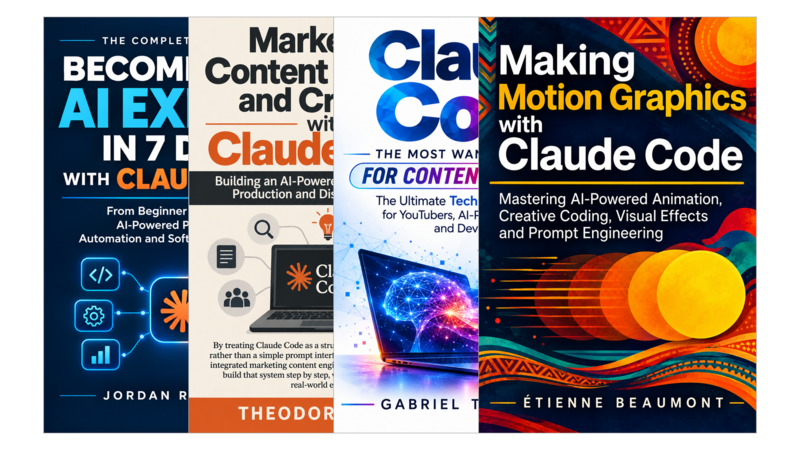

Building an AI-Powered Content Strategy, Production and Distribution System
Introduction: Beyond AI Copywriting
- The AI Content Paradox: More Tools, Less Strategy
- Why Claude Code Is Different from Chat Interfaces
- What This Book Will Build: Your Content Operations System
- How to Read This Book
Chapter 1: The Modern Content Marketing Landscape
- How Search Has Changed: From Keywords to AI Overviews
- Zero-Click Reality and the Rise of Answer Engines
- Content Overload and the Trust Economy
- Why Brand Differentiation Matters More Than Ever
- The Case for Content-Led Growth in 2026
Chapter 2: Content Strategy Fundamentals
- Defining Content Strategy: Beyond Publishing Regularly
- Aligning Content Goals with Business Objectives
- Positioning and Messaging Architecture
- The Content Marketing Flywheel
- Horizontal vs. Vertical Content Strategy
- Building Your Content Pillars
Chapter 3: Understanding Your Audience
- Beyond Demographics: Psychographics and Behavioral Data
- Building Evidence-Based Buyer Personas
- Mapping Jobs to Be Done
- Identifying Audience Content Preferences
- Persona Research Methods for Modern Marketers
Chapter 4: The Buyer Journey and Content Mapping
- Awareness Stage Content: Education and Discovery
- Consideration Stage Content: Evaluation and Comparison
- Decision Stage Content: Conversion and Proof
- Post-Purchase Content: Retention and Advocacy
- Mapping Content Types to Journey Stages
- Nonlinear Journeys and Modern Buying Behavior
Chapter 5: Brand Voice and Consistency
- Voice vs. Tone: Understanding the Difference
- The Brand Personality Framework
- Writing Effective Brand Voice Guidelines
- Tone Adjustment Across Contexts
- Maintaining Consistency at Scale
- Examples: How Leading Brands Define Their Voice
Chapter 6: Storytelling in Marketing
- Why Storytelling Works: The Psychology
- Foundational Narrative Structures for Marketing
- The Hero Journey and the Brand as Guide
- Crafting the Transformation Narrative
- Data Storytelling and Evidence-Based Narratives
- Integrating Story into Practical Marketing Content
Part II: The Claude Code Marketing Environment
Chapter 7: Claude Code for Marketers
- What Claude Code Actually Is
- Why a Coding Tool Works for Content Creation
- Key Capabilities: File Operations, Web Access, Automation
- Subagents: Specialized Content Assistants
- Skills and Hooks for Workflow Automation
- MCP: Connecting to External Tools and Data
Chapter 8: Setting Up Your Content Workspace
- Installing and Configuring Claude Code
- Recommended Directory Structure for Marketing Projects
- Project Configuration with settings.json
- CLAUDE.md: The Heart of Your Content Context
- Permissions and Tool Access Configuration
- Testing Your Setup with a First Content Task
Chapter 9: Building Your Centralized Brand Knowledge Base
- What Belongs in Your Brand Knowledge Base
- Structuring Brand Guidelines for AI Consumption
- Tone of Voice Documentation
- Audience and Persona Files
- Product Information and Messaging Frameworks
- Approved Terminology and Editorial Standards
- Competitor Intelligence Files
- Example Content and Reference Library
Chapter 10: Creating Skills, Subagents and Custom Commands
- Skills for Content Workflows: When and How
- Building a Research Skill
- Building a Writing Skill
- Building a Review and Edit Skill
- Subagents for Specialized Roles
- Custom Commands for Frequent Tasks
- Hooks for Automated Checks and Quality Gates
- Combining Skills, Subagents and Commands
Part III: Content Research and Strategy with Claude Code
Chapter 11: Market and Audience Research
- Using Claude Code for Desk Research
- Structured Competitor Analysis
- Social Listening and Trend Detection
- Extracting Insights from Research Data
- Building Research Briefs for Content Teams
- Automating Ongoing Market Monitoring
Chapter 12: Keyword Research and Search Intent Analysis
- Keyword Research Fundamentals for Content Strategy
- Using Claude Code with SEO Data Sources
- Understanding and Categorizing Search Intent
- Content Gap Analysis
- Topic Clustering and Semantic SEO
- Building Keyword-Mapped Content Plans
Chapter 13: Content Planning and Editorial Calendars
- Topic Discovery and Ideation
- Developing Content Pillars and Clusters
- Campaign Ideation with Claude Code
- Building a Content Editorial Calendar
- Sequencing Content for Maximum Impact
- Balancing Evergreen and Timely Content
Part IV: Content Creation Fundamentals
Chapter 14: The Claude Code Writing Process
- Prompting Claude Code for Marketing Content
- The Brief-First Approach
- Outlining Before Writing
- First Draft Generation
- Iterative Refinement
- Fact-Checking and Verification
Chapter 15: Copywriting Principles and Persuasion
- The Fundamentals of Conversion Copywriting
- Copywriting Frameworks: AIDA, PAS, BAB
- Psychological Triggers in Marketing Copy
- Headline Writing That Gets Read
- Calls to Action That Drive Action
- Objection Handling and Proof
Chapter 16: Editing, Proofreading and Quality Control
- The Editing Process: Structure, Clarity and Flow
- Tone and Voice Consistency Checks
- Grammar, Style and Readability
- SEO Quality Checks
- Plagiarism and Originality Verification
- Building Automated Review Workflows with Hooks
Part V: Multi-Channel Content Formats
Chapter 17: SEO Articles and Long-Form Blog Posts
- Planning an SEO Article: Research and Outline
- Article Structure for Readability and SEO
- Writing the First Draft with Claude Code
- Optimizing for E-E-A-T and Expert Signals
- Technical SEO: Headings, Internal Links, Schema
- Performance Metrics for Blog Content
Chapter 18: Website Copy and Landing Pages
- Website Copy Strategy: Pages That Sell
- Landing Page Copy Frameworks
- Product Page Writing
- Homepage and About Page Copy
- Conversion Optimization and A/B Testing Copy
Chapter 19: Email Campaigns and Newsletters
- Email Marketing Content Strategy
- Writing High-Open-Rate Subject Lines
- Newsletter Structure and Flow
- Nurture Sequences and Drip Campaigns
- Transactional and Behavioral Emails
Chapter 20: Social Media and LinkedIn Content
- Social Media Content Strategy
- Platform-Specific Content Guidelines
- LinkedIn Thought Leadership Content
- Content Calendars for Social Publishing
Chapter 21: Long-Form Assets: Whitepapers, Ebooks and Case Studies
- Whitepaper Strategy and Structure
- Ebook Planning and Production
- Case Study Writing Frameworks
Chapter 22: Video Scripts, Podcasts and Audio Content
- Video Script Writing: YouTube, Social and Ads
- Podcast Script and Outline Creation
- Webinar and Presentation Scripts
Chapter 23: Advertising Copy and Product Announcements
- Paid Ad Copy: Google, Meta, LinkedIn
- Product Announcement Messaging
- A/B Testing Ad Variations
Part VI: Advanced Production Systems
Chapter 24: Content Repurposing and Multi-Format Distribution
- The Content Repurposing Mindset
- One Piece, Many Formats: Practical Workflows
- Blog to Social Media Repurposing
- Long-Form to Short-Form Video Scripts
- Email Sequences from Core Content
- Automating Repurposing with Claude Code
Chapter 25: SEO Optimization and Discoverability
- On-Page SEO with Claude Code
- Semantic SEO and Entity Optimization
- Optimizing for AI Overviews and Answer Engines
- Technical SEO: Structure, Schema and Metadata
- Ongoing SEO Maintenance
Chapter 26: Conversion Optimization in Content
- Conversion-Focused Content Strategy
- CRO Principles Applied to Content Writing
- Testing and Iterating Content Performance
Chapter 27: Multi-Language and Localization
- Translation vs. Localization
- Claude Code for Multilingual Content
- SEO Considerations for International Content
Chapter 28: Human-in-the-Loop Workflows
- Why Human Review Is Non-Negotiable
- Defining Review Roles and Responsibilities
- Factual Accuracy Verification
- Building Review Checklists
Part VII: Operations, Distribution and Measurement
Chapter 29: Publishing Workflows and CMS Integration
- From Draft to Published: Workflow Design
- CMS Integration Options
- Git-Based Content Management
Chapter 30: Performance Measurement and Continuous Improvement
- Defining Content Marketing KPIs
- Using Analytics to Guide Content Decisions
- Content Audits with Claude Code
Chapter 31: Risks, Challenges and Governance
- Hallucinations and Factual Errors
- Plagiarism and Copyright Concerns
- Brand Dilution and Generic Content
- Search Engine Quality Guidelines
- Building a Responsible AI Content Policy
Chapter 32: Scaling Your AI-Powered Content System
- From Solo to Team: Sharing the System
- Standardizing Templates and Workflows
- Cost Management and Efficiency
- The Marketing Engineer Role