Can Machines Think? A Modern Philosophical Inquiry


Can machines really think, understand, or become conscious—or are they simply processing information in increasingly sophisticated ways?
Explore the fascinating intersection of artificial intelligence, philosophy of mind, human cognition, and machine consciousness.
From Alan Turing's groundbreaking question to modern AI, Artificial General Intelligence, and the possibility of conscious machines, this book challenges readers to rethink the boundaries between human and artificial intelligence.
Discover the science, philosophy, and future of thinking machines.
Minimum price
$9.99
$19.99
You pay
Author earns
About
About the Book
About the Book
Can Machines Think? A Modern Philosophical Inquiry
By Anshuman Mishra
What does it truly mean to think? Can a machine do more than process information, recognize patterns, and generate intelligent responses? Could artificial intelligence ever develop genuine understanding, consciousness, or even something resembling human thought?
These questions lie at the heart of one of the most fascinating intellectual challenges of our time.
In Can Machines Think? A Modern Philosophical Inquiry, Anshuman Mishra explores the profound relationship between human intelligence, artificial intelligence, consciousness, and the philosophy of mind. Bringing together classical philosophical theories and contemporary developments in artificial intelligence, this book examines what it means for a machine to demonstrate intelligence—and whether such demonstrations could ever amount to genuine thinking.
Beginning with the historical foundations of thinking machines and Alan Turing's influential question, the book takes readers through major philosophical perspectives, including dualism, materialism, functionalism, behaviorism, and the computational theory of mind. It investigates the significance and limitations of the Turing Test, examines John Searle's Chinese Room argument, and considers the ongoing debate between strong AI and weak AI.
The discussion then moves into the modern landscape of artificial intelligence, cognitive science, neural networks, deep learning, machine reasoning, and artificial empathy. Particular attention is given to the distinction between intelligent behavior and subjective experience, raising important questions about machine consciousness, emotions, moral reasoning, and the possibility of artificial minds.
Beyond theoretical debates, the book explores the ethical, legal, and social consequences of increasingly intelligent machines. It considers AI governance, accountability, privacy, human-machine collaboration, and the implications of artificial intelligence for employment, society, and human identity.
Looking toward the future, readers are introduced to emerging possibilities involving Artificial General Intelligence (AGI), quantum computing, brain-computer interfaces, and potential developments in machine consciousness by 2050.
Through interdisciplinary analysis, practical examples, and real-world case studies from healthcare, law, finance, creative industries, and scientific research, this book encourages readers to approach artificial intelligence with both intellectual curiosity and philosophical responsibility.
This is not simply a book about what machines can do. It is an exploration of what intelligence, thought, consciousness, and humanity actually mean.
Whether you are a student, researcher, philosopher, AI practitioner, technology professional, or curious reader, this book offers an opportunity to examine one of the defining questions of the modern technological age:
Can machines think—or are they only becoming increasingly convincing at appearing to do so?
Author
About the Author
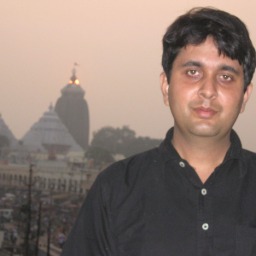
Anshuman Kumar Mishra, M.Tech (Computer Science) Assistant Professor, Doranda College, Ranchi University
Prolific Author of 50+ Books on AI, Machine Learning & Computer Science | 20+ Years Experience
Anshuman Kumar Mishra is a dedicated educator, researcher, and highly prolific author with over 20 years of experience in Computer Science and Information Technology. Holding an M.Tech in Computer Science from BIT Mesra, he brings a rare combination of academic depth and practical teaching expertise.
Currently serving as Assistant Professor at Doranda College under Ranchi University, he has mentored thousands of students, helping them build strong foundations in programming, data science, and artificial intelligence. His student-centric teaching style emphasizes conceptual clarity, hands-on practice, and real-world application.
Anshuman is a prolific author with more than 50 books published across a wide spectrum of computer science and emerging technology domains. From foundational programming languages to advanced topics in Artificial Intelligence, Machine Learning, Reinforcement Learning, Decision Theory, and Computer Vision — his books are widely appreciated by students, educators, and professionals for their clear explanations, strong theoretical foundation, and practical approach.
His extensive body of work reflects his deep commitment to making complex subjects accessible and meaningful for learners at all levels. He is particularly recognized for creating well-structured learning paths that help readers progress from beginner to advanced levels with confidence.
Driven by the mission to democratize quality technical education, Anshuman continues to write and update books that bridge the gap between academic theory and industry practice.
When not teaching or writing, he actively follows and explores new developments in AI, Quantum Machine Learning, and Ethical Intelligence systems.
Contents
Table of Contents
The Leanpub 60 Day 100% Happiness Guarantee
Within 60 days of purchase you can get a 100% refund on any Leanpub purchase, in two clicks.
See full terms...
Earn $8 on a $10 Purchase, and $16 on a $20 Purchase
We pay 80% royalties on purchases of $7.99 or more, and 80% royalties minus a 50 cent flat fee on purchases between $0.99 and $7.98. You earn $8 on a $10 sale, and $16 on a $20 sale. So, if we sell 5000 non-refunded copies of your book for $20, you'll earn $80,000.
(Yes, some authors have already earned much more than that on Leanpub.)
Learn more about writing on Leanpub
Free Updates. DRM Free.
If you buy a Leanpub book, you get free updates for as long as the author updates the book! Many authors use Leanpub to publish their books in-progress, while they are writing them. All readers get free updates, regardless of when they bought the book or how much they paid (including free).
Most Leanpub books are available in PDF (for computers) and EPUB (for phones, tablets and Kindle). The formats that a book includes are shown at the top right corner of this page.
Finally, Leanpub books don't have any DRM copy-protection nonsense, so you can easily read them on any supported device.
Learn more about Leanpub's ebook formats and where to read them
Write and Publish on Leanpub
You can use Leanpub to easily write, publish and sell in-progress and completed ebooks and online courses!
Leanpub is a powerful platform for serious authors, combining a simple, elegant writing and publishing workflow with a store focused on selling in-progress ebooks.
Leanpub is a magical typewriter for authors: just write in plain text, and to publish your ebook, just click a button. (Or, if you are producing your ebook your own way, you can even upload your own PDF and/or EPUB files and then publish with one click!) It really is that easy.