Unsupervised learning and clustering techniques
for students researchers and data science enthusiasts


What You Will Learn
By the end of this book, you will be able to:
1. Understand the core concepts of unsupervised learning and how it differs from supervised learning.
2. Preprocess and prepare datasets for clustering, including scaling, normalization, and handling outliers.
3. Implement popular clustering algorithms in Python, tuning parameters for optimal results.
4. Evaluate clustering performance using both internal and external metrics.
5. Apply clustering techniques to real-world problems such as customer segmentation, anomaly detection, and image grouping.
6. Work with high-dimensional data and understand techniques to reduce dimensionality while preserving patterns.
7. Use advanced clustering techniques to solve complex data grouping problems in large datasets.
8. Develop ethical awareness of privacy, bias, and fairness in AI applications.
Benefits After Studying This Book
For Students· Gain strong theoretical foundations in machine learning without supervision.
· Prepare for academic exams, assignments, and competitive exams like UGC NET, GATE, and data science interviews.
· Build portfolio-worthy projects to showcase in internships or job applications.
For Job Seekers and Professionals· Learn industry-relevant clustering algorithms used in AI, marketing, healthcare, and cybersecurity.
· Enhance data analysis and problem-solving skills to stand out in interviews for roles such as Data Scientist, Machine Learning Engineer, or Business Analyst.
· Understand how to integrate clustering techniques into business solutions for better decision-making.
For Researchers and Innovators· Explore cutting-edge clustering methods and hybrid models for high-dimensional and big data scenarios.
· Gain insights into current trends and future research opportunities in unsupervised learning.
· Leverage clustering techniques for research publications, AI prototypes, and academic projects.
Minimum price
$9.99
$17.99
You pay
Author earns
About
About the Book
"Unsupervised Learning and Clustering Techniques: Concepts, Algorithms, and Practical Applications" is a comprehensive guide designed for students, researchers, and data science enthusiasts who want to master the principles and practical applications of unsupervised machine learning.
This book walks you step-by-step from the fundamentals of unsupervised learning to advanced clustering algorithms used in real-world AI systems. It blends theory, mathematics, and Python implementations to ensure that readers not only understand the concepts but can also apply them to solve real data challenges.
Structured with clear explanations, visual diagrams, hands-on coding examples, and case studies, this book caters to both academic learners preparing for exams and practitioners aiming to strengthen their portfolio with practical machine learning projects.
It covers essential techniques such as:
· K-Means and its variants
· Hierarchical clustering and dendrogram analysis
· Density-based clustering (DBSCAN, OPTICS)
· Gaussian Mixture Models (GMM)
· Dimensionality reduction (PCA, t-SNE, UMAP)
· Advanced algorithms like Spectral Clustering, Fuzzy C-Means, and Self-Organizing Maps
· Evaluation metrics to measure clustering performance
· Practical applications in marketing, healthcare, fraud detection, and more
This book is project-driven, ensuring that readers learn by doing through numerous examples using Python and Scikit-learn. Each chapter includes practical exercises, visualizations, and tips for interpretation, enabling learners to translate theory into actionable insights.
What You Will Learn
By the end of this book, you will be able to:
1. Understand the core concepts of unsupervised learning and how it differs from supervised learning.
2. Preprocess and prepare datasets for clustering, including scaling, normalization, and handling outliers.
3. Implement popular clustering algorithms in Python, tuning parameters for optimal results.
4. Evaluate clustering performance using both internal and external metrics.
5. Apply clustering techniques to real-world problems such as customer segmentation, anomaly detection, and image grouping.
6. Work with high-dimensional data and understand techniques to reduce dimensionality while preserving patterns.
7. Use advanced clustering techniques to solve complex data grouping problems in large datasets.
8. Develop ethical awareness of privacy, bias, and fairness in AI applications.
Benefits After Studying This Book
For Students· Gain strong theoretical foundations in machine learning without supervision.
· Prepare for academic exams, assignments, and competitive exams like UGC NET, GATE, and data science interviews.
· Build portfolio-worthy projects to showcase in internships or job applications.
For Job Seekers and Professionals· Learn industry-relevant clustering algorithms used in AI, marketing, healthcare, and cybersecurity.
· Enhance data analysis and problem-solving skills to stand out in interviews for roles such as Data Scientist, Machine Learning Engineer, or Business Analyst.
· Understand how to integrate clustering techniques into business solutions for better decision-making.
For Researchers and Innovators· Explore cutting-edge clustering methods and hybrid models for high-dimensional and big data scenarios.
· Gain insights into current trends and future research opportunities in unsupervised learning.
· Leverage clustering techniques for research publications, AI prototypes, and academic projects.
How This Book Helps You Learn Effectively
· Step-by-step approach: Each concept is introduced simply, followed by mathematical explanation and Python implementation.
· Visual learning: Clear diagrams, charts, and data visualizations help in understanding complex concepts.
· Hands-on practice: End-of-chapter coding exercises ensure you can apply what you’ve learned.
· Case studies: Real-world examples make learning practical and relevant.
· Quick references: Appendices with formula sheets, Python syntax, and dataset sources save you time during projects.
Author
About the Author
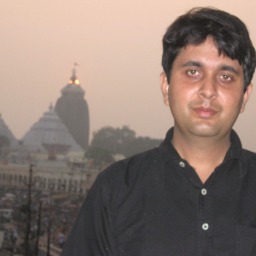
Anshuman Kumar Mishra, M.Tech (Computer Science) Assistant Professor, Doranda College, Ranchi University
Prolific Author of 50+ Books on AI, Machine Learning & Computer Science | 20+ Years Experience
Anshuman Kumar Mishra is a dedicated educator, researcher, and highly prolific author with over 20 years of experience in Computer Science and Information Technology. Holding an M.Tech in Computer Science from BIT Mesra, he brings a rare combination of academic depth and practical teaching expertise.
Currently serving as Assistant Professor at Doranda College under Ranchi University, he has mentored thousands of students, helping them build strong foundations in programming, data science, and artificial intelligence. His student-centric teaching style emphasizes conceptual clarity, hands-on practice, and real-world application.
Anshuman is a prolific author with more than 50 books published across a wide spectrum of computer science and emerging technology domains. From foundational programming languages to advanced topics in Artificial Intelligence, Machine Learning, Reinforcement Learning, Decision Theory, and Computer Vision — his books are widely appreciated by students, educators, and professionals for their clear explanations, strong theoretical foundation, and practical approach.
His extensive body of work reflects his deep commitment to making complex subjects accessible and meaningful for learners at all levels. He is particularly recognized for creating well-structured learning paths that help readers progress from beginner to advanced levels with confidence.
Driven by the mission to democratize quality technical education, Anshuman continues to write and update books that bridge the gap between academic theory and industry practice.
When not teaching or writing, he actively follows and explores new developments in AI, Quantum Machine Learning, and Ethical Intelligence systems.
Contents
Table of Contents
The Leanpub 60 Day 100% Happiness Guarantee
Within 60 days of purchase you can get a 100% refund on any Leanpub purchase, in two clicks.
See full terms...
Earn $8 on a $10 Purchase, and $16 on a $20 Purchase
We pay 80% royalties on purchases of $7.99 or more, and 80% royalties minus a 50 cent flat fee on purchases between $0.99 and $7.98. You earn $8 on a $10 sale, and $16 on a $20 sale. So, if we sell 5000 non-refunded copies of your book for $20, you'll earn $80,000.
(Yes, some authors have already earned much more than that on Leanpub.)
Learn more about writing on Leanpub
Free Updates. DRM Free.
If you buy a Leanpub book, you get free updates for as long as the author updates the book! Many authors use Leanpub to publish their books in-progress, while they are writing them. All readers get free updates, regardless of when they bought the book or how much they paid (including free).
Most Leanpub books are available in PDF (for computers) and EPUB (for phones, tablets and Kindle). The formats that a book includes are shown at the top right corner of this page.
Finally, Leanpub books don't have any DRM copy-protection nonsense, so you can easily read them on any supported device.
Learn more about Leanpub's ebook formats and where to read them
Write and Publish on Leanpub
You can use Leanpub to easily write, publish and sell in-progress and completed ebooks and online courses!
Leanpub is a powerful platform for serious authors, combining a simple, elegant writing and publishing workflow with a store focused on selling in-progress ebooks.
Leanpub is a magical typewriter for authors: just write in plain text, and to publish your ebook, just click a button. (Or, if you are producing your ebook your own way, you can even upload your own PDF and/or EPUB files and then publish with one click!) It really is that easy.