


- 1. Introduction – Focus of this document
- 2. Foundations of the Fourier Transform for continuous-time signals
- 3. The discrete-time Fourier Transform (DTFT)
- 4. The Discrete Fourier Transform (DFT)
- 5. DTFT and DFT: synopsis
- 6. Computation of the DFT
- 7. Applications
- 8. DFT implementation: summary
- 9. Conclusion and key takeaways
- 10. References
An Introduction to the Discrete Fourier Transform and Its Applications in Signal Processing
MATLAB and Python Edition

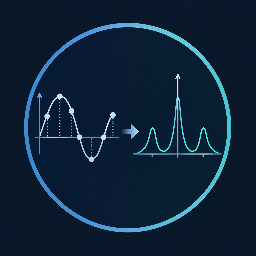
A practical and pedagogical introduction to the Discrete Fourier Transform (DFT), combining theory, numerical examples, and MATLAB/Python implementations for students, engineers, and educators.
Minimum price
$24.00
$34.00
You pay
Authors earn
PDF
About
About the Book
This course monograph provides a progressive introduction to the Discrete Fourier Transform (DFT) and its applications in signal processing. It combines theoretical explanations, numerical examples, and practical implementations in MATLAB and Python/NumPy.
Topics include:
- sampling and aliasing;
- spectral leakage and windowing;
- frequency resolution;
- one-sided and two-sided spectra;
- phase spectra and fftshift;
- FFT implementation and normalization;
- practical signal-processing applications.
The material is intended for undergraduate and graduate students, instructors, and engineers who need a clear and operational understanding of spectral analysis and numerical signal processing.
Included with the book:
- Complete PDF course monograph;
- Executable Jupyter notebook (.ipynb);
- HTML version of the course;
- High-resolution figures.
The notebook contains all Python/NumPy examples presented throughout the text and allows readers to reproduce, modify, and extend the computations discussed in the monograph.
Companion materials available upon request at (please attach your Leanpub purchase receipt):
signal.processing.course@gmail.com
Categories
Feedback
Author
About the Authors
Laurent Nony
Laurent Nony is Associate Professor (Maître de Conférences Hors Classe) in Physics at Aix-Marseille Université (France) and a member of the Institute of Materials, Microelectronics and Nanosciences of Provence (IM2NP, CNRS UMR 7334, France), where he is currently leading the "Nanostructuration" research group.
He received his Ph.D. in Physics from the University of Bordeaux (France) in 2000 and subsequently held post-doctoral research positions at the IBM Zurich Research Laboratory (Switzerland) and the University of Basel (Switzerland), before joining Aix-Marseille Université in 2005. He obtained his Habilitation (HDR) in 2013.
His research activities focus on experimental and computational nanophysics, scanning probe microscopy, signal acquisition, instrumentation, and data analysis. Throughout his academic career, he has supervised numerous student projects and developed original scientific instrumentation as well as numerical simulation tools.
For more than twenty years, he has taught physics, instrumentation, numerical methods, signal processing, sensors, and scientific computing at undergraduate and graduate levels. He has also created a wide range of pedagogical resources, including lecture notes, laboratory projects, online courses, and educational videos.
His teaching philosophy emphasizes the connection between theory, experimentation, and practical implementation. This course monograph reflects that approach by combining conceptual explanations with concrete MATLAB and Python/NumPy examples, enabling students to develop both intuition and practical skills in signal processing.
He is the author, or co-author, of more than 50 peer-reviewed research articles, books chapters and patents, and developer of several digital pedagogical resources dedicated to signal processing, scientific computing, and experimental physics.
Jean-Marc Themlin is Professor of Physics at Aix-Marseille Université (France), affiliated with the Institute of Materials, Microelectronics and Nanosciences of Provence (IM2NP, CNRS UMR 7334, France), where he is currently leading the PHaNO scientific department.
As an experimental physicist specialized in the electronic structure of solids, surfaces and nanomaterials, he benefits from over 35 years of experience in higher education and research. His research interests focuses on Angle-Resolved Inverse Photoemission Spectroscopy (ARIPES) to probe unoccupied electronic states. His work has led to significant advances in understanding pristine and N-doped epitaxial graphene on SiC, two-dimensional Mott insulators, monolayers of pi-conjugated molecules (fullerenes,...) adsorbed on surfaces,...
With more than 60 top-tier publications, his career is driven by a profound commitment to pedagogy : the conviction that training the next generation of physicists requires an active, experimental, and inclusive approach. Head of the Experimental Physics Service of the Physics Department of AMU since 2002, he leads this multi-site service, ensuring the quality and modernization of practical labs for all physics students through resource sharing and equipment upgrades.
Adept of "Teaching Through Practice", his teaching philosophy centers on reforming traditional methods to prioritize "well-structured minds over well-filled ones" through providing more active learning opportunities to students. To this aim, he restructured numerous courses (Signal theory, Signal & image Processing, Electronics,...) to reduce formal lecture time in favor of hands-on labs, experimental projects, and case studies, utilizing open-source tools and collaborative platforms. Applying these recipes, he created an interdisciplinary "Digital Physics" course tailored for first year B.Sc. students with a computer science background.
More recently, he designed and launched the enhanced "Initiation to Scientific Research" track for Bachelor’s students in their second and third year, allowing them to immerse themselves in "close-to-real" research. In 2025, he initiated the PhysLab project, funded by the University fundation AMidex, to create dedicated spaces for undergraduate experimental research, bridging the gap between standard lab sessions and authentic laboratory research.
Beyond the lab and the classroom, he also held structural leadership roles within the faculty, especially as Head of the Physics Department of AMU. Serving two terms (2018–2024), he led the largest department in the Faculty of Sciences, overseeing a complete redesign of the degree programs (Bachelor’s and Master’s).
Contents
Table of Contents
Get the free sample chapters
Click the buttons to get the free sample in PDF or EPUB, or read the sample online here
The Leanpub 60 Day 100% Happiness Guarantee
Within 60 days of purchase you can get a 100% refund on any Leanpub purchase, in two clicks.
See full terms...
Earn $8 on a $10 Purchase, and $16 on a $20 Purchase
We pay 80% royalties on purchases of $7.99 or more, and 80% royalties minus a 50 cent flat fee on purchases between $0.99 and $7.98. You earn $8 on a $10 sale, and $16 on a $20 sale. So, if we sell 5000 non-refunded copies of your book for $20, you'll earn $80,000.
(Yes, some authors have already earned much more than that on Leanpub.)
Learn more about writing on Leanpub
Free Updates. DRM Free.
If you buy a Leanpub book, you get free updates for as long as the author updates the book! Many authors use Leanpub to publish their books in-progress, while they are writing them. All readers get free updates, regardless of when they bought the book or how much they paid (including free).
Most Leanpub books are available in PDF (for computers) and EPUB (for phones, tablets and Kindle). The formats that a book includes are shown at the top right corner of this page.
Finally, Leanpub books don't have any DRM copy-protection nonsense, so you can easily read them on any supported device.
Learn more about Leanpub's ebook formats and where to read them
Write and Publish on Leanpub
You can use Leanpub to easily write, publish and sell in-progress and completed ebooks and online courses!
Leanpub is a powerful platform for serious authors, combining a simple, elegant writing and publishing workflow with a store focused on selling in-progress ebooks.
Leanpub is a magical typewriter for authors: just write in plain text, and to publish your ebook, just click a button. (Or, if you are producing your ebook your own way, you can even upload your own PDF and/or EPUB files and then publish with one click!) It really is that easy.