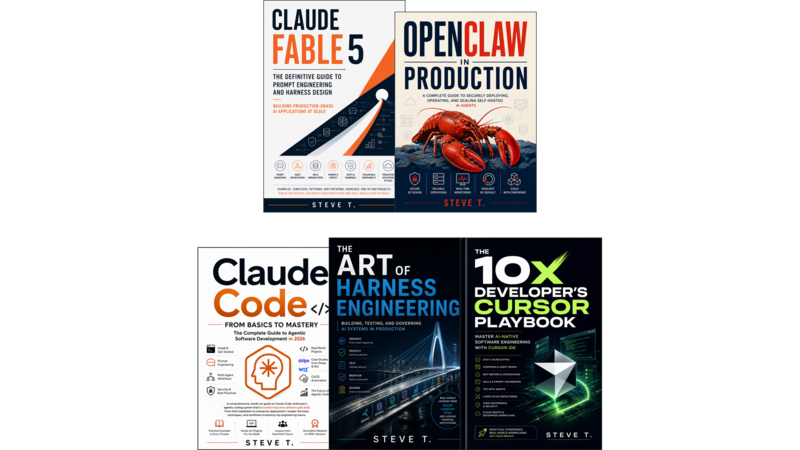
Steve is a technology professional with more than 20 years of experience in software development, server infrastructure, cybersecurity, vulnerability research and reverse engineering. Throughout his career, he has designed, secured, analyzed and tested complex software and infrastructure, with a particular focus on understanding how systems fail and how they can be made more secure.
Outside of work, Steve enjoys sharing knowledge with the technology community. He collaborates with researchers, industry experts and technology professionals to write practical books covering software development, cybersecurity, cloud computing, networking, DevOps, artificial intelligence and enterprise technologies. His books focus on practical learning through clear explanations, real-world examples and hands-on exercises. With more than two decades of industry experience, his goal is to help IT professionals, students and technology enthusiasts build useful skills and stay current in a rapidly changing industry.
We believe readers deserve to know how our books are created. Most of our authors are not native English speakers, so we use AI to help translate, proofread manuscripts, fix grammar, improve sentence structure and make technical explanations easier to read. AI is used as an editing tool only. It does not replace the research, technical knowledge or hands-on experience behind our books. Some of our authors also prefer to remain anonymous for privacy or professional reasons. In those cases, we publish their work under a different name. The author's name may be different, but the quality of the content and our review process remain the same.
Every book is written, reviewed and maintained by experienced technology professionals, with contributions from our private technical community of more than 420 engineers and researchers. We spend far more time validating technical accuracy and keeping our content up to date than generating text. We are always interested in working with experienced professionals who have deep expertise in a particular technology or domain. If you would like to publish a book with us or help review an existing manuscript, we'd love to hear from you. Send us a message describing your area of expertise. We are especially interested in niche technologies, specialized skills and emerging topics that are underrepresented in existing technical literature.
If you look through the contents of our books, you'll see practical examples, detailed explanations and material that is regularly updated. Our goal is to publish books that professionals can actually rely on, not low-effort AI-generated content. If you ever feel that one of our books does not meet that standard, Leanpub offers a 60-day money-back guarantee. Feel free to request a refund if you are not satisfied with your purchase.