The Leanpub 60 Day 100% Happiness Guarantee
Within 60 days of purchase you can get a 100% refund on any Leanpub purchase, in two clicks.
See full terms...
Separate Within and Between Variation and Model Change in Panel Data Using R

Separate how people differ from how they change, and model change in time with panel data in R. In this course, you will learn how to estimate fixed effects, random effects and hybrid models with plm, and how to build, compare and interpret multilevel models for change with lme4. By the end, you will have a clear sequence of models for your own longitudinal data, from the empty model to growth models with time-varying predictors and non-linear change.
Interested in this course? Show your support by saying what you'd like to pay for it!
About the Course
Longitudinal data, or data collected multiple times from the same cases, makes it possible to study how people change in time and why some people change more than others. This also brings a challenge. Each person is measured repeatedly, so the variation in the data has two sources: differences between people and changes within the same person.
This course will teach you the main regression-based models for this type of data and how to estimate them in R. You will start with fixed effects, random effects and hybrid models, which are useful when the main interest is in causal relationships. You will then learn the multilevel model for change. This model describes how people change in time, how much they differ in their starting point and rate of change, and what explains these differences.
The course focuses on the decisions you have to make when modelling change. These include which source of variation to model, whether to use fixed or random effects and how to code time. They also include how to add predictors that change in time and how to model change that is not linear.
The lectures and practicals use data from Understanding Society, a large UK household panel study, and all the models are estimated in R with the plm and lme4 packages. This way, the skills you learn transfer directly to your own research projects.
Within and between variation
Before modelling change, it helps to understand where the variation in longitudinal data comes from.
In this section, you will learn:
These concepts are the basis for every model in the course.
Fixed, random and hybrid models
When the main interest is in causal relationships and change in time is not the main focus, fixed and random effects models are a good place to start.
In this section, you will learn how to:
In the first practical, you will apply these models to explain log income.
The multilevel model for change
The multilevel model for change describes the average change in time and how much people differ from it.
In this section, you will learn how to:
These steps give you a sequence of models you can use to describe and explain change in your own data.
Extending the multilevel model for change
Many research questions involve predictors that change in time and trajectories that are not straight lines.
In this section, you will learn how to:
With these extensions, you can adapt the multilevel model for change to the research questions and data in your own projects.
The course combines videos, written explanations, quizzes, and hands-on practical exercises so you learn by applying the techniques directly. You will also gain access to a forum to ask questions related to the topics covered in the class.
The lectures use examples from Understanding Society (UKHLS), with life satisfaction as the main outcome. The three practical exercises use a synthetic version of Understanding Society, one of the largest longitudinal household surveys in the world. You will model change in log income over four waves, using sex, life satisfaction, the year of the interview and age.
Each practical includes:
By the end of the course, you will have run a full sequence of fixed effects, random effects and multilevel models for change in R. You can then adapt the same code to your own panel data.
This course is designed for researchers who want to model change with longitudinal and panel data in R, including:
You should already be comfortable with:
The course data is already cleaned and in long format. If you want to learn how to clean, merge and reshape panel data yourself, consider taking the course Master Longitudinal Data Wrangling using R.
If you are new to R, consider taking the course Introduction to R for Social Researchers, which provides the foundations needed to follow the workflows taught here.
After completing the course, you will be able to:
You will also have a clear order for building models of change, from the empty model to models with predictors, that you can follow with your own panel data.
About the Instructor
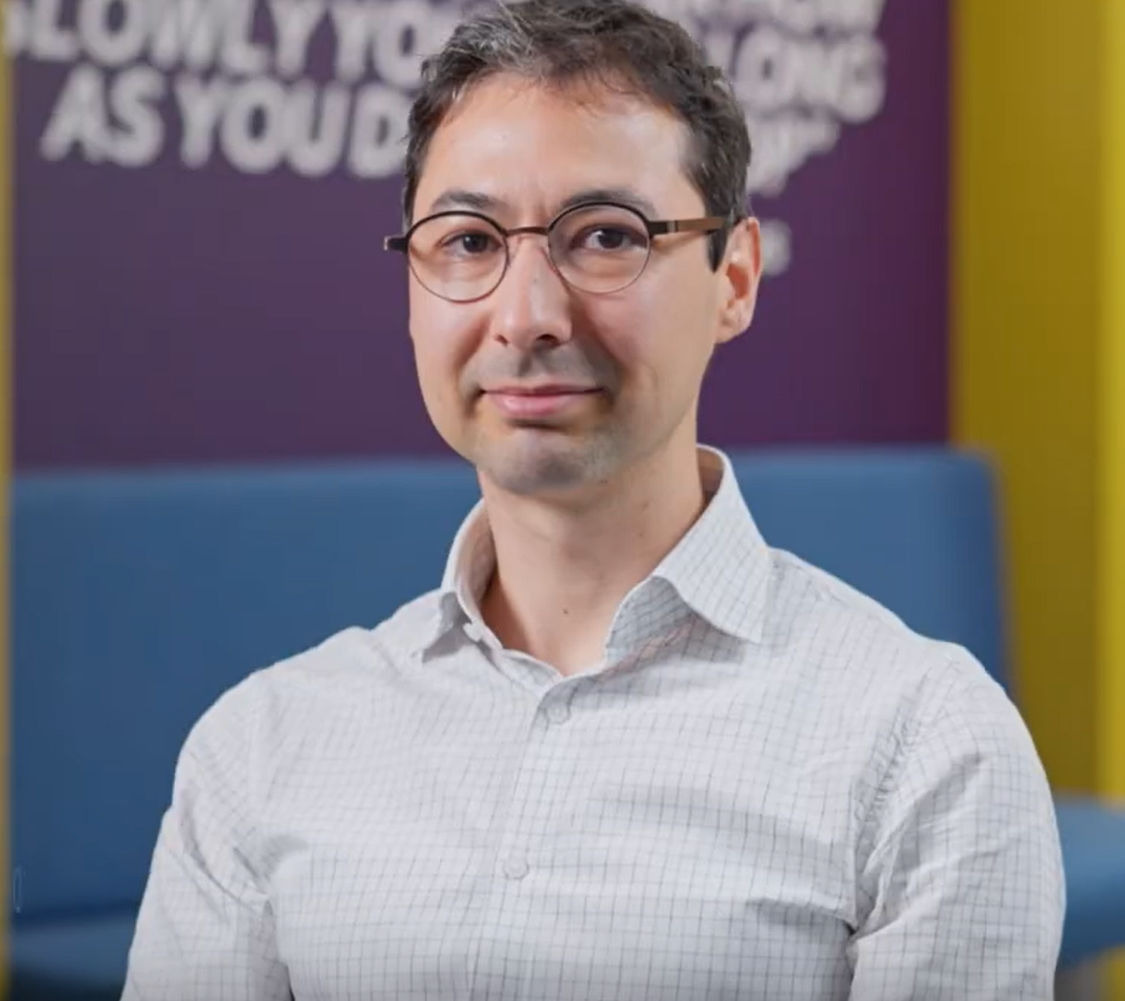
Alexandru Cernat is a professor in Methodology and Social Data Science at the University of Manchester.
He has a PhD in survey methodology from the University of Essex and was a post-doc at the National Centre for Research Methods and the Cathie Marsh Institute.
His research and teaching focus on: survey methodology, longitudinal data, measurement error, latent variable modelling, new forms of data and missing data.
He is also the founder of longitudinalanalysis.com, a platform that helps researchers and analysts learn to collect, clean, and analyse longitudinal data.
You can find out more about him and his research at: alexcernat.com.

Episode 267
An Interview with Alexandru Cernat
Within 60 days of purchase you can get a 100% refund on any Leanpub purchase, in two clicks.
See full terms...
We pay 80% royalties on purchases of $7.99 or more, and 80% royalties minus a 50 cent flat fee on purchases between $0.99 and $7.98. You earn $8 on a $10 sale, and $16 on a $20 sale. So, if we sell 5000 non-refunded copies of your book for $20, you'll earn $80,000.
(Yes, some authors have already earned much more than that on Leanpub.)
Learn more about writing on Leanpub
If you buy a Leanpub book, you get free updates for as long as the author updates the book! Many authors use Leanpub to publish their books in-progress, while they are writing them. All readers get free updates, regardless of when they bought the book or how much they paid (including free).
Most Leanpub books are available in PDF (for computers) and EPUB (for phones, tablets and Kindle). The formats that a book includes are shown at the top right corner of this page.
Finally, Leanpub books don't have any DRM copy-protection nonsense, so you can easily read them on any supported device.
Learn more about Leanpub's ebook formats and where to read them
You can use Leanpub to easily write, publish and sell in-progress and completed ebooks and online courses!
Leanpub is a powerful platform for serious authors, combining a simple, elegant writing and publishing workflow with a store focused on selling in-progress ebooks.
Leanpub is a magical typewriter for authors: just write in plain text, and to publish your ebook, just click a button. (Or, if you are producing your ebook your own way, you can even upload your own PDF and/or EPUB files and then publish with one click!) It really is that easy.