Bundles
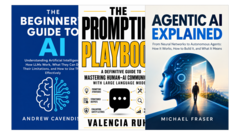 Beginning AI BundleSteve Publications
AI is moving fast, but you do not need to be a computer scientist to understand what is happening. This three-book bundle takes you from the basics of artificial intelligence to mastering prompts and exploring the rise of AI agents. Learn what happens behind the scenes, discover what these systems can actually do and, just as importantly, where they fall short. Whether you are completely new to AI or already experimenting with it, these books will help you make sense of the technology and use it with confidence.
 Interpretable ML + Conformal Prediction + Modeling MindsetsChristoph Molnar
Get Interpretable Machine Learning (2nd edition), Modeling Mindsets, and Introduction to Conformal Prediction.
- Interpretable ML + Conformal Prediction + Modeling MindsetsChristoph Molnar
Get Interpretable Machine Learning (2nd edition), Modeling Mindsets, and Introduction to Conformal Prediction.

Seven handbooks on running Claude Code without losing work, money, or your git history — the four-book Operator's Library plus the three newest titles, sold as a separate bundle rather than an upgrade to it. Three of them have "safety" in the title and do different jobs, so this page starts by telling you which one to read first. Start with the free Field Manual to find out whether your guards actually fire, then install.
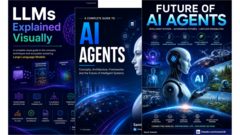 Visual AI CollectionSamir SolankiNo Description Available
 No Description Available
 AI Inference Mastery BundleSteve Publications
What really happens between a prompt and the next generated token? This collection goes behind the abstractions to explore the engineering of modern LLM inference, from transformer fundamentals and memory management to quantization, KV caching, GPU optimization and production serving. Across C, Rust, vLLM, GGUF and local models, these books show how inference systems are built, optimized and operated when performance, cost and reliability actually matter.
 Niche Languages BundleSteve Publications
The programming world is changing in places most developers aren't looking. New languages are rethinking memory safety, performance, concurrency, AI development and even what it means to tell a computer what to do. This bundle takes you beyond the familiar and into that experimental frontier, where Vale, Mojo, Nim, Gleam, Prolog and other emerging ideas offer radically different ways to build software. Some of these languages may become tomorrow's essential tools. Others may take a completely different path. Either way, there's a lot here worth discovering.
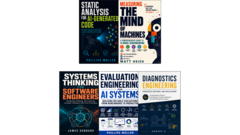 Complex Systems Engineering Skillset BundleSteve Publications
Five practical books for software engineers and AI professionals who want to build better systems. Learn how to think in systems, evaluate AI with confidence, benchmark models, analyze AI-generated code and design reliable diagnostic solutions using methods that stand the test of time.
 GPU Programming BundleSteve Publications
Go beyond using GPUs and learn what actually happens under the hood. This bundle takes you from building Linux DRM drivers and writing CUDA kernels in Rust to understanding GPU virtualization with KVM and QEMU. Packed with real code, practical examples and low-level implementation details, these books give you the knowledge to build, debug and work with modern GPU systems from the ground up.
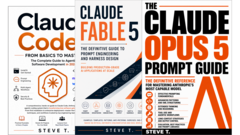 Claude Specials BundleSteve Publications
Build faster, prompt smarter, and master the full power of Anthropic's AI ecosystem. This comprehensive three-book bundle takes you from effective prompt engineering to production-scale AI application development and agentic software engineering with Claude Code. Whether you're building your first AI-powered application or designing sophisticated autonomous systems, you'll gain the practical knowledge, proven design patterns, and real-world techniques used to create reliable, scalable, and high-performance AI solutions.
 Agentic ApplicationSandeep Kumar Patel
Two books for web developers on putting AI to work in your product: build interactive apps inside Claude, and expose your website to AI agents with WebMCP. Runnable code included.
 The Kotlin & AI MasterclassEdgar MilvusNo Description Available
Build three substantial software engines in C++: a compiler, a SQL database engine, and an LLM inference engine.
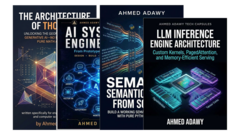
Stop building fragile AI toys. Master the complete engineering stack for production-grade LLMs, vector search, high-performance inference, and autonomous AI agents.LLM Engineering, AI Architecture, Agentic AI, Semantic Search, Vector Databases, AI Infrastructure, Python Performance, Machine Learning Systems, DevOps for AI, RAG Pipelines