

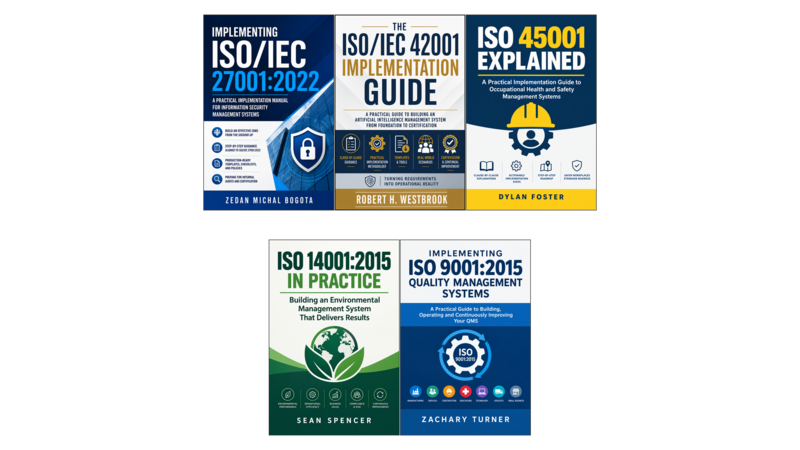

A Practical Implementation Guide to Occupational Health and Safety Management Systems
Introduction
Chapter 1: The Global Challenge of Occupational Safety
- The Human Cost of Unsafe Work
- Economic Burden on Organizations and Society
- Evolution of Occupational Safety Regulation
- From Reactive to Systematic Safety Management
- The Case for a Management System Approach
Chapter 2: What Is ISO 45001?
- ISO and the International Standardization Movement
- ISO 45001: Status, History and Current Edition
- Scope: What the Standard Covers and Excludes
- Relationship to OHSAS 18001 and Other Standards
- Certification versus Implementation
Chapter 3: Foundations of Occupational Health and Safety Management
- Key Terminology in ISO 45001
- The Plan-Do-Check-Act Model
- Hazard, Risk and Opportunity in OH&S
- Worker Participation and Consultation
- The Role of Leadership in Safety Culture
Chapter 4: The High Level Structure: A Common Framework
- What Is Annex SL and Why It Matters
- The Ten Clauses of the High Level Structure
- Consistent Terms and Definitions Across Standards
- Benefits of Structural Alignment for Integration
- How ISO 45001 Adapts the Generic Framework
Chapter 5: Understanding Context and Interested Parties (Clause 4)
- Determining Internal and External Issues
- Identifying Interested Parties and Their Requirements
- Defining the Scope of the OH&S Management System
- Documenting Context for Practitioners
- Common Pitfalls in Context Analysis
Chapter 6: Leadership and Worker Participation (Clause 5)
- Top Management’s Mandatory Responsibilities
- Developing the OH&S Policy
- Assigning Roles, Responsibilities and Authorities
- Worker Participation and Non-Discrimination
- Case Scenarios: Leadership Commitment in Practice
Chapter 7: Planning: Risk, Hazards and Legal Requirements (Clause 6)
- Actions to Address Risks and Opportunities
- Hazard Identification: Methods and Approaches
- OH&S Risk Assessment and Opportunity Evaluation
- Determining Legal and Other Requirements
- Establishing Measurable OH&S Objectives
Chapter 8: Support: Resources, Competence and Communication (Clause 7)
- Resources for the OH&S Management System
- Competence: Requirements and Verification
- Awareness and Safety Culture Development
- Communication Processes Internal and External
- Documented Information: What, Why and How
Chapter 9: Operational Planning and Control (Clause 8)
- Operational Planning and Control Mechanisms
- Hazard Elimination and Risk Reduction Hierarchy
- Management of Change for OH&S
- Procurement, Contractors and Supply Chain
- Emergency Preparedness and Response Planning
Chapter 10: Performance Evaluation: Monitoring and Measurement (Clause 9.1)
- What to Monitor and Measure
- Leading versus Lagging Indicators
- Evaluation of Compliance with Legal Requirements
- Calibration and Monitoring Equipment
- Interpreting Performance Data
Chapter 11: Internal Audit (Clause 9.2)
- Purpose and Scope of Internal Audits
- Developing an Audit Programme
- Auditor Competence and Impartiality
- Conducting the Audit and Reporting Results
- Using Audit Findings for Improvement
Chapter 12: Management Review (Clause 9.3)
- Purpose and Frequency of Management Review
- Required Inputs to Management Review
- Required Outputs and Decision-Making
- Practical Guide to Conducting Effective Reviews
- Linking Review to Strategic Direction
Chapter 13: Improvement: Nonconformity and Continual Improvement (Clause 10)
- Incident, Nonconformity and Corrective Action
- Root Cause Analysis Methods
- Corrective Action Implementation and Verification
- Continual Improvement: Concepts and Approaches
- Learning from Incidents and Near Misses
Chapter 14: A Step-by-Step Implementation Roadmap
- Phase 1: Preparation and Initial Assessment
- Phase 2: Leadership Commitment and Planning
- Phase 3: System Design and Documentation
- Phase 4: Implementation and Training
- Phase 5: Evaluation and Improvement
- Phase 6: Readiness for Certification Audit
- Implementation Timelines and Resource Planning
Chapter 15: Integrating ISO 45001 with ISO 9001 and ISO 14001
- Rationale for Integrated Management Systems
- Mapping Common and Unique Requirements
- Designing a Unified Documentation Structure
- Shared Processes: Audit, Review, Document Control
- Implementation Sequence and Practical Considerations
Chapter 16: Certification, Accreditation and Audit Expectations
- The Certification Process Explained
- Understanding Accreditation and Conformity Assessment
- Stage 1 and Stage 2 Certification Audits
- Surveillance Audits and Recertification
- Typical Audit Findings and Nonconformities
- Decision Criteria for Certification Bodies
Chapter 17: Practical Implementation Challenges and Common Mistakes
- Resource Constraints and Competence Gaps
- Over-Documentation and Bureaucracy
- Leadership Tokenism and Cultural Resistance
- Hazard Identification Shortcomings
- Treating Certification as the Goal
- Strategies for Overcoming Implementation Barriers
Chapter 18: Critical Success Factors for Effective Implementation
- Genuine Leadership Engagement
- Meaningful Worker Participation
- Integration with Business Processes
- Data-Driven Decision-Making
- Alignment with Organizational Culture
- Sustained Commitment to Improvement
Chapter 19: Strengths and Benefits of ISO 45001
- Systematic Risk Management and Prevention
- Improved Worker Safety and Health Outcomes
- Regulatory Compliance and Legal Protection
- Operational Efficiency and Cost Reduction
- Enhanced Reputation and Stakeholder Confidence
- Cultural Transformation and Organizational Resilience
Chapter 20: Limitations, Weaknesses and Risks of ISO 45001
- Limitations Inherent in the Standard
- Implementation Risks and Potential Disadvantages
- The Certification Illusion: Compliance versus Performance
- One-Size-Fits-All Concerns and Context Gaps
- Cost and Resource Demands for Smaller Organizations
- Distinguishing Standard Weaknesses from Execution Failures
Chapter 21: Maintaining and Continually Improving Your System
- Embedding the System into Daily Operations
- Maintaining Audit Readiness Year-Round
- Adapting to Organizational and Regulatory Change
- Refreshing Objectives and Targets
- Sustaining Worker Engagement and Culture
- Long-Term Maturity Development
Chapter 22: ISO 45001 for Different Organizations
- Small and Medium-Sized Enterprises
- Large and Multi-Site Organizations
- High-Risk Industries: Construction, Manufacturing, Mining
- Low-Risk and Service Sector Organizations
- Public Sector and Government Entities
- Multinational Organizations and Supply Chains
Chapter 23: Current Status, Revisions and Future Directions
- Current Edition and Amendment Status
- Related ISO Standards and Guidance Publications
- Revision Cycles and Future Directions
- Emerging Trends in OH&S Management
- Digitalization and Technology Integration
Conclusion: Safe Work as Strategic Imperative
- The Human Imperative
- ISO 45001 as a Living System
- The Path Forward for Organizations