

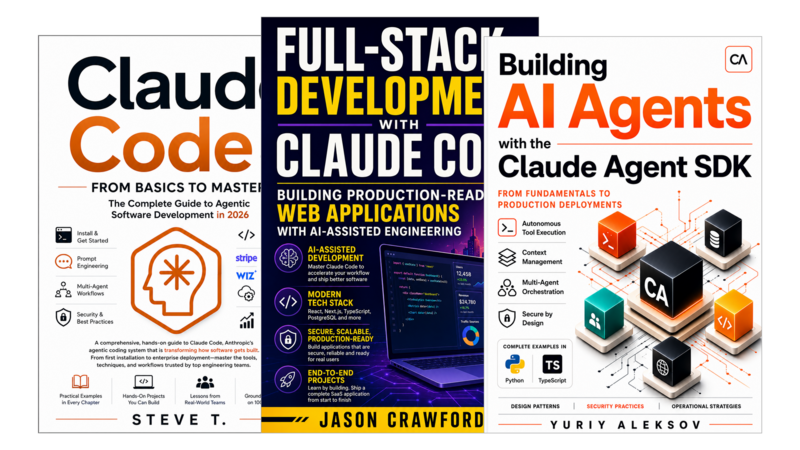



Building Production-Ready Web Applications with AI-Assisted Engineering
Introduction: The New Era of Web Development
Chapter 1: How the Web Works – The Mental Model Every Developer Needs
- What Happens When You Visit a Website – The Complete Journey from DNS to Rendered Page
- Clients and Servers – Understanding the Division of Labor in Web Architecture
- HTTP and HTTPS – How Browsers Talk to Servers (Methods, Status Codes, Headers)
- Frontend vs Backend vs Full Stack – Defining the Roles and Responsibilities
- Static vs Dynamic Websites – The Fundamental Distinction That Shapes Everything
- Why Type Safety Matters – A Brief Case for TypeScript From Day One
Chapter 2: Setting Up Your Development Environment with Claude Code
- The Tools You Need – Node.js, npm, Git, VS Code, and Why Each Matters
- Installing Node.js and Verifying Your Setup – Getting the JavaScript Runtime Running
- Understanding npm and Package Management – How JavaScript Projects Share Code
- Installing Claude Code – Step-by-Step Setup and First Run
- Configuring Claude Code for Development – Settings, Model Selection, and Project Context
- Your First Command-Line Session – Navigating Directories and Running Commands With Confidence
Chapter 3: Frontend Fundamentals – HTML, CSS, and Responsive Design
- HTML Structure – Elements, Attributes, Semantics, and Building Meaningful Pages
- CSS Basics – Selectors, Properties, Box Model, and Making Things Look Right
- Responsive Design Principles – Making Websites Work on Every Screen Size
- Building Your First Page With Claude Code – From Prompt to Working HTML and CSS
- Understanding What Claude Code Generated – Reading AI-Written Frontend Code
- Common Frontend Mistakes And How To Avoid Them
Chapter 4: JavaScript and TypeScript – The Language of the Web
- Variables, Types, and Data Structures – Storing and Organizing Information in Code
- Functions and Control Flow – Making Your Code Do Things Conditionally and Repeatedly
- Objects, Arrays, and Modern JavaScript Features – Working With Complex Data
- The DOM and Browser APIs – How JavaScript Interacts With Web Pages
- TypeScript Fundamentals – Type Annotations, Interfaces, and Catching Errors Early
- Using Claude Code to Learn Programming – Asking for Explanations, Examples, and Refactoring
Chapter 5: React and Component-Based Architecture
- Why React – The Problem That Components Solve in Modern Web Applications
- Your First React Component – JSX, Props, and Composing UI From Pieces
- State and Interactivity – Making Components Respond to User Actions
- Effects and Side Effects – Data Fetching, Subscriptions, and Lifecycle Management
- Building a Small Interactive App With Claude Code – A Task List or Similar Project
- Reviewing and Understanding AI-Generated React Code
Chapter 6: Introduction to Next.js – Bridging Frontend and Backend
- The Problem With Pure Client-Side React – SEO, Performance, and User Experience
- What Next.js Is and Why It Matters – Server Components, Routing, and Full-Stack in One Framework
- Creating Your First Next.js Project With Claude Code – Vite vs Next.js vs Other Options
- Understanding the App Router – File-Based Routing and Layouts
- Server Components vs Client Components – When to Use Each and Why It Matters
- Your First Full-Stack Page – Rendering Data From Server to Browser
Chapter 7: Databases and Data Modeling with Prisma and PostgreSQL
- Why You Need a Database – Persisting Data Beyond Browser Refresh
- Relational Databases Explained – Tables, Rows, Columns, Keys, and Relationships
- Setting Up PostgreSQL – Local Installation or Cloud Options for Development
- Prisma Schema Design – Defining Your Data Model in Type-Safe Declarations
- Migrations – Evolving Your Database Structure Without Losing Data
- Querying Data With Prisma in Next.js – Reading and Writing From Your Application
Chapter 8: APIs, Authentication, and Authorization
- RESTful API Design – Resources, Endpoints, Methods, and HTTP Semantics
- Building API Routes in Next.js – Serverless Functions That Handle Requests
- Authentication vs Authorization – Who You Are versus What You Can Do
- Implementing Authentication With Auth.js – OAuth Providers and Email Login
- Session Management and Protected Routes – Keeping Users Logged In Securely
- Securing Your Application Secrets – Environment Variables and Never Hardcoding Credentials
Chapter 9: The Project – Designing a Full-Stack SaaS Application
- From Idea to Architecture – Requirements Analysis and Feature Prioritization
- Designing the Data Model – Entities, Relationships, and Scalability Considerations
- Project Structure and Conventions – Organizing Files for Maintainability
- Scaffolding the Application With Claude Code – Generating Boilerplate and Initial Setup
- Setting Up Development Workflows – Hot Reloading, Database Seeding, and Debugging
- Establishing Coding Standards and AI Prompting Patterns for the Project
Chapter 10: Building the Frontend – Components, State, and User Experience
- Layout Architecture – Navigation, Headers, Sidebars, and Responsive Shell Components
- Form Handling – Controlled Inputs, Validation, Error Display, and Submission Patterns
- Data Fetching and Loading States – Suspense, Optimistic Updates, and User Feedback
- State Management Strategies – When to Use Local State, Context, or External Libraries
- Accessibility Best Practices – Keyboard Navigation, Screen Readers, and Inclusive Design
- Iterative UI Development With Claude Code – Prompting for Components and Refinements
Chapter 11: Building the Backend – Business Logic, APIs, and Data Operations
- RESTful Endpoints for Your Application – Designing Consistent API Routes
- Complex Queries and Database Relationships – Joins, Filtering, Pagination, and Aggregation
- Input Validation and Error Handling – Rejecting Bad Data Gracefully and Securely
- File Uploads and Media Handling – Storing and Serving User Content
- Background Jobs and Async Processing – When to Defer Work Outside Request Handlers
- Using Claude Code for Complex Backend Logic – Breaking Down Hard Problems Into Prompts
Chapter 12: Testing – Confidence at Every Level
- Why Testing Matters – Catching Bugs Early and Enabling Confident Refactoring
- Unit Testing With Vitest – Testing Functions and Business Logic in Isolation
- Component Testing With React Testing Library – Verifying UI Behavior From the User’s Perspective
- Integration Testing API Routes – Ensuring Endpoints Work With Real Data
- End-to-End Testing With Playwright – Automating Browser-Level User Flows
- Using Claude Code to Write and Debug Tests – Generating Test Cases and Fixing Failures
Chapter 13: Security, Performance, and Production Readiness
- Web Application Security Fundamentals – OWASP Top Ten and How to Defend Against Each Threat
- Input Sanitization and Output Encoding – Preventing Injection Attacks
- Authentication Security – Password Hashing, Token Management, and Session Security
- Performance Optimization – Bundle Size, Image Optimization, Caching Headers, and Database Indexes
- Environment Configuration for Production – Secrets, Feature Flags, and Multi-Environment Setup
- Preparing for Deployment – Linting, Type Checking, and Build Validation
Chapter 14: Deployment, CI/CD, and Operations
- Choosing a Deployment Platform – Vercel, Railway, Self-Hosted Options Compared
- Deploying Your Next.js Application – Build Process, Environment Variables, and Database Connection
- Continuous Integration With GitHub Actions – Automated Testing on Every Commit
- Domains, HTTPS, and DNS Configuration – Making Your Application Accessible to the World
- Monitoring and Observability – Logs, Error Tracking, Performance Metrics, and Alerts
- Production Troubleshooting – Diagnosing Issues When Things Go Wrong
Chapter 15: Advanced Claude Code Workflows and Patterns
- Context Management in Large Projects – Keeping Claude Code Focused and Accurate
- Custom Instructions and Project Conventions – Teaching Claude Code Your Standards
- Advanced Prompting Techniques – Chain-of-Thought, Few-Shot Examples, and Role-Based Prompts
- MCP Servers and External Tool Integration – Extending Claude Code With Specialized Capabilities
- Multi-Agent Workflows and Subagents – Delegating Tasks Across Specialized AI Agents
- Refactoring Large Codebases With Confidence – Using Claude Code for Architectural Changes
Chapter 16: Scaling Architecture and Future Directions
- When to Scale – Signals That Your Architecture Needs to Evolve
- Monolith vs Microservices – Tradeoffs and Practical Guidance for Most Teams
- Caching Strategies – Redis, CDN Caching, and Database-Level Optimization
- Real-Time Features – WebSockets, Server-Sent Events, and Live Updates
- AI-Assisted Development in Teams – Collaboration Patterns, Code Review, and Knowledge Sharing
- The Future of Full-Stack Development With AI – Trends, Opportunities, and What Developers Should Learn Next