


The Leanpub 60 Day 100% Happiness Guarantee
Within 60 days of purchase you can get a 100% refund on any Leanpub purchase, in two clicks.
See full terms...
The Definitive Guide for Users and Builders: Standards, Safety, and Reliability

A practical field guide for using AI assistants at work—and engineering them in production. Learn the standards that prevent “sounds right, wrong” outputs: specs, grounding, tools, evals, guardrails, and cost control.
With Membership
Free!
$29.99
Buying multiple copies for your team? See below for a discount!
About the Book
Engineering AI Assistants is a practical guide to getting consistent, high-quality results from AI—without relying on prompt folklore—and to building assistant features that behave reliably once real users, real data, and real risk enter the picture.
AI assistants are probabilistic reasoning-and-language systems. They can be incredibly useful—until a vague task, missing context, or “fresh facts” requirement causes fluent but incorrect output that slips into decisions. This book is built around one idea: reliability is engineered, not hoped for.
What you’ll learn (and reuse daily)
- How to write prompts as specifications: goal, context, constraints, format, and an uncertainty policy
- How to match rigor to risk tiers (drafting vs internal decisions vs customer-facing vs regulated)
- Grounded workflows for research and synthesis: no evidence, no claim
- How to use structure and schemas to eliminate ambiguity (schemas are seatbelts)
- Tool use done safely: models for reasoning/language, tools for facts/state/actions
- Agent patterns with stop conditions, budgets, and safety boundaries
- Production engineering: RAG done right, evals & regression gates, guardrails/governance, and cost/performance discipline
Who this book is for
- Users (anyone using AI to write, research, analyze, or code): You’ll get repeatable workflows that raise quality and reduce rework—especially when correctness matters.
- Builders (engineers/product teams shipping AI assistants): You’ll get practical engineering standards: retrieval design, tool boundaries, evaluation, monitoring, and incident-ready guardrails.
How the book is organized
Part I — Foundations (New → Competent)
Part II — Daily Workflows (Competent → Productive)
Part III — Power User Patterns (Productive → Professional)
Part IV — Building Production Systems (Professional → Elite)
Appendices (Copy/Paste Library)
In a nutshell, if you want AI results you can defend—and assistant systems you can operate—this book is "the way".
Team Discounts
Get a team discount on this book!
Up to 3 members
Up to 5 members
Up to 10 members
Up to 15 members
Up to 25 members
About the Author
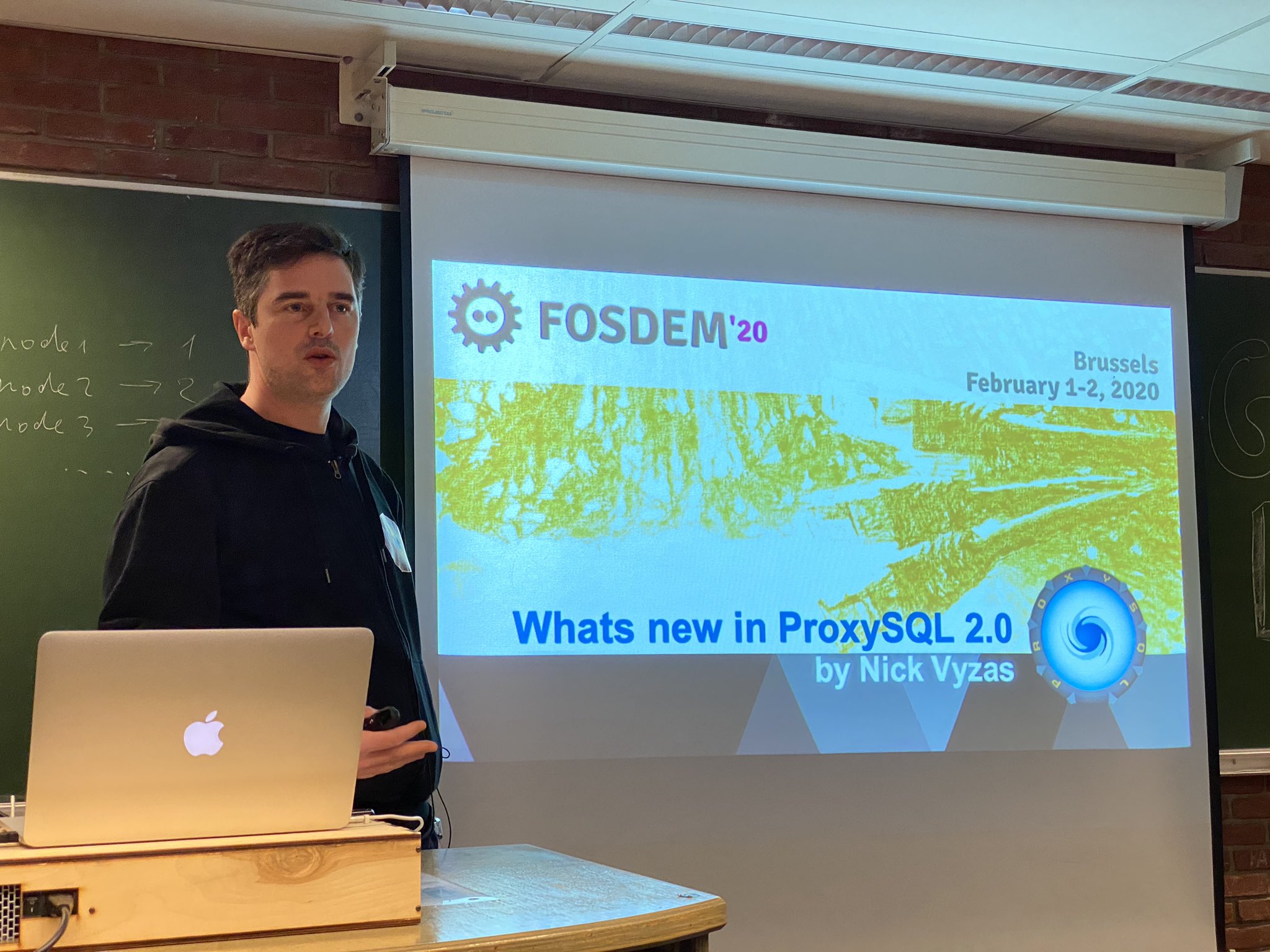
Nikolaos (Nick) Vyzas is a senior data platform engineer with more than two decades of experience designing, scaling, and operating mission-critical data systems. He has worked across ad-tech, fintech, gaming, telecoms, and other high-throughput environments where millions to billions of events per day, strict SLAs, and tight latency budgets are the norm.
Nick’s work spans OLTP, data analytics & AI: large MySQL and MariaDB deployments (including Percona, Galera, Aurora, and ProxySQL), massive ClickHouse clusters, PostgreSQL, MongoDB, Cassandra, and distributed data pipelines built on Kafka and Python. He also specializes in open-source AI solution stacks for production data and ML workloads. He has architected multi-region clusters, blue-green and zero-downtime migrations, high-volume ingestion and compaction frameworks, and observability stacks using Prometheus, Grafana, and OpenTelemetry.
He spent five years as a core maintainer and release manager for ProxySQL, used in thousands of production environments, where he focused on performance, reliability, and safe rollout practices. Earlier roles at consulting and managed services companies put him on the front lines of incident response for hundreds of customer environments, from finance and e-commerce to utilities and large online platforms.
Nick is deliberately vendor-neutral: he cares more about patterns than specific products, and about designs that survive cloud migrations, engine changes, and new AI/ML workloads. He speaks regularly at community conferences, contributes to open source, and has served as a technical reviewer for database and Linux books.
Thinking in PostgreSQL, Engineering AI Assistants and Infrastructure as Code Mastery continue the same theme as his day-to-day work: take the hard lessons from real systems with high complexity and real load, then turn them into practical mental models, checklists, and playbooks that engineers can reuse—whether they’re running Postgres next to ClickHouse, behind ProxySQL, deploying with Terraform, scaling inside Kubernetes, or doing X,Y,Z with whatever stack comes next.
Also by the Author
Within 60 days of purchase you can get a 100% refund on any Leanpub purchase, in two clicks.
See full terms...
We pay 80% royalties on purchases of $7.99 or more, and 80% royalties minus a 50 cent flat fee on purchases between $0.99 and $7.98. You earn $8 on a $10 sale, and $16 on a $20 sale. So, if we sell 5000 non-refunded copies of your book for $20, you'll earn $80,000.
(Yes, some authors have already earned much more than that on Leanpub.)
Learn more about writing on Leanpub
If you buy a Leanpub book, you get free updates for as long as the author updates the book! Many authors use Leanpub to publish their books in-progress, while they are writing them. All readers get free updates, regardless of when they bought the book or how much they paid (including free).
Most Leanpub books are available in PDF (for computers) and EPUB (for phones, tablets and Kindle). The formats that a book includes are shown at the top right corner of this page.
Finally, Leanpub books don't have any DRM copy-protection nonsense, so you can easily read them on any supported device.
Learn more about Leanpub's ebook formats and where to read them
You can use Leanpub to easily write, publish and sell in-progress and completed ebooks and online courses!
Leanpub is a powerful platform for serious authors, combining a simple, elegant writing and publishing workflow with a store focused on selling in-progress ebooks.
Leanpub is a magical typewriter for authors: just write in plain text, and to publish your ebook, just click a button. (Or, if you are producing your ebook your own way, you can even upload your own PDF and/or EPUB files and then publish with one click!) It really is that easy.