About
About Nick Vyzas
Nikolaos (Nick) Vyzas is a senior data platform engineer with more than two decades of experience designing, scaling, and operating mission-critical data systems. He has worked across ad-tech, fintech, gaming, telecoms, and other high-throughput environments where millions to billions of events per day, strict SLAs, and tight latency budgets are the norm.
Nick’s work spans OLTP, data analytics & AI: large MySQL and MariaDB deployments (including Percona, Galera, Aurora, and ProxySQL), massive ClickHouse clusters, PostgreSQL, MongoDB, Cassandra, and distributed data pipelines built on Kafka and Python. He also specializes in open-source AI solution stacks for production data and ML workloads. He has architected multi-region clusters, blue-green and zero-downtime migrations, high-volume ingestion and compaction frameworks, and observability stacks using Prometheus, Grafana, and OpenTelemetry.
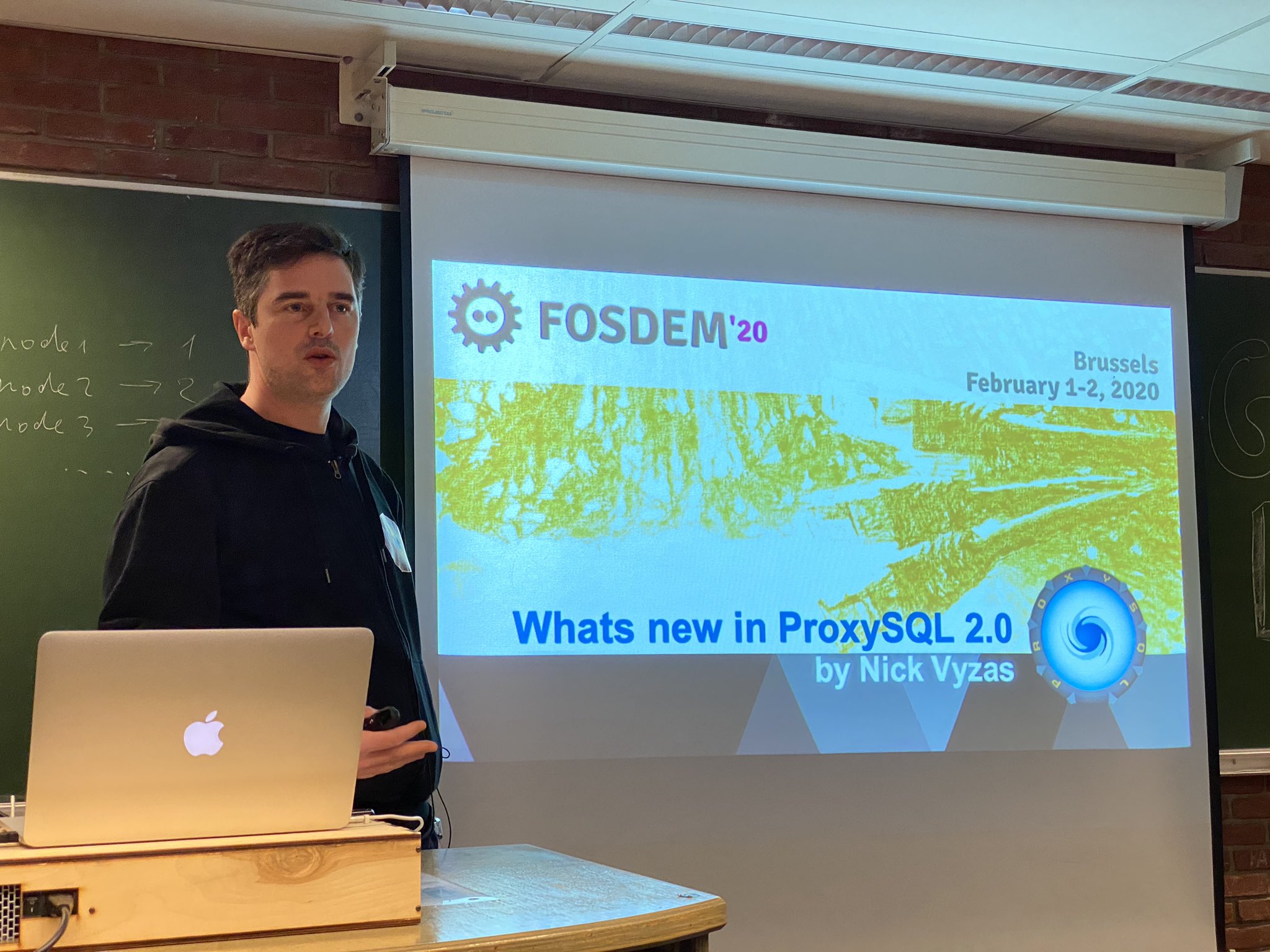
He spent five years as a core maintainer and release manager for ProxySQL, used in thousands of production environments, where he focused on performance, reliability, and safe rollout practices. Earlier roles at consulting and managed services companies put him on the front lines of incident response for hundreds of customer environments, from finance and e-commerce to utilities and large online platforms.
Nick is deliberately vendor-neutral: he cares more about patterns than specific products, and about designs that survive cloud migrations, engine changes, and new AI/ML workloads. He speaks regularly at community conferences, contributes to open source, and has served as a technical reviewer for database and Linux books.
Thinking in PostgreSQL, Engineering AI Assistants and Infrastructure as Code Mastery continue the same theme as his day-to-day work: take the hard lessons from real systems with high complexity and real load, then turn them into practical mental models, checklists, and playbooks that engineers can reuse—whether they’re running Postgres next to ClickHouse, behind ProxySQL, deploying with Terraform, scaling inside Kubernetes, or doing X,Y,Z with whatever stack comes next.
Books
Books by Nick Vyzas
3 books by Nick Vyzas on Leanpub


Find your next book on Leanpub.
Thousands of books, courses, bundles and tracks, updated by their authors as they write.
Browse the store