

The Leanpub 60 Day 100% Happiness Guarantee
Within 60 days of purchase you can get a 100% refund on any Leanpub purchase, in two clicks.
See full terms...
The Engineering Triumphs, First-Principles Physics, and the Minds Behind the Tech Revolution
Minimum price
$9.99
$9.99
About the Book
About the Book
Most biographies of public figures focus heavily on the human drama—personal relationships, childhood psychological wounds, board-room politics, and public controversies. While these elements are crucial for understanding the human narrative, they often obscure the actual mechanics of technological innovation.
The Elon Musk Chronicles is fundamentally different. It is a calculated, systematic sessional audit of Elon Musk's cognitive operating system, exploring how he processes physical, material, and computational constraints to drive some of the most radical technical transformations of the 21st century.
Written in a detached, analytical, and highly structured register, this book translates Elon Musk's industrial milestones into rigorous mathematical and physical parameters. If you have ever wanted to look past the noise of the public square and focus entirely on the high-fidelity signal of the engineering, this is the book you have been waiting for.
Transparency & Honesty: An Important Note for the Reader
Before you click buy, we believe in complete transparency about what this book is—and, perhaps more importantly, what it is not.
Modular and Chronological Structure
The Elon Musk Chronicles spans from 1971 to 2025, arranged in chronological order. However, the chapters are designed to be relatively independent of one another.
This modular architecture allows for a non-linear reading experience. You do not need to read this book from cover to cover to gain value from it.
Each section stands alone as a high-density, technical deep-dive.
What Makes This Book Unique?
Who Is This Book For?
Key Technical Milestones Analyzed Inside:
Dive into the scaffolding of physical and logical laws that support our transition into a multi-planetary, autonomous, and highly connected future.
About the Author
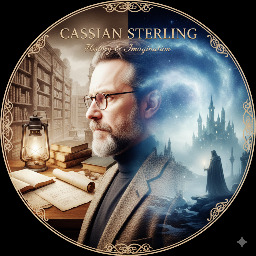
Cassian Sterling writes at the edge of history and imagination. With a career defined by meticulous investigation, he has earned a reputation for deconstructing the lives of the world’s most enigmatic minds, bridging the gap between technical complexity and human tragedy. His fascination with the "unseen"—whether it be the invisible laws of physics or the creeping dread of the classic horror tradition—informs every page of his work. Whether he is decoding declassified government files for a scientific biography or weaving tales of Gothic suspense, Sterling’s writing is marked by a commitment to atmosphere and intellectual rigor.
You can find all my books here.
Within 60 days of purchase you can get a 100% refund on any Leanpub purchase, in two clicks.
See full terms...
We pay 80% royalties on purchases of $7.99 or more, and 80% royalties minus a 50 cent flat fee on purchases between $0.99 and $7.98. You earn $8 on a $10 sale, and $16 on a $20 sale. So, if we sell 5000 non-refunded copies of your book for $20, you'll earn $80,000.
(Yes, some authors have already earned much more than that on Leanpub.)
Learn more about writing on Leanpub
If you buy a Leanpub book, you get free updates for as long as the author updates the book! Many authors use Leanpub to publish their books in-progress, while they are writing them. All readers get free updates, regardless of when they bought the book or how much they paid (including free).
Most Leanpub books are available in PDF (for computers) and EPUB (for phones, tablets and Kindle). The formats that a book includes are shown at the top right corner of this page.
Finally, Leanpub books don't have any DRM copy-protection nonsense, so you can easily read them on any supported device.
Learn more about Leanpub's ebook formats and where to read them
You can use Leanpub to easily write, publish and sell in-progress and completed ebooks and online courses!
Leanpub is a powerful platform for serious authors, combining a simple, elegant writing and publishing workflow with a store focused on selling in-progress ebooks.
Leanpub is a magical typewriter for authors: just write in plain text, and to publish your ebook, just click a button. (Or, if you are producing your ebook your own way, you can even upload your own PDF and/or EPUB files and then publish with one click!) It really is that easy.