8 Continuous Training
“Effective empowerment is the product of freedom multiplied by capability”, according to Jeremy Hope and Robin Fraser.[1] Many managers are intrigued by the idea of empowerment. They advocate for outstanding expertise, give their voice for interdisciplinary teams and support agile methods. In many cases, though, it remains rhetorical empowerment. In the worst case, when it is going about significant decisions, the well-known power structures are restored. Self-organisation is supported in theory, but command and control practices still dominate our daily business.
We find a similar contradiction when looking at the employees. Almost nobody has something against having more freedom. The idea of more self-control and room to manoeuvre is greeted with open arms. However, if it is going about handling critical situations, exploiting opportunities or holding each other accountable, often things look quite different.
Occasionally, true will might be missing. More often, though, the issue is understanding. And most of the time, people fail simply because they are incapable. Because self-organising systems not only need a different framework than traditional environments — they also require different competencies to make the best of these conditions. Just like the new structures and processes that make agility possible, these competencies do not develop by themselves. Nobody wakes up one morning and is an expert.
In my experience, whether the potential of self-organisation can be realised or not depends at least on four factors:
- The knowledge of what self-organisation is about, why it is important for our business and what´s in it for each of us.
- Being equipped with the necessary resources, methods and tools.
- The skill that comes from disciplined practice.
- Professional feedback. Practice alone is not enough. Beyond ongoing practice there needs to be accurate feedback. Ultimately, we must know if we are doing things right and if we are actually improving.
In this regard, metrics are as valuable as experienced coaches, who can help draw the right conclusions from the actual results, their observations and benchmarks. It is a little bit like sports: In order to be successful, top athletes must train certain sequences again and again. For effective improvement, exercise and feedback must go hand-in-hand. Based on their interplay, we discover whether we are on the right path and whether further action is needed before we open a new loop of training, observing and evaluating.
Kata is the Japanese term for this kind of loop. Operational routines that are essential for Toyota’s success are developed under this concept. They are practiced so long that they eventually become second nature. Toyota especially focuses on two things: the continuous improvement of all processes and the consistent coaching of all employees. In Mike Rother’s view, Toyota taps much more power from these two katas than from their organisational structures. While the latter mostly conforms to the traditional model of functional departments and expert silos, the root of sustainable success lies in the continued development of their core capabilities at all levels.[2]
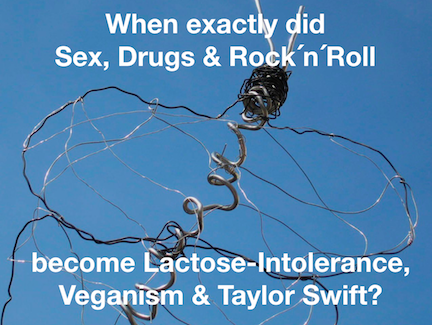
But how does it work if we also want to make our structures and processes as agile as possible? When we want to realise our full potential without hindering ourselves with hierarchy and departments? If we concentrate on smooth value streams and discard organisational overhead as much as possible? In short, how would a Kata for self-organising enterprises look?
8.1 Kata of Self-Organisation
Although there is a dedicated part in this book to the topic of coaching, I would first like to offer some answers right now. In my view, a self-organisation kata includes at least four dimensions:
- The competencies of the employees.
- The support from teams and work groups.
- The competencies of the line managers.
- The continuous improvement of the entire system.
As self-organising enterprises show, employee development focuses on their management capabilities. This could be basic training in self-organisation, like Dutch healthcare network Buurtzorg requires for all new employees, or could be business management trainings like at Semco, or even customer-focused trainings, which are part of the routine at SOL. Beyond this, there could be workshops on consultative decision-making processes, like Morning Star has, or seminars on the topic of peer feedback like at eSailors. At sipgate, the entire advanced training is self-organised: Each employee decides for themselves which two trainings or conferences they would like to attend, publishes their choice on a post-it wall and commits themselves to reporting about their experiences. Along with professional training, personal coaching and peer mentoring also belong to the fundamentals of self-organising enterprises. At Gore, experienced associates look after younger colleagues for a time. As so-called sponsors, they provide important contacts, support professional learning and help master substantial challenges. On the other hand, teams and work groups are supported through kick-off events, team-building workshops or training of facilitation skills. Encouraging open communication helps to develop cross-functional teamwork. Productively dealing with all kinds of differences between people is often far more difficult than expected.
A regular time-out from daily work strengthens self-organising teams and supports their professional development. This can happen informally through joint activities or celebrations. Agile teams also foster their teamwork more formally with workshops. These can either be about social or technical issues: How do we work together? What do we appreciate about each other? What new approaches are there? How can we improve on how we manage our work? It is hardly surprising that addressing these questions requires state-of-the-art facilitation, just as it is hardly surprising that many self-organising companies use the help of professional coaches. The Swiss Federal Railways built up their own Agile Coaching Team (ACT), and the coaching team at Spotify, already includes more than 30 people.
On the other hand, Computest uses expert and process coaches that were line managers before, but now concentrate on a broad range of company-wide services. ImmobilienScout24 took the opposite approach. Over many years, a specialised team of Scrum Masters and Agile Coaches was used. As more and more conflict arose with line managers due to their taking over more and more responsibility for organisational development, the company chose a new set-up. In the process of reorganising along market segments, the leadership responsibilities were not only reduced, but a so-called Engineering Manager position was created, a hybrid of Scrum Master and team leader, who acts as a coach and captain. Traum-Ferienwohnungen implemented their own organisation developer, who manages all aspects of their ambitious change towards self-organisation. Likewise, the Stämpfli Gruppe is also preparing to engage an internal change agent to design their agile transformation.
In contrast to employees and teams, well-designed management training and coaching programs are rare. Helping traditional managers get accustomed to the agile world needs far more than just individual events. Year after year, investing only one or two days in the newest hype is definitely too little. Almost everywhere, there is a growing sense of urgency to overcome the traditional roles as administrators, commanders and controllers and instead move towards being designers, facilitators and coaches.
As designers, managers are responsible for setting the right boundaries and providing a supportive context: appropriate structures must be established, obstacles moved out of the way and bottlenecks resolved. As coaches, managers are supposed to accompany, rather than direct, their employees. At Harley-Davidson, even former vice presidents understood themselves to be such advocates. They supported their work groups without relying on hierarchical authority. Leadership was understood as a service and pulled in rather than imposed. The important thing is that managers lead the way by seeing themselves as learners, and commit themselves to mutual improvement. Instead of formal trainings at Gore, there were so-called Socratic dinners where company founder Bill Gore facilitated discussions about leadership principles with various associates.
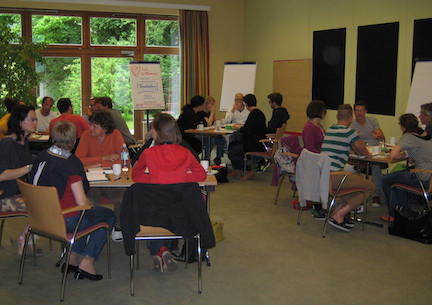
As previously described, the manager´s role as choreographer is mostly about improving the entire system. On one hand, such improvement occurs through flow-based coordination across teams and divisions. Above all, though, it is important to strengthen the ability to professionally facilitate large groups.
In addition, the choreographer is responsible for improving the entire organisation. State-of-the-art change management is at the top on their agenda. The need for ongoing change results from many factors: ensuring growth, focusing on the market, vitalising customer relationships, responding quickly to new challenges and so on. However, I believe the deep changes that come along with any journey towards self-organisation cannot be accomplished without strong emotions. In my view, such emotions are literally the dynamo for keeping a company in motion.
8.2 The Power of Emotions
The experiment started in 2011 at the Volksbank Heilbronn is a perfect example of this. Returning to cooperative basics, organisational structures were radically modified: Solidarity was nearly absent in the existing set-up, as was self-management or individual responsibility. It was clear that more than a few superficial changes were required in order to bring these values back in order. What does a customer truly need from a bank these days? How must a bank be organised if it wants to deliver the service customers expect? And how do we help employees with different tasks, ideas and characters work together autonomously?
It was quickly realised that deep change was needed in order to answer these questions. And this change was driven forward. The middle management underneath the executive level was completely replaced by expert leadership, the airy-fairy strategy made by managers only was replaced by an interdisciplinary feedback circle, and the individual bonuses were replaced by a team-oriented salary model.
Deep changes often provoke strong reactions. In an article worth reading, two Volksbank Heilbronn managers wrote about the wide range of behavioural patterns that were affected by this change.[3]
- Passiveness: Employees do not actively take part, rather they take a wait-and-see approach. Following the motto: We’ll see where it takes us!
- Lack of Orientation: Even after a long period of observing, the way was anything but clear for some people. What exactly is expected from them? And what is no longer expected?
- Resistance: In those areas where good results were already being achieved, the people were unsure what good the change should bring. Why should something that obviously works well be turned upside-down?
- Reorientation: Employees and managers that did commit to change left the bank.
- Loss of Perspective: For all those who cared about social status and power, there were no longer many possibilities. With the removal of the hierarchy also went the classical career ladder.
- Identity Crisis: By replacing the hierarchy with a process-oriented organisation, many job titles became pointless. How do you explain at a party that you are no longer a powerful department manager but a regular employee? And how can you cope with the fact that the familiar network of superiors and subordinates is gone?
“Not every employee is ready or able to self-organise. The new freedom that comes with having autonomy and taking over responsibility, while at the same time removing the hierarchy, is not seen by everyone as an opportunity”, Gysinn and Capriuoli concluded. The paradox that freedom requires more leadership rather than less can be explained through the dynamic of deep change. Without appropriate boundaries, without professional facilitation, and without personal coaching, we support chaos instead of self-organisation.
Hartger Ruijs, CEO of Computest, the Dutch testing and security specialist, came to similar conclusions.[4] In his interim appraisal a half-year after he started Computest´s journey towards self-organisation, he acknowledges the emotional impact. He advises everyone considering such an experiment to not underestimate the importance that job titles and positions have for some people, and accept the fact that some people will leave. According to Ruijs, not everyone feels comfortable in a self-organising company. This can lead some people to decide for a different direction, but can also make it clear that some do not fit into the new structure. If a former CTO is relabelled as a performance coach, or the sales manager as a consultant, you should also be prepared that not everyone will be immediately happy with this. All the more important that your vision is implemented in detail: Why self-organisation? What does it mean for our customers as well as for our employees? And how is your own role as a CEO supposed to change? A new organisation cannot be created with the wave of a hand. Rather, all existing systems, contracts and rules must be incrementally changed and the new expectations towards teamwork must be communicated. This is the only way to clarify how you expect people to behave and collaborate in the future.
No motion without emotion is the point—and we need to remind ourselves that changes come with their own dynamic. On one hand, like the example of the Volksbank Heilbronn shows, you should be prepared for a wide range of very different emotions: positive emotions such as spontaneous commitment, willingness to experiment or even enthusiasm, but also negative emotions such as confusion, uncertainty and fear. With this perspective, it is easy to understand that many have mixed feelings about the transfer of authority. As always, if we shake the foundation professional self-esteem, manifested in specific roles, responsibilities or job titles, we are asking too much of some people and will alienate others. Despite the goal to improve the whole system, these changes are taken very personally. Almost like a reflex, three questions immediately arise with every deep change.[5]
- Do I need to change? Do I understand why our company wants to self-organise? Am I bound to this form of organisation, or are there alternatives? And is this now permanent, or will it also pass like many other fashionable methods have before?
- Am I able to change? Can I cope with self-organisation? Do I have the necessary competencies needed for it? What are my chances for good results? Will I be able to continue delivering good results?
- Do I want to change? Is self-organisation interesting enough? Is there a risk of losing money, relationships or career perspectives because of it? Or can I perhaps profit from it?

The range of emotions these questions churn up, just like market dynamics, are unable to be controlled. “Spirits that I’ve cited, my commands ignore” you might know from Goethe’s poem The Sorcerer’s Apprentice. Which begs the question, how you can use these spirits in a productive way? What should you pay attention to in order to avoid any unexpected surprises? How can you ensure the necessary amount of certainty that every experiment needs for it to be successful? And on what can you build yourself, when you are about to change?
Part III of this book should give you trend-setting answers to these questions. It follows the observation that coaching is an essential service in self-organising enterprises. Coaching is a chameleon-like phenomenon, though, showing up in various forms: as peer coaching between professionals, as personal feedback between peers, as explicit help from a manager or as a sparring partnership between a manager and a coach. Although coaching shows up under many different names, all these forms have something in common: the professional help to effectively deal with business challenges. What exactly stands behind this, why such support is important in self-organising enterprises and how they ultimately function, you will find out on the next pages.
Key take aways from this chapter
Whoever wants to support autonomy cannot avoid changes in management. It needs training in order to strengthen the necessary capabilities in all areas. And it requires discipline to practice what we have learned, until it becomes second nature.
In this chapter, you learn what you need to pay attention to if you want to strengthen your entrepreneurial fitness. Volksbank Heilbronn, Computest or Stämpfli have shown how this can be accomplished and what challenges can be expected. After all, it’s going about designing for deep change, which questions many things and requires effort to answer these questions.