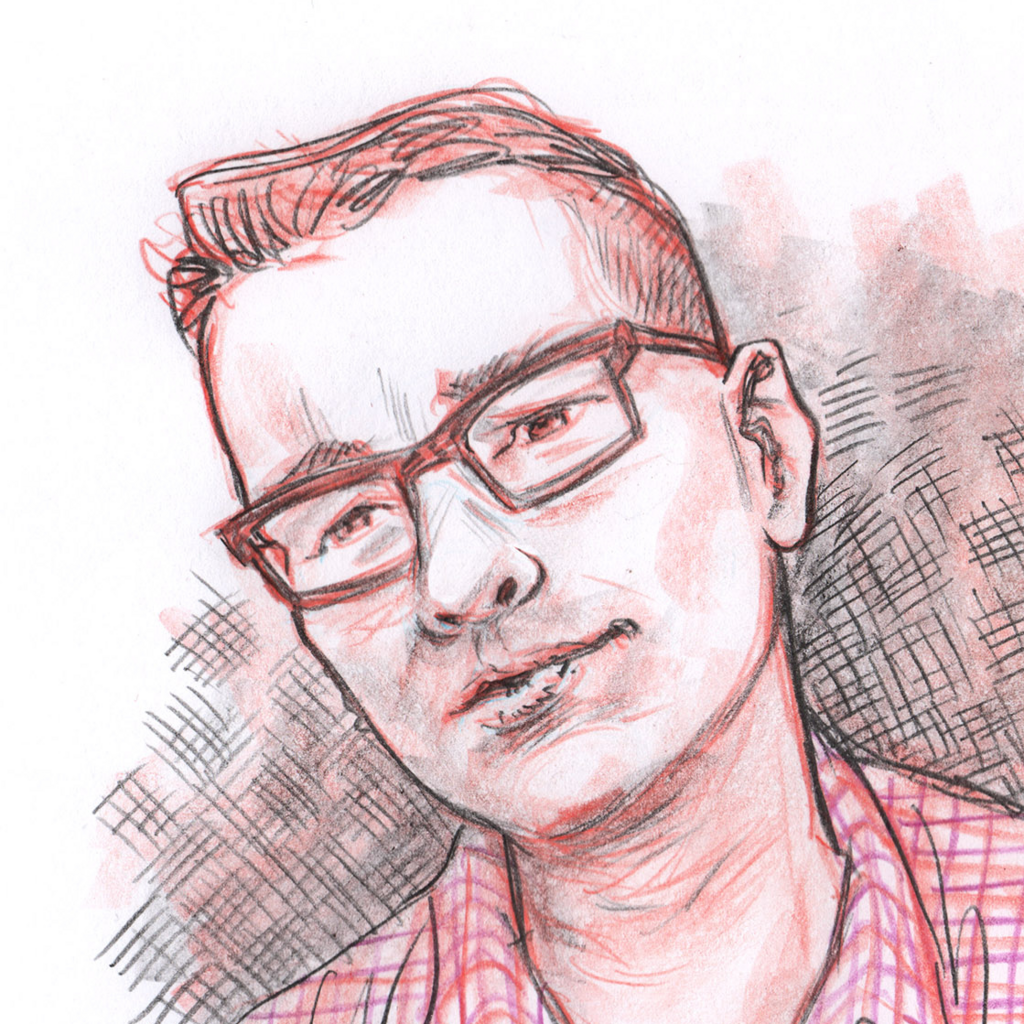
Noah Gift, Co-Author of Minimal Python
A Leanpub Frontmatter Podcast Interview with Noah Gift, Co-Author of Minimal Python
Books by Noah Gift on Leanpub


Noah Gift is co-author of the Leanpub book Minimal Python. In this interview, Leanpub co-founder Len Epp talks with Noah about his background and career, how he got his start in television and film production, using his self-taught Python programming skills to work on movies like Avatar, online learning and universities, remote work and prod...

Noah Gift is co-author of the Leanpub book Minimal Python. In this interview, Leanpub co-founder Len Epp talks with Noah about his background and career, how he got his start in television and film production, using his self-taught Python programming skills to work on movies like Avatar, online learning and universities, remote work and productivity, his approach to teaching programming in Python, his books, and at the end, they talk a little bit about his experience as an author, including his advice for how to manage your mood, when you're writing your first book.
This interview was recorded on April 17, 2020.
The full audio for the interview is here: https://s3.amazonaws.com/leanpub_podcasts/FM151-Noah-Gift-2020-04-17.mp3. You can subscribe to the Frontmatter podcast in iTunes here https://itunes.apple.com/ca/podcast/leanpub-podcast/id517117137 or add the podcast URL directly here: https://itunes.apple.com/ca/podcast/leanpub-podcast/id517117137.
This interview has been edited for conciseness and clarity.
Transcript

Len: Hi I'm Len Epp from Leanpub, and on this episode of the Frontmatter podcast I'll be interviewing Noah Gift.
Based in Raleigh, North Carolina, Noah is the founder of Pragmatic AI Labs, an author who has published books with publishers including O'Reilly and Pearson on topics from AI and Machine learning to Python and DevOps. He's also a lecturer for the Master's in Data Science program at Northwestern, for the MIDS Graduate Data Science Program at Duke, and the Graduate Data Science program at Berkeley, as well as programs at UC Davis and UNC Charlotte.
In addition to his work for many companies listeners will recognize, from ABC to AT&T, he has also done technical work on some movies we're all familiar with I'm sure, including Avatar and Superman Returns.
You can follow him on Twitter @noahgift, you can check out his website at noahgift.com, his Pragmatic AI Labs YouTube channel and the website for Pragmatic AI Labs at paiml.com, and finally you can find links to his latest books and video courses on his profile page at leanpub.com/u/noahgift.
Noah is the author or co-author of a number of Leanpub books and bundles, including Minimal Python, Testing in Python, and Python Command Line Tools. .
In this interview, we’re going to talk about Noah's background and career, professional interests, his books, and at the end we'll talk about his experience as both a conventioinally published and a self-published.
So, thank you Noah for being on the Leanpub Frontmatter Podcast.
Noah: Happy to be here.
Len: I always like to start these interviews by asking people for their origin story. You've got a diverse background, and so I was wondering if you could talk a little bit about where you grew up, and how you found your way to a career in tech?
Noah: Yeah, I definitely have an interesting, non-conventional background.
I started in Southern California, that's where I grew up. My dad was in the television industry. He was an editor for ABC Network News, Entertainment Tonight - I think 20 years? A lot of developers will talk about how they learned to program when they were a kid, because their dad was a programmer, or their mom was a programmer. But in my case, I was learning to do television, because that's what my dad did. So I grew up doing mics and lighting and camera work, and editing stuff.
It was an interesting perspective for me, because I learned how to work from a very young age, like ten. At about ten years old, I think I was working in my dad's company.
And then it culminated - by 18, I think I was working for ABC Network News myself, as a freelancer. I would edit videos and work with people in their forties and fiftiess, and patch live television in. I edited stuff for the OJ Simpson trial. It definitely was a very good perspective for me to get a feel for what it's like to make money early, and also what it's like to be self-sufficient.
It kind of culminated - I remember, I was driving home from LA one day and I was like, "Wow, I just made $500 today. That's a lot of money." And it felt good. It was a good feedback loop of - to get paid early, and basically, to get paid based on things I had taught myself, right? They didn't teach you television production in high school.
And there was a period, actually, where I briefly considered just doing that. They actually offered me a job to work full time. And it was tempting. Because at 18 - this is in 1993 - that's a lot of money. $500 a day is a lot of money. And a union job, all that stuff.
And I just had this goal where I wanted to get a Master's degree, it was just this kind of arbitrary goal, because nobody in my family had actually gone to college, so it was a bit of a goal. And so I turned them down, and went to college.
And I remember, actually, my dad telling me, as he dropped me off in college - he gave me a very anti-motivational speech. He was like, "This is a very bad decision, and you're going to regret it, and I don't approve of you going." I just remember thinking, "Wow, that's harsh. That's harsh." I think it ultimately did pay off, because I'm in the education space now. I see his point, which was that, "Look, you already have a career, why are you going to college?"
So then in college, I studied nutritional science. And the reason I did that was, I've always been a decent athlete, and that was part of the reason I wanted to go to college, too, is, I had just enough athletic talent that - there's a few sports that I was good at, like track, football, basketball - and I tried to make a go of it doing the decathlon in college, and then I didn't actually make the team. I was a failed walk-on.
That was also a good experience for me early - to have this idea of myself, where I was basically invincible, I could do anything I wanted, I was a super athlete, I didn't really need to spend years perfecting really difficult techniques like javelin and pole vault, I could just do it.
And it turns out you can't. Like, it doesn't matter how good you are athletically, there's skill involved with things. So that was a really good humbling experience for me.
And then when I graduated from college, I shifted gears and - I mean, there was a brief period of time actually where I was training to play professional basketball. And it was an accident that I actually ended up working at Caltech.
I had these two different things. I had the athletic part of me, and then, I was interested in computers. A lot of my friends in college were Computer Science majors, and I would do some programming while I was in college.
But kind of as a backup plan, I had applied to work in IT at Caltech. And for some reason, they gave me a job offer.
Then, I had to make a decision: do I want to basically bet on being a really bad basketball player who would make $20,000 a year? Or work at Caltech? So I decided to work at Caltech. I spent several years there.
And that was actually when I learned Python. This was like 2000, and a lot of the people I was friends with were actually Python programmers. So I would play Ultimate Frisbee at lunch, and a lot of the people would also say, "Hey, you need to program with Python." Then I thought, "Oh, I'd better do this or they won't be friends with me." And that's kind of how I picked up Python.
So here's another skill where it wasn't something someone taught me. I learned it, and it turned out to be a great skill. Because when I left Caltech and went back to working in the LA area, I started to work in live TV - in fact, Python was a big deal. So I worked in a lot of live TV scenarios, like Big Brother and Average Joe, all these kind of reality shows, where I would put together these high-end editing systems and troubleshoot them. And it would run like 24-7 - they're just constantly cranking out these things.
And then from there, I shifted to work at Disney Feature Animation. So really, it was the combination of all these self-taught skills that I had - which was Python, TV production, Unix, Linux - all this stuff that I didn't learn from traditional education, got me that career.
And then from there, I shifted into working at Sony Imageworks. That was kind of fun, because I got to play basketball at lunch with Adam Sandler like once a week - definitely a kind of a cool environment.
And then from there, I kept going, and ultimately ended up at Weta Digital in New Zealand working on the movie Avatar, which was really cool. New Zealand's a great place. I lived there for a year, and also did a lot of Python, a lot of dealing with big data.
Film, in my opinion, is actually the first real big data industry. Maybe petroleum? I think I've heard people say that as well. But film, they've had centralized file servers - we'll call it "data lakes," for a long time. And also, render farms - which are basically spot instances on AWS, or the equivalent of that.
So, after I ended up spending a year there working at Weta, I decided to go back to the United States, and then ended up in the Bay Area. I then spent ten years in the Bay Area - I worked a little bit in film, but then mostly switched over to startups.
I worked on games, mobile companies, software-as-a-service companies - and ultimately ended up running a company as a general manager for several years; that was a sports social network.
There was definitely a period where we had a chance of going big. We were partnered with Bayern Munich, which is one of the largest soccer clubs in the world. We had tons of famous people using our platform. Like Brett Favre, and Tim McGraw - it definitely had a period of time where it was a big deal. In fact, Facebook actually was really angry at us, and threatened us. And that was definitely a good - that's a good sign when they're angry at you, and they want to take you out. Ultimately, the company didn't work out; that was 2016.
Then I shifted into doing consulting. So from 2016 to currently, I've done a lot of consulting, where I would work maybe at two, three companies at the same time, either doing CTO-level stuff, or writing code.
There's a lot to like about that. I actually like spending one or two days, and maybe building an entire company in three months, where you don't have to really do anything but write code. It was actually very refreshing.
Around that same time, I accidentally got into teaching. I had a former professor that invited me to teach machine learning. I was also writing a book for Pearson at the time, the Pragmatic AI book.
And then from there, I kind of shifted more and more into doing teaching and lecturing.
Now I'm, I guess in a way, kind of doing the consulting thing with teaching, where I teach at all these different universities.
What's interesting about education is that it has some strange things where they - they've made everybody adjunct professors. But for me, as somebody that likes consulting, it's awesome. I think many universities don't expect someone's really excited to be an adjunct professor. But for me it works out great, because I like the feedback loop. I think of it more like a start-up. The universities and the students are my customers, and I listen to what they need - and then I create content, I create books around that. So for me, it works out really well.
Len: Thank you very much for sharing that great story. We could spend a long time unpacking a lot of that, including the decision to be in California, when the World Wide Web was exploding, and studying nutrition.
I've got to say - one thing I really empathized with in your story, is having a parent who's unhappy with your university choice. I studied English Literature, and my mom was directly unhappy in the same way that your dad was. And my dad was just like, "I'm sorry to know that you're going to be poor."
I ended up getting a doctorate in English Literature and becoming an investment banker after that - so just for anyone listening, Hank Paulson, the former Goldman Sachs CEO, studied English - and Noah studied nutrition. So there's a lot of paths you can go down in life, and the choice you make when you're 18 doesn't necessarily lock you into a particular job.
But I guess, skipping sort to the third act, you write in your book that you've got in progress on Leanpub, Red Yellow Green: What Color is Your Money? The Survival Manual for Gig Workers and Consultants, that you actually made this decision to become more autonomous and independent, very deliberately. I was wondering if you could talk a little bit about what the actual story was there?
Noah: Yeah. Part of it is that having spent a lot of my life working for other people - I did a little bit of consulting, where there's a stretch where I did do work for myself a bit - but one of the things I realized is that betting on other people is not great. Because if it turns out that they don't win, or they don't do the right thing, then you suffer. But if you're betting on yourself and you don't win, it's your fault. It's really simple.
One of my friends is an Olympic high jumper, and we talk about this - that what's so great about track, or the Olympics, is that - look, it's nobody's fault. If you don't make it to the Olympics, it's your fault. That's it, it's real simple.
I think it's a good way to think about your career, even if you're not working for yourself, is, "Is success something that is in my control? Or is it in the control of other people?"
That was a big thing for me, to design things so that it was distributed. So that I had multiple consulting clients, multiple forms of income - and that it's impossible for me to be fired, it's impossible for me to not be successful. Because there's many different things I'm doing intentionally, that make it difficult to not be successful.
Versus, if you're just working for a company, it's possible. It's like rolling the dice. It's like, "Hey, sure, if the dice rolls out, it could work out great." But I like the 100% strategy, where there's 100% chance you'll be successful by planning it out.
In the case of consulting in particular, what I like - when I was purely doing consulting, I called that the "Yellow Money". It's not green. It's not the perfect scenario, but at least if you have three or four clients; if one of them doesn't pay you, or turns out to be a bad person, or whatever problems come up, or they go out of business, it's not a big deal. You have three other clients.
I think that's - today especially, as many people are laid off, and there's all these things happening - hopefully that's something that people think about, is, "I can actually - this is a choice. I can design my life to actually have diversification of my income." And you can do it in a very simple way with consulting.
And then, ideally, if you do something like Leanpub, or you write books - you also can further diversify, because you have this other asset that's paying you money. That's the "Green Money" while you're sleeping.
The feedback loop can be really good where you're consulting. You're actually getting sharper than you are at a single company, because you're learning two or three or four things at the same time.
And then if you take that knowledge and put it into a product, like a self-published book, a mainstream book, a video - you actually have this great feedback loop, where you're completely diversifying what you're doing, and you're protecting yourself.
Len: One thing you've written about that really resonated with me was, and this is - I think this is particularly true in the United States - but the hierarchy that comes from working for someone else, that you're essentially supposed to compliment and please your boss, that this is a very important psychology. And I've got to say, this is - it's not like that everywhere. This idea that your boss has the social right to adopt a moral superiority towards you.
And at the same time as you make that sacrifice to them, you sacrifice your career to them, because the choices they make are going to determine your career. So you can work 100 hour weeks every week for two years, sacrifice your family, sacrifice your holiday time - and end up failing for no reason of your own.
But also, you can do all that and then summarily get fired over Zoom, with no good explanation. And so, there are all these other factors that go into making this decision to become autonomous, as well as the financial independence.
Noah: Yeah and I guess - I hadn't really heard of Seth Godin. Is it Seth Godin, is it how you pronounce his name? I had maybe heard of him, but recently someone told me, "Hey, what you're saying sounds like some of the things he's saying." And then I looked at one of his videos and I realized that, yeah, I agree very strongly with some of the things he's saying - and one of them is this idea of obedience.
Sure, don't be a troublemaker at your job and cause problems. I mean, that's obvious. But I think it's also good to not do what you're told. I tell this to students as well.
One of the things that happens in companies, especially with technology, is someone, the boss, will tell you what you should learn, and what you should study. I think there's no worse thing you can do than to listen to what you should learn and what you should - and we were just talking about this with our degrees, the same thing.
Really, you should have a passion for what it is that you want to learn, and do it. Because you're passionate about it, it will work its way out. It should be something that potentially is even the opposite of what your company is doing.
Let's say your company is a .net company, maybe you should be studying Python on the side? And maybe even your boss doesn't like it. That's even more reason to study it. Because you're already getting the opposite signal, which is someone's telling you how bad it is. Now get another signal, so that you can actually learn something that's completely in a different realm, than what you're learning at your company.
Len: Yeah, and one important thing to remember, is that people who dispense advice like that never follow up, and don't care about what happens to you in the end anyway. It's not like they're going to apologize and try and make up for it if they were wrong. So yeah, listen to what people say, but don't necessarily do what they say.
And so, you talked about university education, and the fact that you like being an adjunct lecturer. I, having a doctorate myself, and having lots of friends who are professors - I'm somewhat aware of the issues here, and I wanted to take the opportunity to talk to you about this. Because a number of things are changing in our time, and things that have been changing, like - well, we can talk about remote work in a little bit, but remote learning has been vastly accelerated by the COVID-19 emergency.
I should mention we're recording this interview on Friday, April 17th, 2020 - and lots of things may have changed by the time you've heard this. But a lot of people from elementary school to high school to university have gone to online teaching.
I guess I don't know if I have a very specific question to ask you about this, but what's your experience been with online teaching in the last month?
Noah: It wasn't really a big deal for me or a big shift, because of a couple reasons.
One, coming from the software industry, my experience has been, I work extensively with global teams already. And the teams were - there would be people in South America, there are people in Eastern Europe, there's people in San Francisco.
And in particular with software, especially one of the things I've enjoyed as an individual consultant - I mean, I had 100 people that I had to manage at one point. And what's nice about individual contribution is that you can really get things down to what are you producing, right? Like if I'm a consultant, and I don't write software for somebody - that's bad, right? They're not going to be happy. They're not going to want me to do consulting.
I think with teaching, the remote stuff - it really does get things into, what's the artifact, or what's the thing you're producing? It turns out that in some cases, maybe there wasn't something that was being produced. And it's becoming - it shines a light on, maybe, an area.
The courses that I've taught had really just been designed to be remote async first, from the beginning. I was not like some genius, and I picked up all this on my own. I definitely learned stuff from courses where I learnd a lot of stuff - actually from Northwestern, in fact. They taught me a lot about learning, teaching remote courses.
One of the things that's interesting that I do, is I encourage the students to do weekly demos. Every course I teach - like data during capstone, AI engineering, cloud computing - whatever course I'm teaching, they have to create weekly artifacts of what they're doing.
And the reason for this, is so that they're creating a portfolio. And they're also learning to express their ideas. So, "Here's what I'm doing. I wrote a Flask app and it, it's importing adjacent payload, and then I do machine learning on it - and here's the result."
That is very different, I think, than if you're in a classroom and you're giving a lecture, which is passive, and then they give you the assignment, and the students don't get to see it.
So that's the other thing I do - all assignments and all projects are seen by everybody, and it's a discussion. I think those are two relatively straightforward ways that I've seen massive changes in adoption of, or success, is that you make it artifact-based, so there's always something that's being produced - written documentation, videos.
And also that, instead of me teaching, it's a distributed computing problem. All the students are nodes as well, and they're teaching. And so then people learn at a rate, I think that's on more of an exponential learning rate, than just the teachers telling you something, and then you just absorb it, and maybe you get 1% of it.
Len: You mentioned async. I was wondering if you could talk a little bit about what that means in the -? Obviously "asynchronous", but I mean, in the context of online education?
Noah: One of the things is that, if you give someone weekly - just like in a software team, I'm assuming a lot of people that are listening to this are probably from a software team - you realize, generally it's pretty straightforward. You take a ticket off of a queue. You work on it, maybe have two or three tickets you work on in a week. That's async, right? That's an async workflow. You don't really need to talk to anybody.
And then on Monday, hopefully you finish your tickets and you demo it. So it's the same concept, right? That the students are taking essentially tickets, or they're given a task to do that week. They work on it. If they did it on Monday or they did it on Thursday, it doesn't really matter. And then there is a sync, there's a sync that happens.
But really, everything can be done without a human being there. I think that's the part that's very different about some of the stuff I'm doing, that I've found to be very successful.
Len: I've got a couple of COVID-19 random kind of questions about your opinion. None of us are experts in the future or even in the present, but I did want to ask you about what you think might happen to university education going forward?
Because like I said, one of the ways of interpreting what's happening, is an acceleration of changes or pressures that were already there. And in particular in the United States, university education had become incredibly expensive. There's a proliferation of, let's say, basically Trump Universities.
But also at the same time, the other side of that coin is the really aggressive, systemic celebration of people with brand-name university degrees. So, basically - if somebody gives you a place at a certain university when you're 17, you're set for life, because other people will pull you along the same path they were pulled along, because they had the same 17-year-old experience.
What do you think is going to happen to university education in the United States going forward? Do you think there will be a permanent change? Do you think we'll go back to the way things were six months ago?
Noah: I do think there will be a permanent change. And the things you brought up, I agree with. I mean, if you look at this idea that there's a brand name university - and because you went there, it means something. The world is getting savvier about data, right? And if you even look at a signal, unfortunately one of the signals for top universities is actually how rich your parents were. It's not a great signal. That really is not a good look.
I think if that's the only thing that a top university has got going for them, they may have to fix that really quickly. We see some examples of this in the current environment. The current presidential office holder has people in his family who went to Harvard, and based on - I mean, this is all public knowledge - it looks like, not merit-based, right? It was more financial-based. And they're making very important decisions about potentially life-and-death situations. And that, I don't think, is great for the brand of a top university. So there's that.
Then in terms of the cost structure. If you look at some of the things that have been happening, especially just take the UC system - University of California. I think it's from the '90's until currently? There was a period where things were relatively stable. And then the costs started growing. It's either linear or super linear. And if you dig into it, there was something I was reading about from UCLA, that it's really the head count, right?
And it's Parkinson's law, is that the word for this - work expands to fill the people doing it, or something like that. And so this idea that university administration salary, plus the headcount's just constantly going to grow. And if you look even at the UC administration, they have people making triple, I think, what the President of the United States makes. So I don't think that's a sustainable structure.
And then if you look at the housing crisis in California in particular, it really - because of other problems like property taxes don't go up, there's rigid - all these other issues.
Then you have the lower end of the spectrum. You have a TA who's trying to get a PhD. And then they're getting paid 17 grand, and then the president of the university makes 750. That whole structure seems like it's kind of kindling.
And then if you look at who's coming into the university system - often the only people that will pay full tuition, are people from outside of the United States. So it feels like - is that the core mission of something like University of California? Is it really to charge very expensive rates to people outside of the United States? It seems like maybe that's not - that should be something, but is that the entire mission of - let's say, the University of California?
Len: Thanks very much for sharing that. I think I agree with most of what you said, and I could talk about it forever. But just one thing I should note for people listening who never had the experience of being a graduate student. A TA is a teaching assistant, and that's somebody who is studying at the university at the graduate level - either Master's or PhD, and they get paid to do a bit of teaching to help them along, and give them some teaching experience.
But yeah, I call the phenomenon you're describing, "admin creep." Like "mission creep," where it just kind of - administrations starting in, I think, the 80s, just started growing and growing and growing. And one thing I'm - I mean, I don't want any - It's never nice to think about people losing their jobs. But at the same time, it's never nice to think about 18-year-olds going into debt to pay for someone's high-paid position that's unnecessary.
One thing I think that's going to be exposed, as people all are getting experience doing online learning now, is how many positions at universities exist, that really only exist for their own sake. And it will be a - yeah, as you say, "kindling" might be exposed for what it is. And hopefully in the long run, that will be good for a lot of people.
Similarly, people are experiencing remote work now. Many people who are - sorry, I should say - many people are experiencing remote working, who weren't before - and are learning a lot about that. Just generally speaking, what are some of your thoughts on that subject?
Noah: I think that remote work - I definitely went through a period of time where I - having been a manager for a lot of my life as well, there was a period of my life where I was like, "Oh, it's hard to know what someone's doing, if they're at home." But having done both - managed people remote, and then also done it as a consultant - where literally I'm paid, whether I'm effective or not - it's really cutthroat. If somebody's hired, paying you by the hour to write code - you'd better be doing great work, or they're not going to pay you anymore.
I think the productivity level is off the charts, at least for me, for writing software. I would say, it could be close to 10 times more effective, it really could be. Because of the fact that - if you really know what you're supposed to do, if you have a clear list of things and you're grabbing it from a queue - you don't have to talk about stuff. Like, "Hey, how was your weekend?" All this stuff, it goes away. Not that it's not good to make friends with people, but that's a separate thing. People are using the office to be friends with each other. If we're really getting down to it, that's actually impacting productivity too.
A lot of the meetings that get called, there's a lot of - you just said it, the admin bloat - it happens as well in organizations. And there's like three or four - I call them "runners," who are just kind of running around. And they’re like, "Is it done yet?" And really, you don't have to deal with those people anymore, because you're at home.
And you can actually turn off Slack. You have control over your productivity.
I think that's one thing that many organizations - if they're managed correctly and they're - part of the problem is that - I'm talking more about software teams. But if you're able to clearly give people tasks at the beginning of the week, really, there should be very little interaction after that. I mean maybe if two developers are working on a piece together, they need to have a quick Slack conversation or something? But really you can kind of harness - even say, "Look, give me four hours of writing code every day," that's just sustained effort, "And that might be five times or two times better than what you get in the office."
In my experience with a lot of the stuff that happens in offices in the Bay Area or whatever the location is - there's people yelling, there's all these people walking by. You can't concentrate. You have to wear noise-cancelling headphones. It's really like the worst possible place to get anything done that's intellectual. So I think it's potentially also kindling.
Len: There's so many deep issues there. I mean, in particular - I'm totally with you on the productivity thing. And that's not just programming, but all kinds of different jobs. I mean, just thinking about the amount of time thrown away in a person's day, and mental energy, by commuting.
Noah: Yeah, commuting.
Len: I remember one time when I - I have had a couple of office jobs in my life, and if the Tube - I was working in London - if the Tube got delayed, the boss would - he'd walk in and he'd be like tap, tap, tap on his watch. And it's like, "It wasn't my fault." Those kinds of conventions always just struck me - some people just take them for granted for some reason, but they always struck me as naturally absurd.
One thing that you see now, for example, with people getting used to working from home for the first time, is like, "Make sure to get up at the same time you used to go to work, and put on your business clothes." And it's like - the time you got up and the clothes you put on never contributed anything to the quality of your work, I'm sorry to tell you. But those things actually often have been used as metrics for how valuable a person is.
And so, for example - and to any women listening to the podcast, how you dress at work is really important for your career prospects. Which - again, if you're the kind of person who's focused on what you're actually trying to get done, this is crazy. And the idea that putting on suit - a nicer suit than the next person, makes you more of a promotion prospect - might be something that we actually don't have to contend with in our working lives quite as much anymore. Or getting ahead because you've got a strong jaw and a proud bearing, or something like that.
So yeah, there's going to be a lot of really, really deep things potentially, that change.
Just to finish, but one of the things - I know you mentioned, I think, working for Sony Entertainment earlier? I think they were one of the first companies in LA, before Gavin Newsom announced the lock in, to tell people to work from home.
And this was when you started to see these - I mean, to me - wonderful images of like clear skies in LA, and empty freeways, and stuff like that. And the idea that people are going to go back to 7 am gridlock - as they say on The Simpsons, "gas break honk, gas break honk" - and not look around at each other and go, "Why the hell are we doing this?" - just strikes me as quite unlikely.
Noah: Well, and further to your point - the other one that's also kind of a pet thing for me to throw rocks at, is the unrealistic explosion of speculation on real estate in California. Where it really - should a normal person be every day worried about how much their house has doubled? This is just a place you live, right?
And the fact that you're forcing people - I know so many people actually that work at the FAANG companies - it was just, look at just the FAANG companies, that have told me they were in some other location, and they're like, "Yeah, I want to go to the Bay Area." In their head, let's say Google. And they're like, "I can't afford it." You're at Google and you can't afford to go to the - it's a completely ludicrous scenario.
Where now I think, the other thing's going to happen, is that people have realized that you can work remote, you're more productive. They're happier, they have more control of their lives - even though it does require some self-discipline, some change. But if you can work literally anywhere, why are you spending 50%, 60%, 70% of your salary on rent? Probably not a good idea.
Len: So with all that said - do you think that we're going to see the so-called V-shaped recovery, in real estate, for example?
Noah: I've been looking a lot at real estate for many different - I mean part of it, just writing a book - it was a topic to write about. But in particular the Bay Area, has been obsessed with real estate, because of just how crazy it's been.
If you look at the - really since about, I would say that 2000 to 2020, there's been this exponential growth rate. And then there was the dip, obviously in 2008. But then the exponential growth rate just accelerated even more. We know, right - nothing exponential lasts forever. So forget even COVID-19, things don't grow exponentially. Eventually you run out of the things that are making the growth. Like if it's a bacteria, it's whatever - air or sugar or whatever.
So I think part of the thing that is going to be a problem - let's just take the Bay Area in particular, is the supply. How many people are going to be able to afford a five, six, seven, eight thousand dollar a month rent? Maybe for a little bit, people are okay with that. But then, what happens is that someone must have a family. And then what happens is they have to go a little bit out, right? So then they go 20 miles out of a major city. And then, now you're paying at least one or two thousand more. And then it's just - things just kind of reach a tipping point, where how many of those people exist? Where's your supply?
I already thought there was a problem. But now you've introduced this other issue, which is that you can work remote. So now the supply, I think, has a reason to go to another location. I mean, honestly, if I was in the Bay Area right now, and I was working for some other company, and they said, "It's okay to work remote," and I was renting a house for, let's say, six K, right? Or five or six K - I would be so focused on figuring out how to move, to like Idaho or something.
I would be - I mean, because you could be making five, six thousand - who can give themselves a five or six thousand dollar a month raise? You can. A mortgage of let's say 500 thousand dollars, is still pretty expensive. That's like an $1,800, $1,900 a month payment that's not - you couldn't even get that, you'd be a roommate with somebody in the Bay Area. So the fact that now that's an option, I think if people have basic math skills - why would you live somewhere where you're literally just giving someone, for no reason, $50,000 a year.
Len: One of the other dimensions of real estate that's going to be affected, potentially very dramatically, is commercial - if there is a shift to remote work. Because so much of a city's downtown core, is businesses that service people who commute in and out to the office all of the time.
And actually my last foray to my city center here in Victoria was about three weeks ago. Basically, long story short - our national broadcaster decided to stop local news. And so I thought, "Okay, well, I want to document what happens, what's happening right now in my city." And the two saddest things that I saw - the second saddest thing I saw was stores that were still open. Because you knew it was like - this is a very tourist-centric economy here, and you knew that these were like souvenir shops that are like - if a bus load of German tourists doesn't show up in the next 10 minutes, my store's closing anyway. So people stay open desperately.
But the saddest thing was the "coming soon" signs. The "opening soon" signs. "Opening in June, new sandwich shop." And it's like, "I don't think that's going to be happening." And I think that, yeah - all those sectors- every sector of real estate would be affected by remote work becoming the norm.
Noah: I don't think there will be a V-based recovery for real estate. I already thought there was a problem in hot spots. And then, because of remote work alone, the commercial real estate alone - I mean, companies - forget the employees in the company, the company themselves might go, "Wait," like you said. I know many CFOs, and I know a CFO recently that was texting me, and he told me that he moved one of his locations.
They were paying, I think $800,000 a month rent in the Embarcadero of San Francisco, and moved it somewhere else. They cut it by like 20%. He's like, "Yeah we saved all this money." Well, how many other companies are going to say, "Wait a second, $600,000 a month is a lot of money, that in fact maybe we don't need to spend any of it."
Len: It's really curious. Just signaling that we're going to move onto the next part of the interview in just a couple of minutes and talk about Noah's books - but one of the really interesting things I think, for people in tech and like you and like me, and like most of the listeners to this podcast, is we don't know how some of the things that are familiar to us, are totally unknown to people outside our sector.
And so, for example - I was talking to a friend of mine who's a relatively prominent lawyer recently. He did his first online video meeting ever a couple of weeks ago, because they've all started working from home. And this was with lawyers from all around the province, and his clients and stuff like that. And what surprised him the most was that it worked. Because it works now - something that people like us have known for some time.
And another friend of mine who's a neurosurgeon, they've been told, for obvious reasons, "You should try and really think hard about who you really need to meet in person." And so, he's cut his in-person meetings dramatically. And this is here in Canada, but there's stories about how the National Health Service in the UK has made 10 years of telemedicine progress in just the last like 10 weeks.
It looks like people in all kinds of industries are learning, and their bosses are learning, and their CFOs are learning, that a lot of things that they thought couldn't be done remotely, actually can be done remotely. In addition to sort of straightforward work like coding or something like that, but actually all of the meetings and even check-ups and things like that.
Noah: Right. And I would say - related to this, the other thing I'm somewhat passionate about, is this concept of externalities, where - I think there's a lot of good things that have happened in tech. I'm happy for tech. I like, in general the big companies.
But one of the things that I take issue with a little bit is - there was an interview right before COVID-19 really hit, with the leader of Y Combinator, Paul Graham - who I really like and really respect. But one of the things he said, I think that hopefully he would have a further explanation about, is - he said, "I create income inequality, and I'm basically proud of it."
I think if you look at some of the problems with this exponential growth rate in real estate, exponential growth rate in traffic - people don't look at the secondary and tertiary effects of, who's cooking your food? They live 50 miles away. What does that do to your freeway? Things are not in isolation - the externalities of a lot of the tech growth have created some human suffering on a scale that's almost at the worst scale of many other locations in the world. And if you look at the Bay Area, you look at California - they have -
Actually the top three states - California, Oregon, Washington - have four out of the 10 homeless people in the United States. There are already a lot of homeless people. Too many, 500,000. But four out of 10 live there. What do those places do? They work in tech.
I think a comment like that, hopefully that's not what he means. But I do think that if we don't address something like that, COVID-19 shows as well that just because someone's living on the streets, doesn't mean they don't have an effect, right? They're actually part of the network. And if you let one part of the network decay and have problems, it's going to affect everybody.
Len: I couldn't agree more. In a former phase of my career, I spent quite a bit of time travelling in the United States, and it was always particularly very striking, going to San Francisco or Seattle, and encountering so many homeless people in such nominally prosperous places.
Moving onto the next part of the interview, I'd like to talk about your books.
So you've got a book that you co-authored on Leanpub, called Minimal Python Could you talk a little bit about what was the inspiration for that book, and who it's for?
Noah: I've gotten a lot of feedback from data science organizations in particular, where there's this - I would call it more of like an elite way of teaching programming. And there's a place for it. There's a lot of reasons to be elite about Computer Science and C++ and algorithms and the design of things. But there's also a place for just more of a carpentry approach to learning programming, where I personally don't think it's any different to teaching someone to build a chair, or to write code in Python.
That's really the spirit of this, is that - there's a very different way to teach Python, in which you can strip out - I would say 80% of it, that you just don't need.
So for example, you don't need to do object-oriented programming at all. And I know that's very, probably - what's the word? Controversial to many people, especially people that have got a Master's in Computer Science, and probably even upset about it. Like, "Of course you need to know that." I would say, "I will debate you on this. You do not." I teach students - they don't do object-oriented programming - especially with cloud computing, initial learning's, don't do it. You use functions.
I think that's really the spirit of it, is - could you teach people a subset, like 80% of Computer Science just goes away. It doesn't mean later they shouldn't study it, or they won't study it. But if you reduce all that, can you actually reach people that would never - they felt like they could never be a programmer.
That's kind of the spirit of the book, is stripping out parts that are unnecessary.
I've seen this in teaching data science students, who traditionally have an English degree, or they have a History degree, or they're coming from a Liberal Arts background - that they want a way to learn to code. And this is really my attempt at doing that.
Len: Thanks very much for sharing that. The book has a very bracing and brief introduction, which is very straightforward about what it is - and you know exactly what you're going to be getting in the book from that, in a very deliberate way that it has a focus.
So for that book, you're stripping out things that aren't necessarily necessary to learn. But you've also got a book called, Cloud Computing For Data Analysis that has the subtitle, "The missing semester of Data Science." This is adding something that's typically left out, and I was wondering if you could talk a little bit about that?
Noah: This is, I think, an artifact. We're talking about education, and really with - cloud computing is actually one of the most fascinating things right now in education.
If you took 100 universities, even right now, I would say 90 out of 100 probably don't have anything they're doing with cloud - even at the elite level. They may be doing a little bit, or - I guess, they don't have a comprehensive story. And it may even be 95 out of 100 don't have a comprehensive story.
Part of that's the artifact of the way the educational system works right now. Obviously the tenured faculty, they're rewarded by the research they do. Very little research is focused on current technology. And cloud computing is a transformative technology.
And really, in my opinion, it's what you have to use to do data science, machine learning. Unless you're playing around with a toy, you're going to be doing something in the cloud.
Part of the idea is that, there really is very little education available that's directed towards the student who needs to do cloud computing, wants to learn cloud computing.
In fact, maybe even they're in a data science program, or learning or something on their Jupyter notebook. And then they're like, "Hey, wait a second - I interviewed for a job and they're telling me about Redshift." Or, "They're telling me about Kubernetes on GCP."
The idea is just really to comprehensively cover every single cloud platform, AWS, Azure and Google Cloud. I actually have friends at all those places, and I've been getting a lot of, kind of, inside information, and putting it into this book.
But that's the ideai s that this is really almost like a Bible, of - if you're a data scientist and machine learning person, you read this book from zero to the end, this will bootstrap you and get you going on the cloud.
Len: That reminds me. There was a question I actually forgot to ask you. But did you study computer science formally at university at any point in your -?
Noah: I did not. I got a Master's in information systems, which is definitely not Computer Science.
Len: Okay, the reason I ask is that, actually one of the questions that has come up quite often on this podcast over the years, because we - at Leanpub, we see so many people from so many different backgrounds doing so many different things, with so many career shifts - the question is, if you were starting out now, knowing that you would end up in a career in tech, would you want to take Computer Science? Of course his is a loaded question, given the context of this conversation, but would you choose to take a four-year Computer Science degree?
Noah: I mean, I wouldn't be opposed to it, and I like some parts of Computer Science, for sure. I don't know. I think part of it is that - I guess I have a healthy - even though I teach at seven universities right now, I have a healthy disrespect for hierarchy and formality. I even tell students this too - "Double-check what I tell you. Don't believe all of it. It may not be true."
I think the thing that I think that is pretty obvious to people that don't have Computer Science degrees, is that this is not like the Holy Grail. It is not like the secret golden key, where you let 20 people into a Computer Science program each year, and those 20 people are blessed, and then they can read the Ten Commandments from the top of a mountain every day. I think that concept is not a good concept. The elitism of a particular degree, that's gated on exclusivity, I just think the concept is not a good concept.
I'm not saying I wouldn't take it. But I think that that in itself has created a cascade of problems.
And one of the other aspects of it is - you mentioned diversity earlier. If your whole idea is, "I'm elite and I won't let you into my university," in a way what you're saying is that, "I don't believe in diversity." I mean that, like, no matter what you do, and no matter how you phrase it, you're basically saying that meritocracy doesn't matter, and that there's only like a secret guild of people.
I think that's the part also about university, that I hope goes away, is that it's more of, it's more inclusionary. So that, why couldn't any - I mean, I certainly have done pretty well. And every single thing I've learned, for the most part, I've picked up organically. I don't know if that concept is a good concept of like, "There's this one thing everybody has to do, and if you don't do it, you won't be successful."
So it may be that, I guess the roundabout answer to your question, I kind of like that I didn't go that way. Because it made me, who I am.
Len: It's such an interesting topic, that I think we could talk about for a long time.
My personal contribution to that kind of story is that, I went to both a no-name and to a very big brand name university, in my education. I went to the University of Saskatchewan for my undergraduate and Master's degrees. And then I went to the University of Oxford for my doctorate. And one thing I can say - and I went to one of the - I didn't know - I was so naive, I didn't know when I went there, but there are colleges in Oxford and there's an internal hierarchy -
Noah: Oh wow.
Len: And I ended up at the top of that. And it is very seductive to start to believe that you were destined for something like that to happen, and to carry with you the confidence and self-congratulation that is made very easy for you to think about and indulge in, when you attend institutions like that. It's really hard to resist. And the thing is that, most of the world is built around reinforcing it.
For example, in my investment banking days, when my picture was put in a slide deck for "who's on the team" - they didn't put "University of Saskatchewan" on there. They put "University of Oxford" on there. And when a bunch of investors are looking at a slide deck for who's on their investment banking team, they want to - even if they didn't themselves go to any of these institutions, they just like seeing it.
I like to think I have a healthy disrespect for hierarchy myself, but I remember one day seeing a slide deck - and someone said, "University of Saskatchewan," and I'm like, "What the fuck, who would put that on their bio?" This is what I mean about it being seductive. You get lost in the bullshit, basically.
Noah: It's a really good thing you bring up. I have seen this as well in - I think I've been a pretty good manager in many parts of my career. I've also been bad at some point. Especially when a company's failing, it's hard - it's easy to be a bad, a worse manager.
And one of the things that's similar to what you're saying, is that, when I've had unchecked power, where it's like basically I literally make every single decision in the company - that's also seductive.
It's like, "Oh, I must be right, because I have all the power. So I must be able to do whatever I say." Oh, like, "This is the person that's hired. This is the person that's fired. Here's how much they should make." Or, "This is the direction the company should make."
It's very similar, in that you believe that the things you're doing are the correct moves, because you can do them. And so you believe your own bullshit.
And that's scary. That's, I would say - if I had to categorize one of the things I'm most afraid of ever happening to me, is that I believe my own bullshit. That would be really, really troublesome.
To your point, it may be really - it's a dangerous game. And in fact, I've hired people from the number one university, and then the one that was 25 miles away - everyone's got different experiences. I've had much more success from the universities where they're 25 miles away, where they don't have a preconceived notion of how awesome they are, and they're just kind of like, "Hey, what do you want me to do? Let's get to work." But coming into a position where you're required to just do work, and not like extra work where I'm oppressive or anything, but just, "Hey, like here's a task, can we all do it?"
If the beginning of you starting it is, "I'm better than everybody, I'm smarter than everybody - and I'm destined for greatness," that's not a great environment to put that kind of person into. I mean, maybe you put that person into - I don't know? They become in charge of peace in the Middle East or something like that. Maybe that's a better -
Len: It is, it is. It's actually - it's so easy to digress, but, particularly at this current moment, when we do look at the spectre of Jared Kushner, in a way - as shocking as it is, it's more or less a symbolic situation of how things have been.
There's a lot of Jared Kushners out there, and a lot of people who kind of just get on - they're at the front of the train the whole ride. And they believe they're supposed to be there, and there's nothing that can convince them of the contrary. And they're surrounded by an environment that's built to reinforce that belief in their position. And this may be hopefully something that we're all going to come out of this, with at least a better awareness of.
So - machine learning is something that you've written a book about, for - I think that was the O'Reilly book that you recently published? And so while I've got you here for a few more minutes, I just wanted to ask you a little bit about that.
What are some of the things that you've seen at a high level happening in the machine learning space in the last couple of years, that you've found most exciting to write about and to engage in?
Noah: One of the things I think is really important and relevant to right now - and this is also what I teach at university level - is that, if it's not in production, what is it doing? And if you look at COVID-19, one of the things that I'm upset about - I'm sure lots of people are upset about a lot of things - is that it isn't like we don't have the technology. We have the ability to do binary classification on images. We could be doing this.
You could set up something where you have one image that's been labeled, that has COVID-19 in the lungs, another one that doesn't. Again, I'm not a doctor. I have some - I did take a year of anatomy and physiology, so I can probably speak to that. We have the technology. But where is it? I know people that work at UCSF. I know doctors, and I've asked them about this. And they just - they would do it, I think they would be willing.
The tools - in fact, you can do auto eval. You could click a button, and they could upload those labeled images themselves, and then actually build something like this.
It feels like - that's the shame, I guess of right now, is like, we actually have the technology to build things that could really help, at a local level, diagnose what's happening, triage people. And hopefully that's one of the outcomes.
So that - basically one of the topics I talk about is, how do you operationalize machine learning, get into production? Because really - and again, if you look at this crisis - hey it's great that you have a Kaggle project. Meanwhile, people are dying in the streets. And we actually could use what's in your Kaggle project to solve that. How do we get there?
I hope this is spurs people to think about how operationalizing machine learning - it isn't just a fun thing, it actually can really solve a lot of problems and do the world a lot of good.
So, that's the spirit of what I wrote about. It obviously wasn't - I didn't know COVID-19 - what would happen.
Len: I'm so glad you bring that up, machine learning, in that context. Conventionally, the discourse, I think for people who might just come across these concepts in the tech section of the news websites - machine learning might have seemed kind of obscure, or something that the - you mentioned FAANG before - so the Facebook, Amazon, Netflix, Google [And Apple - Eds.] companies are using to try and manipulate you or take your job, away or something like that.
And while there's a lot of thought that ought to be devoted to those subjects, I think a lot of people - I think one of the most popular websites right now is at Johns Hopkins, for people looking at COVID-19. And it's reminding people that concepts like machine learning and things like that, can actually have very practical, positive applications to the things we do in our lives, and the way we manage various things in our society, including health.
Noah: Yeah. And if people can focus on - so that's really the spirit. The title of the book is called Python for DevOps, although there's a heavy machine learning aspect of it. In fact, I am working on some devops for machine learning concepts.
But the core concepts with devops and the core concepts with machine learning, why they fit really well together - is machine learning is a feedback loop, right? You put stuff in, you train it, you make a prediction about the future.
Devops is also like that. You have something, you do some work on it, you automatically deploy it somewhere. So those things fit really well in terms of devops and machine learning.
In fact, the two trends - that's one of the things I'm trying to work on, is how to merge those two things together, and hopefully I'll have some impact on - at least the students I'm teaching are definitely doing this - is getting things into production. In fact for the class that I just finished teaching at Duke, the final project is, "You need to have a group project. You get a machine learning model. You put into production, you download the project, it's working in production." So hopefully that will spread, that that's an important thing to do.
Len: Thanks very much for sharing all that. They're really good books. I recommend everybody read all of them if you get a chance. We may have more time on our hands now than usual, but - and in particular, if you haven't programmed before, Minimal Python is an excellent resource.
So, moving onto the last part of the interview, where we talk about your experience as an author. When did you start writing?
Noah: I would say probably 2005 or 2006 or so. I started doing some technical posts where I got paid. So I guess I've been a paid writer for about 15 years now.
I was doing things for O'Reilly, Red Hat magazine - which I don't think exists anymore. Some tech publications. And what I discovered is, it's actually a really good feedback loop - in tech, you have to learn things every three months anyway.
It's almost like you're an athlete, right? Where you can't just enter the NFL and do 225, which is two plates on each side 20 times - and then you just never do it again, and then you're that strong. That's not how it works. Same with tech. Like every three months or so, you should have some new skill that you learn. So if you're already doing that, why don't you just turn it into an article or a book - and then get paid for it as well. - plus get notoriety, get people to recognize what you've done.
So that's something I discovered about 15 years ago, and that's how I got started - when I pitched a book to O'Reilly called, Python for UNIX and Linux System Administration." That took me a year to write, and that was a good experience for me. Because I was really bad at prioritizing my time as a writer. And I really stressed myself out, gained weight. I literally gained like 20 pounds writing the book.
Len: Oh wow.
Noah: Because I didn't get sleep and I was basically torturing myself. And really, I didn't need to.
So that was one thing I learned, and now might give you some advice - which is, writing your first book - instead of just torturing yourself, just do a little bit each week, and actually intentionally try to be happy and take breaks.
A big thing I've learned as a writer is, I try to walk outside. Like if I'm writing in the morning, if I'm writing for two or three hours, I'll try to go on a trail somewhere, look at the sun. And then the rest of what I need to write will write itself, because I am experiencing nature.
I think that's a big part of it, that I didn't realize the first time I wrote a book - was that making yourself happy makes writing a lot easier, versus the opposite.
Len: Thanks very much for sharing that. This is one of the reasons I always look forward to this part of the interview, when we go into the weeds.
I know a lot of our listeners drop off because they're not authors or not thinking about becoming authors, but sharing these experiences is really important, bot only for people who haven't gone through it yet, but for people who have gone through it - to know that other people out there have gone through something similar.
And that first book can often be - I mean, is almost always a psychological roller-coaster. It can have an impact on people's bodies, it can have an impact on people's lives, it can have an impact on their relationships, and things like that. And having a higher-order awareness of what's going on, and what you're doing to yourself, can be really important.
On the subject of getting into the weeds, so one thing I always like to ask people about is, it's sort of easy to gloss over what it means to pitch a book to O'Reilly when you've done it. But for a lot of people who've never done it, they're like, "Ah, that's actually the gold here." What does it mean to pitch a book to a publisher?
Noah: So the idea with a publisher - I guess I've done three books now, that are mainstream books.
A part of it is it's a filter mechanism, and maybe other people have realized this themselves. There's a story of the hen with the wheat, I don't know if you know the story? It's a Russian folktale, I think, where a hen finds some wheat, and then she's like, "Who wants to help me grind the wheat?" And then everybody on the farm is like, "No, busy." And then it's like, "Okay, who wants to help me make dough?" And then everybody on the farm's like, "Oh, too busy." And then she bakes it, and it's like, "Who wants to help me eat the bread?" And then everyone's like, "Yeah, I want to eat the bread."
It's kind of the same with writing a book, or doing something really hard, is - there's no shortage of people that want to eat the bread and be like, "Oh yeah," like the idea of writing a book is tremendous. It's like, "Oh, I want to be an author." But the doing it is the part where - that's where you really get to figure out whether someone has the self-discipline to do it. And I don't think it's hard either. It's just psychologically hard.
And so that's really, I believe what the real part of the pitch process is to writing a book, is that they know that many people just won't follow through and create, and outline. And so it's really the biggest thing, to doing the proposals - can you actually create an outline? If you can't create an outline, you're not going to write a book. It's that simple.
So I think that's the hardest part of it, is - it's a filter mechanism. Will you actually build out 10 chapters or 12 chapters with bullets in there, and show off this piece of paper? If you won't do that, you are 100% the person that says they'll write a book, they'll put a paragraph, and our months later, "Hey, so your first chapter's supposed to be done, what happened?" And then they just don't do it. I think that's really the hardest part.
Len: It's funny, you're reminding me - this is from a couple of hundred years ago, but the poet Samuel Taylor Coleridge once wrote advice to young, aspiring poets, which is, "Do you want to be a poet, or do you want to write poetry? If you just want to be a poet, don't write anything and stop now, and move on." Because it's the actual work that you have to do, that has to be the thing that you want to do - in order to become the thing you think you want to be.
And there's never a point where you're like being the thing, like being an author. There's a sense in which, it's always something - well, like you said about, with respect to being an athlete - iit's something you always need to sustain and hold up. It's not something that you kind of achieve, in the sense that people often think you do, in any way.
And so what you're saying is that - someone coming from a position of not knowing anything - so if you want to pitch a book to a publisher, you should actually have a detailed outline that, whether or not that's what the book ends up being, demonstrates that you've really thought it through, and it shows that you understand your subject. And do you then - did you cold email them with the full outline?
Noah: So, the first book that I did, I did email them. And the standard response will be, "Give us an outline." The second book I wrote, the one I wrote for Pearson, somebody approached me.
I think it's easier if you've written something. For example, Leanpub, same thing. That's one of the advantages where I think there's a lot to like about Leanpub. Is that - alone, that might be a reason you get someone to approach you. Someone may see that you're doing the work, so you've demonstrated the hardest part - which is, "Will you do the work?" And then they may approach you and say, "Hey, can you turn this into a proposal?"
Len: Yeah, on that note - what drew you to Leanpub for your latest book projects?
Noah: One of the ideas that I had was that - I do like lowering the ping-pong of - the less people, the better, if you're productive. And so, for me, I like the fact that I'm willing to pay for tools that save me time, or make me productive, and I already know how to write a book - I've written books before. In fact, the last book we wrote for O'Reilly, we did it in, believe it or not, we finished in, I think, six months? Which is almost unheard-of for a technical book. We had four people on it. It went as good as it possibly could go.
But I know I can write. I've been writing for 15 years. I figure, if there's a tool that will let me write a lot of things at the same time - and I also like the concept of writing stuff intentionally that's like a little bit sloppy. Like, "Uh, there's some spelling errors. Oh, I need to change this up." And people expect that. I like it, because I feel like - I mean, right now I'm writing I think five books simultaneously, and I finished a couple. The Testing in Python book in Leanpub, we did that in six weeks.
Now the guy I worked with on this, Alfredo Deza - he's definitely a special person. He was an Olympic high jumper, so he's not like a regular or random person. This is a special kind of person. People that go to the Olympics, they're wired - that truly is somebody that's wired a different way. Like he would - he told me when he was 12, he would have to run at the horse track in Peru by himself for years. So his dad was at work, but he had to be - at 2 o'clock after school got over, he would be doing like 800 repeats in the sand. Like, who does that?
Len: Wow.
Noah: So his self-discipline is off the chart. Working with somebody like that, if you can pick somebody that's a co-author that has very high self-discipline, we - I think we did a great job, and we wrote an entire book in six weeks and published it on Leanpub, and published it on Amazon. I think that's one of the scenarios where Leanpub really pays off, is - like you said, there's being the poet, and there's writing the poetry. Where - if you really want to write something, and you really want to get right down to it - you can write a book in six weeks and publish it.
Len: It's really interesting you mention that. Thanks for sharing the story about your co-author, that's just a fantastic image. But, yeah - one thing we've learned over the years, in particular because so many Leanpub books are about evolving technologies, but they're also like written for people who need to learn something - when you say "sloppiness," I think a lot of people might confuse that with kind of laziness or poorly-written, or something like that.
And that's not what you're talking about. It's like the 80/20 rule, right? A lot of the polish that goes into a book can delay its publication, which delays the time that it gets to the person who might really need it.
And so in the same way that I think we're all learning with the popularity to podcast now - that the odd kid running in the background, or the odd dog barking - can actually add a little bit of charm to it. And the same goes for video calls, and the same goes for books - that if it's a good conversation, if it's giving you something that you need or that's useful - polish it in the end, that's for sure.
But to anyone out there thinking about writing a book, don't let the polish get in the way of getting it out there. Because I can almost guarantee you, there's someone out there - if you're writing something useful, there's someone out there who needs it, who will be just as happy to see a little grammatical error, and let you know about it, who will be just as happy to get the book and see that error, happier to get the book and see that error than they would to not get the book at all. So yeah, thank you very much for sharing that, that's -
Noah: And one last thing to add to that is that, I even will say this to students, is that, "You should focus on output, and even think about intention -" Whenever I find that someone's stuck on something, I say, "Focus on making something intentionally bad. Like make it bad. It's more, it's a mindset - a way of thinking.
It's not that - they won't necessarily make something that's garbage. But it kind of gets you thinking, "Oh, it's okay, I can make something that's garbage." And it turns out that most people will be embarrassed by garbage. So then you'll clean it up, and you'll make it a little bit better.
But if you just take all the pressure off - because I think a lot of people, why they're stuck, is they get stuck on, "Oh, I need to be perfect." But if you put the right glasses on, and the glasses are, "No, I'm going to make something bad. That's what I'm doing, I'm making something bad. I'm going to make it better immediately afterwards. But I'm going to make something bad." That's like a nice little mind-hack that will just get you going, get you going if you're stuck.
Len: I've got to say, I've not heard that put quite so well before - but that's something that I think a lot of writers talk about, particularly journalists who have to have high output. Which is like, "Just type some words. Just sit down and type some words. And you know what? Yeah, you'll improve them and it'll get better. You might throw them away and start over." But not putting the pressure on yourself to be perfect from the moment of creation, is a really, really good, as you say mind-hack, for getting going.
The last question I always like to ask people on this podcast, if they're Leanpub authors, is, if there was one thing you could ask us to do, to either build or fix for you, what would you ask us to do?
Noah: I think there's a pretty big opportunity in the course space. I know that you have a little bit going on there. And I'd probably be interested in doing something there. It feels like - so one of the things that I think is great about Leanpub, is the self-service aspect of it.
If you look at platforms, there's things like O'Reilly, which is kind of curated, right? There's a gatekeeper. The gatekeeper's stopping you. You have to ask them, "Hey, can I do this thing?" And I guess there's some benefits to that.
And then if you look at platforms like Udemy - which is more course creation. Anybody can create something on there.
I think that for what you do, you have this unique space, in that you make it really easy to publish something to Amazon. I would be curious if you also could make it easy for someone to basically have one product, and create many different versions of that product. So it could be a book, it could be a video, it could be a course, it could be a certification. Like it could maybe be an interactive lab?
I think that's the Holy Grail, is that there's so many - and I work with a lot of these companies. I'm on the instructor Advisory Board with DataCamp. I've worked with O'Reilly, I've worked with Pearson. I've done stuff with Udemy. I've done some with Udacity, I'm doing some with Coursera. I think if - the dream scenario, is that you create one thing, and it can be distributed to tons of different channels.
So maybe, for example - if it was easy to automatically create something that got published to YouTube. Or maybe include live streaming. But just the - well, I'll call it, "the lazy part of me," is - what I like to do is create once, and then produce many, right? So I think something in that spirit, where you let people create it. You publish it to many different channels - that would be awesome.
Len: Thanks very much for sharing that. We have been thinking about things along those lines to some extent. How can you, from one source of content, create multiple products that are useful to people in different ways? And so you mentioned courses. So we have online courses - in addition to ebooks, we're also an online courses platform.
And so you can use Leanpub to create - actually, like we've got - it's very complex. This was made in association with a team of data scientists at a brand name university, who had really high standards for all kinds of things, and lots of really interesting features that they needed. So it's very robust, and there's a sort of deep correspondence to what you're talking about there.
Which is that - the way Markua, which is our sort of Markdown dialect, works - from a single source document, you can click a button and create a book and a course. You just indicate which parts you want in the book and which parts you want in the course. And this creates a course online that people can take. And you can also, you don't need a book - you can also just create a course in itself. But it creates a course where someone can get a certification. And by completing it, they get a grade. It can be pass/fail, or it can be a numbered grade, or something like that.
But one of the things that we're really trying to see if - I mean, we're testing out with authors, is - if you've written a prescriptive non-fiction book, which is what most Leanpub books are - like your Minimal Python - and stuff like that. When a person reads a book, they don't have any proof that they've done it.
And so one of the things we're trying to encourage Leanpub authors to do, is like - if you've gone to the trouble of creating an awesome book that teaches people something, create a companion course.
And that's good for you, because it's maybe some extra revenue. But it's good for the student, or the reader, because after they read the book, they can then take your course, and then get a certificate that they can show one way or another, saying, "Hey look, look, I actually did read it, and I actually did learn something from this. I know how to code minimal Python now." And so that's definitely something that we've had in mind.
There's something else called - there's a concept of a "project," where you can sort of take - what you do is you direct a student towards multiple ebooks and online courses and video trainings, and things like that, and give them a specific piece of output that you want from that. So a project - you give them all these different resources, obviously at a discount when you buy them all together.
But yeah - really, one thing that really struck me from this interview is when you talked about having artifacts. That's something that we've been - I can't say we've been pushing it, but we've been pulled in that direction by people. Because like you were saying, it's very powerful to have something to show to potential employers, things like that, when you're done. It's the sense of accomplishment that you get in things like that.
And so, definitely this is something where we're like - yeah, we're being pulled in exactly the way you're pulling us right now, in that direction. And it's definitely something we're thinking about.
Well, Noah - thank you very much for taking some time out of your day to talk to us on the podcast. We covered a lot of ground, which is always my favorite kind of interview. And thank you very much for writing your books, and for being a Leanpub author.
Noah: Thank you very much, I really enjoyed the conversation.
Len: Thanks.
And as always, thanks to you for listening to this episode of the Frontmatter podcast. If you like what you heard, please rate and review it wherever you found it, and if you'd like to be a Leanpub author, please visit our website at leanpub.com.