
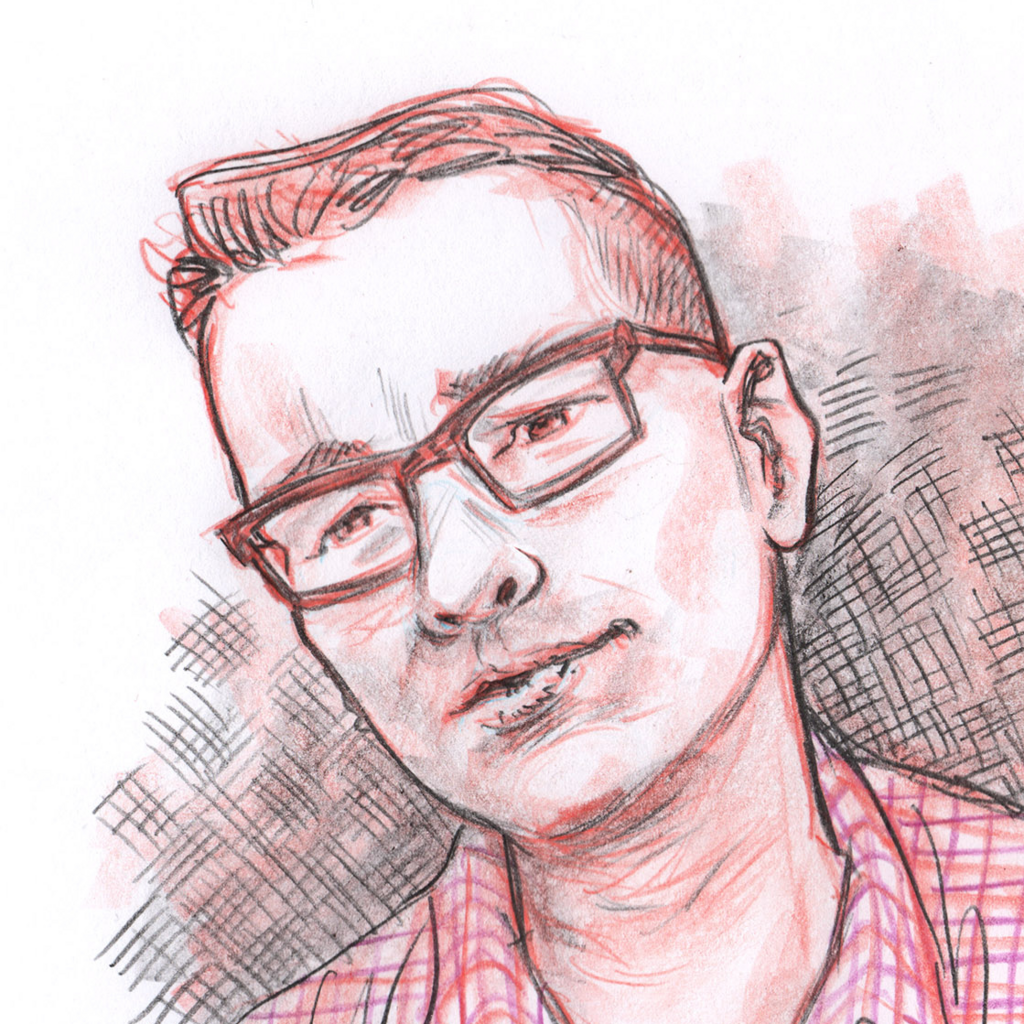
Alfredo Deza, Co-Author of Minimal Python
A Leanpub Frontmatter Podcast Interview with Alfredo Deza, Co-Author of Minimal Python
Books by Alfredo Deza on Leanpub


Alfredo Deza is co-author of the Leanpub book Minimal Python. In this interview, Leanpub co-founder Len Epp talks with Alfredo about his background, his first experience with programming, his experience as an Olympic-level athlete in track and field, moving to the United States from Peru, how he learned Python himself, and at the end, they talk...

Alfredo Deza is co-author of the Leanpub book Minimal Python. In this interview, Leanpub co-founder Len Epp talks with Alfredo about his background, his first experience with programming, his experience as an Olympic-level athlete in track and field, moving to the United States from Peru, how he learned Python himself, and at the end, they talk a little bit about his experience as a self-published author.
This interview was recorded on April 22, 2020.
The full audio for the interview is here: https://s3.amazonaws.com/leanpub_podcasts/FM152-Alfredo-Deza-2020-04-22.mp3. You can subscribe to the Frontmatter podcast in iTunes here https://itunes.apple.com/ca/podcast/leanpub-podcast/id517117137 or add the podcast URL directly here: https://itunes.apple.com/ca/podcast/leanpub-podcast/id517117137.
This interview has been edited for conciseness and clarity.
Transcript

Len: Hi I'm Len Epp from Leanpub, and in this episode of the Frontmatter podcast I'll be interviewing Alfredo Deza.
Based in Atlanta, Alfredo is a software engineer, open source developer, photographer, and former Olympic athlete. A popular speaker, he has given talks on a range of subjects, from professional sports, to personal development, and open source software.
You can follow him on Twitter @alfredodeza and check out his website at alfredodeza.com.
Along with his colleague Noah Gift, Alfredo is co-author of the Leanpub books Minimal Python, Testing in Python, and Python Command Line Tools .
In this interview, we’re going to talk about Alfredo's background and career, professional interests, his books, and at the end we'll talk about his experience as an author.
So, thank you Alfredo for being on the Leanpub Frontmatter Podcast.
Alfredo: Len, thank you so much for having me. I'm really excited to be here and chatting about all of these interesting things that are going on.
Len: We'll get to some of the things that are going on in a little bit.
But first, I always like to start these interviews by asking people for their origin story. And you've got a couple, I think. So I was wondering if you could talk a little bit about - let's start with the technology stuff - where you grew up, and how you first became interested in computers and technology?
Alfredo: Well, I think I could write a book about that. It's just very extensive. But let me try to summarize it in an interesting way.
I was born in Peru, and I lived there until I was 25, that's right around when I got married. My wife is from Peru.
I did go to college, but I was there for just a few months. It was really hard for me. I was a professional athlete back in Peru. I was a track and field athlete, I did the high jump - and that consumed most of my life.
I did it very intensely for about 15 years. I started when I was 10 years old - training, working out every day. So Saturday, Sundays, New Year's Eve, Christmas, birthdays - and then slowly intensifying to working out between 12 to 17, 18 times per week. So almost every day twice a day, and sometimes three times a day. So pretty, pretty hard.
Then I went to college, and college was not really making things work for me. After a few months I just decided to quit and concentrate on sports.
It all basically ended when I went to the Olympic Games. I did pretty bad in the Olympics, didn't do too well. And then I came back, got married - and decided to come to the US.
And we - it was really brutal coming to the US. Back in Peru, we had the support of the family, and tons of people that knew me, and that made things go pretty easy. But here in the US, we were staying with my sister-in-law, and it was a very small single bedroom basement. And then just trying to make ends meet, and slowly but surely trying to find things that would generate income.
I started as a personal trainer for a little while. That was also brutal, because I didn't have all of the certifications that gyms were asking me for - it was really hard.
Along the way, I've always liked computers. I was always like enticed by them. Growing up, in my house, we always had a computer. I remember having an Apple, the Apple II, and doing some BASIC - my older brother knew that, and I had no idea. And he's like, "Oh, look at the stuff that I can write, and how can I make the computer do this." And it's like, oh, I thought, "That's interesting." But I didn't know this was programming, or a programming language. I thought it was like a game.
And so I started learning at home. I thought it was pretty neat. I didn't realize it was programming until years later.
So now I'm in the US, and trying to get things working out. I started getting interested in Linux. Because I had my laptop, it got a virus, and it destroyed most of my pictures. I was very annoyed, and I kept hearing this thing where there was like, "Oh, there's no viruses in Linux." Which is, of course, not entirely true.
But 15, 20 years ago, it was like, "Oh, this sounds enticing enough. I will just figure it out." I'll just slap a CD and try to get Linux.
I remember trying some version of Red Hat that came with like five or six CDs, and nothing - like, my keyboard wasn't working, my mouse was not working. So just like, "This is not okay." And PCWorld Magazine had an article that year - I think it was 2004 or 2005? It came out with like, "The top 20 things in technology that are pretty outstanding." And one was the Ubuntu Linux distribution.
The article literally said, "The most surprising thing is that the keyboard works, and the mouse works - and it's just really great." It's like, "Oh, I have to try this thing." And lo and behold - I tried it, it worked - so I started getting more and more interested in that.
And so that - coming to the US and struggling with making ends meet, I started picking up books. I remember I went to Barnes & Noble, which is a big bookstore here in the US, and being interested in learning more and more of these things. And so I got more adept to learning and improving my skills.
It all started when my wife was working at a small media agency, and they needed someone to do something - she heard something about a server and Linux, and they needed someone - and they couldn't find one. And she said, "Well, my husband can do this." I raised my hand, I said, "Yes." And that's how my career started. This is 2007.
Len: Thank you very much for sharing that. There's a lot of threads we could pull on there.
Alfredo: Yes, yeah.
Len: One thing I always like to ask about is - the common question that comes up is the question of like, "What was your first computer?" Which you've already told us about. But how did the computer come into your home? Because often the story I hear is that someone's parent had a job in tech or something like that, or else it was a gift for the kids. But it's really interesting to know, because they - for those listening who might be a little bit younger - it wasn't the case that everybody had a computer at home in those days.
Alfredo: Yeah. For sure it was a privilege. Especially in a third-world country like Peru, especially in the 1980s. The 1980s in Peru was very rough. We had tons of terrorism. Things were really, really rough. And one of the things was that imports were really restricted. Like if you wanted to buy a car, it doesn't matter if you had the money. You had to wait a period of like about six months to have all sorts of paperwork and get your new car. And it's so extremely expensive.
So, extremely privileged. My grandparents from my mother's side, my granddad - he owned a mine, or a few mines, and he had a mining company. He was doing well. And he had, I remember - a computer room, already. And again, in Peru - in the circumstances, it was really outstanding that he was able to have something like that. So there were computers at home in his place, and I think it came from that.
My older brother was interested, and we were going to a good high school that had a computer program, and had these computers. So my dad saw that that was kind of like a thing, and he could get one of these hand-me-downs from my granddad.
That's how the first computer arrived. But my dad was not a technologist at all, and neither were any of my family. It was just me and my brother trying to figure stuff out.
Len: And just very briefly, without asking you to tell us the whole history of Peru, could you explain in just a couple of minutes why there was terrorism there at that time?
Alfredo: Yeah. There were two or three groups that were trying to instill their ways of thinking, based - I hope - I'm trying to get this correct, but be lenient with me if I don't get all the facts super straight, but there's these trains of thought are coming from Maoism and Leninism - and these groups believe that the better good for the country, the better path forward, was following these ideas or ideologies. And because they weren't seeing traction, they started trying to make a point by making violence. So they would blow things up, and this was very sad and very, very hard on the country.
So things like - you would lose power every other day, because they would blow up the power towers. They would just blow dynamite. My granddad who had the mines, he was also in trouble sometimes, because the terrorists would just go in and steal the dynamite, the TNT, from his mines. Death threats, it's just really hard.
And even today, you can see in Peru, if you ever go to Lima - it doesn't happen anymore, but you can still see these blocks of concrete in front of police stations.
And people are like, "Why do they have that?" Because terrorists, back in the 80s - what they would do is, they would put a car in first gear, full of explosives, and just drive it into the police station, and blow it up. So this would prevent the car to just go all the way into the police station.
I mean, pretty, pretty rough. But that's kind of roughly why there was this thing. And there were two or three groups causing all of this trouble.
Len: One thing I always like to ask people about, when they are from a country where I haven't interviewed someone from there before, is - I mean, pre-COVID, what was life like in Peru? Was there a tech sector there?
Alfredo: I think it's starting to change. It's starting to change in Peru, and I would say in Latin America in general. It's still not as strong as I would prefer that to be. I think it's slowly coming.
In retrospect, I think Latin America's always like a few years behind of the US or other advanced-technology countries. So you're seeing, you're now seeing data centers starting to be a thing. Whereas like ten years ago, it was like, "What's a data center?" So, stuff like that.
And there's a lot of good potential, but the ways of getting people to be more knowledgeable on technology and pursuing - even if you say, "Well, there's no data centers and college or universities are not providing what they need to grow." Now, there are the means to acquire that knowledge and be proficient, without having the state or you country providing these tools for you.
So, I think that's slowly being a thing. And my hope is that, not only Peru, but the rest of the countries, also pick up on that.
Len: Going back to your own story - so you've developed this early interest in programming, without knowing that it was programming. But at a certain point, you or the people around you realized that you were a very gifted athlete. How did you end up in track and field?
Alfredo: Well, my dad went to the Olympic Games. He did track and field for many years. He actually lived here in the US, went to college in the US - and went back, decided to go back to Peru. So sports was always in the family.
My mom, she started as a swimmer. She actually at some point had the national record for the medley with her sisters. So, another family coming with strong sports influences. And then she went on to be a discus thrower, and that's how she met my dad.
They went to, I think it was, the Bolivarian Games, which is kind of like a mini-Olympics from all the Bolivarian countries, so mostly South America. And that's how they met.
But my dad never - people think that my dad kind of like forced me to do stuff. No, it was me. I said, "I really like this. I want to do it. I really want to do this seriously." I was kind of doing it on and off, and then I was like, "I really want to put all my chips in. I want to do this thing. What do I need to do to be the best?" And that's how I started.
Len: I never even remotely got close to the level that you have in my own life. But one of the things I always really loved about track and field generally was the variety. So things like discus, and javelin, and running and jumping and things like that. Was there a particular reason you focused in on high jumping?
Alfredo: Yes, a couple. One of them is that I was excelling at that. One of the ways that my dad had of teaching was like, "No, you're first an athlete, then you are narrowing down into high jump, or hurdles, or whatever." And actually, I was a pretty good hurdler. My dad had the national record, I almost got the national record and missed it. But in any case, I was excelling at high jump - it was one of the events that I am doing pretty good.
And its snowballs. It snowballs and it's like, "Oh, I'm really good." It's like, "Oh, I think I like this a little bit more than the other stuff," because I'm excelling at it. And it's like, "If I put a little bit more effort, then I'm a little bit better."
So, just one thing leads to another, and then suddenly you're like, "Oh, I'm really good."
And the other thing is that it feels really spectacular. Like when you're running, and stepping on the track, and just flying over the air and you're like, "Woo". People are like, "Whoa, that's kind of nifty." And I like that. I really enjoy that.
Len: I think you were being rather modest in your description of your performance, but I don't know if I mentioned it yet - you were the first world junior champion in track and field for Peru.
Which Olympics did you go to? I guess is my first question about that.
Alfredo: I went to the 2004 Olympics, those were in Athens.
Len: Oh wow, okay. I guess if you could talk for a couple minutes about what was that like? I mean, I think a lot of people - my understanding is that when you only arrive a couple days before, and you generally leave right after. So you kind of dip in and out of the Athlete's Village?
Alfredo: Yeah, it's a little bit like that. And this is a little bit hard for me to talk about - let me give you a little bit of context on why.
For the longest time, I felt very self-conscious about my sports background. And it was so because when I came here, it was really hard on my family. My dad was actually trying to keep me in Peru. And he said, "Well, you're going to have it super hard out there Alfredo, because nobody knows you. Here in Peru, everybody knows you."
I was just recently put on some front pages of the most important newspaper in Peru, on the walls at home. So people knew me, knew who I was. I was getting in front of the TV, and radio stations, and getting interviewed all the time. It was kind of like a big deal.
But when I came to the US, I felt great that nobody knew me, and I was going to build a name by myself. I was going to start from scratch - it's going to take me a lot of work, but I'm in it, I want to do this.
And slowly but surely, yes - people would recognize me, because I was giving a presentation over here, or talking about Python over there - and kind of like, that was really great. So I always held back, and I would never advertise that I went to Olympics - or that I was a world junior champion in high jump, the first - the only world champion track and field competitor for Peru. And people at work would find out later, and they would just not believe it. Then they would come and ask me.
So I was very self-conscious. I didn't want to come off as a showoff. I didn't want to say, "Hey, by the way, I went to the Olympic Games," or, "Oh, by the way, I did this and I did that."
And my dad - my dad would be really upset about this - "Well, you have to say it. People in the US, people outside of Peru - they just think it's great. How come you're not saying it more?" And it's like, "Oh, I don't know."
It took me a while. And it was recently - I think in the past two years, that I just recently put it on my LinkedIn profile, that I put it on my Twitter account - just very recently.
I'm coming to terms to it. I think the reason why is that I finally feel successful enough. Of course, this is just a road to becoming better and better. By no means does it signal that I've made it. But I feel successful enough, I feel good enough that I can say, "Oh yes, I'm writing books," or, "I'm working as a software engineer, and I'm presenting here - but I'm also coming from a background in track and field."
And the reason that now I also like to say it, is because it exemplifies - it kind of shows that I was determined to do something and I did it. It was very hard and - because otherwise, how can you explain if you're someone that really, really can own something, and have the responsibility and the ownership to just pull through and make something happen? If you can say, "Well I did this," but it wasn't just the Olympic games, it was 15 years of my life.
I remember once I was getting interviewed, and this lady said, "Oh, so how many months have you been training for the Olympics?" It's like, "Well, it's about 15 years. I don't - what do mean, how many months? It doesn't work that way. It's all your life."
That's how I feel about it. But I'm way more comfortable about it these days.
Len: I'm really curious - so you were sort of at the peak of things, and did you - was there a moment when you're like, "I'm going to stop competing, and this isn't going to be such a big part - a three-times-a-day part of my life anymore?" And what was that like?
Alfredo: It was pretty hard. And actually, you're making all the best questions here.
I was one of the only professional athletes - track and field athletes in Peru, I mean - professional track and field athletes don't just happen in Peru. And BellSouth, which was a phone company back in the 90s - they were doing very well. They have operations in South America. They of course have operations in Peru.
And then they decide - it's like, "Oh there's this dude, he's doing pretty well - he seems like a good guy, like a good image for our brand - we're going to sponsor him." And I was sponsored with - there was a tennis player and a couple of rally race car drivers. And it's like, "Oh, this is great." The contract was for like four or five years, I think. And things ended pretty bad. I had an exclusive - or exclusivity clause in my contract, meaning I couldn't be sponsored by any other brand.
So while I was competing in the Olympic Games, they - I mean, they were under financial strain, and they sold - here in the US they sold to AT&T, I think? In South America, they sold to the Spanish - a telco, which is Telefónica.
They were getting rid of stuff. And basically, they got rid of me. They sent me a really rough four or five page letter to the address of my parents' house in Lima, while I was in the Olympic Games. They were cutting me off.
My dad didn't tell me, of course, until the Olympics were done. The letter said, "You've violated the terms of our agreement." Because there was a big photograph of mine, jumping in an event that had happened two weeks before the Olympic Games, which were the Ibero-American Championships in Spain. And the number, my - I think it's called - my number on my t-shirt, had Vodafone, because Vodafone was sponsoring the event.
But this is something that is very well stipulated in the International Track and Field Federation, which is - athlete A, being sponsored by, say Nike, and going to an event that is sponsored by Adidas, has to use Adidas. There's no other way. Otherwise, you don't compete. I had to compete. So they just grabbed a technicality, and got rid of my contract.
But I have this letter printed out - along with the picture. My dad really struggled with that. He thought it was super negative. But to me it was very negative.
It signaled my decline and my - the idea of like, "I need to stop doing this," and trying to figure out what I'm going to do with my life.
But for me, it was the lowest of the low in my career - being let go by the company that had sponsored me, they believed in me - and then someone was like, "Oh well when you -"
I actually had 20-something scholarships to come here to the US, that I declined. Because it was to compete in the NCAA, and the NCAA regulations consider you a professional - even if you get $100 a year sponsorship, or a one-time $10 - right? This I don't remember, I think it's pretty-- It's either 50 or 100 bucks, then you're considered a pro - you're not allowed to compete in NCAA.
So I told them, it's like, "My future - I'm betting on you, just as you are betting on me. I'm not going to go to the US, not going to the NCAA thing - and I'm going to stay here in Peru." And they decided to these other things. So these things I've printed out, represents to me a low in my life - but it also represents that being so low there, that I could just reinvent who I was, and my goals in life.
I wanted to be better. And I think I've succeeded to some extent, to do that. I'm no longer, "Oh, this is the Olympian dude." No, it's just, "Oh this is the dude that writes software, does the other thing," so, yeah.
Len: Thank you, by the way for sharing all of that. I really appreciate that, and I'm sure our listeners will as well.
Why did you choose to move to the US?
Alfredo: My wife had family here, and that made it easier. And in Peru, we were struggling to - my wife, we couldn't find work. She had graduated a year and a half or two years earlier, and she was unable to find work. We were living in my in-laws' house. We lived there for a year. And we thought, "Well, we need to make a decision." Either we stay here in Peru, and we try - me trying to look for another sponsorship. My dad tried to put all of his energies in trying to make that happen. I was burned out. I was working out pretty brutal hours, and I wasn't seeing the results anymore.
And I thought, "I think I'm going to make it happen." But my dad would ask me, he was like, "What do you think is going to happen in the US?" "Well, I don't know, I'll figure it out. I'll figure it out. Something - I think I have this plan, I will just do some personal training. I will just be a coach, and my wife will find some work, and then we'll take it from there." It ended up being kind of like that, but very different in the end.
Len: We were talking a little bit before we started recording the interview, but one thing that's now a feature of, I think most podcasts, is - how has COVID-19 affected you professionally? And I guess, specifically, what are things like in Atlanta right now? I know you're in the Atlanta region.
Alfredo: Yeah, I'm just a little bit up north of Atlanta. But I don't think it has changed much professionally for me. I still work my day-to-day stuff. I'm working these days with a company that does security analysis of containers, called Anchore. I've been working remotely for the past eight years or so, fully remote. And ten years - almost all the time remote. So things don't seem so much different than before, except for the fact that I don't have the occasional going out thing.
I would say the state is doing okay-ish. There are some controversial measures of opening and reopening the beaches, or reopening businesses early. So that's a little bit stressful. But things are okay.
So professionally, the same. It's kind of like when we have a snow day, and my kids are like, "Oh, we have the day off." Because as soon as it snows, Atlanta shuts down. And it's like that. "But you have the day off." It's like, "Ah, no. Doesn't work that way for a remote worker. It doesn't matter there's snow outside."
But other than that, I'm sharing my home with my sister- and brother-in-law, and their family. They have three kids and they're staying with us. They were caught almost in the middle of this, in the transition from moving from one state to the other. And so they're staying with us these days, which - yeah, like you said - we were talking about this before we started. But it make the logistics of everything pretty difficult, going to buy groceries for 10 people - it's just very different than buying for one or two people. And everyone of course, these are - my nephews are almost like - almost all of them are teenagers. And they were like three people in one. So -
Len: Yes, it's really interesting. One thing we were talking about before, but I was hoping you would be willing to share in the interview, i- that people think you're a hoarder when you go shopping.
Alfredo: Yeah, yeah.
Len: Because they don't believe you when you say that you're managing ten people. And I'm sure there are probably very few people listening to this who are in a household with like ten people in it, but I'm sure we've all had a similar experience - where we've got some particular thing in our life that makes us a little bit different from other people, and operating under new circumstances requires not just adaptation on our own part, but understanding from other people as well.
Alfredo: Yeah. That's a great point. Judging others is - or judging others' situations is just so easy. It's low-hanging fruit. It doesn't take much effort. You see something that doesn't quite look okay, and then you immediately draw your conclusions, and you say something, or you post something, or you tweet something. And there's always something a little bit beyond that, right?
We go to the - well, there's restrictions in the supermarkets on how much chicken you can buy, or how much pork you can buy. And it's like, oh it's just one - half a chicken per family. And you're like, "Well, but we're ten people. It's me, my wife, my three kids, and my sister-in-law, my brother-in-law, and their three kids. Oh, and we have two dogs - their two dogs are also here." So you're trying to get these things working out, but you try to cope with it. We're lucky because it's family, and we love each other - and we're lucky that we have each other to survive this thing together.
Len: Thanks again for sharing that. I'm glad to hear you're with your family and you guys are safe and comfortable and managing things, and that you're working from home means you're relatively protected from some of the things that are affecting all of us.
And so moving on to the next part of the interview, I wanted to ask you about your work at Anchore. You said, "security around containers," and I was wondering if you could talk a little bit - I'm sure you get this question from people who are sort of not in the computer world, but if you could talk a little bit about like what containers are and what Anchore does?
Alfredo: Well the funny thing is that I have it much easier than my previous job. I was doing distributive storage for like about six or seven years, working with the team that created Ceph. Ceph is a distributive file storage system. And that's just very tricky to explain. So when everybody, when someone is like, "What is it that you do in technology? Do you do work with computers?" "Well, how do I explain distributive store? It's just so complicated." "Oh, you mean like the cloud?" "Well, yes kind of, like sort of."
But now it's much easier. I just say, "Security." I just analyze what's going on there in the computer or server, and then we come up like, "Oh, this thing has a security vulnerability here. And that thing's not safe. And here's the report, and you can take some actions.
But you asked a couple of granular questions there. So containers are - it's this level of abstraction. Back in the 90s, you'd say, "I'm going to run a website." So you have to have your physical server plugged in - this computer that looked like a big pancake and just stacked into a rack. And that rack would have other ginormous pancakes with flashing lights, and then you would turn on your website. And your website will be living there, which is on a computer.
And then technology progressed and we had the virtual server, which is a thing that mimics that thing, so that you can have 10 or 20 or whatever number, living inside of a physical computer. So that was abstracted.
And then the container is a step beyond that - or at least that's the way I try to explain it in easy terms. Which is, it's a very thin abstraction which allows you to virtualize applications and make them work. So we grab these things, which are compressed in - they call them "images." And then we uncompress them and analyze them, and try to find what might be wrong with them and make a good report with it, which I think is pretty cool.
Len: And how do you analyze? So, a container is kind of like - the idea is that you should be able to have all the things that make something work in a metaphorical software box. But now you've got all these boxes, and there could be something going on inside one box that's not going on inside another box. And so you guys - I don't claim to understand exactly what you do, but this presents companies who are using containers with a particular kind of security vulnerability. And so what you do is, companies give you access to their software and then you go in there? And you look inside the container, or -?
Alfredo: Well, yes, so there's different barriers in directions that you can have. There's an open source version that you can run. The idea is that you will run this service somewhere in your infrastructure. And then, when it's running - especially on-premise that you're running this, you're installing this service within your system, wherever that is. Like, if you want to run it on Amazon, you could. And what happens there is that you can analyze individual images.
And you can say, "I've created this image, and then I'm just going to put it here." And then you grant access to the container registry.
So a registry, for those who might not know what it is, it's basically a collection - like the service that collects all of the images available. That could be private, or that could be Docker Hub, which is the public registry that most everyone uses for Docker images. So yeah, to some extent - yes, you have to grant access to the service to analyze these container images.
Len: Actually one thing I wanted to ask you - I should have actually included this in the previous part of the interview. But in addition to your work that you do professionally, you've also been a speaker on a number of different things, as I mentioned in the introduction. And I was scrolling through your Twitter feed, doing research for this interview, and I saw that you were supposed to be speaking at the PyCon Perú 2020 conference in late March. Did that actually happen?
Alfredo: It didn't. Such a bummer. And especially so because it's Peru, and my background in sports and everything - it felt to me kind of like my going back and being a keynote speaker for a technology event was opening up - not necessarily opening up opportunities for me, but making me feel like, "Yes, I'm getting even more recognition for being someone else, other than the athlete that was in track and field." Like, as a successful track and field athlete. So yeah, that didn't happen, ended up cancelling, just like a bunch of other travel that I had planned. But I mean, I think it's for the best.
It's just a major, major bummer. Not necessarily because of the keynote speaking. But - again, because it was Peru. I was really looking forward to that, and having been given the opportunity to go and talk in keynote, I think is great.
I really enjoy giving presentations. It's one of the things that I really, really like. Even way before, when I was in school. I really liked standing in front of people and telling stories. I think it's great. And very sad that that didn't happen. Hopefully we can make PyCon Perú happen again soon.
Len: I'm sorry to hear that. This is the kind of thing that's been affecting a lot of people, and in particular Leanpub authors are often people who give conference talks. And in fact that acts for some of our authors that actually - it's a pretty important part of their income, if they're paid to give presentations to companies and conferences and things like that. And everybody's really kind of scrambling right now, and uncertain about the future.
And one thing - I don't know if I've mentioned this on the podcast before, but O'Reilly actually just permanently cancelled their conferences business - their in-person conferences business. They're pretty smart cookies over at O'Reilly, and if they have made a decision like that - any way, to me, that's been the most - this is just kind of anecdotal, but that's been the most ominous sign for me, for conferences in this sector, going forward.
Alfredo: Yeah. I heard the news as well. I think O'Reilly does wonderful events. It's a major bummer, all these people who've been let go. My hope is that - a while ago I heard this interview, and the interviewer was asking these questions about these terrible times - before even the COVID situation that we're living in. And this person answered in a way that I can really relate to, and hopefully anyone that is listening to the podcast can feel good about this.
And this person said, "Yes, we are living through these very complicated times, and things are complicated, things are difficult. But that can only mean that when we're coming out - we will come better and stronger, and more aware of what things were bad, and how lucky we are that we're having our chance to make it better."
So to me, it feels like we're hunkering down, we're in our homes not being able to have all of the freedoms. Let's appreciate more of that. Let's put the extra effort in thinking about all of these other people that -
I don't remember when there was so much gratitude to these people in the frontlines, just doing so much work - the caretakers, and putting their lives at risk. And so many have lost their lives trying to help others. I don't remember a time where there was that awareness - that level of awareness. So I think that's great. And I think that when we come out of this problem, we will be much better. And then this tremendous opportunity to make things even better and be more - less judgmental, when it's so easy to do - and more aware of things.
Len: That's a very great observation, thank you for that. You're reminding me that a couple of weeks ago - here where I live, on my street - people started banging pots and shouting at 7pm to celebrate the frontline workers.
Alfredo: Wow.
Len: It's this really touching thing. Canadians don't typically do collective stuff like that. And it's funny, I work from home myself - I'm looking out at my street through these beautiful windows all day long. And every day at seven, there's this reminder there are actually people in those houses, living their lives, doing things. And they all come out and celebrate the people who are taking the biggest risks to help the rest of us, who are suffering the most right now. That's a great thing, and it is a hopeful sign for maybe a changed approach to life going forward.
Moving onto the next part of the interview, I'd like to talk to you about your books. I guess the first thing is, you've co-authored them with Noah Gift, who I actually interviewed last week. So that interview will be coming out on the podcast just before this one. But how did you and Noah become colleagues and co-authors?
Alfredo: Man, Noah has changed my life more than once. He's been a tremendous source of positive influence in my life. He's an amazing human being.
I met him while I was a system administrator in a very small media agency. My office was not an office, it was the server room. I would put my chair right next to the rack of servers inside a very freezing room, inside of this small company. And the company needed someone to do something with Python, they were primarily doing PHP. Noah was contracting - he was living in the Atlanta area at that time, and he got hired. I was told, "Hey, there's a new person coming in."
So, I wasn't only the system administrator, I was also the IT guy. Like, if the printer was not working, you would call me. You need to go to the data center? That's me as well. Any network cables - you need to ask me. All of those things was me. So system administrator, was - take it with a grain of salt.
I was setting his computer up, and then we started talking a little bit - and then he really liked sports. He is very passionate about sports. So I told him, "Yeah, I did a little bit of sports." Like, I wouldn't advertise any of my background and things. "Oh yeah, really, you do sports? What kind of sports?" "Well, I did track and field." "Oh, really?" I was, like, "Yeah." And Noah says, "Well, I also did track and field." It's like, "Oh, that's great."
And then he would say, "So what event you did in track and field, Alfredo?" "Well, I did the high jump." He was like, "Oh.". And Noah's like, "I also did the high jump." It's like, "Oh." So Noah's like, "Oh, I jumped this," and "How much did you jump?" I said, "Well, I jumped - I think it's seven-four, which is 227 - two meters, 27 centimeters, which I think is seven-four, or close to seven feet, four inches? And he was like, "Whoa, wait a second."
Len: Yeah, the ball dropped there.
Alfredo: "That doesn't sound quite right. What's going on?" So he pressed me, and it's like, "Yeah, I went to Olympics." He's like, "You went to the Olympics? What is going on? That's insane."
We became friends, and we started working together, and he said, "Hey, I think you really need to learn some Python." And I was like, "Well -" This is horrible to say, but I said, "I don't know Noah, I know Bash. I'm pretty proficient in these things. Why would I need to learn Python? Show me how I run a system command in Python."
System administrators are always restarting servers and installing dependencies. And it's like, "Show me how I run a system command." "Well, you import this thing, you run this thing, and pass it through a pipe." And it's like, "Oh my goodness, this is terrible. I can do this with one line in Bash, why would I ever do this in Python?" He's like, "Oh, you don't understand." So he got me convinced.
And then he said, "Choose one thing that you want to automate out of your day-to-day stuff, and write it in Python. And then every Friday we'll sit down and review it, and we'll take it from there."
That's how I started learning. Basically pushed me to learn Python. And then after a couple of weeks, I swear it was like two or three weeks learning Python, he said, "Okay, so you need an objective in your life, so you need to present at the next Pycon in Atlanta," which was 2010.
I started learning Python in 2009. He's like, "Because PyCon is in Atlanta, you need to present." It's like, "How am I going to possibly present something I just learned? No way." So he said, "No, you need to do it. You need an objective. You need to submit a presentation and a proposal, and see what happens." Then lo and behold, I submitted a proposal - and that was the only time that I was able to get accepted at PyCon, and presented in 2010. So that's how I met him. That was back in 2010.
Len: And when did you guys decide to write books together?
Alfredo: So after being with Noah for a while here in Atlanta, he went off to New Zealand, and then to San Francisco, and then stayed in California for a while. And then I moved around and kind of lost contact with him for a little bit. I would just always try to - every now and then, try to give him a call and chat with him - but we weren't in touch a lot.
What happened was that one day we started talking about things that we should be trying to do together. He was doing all of this training, and he wanted to pull me in, and try to do some stuff together. And I was like, "I mean, I don't know, Noah. I'm more of a hands-on person. I can't just learn something and just start teaching it."
There was some talk about doing some cloud-related stuff. He's very, very big on cloud things. And then the year started - this is last year. Last year, can you imagine? Last year started ,and it was like January and he was like, "Alfredo, how about we do this book with O'Reilly called Python for DevOps?" And I said, "Okay, yeah, let's do this. Don't go too crazy on me with the topics."
But I have tons of devops experience, so I felt confident enough that at least a chunk of chapters could be mine. I could own them and be good. And we then later partnered with two more authors - Kennedy Behrman and Grig Gheorghiu - amazing, amazing guys. And we knocked that out in four or five months. We went full steam ahead, and that's how we started.
And so we finished, and the book was finally published by O'Reilly in December. And January comes - I think it's January 2nd, or 3rd - and then I talked to Noah, and I said, "You know what? I want to write another book. I don't want to stop, I think this is going well. And I've heard this thing called 'Leanpub.' It sound really neat. It sounds more of like the stuff that - it aligns more with the way I work, or the way I would want to work, with books."
Because technology books, they can get so out of date so quickly. And even if they don't, they have a lifetime. When they die, they die. I mean, what are you going to do? A Python book from 10 years ago is not that useful today. Even if it is somewhat useful, it won't be as useful as someone writing a book with the most recent version of Python today. So it was enticing to me.
I actually read the story - or one of the blog posts, of theguy that wrote Ansible for DevOps in Leanpub.
Len: Jeff Geerling, yeah.
Alfredo: Geerling, yeah. I remember seeing his repositories for Anisble for a while. "Geerlingguy" is his nickname on GitHub. I remember reading that and I said, "Well, I think this is great." Writing for O'Reilly was a great experience, I loved it - but I wanted to go on a different route, and I talked to Noah, and Noah said, "Yeah. Oh my goodness, this is great. Okay let's do it." And we started.
And while we were writing, the first book was Testing in Python. While we were writing that, Noah liked it so much, that we brainstormed on two more books. The other book was Minimal Python, which we just finished. And the other one is Command Line Tools in Python And so we've been cranking out a book every six weeks almost.
Len: And do you plan on continuing to write more?
Alfredo: So that's a weird question. It's been a pretty brutal schedule, trying to crank out a book every six weeks - it's been brutal. I don't have any other way to put it. So I want to - not necessarily stop writing books, but I want to continue to improve the books that we have, and expand on the things surrounding the books as well.
And again, one of the things that I really like about Leanpub is that we can have this iterative approach on writing and republishing, and putting another version.
I think that - but I have - my brother in law is with me. He's more like a manager, but has like a background in mechanical engineering, and he's picked up Minimal Python. He's like, "Oh well -" He doesn't know Python, and he's picking up on it. And it's like, "Well, it would be really cool if you could expand on this, around that, or reword this." And I'm up for that. We haven't written these books to just say, "We did it." Checkbox, done. We're going to do - I don't know - the movies now." We really want to make these things great, and so we're thinking all these different ways that we can make that happen, so -
Len: That's a great story. You guys are the canonical Leanpub authors, right? We're writing about something that can change, so we want to have books that we can update - and we're using our readers as resources for improving our books and guidance for how we can make them better. That's just fantastic to hear.
The last question I always like to ask people on this podcast if they're Leanpub author is, in your experience using Leanpub, if there was one feature we could build for you, or one problem we could fix for you - what would you ask us to do?
Alfredo: For me as an author?
Len: Yeah. It can be as personal and unique as you like.
Alfredo: I do have one thing that is just really, really tricky. Whenever I need to make changes to my book - either generate a new version or change some setting, I can never ever find the right menu, or how to get to the menu that I need. And so I have to go through this one URL that has a dropdown. And then I can just drill down. So some sort of reordering of the menus would be greatly appreciated, because I can never find my way around.
Len: No one can see, but I'm laughing because - thank you very much for sharing that. We introduced a new navigation system on the website a while ago, and we realized that it was not the right approach, and we are redesigning the whole thing right now.
One thing I would say to any Leanpub author is that, if you are working on your book, you can go to like your book landing page, and just go to /overview.
Alfredo: Right.
Len: That shows you all the menu items on one page, in categories - like in "Store" or you can do coupons and make packages. So there is one page you can go to, that you should definitely bookmark for your book - where you can get all the links. But yeah, thank you for sharing that.
Alfredo: Great.
Len: We really appreciate that kind of feedback. And yeah, the navigation system is something that we're fixing - that we're going to make hopefully way better, and more clear.
The short version of it is - we got a bit too clever and up our own ass, instead of thinking about things from like, "What does a new user need to see? What does someone who's actually grinding away on a book like me, need to be able to get to quickly and easily?" And yeah, right now there are a lot of things where it's like, "I can't." Even seasoned Leanpub authors are like, "I can't find what I'm looking for." Which is pretty embarrassing for us, so we're working on a fix to that.
Alfredo: That's a great thing to do - Len, to ask about. I think as people that produce a product and having some - looking forward to get some feedback, even if it's not quite like positive - I think it's great.
You asked me something that could be improved. But I would like to add that so far we're in love with the whole platform. We're using GitHub actions to talk to the API and auto-generate our books. I think that's great - not having to just go and click and everything's - so having the API is fantastic.
So if there are other Leanpub authors listening to the podcast and if they haven't used the API, it's just great. It's really nice, and using it on GitHub with the GitHub actions thing is just, it's just perfect. You just add the API token, and just - and everything gets published. So that's really nifty. Noah and I were collaborating on GitHub, so we're submitting our stuff and we merged our branch to master in the new version of the book, it's out and it's perfect.
Len: Thanks very much for the kind words. We appreciate that too. And yeah, our more sophisticated users really do like the API, and then sort of coming up with their own workflows and working together with someone else, comes with it's own issues. But thankfully we've got modes of writing like GitHub and Bitbucket and stuff like that, where there's these entire brilliant services that are built to help people work together creating texts. Which is what some code is, and what a book is.
Well, Alfredo - thank you very much for taking the time to do this interview today, we really appreciate it. And thanks to you and Noah for using Leanpub as a platform for your latest books.
Alfredo: Yeah, absolutely. Again, we're tremendously passionate about producing good content. I think Leanpub is a great place to develop and produce our content, and I think it's a great platform. Hopefully more authors realize that and start using it. And I really want to thank you for all of your thoughtful questions and an awesome interview. I really enjoyed my time chatting with you.
Len: Thanks very much. And as always, thanks to all of you for listening to this episode of the Frontmatter Podcast. If you like what you heard, please rate and review it w0herever you found it. And if you'd like to be a Leanpub author, please check out our website at leanpub.com. Thanks.
And as always, thanks to you for listening to this episode of the Frontmatter podcast. If you like what you heard, please rate and review it wherever you found it, and if you'd like to be a Leanpub author, please visit our website at leanpub.com.