

The Leanpub 60 Day 100% Happiness Guarantee
Within 60 days of purchase you can get a 100% refund on any Leanpub purchase, in two clicks.
See full terms...
Interested in this book? Show your support by saying what you'd like to pay for it!
About the Book
From the book:
However, only true poets can truly comprehend the contingency as Richard Rorty wrote paraphrasing Nietzsche. "Why are you cast down, O my soul and why are you in turmoil within me?" (Psalms 42:5 ESV) would sang the psalmist. Everybody else are doomed to remain philosophers - desperately trying stick to one true description of life. So, the question was - was I the psalmist or the philosopher? The psalmist would rejoice over the greatness of the King of glory (Psalms 24:8) not denying nor glorifying his own deceitfulnesses. Philosopher would start with classic question which made Pilate famous - “What is the truth?” or - more precisely - “Are you the King?” (John 18: 35-38). Noam Chomsky had a point stating that in area outside of natural sciences there is lot more room for equaling objectivity with that what suites those which are in position of power. Without benefits of experimental method those who are trying to say something about historical, social, psychological, cultural or spiritual realms are on the battlefield of the powers of persuasion simply because their arguments can be confirmed solely by ex-perience rather by ex-periment. But, paradoxically - this experience is the only true valid argument when we talk about faith. This was the main thesis in the book “My Belief” by Hermann Hesse. It is not that faith does not care about objectivity - it is just that faith is something that has to be lived. And living is always personal.
Cover image by Andrew Villasis (CC BY 2.0)
About the Author
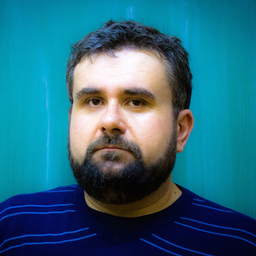
Davor is a theologian working in a software startup as tester. Being theologian and software tester he is thanking God that there will always be room for improvements. He authored and published several short stories, poems and articles in various Croatian magazines. Davor rides bike, plays sax (poorly), enjoys tea and books and proclaims the Gospel on the housetops and his blog at http://diotref.tumblr.com/ (again Croatian). The Cross on Our Way is first book he started in English to see is that possible. He didn't finished any of his book so far so be warned before paying any money.
Within 60 days of purchase you can get a 100% refund on any Leanpub purchase, in two clicks.
See full terms...
We pay 80% royalties on purchases of $7.99 or more, and 80% royalties minus a 50 cent flat fee on purchases between $0.99 and $7.98. You earn $8 on a $10 sale, and $16 on a $20 sale. So, if we sell 5000 non-refunded copies of your book for $20, you'll earn $80,000.
(Yes, some authors have already earned much more than that on Leanpub.)
Learn more about writing on Leanpub
If you buy a Leanpub book, you get free updates for as long as the author updates the book! Many authors use Leanpub to publish their books in-progress, while they are writing them. All readers get free updates, regardless of when they bought the book or how much they paid (including free).
Most Leanpub books are available in PDF (for computers) and EPUB (for phones, tablets and Kindle). The formats that a book includes are shown at the top right corner of this page.
Finally, Leanpub books don't have any DRM copy-protection nonsense, so you can easily read them on any supported device.
Learn more about Leanpub's ebook formats and where to read them
You can use Leanpub to easily write, publish and sell in-progress and completed ebooks and online courses!
Leanpub is a powerful platform for serious authors, combining a simple, elegant writing and publishing workflow with a store focused on selling in-progress ebooks.
Leanpub is a magical typewriter for authors: just write in plain text, and to publish your ebook, just click a button. (Or, if you are producing your ebook your own way, you can even upload your own PDF and/or EPUB files and then publish with one click!) It really is that easy.