Key concepts of longitudinal data
Types of longitudinal data
Types of longitudinal questions
Longitudinal data structures
The Age-Period-Cohort conundrum
Quiz
Quiz 1
100 attempts allowed
Longitudinal data wrangling
Selecting variables and cases
Recoding variables
Working with factors
Merging longitudinal data
Reshaping longitudinal data
Quiz
Quiz 2
100 attempts allowed
Practical
Solution
Efficient longitudinal data wrangling
Quiz
Quiz 3
100 attempts allowed
Practical
Solution
Further reading
Course forum
Make the course better
References
Master Longitudinal Data Wrangling using R
Clean, Merge, and Reshape Panel Data Efficiently Using R

The instructor has published 100% of this course.Last updated on 2026-03-13
Turn messy longitudinal datasets into clean, analysis-ready data with efficient R workflows. In this course, you will learn how to merge and reshape panel data, clean variables, and automate data wrangling tasks commonly encountered in longitudinal studies. By the end, you will have a clear, reproducible workflow for preparing longitudinal data, so you can focus on answering research questions rather than struggling with messy datasets.
Minimum price
$100
$100
You pay
Author earns
PDF
EPUB
WEB
About
About the Course
Longitudinal datasets are one of the most powerful sources of evidence in the social sciences. They allow researchers to study how individuals, organisations, and societies change over time. However, working with longitudinal data can quickly become overwhelming. Multiple waves, inconsistent variable names, missing data, and complex data structures make longitudinal data wrangling one of the biggest challenges researchers face.
This course will teach you how to efficiently clean, reshape, and prepare longitudinal datasets using R so you can move from messy raw data to analysis-ready datasets with confidence.
Instead of spending weeks struggling with merging waves, restructuring panel data, or fixing variable coding, you will learn a clear and reproducible workflow for longitudinal data wrangling in R. By the end of the course, you will know how to prepare complex panel datasets for statistical analysis while writing clean, reusable code.
The course focuses on practical data wrangling techniques used by researchers working with longitudinal and panel data, including selecting variables, recoding data, merging waves, reshaping datasets, handling missing values, and automating repetitive data preparation tasks.
All examples use realistic longitudinal survey data, so the skills you learn transfer directly to your own research projects.
What You Will Learn
Understanding longitudinal data structures
Before cleaning data, it is essential to understand how longitudinal datasets are organised.
In this section, you will learn the key concepts behind longitudinal and panel data, including:
- The difference between longitudinal and cross-sectional datasets
- Common longitudinal study designs
- Wide vs long data structures
- Time-varying and time-constant variables
- The Age–Period–Cohort conundrum in longitudinal research
Understanding these concepts will help you design better workflows for longitudinal data preparation and analysis.
Core data wrangling tools in R
Cleaning longitudinal datasets often requires a combination of several data manipulation steps.
In this section, you will learn how to perform essential data wrangling tasks in R, including:
- Selecting variables and cases from large datasets
- Recoding variables and handling missing values
- Working with categorical variables and factors
- Creating new variables for analysis
- Writing clear and reproducible data wrangling pipelines
These tools form the foundation for efficient data-cleaning workflows for panel and longitudinal data.
Merging and reshaping longitudinal datasets
One of the most common challenges in longitudinal research is combining data across waves and restructuring datasets into formats suitable for analysis.
In this section, you will learn how to:
- Merge datasets across waves using unique identifiers
- Identify and explore attrition and non-response patterns
- Reshape data between wide and long formats
- Prepare datasets for panel models and longitudinal analysis
These are core skills for anyone working with panel data, repeated measures datasets, or cohort studies.
Automating longitudinal data preparation
Longitudinal projects often involve repeating the same data preparation steps across many waves.
Instead of copying and modifying code manually, you will learn how to automate data wrangling tasks in R, including:
- Iteration with functional programming
- Writing reusable R functions
- Processing multiple datasets efficiently
- Building scalable workflows for large longitudinal studies
These techniques allow you to handle complex datasets while keeping your code clean, efficient, and reproducible.
Learn by doing with real longitudinal data
The course combines videos, written explanations, quizzes, and hands-on practical exercises so you learn by applying the techniques directly. You will also gain access to a forum to ask questions related to the topics covered in the class.
The practical exercises use a synthetic version of Understanding Society (UKHLS), one of the largest longitudinal household surveys in the world. You will prepare multiple waves of the dataset, clean variables, reshape the data, and explore patterns across time.
The practical includes:
- Step-by-step exercises
- Full solution code
- Detailed walkthrough videos
By the end of the course, you will have built a complete workflow for preparing longitudinal data in R that you can adapt to your own datasets.
Who this course is for
This course is designed for researchers who want to become confident working with longitudinal and panel data in R, including:
- PhD students working with longitudinal datasets
- Social scientists using panel studies or cohort data
- Data analysts working with repeated-measures data
- Researchers transitioning from cross-sectional to longitudinal analysis
Prerequisites
You should already be comfortable with:
- Basic R syntax
- Working with data frames
- Basic data manipulation
If you are new to R, consider taking the course Introduction to R for Social Researchers, which provides the foundations needed to follow the workflows taught here.
What you will be able to do after this course
After completing the course, you will be able to:
- Prepare complex longitudinal datasets for analysis in R
- Merge and reshape multi-wave panel data efficiently
- Clean and recode variables across survey waves
- Handle missing data and attrition patterns
- Automate repetitive data preparation tasks
Most importantly, you will gain a clear workflow for longitudinal data wrangling, allowing you to focus on answering research questions rather than fighting with messy data.
Categories
Instructor
About the Instructor
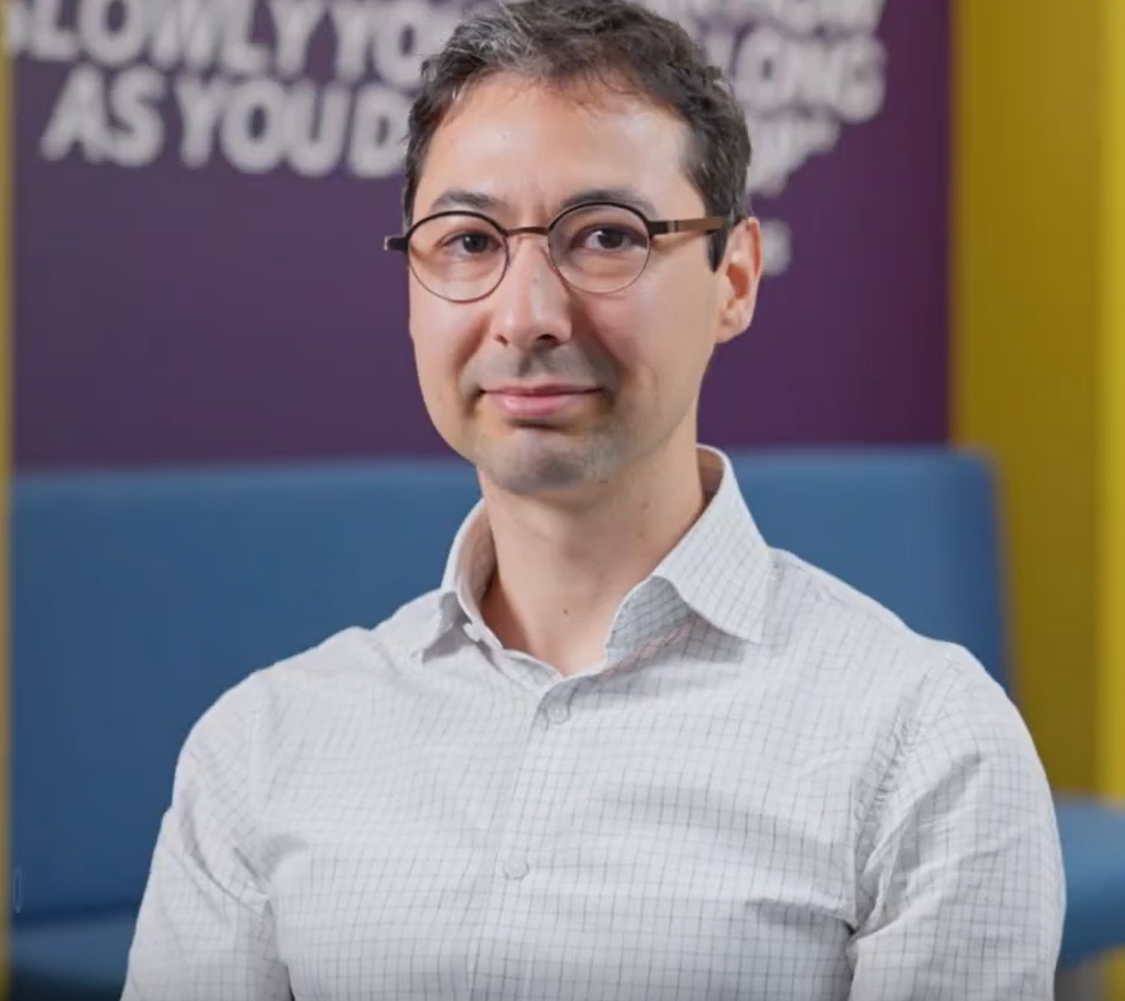
Alexandru Cernat
Alexandru Cernat is a professor in Methodology and Social Data Science at the University of Manchester.
He has a PhD in survey methodology from the University of Essex and was a post-doc at the National Centre for Research Methods and the Cathie Marsh Institute.
His research and teaching focus on: survey methodology, longitudinal data, measurement error, latent variable modelling, new forms of data and missing data.
He is also the founder of longitudinalanalysis.com, a platform that helps researchers and analysts learn to collect, clean, and analyse longitudinal data.
You can find out more about him and his research at: alexcernat.com.
The Leanpub Podcast
Episode 267
An Interview with Alexandru Cernat
Material
Course Material
The Leanpub 60 Day 100% Happiness Guarantee
Within 60 days of purchase you can get a 100% refund on any Leanpub purchase, in two clicks.
See full terms...
Earn $8 on a $10 Purchase, and $16 on a $20 Purchase
We pay 80% royalties on purchases of $7.99 or more, and 80% royalties minus a 50 cent flat fee on purchases between $0.99 and $7.98. You earn $8 on a $10 sale, and $16 on a $20 sale. So, if we sell 5000 non-refunded copies of your book for $20, you'll earn $80,000.
(Yes, some authors have already earned much more than that on Leanpub.)
Learn more about writing on Leanpub
Free Updates. DRM Free.
If you buy a Leanpub book, you get free updates for as long as the author updates the book! Many authors use Leanpub to publish their books in-progress, while they are writing them. All readers get free updates, regardless of when they bought the book or how much they paid (including free).
Most Leanpub books are available in PDF (for computers) and EPUB (for phones, tablets and Kindle). The formats that a book includes are shown at the top right corner of this page.
Finally, Leanpub books don't have any DRM copy-protection nonsense, so you can easily read them on any supported device.
Learn more about Leanpub's ebook formats and where to read them
Write and Publish on Leanpub
You can use Leanpub to easily write, publish and sell in-progress and completed ebooks and online courses!
Leanpub is a powerful platform for serious authors, combining a simple, elegant writing and publishing workflow with a store focused on selling in-progress ebooks.
Leanpub is a magical typewriter for authors: just write in plain text, and to publish your ebook, just click a button. (Or, if you are producing your ebook your own way, you can even upload your own PDF and/or EPUB files and then publish with one click!) It really is that easy.