

The Leanpub 60 Day 100% Happiness Guarantee
Within 60 days of purchase you can get a 100% refund on any Leanpub purchase, in two clicks.
See full terms...
Minimum price
$6.99
$6.99
About the Book
History is typically told through the movements of armies, the signatures of treaties, and the grand ambitions of leaders. But the true architecture of the twentieth century was not built in the halls of power; it was forged in the kitchens, the munitions factories, and the soot-stained tenements of the working class. It was written in the caloric deficit of a child, the rhythmic vibration of a factory lathe, and the quiet, desperate subversions of the shadow economy.
In THE COMMON PEOPLE IN THE WORLD WARS CHRONICLES: The Complete History of Ordinary Lives in the Shadow of the World Wars (1914-1946) , Cassian Sterling performs a devastatingly deep sociological autopsy of a civilization under unprecedented pressure. Moving beyond traditional sensory history, Sterling employs a "biological historiography" to document how the machinery of total war literally reshaped the human body, the domestic psyche, and the molecular structure of the household.
From the communal solidarity of the Great War to the atomized, consumerist stability of the 1950s, this monumental work maps the transition from citizen to component. Sterling masterfully weaves together three escalating threads of human experience:
A profound, sweeping, and deeply moving masterpiece of micro-history, THE COMMON PEOPLE IN THE WORLD WARS CHRONICLES is an essential reading for anyone seeking to understand how the modern world—and the modern human—was truly made.
About the Author
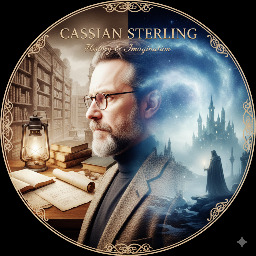
Cassian Sterling writes at the edge of history and imagination. With a career defined by meticulous investigation, he has earned a reputation for deconstructing the lives of the world’s most enigmatic minds, bridging the gap between technical complexity and human tragedy. His fascination with the "unseen"—whether it be the invisible laws of physics or the creeping dread of the classic horror tradition—informs every page of his work. Whether he is decoding declassified government files for a scientific biography or weaving tales of Gothic suspense, Sterling’s writing is marked by a commitment to atmosphere and intellectual rigor.
You can find all my books here.
Within 60 days of purchase you can get a 100% refund on any Leanpub purchase, in two clicks.
See full terms...
We pay 80% royalties on purchases of $7.99 or more, and 80% royalties minus a 50 cent flat fee on purchases between $0.99 and $7.98. You earn $8 on a $10 sale, and $16 on a $20 sale. So, if we sell 5000 non-refunded copies of your book for $20, you'll earn $80,000.
(Yes, some authors have already earned much more than that on Leanpub.)
Learn more about writing on Leanpub
If you buy a Leanpub book, you get free updates for as long as the author updates the book! Many authors use Leanpub to publish their books in-progress, while they are writing them. All readers get free updates, regardless of when they bought the book or how much they paid (including free).
Most Leanpub books are available in PDF (for computers) and EPUB (for phones, tablets and Kindle). The formats that a book includes are shown at the top right corner of this page.
Finally, Leanpub books don't have any DRM copy-protection nonsense, so you can easily read them on any supported device.
Learn more about Leanpub's ebook formats and where to read them
You can use Leanpub to easily write, publish and sell in-progress and completed ebooks and online courses!
Leanpub is a powerful platform for serious authors, combining a simple, elegant writing and publishing workflow with a store focused on selling in-progress ebooks.
Leanpub is a magical typewriter for authors: just write in plain text, and to publish your ebook, just click a button. (Or, if you are producing your ebook your own way, you can even upload your own PDF and/or EPUB files and then publish with one click!) It really is that easy.