Standard Fare: Establishing the Digital Classroom
Acacia Woodbury
|
Open educational resources should be standardized, allowing teachers and students additional tools and contexts to optimize learning experiences. |

Education has held its post as a defining institution of society throughout the ages—shaping each rising generation, fueling growth and culture. Little wonder that major changes in education are often viewed as disruptions. But a disruption can be a good thing. Education has been disrupted by debates about college tuition, grading policies, the effectiveness of post-secondary training, etc. There are plenty of voices vying for the spotlight, ready to make a dozen alterations to our present methods.
It’s helpful to use the Digital Age as the context for this discussion. It’s the context of education today, and it can help us recognize what the most relevant and important changes really are.
The Digital Age has altered many aspects of life already, and they have been altered for good. Education could be the next institution due for some retouching—and once it begins in earnest, we won’t be able to return to our old methods and perspectives. Is it worth it to trade the efficiency of the familiar for the efficiency of progress? It very well may be in the case of open educational resources, or open-source learning.
What are open educational resources?
Open educational resources (OER) are teaching tools made freely available by digital means. These resources allow what is called open-source learning to take place, an approach to education that integrates digital tools, platforms, and resources with the traditional classroom.
These resources have been emerging in other facets of society. For example, people no longer need to buy a book if they can find it for free online. This makes possible a new level of self-education than has ever been achieved. It has already had lasting effects on the way our society works. Without any kind of instructor, anyone can look up anything they care to know about the Civil War or organic chemical compounds or calculus. In fact, they can hand-select their learning platform, method, and application and match it to their purpose and learning style.
Why should the formal education system adjust and become more inclusive of these resources? Teachers and students already have access to them. There are several advantages to using them, and the real question may be why these resources haven’t been widely used in classrooms.
OER allows teachers to personalize their courses to better fit their subject and their students. It also gives students the ability to interact with content and respond through digital dialogue, or even create original content. OER gives students more responsibility for learning relevant skills as well as the core curriculum.
No need to throw out the traditional classroom entirely. Our education system plays too important a role in our civilization. But the purpose and drive of education is improvement. Rather than suggest we make every resource free and rely on intrinsic interest and high levels of insight to propel the next generation forward, I think we ought to reevaluate our teaching methods. OER could be a well-matched enhancement to our educational priorities and goals.
While open-source learning is still a relatively new idea, with many as-of-yet unexplored possibilities, it has been implemented in a variety of ways already in a few classrooms. I’ve seen hints of it in my own experiences as a student, and there are some school programs leaking OER and open-source learning methods.
But the real power in this kind of learning is still locked away by a lack of universal application. The first step is to help people understand what these new ideas are, where they come from, and what the benefits they offer.
The person who first coined the term “open-source learning” was David Preston. He earned a PHD in Education Policy, taught at UCLA, and ran his own management consulting firm. In 2004, he saw an opportunity to use his new ideas and joined a high school English department.
Preston was determined to use open-source learning methods to help his students. He “allow[ed] students to create their own learning experiences as a virtual complement to the classroom studies. Students work[ed] with teacher-mentors to communicate and collaborate, using in-depth online research, blogs, social media, and other interactive tools” (Preston).
In this way he became more of a guide than an instructor, helping his students to learn how to interact directly with experts, authors, and online communities. Preston said:
“Students have access to the Internet in their pockets, but most teaching environments don’t even begin to touch the power of online technology. At first I started using these tools because I thought that it made the curriculum more engaging. But as open-source learning evolved, I realized that these tools—and the networks they can create—give students many more choices for expressing themselves in the context of the curriculum and finding depth in the material” (Preston).
Some people may misunderstand the term “open-source learning.” I’m not saying we need to convert every teacher’s lesson plan into a Wikipedia-style free-for-all. It can be a misleading term.
I’m saying that there are digitally curated resources that could enhance the classroom, make learning more engaging for students, and train students in technological skills they’ll need later.
No creation of content is necessary, though some teachers may find a personal collection of their favorite tools helpful. These resources already exist—physically and conceptually. All we need to do is integrate them with the classroom.
The sooner we decide to do this and begin the upward haul, the sooner we’ll be over the learning curve and sailing forward into smoother waters.
What would the benefits be?
If there are benefits to using open-educational resources, what are they?
First, because students do not always know where these resources are to be found. They do already exist, but digital resources have exploded into a vast web of knowledge that can be difficult to navigate without some initial guidance.
Second, having found the resources, students can quickly become lost without a real-time instructor giving feedback and direction. Relevant and interesting as some information may be, it can be passed over by accident if the student doesn’t have a specific structure given to their exploration.
Third, if the resources are known and applied by the student, the diversity of each subject’s context may remain obfuscated. Or, in other words, the students may not always know enough to become fully cognizant of the questions inhibiting their comprehension of relevant topics, whether belonging to a more distinct or a broader lens of study.
These three benefits, combining OER with the traditional classroom, focus narrowly on some specific needs of the students. There are also benefits for students who are interested in a more interactive learning process and benefits for teachers.
OER can promote concept creation and original thinking in students. They offer new contexts for them to discuss and hypothesize and interact with real-world examples. OER include ebooks, free software, portals, open information communities, electronic collaboration, personalized learning, space for original content development, digital dialogue, public domain sources, current events resources, and scholarly journals. The list could go on and on . . .
Many schools around the nation already teach typing, basic computer skills, online research, and similar skills. This is a good step towards using OER and open-source learning, but it isn’t the same thing.
Open-source learning prioritizes the empowerment of students and teachers in their individual conditions. Teachers are empowered by the ability to adjust the design of their course and hand-select the platform, the media, the digital tools to fit their goals. This focus becomes for students to develop skills and perspectives that translate directly into the workplace rather than master the common core alone.
While the goal to teach essential content will not change, there are now more efficient ways to teach them. There are also new skills that are becoming relevant because of the digital age, and the new technology is as much a necessary skill for students to learn as the content they are studying.
I saw the beginning of this when Smart Boards (basically white board and a projector combined with interactive functions) were introduced in some of my classes as replacements for the boxy projectors. It happened seamlessly. No one questioned whether we would go back to using that clunky old projectors. There was a slight learning curve for students and teachers, but then we moved on and put the new tool to use. It was more efficient, so we adapted.
I had a diverse educational experience, and I saw a wide variety of methods put to use. I attended schools of all levels across five different states. I have been homeschooled, attended public schools (some wealthier than others), and participated in an online charter school with a performing arts location. And I currently attend a private university.
I love learning, so I appreciated the opportunities some of my teachers gave me to explore content in my own way, to generate my own ideas. The digital age allows for more ways that teachers can guide students in this kind of interactive, explorative learning. It would be a big change to standardize open-source learning methods, or even some of its elements, and the idea is hotly contested by those who see more potential for problems than for positive growth.
Adaptability is the soul of efficiency. Our educational methods need to adapt to the Digital Age. While there are many benefits for making the change, there are potential consequences for not doing so as well.
Our civilization is being redefined by the Digital Age. It may be a disruption in many ways, but that is the pattern civilizations have followed on the path of progression. One way or another, we will need to make changes. That, or we may find our society stuck in the past as others make use of the new opportunities.
We need to adapt, and we need to do it collectively. If we don’t do it together, it won’t have the same staying power in society.
Why is standardization important?
Different teaching methods have been employed throughout history—from the Chinese system of strict memorization to the gentleman’s academic perusal of Europe to one-room schoolhouses on the frontier. More modernly, we have standardized the common core, a federally recognized set of curriculum. The possible effectiveness of these various methods is only ascertainable—and, indeed, it is only possibly valuable—as far as it is standardized. By this, I mean that it has been adopted universally by schools or teachers.
Some teachers are diving right into the use of OER and open-source learning, and others are just dipping a toe into it. Why standardize?
The reasons are the same as they always have been in the question of standardization. Because it is more efficient that way. Because it will have a greater effect that way. The metaphor “reaching the end of the row” comes to mind, reminiscent of early irrigation systems that were only as effective as they were capable of reaching down to the end of every row and watering every plant in the field. It’s the same principle here.
Standardization is the process of unifying the standards within an industry or field. These can be physical standards (like the base-required integrity of a steel girder) or conceptual standards (like the expectation of academic honesty or the value of submitting work to peer review). This can also be a good thing. I like structurally sound steel girders on my bridges—thank you.
The history of standardization reveals its strengths and its weaknesses very clearly.
Standardization was conceptually conceived with the mass production of the Industrial Revolution but it was born in the 20th Century. In the early 20th Century, electric engineers each had their own standard sizes and methods of testing the effectiveness of their materials. They had to maintain long, complicated files in order to recall the various requirements for each of the companies they worked for.
R. E. B. Crompton got tired of this and decided to solve the problem with a universal system. He recognized that there’d be a special point where engineering could be most efficient while also allowing for differences in individual projects. Not everything needed to be universally the same about the engineers’ work (and it’d be inefficient to attempt to make it so), but by standardizing the most common measurements and materials, engineers could work together and communicate more easily with one another.
He publicly argued the benefits of standardization and promoted it actively on an international level. Though he advocated for standardization in electrical engineering, the principle is still applicable to education.
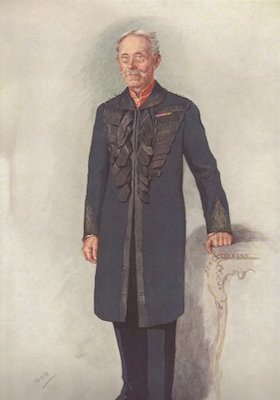
Crompton presented an essay about the standardization of machinery at the St. Louis International Electric Congress in 1904. Of standardization in engineering, he said:
“I think we must all agree that electrical standardization must bear a different meaning to standardization of far older . . . types of machinery. . . . It is highly undesirable that any types, patterns or sizes should be standardized if these are likely in any way to hinder the future development of design, but all who have looked into the matter know how much useful electrical standardizing can be . . .” (Crompton, 769).
Crompton’s peers recognized this idea as a clear advancement in the efficiency of their work. Crompton was asked to organize the International Electrotechnical Commission, and he was voted to be the group’s first president in its first meeting.
I think that many of the virtues of standardization were put forth by Crompton or displayed in the processes he went through to achieve it. He discovered the most necessary places where standardization would benefit workers and manufacturers in his industry. He asked other professionals in his field about their experiences and what might benefit them. He made room for future development and improvement in anticipation of a time when the process he was instituting might need to adapt.
Too much fluctuation or too little evaluation of adaptations can have negative effects. Many people look at Wikipedia as an example of an untrustworthy source because its fluctuating system necessarily compromises some standards of accuracy. Likewise, if the standards chosen to be standardized are too low, too high, or not measured the right way by the standardizing authority, then the standardization will cause more problems than it will solve.
However, the ability to adapt is important when approached properly. Crompton would agree that for standardization to be the most effective, it should be capable of adaptation. As we remain aware of those weaknesses and limitations, we can improve upon them.
A more modern and topically relevant example of standardization is the common core structure of curriculum. Adapting to open-source learning would not only be an efficiency in its own right but it would augment the standardization of the common core.
I personally relied on a certain amount of unity in the subjects taught at my schools when I moved multiple times across the country, frequently in the middle of a school year. If I’d had access to OER, it could’ve been even smoother of a transition.
The principles of teaching with OER are being taught in high-level classes, like Dr. Caitlyn Dooley’s about constructivist theories and research. Her syllabus reads, “Technology, such as email, wiki, blogs, group bulletin board, database search engines and so forth will be integrated into the course. These tools will be essential for your learning as they carry much of the on-going communication beyond campus walls” (Dooley, 4).
There is no doubting the importance of these resources and skills in the Digital Age. The need is increasing for students to be exposed to them in an academic setting much earlier than is currently happening.
Coupling open-source learning with effective standardization practices will take our educational system to the next level and support another generation of our civilization. Employing these ideas that were born in the 20th Century will help us make the most of our Digital Age.
What would a digital classroom look like?
My experiences with participating in an online charter school give me some insight into a model of how this new method could work. Online classes had their downsides, so I am not trying to advocate online school. It represents one possible application of the digital tools I am talking about.
In the online charter school, my classes we organized and distributed on a platform called Moodle. Moodle can be used by teachers or administrators (or even business owners) to organize teaching tools for large groups of people.
In a Moodle classroom, students are given access to the resources they need to learn a particular lesson, they explore the resources on their own—albeit in a guided format, and then they complete an assignment on the subject. The learning process was more open to student interpretation and concept development.
Some assignments are simply to contribute to a digital dialogue with other classmates on the subject. Others were more traditional evaluations. But even if the assignments did not differ too widely from traditional ones, the method of learning invites individual questioning and exploration. The student is required to be proactive in the learning process.
This method can easily be blended to the traditional classroom. An entirely digital school is not necessary to use these methods and tools.
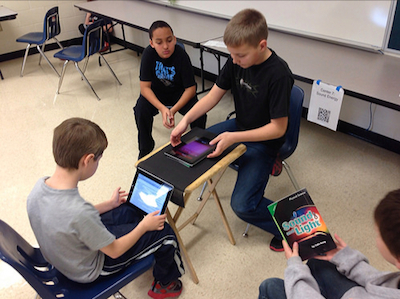
Wesley Fryer is a good example. He teaches fourth and fifth grade science classes, and he maintains a blog about his teaching experiences called The Speed of Creativity. One of the unique ways Fryer has implemented digital tools in his class was to record his voice at independent stations for his fourth-grade students so that they could pause, replay, or rewind the instructions he was giving them. In this way, he organized and taught several groups within his class at the same time.
This method gave students the ability to problem-solve on their own with a teacher nearby to guide them when they needed help. They didn’t only learn the material in the class but were excited to use what they’d learned to create another digital teaching tool (recording their class’s work) for others to reference. (Fryer)
Edwige Simon, an Educational Technologist at the University of Colorado Boulder, contributed an article about digital teaching tools to the Edutopia blog. The site has many resources available for teachers who are interested in developing lesson plans or sharing resources in class with digital tools. Simon recommends six specific steps for teachers to make use of digital resources and makes many other tools
Simon introduces her approach by outlining the primary benefits of open educational resources: “Textbooks are a great source of reliable information and ready-made activities, but the content they provide can be generic and not particularly engaging for students. By leveraging the instructional potential of web-based resources, you can increase student engagement, expose them to authentic content, and engage them in collaborative activities that trigger critical thinking and creativity” (Simon).
This kind of communal knowledge pool and interactive learning is exactly what open-source learning—and the Digital Age itself—is all about.
Works Cited
Crompton, R. E. B. “Standardization of Dynamo-Electric Machinery and Apparatus.” Transactions of the International Electrical Congress, St. Louis, 1904. Albany, N.Y.: J.B. Lyon, 1905. 768-775. Print.
“David Preston: Open Source Learning Combines Academic Standards with 21st Century Workplace Skills.” UCLA GSEIS Ampersand. University of California, Los Angeles, 23 Aug. 2013. Web. 26 May 2015. <ampersand.gseis.ucla.edu/david-preston-open-source-learning-combines-academic-standards-with-21st-century-workplace-skills/>.
Dooley, Caitlyn. “ECE 8920 Constructivist Theories and Research Syllabus.” Academia. 1 Sept. 2011. Web. 26 May 2015. http://www.academia.edu/1742917/ECE_8920_Constructivist_Theories_and_Research_Syllabus.
Fryer, Wesley. “Lessons Learned with Elementary STEM Centers.” Moving at the Speed of Creativity. 25 Jan. 2014. Web. 26 May 2015. http://www.speedofcreativity.org/2014/01/25/lessons-learned-with-elementary-stem-centers/.
Simon, Edwige. “Teaching with Web-Based Resources.” Edutopia. 28 Apr. 2015. Web. 26 May 2015. http://www.edutopia.org/blog/teaching-with-web-based-resources-edwige-simon.
Image Credits
- “Woman Hand Desk Laptop” by Pexels licensed under CC 0 http://www.pexels.com/photo/woman-hand-desk-laptop-6471/
- “Untitled Classroom Photo” by Wesley Fryer licensed under CC 2.0 http://www.speedofcreativity.org/2014/01/25/lessons-learned-with-elementary-stem-centers/
- “The Road Builder” by Vanity Fair incensed under Public Domain https://en.wikipedia.org/wiki/R._E._B._Crompton#/media/File:Rookes_Evelyn_Bell_Crompton_Vanity_Fair_30_August_1911.jpg
About the Author

Acacia Woodbury is studying editing and digital humanities at Brigham Young University. She has lived in five different states, and she has attended a wide variety of schools between them all. When she isn’t tinkering away at someone else’s writing, she’s usually composing her own.