Reformation 2.0
Tiana Cole

|
Reformation 2.0 is a facet of the digital age where people are getting more than just greater access to the Bible—they are getting more responsibility for it through greater opportunities to contribute, collaborate, and communicate on modern translation projects using crowdsourcing. |
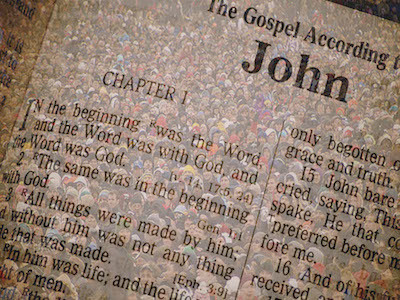
Martin Luther and the other Reformers shattered the status quo in 16th-century Europe by making the Bible available to the general population through diligent translation efforts. We might call a similar phenomenon in our day Reformation 2.0, a facet of the digital age where, in contrast with the original Reformation, people are gaining more than just greater access to the Bible—they are gaining greater responsibility for it through more opportunities to contribute, collaborate, and communicate on modern translation projects using crowdsourcing. This digital collaboration represents a disruption to traditional methods of working on such projects, providing a faster, more inclusive, and often more fulfilling way to accomplish a task.
Crowdsourcing and collaboration in the digital age
The idea that people can work together to get work done is not new, but what is new is the spin the digital age has given it. With more people having access to the Internet and consequently other ideas and people, the digital age has revolutionized how we collaborate.
A few years back, Jeff Howe coined the term “crowdsourcing.” In his own words, crowdsourcing is “the act of taking a job traditionally performed by a designated agent (usually an employee) and outsourcing it to an undefined, generally large group of people in the form of an open call” or, in what he calls his Soundbyte Version of a definition, “The application of Open Source principles to fields outside of software” (Howe).
What are open source principles? According to Brian Gentile, tech executive at Jaspersoft and founding member of opensource.com, the distinguishing principles of open source are transparency, participation, and collaboration (Gentile). Ideally, in crowdsourcing there is also a balance between top-down and bottom-up processing, with some level of control coming from the top matched with a healthy level of activity and input from the bottom.
Modern translation projects like Google Translate greatly benefit from the use of crowdsourcing; although the engine is automated to some degree, users are invited to become part of Google Translate’s community to help improve translations by providing human insights that machines cannot duplicate.
The dawn of the digital brought about the means to make crowdsourcing possible, enhancing collaboration and speeding up countless projects, Bible translation being one example. Can you imagine what the Reformers could have done with access to the wisdom of the crowd? Well, with modern translation projects in Reformation 2.0, we get to find out.
What was Reformation 1.0?
To fully appreciate the concept of Reformation 2.0, it is important to first understand what Reformation 1.0 was like.
The religious attitude of the Reformation period took the piety of the Middle Ages and combined it with the importance of the individual found in Renaissance humanism to create a human who was focused on God, and what was most important was that individual’s personal relationship with God. This attitude is in direct contrast with the medieval spirit of communalism, where the individual was nothing without the group.
The Catholic church, a powerful top-down authority for ages, was beginning to lose its control over European civilization, and the radical individualism sparked during the Reformation resulted in the creation of several smaller church groups whose existence the Catholic church attempted to quash but ultimately had to accept.
Essentially the only thing these Protestant churches, as they came to be known, had in common was the belief that the Catholic church was wrong, or at least should be different. Aside from that, each church developed its own core beliefs and stayed within their own circle.
Martin Luther is well known as the Father of the Reformation, with his outrage over the selling of indulgences and his 95 Theses nailed to the door of the Catholic church in Wittenberg, but he is also known as the Father of the German language for his German translation of the Bible.
As an Augustinian monk, Luther discovered the Latin Bible in the monastery and upon reading it realized that there was so much in there that was not shared with the general population, and because they could not read Latin, it remained unknown to them. Since knowing the word of God is vital to developing a personal relationship with Him, Luther decided to remedy this by using his expertise to translate the Bible into German.
The only problem: there was no standardized form of the German language at the time. The two principal dialects were High German and Low German, and fortunately as a boy, Luther had grown up moving back and forth across the linguistic boundary and consequently used and understood both. He used his bilingualism to make arbitrary decisions based on his knowledge to standardize the dialects into one common language in writing. The intended result was a Bible that could be read the way an everyday German would speak.
Because of this, his translation of the Bible gave thousands more people access to the word of God, a privilege that formerly had been available only to the elite or clergy. To this day, the German language still owes many of its characteristics to the decisions Martin Luther made in the 16th century as he translated the Bible (Cox).
Not everyone thought Luther’s interpretation was impeccable, however. In John Foxe’s “Book of Martyrs,” a contemporary of Martin Luther, Father Simon, is quoted as saying that
Luther … was the first Protestant who ventured to translate the Bible into the vulgar tongue from the Hebrew text, although he understood Hebrew but very indifferently. As he was of a free and bold spirit, he accuses St [Jerome] of ignorance in the Hebrew tongue; but he had more reason to accuse himself of this fault, and for having so precipitately undertaken a work of this nature, which required more time than he employed about it. There is nothing great or learned in his commentaries upon the Bible; every thing low and mean: and though he had studied divinity, he has rather composed a rhapsody of theological questions, than a commentary upon the scripture text: to which we may add, that he wanted understanding, and usually followed his senses instead of his reason. (Foxe)
So, yes, Luther was a great man who did a great job, but he was still just one man, with human faults, imperfect knowledge and understanding, and never enough time. While he did the German language a great service, what insights could have been missed by not consulting the crowd? How might the German language be different today had common people had more input on the way their spoken language was written?
Granted, given the sociopolitical atmosphere during the Reformation, it would have been nearly impossible for a large-scale collaboration project to take place (the Catholic church probably would have had a heyday if the entire German population began contributing to a translation of the Bible), but today in Reformation 2.0 we have that freedom and ability.
Later in the Reformation period, King James I commissioned a new translation of the Bible to quell the disputes between the Catholics and Protestants in the kingdom. In contrast with Luther’s individualistic approach to translating, he assembled a group of 47 highly educated individuals, with Cambridge, Oxford, and Westminster being equally represented in groups of six. Each group was assigned a section to translate and all were made to abide by a set of standards to minimize bias (Blumell).
While this was not an example of true crowdsourcing (one reason being a lack of an open call for contribution from the masses), it was a step closer to it, and further away from the decisions and bias of the work of just one man.
The participatory culture of Reformation 2.0
The advent of the digital age and the participatory culture of Web 2.0 allow us to explore this alternative approach to translation by working with what Luther never did: the crowd.
Reformation 2.0 reflects the disruptive influence of Martin Luther and the other Reformers of 1.0, who took the Bible from the small group of the social and clerical elite and made it available to the community at large. Crowdsourcing makes that application gracefully to the digital age, where collaboration on creative ideas and projects involves not only the gifted and educated, but also the amateur and aficionado. The main difference, though, is the level of participation: Luther trusted the people to read the Word—now we as the crowd are being trusted to interpret it.
In contrast to the radical individualism found in the 16th century, Reformation 2.0 is characterized by a desire to work together to create something worthwhile. As previously mentioned, Reformation 1.0 led to the creation of several small groups that worked within their own spheres, but in Reformation 2.0 those smaller groups and individuals now want to collaborate, and the digital tools of this age make it both attractive and possible to work on even massive projects together with complete strangers, united by a common cause. According to Dr. Miguel A. Jimenez-Crespo, “Normally, the reasons for [large crowdsourcing efforts] are speed, quality and global reach” (Jimenez-Crespo, 195), all of which perfectly fit with the motivation behind modern crowdsourced Bible translation efforts.
The mission of the early reformers continues today through groups like Wycliffe Global Alliance and the smaller organizations it includes. Named for one of the early translators of the Bible into English, Wycliffe Global Alliance is a worldwide organization that focuses on “participating in and encouraging the worldwide Church in ministry among minority language communities” (“Why We Exist”). The overarching goal is to see the gospel message spread to all people, with a vision that by 2025 every language still needing one will have a Bible translation program up and running, primarily maintained by volunteers.
Groups like this exist because an astronomical number of people in the world still do not have access to a Bible for almost exactly the same reason as the people in Luther’s day: one does not exist in their language.
According to Wycliffe Global Alliance’s website, there are over 6,900 languages in the world today, and more than 2,000 of those languages do not have either the Old or New Testament available to them. In terms of individuals, those 2,000 languages represent almost 1 billion people. Most of these people and languages are concentrated in the regions of Indonesia and the Pacific Islands, mainland Asia, and Central Africa and Nigeria (Wycliffe Global Alliance).
The groups associated with Wycliffe Global Alliance are using crowdsourcing techniques to reach out to the Christian community online and use the linguistic resources of that community to translate gospel texts into thousands of lesser-known languages. Each project has established goals and models to follow to help participants know how to accomplish the task, and as a result these cooperative efforts are filling a linguistic and literary need.
One of the organizations under Wycliffe Global Alliance, unfoldingWord, has a crowdsourcing project called Door43, referring to Colossians 4:3 in the New Testament which talks about having a door opened to declare the word of God. In this project, participants choose from over 200 languages to begin translation on Bible materials—and if you don’t see the language you’re looking for, you are invited to create a page for it.
Translators join a community online called the Hall where they can communicate with others working on the same project, and there are established guidelines to follow to make sure translations are in harmony with each other (Door43).
There are also multiple levels of “checking,” the first of which is done by the translator herself, then by the language community (primarily to test how natural and accurate the translation is), and finally by a recognized organization to approve the distribution of the translated material. Evidently, this last check is also optional (ibid).
In 2011, The Seed Company partnered with a community in South Asia to see what would happen in an attempt to crowdsource a translation of the Bible. Gilles Gravelle, director of research and innovation at the Seed Company, blogged about the results as follows:
All segments of the community participated. Significantly, women and youth were able to participate, adding their perspectives which are typically missing because of cultural constraints. Non-literate people were able to participate because the people chose to work in groups. People from seven regions, across denominational boundaries, worked together with surprising unity and harmony. And most importantly of all, they view the translation work as their own from the very start, and it is already making an impact in their community in ways we could not have guessed. (Gravelle)
The astonishing level of participation in this and other crowdsourced projects indicates that the crowd has the potential to accomplish much greater things than any one individual when given the tools they need and united by a cause they believe in.
Disrupting ideas from the past
Granted, there is often resistance to something new because it disrupts the old, and sometimes more is not always better or easier. In my time as a student, I’ve been a part of many group projects, and I know firsthand how hard it can be to work on the same document with other people and be unified in voice and style—not to mention the dozens of other details that come with combining the creative and intellectual efforts of several people.
If we get that kind of complexity working in a group of only three or four people, imagine the complexity of unifying thousands of people collaborating on the same project. Problems are bound to occur, which is why from time to time Google Translate will give you a very strange translation result (which other humans then attempt to fix), or other projects that have been assembled in piecemeal sometimes sound like a writer with multiple personality disorder.
What makes something disruptive? More than just being different from the past, it involves doing things in a new way that may be seen as outrageous, illegitimate, or jeopardizing tradition, but eventually becomes widely accepted. The Reformation movement at first was an unthinkable revolt, the ideas that came from it eventually shifted into the spotlight of the mainstream. In the same way, crowdsourcing the Bible sounds heretical to some at first, but in time it seems to make more sense.
Crowdsourcing is certainly not celebrated by everyone. Take professional translators, for example. Danilo Nogueira and Kelli Semolini wrote an article in Translation Journal warning companies seeking cheaper labor with quick results of the pitfalls of crowdsourced translation. They assert that “crowdsourced translation cannot replace professional work,” because although amateurs may do a good job, “it is hard enough to control terminology in a one-translator job and jobs handled by more than one translator require glossaries and editing by as few editors as possible” (Nogueira & Semolini).
While there is some apprehension about their very source of income being outsourced to the digital world, they also make the claim that “crowdsourcing is a fad and it will fade away like all fads, whether we do something about it or not” (Nogueira & Semolini). But only time will tell.
In translation, the ultimate goal is clear comprehension. This passage from the translators’ (of the King James version of the Bible) preface to the reader epitomizes why translation matters today, especially when it comes to the word of God:
But how shall men meditate in that, which they cannot understand? How shall they understand that which is kept close in an unknown tongue? … Translation it is that openeth the window, to let in the light; that breaketh the shell, that we may eat the kernel; that putteth aside the curtain, that we may look into the most Holy place; that removeth the cover of the well, that we may come by the water, even as Jacob rolled away the stone from the mouth of the well, by which means the flocks of Laban were watered [Gen 29:10]. Indeed without translation into the vulgar tongue, the unlearned are but like children at Jacob’s well (which is deep) [John 4:11] without a bucket or something to draw with. (“The Translators to the Reader”)
We live in a world full of untapped talent and ability. Through crowdsourcing, we can find people with the abilities we are seeking and collaborate to give people in every tongue easier access to the Bible.
Reformation 2.0 not only revolutionizes the way we receive and distribute information, but the way we create it as well. As we grow more and more familiar with our digital world and continue to develop our own personal knowledge as well, we will be able to contribute in increasingly meaningful ways.
Although the efforts of the few and gifted are significant, the cliché still seems to ring true: we can accomplish more by working together. With so many digital tools at our disposal today and an increased ability to work together to achieve something great, the possibilities for effective collaboration through crowdsourcing are limitless.
Works Cited
Blumell, Lincoln H. and David M. Whitchurch, “The Coming Forth of the King James Bible,” in The King James Bible and the Restoration, ed. Kent P. Jackson (Provo, UT: Religious Studies Center, Brigham Young University, 2011), 43–60.
Cox, Patrick. “Martin Luther Didn’t Just Reform the Church, He Reformed the German Language.” Public Radio International. Public Radio International, 2 Apr. 2015. Web. 27 May 2015. http://www.pri.org/stories/2015-04-02/martin-luther-didnt-just-reform-church-he-reformed-german-language.
Door43: Open-licensed Biblical Content. Distant Shores Media, UnfoldingWord. Web. 26 May 2015. https://door43.org/.
Foxe, John. “The Project Gutenberg EBook of Fox’s Book of Martyrs.” The Project Gutenberg. The Project Gutenberg. Web. 21 May 2015. http://www.gutenberg.org/files/22400/22400-h/22400-h.htm.
Gentile, Brian. “Transparency, Participation, and Collaboration: The Distinguishing Principles of Open Source.” Opensource.com. Red Hat, 30 Sept. 2010. Web. 25 May 2015. https://opensource.com/principles.
Gravelle, Gilles. “What Happens When a Crowd Translates the Bible?” The Seed Company Blog RSS. The Seed Company, 15 Dec. 2011. Web. 26 May 2015. http://blog.theseedcompany.org/bible-translation-2/what-happens-when-a-crowd-translates-the-bible/#.VXg2oNNViko.
“How We Do It.” Distant Shores Media. Distant Shores Media, 25 Jan. 2013. Web. 22 May 2015. http://distantshores.org/about/how.
Howe, Jeff. “Crowdsourcing.” ‘Crowdsourcing’ Web. 25 May 2015. http://www.crowdsourcing.com/cs/.
Jimenez-Crespo, Miguel A. “Future Perspectives in Localization.” Translation and Web Localization. Routledge, 2013. 193-197. Print.
Nogueira, Danilo, and Kelli Semolini. “Crowdsourcing.” Translation 14.2 (2010). Web. 29 May 2015. http://translationjournal.net/journal/52crowd.htm.
“The ‘Translators’ Preface to the Reader’” “Translation… Openeth the Window to Let in the Light”: The Pre-History and Abiding Impact of the King James Bible. The Ohio State University Libraries. Web exhibit. https://library.osu.edu/innovation-projects/omeka/exhibits/show/the-king-james-bible/sections/item/72. Also transcription: http://www.ccel.org/bible/kjv/preface/pref9.htm.
“Why We Exist” Wycliffe Global Alliance. Wycliffe Global Alliance. Web. 1 June 2015. http://distantshores.org/about/how.
Image Credits
- This work, “The Gospel According to the Crowd,” is a derivative of “Inauguration Crowd” by Pablo Manriquez, found on Flickr, and “Book of John” by John Snyder from Wikimedia Commons, used under CC BY-SA. “The Gospel According to the Crowd” is licensed under CC BY-SA by Tiana Cole.
- Picture of Tiana Cole copyright 2013 by Karly Jo Photography. Used by permission.
About the Author

Tiana Cole
Tiana Cole was raised in Orem, Utah and is a student at Brigham Young University. She will graduate with a Bachelor of Arts degree in linguistics in April 2016.