Semantic Web and SPARQL
The Semantic Web extends the World Wide Web by using standards to make data machine-readable. Rather than parsing unstructured HTML, computers can query data directly using semantic relationships.
In this chapter, we use the industry-standard Apache Jena framework in Scala 3 to read Resource Description Framework (RDF) data, execute SPARQL queries, and perform basic ontological reasoning using RDFS schemas.
All code is in source-code/semantic-web.
From a Web of Documents to a Web of Data
Tim Berners-Lee, James Hendler, and Ora Lassila laid out the Semantic Web in a 2001 article. Their argument was simple: the web links documents written for people to read, but the meaning inside those documents is locked in prose that machines cannot use. If we instead publish data with explicit, shared meaning and link it across sites, software can combine facts from many sources and answer questions no single page states. This vision matured into today’s knowledge graphs, the technology behind features like Google’s info panels and the backbone of the next chapter’s Knowledge Graph Navigator.
The RDF Data Model
The foundation is the Resource Description Framework (RDF), and its whole data model is one idea: every fact is a triple of subject, predicate, and object.

A triple reads like a tiny sentence: Bill Gates (subject) founded (predicate) Microsoft (object). Collect many triples and they form a directed graph, where subjects and objects are nodes and predicates are the labeled edges between them. This is a fundamentally different shape from a relational database. A table fixes its columns in advance; an RDF graph grows by adding triples, so new kinds of facts need no schema change. To make facts globally mergeable, RDF names things with URIs (the same identifier scheme as web addresses). If two datasets both use http://dbpedia.org/resource/Microsoft, a machine knows they mean the same company, so graphs from different authors join automatically.
RDF is an abstract model, so it has several text serializations. The most verbose is RDF/XML; the most readable are N-Triples (one triple per line) and Turtle / N3, which let you group statements about the same subject. The data files in this chapter use N3, which is why a single subject can list many objects separated by semicolons and commas.
SPARQL: Querying Graphs
If RDF is the data model, SPARQL is its query language, standardized by the W3C and roughly the SQL of the graph world. A SPARQL query is built from a basic graph pattern: a set of triples with some positions replaced by variables (written ?x). The engine finds every way to bind those variables so the pattern matches triples in the graph, and returns the bindings. SPARQL has four query forms: SELECT returns a table of variable bindings, ASK returns true or false, CONSTRUCT builds a new RDF graph from the matches, and DESCRIBE returns the triples about a resource. Every query in this chapter is a SELECT.
The Apache Jena Integration
Apache Jena is a comprehensive Java framework for building Semantic Web applications, and because it runs on the JVM we call it directly from Scala. Its central abstraction is the Model, an in-memory RDF graph you can load, query, and reason over. The SPARQL engine, called ARQ, executes queries against a model or against a remote endpoint. In semantic-web/JenaApis.scala, we wrap these APIs to load RDF files, execute local queries on models, and connect to remote SPARQL endpoints:
 1 //> using dep org.apache.jena:jena-arq:5.2.0
 2
 3 package semantic_web
 4
 5 import org.apache.jena.query.{QueryExecution, QueryFactory}
 6 import org.apache.jena.rdf.model.{Model, ModelFactory}
 7 import org.apache.jena.riot.{RDFDataMgr, RDFFormat}
 8 import java.io.FileOutputStream
 9 import scala.collection.mutable.ListBuffer
10 import scala.jdk.CollectionConverters.*
11
12 case class QueryResult(variableList: List[String], rows: List[List[String]])
13
14 object JenaApis:
15   def createOntologyModel(): Model =
16     ModelFactory.createOntologyModel()
17
18   def loadRdfFile(model: Model, filePath: String): Unit =
19     model.read(filePath)
20
21   def query(model: Model, sparqlQuery: String): QueryResult =
22     val qexec = QueryExecution.model(model).query(sparqlQuery).build()
23     try
24       val results = qexec.execSelect()
25       val vars = results.getResultVars.asScala.toList
26       val rows = ListBuffer[List[String]]()
27       while results.hasNext do
28         val solution = results.nextSolution()
29         val row = vars.map { v =>
30           val node = solution.get(v)
31           if node != null then node.toString else ""
32         }
33         rows.append(row)
34       QueryResult(vars, rows.toList)
35     finally
36       qexec.close()
37
38   def queryRemote(serviceUrl: String, sparqlQuery: String): QueryResult =
39     val qexec = QueryExecution.service(serviceUrl).query(sparqlQuery).build()
40     ...
The key choice is createOntologyModel, which builds a model with an RDFS reasoner already attached, not a plain triple store. That reasoner is what makes the inference below work. The query method drives the standard ARQ result loop: build a QueryExecution, call execSelect to get a ResultSet, then iterate QuerySolution rows and read each variable’s binding. We wrap each execution in a try/finally because a QueryExecution holds resources (and, for remote queries, a network connection) that must be closed. The Scala interop is smooth: scala.jdk.CollectionConverters bridges Jena’s Java iterators to Scala collections with asScala.
Local Ontological Reasoning and RDFS
One of the key strengths of RDF graphs is the ability to define schema constraints with RDF Schema (RDFS), a lightweight ontology language. RDFS lets you state that one class is a subclass of another, or that one property is a sub-property of another, and it defines entailment rules that let a reasoner derive new triples the author never wrote down. This is the payoff of giving data explicit meaning: the machine can infer facts, not just retrieve them.
For example, we can define a rule stating that containsCity is a sub-property of containsPlace. In the Description Logic notation used for ontologies, the subsumption symbol  reads “is more specific than”:

The relevant RDFS entailment rule (known as rdfs7) says: if  is a sub-property of
 , then every triple
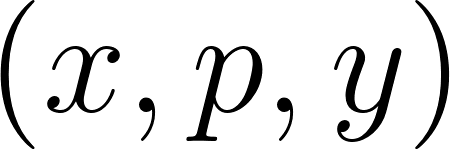 also entails
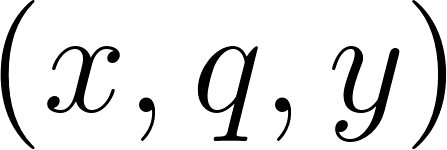 . So if the data contains the fact
(London, containsCity, Westminster), the reasoner automatically infers (London, containsPlace, Westminster) without that triple ever appearing in the file. We define this relationship structure in our data file semantic-web/data/news.n3:
 1 @prefix rdf:   <http://www.w3.org/1999/02/22-rdf-syntax-ns#> .
 2 @prefix rdfs:  <http://www.w3.org/2000/01/rdf-schema#> .
 3 @prefix kb:    <http://knowledgebooks.com/ontology#> .
 4
 5 # Schema definitions
 6 kb:containsCity  rdfs:subPropertyOf  kb:containsPlace .
 7
 8 # Fact assertions
 9 kb:newsItem_1  kb:containsCity  kb:London .
10 kb:newsItem_2  kb:containsCity  kb:Paris .
For richer modeling, RDFS gives way to OWL (the Web Ontology Language), which is grounded in Description Logics and can express constraints RDFS cannot, such as that two properties are inverses or that a class is defined by a restriction. Jena’s ontology model supports OWL reasoning as well. One idea underlies all of it and is worth stating plainly: the Semantic Web uses the Open World Assumption. A fact missing from the graph is not therefore false, only unknown, unlike a SQL database, where absence means “does not exist”. This assumption fits a web of data assembled from many incomplete sources.
Local and Remote Queries
In semantic-web/Main.scala, we initialize a Jena ontology model, load the local data file, and perform two SPARQL queries that show inference at work:
- Direct Query: Searching for cities using the sub-property
kb:containsCity. - Inferred Query: Searching for places using the parent property
kb:containsPlace.
 1 @main def semanticWebDemo(): Unit =
 2   // 1. Local Ontological Reasoning
 3   val model = JenaApis.createOntologyModel()
 4   val rdfFile = "data/news.n3"
 5   JenaApis.loadRdfFile(model, rdfFile)
 6
 7   println("\nQuerying direct cities (kb:containsCity):")
 8   val directQuery =
 9     """|PREFIX kb: <http://knowledgebooks.com/ontology#>
10        |SELECT ?subject ?object WHERE { ?subject kb:containsCity ?object }
11        |""".stripMargin
12   val directResult = JenaApis.query(model, directQuery)
13   println(directResult)
14
15   println("\nQuerying inferred places (kb:containsPlace):")
16   val inferredQuery =
17     """|PREFIX kb: <http://knowledgebooks.com/ontology#>
18        |SELECT ?subject ?object WHERE { ?subject kb:containsPlace ?object }
19        |""".stripMargin
20   val inferredResult = JenaApis.query(model, inferredQuery)
21   println(inferredResult)
The second query is the interesting one. Nowhere does the data assert a single containsPlace triple, yet the query for containsPlace returns the same cities as the query for containsCity. The reasoner supplies the missing triples on the fly from the sub-property rule. The two WHERE clauses are basic graph patterns with the subject and object left as variables, so each returns every subject-object pair connected by the given property.
Furthermore, we connect to the public DBpedia SPARQL endpoint to retrieve semantic links connecting Bill Gates to Microsoft:
1   // 2. Remote SPARQL Query (DBpedia)
2   val remoteQuery =
3     """|SELECT ?p WHERE {
4        |  <http://dbpedia.org/resource/Bill_Gates> ?p <http://dbpedia.org/resource/Microsoft> .
5        |} LIMIT 10
6        |""".stripMargin
7
8   val remoteResult = JenaApis.queryRemote("https://dbpedia.org/sparql", remoteQuery)
9   println(remoteResult)
This query fixes the subject and object and leaves the predicate as the variable ?p, asking “in what ways is Bill Gates related to Microsoft?”. It runs against DBpedia, a knowledge graph of structured facts extracted from Wikipedia and a central hub of the Linked Open Data cloud. Because DBpedia exposes a public SPARQL endpoint, our program queries billions of facts over HTTP without downloading anything, which is the Semantic Web promise made concrete: your code and someone else’s data, joined by shared URIs.
Running the Semantic Web Demo
Run the demo using:
1 scala-cli run .
This compiles the project, runs the local inferencing queries, and performs the remote HTTP SPARQL query against DBpedia:
 1 ==================================================
 2 Semantic Web & SPARQL in Scala
 3 ==================================================
 4
 5 --- 1. Ontological Reasoning (Local RDF) ---
 6 Loading RDF file from: data/news.n3
 7
 8 Querying direct cities (kb:containsCity):
 9 [QueryResult vars: [subject, object]
10 Rows:
11   [http://knowledgebooks.com/ontology#newsItem_2, http://knowledgebooks.com/ontology#Paris]
12   [http://knowledgebooks.com/ontology#newsItem_1, http://knowledgebooks.com/ontology#London]
13 ]
14
15 Querying inferred places (kb:containsPlace):
16 [QueryResult vars: [subject, object]
17 Rows:
18   [http://knowledgebooks.com/ontology#newsItem_2, http://knowledgebooks.com/ontology#Paris]
19   [http://knowledgebooks.com/ontology#newsItem_1, http://knowledgebooks.com/ontology#London]
20 ]
21
22 --- 2. Remote SPARQL Query (DBPedia) ---
23 Executing remote SPARQL query on DBPedia endpoint...
24 [QueryResult vars: [p]
25 Rows:
26   [http://dbpedia.org/ontology/founder]
27   [http://dbpedia.org/property/founder]
28   [http://dbpedia.org/ontology/keyPerson]
29 ]
The two local result sets are identical, which is the whole point: the inferred containsPlace query finds London and Paris even though the data only ever states containsCity, because the RDFS reasoner materialized the parent-property triples. The remote result shows the graph’s answer to our question about Bill Gates and Microsoft: the predicates founder and keyPerson. We did not tell the program these facts; it discovered them by matching a pattern against a public knowledge graph. This same technique, resolving names to URIs and querying DBpedia for the relationships between them, is exactly what we build into a full application in the next chapter.