Special Guest: Simon Collinson
A Leanpub Frontmatter Podcast Interview with Special Guest Simon Collinson

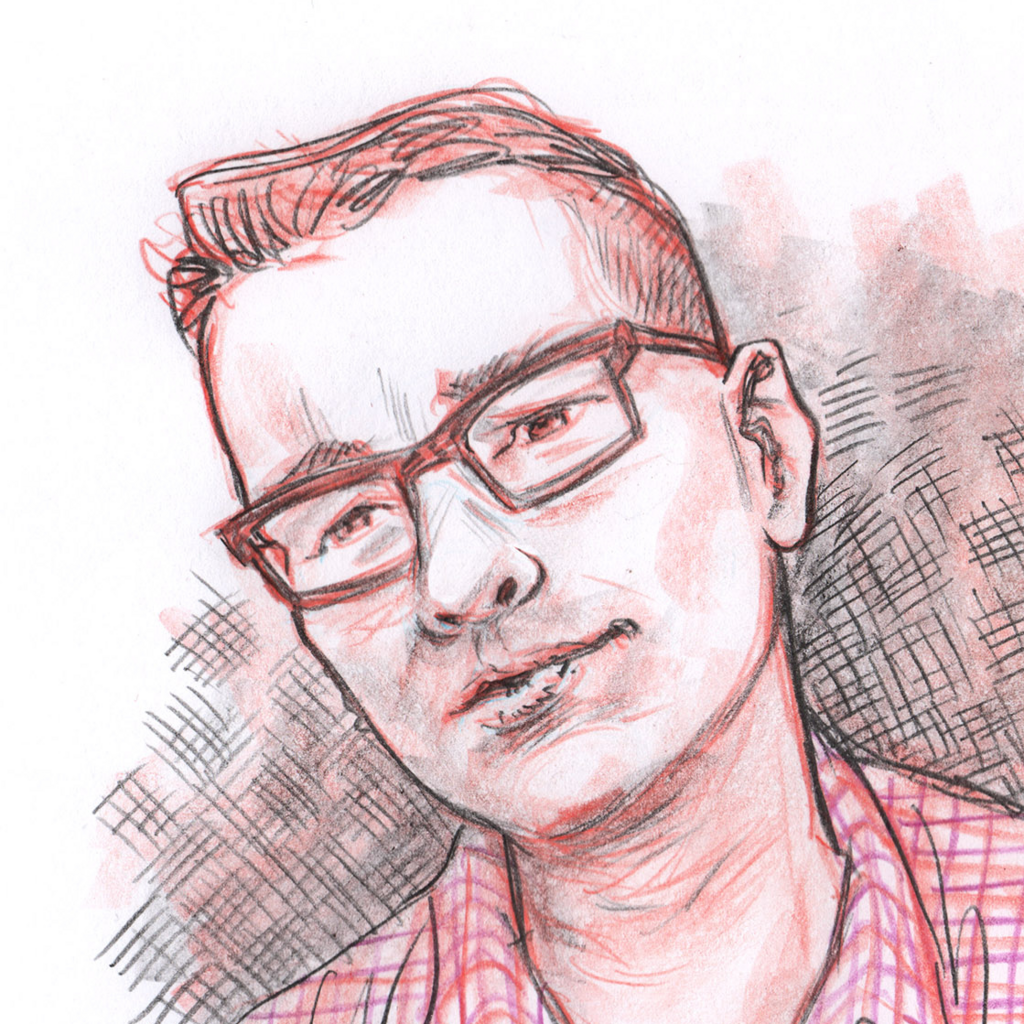
Special Guest: Simon Collinson is an Australian digital publishing professional currently based in Toronto. In this interview, Leanpub co-founder Len Epp talks with Simon about his background, how he got into the book industry, living and studying in London, the role that location can play when it comes to success or prestige in the publishing world, working on data analytics at Kobo, the concept of data skepticism, Tilted Axis Press, and his new role at TextbookHub.
This interview was recorded on January 14, 2021.
The full audio for the interview is here: https://s3.amazonaws.com/leanpub_podcasts/FM171-Simon-Collinson-2021-01-14.mp3. You can subscribe to the Frontmatter podcast in iTunes here https://itunes.apple.com/ca/podcast/leanpub-podcast/id517117137 or add the podcast URL directly here: https://itunes.apple.com/ca/podcast/leanpub-podcast/id517117137.
This interview has been edited for conciseness and clarity.
Transcript

Len: Hi I'm Len Epp from Leanpub, and in this episode of the Frontmatter podcast I'll be interviewing special guest Simon Collinson.
Currently based in Toronto, Simon has extensive experience in the book publishing industry, including his time at Kobo as a Senior Manager for Business Reporting, and his work as co-founder and digital producer at Tilted Axis Press. He'll soon be moving to Vancouver for his new role as Publisher Business Development Manager at PressReader subsidiary TextbookHub, where he'll be onboarding publishers and supporting schools in the adoption of digital textbooks.
You can follow him on Twitter @Simon_Collinson and check out his website at simoncollinson.com.
In this interview, we're going to talk about Simon's background and professional interests, his experience in the book publishing world, and his views on some of the trends in book publishing as we enter 2021.
So, thank you Simon for being on the Frontmatter podcast.
Simon: No worries Len, thanks for having me.
Len: I always like to start these interviews by asking people for their origin story. So, I was wondering if you could talk a little bit about where you grew up, and how you eventually made your way into the book publishing world?
Simon: For sure. I'm Australian, and I've been kind of bouncing around the English-speaking publishing industry for a couple of years now. I started out as a print book seller back in Adelaide, Australia, and sold books at a Dymocks book store for five years. I did a bunch of interesting things there.
I edited a student magazine, and then I did an internship in 2013 at a company called Vook, in New York. Did you ever encounter Vook?
Len: Yes, it rings a bell.
Simon: They were, at that time - they started out doing - video enhanced ebooks was their idea, and then they pivoted to basically services for other brands. The New York Times was one of their clients - putting together ebooks for other companies.
They pivoted a few times, and ended up becoming the book distribution platform called Pronoun. And then they got acquired a few years later.
So, yeah - they pivoted a bunch of time. But it was a really interesting place. I came along in 2013 when the ebook market was just kind of exploding, and I thought, "Huh, this is interesting - ebooks."
So I came back to Australia and started making ebooks as a freelancer, and then moved over to the UK, did a Masters in Publishing over there, and worked for a company called Canelo), which started out as an ebook-only publisher, and now they're doing really cool things with print-on-demand.
And then I met my wife, who's Canadian, and we moved to Toronto a couple of years later, where I started working at Rakuten Kobo. I just left Rakuten Kobo now after years years there, and started at TextbookHub.
So, that's kind of the one-minute potted history. But I guess I should mention - along the way, I started a radical non-profit press called Tilted Axis Press with my friend Deborah Smith, and we've been publishing books and translation ever since. So, that's kind of the side project.
Len: I'd like to talk to you about Tilted Axis Press in just a bit. But I'm just looking at your profile here on LinkedIn, and I see you also spent some time in the UK?
Simon: Yeah. I did a Master’s Degree in Publishing, which is kind of one of these things now, I guess - if you want to get into the - especially in the trade side of the industry, but really any side of publishing, you have a lot of an advantage if you have one of these Master's degrees.
And so I did that, and then worked for a couple of different publishers before I landed this job at Canelo. So yeah, three years in the UK.
Len: Three years. And were you in London the whole time?
Simon: Yeah. Different places in London. I mean, anyone who's lived in London will know that as a student, you end up moving once a year, if not more frequently. Because you have housemates and they move out and - yeah, I actually lived in, I think three, maybe even four different places, in those three years. I saw a lot of London, yeah.
Len: So - long time listeners of the show will know that I lived in London for about eight years. Or - well, I lived in the UK for nine years.
Simon: Oh, I didn't know that.
Len: And I lived in numerous locations in London as well. And so, for a bit of - we'll only talk about this for a few minutes, but it's actually always interesting to me, because I've actually talked to people who are currently living in a neighborhood where I lived in London. So I'll just say where I lived. I lived in Balham, Golders Green, Chelsea for a while - and I'm even forgetting places. I lived near Angel Station, near the City for a while.
One of my jokes was that, if you had one Aussie roommate, you had at least two. There was always someone else there.
Simon: Yeah, that's true. That is very true.
Len: Can you tell us some of the neighborhoods that you lived in?
Simon: I lived for a year near Kings Cross Station, in - the thing I would tell people is, "It's the prison on the Monopoly board." Whatever the name of that street is, I've temporarily forgotten. But anyway, in kind of the rough side of Kings Cross.
Len: Right, yeah.
Simon: Not the nice Islington part that you lived in. The - oh, just a bit west - where it's a bit rough. And then I lived in Brixton for a year, which was fantastic.
Len: Oh yeah.
Simon: Yeah. I then did a year in Dulwich, which was also a very, very cool neighborhood. I was the least cool person in that part of London, but it was a lot of fun.
Len: This is a very specific question - I often wondered what it would be like to be a student in London, with so many things to do. Did you find it difficult to stay focused?
Simon: Well, it was a little hard to concentrate sometimes. But I think the fun thing about being a student in a professional degree, I guess you could call it - is that a lot of the fun things were tied up with the publishing community. And one of the great things about the UK, is they have a very strong, a very vibrant publishing community in London. And I mean, the flip side of that, is that you have to be in London to access that community. And you're on a publishing salary trying to drink 15 pound gin and tonics at fancy clubs, but -
Len: Yeah, I know that life.
Simon: But yeah, I loved London. It's a great place to be as a young person, I think. And a lot of people, I think, spend a few years there and move on.
Len: Yeah, it's interesting. Just to share a brief story. It actually really does - I mean, it's a little bit different now with sort of things going so virtual under COVID and things like that. But where you are can actually be a huge privilege in the publishing industry. I remember - I wasn't even adjacent to it, but I'd studied English and had a friend in London who just said, "Hey, I've got someone who's got a manuscript of the latest Michael Ondaatje novel, they need someone to proof it." And so I got - like just printed out from Microsoft Word, an early version of Anil's Ghost.
Simon: Wow, that's cool.
Len: It hadn't been published yet, and I just like had it in my apartment to read.
Simon: Yeah, that's cool.
Len: That wouldn't have happened if I hadn't been in London. Not in a million years.
Simon: I think that's one of the things that people in publishing secretly really love, and they're a bit embarrassed to admit it, is - having that access to things before they get published.
For a while I was reading submissions for a few publishers, and I read a few things that went on to win prizes and stuff, from big names. It is a really cool feeling, of being the first or one of the first people to read something that you know is going to be a very popular book.
I think that there's a whole interesting - I'm sure people have written dissertations about this. There's a whole interesting prestige economy around proof copies of books, and who gets advance copies of things. And the visibility of, "Oh look, I've got this new Jonathan Franzen," or whatever it happens to be - six months ahead. It's interesting. You can be cynical about it, of course. But it is very interesting to see how it operates.
Len: Well, and even parties, right, and gatherings, and stuff like that. I've been sort of adjacent to sort of some well-known authors. And it's like, "Would you like to come to our Wednesday afternoon at the pub?" kind of thing. It's almost like a momentous thing to be invited into the circle.
Simon: Yeah, yeah.
Len: A lot of this in-person stuff, I have no idea how it's been affected by COVID - but there's all kinds of prestige in the publishing world, around in-person stuff, and in-group things.
Simon: Yeah.
Len: And again - where you are, makes a huge difference.
Simon: Yeah, for sure.
Len: And so, you ended up in Toronto, and you ended up working for Kobo. I was wondering if you could talk a little bit about what your work was for them?
Simon: Kobo was really interesting for me. I worked in a role that had really nothing to do with what my experience should have suggested I would be doing.
I had been building ebooks by and large for several years at that point. And then this job came up, which was in the content analytics department, which later became part of the big data team.
One of the things that I learned from scratch, which I think is the best way to learn something at a new job, is, I learned about data, and I learned how to write SQL, and I learned Python. I spent a lot of time hanging out with DBAs, and with data scientists and with data engineers, product managers - all these technical people.
I'd never worked really in a medium-to-large sized software company before. I think - by the way - whether you consider a 400 person company medium-sized or large, says a lot about you. But to my mind, this was the biggest place I had ever worked. And by tech company standards, it's quite small.
But I spent a lot of time hanging out with really smart engineers, and I learned a lot, and basically spent my time writing a lot of SQL, building a lot of dashboards in Tableau, trying to answer questions about, "How can we turn data into business?" - answer business questions with data.
And so I learned the discipline of - I like to call it "data skepticism," which I think is like a really important skill, that I think maybe needs to be taught more widely. Which is - just because you have data, doesn't mean it's useful. Or, it doesn't mean it tells you what you think it means.
So yeah, I learned a lot at that job, and got to do some kind of product management-type stuff. I worked very closely with the executive team in terms of doing research projects.
I had a lot of opportunities there to see Kobo's business from A to Z. I had access to everything. And so that was a very privileged position to be in, in many ways - to see the entire user base data, whatever I wanted to - to play around with it. It's a lot of fun.
Len: I think for people - there might be people listening who are like, "What does an ebook company need data for? What research projects would one be doing for a company that distributes ebooks?" I was wondering if you could dive in a little bit to talk about the actual projects you would've been working on - what data Kobo was gathering, and how they were using it to help customers and determine what to do next.
Simon: Yeah, for sure. One of the things I didn't realize when I started working at Kobo - I mean, I sort of knew this conceptually, but I'd never seen it in person - was, just how much data gets generated when you visit a website or when you use things, when you use software or hardware. Kobo's interesting, in that they have a number of different business models. So there's the hardware business, where they make eteaders, obviously. And then there is an ecommerce business, where they sell ebooks and audiobooks. And then there's also a very important partnership aspect to it.
Kobo has many partners throughout the world, who they work with very closely. Some of them are extremely tightly integrated with Kobo's ecosystem, indeed. And so there's a lot of - it's not, I don't know if I'd call it "software as a service", but there's a lot of development of software in a generic sense, for use by partners all over the world. I guess there's those three aspects of it.
And there's also the self-publishing arm as well. There's a division called "Kobo Writing Life." Plus, there's now original content as well. So there's just a whole bunch of stuff going on.
But the core of it is really, it's a big ecommerce website. And so you have a lot of folks from the marketing team who are interested in, "Did our ads perform well? How's our email marketing doing? Which products are performing better than others? How do we serve recommendations?"
Some of the most interesting stuff that the data science team is working on is product recommendations, which is a - that's a whole domain of data science.
But we have some really smart people working on - the cold start problem, for example. When somebody joins your service, how do you give them a recommendation when you know nothing about them? And that often translates into, "How do you get somebody to give you information about their tastes that can then be used to serve them recommendations?"
There's a whole bunch of stuff like that. There's practical stuff like financial records. But there's also a lot of conceptual stuff, like, "If we have such and such data, can we predict behavior X, Y, or Z?" There's a lot of looking for patterns in data. And that's, I guess, what you would call more like "classical big data analysis," where you're looking for pure relationships between things.
And there's of course textual analysis. You have this huge corpus of books as well. And in fact, they do do a lot of textual analysis, to do things like looking for books that might not be age-appropriate, that are trying to slip under the radar or word counts - all that thing. Sorry to interrupt.
Len: No, no, no - that's okay. I was interrupting you.
It's really fascinating. This actually brings up a really deep issue in the publishing world, which is - a lot of people - most people, even if they're not into the book publishing industry theory and practice and stuff like that - are aware of the fact that Amazon is a huge, dominant player in the discovery and in the selling of books.
And so a lot of people think, "The publishers have really seeded a lot of autonomy to Amazon as a place where books are sold," right? If you want to sell your books, you have to go through Amazon. And there's just all kinds of obvious implications for the things you've given up by doing that.
Simon: Yeah.
Len: But the data side of it is hugely important, right? Because what happens when you sell - you're a big publisher. You're selling, let's say, millions of books a year. But Amazon knows everything. They know who the customers are. They know where the customers are from. They know what other things the customers have bought. They know how frequently they buy things. They know what subjects they're buying, they know - Amazon has all that information about, essentially, your readers.
But as the publishing company, you don't have it. So it's not just control over the really big-ticket things, like pricing and stuff like that, or distribution - which Amazon can throttle if they want to thing. It's all the stuff you were just talking about. It's a really obvious opportunity for a company that has all that information, to actually bring on publishers as clients, if they can pay for a service, that they can then access some of that information and use it in various ways to decide, "Oh vampires are over, it's werewolves now."
Simon: Yeah. I think a lot of this comes from the fact that publishing is still grappling with the fact that we are moving from what was essentially a B2B business - selling to bookstores - and we're now in a world where we have a mixture of B2B and B2C. One solution to that is to lean on B2C. And that's why you hear people talking about email marketing so much.
Sam Missingham, for example, is a friend. You'll often hear her talking about the importance of having a good email list. That's the start. But beyond that, you want to try and have as close a relationship with your customers as possible, as a publisher. And so you see a lot of smaller presses now offer subscriptions. And actually, that's something that we do at Tilted Axis, and have found that it's been really, really good for brand loyalty. And for people feeling that close connection with us and what we're publishing. I think you want to be as close to your end customers as possible.
But at the same time, most of your money is coming from bookstores. And so you can't neglect them either. So it's become a much more complicated business.
When I was younger, I used to be very critical of publishers, and I used to think, "Why did you cede this business to Amazon, and why do you do such and such?" As I've got older and more experienced, I've realized that there's only so many things you can do in a day. And people make decisions about where to focus their efforts.
I don't always agree with the way publishing has focused on things. And I think tech literacy is a real problem still. But you can see why - somebody comes and offers you this solution to a difficult problem on a silver platter, and you're like, "Oh yes, I'll have one of those, thank you very much."
Len: This is just a total like "what's your opinion" question, but why do you think that tech literacy is and has been such a particular problem for the book publishing world?
Simon: This is such an interesting question, and this is one that I talk about with my students a lot. Until fairly recently, I was teaching with my friend, Monique Mongeon, a course at Ryerson University on book publishing, specifically, making ebooks. And one of the things that we always had to address, was - students would come in feeling very anxious and feeling, "Oh I'm not technical. I don't have any of these skills. This is going to be so hard for me."
And so the first three, four weeks of the course are really just designed to show the students, "Look, you can write HTML. Anyone can write HTML. And now you can write some CSS. And now you can write a little bit of XML, and look - you've got an EPUB." A lot of it is dispelling this fear.
I think a lot of it comes from school, when people are told, "Oh well, you're good at English, therefore you can't be good at mathematics or whatever." I think people tend to divide themselves into these two camps.
And you can even go back to like C.P. Snow, talking about the two cultures - the technical cultures, the scientific culture, and the literary culture.

I think it's a very deep division, especially in Western societies - is this idea that you can be good at the technical things, or you can be good at the literary things - but not both. And I just think that's categorically untrue. I don't agree with that at all.
Len: Yeah, I could talk about that forever. I call it the myth of incompatible talents.
Simon: Yeah, I like that.
Len: Which is - I mean, so I've had this experience in my life, where I wrote a doctorate in English literature, and then became an investment banker doing high-level financial modeling and stuff like that, which was essentially functional programming. And yeah - it actually is sad to see people when they're caught up in this myth, where they think that, "Because I'm good at this, I'm going to be bad at that" , so they don't even try - or they even self-sabotage, to reinforce this preconception that they go in with.
But actually, I once had the experience of having a good friend who had the opposite, even more tragic problem, which as thinking that because he was bad at one thing, he was good at the incompatible thing, which is something that you get.
There are people who will like - and unfortunately you do get this particularly - well, I mean I won't specify any particular subculture, but like people who boast about being bad at math, as though that's somehow proof that they're a literary person. Well, I actually am singling it out. It's just - when you've freed yourself from the nets of this myth, you see people caught up in it, and you see people reinforcing it as well. "Oh, you're good at math, so we're not going to read your poem or take it seriously," or something like that, right?
Simon: Yeah, it's interesting, some of the best engineers that I worked with at Kobo, weren't necessarily the people who wrote the most lines of code. They were the ones who could actually communicate what they were doing to their colleagues.
I realized a couple of years ago that the hardest thing to do is to communicate in any field, but especially in technical fields. And so if you come to that with a background where you have got some training in the literary arts, you actually have a real advantage. That's why you see, I think, so many people from an English background making really great contributions as like product managers, and as developers, or whoever. I think there are a lot of transferrable skills.
The culture of culture of tech is partly to blame for that as well, I think. I have a friend, Emma Barnes, who runs a fantastic book metadata service called Consonance. She's often talking about how you read documentation that says, "Just do this. This is really simple. This will simply do this." And of course, if you're reading this and you run into like a Java runtime error when you're trying to install something that the documentation says, "Is as easy as pie," it does make you feel stupid and it does reinforce those things.
But, of course - when you're in the position of having done something for years and already solved all of those annoying issues, you are in the habit of thinking it's easy. But you've got to put yourself in the position of, "Okay, this isn't easy. Just because it's easy on my machine, it's not easy on your machine or with your experience, with your background", so -
Len: Yeah, nothing makes you yell at the computer more than conceited instructions. You'll find this on message boards, where people are like, "How do you do this?" And someone will go, "Oh, you just flange the baluster, duh."
Simon: Yeah, yeah.
Len: And it's like - I'm asking, because I don't know - or else, why would you want to do that?
Simon: Always a small problem, isn't it?
Len: Yeah, oh it's a problem. "Why would you want to do that?" And it's like, "Why would you waste time asking me why I want to do something that I clearly want to do?"
Simon: Yeah, it's like, "Why would you want to go to Berlin? Paris is so much nicer."
Len: But yeah, these are common problems. I actually wanted to circle back a bit to what you said about data skepticism. Because, something I haven't had a lot of experience with, but I've had some, particularly from a like the investment side of things - where there's a phenomenon where people see, particularly charts, and they think that that must correspond to some objective reality.
It sounds funny to put it that way, but if you show someone a chart that's a projection, that's like a hockey stick, for a stock - not that I've ever done that myself - but like, they'll just, oftentimes, they'll just believe it.
It's just a weird phenomenon. And particularly with numbers, showing people numbers. You'll see this in the publishing world, where some management consultancy puts out a projection that, "We project that the cumulative aggregate growth rate for the publishing industry in the next five years will be 3.25%" - in decimal, what's going to happen in five years.
Simon: Yeah, I love that. And you look, and it's just like - it's just a straight line. It's like, "Oh, okay. So you've just taken this number and multiplied it by like .0325. It's not necessarily that sophisticated."
Len: Yeah, but our cumulative annual growth rates are?. There's a whole industry of people just providing numbers that are complete bullshit. [Len means the Compound Annual Growth Rate, or CAGR - Eds.]
It's weird. Because like, we understand why, right? It's like, people who are making decisions can't just hand-wave. It's nice for them to have a report with numbers in it to point to.
But it's really easy, even if you know better, to slip over into being overly certain about anything that comes in the form of numbers and charts - which is, I imagine, a huge challenge for anyone whose job is to - not just manage data, but to present their findings.
Simon: Exactly. I ran into this challenge a few times at Kobo. Because, once you've proven that you know how to write SQL, the next question is, "Okay, I want a prediction for such and such a business or such and such a thing." I realized that I could give somebody a number that said $100,000, or I could give them a number that said a million dollars. And both would be taken as equally plausible. I realized that the only way to really do this in an intellectually honest way, I think, is to be really, really explicit about what your inputs are and what your assumptions are.
And then you end up in a case where you give people a low case and a high case and a medium case. But even that implies a degree of certainty that isn't really there.
I realized that the best way to present an uncertain calculation, is to show how many confounding variables there are. And so I would usually highlight those things in yellow in an Excel spreadsheet. It's like, "Oh wow, there's fifteen different inputs, and each one of them can change the output by three times."
And like, "Yes, that's exactly what I'm trying to tell you - is that you can make some reasonable assumptions, but ultimately you have to take a guess a lot of the time." And that's hard in business. People want to have definite answers. But sometimes you've just got to make a guess, and hope that you're right.
Len: Yeah, you get the weird second-guessing that happens too if you - I mean I've had that same experience, where you try to be intellectual - I mean of course, you're always trying to be intellectually honest about things, right? But if you show people how much uncertainty there is behind the prediction they're expecting, or they've asked for - they might feel like that's because you're not good at it.
So there's a real balancing act, because you are good at it. You really do understand it better than they do, and you know what's going on. But if people have this expectation of certainty, and you present them with uncertainty - they might think, "Oh well, we just need to keep working at it." The really hard thing is to convey to people, "No, this is just an inherently uncertain thing."
But once you've been behind the curtain, you see these projections and things like that, whether it's a government budget or an industry projection or something like that, andnd you're like, "Somebody had an Excel spreadsheet and they typed some numbers in it. And then there was a meeting about 'Should we use those numbers or other numbers?'" And that's the basis for that projection.
Simon: Yeah. And I mean, I used to be responsible for a big part of the inputs for the financial forecasting for Kobo. That was a fascinating process. Because there are multiple layers of stakeholders, and it's an important process.
Ultimately, at the end of the day, you're saying, "This is my best effort." And there are a few times that I got it wrong. I got it wrong quite spectacularly on one occasion, that I can't really talk about. But all you can do is say, "Look, these are - these were my assumptions, and this was the one that was wrong." And sometimes you've got to be humble and say, "I'm not perfect at this, but I'll try to be honest with you about where my knowledge stops."
Len: You're getting - anyone in an analysis role out there, you have my sympathies.
Just shifting gears a bit. So Tilted Axis Press, you're a co-founder of it. And I was wondering if you could talk a little bit about that for a moment - how it came about and what it does.
Simon: So Tilted Axis, I can't take any credit for the idea for the press itself. Essentially, the way it came about was - I knew a translator called Deborah Smith). We had interned at the same publisher back in 2014, something or other. And she came to me and said, "I need a technical person to help me set up this press that I want to build, would you be interested in doing it?" Essentially the idea is that - Deborah is a translator from Korean. And she translated a book called The Vegetarian that went on to win the Booker International Prize in 2016 - and became actually very, very successful - especially in the US.
She has this network of translator colleagues all over the world. It's a very tight-knit community, the translation community. And she realized that a lot of books, especially from Asian languages - where there were translators there who were willing to do the work - in some cases, even funding from the governments of those countries. And a lot of publishers, particularly in the UK and the US, just weren't interested, or they could only do so many per year. And there's just so much great literature being published that just wasn't making it over, especially to the UK.
And so we started out with this brief of essentially focusing on work in translation, largely from Asian languages. We published books translated from Bengali, and from Thai and Japanese. And languages that, in some cases - one of the books that we published was, we think was the first book translated from Thai to be published in the United Kingdom as a commercial fiction book. This was like 2018, and this is the first time this is happening. It's crazy, so -
Len: Wow.
Simon: So, Deborah had some money from the Booker Prize, and she put that into Tilted Axis. We've been a distributed team since day one, so we've never had an office. We've met in person, I could count the number of times on one or two hands. We have team members all over the world. Deborah's living in India right now. We have team members in the UK, and it's a classic distributed team now.
We've just published our 20th book - we've done poetry, we've done all kinds of fun stuff. It's great, because it's completely different from the commercial publishing world that I spend most of my time in. And it's the absolute opposite end of the spectrum, like very indie, arthouse publishing that is something that we do because we think it's important.
Len: And how do you distribute - how do you sell your books?
Simon: We have a fantastic sales agency called Inpress, in the UK. They represent a lot of poetry publishers. They have a couple of hundred clients, I think. They're our sales agency.
And then we have a distributor called NBNi, who were recently acquired by Ingram. I think they're now called Ingram Publisher Services in the UK. They do our distribution.
And we print in the UK with - usually in the UK with Clays and - basically, we're a standard publisher in some senses, and we're very different in others.
That was like a conscious decision. Because we wanted to figure out, "Where are the things where we can save costs, and essentially outsource these services that we don't want to provide ourselves".
Sales is obviously one of them, where you get economies of scale. Printing, distribution - all that stuff. But we obviously do our own editorial work in-house. I make all the ebooks and run the website and all that stuff. So, yeah, it's a traditional publisher from the sales and distribution point onwards. But everything else is a bit different, up to that point.
Len: This is, I think probably a good opportunity to segue into the part of the podcast where we talk about how the pandemic has affected the guest, and their work. Why don't we start by hearing about how the pandemic has affected your indie press?
Simon: I mean, to be honest, nothing has really changed at Tilted Axis. We - although one of my colleagues is currently ill with the coronavirus in the UK. I think she's on the road to recovery, but yeah - I shouldn't say "nothing has happened." It's obviously affected us personally. From a business standpoint, really though - nothing much has changed. We've had a little bit of trouble getting print runs fulfilled recently. We had a few ship dates slip. But by and large, we were already a distributed team. So it hasn't really changed that much.
And I guess the other thing is that the timelines are so long that it doesn't really - we're only starting to feel the effects of coronavirus on our commissioning now. And then for our 2021 list. But yeah, I think sales this year have been good. We were lucky, one of our books won The National Book Award for Translated Fiction in the US recently. It's called, Tokyo Ueno Station.
So we had this book translated, and we sold the US and Canadian rights to Riverhead in the US. They put all this publicity muscle behind it. They created this beautiful cover. And they got a National Book Award. So that book has actually done fantastically well for us this year. So yeah, we fortunately have been very much unscathed by the pandemic. We've been very, very fortunate.
Len: Best wishes to your colleague for a speedy recovery.
I was wondering too, what life has been like in Toronto under the pandemic? I mean I know it - well, speaking of timelines, it's now been a really long time. When I started asking this question, it was only like a month in. But now it's been quite a bit longer than that. And Toronto, well, Ontario just went into a new lockdown phase. So, I was wondering if you could just give us a general impression of what life's been like for you in Toronto, since things started in, basically, March?
Simon: I think, tomorrow, it's been like 10 months of lockdown for Toronto. Although, we did have a period in the summer when it was less severe and we could meet people outside.
But I mean, again, I've been very fortunate I've been able to work remotely the whole time for Kobo, and then for my new job, since mid-December. My wife is also working remotely. So we're on opposite sides of the kitchen table. And sometimes people are like, "I can see your hands, but somebody's typing - what's going on?" It's like, "Well, my wife is sixty centimeters away, so that's probably what you can hear." But yeah, we have been very fortunate, in that we can work remotely. And I've picked up baking sourdough this year, and started running. And that's about all that's changed in the last year.
Len: Baking - oh sourdough, right?
Simon: Yeah.
Len: I'm a bit late to the game, but I just got - I'm just showing you this classic Italian baking book.
Simon: Oh wow, yeah, that looks nice.
Len: It's fantastic, it's called The Italian Baker, I recommend it to anyone who's interested.
Just before we move on to talking about your new job. Was - I'm curious about masks. Where I live in Victoria on Vancouver Island, people didn't actually start wearing masks outside until quite recently. And even now, it's not a requirement. Maybe like one quarter of people will do that. What was it like in Toronto, generally, around masks?
Simon: Yeah, well, it's funny, because I have a good friend in Hong Kong who was trying to tell us back in February, or January - she was like, "This is real. This is going to affect you." And we didn't really believe her.
But I think Toronto has been pretty good about wearing masks since the beginning. I think, I mean - it took a little while for people to get used to it. But I think we are probably doing pretty well. You still do see a few people who aren't wearing masks when they should. But I'd say 95% of people are doing a pretty good job of wearing masks indoors and outdoors now. I see increasingly people are wearing masks outdoors, and I think it can't hurt.
It's very hard to know quite - I guess when social change happens like that, it's really interesting. Because my family's back in Australia, and the contrast could not be starker. I don't know if that's the right way of saying that. But the contrast could not be more telling. In Australia, my sister was at an in-person wedding last week, for example. Life is completely back to normal for most people. They're at the beach right now. So it does make me wish that Canada had done a better job of locking down more aggressively. But I also think we share a border with our dear friends down South, who probably would've been acting as a viral pump for us, no matter what we did. So, I don't know? I'm not an epidemiologist, so I shouldn't really have opinions about that thing.
Len: No, no - I mean, we've all been thinking about it for a long time, right? And it's - you've got to - regardless of one's expertise, you have to come to some conclusion about how you think you should behave, and how other people should behave. My position has been - I started being concerned about it, I think - when you're in like the tech world, people were a little bit more aware I think, than in other worlds, in advance.
My approach to it is that, "I'll start wearing one outside when it tips over to the point where other people are concerned about it." But personally, specifically here on Vancouver Island, and in the city of Victoria, I just didn't think it was worth it. But the moment it tips over to like, "Hey buddy, put on a mask", it's like, "No problem at all." It doesn't hurt at all. But everyone's got an opinion. I'm no epidemiologist either, but everybody's got to come to their own conclusion anyway.
Simon: Well, it's interesting. Because I remember talking to a friend who is an infectious diseases specialist actually, and knows things about transmission of disease. And I remember asking him, can remember back at the beginning - there was this whole debate about whether masks were effective, and whether people should be wearing them or not - and whether the general public should wear masks.
I remember asking him, and he said, "Well, you probably don't need to." And that was the conventional wisdom a year ago. At least with a lot of English-speaking doctors, I think. It's an interesting example of how - particularly in Asian countries, mask wearing was very much the norm. And I think there's probably a failure to learn from that experience. And on the part of Western doctors, they probably could've learned from what their colleagues in Asia knew already.
Len: I mean, this is a really deep subject that we could talk about forever too.
Simon: Yeah.
Len: But the thing is, my understanding is that - typically in Asia, mask wearing was adopted as a form of being responsible towards other people, right? You didn't wear it because you were afraid of getting something. You wore it because you didn't want to spread whatever you thought you might have.
And people, particularly in North America, and maybe even particularly our friends to the south here - viewed it quite differently. They viewed it as an expression - a lot of people viewed wearing a mask as an expression of fear, and a protective thing. It was just a like mirror image of the way people in Asia typically viewed mask wearing. Which was like, "I'm trying to help other people out. That's why I'm wearing it." It' wasn't viewed as an infringement of your freedom, it was something you adopted just like washing your hands before you serve food. It was just a normal thing to do.
Simon: Yeah, that's a good way of putting it. I always felt like - I noticed, especially at the start, a few people wearing masks with vents. And I was thinking, like, "Well, what's the point of that?" But of course, if you think of the mask as protecting you, then that makes sense. But from the perspective of, it's meant to be a barrier to transmission in both directions, then a mask with a vent is only really serving half the purpose it's meant to serve.
Len: Yeah, I actually had one of those initially. Someone gave it to me, I wasn't an expert. And it was - well, people were learning, right? It was a construction mask. So the idea was that it was designed for the purpose of protecting you from damaging stuff in the environment around you.
But people were - I think most people who wore those, like me, didn't realize that actually this wasn't helping other people at all.
Simon: Yeah, absolutely, yeah.
Len: And so, moving back to your career. So you're starting - or you've already started a new job with TextbookHub.
Simon: Yeah.
Len: And, as I gather, you’re going to be moving to Vancouver relatively soon.
Simon: Yeah.
Len: I was wondering if you could just talk a little bit about what TextbookHub does, and what you're going to be doing for them?
Simon: Yeah, for sure sure. So essentially, TextbookHub is a digital textbook platform for independent and parochial schools. That's the core business in the US. And there are two value propositions. One of them is, we have this fantastic annotation platform, where we can serve content to you, and our own reading experience. As a student or as an instructor, you can annotate it. You can add notes, you can add hyperlinks, you can draw on the pages - whatever you want to do. And then you can share those annotations with other people in your class, with other students or instructors. And so there's that reading experience. But we also have -
The fact is that the digital textbook world is quite a messy space. So there's a lot of other publishers who have their own reading systems. We integrate into them as well. And so we provide a single-sign-on service for those books, where they aren't in our platform.
The idea is that the student or the instructor logs into this one place. They have all of their books there. If the book's hosted on an external service, we make it as easy as possible for them to go out and access that content. And rather than somebody having a dozen different logins to a dozen different websites, because there's twelve different publishers all trying to maintain their own walled garden -
One of the things that I've learned - and educational publishing is new to me, but I've been in trade publishing for a long time - is that, this is quite a messy space. There's a lot of overlap, there's a lot of products where it's not quite clear how things integrate with each other. Does your product integrate with such-and-such learning management system? Does it get information from student integration systems? Do you have SSO? It's a really complex space.
One of the things that we offer that schools seem to really like, is simplification of that. Where it's like, they send us a list of books, and we go and get the books, and they don't have to worry about that.
And so my role is essentially, I'm the first person on the team to focus specifically on publisher relationships. My role is to go and get as much content as I can, and to work on those integrations with publishers. And so, I'll be doing everything from the business relationships, contract negotiation - that level of things. All the way down to curating the EPUB files that get delivered. Because, again - this is my background, in ebook production. I love to get my hands on the files themselves and review the EPUBs and make sure they're good.
And also, a big thing that we're working on is metadata. Especially the classic book industry problem of price information being wrong. Getting good metadata in from all of our partners is a really big challenge. So that's something that I'm working on right now.
Len: And what's the customer range for TextbookHub? Is it Canada, is it British Columbia? Is it the whole world?
Simon: Right now, we're US only. Obviously at some point in the future, we might want to expand that. But for now, it's US only.
Len: Pretty big market.
Simon: Yeah, huge - yeah.
Len: Yeah. Simplification sounds like a really important thing to focus on. Particularly with people switching to remote learning in so many instances, in the last ten months. The idea of making things simple and workable, has I think probably become a higher priority for people. Because there's things that can be done in person that you kludge together, that you just have to find a solution for when you're doing them remotely.
Simon: Yeah. And I think one of the other things that it gives you, is that you are free to change your textbook at any time. Often schools are increasingly renting textbooks for a semester, or for two semesters. And so, rather than the school investing in a physical textbook, which is expected to last for four years, and having to have this lumpy budgeting, where you have like a big investment in the product one year and then nothing the next years, you have the continuity for one year, and if you need to change that - then you don't have this pile of textbooks that you have to use. So it gives you more flexibility in that sense.
We've done some research into why schools are adopting digital textbooks, and what percentage of the textbooks are adopted. And a lot of schools are saying that they actually, they do save money this way. Because they can get a more granular unit of textbook, if that makes sense? But yeah, I mean - it's still very variable. So, some schools have got like 10% or 15% digital textbooks, and everything else is print. Others are like the other extreme, where they have 90%. One school told us they had 95% digital textbooks. So it's all over the map. But a lot of it is - it gives them more flexibility and saves them money.
Len: It's a really interesting topic - the idea of being able to update the textbooks that the students are using. This is definitely not an area of my expertise, but I've had some experience with it from the student side of things. And with print, often an experience you'll have in a classroom - particularly in universities, I guess - is people have different versions.
This sounds like a really technical thing, but it's actually a very significant real-world problem. Where you say, "Go to page 231." And people are looking at different things, because they're in different versions. And the idea - one of the great things in my view about digital books, is that since things can be updated for everyone - particularly if they've subscribed to a service or something, like that's the portal through which they're viewing something - you can just be sure everyone's on the same page. And that's actually really important. It's as important as synchronizing your watches, if you know what I mean?
Simon: Yeah. And but it's funny though, I still think that, this is one of these things where I feel like we haven't done enough - a good enough job as a publishing industry, in terms of actually adopting some of the standards that are available to us.
So this is - I mean, you've touched on one of my personal pet peeves - is that in the EPUB spec, you can put a page list in place, so that you can have the ebook tied exactly to where the print book - each page on the print book starts and ends. So you can easily locate, in theory - you can easily locate every digital, every ebook - no matter what font size you're at or whatever, to a specific print page.
But the reality is that very, very few publishers are doing that. And probably that's because the tooling's not good enough. InDesign doesn't automatically create page lists for you. It's a bit of a headache to do them. I guess people aren't making enough noise asking for them. So at least in the trade world, most books - most ebooks - even the ones published today, still don't have page lists in them. Which I think is a real shame. Because it's a very - page numbers are a really critical navigational tool that I think we haven't moved past the need for - if that makes sense?
Len: It does, it does. You're reminding me that - it's also a big problem for academic research, right? Where you're doing citations. It's just a big problem. Like what version, if you're citing an ebook - maybe it's changed 100 times since you've cited it.
Do you have to have a specific file stored somewhere, and point to that? Well, how often is that really going to happen? These are really big, big problems and I don't know how soon any of them are going to go away.
Len: Just moving on, to the last part of the interview, where we talk a little bit about your views generally, about the publishing industry. One thing you've worked on in the past is getting interns paid.
This is an issue in journalism, and it's an issue in publishing as well - where there's often a convention that an intern might be, in journalism, that they're often paid nothing. Or in various industries, they might be poorly paid. And what that means, is that basically - it means a lot of different things, which you would know much better than me, and have more experience with. But one thing it might mean is that - only if you're already financially well off, can you get started in an industry, right?
Simon: Yeah, absolutely.
Len: Because of a period of unpaid work. I was wondering if you could talk a little bit aboutthe work you've done, with respect to getting interns paid. Do you think that shift towards more remote working is going to have any impact on that?
Simon: Yeah. That's a really interesting question. I think it - I'm really heartened by how quickly opinion has changed over internships. Probably six years ago, when people were starting to talk about this, and I wrote a couple of articles for The Bookseller in the UK - the norm was that most internships were unpaid. Even at big publishers, even at some of the Big Five publishers, you wouldn't get paid for internships. That was just the way it had always been. The problem of course is that you don't have any bargaining power if you're the intern, and you are reliant on somebody to give you that job. And so of course - you're not going to make a fuss, you're not going to kick up a stink about not having been paid. The idea is, you should be grateful just to be in the door.
I think people are starting to realize how much of a negative effect that's had on diversity in the industry. Because - especially if the interns have to be working in London, they're already in one of the most expensive cities in the world. Same goes with New York publishing of course. I have friends, who - for the first couple of years of their publishing careers, they worked second jobs to make ends meet. And to me - that should tell you something about the industry, I think.
Things are definitely improving. You've seen - especially Big Five publishers, starting to commit to baseline levels of pay. I think things are moving much faster than I expected them to.
But there was a lot of resistance at first, because there was that old guard of people who had been through it, and they were of the opinion that, "Well, you're getting all this value out of this internship and you're learning so much and it's like a mini-degree," or whatever. There were some uncomfortable conversations, and my strategy was always to confront people publicly about that. Which was - maybe I just like to stir things up a bit? Maybe that's my Australian nature? But there's nothing a British person hates more than being publicly called out for something.
I think that's also - you can talk about Twitter culture and all of that. It's not always constructive. But I think if you handle it in a targeted way, and if you give people an option to do the right thing, I think it's a very powerful tool. Because publishers are acutely aware of their image. And so it doesn't look good to have people saying, "Well, you're an X billion dollar company, why aren't you paying your interns who are working so hard for you?"
From what I can tell, unpaid internships are much less prevalent now. I think they've gone underground. In a certain sense, I think they're no longer advertised openly - and so they're harder to combat now. Because I think they're on private mailing lists - and if you're on your publishing Master’s program, maybe somebody emails your class? That's the thing that's much less public. There are still networks of privilege operating that way. In many ways, getting a Master's degree is a way of exercising your privilege. And so I'm not exempt from that by any means. But yeah, I think we are moving in the right direction. It's just - as with anything in publishing, it's taken twice or three times as long as it should.
Len: And do you think a shift towards remote work - I mean, I just came up with that question like on the fly, so I'm not sure if it's even really meaningful - but is that - I just have a suspicion that it might be easier for people to get away with using people for unpaid internship work when it's remote.
Simon: Possibly. Yeah, possibly. I did one or two unpaid internships at the start of my career that were largely remote. I think it certainly - I mean, this is the problem. This is the classic - the reason unpaid internships exist, I think, is because people are so desperate to get their foot in the door - particularly in industries like publishing and other cultural industries. I'm sure it's the same in the film and TV industries. The industries that have that social prestige, I think you will always find young people who are willing to work for nothing. I think it comes up to the employers to behave responsibly in that sense.
But, yeah, remote - you can onboard people remotely, and you can teach people things remotely, but it's hard. At Kobo we hired a bunch of people remotely during the pandemic. I think four of my colleagues on my team had been hired remotely. It's hard to onboard people and get to know them that way, it really is.
Len: I guess my last question would be - given the fact that all predictions are based on assumptions, do you have any big predictions for 2021 in the book publishing world?
Simon: Ooh, that's a great question. I think we are going to see more and more movement in the automated typesetting space. I think that's something that's been flying under the radar a little bit. There's a bunch of interesting work going on. I mean you guys at Leanpub obviously have your toolchain. There's a very interesting tool called Hederis, which I think is launched now. That is another fantastic tool.
I think accessibility is going to increasingly become important. I think publishers are starting to see the commercial value in it. Not just the moral imperative, but also the commercial value. And I think - hopefully - this is maybe a bit more wishful thinking. But there's an audiobook spec now, and I think we are hopefully going to move beyond the world of bundles of MP3 files being sent around with a Word document - into a world where we have a properly-specced audio format, Largely thanks to Wendy Reid, who is an old colleague of mine at Kobo and did a lot of work on the draft of the audio spec that's just been published.
So I feel optimistic about this year in publishing, actually. I mean it was - it's one of those awkward things, where a lot of publishers did well last year. Kobo had a very good year. A friend at Lightning Source tells me they had a very good year as well. People are turning to books. It's one of these recession-adverse businesses, where - even though books are actually quite expensive now in terms of people's purchasing power - I think people do have a special - I wouldn't be in this business if I didn't think that there was something special about the written word. So I'm excited about what's happening this year. But I don't know if I could predict it beyond a few technical things like that.
Len: Well, it's always nice to end on an optimistic note. Thank you for that. And thank you for taking the time out of your day to be with us here on the podcast. Thanks very much for being a guest.
Simon: Thanks very much for having me, Len. It was a real pleasure, and yeah, great to chat.
Len: Thanks a lot.
And as always, thanks to you for listening to this episode of the Frontmatter podcast. If you like what you heard, please rate and review it wherever you found it, and if you'd like to be a Leanpub author, please visit our website at leanpub.com.