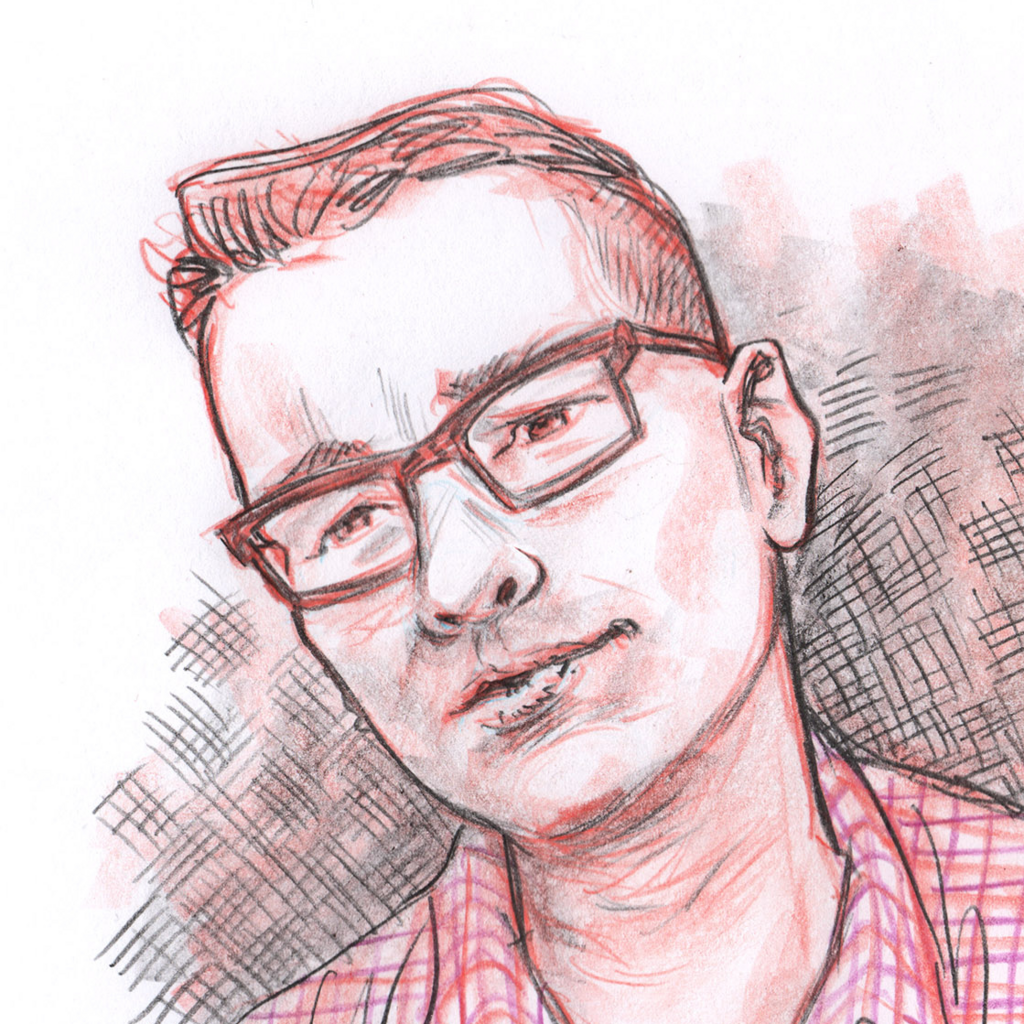
Special Guest: Ricci Wolman, Founder and CEO of Written Word Media
A Leanpub Frontmatter Podcast Interview with Special Guest Ricci Wolman, Founder and CEO of Written Word Media
Ricci Wolman is the Founder and CEO of Written Word Media. In this interview, Leanpub co-founder Len Epp talks with Ricci about her background, the challenges and benefits of beginning your career in the demanding environment of investment banking, the evolution of online marketing and ecommerce, some of the reasons email newsletters have proven ...

Ricci Wolman is the Founder and CEO of Written Word Media. In this interview, Leanpub co-founder Len Epp talks with Ricci about her background, the challenges and benefits of beginning your career in the demanding environment of investment banking, the evolution of online marketing and ecommerce, some of the reasons email newsletters have proven to be such a good tool for marketing, her experience building a successful business that helps authors and publishers find the right readers for their books and drive book sales, and at the end, they talk about some important changes in the indie publishing industry that have been taking place recently.
This interview was recorded on October 3, 2019.
The full audio for the interview is here: https://s3.amazonaws.com/leanpub_podcasts/FM131-Ricci-Wolman-2019-10-03.mp3. You can subscribe to the Frontmatter podcast in iTunes here https://itunes.apple.com/ca/podcast/leanpub-podcast/id517117137 or add the podcast URL directly here: https://itunes.apple.com/ca/podcast/leanpub-podcast/id517117137.
This interview has been edited for conciseness and clarity.
Transcript
Len: Hi, I'm Len Epp from Leanpub and in this Frontmatter Podcast, I'll be interviewing Ricci Wolman.
Based in Durham, North Carolina, Ricci is founder and CEO of Written Word Media. Her company offers a number of services to authors and readers and publishers, including Freebooksy, Bargain Booksy, New In Books, Red Feather Romance, and Reading Stacks - all of which I'm sure we'll get a chance to talk about a bit in this interview.
In addition to their various services geared towards helping authors build bigger audiences and sell more books, you can also sign up for their popular newsletter at writtenwordmedia.com, and find a lot of really great articles and guides that are an excellent resource for all authors and publishers - from those who are just getting into publishing, to those who have been at it for a long time.
You can follow Written Word Media on Twitter @writtenwordm and on Facebook at facebook/writtenwordmedia.
In this interview, we're going to talk about Ricci's background and career, professional interests, Written Word Media, online book marketing generally, and some of the bigger issues being talked about in the book publishing community these days.
So, thank you Ricci for being on the Frontmatter Podcast.
Ricci: It's a pleasure, thanks so much for having me, Len.
Len: I always like to start these interviews by asking people for their origin story. So, I was wondering if you could tell us a little bit about where you grew up, and how you found your way to the US and subsequently to North Carolina, that you now call home.
Ricci: Yeah, absolutely. I was born and raised in South Africa, in Johannesburg. And I made my way to the US soon after I finished high school. I came here for college, and I was up in the northeast. I did an undergrad degree, and majored in Psychology and Economics - which turned out to be a really great combination for my career in digital marketing. I spent a couple of years in New York, and I was back in Boston for a while.
And then we moved down to North Carolina over a decade ago, now. We came down here, because my husband was headed to Duke to get his Master's degree - and we really fell in love with the area. It's absolutely beautiful down here, it has some really great people - and that's now where we call home, and where Written Word Media is also headquartered.
Len: This next question's a bit selfish, but I noticed from your LinkedIn profile that you worked as an investment banking financial analyst at Bear Stearns, which I assume was your New York years.
This question's a bit inside baseball, but I used to be an investment banker myself, based in London, doing M&A in the utilities sector for an Australian bank called Macquarie. I was wondering if you could talk a little bit about what your experience was like. I learned a great deal in my two and a half years or so, that I'll never forget - including the fact that I can work 43 hours straight, and a few other things that were maybe not so good to learn. But I also learned that definitely investment banking is not - is definitely not a career that you should do long term, unless you love it.
Ricci: Yeah, it is not for the faint of heart, definitely. But it's an incredible foundational experience for any career, is what I would say. I learned a ton, both about myself, and about the world.
As you referenced a little bit, about the 43 hours - you learn what your physical and psychological limits are. And not that you should be doing that all the time, nor did I particularly enjoy it. But as you continue on into other areas, you are able to look back on that time and say, "Okay, well, if I've got this thing I've got push through - I know I can do it, because I have done this before." And so it does give you a little bit of a - I think, psychological edge, almost like a coach. Because you've gone through that.
I would say one of my favorite parts of investment banking was that it introduced me to the Excel spreadsheet, which I have a long love affair with, and continue to today. Being a data-oriented person - it was awesome to get the kind of training that you get on Wall Street, or we did back then, on how to utilize Excel, because you are constantly building models. So that was great.
And then this is something I didn't realize at the time - but although banking is probably the furthest thing that you would imagine from the publishing industry, it actually utilizes the power of story in a very effective way. Because you said you were in M&A, is that correct?
Len: Yes.
Ricci: Yeah. So if you think about M&A, for those people who don't know exactly how it works - when bankers are trying to pitch a deal for two companies to merge, they'll put together a slide deck or a pitch book that'll explain how these two companies can come together, and why that would be a good thing. And basically it's a story. It's a story about - you've got company A and you've got company B. And these are the audiences or consumers or whatever it might be, that they're selling on each side, and this is how we think they'll be better together. And then you're taking that and you're selling it both to the companies or to the investors, or to other people.
And so when I looked back at it, there was a lot of storytelling that was happening in banking - even though it was maybe through the format of graphs and spreadsheets and pitch books. Which is something I thought was interesting.
Len: Thanks for sharing that. That brought back a few memories in me, including being able to immediately kind of pivot to a new story, is actually something you need to be able to do. I remember being told one time, "Don't show so-and-so a toothy graph." So you actually change the parameters so that it doesn't look so spiky, just because that person doesn't like it. And you can - I mean, I've done this in sort of start-up world - going into venture capital meetings and stuff like that, where suddenly someone's like, "I'm not interested in this, but what about that?" And you have to immediately be able to construct something.
Ricci: Change the narrative, right? Yes, exactly. Use what you have at your disposal to suit the narrative that you're trying to tell.
Len: And whatever you say has to have the virtue of also being true, which is the thing. You can't make it up, but you have to be creative. And yeah, sorry - just to share one thing. When it comes to spreadsheets, that's so important and it's so useful. I remember one time getting a spreadsheet of some information from a third party, like one of the big five accounting firms - that actually had hidden data in it. They'd hidden sheets. So I learned how to write VBA code to crack the password to get into the -
Ricci: Of course you did.
Len: - hidden sheet. Because, well, that's gold, right? They're trying to hide it from you for a reason. And anyway, that's just an example of the kind of things that Ricci would've had to do at sort of 3 o'clock in the morning on a Saturday in her work at Bear Sterns. Same thing for me. It's not just like learning pivot tables. It's like really, really intense and really useful to understand.
And so you eventually moved on to do an MBA at Harvard Business School. What was that like?
Ricci: It was - I mean, it was great. Let me back up a little bit. I went to business school with a very specific mission, and that mission was actually to get more involved in retail. Because after banking, I worked for a couple of years doing microfinance. I liked the finance aspect of banking, but I wanted to apply that in a different world - and so I was doing microfinance. And at the same time I was running a little home-based business off of a platform called Yahoo Store, which was like this brand new platform back then, where you could open up a little store on Yahoo and sell things.
I was selling fair trade goods on this Yahoo Store, and doing some different parties or vending at different stores and festivals around Boston. And I ran into a problem with cash flow, because I was running a pretty decent business - I was selling goods at a higher price than I was purchasing them - however, every time I had to go in and put a big order in, I was always short of the cash that I needed for that. And so when I looked at this little business that I had - I wanted to figure out how were other bigger companies and smaller companies, entrepreneurs doing this?
So I went to business school with the explicit goal of trying to figure that out, and trying to understand more about how retail companies worked. The experience was way more enriching than I could have imagined. You do learn a very specific skill set at business school. But at Harvard they used the case study method. And so what ends up happening is - not only are you learning some skills that you can then apply out in the business world, but you are basically getting crash courses in all these different industries that exist throughout the world.
Because the case study gives you this bird's-eye view of - this is the industry, this is the problem - how will you deal with it? As well as a lot of practical experience in leadership problems that you might face, or leadership challenges on how to be a better leader. It was a very rewarding experience, and something that I feel very grateful to have been able to have.
Len: And what was your first experience in online marketing after that experience?
Ricci: I went to work for a grocery store, which is not the answer you usually hear from a Harvard MBA. My husband, who was not my husband at the time - but I thought he had potential - [was in the Boston area] and I thought, "It might be worth sticking around in Boston for another year or two to see what's going to happen with this guy."
I wanted to do something that was general, more generalist. And there is a grocery chain up in Boston owned by Ahold, a Dutch company that run Stop & Shop and Giant. And they had a management rotation program, where you would work for them for a year, and they would rotate you through all the different corporate departments, as well as give you in-store experience.
I felt really strongly that in-store experience was critical, because you can't understand how to manage a grocery store chain, if you don't understand what employees are dealing with on a daily basis.
So I literally worked in the grocery store, and Valentine's Day I was putting together bouquets of flowers. On Thanksgiving, I actually worked the cash register, because that's one of the - the day before Thanksgiving is one of the busiest days in grocery. So I spent my first three months actually rotating through the different departments in grocery, and then the nine months subsequent in the corporate headquarters, working in marketing with some of the other departments. So that was my first retail job. Learned ton.
And then we moved down here, and I was lucky enough to find a job with The Body Shop, which was one of the first ethically-based companies, kind of - it was the Tom's of beauty, before Tom's even existed. Founded by a female entrepreneur out of the UK.
When I went to work for The Body Shop, this was when ecommerce was really just starting to gain traction within companies. This is probably three or four years after my Yahoo Store experience. And I was able to get incredible experience helping them scale and run their ecommerce operations. That's really where I got into digital marketing in a big way, which has been the platform from which I've been able to build Written Word Media.
Len: You've seen online marketing from a lot of different directions, and I was wondering if you could talk a little bit about, what's the biggest change you've seen in online marketing in your career?
Ricci: Well, that's a good question. I think the biggest change has been probably the gating of access to audience. So, when I think back to when Facebook first started, and you created a fan page and people could like you - it may be hard to believe now, but when you would post something to your page, every single person who logged on that day would see your post. 100% of them. And then that started dropping and it was 98% and 90%, and today you're lucky if 3% of the people see what you're actually posting.
So I think that has been a fairly dramatic change and one that has been also, I think, somewhat painful for both sides of the equation. Both the end user and the consumer - because I'm also using these tools as a person. And if I like a brand, it means that I want to see what that brand has to say. Or if I like a personality, an author - I am interested in hearing what they have to say. And that author or personal brand is trying to get some message out to me - and having that relationship be stymied in some way, has been a pretty dramatic change that has happened really over the last decade.
Len: Speaking of a stymied relationship - one thing that everybody who's even got their own personal website, but also running a corporate website, has run into in the last little while - is something called the GDPR, General Data Protection Regulation in the EU. I just wanted to ask you generally, as an expert in online marketing, has the fight for online privacy negatively impacted the ability of marketers to directly target people? And what do you think about the idea that people should be able to own their own personal data and somehow get paid for it, when it's used by various companies to learn about them or their demographic?
Ricci: Yeah, so let me start with the impact piece. I think the impact has been varied, depending on the different industry that you're in. We haven't been impacted that much. But that's because we've always had a kind of an opt-in policy, and we're also not in one of those highly-sensitive categories like pharmaceuticals, or something of the like. I really believe that it's very important that people have the right to privacy if they want it, and the right to own their own data.
As a consumer, however - when it comes to marketing, I actually really like the idea of targeted marketing.
So, here's an example. I have young children in my home. And sometimes in the fall on a Sunday, we'll put on the TV and we'll watch a football game. And for any of you who watch football, you know that there are tons of commercials. And some of the most popular commercials are for video games - or upcoming movies. And they are very violent.
And so in our household, when we're watching football - you get to watch 10 minutes of football, and then you're like - literally I'm saying to my kids, "Close your eyes, don't look, don't look," every time a scary ad comes on. Now, I would love to be able to tell my cable provider, "I have young children in the home. I do not want to see these types of ads, only show me -" I'd be happy if the ads for Disney or some of those types of things came on that were child-friendly.
I think that's where advertising needs to go. Consumers need to be able to raise their hand and say, "I know I'm going to be advertised to. These are the things that I'd like to see," without feeling like they're - in some way like their privacy is being violated.
Len: Thanks for that really great answer. You're reminding me of - I think it was a couple of tweets I saw. One was someone saying, "I can't sit down with my kids and watch baseball, without having to explain to them what boner pills are now."
Ricci: Right. This is modern parenting for you, Len.
Len: And I saw another one, I think it was from someone in San Francisco, who was saying, "My kids don't watch TV, but we were in the hotel and we just turned it on. And one of them saw their first pharmaceutical ads, and were horrified by the last two thirds of the ad, which was just this long explanation of all these terrible things that can happen to your body, maybe, if you take it."
Ricci: Right.
Len: I don't have kids myself, but I can somewhat understand - I think the idea that - like, not all of a sudden having some gory zombie being shot in the head being on the TV after a touchdown, is something that you would very much like to avoid seeing. And being able to just send some information about, "Look, here are my preferences," would be really useful.
My next question is a bit specific, and it's a little bit long - so please bear with me. Sorry about that. But it wasn't too long ago that I remember everyone in the tech world was like, "Email's the worst, let's replace it with something better." I even worked on a product like that myself for a couple of years. And yet now we're all basically using unstructured internet relay chat in Slack, which is, in many ways, arguably even worse than email. And at the same time, the email newsletter has exploded. Not just as a serious marketing tactic, but even as a business model itself, for people who produce written content or make recommendations.
I was wondering if you could talk a little bit about - why do you think email newsletters have proven so popular in the last few years? Is there an element of curation that makes them distinct from what I'm going to call the "algorithm hellscape of auto-selected content" we're constantly having thrust at us online?
Ricci: This is a great question. I love this question. I have always been a fan of email. Obviously our company is built on email, so I'm a little bit biased. But the data - year after year after year, shows how compelling email is in terms of its effectiveness, compared to all the other things that have come along. There's been so many promises of different, other marketing tools or techniques that really haven't lived up to the types of effectiveness email can have.
I think some of your hypotheses are interesting. I don't have a definitive answer on why email is so successful. But I think part of it is that there is a sense of control that you have as a user when it comes to email. You proactively signing up, right? To hear from whoever it is that's emailing you. So the content is pre-vetted. You kind of, this is - it kind of goes back to my raising your hand. You've raised your hand, you've said, "I want to hear from this brand."
So the content that is coming in is stuff that you know you're going to be interested in. You know you can unsubscribe any time. So you don't have that anxiety of, "Well, what if I don't like this content?" Or, "What if this ad platform is creeping on my other stuff?" And it's a place that you're familiar with. You know when you go and check your inbox, but it's also a place you can enter and leave kind of on your own terms.
So I think - I'm taking kind of the psychology lens to this. When I think about human behaviour and why is it that email and the inbox is something that we are so comfortable with. And those would be a few of the ideas that I would have around that.
Len: Thanks, that's a really great answer. I actually hadn't quite thought of it in those terms myself before. But yeah - the idea that like you know you signed up for - if you get an email like that, you know you've signed up for it, you know you can easily unsubscribe.
It reminds me of something I've noticed as a change running online stuff for the last 10 years or so in my career. In the past, it was more common - at least in my experience - to get people going, "Hey, I never signed up for this. Get me off of it."
But not knowing, or forgetting that they signed up. Not understanding that it's not a scam just because it's on the computer. And not knowing that there's unsubscribe links.
But the convention has changed, and everybody knows now that if you get one of those emails, it's probably because you signed up for it, even if you don't remember. Oh, and even if it's something going on, you can easily unsubscribe or send it to your archive or something like that. And so people's understanding of email has actually improved over the years.
Ricci: Yeah, I think that's a really good point. We basically - as we've evolved, even though email hasn't changed that much, and so we haven't had the same kind of degradation that we have maybe on the social platforms.
Which actually goes back to what we were talking about before. Which is, on the platforms, when you go on there - you've got an intermediary between you. You're not sure what you're going to see.
Whereas in email - although if you're a Gmail user, there are two very small ads at the top - for the most part, everything in your inbox is something you've signed up for. You're not going to see something that's unexpected. And I think there's something that gives people a sense of security and safety about that, that you don't feel when you are in other places on the web.
Len: Oh yeah, definitely. I mean, Twitter is actually a dangerous place. Anybody can just suddenly say anything to you at all. And even if you're a privileged person in sort of conventional terms, you send a tweet - like anybody from out there can come at you. And it can be anything from a Russian agitator to a creep. And so email definitely offers you comfort and protection, at least in comparison to that just totally being open stage.
Ricci: Yes, it's a happy place, compared to Twitter. Which is - I'm not brave enough to really be on Twitter, so I applaud those who are, but I know exactly what you're talking about. It feels like a very unsafe space. Yeah.
Len: It really is. I mean - public service announcement, it's a dangerous place. And you need to use that mute button if you're on there.
So having gone into some of the theory, let's go more into the theory of online marketing. Each of your book discovery and promotion brands is designed to face a distinct audience of readers. [Note: If you're an author and you're interested in trying this, please go here! - Eds.] How did you go about -? I know there's a lot of answers to this, but how did you go about deciding which five audiences to choose? I imagine these decisions were heavily data-driven, based on your experience gathering market and audience information over the years.
Ricci: So, as we added different brands and properties, we were really guided by the data that was coming both from readers and authors. But in the beginning, it - Freebooksy, which is our first and kind of flagship brand - was really built around this need for curation of the free books that were available on Amazon. Because there were so many on any given day. But making your book free is such a powerful marketing technique to build readership for authors, and it's a risk-free way for readers to try out new authors and explore different books, that they might not have. It's a very effective discovery mechanism. And so, Freebooksy was built for that purpose.
We actually - originally we did have genres you could choose from. Because we thought it was very important to have curated personalized content going to the reader. And then the genres have grown as we've gotten feedback from readers predominantly, who have said, "You have mystery, but I like a specific sub-set of mystery, it's called 'cozy mystery.' And I'd like to be able to only see those books, and not have to look through the three or four mystery books to see if that one's in there."
And so we've actually gotten a lot more granular in terms of the genre definitions that we have, which makes the experience for readers all the more rewarding and all the more relevant. Because the books that they're seeing are very specific to the sub-type of genre that they are very interested in.
And so then Bargain Booksy is similar. It's deal-focused. It's kind of - we call it our Groupon for books. So that is where you get books that are usually on sale for a very limited time.
Red Feather Romance was born out of the need of our romance reader community, who really - they're an incredible, awesome bunch of people who love to read romance. They're pretty voracious, and they're reading three or four books a week in the genre. They wanted a place where they could get an email every single day that came out with just the types of romance books that they were looking for.
And our most recent site, Reading Stacks, is actually following the trend of subscription services, which we're seeing pretty much pop up in every aspect of your life. There's the Kindle Unlimited subscription program through Amazon, there's Scribd, there's the Audible subscription program. And what we were hearing from readers is that they have the same problem within a subscription program that they do if they're purchasing a book. Which is - how do I choose what to read next? How do I choose what to redeem my Audible credit on? How do I choose which book to borrow from Scribd this month?
And so we are trying to help ease the pain when it comes to that choice, and say, "Okay, you know you've got one credit," or, "You know you're a part of this all-you-can-eat buffet, here are some books that you might want to go ahead and grab." Which saves the reader time, and they get a lot more value out of their subscription. So that one was very much trend-based and data-based. And that site is brand new. It was launched this year.
Len: Actually - this isn't in my list of prepared questions, but I just wanted to give you an opportunity to explain to any authors listening how it is that they can use your services, to reach these readers.
Ricci: Yes, absolutely. What I'll say is - all this information is on our website, and we do have great customer service. We have a team of people here who work with authors every day, and would be happy to answer your questions.
So, if you write us, we will respond, and we will respond really quickly. We like to sometimes give personalized advice to authors. So if you write in and send us your books, we'll say, "Okay, this is the right brand for you, and this is what we would recommend you do."
Basically, what Written Word Media does, is we help connect readers with authors. So as I've been referencing, readers sign up and they tell us very specifically what genre they like to read - and then they get a daily or weekly email with book recommendations for the genres they have chosen. Authors then come to our platform, and they can pay to be featured in one of our promotional slots within those emails.
So if you are a cozy mystery author and you have a book that's going to be free, you would then run that book on Freebooksy in the cozy mystery genre. On the day that your book is free, it would go out to all of our cozy mystery readers. So if you're a cozy mystery reader, you'd open the email. There would be "Len's cozy mystery book", and you would get thousands of downloads.
If you're on Bargain Booksy, you would get a bunch of sales on that book. So what that does is, the reader is getting a curated selection free, or a discount. Or, if it's the Red Feather site, it's not discounted. But the reader is finding what they need, and the author is getting sales and new readers who come through and discover them.
And so it's a very effective marketing technique. It's not the only one that you can use, because you do have to do other things to build up your readership. But it's very effective. And what I like about it the most, is it's hyper-efficient. It's probably the most efficient in terms of time and money when it comes to your marketing dollars. Because booking with us will take you five minutes. The amount that we charge is nominal and is related to the results that you're going to see. And so, you can spend five minutes booking your promotion with us - you know you're going to see great results, and then move on to more writing, or doing the other marketing that you need to do. But you won't really find any other marketing tool in your arsenal that's going to be quite as efficient as that.
Len: Actually, that leads me to my next unplanned question. Which is - I know that you actually, as you mentioned, you actually use your own data to determine your pricing, to make sure that the price that the author pays for the service is related to the outcome that they're most likely to see.
Ricci: That is correct. What we do is, we are able to look at the data on how many copies of a book are being sold at the different price points. And then, and by genre. So we look at the data again very granularly, which is why, when you go to our website you'll see that there is a price differential if you buy a cozy mystery on Bargain Booksy. That might be a $60 purchase if you buy a children's book. That might be a $30 purchase. The reason that there's a price difference is that the audience size is different, potentially. And the engagement of the audience is going to be different.
So every month we say, "Okay, how many on average - an author who's running a cozy mystery book - how many books are they going to sell?" And then we price at that mid-point. That's the average.
So when you look at our pricing, if the price is $60, it means the average author sells $60 worth of books - usually within 48 hours of running the promotion with us. Now, it follows a distribution curve, just like everything else, which means that some authors might only be selling $20 worth of books, whereas other authors might be selling $120 or $150 worth of books.
We - especially on Bargain Booksy - our philosophy there is, every author deserves a shot. So we are not being the gatekeeper there. We're saying, "You give us your book, we're going to put it out there and let the reader judge for themselves." Which is why that site tends to have more variance. Whereas - if your book doesn't have a great cover or if you don't have reviews, you might be at the $20 range. If you've got a great cover, you've got tons of reviews - you might be at $120, $150. But we kind of price it at the mid-point to make it as fair as possible.
Len: I think it's a really brilliant model. Particularly because of the transparency. That - the price would be zero if it didn't work. The reason the price is non-zero is because it does work, and it's proven to work.
I remember having my own experience doing some Facebook advertising at one point, where they've basically just got a "trust us" button. And it's like, "I don't trust you, because you've given me no reason to, and this is just a money pit." But your particular model, and like - again, the model behind it is great - but the transparency about it, I think really is an important differentiator.
We've got about 20 minutes left. So, while I've got your very valuable time, I thought I'd move on to talk to you about the publishing industry, which is something I was really looking forward to talking to you about in this interview.
One thing I should briefly mention is - I was saying to Ricci before this interview started, I've had interviews prevented or interrupted by various things - including, once, a poisonous snake approaching an author on a hillside. Everyone turned out okay.
This interview has been delayed twice. Once by a power outage, and once by a hurricane. So I want to make the most of the next 20 minutes that we have. So you wrote -
Ricci: Well it's third time's a charm. And yes - for some reason the universe didn't want us to do it on those first two occasions, but today is the day.
Len: Today's the day. So, way back in January, you wrote a great post called Top Ten Publishing Industry Trends Every Author Needs to know in 2019, and I know you've done these prediction posts before - and I thought this might be a good chance to see how things turned out, now that we're later on in 2019.
One thing I found really interesting to follow this year is the growing sense in the self-publishing community that authors should be paying for advertising on platforms, of course, like yours. But also like Amazon. This wasn't a part of the discourse in the past in the same way that it is now. Have you found that services like - I think it was called Amazon Marketing Services, or maybe it's just Amazon Advertising now? Have in fact become more mainstream amongst authors this year, and have authors been getting the hang of it?
Ricci: Yes. So, the Amazon marketing platform has become a lot more mainstream this year. I would say it really hit a tipping point towards the end of last year, where a lot of authors - at the very least were setting up their accounts, which is very easy to do if you publish directly through Amazon. There's literally just a button you push to open up the interface, and at least attempt to run ads on the platform.
In terms of the effectiveness, it's been really mixed. We actually recently ran a survey, we'll be publishing the results in the next couple of weeks in one of our blog posts, where we asked authors a lot of questions, and we got an amazing response. We got over 1,000 authors who responded. I actually might even just pull up that data quickly now.
One of the questions we asked them was, "When it comes to the effectiveness of marketing, rate the following marketing services or tools on a scale of one to five. One being the least effective, five being the most."
And so when it came to Amazon ads, we had 900 people actually answer the question. I think that goes to your - how mainstream it is. 90% of the authors filling out our survey filled out that question, which means they must have tried it at least once. We don't know exactly to what extent, but they are trying it. However, 45% of people rated it a one or two. With only 6% of authors rating it a five.
So what I would say is - authors are having very mixed results. I think authors that really stay with it, and maybe have larger budgets and are very marketing-savvy - are probably getting it to work for them a little bit. In terms of authors who do not have that background or the time to spend on it, I think you don't see great results. [For people who want to take the time to learn paid ads, click here for some helpful courses - Eds.]
I've been on the platform, and I'm a digital marketer. I've been on the platform, I've played with the platform. It is challenging. It's a full-time job. You really have to know what you're doing. You have to be testing a lot of different things. You have to be able to slice and dice the data to figure out where your pockets are.
And it's changed. I would say 18 months ago, the platform was more effective. But as with anything else - as more people have piled in, you have to have some kind of edge to be able to make the ads work for you, and to get the ROI that you need.
So I would say it's definitely a tool that authors are trying. I think it can be effective if you have some dedicated resources or a background in marketing to be able to play with it. But for most authors, it is really challenging.
Len: Thanks very much for sharing that. I didn't know we'd be breaking news on this podcast, but--
Ricci: Right. This is an exclusive. You're getting that data before anybody else. Because I'm literally like, I just pulled it up - we haven't even coded it or anything yet, and written the article - but I just brought up that graph, because I thought that was interesting to be able to have.
Len: That's fantastic, thank you. And if you could share the link to the post when it's up - I'll make sure to put it in the transcript for this interview [Click here!], so that everybody can see everything when it's published.
You're reminding me, it's interesting. I've wondered before if old-timey banner ads, like, "If I pay you money, you'll put my book up on your website. It will show up here at this time in this place," might actually be a better entry point for authors, than going into this crazy world where you kind of need a PhD to understand it. And even like - it's outdated the moment you got it, because they just changed something on you.
This is actually me just being kind of personal, but I've always been very suspicious of that as a model. It's kind of like - I remember encountering some day traders in my career back in the day. You're not going to beat the person who's got a desk at Goldman Sachs.
Ricci: Right.
Len: And has all the resources of that organization. You're probably not going to beat them. You're fooling yourself if you think that using these really complicated services, that are changing on you all the time, is actually in your best interest.
Ricci: Yeah. And I think - again, it just comes back to the level of sophisticated-ness of the author, and where you want to be spending your time. I very much admire Joanna Penn, and she talks a lot about this. She says, "I know I should be doing more marketing. I probably should be doing Amazon ads." But she says, "Life's too short. That's not where I want to be, spend my time. I want to be spending my time writing my next book." And so her philosophy is, "I'm just going to put out more titles, even though I know I'm not optimizing all of the marketing stuff that I should be doing. Because that makes me a happier person."
The incremental gain that she might get for spending hours becoming a digital marketing guru - which she totally could, because she's smart enough - she's actually made that choice. And I think that's very freeing, to be able to sit down and say, "This is where I want to focus my time. When it comes to marketing, I'm going to do these three things." And then just be okay with it, and not have comparatonitis, and say, "Well, that author's doing that," or, "That author's doing that. I should be doing that too." Because then you live in a constant state of discontent.
And so I think there's a lot to also the attitude that you want to have when it comes to marketing your books. Choose the things that are enjoyable to you. Choose the things that are manageable, and the rest will fall into place over time.
Len: Oh, I couldn't agree more, actually.
Speaking of book industry news, there was an article recently published in The New York Times about piracy. I don't know why they're so weird about book publishing in that newspaper. But they published an article by a guy who talks somewhat boastfully about having a folder in his email called "Thieves", or something like that, where he records instances of online piracy of his books, and it's like, "What are you doing with your time and your mood and your feelings?"
Ricci: They're winning, they're winning.
Len: They're winning. Every single entry in your "Thieves" folder is someone who got to you, and you let them.
Ricci: Yeah.
Len: It's so important on all these different things, when it comes to marketing, etc. I don't want to say, "Only do what brings you joy," because that's nonsense. But don't let your instincts get the better of you, basically. They might lead you astray sometimes, and you sometimes really need - you might be thinking, "I just read this great post, or listened to this great podcast about someone who really nailed their complex marketing scheme." If that's what you want to get into, get into it. But if it's not - stay away, choose something that you feel comfortable with - that's actually like some of the best advice you can get.
You wrote in your post about how quality would increasingly be a differentiator for indie authors. In a world where people are saturated with choices, like we've been talking about - and the ability to move seamlessly between services, including subscription services, it does seem that quality is of increasing importance for readers. Do you think there's an uptake generally in quality from self-published authors?
Ricci: I do. I mean we see hundreds of books that pass through our platform every month. And the overall trend is an increase in quality.
If I look back at the last five years that we've been doing this, the quality of books from back then to todaym has dramatically improved. And then I think even in these kind of small time frame increments, when you look at it - authors are understanding what they need to package their books better, when it comes to both the editing, as well as the book cover design. And the tools that are out there have gotten a lot better. The tools and services.
I think that combination has definitely increased the quality level, to the point where there are a lot of books I could put in front of you - an indie book, right next to a traditionally published book - and you wouldn't be able to tell me which was which.
I think that is going to continue to happen. I think fibve years from now - you're in a world where, most of the books you won't really be able to tell who has published them. Of course you're always going to have the outliers. You're going to have books that are of poor quality, and some that are really stellar. But for the most part, I do think we're moving in that direction.
Len: One of your predictions that really resonated with me was your claim that in 2019 - and I'm quoting here, "The number of indie authors making a living solely from writing grows." People who aren't insiders in the self-publishing world might find that surprising, because there are various high-profile constituencies out there, particularly in the US and the UK - if you follow the book publishing industry news - that are loudly proclaiming "the authors-making-a-living apocalypse is upon us." So, I was wondering if you could talk a little bit about why you think indie authors are better positioned now to make a living from their writing, compared to the past.
Ricci: Sure. So another great question. And actually I think a really cool thing.
There has been a lot of disruption in the publishing industry. But one of the cool things that has happened as part of that disruption, is that this is an industry where actually you have fewer gatekeepers than you did in the past.
The old model of publishing was that you had to submit your manuscript to a publisher. They had to then accept it out of a pile of hundreds of submissions they were getting. And then you were published.
From the publisher's perspective, this makes sense. And it still makes sense for the traditional publishers today. Because what they have to do, is - they have to find books that are going to have enough mainstream appeal that they can put large investments behind it - and then recoup those over time by selling it to the masses. And that's where traditional publishing really shines, is finding these books that appeal to the vast majority of people.
In the model of self-publishing, and the way that - the proliferation of both the internet, and being able to have more access to readers online, what that does is, it allows for much more niche content to be published. Because authors can now find those readers.
So, before, it wan't economically viable to maybe publish a book on a very small sub-genre that only 100,000 people were really going to be interested in. But in today's world, that is economically viable, by doing it through self-publishing and then just finding those readers online.
If you look at something like Wattpad, where there are thousands of stories being published - they're all kinds of genres and sub-genres that would never ever have existed in the world of traditional publishing. Because they appeal to a small micro-demographic. But that micro-demographic, they love these stories - and now they're getting to read them, whereas before they didn't.
There is a lot more potential now for authors who are writing into what were maybe not these mass-appeal genres, to actually write and make a living from that writing. Because they're able to connect with their readers, and it now is an economically viable path for them.
Len: That's a really fascinating topic, finding niche audiences. And there's actually a bit of back and forth between online and books and mortar, which James Daunt, who's the new CEO of Barnes & Noble - he turned around Waterstones by basically doing two things.
As I understand it, one was ending a program by which publishers paid a bunch of money to have their books - the books they decided should be on display, on display in book stores. I think it was something like 15% of books that were being put on display were actually being returned to publishers, because they weren't selling. And so he ended that program.
But he also instituted greater selectivity on the part of people who ran the bookstores, and worked in the book stores. They knew what their customers wanted. They live in the communities, they literally talked to the people who come in the door.
And once Waterstones decided, "Let's give more autonomy to their bookstores", the amount of remaindered books went down dramatically.
And when I talk about the back and forth between online and bricks and mortar, Amazon's doing something similar. They know what toothbrushes people are buying in your community.
Ricci: Right.
Len: If they put a bookstore up, they've got lots of information about what people in that community are interested in, sort of literally minute-by-minute.
Ricci: Absolutely. I mean, data's the new currency. Basically it's the most valuable thing. That's really interesting. I did not know that about the Waterstones turnaround.
But basically it's the indie bookstore model, right? So you look at Barnes & Noble, is struggling. But indie bookstores in communities are actually doing pretty well. And exactly to your point, it's because when you walk in and you ask that person, "Hey, I'm interested in this esoteric thing," the person in the indie bookstore says, "I've got the book just for you. I know exactly what it is," and can walk over and find that specific title for you.
The same thing is happening with indie authors writing into those segments and then finding those communities online. I'm very curious to see how the Barnes & Noble turnaround goes under the leadership.
Len: Yeah, it's fascinating. I mean, the local knowledge thing, like - I mean, if you've got a homelessness problem in your community, it could be that there's increased interest in books on homelessness. The niche audience is not a made-up thing. It's a feature of our lives.
So, we've got a couple of minutes left. The last question I wanted to ask you was - you write on your site that you're driven by the idea that books are a force for good in the world. I think I can probably safely say that everyone listening to this podcast shares that view.
But just to play devil's advocate for a moment - if you encountered someone who said that in a world of online courses and easily searchable, largely free, bite-sized readable content, and all kinds of video and audio - if they said that books were no longer the force for good that they once were, what would you say to such a devil's advocate?
Ricci: I would disagree. I would disagree pretty vehemently. I think that in some respects, books are more important than ever.
If you think about the book, it's basically - it's perfected the format for long-form storytelling, or knowledge sharing. And in the world today, we're more and more distracted. I think the refuge of a book becomes more critical. I think it gives us a place to go for deep thinking and for focus. And I think that is becoming more of a need that we have as people and as a society, with the proliferation of content that is out there.
So I'm bullish on books. I think they're here to stay, and I think they're very, very important to us.
Len: Thank you very much for that great answer. Like with so many other things in this interview, I couldn't agree more.
And thank you for making it through a power outage and a hurricane to finally get to this interview. And thank you very much for taking the time today to be on the Frontmatter podcast.
Ricci: Thank you. This was really wonderful, and I so appreciate you having me on.
Len: Thanks very much.
And thanks as always to all of you for listening to this episode of the Frontmatter podcast. If you like what you heard, please rate and review it wherever you found it. And if you're interested in becoming a Leanpub author, please go to our website at leanpub.com. Thanks.