
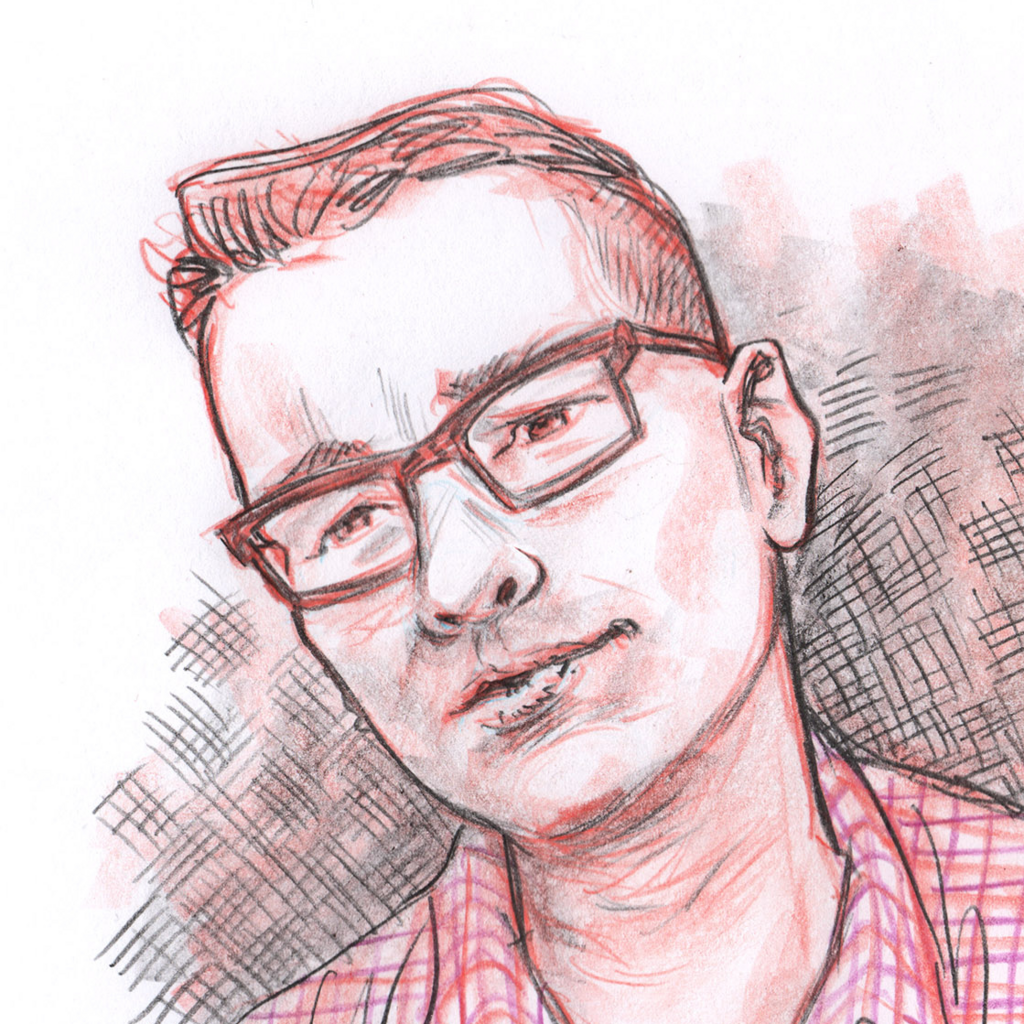
Special Guest: Pamela Q. Fernandes, Author of Romance Fiction and Christian Women's Non-Fiction Books
A Leanpub Frontmatter Podcast Interview with Special Guest Pamela Q. Fernandes, Author of Romance Fiction and Christian Women's Non-Fiction Books
Pamela Q. Fernandes is the author of romance fiction and Christian women's non-fiction books. In this interview, Leanpub co-founder Len Epp talks with Pamela about her background, Marian apparitions, how she got into wr...

Pamela Q. Fernandes is the author of romance fiction and Christian women's non-fiction books. In this interview, Leanpub co-founder Len Epp talks with Pamela about her background, Marian apparitions, how she got into writing, her experience builing a website and an author platform, some of the pitfalls of social media, her book, and at the end, they talk a little bit about her experience as a self-published author.
This interview was recorded on August 12, 2019.
The full audio for the interview is here: https://s3.amazonaws.com/leanpub_podcasts/FM129-Pamela-Q-Fernandes-2019-08-12.mp3. You can subscribe to the Frontmatter podcast in iTunes here https://itunes.apple.com/ca/podcast/leanpub-podcast/id517117137 or add the podcast URL directly here: https://itunes.apple.com/ca/podcast/leanpub-podcast/id517117137.
This interview has been edited for conciseness and clarity.
Transcript

Len: Hi, I'm Len Epp from Leanpub and in this Frontmatter Podcast, I'll be interviewing Pamela Q. Fernandes.
Pamela is an author, doctor and medical writer, as well as the host of the Christian Circle podcast. Her novels are in the romance and women's fiction genres, and she has also published at least one non-fiction book Ten Reminders For The Single Christian Woman.
You can follow Pamela on Twitter @PamelaQFerns and check out her website at pamelaqfernandes.com.
In this interview we're going to talk about Pamela's background and career, her professional interests and her writing, and a bit about the way she's managing her career as an author.
So, thank you Pamela for being on the Frontmatter Podcast.
Pamela: Thank you Len for inviting me. It's a real pleasure to be here.
Len: I always like to start these interviews by asking people for their origin story. I believe you're originally from Kuwait, and I was wondering if you could talk a little bit about where you grew up ,and how you eventually became a doctor, and interested in writing?
Pamela: Okay, so I'm a mix of a lot of things. So basically, I'm Indian. My grandparents are Portuguese, so we're half Indian, half Portuguese. But I was born and raised in Kuwait. And then for college, I went to the Philippines to study medicine. And then I travelled back to India, to the States, to Oman - to different countries to study, to practice, to learn. I am in Brooklyn, New York, trying to get into residency training. So that's me.
Len: You're the first person I've interviewed for the podcast who's from Kuwait. I was just wondering if you could talk a little bit about what life is like growing up there?
Pamela: It's actually very Islamic. It's a country in the Middle East, and you hear the mosque prayers five times a day. You literally hear it. Because every 20 metres, there is a mosque. And so you grow up entirely with this culture where skin is not allowed. I mean - when I came to the States, I actually had culture shock. Because when you come from Kuwait, you barely see anything. And then here, the summers - people are almost half naked. So it's kind of a culture shock.
But Kuwait is like that. Very restricted, but it's one of the friendlier countries in the Middle East. I would say it's on par with Dubai. So, you could still dress what you want to dress. You don't have to be veiled. But you have to be careful with life there, yeah.
Len: I'm just curious, what would happen if you dressed inappropriately? Would there just be a kind of immediate social pressure, like, "Hey, you're doing the wrong thing," or?
Pamela: Yeah. People will be staring at you. You see a lot of women who wear tight jeans or even a blouse that's above their hip. And then people will stare you down till you're embarrassed and you feel, "Oh, there's something wrong with what I'm wearing, or with the way I've done my hair," or things like that. I think that there are a lot of social norms that are not explicitly said, but they are obvious. Like on a bus, there is a particular seat for women. There's a particular place where you stand. You can't just do what you want. So there are a lot of segregations that happen in society that are not said, but they are understood.
Len: And was it similar in the Philippines, or more or less restrictive?
Pamela: Ooh it was just party, party time in the Philippines. It's nothing like that. But the Philippines is very, very Spanish, I guess, in it's culture. So there's a lot of food every day. There's a lot of merry-making. I mean every day is kind of a party. I remember even on the days that we had our duty in surgery rotations. They would order an entire suckling pig. And that was for all the residents, nurses, doctors on duty - they would be eating that night. And I'm not kidding - by the time it was four o'clock in the morning, not one part of that pig remained. Everything was consumed. So life in the Philippines is fun.
Len: And how did you become interested in being a doctor? Was it something you were always interested in as a child?
Pamela: Not really. I mean, I was keen on being an author as a child, and my parents were not so keen on that. They didn't think I would make any money. Not that I am right now, but still. I was good at biology, and I ended up taking the sciences. And then I ended up doing medicine, and it was just one thing that led to another.
Len: You've got a religious podcast and you write on religious themes. So I'm going to ask you straightforwardly, were you raised in a Christian family?
Pamela: Yeah. I was born and raised Catholic, and I've continued to do so. I think over time I've been more convicted as a Catholic. When I was 18, I had my first experience, when God really called me to do something, rather than just talk about my faith. And over time, it's - I've been through a lot of things. We've been through the wars, we've been through troubles, financial difficulties, my father's death. And I think the only one constant that has been there is God himself. I mean, I would have been dead many times over had I not had my faith. It's sustained me, and that's how Ten Reminders and the Podcast and everything started - from my faith.
Len: I should say, I come from a Mennonite background myself.
Pamela: Okay.
Len: So I probably find Roman Catholicism as strange as many of your Kuwaiti friends may have. But I remember, when I was researching for this interview, I listened to a couple of the episodes of your podcast. And in one of them you talk about Marian apparitions.
Pamela: Yeah.
Len: I guess I just wanted to straight up ask you - you believe that Mary the mother of Jesus appears to people on earth?
Pamela: Yeah, I do. I mean, I feel that she strongly shows her presence where people are suffering - and where the world is suffering or going through a very tragic time.
I think the Catholic Church hasn't recognized a number of these apparitions yet. But she appeared in Rwanda before the genocide happened, to warn people and to do something about it - and they didn't. And then she's appeared in Latin America. And we see what's happening in Latin America right now. I feel that she appears as a warning - and as a strength in times of trouble. So yeah, I do believe that.
Len: I'm sure you get this question, when it comes up. But what do you say to skeptics, who might even be Christian, but don't believe that this kind of thing happens?
Pamela: The thing is, I think - there are two differences here. I think one of the things is people think that I'm Catholic because of dogma. And I am not a dogmatic Catholic. I mean I, myself, don't understand a lot of Aquinas and Liguori. I read that stuff, and it still doesn't make sense to me.
But the thing is, I don't believe because somebody has told me, I believe because of my own personal relationship with Christ. And believe me when I say this - the only person who stands with me when I'm down in the dumps is Christ himself, nobody else. So my faith doesn't come from dogma, and that's what I tell skeptics over and over. "You cannot convince me otherwise. Because I've seen, touched, felt and heard Christ himself." So that's enough to convince me.
Len: Thank you for sharing that. I got the sense from your podcast about how direct your experience of God is, and maybe that is not everybody's - I mean, a lot of people approach religion from various directions - some positive, some negative--
Pamela: In ways, yeah.
Len: I would say definitely that I'm not a very religious person. But for me, it was always very much in the head. It's never really been in the heart. And so I always find it very interesting to hear from people who have such a different - everyone has their own experience of -
Pamela: Every view, yeah.
Len: And so you became a doctor. Your parents were skeptical about your career as a writer.
Pamela: Yeah.
Len: This comes up every once in a while on this podcast. But I have a doctorate in English literature, ad afterwards went into investment banking. So there are different paths that one can take, starting with an interest in writing and literature. When did you write your first novel?
Pamela: There was this competition that was being held. I think it was 2013? That was, for some reason, my lucky year. This competition happened, they wanted South Asian romances. I wrote one, and I won in the competition. It was the first time I'd won anything in my life. So I was very happy. And then the story was published as a novella. And from there, every year, I started submitting, and I got a little more confident with submitting. Because, "Okay, I won this. There's a chance I could win more." And that's how short stories happened, from the short stories, more novellas happened - and then the novel started happening. So that was the lucky break - or a blessing, I don't know?
Len: I'm really curious, what's your writing process like? Are you one of those people who like carves out time in the morning? Or is it just whenever you can find a moment?
Pamela: I try to be a disciplined writer. I know a lot of people say that, "You should write quality and not quantity." I don't believe in that, because all of our first drafts are crap anyway. I try to do 1,000 words every day. Even if it doesn't make sense. But the thing is - before I go to bed, I think about what I'm going to write tomorrow. Or I stop before the 1,000 words is over. Because I know, "Okay, this part can continue tomorrow." And so I have material to write for tomorrow. That's how I go about it, 1,000 every day. And it's not a lot every day, but it's still 30,000 words a month.
Len: Actually it's interesting you bring up the question of quantity and quality. And that's a very great line about "all our first drafts suck." But I know that you publish your books on Amazon, and I don't know about this as directly as you would, but I've read a fair amount about self-publishing on Amazon. And one of the things that I think is very important for success on Amazon, is consistently publishing and writing.
Pamela: Yeah. That's one of the changes I made last year. Earlier, I was writing just one a year, and then waiting for an agent to pick it up. Waiting for something to happen. And then I realized that you need to have consistent writing, and you need to be doing it more often. And I read - I don't know who it was? There was another author that I read who did this podcast on marketing, and she was doing 12 books a year - that's one every month. I don't have that pace, and I don't have the time to do that. But I thought that was really someone who was committed to marketing the books. So I started doing more. And I did like one every quarter. This year I managed two, and I'm hoping to do two more by the end of the year.
Len: I believe that actually one of the - I mean, this is an incredible pace to keep up. But one of the formulas for succeeding as a self-published author of genre fiction on Amazon, is to publish 100,000 words a month. One novel every 30 days. It's crazy that there are people who can do that. But there are people who can do it, and - yeah, I don't know how they do it.
You bring up agents, and waiting to be discovered by them or by publishers, and things like that. It's really interesting what's happened to self-publishing in the last 10 years or so, and the way that Amazon has really changed it. You can make money as a self-published author now, in a way that you couldn't before. But it does require setting up what they call a "platform" in the business, which I'm sure you know all about.
Pamela: Yes.
Len: Because you have one. I wanted to ask you about that. One thing that I think often seems daunting to people when they're starting out in their career, or hobby, I suppose, as a self-published author is just setting up a website. You've got a great one, and I was wondering if you could just share a little bit of information about how you set up your website, and how you maintain it.
Pamela: The thing is, when I did the website, I didn't have any money. So I had to do it all by myself. I did it all wrong. And then I learned what I had to do right. I think it took nearly three and a half years to get to where I am today. It's taken a very long time.
The first thing that I did was, I went on WordPress.com. and I started with a free website. And let me say this - if you want to make money, you have to spend some money. So if you want to build a platform, go to WordPress.org. Pay the money for your site, the security - all the stuff, the certificates - and set it up.
And then you can set up everything that you like. Do what you want to do. Your brand colors, think about the fonts. Think about what pictures you're going to use consistently, where people are going to see you everywhere.
I didn't know all this stuff. I didn't know that color was important. I didn't know pictures were important. You had to have an author portfolio. You need to have pictures. So all these things kind of tie in to building a brand. And nobody explains that, what a brand is - but then gradually you understand what it is.
And then setting up social media. Getting all the things tied into that website. Consistently blogging there. Getting traffic to come there. So now, after three years - I have traffic. I mean, I didn't have traffic all these years with the website. All these things slowly happened. The platform takes a long time.
Len: And how do you approach social media? I'm curious. I'm sort of very political on Twitter, and it doesn't necessarily gain me a lot of friends. How do you approach that kind of thing? I mean, obviously you write about religion and you talk about religion. Do you draw the line at politics?
Pamela: Well, there's not a lot of politics that I understand, first of all. Because it always seems that the sides are changing and the people are changing - and nothing else seems to change. I mean, the policies stay the same. The rest of social media - I know a lot of authors do use it to direct sell. And they keep saying it's supposed to be a one-is-to-three, or a one-is-to-eight approach. I don't know what it is right now. But I have stuck with using social media to let people know the books are coming. How the writing process is happening, the podcast is happening. What's right, what's wrong in my life - that's it. I'm not really trying to do more, because it just ends up being a numbers name. Constantly thinking, "Followers, followers, followers."
Len: One question I have is: is interacting with your readers directly on social media, or by email, something that you do?
Pamela: Well yeah, I have people who write in after they've reviewed or read a book. Recently I wrote, Painting Kuwait Violet, last year. And a lot of people, women especially, wrote back to me and said, "Well you know, we have it really good here out in the west, in the United States or in Britain, especially." They were kind of amazed that life in the Middle East is so hard for women. So with those people, I definitely write back and talk to them and interact with them.
There are people sometimes on Facebook. Sometimes people leave comments on the website, and they don't want it to be made public - which is why there are not many comments on my website. But these interactions that happen - I feel like this builds a relationship with the reader, rather than just bombarding them with newsletters and social media stuff. So it helps, yeah.
Len: I hope this isn't an overly sensitive issue, but one thing that a lot of people who are building public profiles, but in particular women - one experience they can have is getting a lot of negativity directed at them, basically on social media. This has come up with some of the people I've interviewed on the podcast before. Is online abuse something that you've had to deal with?
Pamela: I've not really had too much of it, because I am not spending a lot of time. My goal every day is like 15 minutes on social media - get in, get out - that's it. I don't spend a lot of time arguing or responding - I don't have that. But I did have an experience where, as soon as, Painting Kuwait Violet came out, and I had sent out all these blurbs and teasers about the book and the trailer, Twitter suspended my account. And -
Len: Oh.
Pamela: After that, yeah. One thing I learned from that experience was that you don't build your followers on social media, you build them on your website. Because at any point in time, Facebook, Twitter and all these organizations can suddenly shut you down - and then you are left with nothing. So you build your readership, your platform, on your platform, and not on social media.
After one month, Twitter sent me a message saying that they reinstated me and why wasn't I posting more stuff on Twitter? So after that, I've become wary. I've become cautious - there's no need of building a profile elsewhere, I'll just do it on my website. That's it.
Len: Thank you very much for sharing that, I think, very good advice. You just reminded me of a story I heard recently from my brother's parents-in-law, who have - I believe it's a nephew, who was doing quite well self-publishing on Amazon. And then one day Amazon just yanked him.
Pamela: Ooh.
Len: Yeah, they just shut everything off. I think like erotic werewolf fiction or something kind of risky.
And I guess he just fell afoul of some algorithm in Amazon. And he was making like $100,000 a year.
Pamela: Wow.
Len: And all of a sudden, it was just gone. And so he's been working hard to sort of - he had to get new bank accounts and a new pen name, and stuff like that. But I think your advice about having your own platform that you're in control of, as the center of your web, is very good advice. Because you can see a lot of the work - if you're dependent on other platforms, they can - as you say, it happened with you on Twitter - they can just shut you out at any moment.
Pamela: Yeah. And on your website, you control all the information. No one can take down your comments, no one can take down your blog. Because you own everything, you've paid for all of it. So that's why I keep saying, pay for the hosting. Because even if you're not hosting the material yourself, the content does not belong to you. But if you're hosting yourself, it means everything - every image, every sentence, everything you write belongs to you. You can say what you want, write what you want, post whatever pictures you want - and no one can take you down.
Len: And do you still run your website entirely on your own?
Pamela: Yeah. It's something that I will not hand over to anyone else. Because I am changing things every month. I have to change the podcast, I have to change images, I have to change the details of my portfolio. So if you hand over control to somebody else, you'll be paying them every month, or you have to constantly bother somebody, "Do this, do that, there's a deadline." But if you're doing it yourself, you can wake up in the middle of the night and do it yourself. It's no big deal.
Len: Again, getting into the practicalities of things because it can often seem so daunting from the outside - but how did you go about setting up a podcast on your own?
Pamela: Trial and error. The podcast happened because I was going through a very hard time after my father's death. And then I felt inspired to do it, do the podcast. I said, "God, I'm only going to do this if you're going to send people to feature on the podcast." Because I didn't know anything about podcasting. I started with Skype, Audacity and a pair of headphones, and I started recording just one every month. And gradually over time - it's been a year and a half, two years now - we're about 54 episodes. Gradually it picked up.
I learned through mistakes. There were some episodes where I forgot to even turn on the recording -it happens, and then you learn gradually.
Len: Yeah, that's every podcaster's nightmare. Every time when I click the hang up button - and we're recording this on Skype, for anyone listening - every time I click the hang up button, I just have a moment of panic.
Pamela: I know, I know.
Len: Is it really, is the recording really going to be there?
Pamela: Is it all there? Yeah.
Len: Yeah. I've found that actually - and I think my experience is similar to yours, trial and error - but people take to the podcast format really naturally, usually. I mean, if they've asked to be on, or if they've accepted an invitation - they've probably already thought about it. In my experience, when someone is overly detailed or cautious in the way they run their podcast - where they're like, "You need to make sure that you're using this protocol and you record it on your end, and I'll record it on my end." I've found - and this is just totally anecdotal and kind of off script - but I find that they tend to be not very good interviewers.
There's something about that kind of tight mindset that isn't conducive to a flowing conversation.
And so, this is just all the way around of saying, like - if you're thinking of starting your own podcast, you will probably fail at being easy going, like we all do. But you should paradoxically try. Because the best thing for having a good conversation is just accepting that - you know what? There's going to be a dog in the background.
Pamela: Yeah. Or a plane.
Len: Or a plane, or a police siren. And things are going to go wrong.
Pamela: Yes.
Len: It took me longer than it should have, but I've realized that actually one of the charms of a good podcast is a little bit of the randomness.
Pamela: Yeah, the naturalness. The natural sounds that happen, yeah.
Len: On that note - this is not a subject area that comes naturally to me, but you've written a non-fiction book called, Ten Reminders For The Single Christian Woman. I was thinking about it a little bit before, while I was preparing for this interview. And so, I guess there's something - and I hate to be presumptuous about it, but there's something about - generally speaking, I think people would consider that part of being a Christian is wanting to get married - unless you're in the priesthood or something like that. And so the position of a single Christian woman is kind of problematic in itself. Is that right?
Pamela: Well, to a great extent it is. I think even right now if - I'll give you an example of my own parish. Whichever parish I've been to, and I've been to a number of churches all over, they'll have ministries for the youth, they'll have ministries for couples, they will have it for kids, they will have it for senior citizens - and yet single people, working single people don't have much. Working single men are often targeted for the religious life or priesthood. And that leaves the single Christian woman doing nothing. There is nothing to keep them occupied in church ministry. We're always told, "Go here, join communion, do gospel, do choir." But there's nothing to support single Christian women in their journey. And it can be hard. It's hard enough as a woman, and it's hard for us as Catholic women, it's even more harder.
So that's why, when I wrote the book, it was something that I personally have been through - I'm going through. So, the reminders are a way of keeping you motivated, of staying true to your faith - and staying positive, because God has a better plan than most of us can imagine.
Len: And if you wouldn't mind sharing, what are one or two of the ten reminders in your book?
Pamela: One of the reminders is - Proverbs 31. I don't know if you know, but there's this thing about Psalm 31 and Proverbs 31. A lot of people say you've got to be this woman of - this Proverbs woman who is hard-working and strong and kind and gentle and blah, blah, blah, blah. But most of the time we end up being Psalm 31 women. Which is the woman who says, "Oh Lord, help me. I'm miserable." Because that's how we are. We're just crying about the state that we're in. Then, "Lord, when are you going to bless me? When are you going to give me my husband or my career or my job or my vocation?" Whatever vocation that may be.
But instead, we need to focus on ourselves and really being that Proverbs 31 woman. Being kind, learning how to be independent, learning how to manage money, learning how to maintain a household, learning to deal with our present relationships - whether that's our family, our parents. And so that's one of the reminders.
Another one is prayer. You have to be able to have relationship with Christ first, before you can have a relationship with your spouse or your superior - whoever it's going to be in your vocation.
So those are a couple of reminders, and most of them, 10 of them are quite simple. They're all biblical verses that have been taken and expanded, so that women can stay positive while they're single, and not think of it as a season of just waiting, but a season of growing.
Len: And is there - I mean, I know you've mentioned already that there's a lot of diversity between parishes, and presumably between priests and things like that. But are women in the Roman Catholic church - do you come under pressure to get married if you're not?
Pamela: I don't think so. I think times have changed now. I think the current problem in the Catholic Church is that nobody cares. Fellowship is one of our biggest problems. So what I feel right now is that no one's really bothered.
Okay - there are single women, there are people who are looking for spouses. Or there are people who are looking for a vocation. It's all dumped on the priests. And they're supposed to do all this stuff and organize and do events, or whatever.
But I think the pressure right now is getting people to even come to church. It's no longer that - okay, how do we help these people, how do we help the women? I don't even think there's any pressure anymore. Because hardly anybody's there at church. These are very different times right now for the Catholic Church. And this is a problem that is really far down the list. There are more pressing issues in the Catholic Church right now.
Len: That's really interesting. Thank you for sharing that.
You just reminded me of a sort of - I guess, funny - but a sort of opposite experience I had a few Christmases ago. I was visiting my brother in a small town in the province of Ontario in Canada, and his girlfriend at the time was Catholic. It was Christmas Eve, and we went to Christmas Eve mass. And one of my brother's partner's friends was there. And so there we were, I was this Mennonite guy and there was this Jewish guy. And we walked into this Catholic Church on Christmas Eve.
TAnd there was an organizer there, I remember, a very bitter woman who was cast with organizing the collection - and she couldn't find anybody to do it. So she saw me and this other guy, and she's like, "Can you do the collection?" It was like, "Sure, if you want Mennonites and Jews doing Catholic collection, we're happy - that's why we're here."
But, so, I had to learn like holding the basket on the end of the stick, and stuff like that. I remember how visibly and openly frustrated this woman was that there was no one around who knew enough to actually even do collection.
Pamela: Yeah.
Len: I was very sympathetic. But at the same time, she kind of pissed me off. Because there I was, volunteering to do something, and she was just so unhappy that she couldn't be kind of gracious on Christmas Eve.
But I guess - anyway, I'm just sharing that story because it was an experience I had where - there was actually even like a proper Bishop at this ceremony. And even that wasn't enough to attract a lot of people.
Pamela: And I guess, she must have - she could've used you guys. Because I'm sure to have two good-looking, young men at the church - it would've been amazing, and she should've used you guys and said, "Well go ahead." You would've had a bigger collection, I'm sure.
Len: I know that a lot of churches everywhere are having trouble attracting people. Actually just on that - since we're talking about this. Why do you think that is? Why do you think it is that - let's be specific to the Roman Catholic Church. Why are the pews emptying?
Pamela: Well, I'll be honest, Catholicism is hard. It's not everyone's cup of tea, and it's a discipline. I think a lot of people today want Catholicism to be watered down. And that's not going to happen, because the church is not going to change her stance on what has been 2,000 years ago, and it will still be there another 2,000 years later. So what people are expecting is a watered down version of Catholicism, and that's not going to happen.
This - I'm telling you as a Catholic, it is hard. It is a struggle every day to say, "Yes God, I do your will and not mine." It is difficult to embody the gifts of the spirit. I know I fail every day, which is why I try as much as possible to go to confession, to make the Eucharist at least four times a week.
Because I know how hard it can be. And so the pews are empty because people feel - well, that's one thing - it's hard to be Catholic.
Secondly, I think a lot of materialism has taken away our need for God. We place ourselves at the center of our lives. And this is one thing. It's now become the ego-drama. I direct my movie, I star in my movie, and I produce my movie. When it should have been theo-drama. Where God directs this movie, God produces this movie, and God makes me the star. So it's different, because of those reasons. Our dependence on God has decreased. At least that's what I think.
Len: Thanks for sharing that. I'm just thinking it's - I'm not sure exactly how to put this? It strikes me that, when I see the types of Christian churches that appear to be thriving in our current environment, there seems to be an emphasis on pleasure.
Pamela: Yeah.
Len: And even sometimes, I mean - actually becoming wealthy. I just bring that up, because the context of, say, conventional Roman Catholicism, is very difficult. Whereas there are other types of conventional Christianity that are not about difficulty at all, even though if you pressed someone on it, they would probably claim that it was.
I guess, coming from a Mennonite background myself - religion is not fun and games. And it's not about wealth. And it's not about personal success. All those things are important parts of life. But they're, as they might say, "orthogonal," in some senses, to the core of what it's supposed to be, which makes the challenge inherently difficult, as I'm sure every priest listening to this podcast would know.
I guess we've gone into some deep waters there. But on a lighter note, one question I wanted to ask you was: if you were starting out as a writer now, what's one thing that you now know, that you wish you'd known when you were starting out?
Pamela: Brand and platform. I think I would've built that before I started writing the books. I mean - and this is something that you tell authors to do, and they are not going to understand it. I have a group of friends now who are just starting writing their books. We met at a conference. And I keep telling them, "Start the website, build a brand, build a platform." And it's not happening. They don't seem to get it, because they're not there yet, marketing the book - so they don't understand. But I keep saying this, and I know it's probably going to be on deaf ears, but, build a platform before you can put the book out in the market.
Len: Thanks very much for sharing that. That's one of the things that people find hardest to do - oddly enough - is to promote the work that they put so much love and care into. And really just understanding, as a self-published author, that there's going to be - like any published author, a portion of your time is going to be spent telling people about what you've done, and why you think it's good, and why they should read it.
Pamela: Why they should buy your book, exactly.
Len: Why they should buy it.
Actually on that note - so this is a kind of in-the-weeds question. But how do you go about pricing your books?
Pamela: It depends on the number of pages, the amount of research and the market. So if it's - for example, a Christian book - I probably would not really price it too high. Because my goal is that as many number of people can read it, should read it. So that's how I position the book.
But if I'm doing romance or I'm doing women's fiction - then it depends on what the subject is. For example, Painting Kuwait Violet, Solstice Publishing - they priced the print book at thirteen bucks. I find that expensive myself, and I have to buy copies to give my relatives and friends or when I'm sending it out to reviewers. I find it - like thirteen bucks, it's a lot. But that's what they figured anyone who's interested in Middle Eastern fiction would pay.
When I do romance, I kind of price it in-between. I do it in such a way that somebody who's reading for pleasure can make it with $3.99 or something under $5. I also find that if you price higher, like do a higher-ticket book - you can definitely do sales more often. Like you can do every quarter, a 99 cent sale or do a featured deal on Amazon, or on Goodreads or something like that. But if you price it too low, then you cannot do these ad sales too often. They don't even make sense, people won't buy. So that's what I feel when it comes to pricing.
Len: That's really interesting from our perspective. We welcome all types of books on Leanpub, but typically we have programming and technical books, which tend to be naturally priced quite a bit higher than most fiction.
One of the somewhat self-congratulatory reasons that our authors use to justify their higher prices is, if you're to learn something, so you can actually bill yourself out at a higher rate, or get a promotion or something like that - I mean everybody who's in the book publishing world for a little while, realizes that sales are very important, and that you actually do have to keep that in mind when you're setting a baseline price for your book. You're going to want to sell it at a discount at some point. And actually how do you find - if you don't mind sharing, what proportion of your books sell in paperback versus Kindle?
Pamela: Oh, I think it's been all Kindle. I have not had a lot of success with print. I'm not sure why, and I've analyzed everything and I've - in fact, I'm kind of amazed. Because sometimes the books that have good covers don't tend to sell as well. Like last month, in July - I had a sale on one of the prettiest covers. So Wish Upon a Bollywood Star was, I think 99 cents? And it's one of the most beautiful covers of all my books. And we sold only two books, I think.
Len: Oh my.
Pamela: And it was horrible. Yeah, it was horrible. But we did Painting Kuwait Violet the month before. And I did it only on Amazon. And we had 100 copies that sold. We went to the Amazon bestseller list. That's because it's Middle Eastern fiction, so there's not a lot of - you don't have to sell that many to get to the top. So I don't know what the difference is. Because Painting Kuwait Violet has a very simple, basic cover. Whereas the book with the pretty cover didn't really sell.
So I'm not sure how you analyze? The blurbs are both good, so I don't know what the conversion is. Because we did only Amazon and we did much better when we did across Kobo, Smashwords - everything, we didn't do well. So I don't know how to analyze it.
But print is not really working for me, it's ebooks all the way. And which is why I now go direct ebooks. And then if I feel like maybe this has some potential, I will do print. But otherwise, I'm not really keen on doing as much print for romance and women's fiction.
Len: You mentioned earlier on that you have to spend money to make money. And one thing I noticed was that you do have very good covers for your books. Just looking at them right now, I guess I would say I prefer Painting Kuwait Violet to Wish Upon a Bollywood Star myself.
I was wondering if you could talk a little bit about, how do you get your covers?
Pamela: There are two particular people that I work with for my own self-published covers. And then when you're with publishing houses, it tends to be whoever they pick for you. But what I've learned is that you need to have your vision ready before you can explain to the person, the cover designer. Because a lot of times, the concept they have in mind, and your book, is completely different. Because they have not read your book. They just read what is called the art sheet, and then they create a cover from the art sheet.
So usually what I do is I send pictures. In fact, for Painting Kuwait Violet, I had the entire picture ready. And I said, "This is the picture I want." And that's how it ended up being on the cover. Whereas with the other covers, it's like - do we add elements, do we do design, font and -? Things get really muddy once you do all those things.
So, the two people that I work with - one's an Austrian girl that I met on fiverr, she's really good. And the other is from Bahrain. She's somebody I worked with on Wish Upon a Bollywood Star, and now for In Other Words, my book coming out in November, December. She worked with me on that. So these are my true and tested cover designers - and I'm pretty much going to work with them over and over again, yeah.
Len: Thank you very much for sharing that. I guess my last question would be - you mentioned you write every day. What were you writing about today, and what's your next book about?
Pamela: So basically I have a romance that I have to finish. And it's been a struggle, because I am in no mood for writing romance right now. So it's kind of hard to think about how to progress the story. I am writing, In Other Words, I'm editing, In Other Words, and I'm writing the third book of my sports series with TouchPoint Press. I need to give them the third book, and I'm behind on deadline. So that's what I'm doing. I'm editing one, and I'm writing the other.
Len: Well, thank you very much Pamela for taking the time to be on the podcast today, and for sharing all of your thoughts - and for being so game to cover such wide ground. I really enjoy all these conversations, and it's just so - one of the great things about having a podcast where you get to interview authors, is they're all thoughtful people and they like to talk.
Pamela: Thank you Len for inviting me, and thank you for tolerating me for one hour.
Len: That's okay.
Pamela: It was really nice to talk to you.
Len: Thanks.
And thanks as always to all of you for listening to this episode of the Frontmatter podcast. If you like what you heard, please rate and review it wherever you heard it. And if you would like to be a Leanpub author, please check out our website at leanpub.com.