
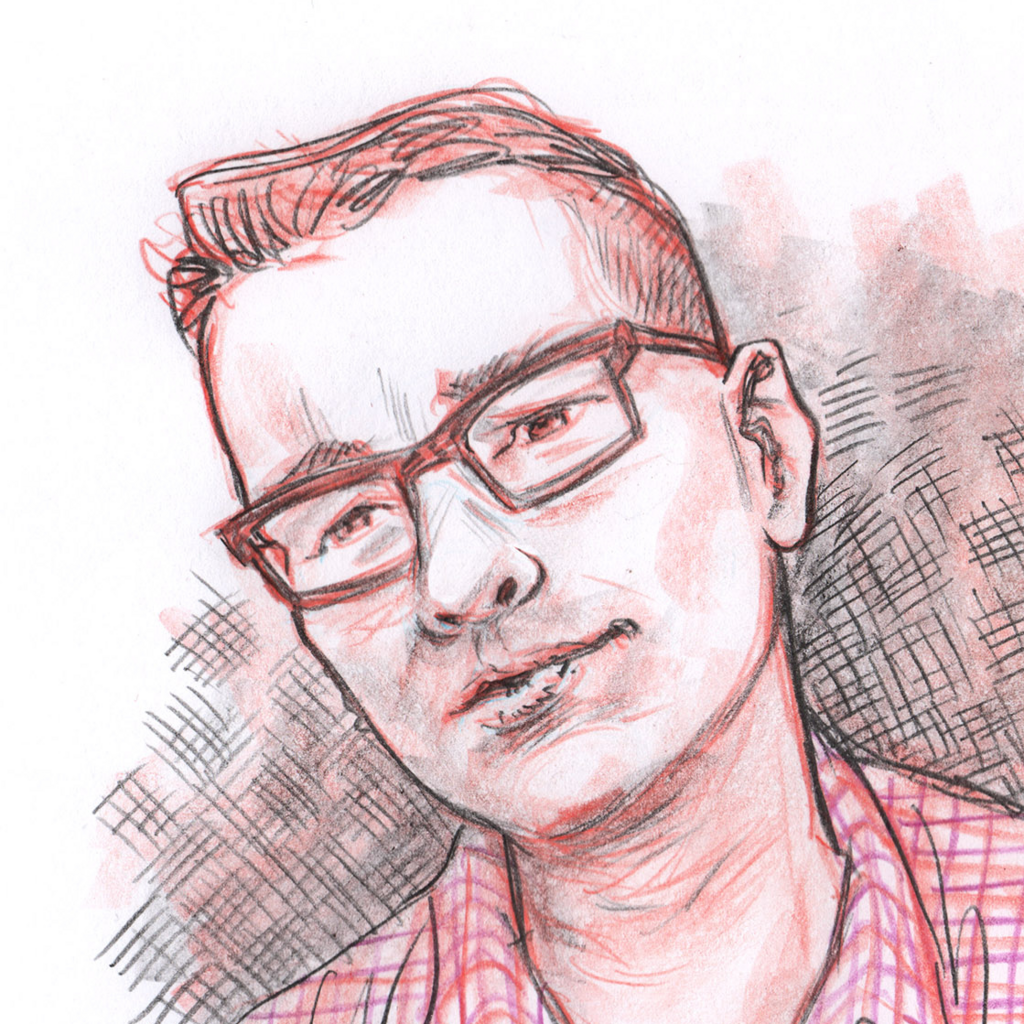
Special Guest: Mike Shatzkin, Founder & CEO of The Idea Logical Company
A Leanpub Frontmatter Podcast Interview with Special Guest Mike Shatzkin, Founder & CEO of The Idea Logical Company

Special Guest: Mike Shatzkin is Founder & CEO of The Idea Logical Company, with decades of experience in the book publishing industry. In this interview, Leanpub co-founder Len Epp talks with Mike about how he's been experiencing the pandemic in Manhattan, his latest work projects, the history of the general book trade publishing concept, and some of the fascinating ways the pandemic has affected the book industry in the United States in 2020, accelerating transformative trends that were already taking place, and at the end, they talk about his work on climatechangeresources.org.
This interview was recorded on December 1, 2020.
The full audio for the interview is here: https://s3.amazonaws.com/leanpub_podcasts/FM169-Mike-Shatzkin-2020-12-01.mp3. You can subscribe to the Frontmatter podcast in iTunes here https://itunes.apple.com/ca/podcast/leanpub-podcast/id517117137 or add the podcast URL directly here: https://itunes.apple.com/ca/podcast/leanpub-podcast/id517117137.
This interview has been edited for conciseness and clarity.
Transcript

Len: Hi I'm Len Epp from Leanpub, and in this episode of the Frontmatter podcast I'll be interviewing special guest Mike Shatzkin.
Based in Manhattan, Mike is the Founder & CEO of The Idea Logical Company, with over 50 years of experience in the book publishing industry in a number of different roles.
He's also the author of a number of books, including most recently *The Book Business: What Everyone Needs to Know, which he co-authored with the late Robert P. Riger.
You can follow him on Twitter @MikeShatzkin and check out his website at idealog.com.
We interviewed Mike originally back in 2017, so if you're interested in hearing the story of his career, you can find that episode wherever you listen to the podcast, and we'll link to the episode page on Leanpub in the transcription of this interview on our website.
In this interview, we're going to talk about what Mike has been up to for the past couple of years, what he's currently doing, and about what's happened in 2020 to the book business, and maybe a little bit about where he thinks things are going to go.
So, thank you very much Mike for being on the Leanpub Frontmatter Podcast.
Mike: Well, happy to be back with you, Len.
Len: I always like to start these interviews with the person's origin story, but as I mentioned, we've already covered that in a previous interview. So, I thought I'd just dive right in and ask you about what your experience of the pandemic has been like, generally, personally and professionally, where you live in Manhattan?
Mike: Well, I think I'm in one of the best possible places to be, which is the East 50s in Manhattan, which has an infrastructure that is built for the - I don't know? 20, 30,000 people who live here - and the 300,000 people who work here. And the 300,000 people who work here aren't here. So we've got plenty of services, and nothing's crowded. And there's no such thing as - I mean there's a Whole Foods up the street, that once every two or three weeks, has a line, because they're metering the number of people in.
But that's not necessary in our neighborhood very much, because people are going to what they can walk to, and there are not that many people around. So I go out every day. I feel fully serviced. The restaurants are all open. They're serving on the street. I mean they've basically set up sidewalks and sheds on the street. Everybody's serving takeout. The only unmasked face I see is my wife's. But I'm lucky, I have a very beautiful wife. So it's not been a particular difficulty or hardship for us. And I mean - obviously, everybody would rather the world be like the world has always been. And it is a drag not being able to socialize, and not being able to do a lot of things.
But on the other hand - it's a lot more of a drag for a lot of other people who don't have enough money and don't have enough space, or are quarantined with somebody they'd rather not be with. So I consider myself fortunate in a very unfortunate time, and I hope it all - for everybody's sake, that we get past this pretty soon.
Len: And have you seen restaurants open things up on the street sides and stuff like that, like I've read about?
Mike: Oh no, it's - I've watched the change. I have a window to my left that looks out on Second Avenue, above Second Avenue and 51st Street. So I look across the street and I can see - I haven't actually counted them - every storefront is a food-serving place. Eight or nine different restaurants, bars, etc. In my building just below me, is a restaurant.
All of them start, set up - I mean, the first month or two, it was total lockdown. Nobody was out. Nobody did anything. Nothing. The only things open were the essential ones, like the drug stores - CVS. That was about it. And there was nobody around, and there was no, and there were no - there was nothing. It was amazingly desolate here.
And then, I guess round about June 1st, we started to go back to something else - and the restaurants all put tables on the sidewalks. And then that soon became tents in the bike lanes and the bus lanes. And the tents have now, in some cases, been sealed with plastic. So as far as I'm concerned, they're no safer than being indoors.
The restaurants are now allowed to have 25% of their capacity indoors. I wouldn't do it, but people do do it. So within a five minute walk of my front door, there are easily 15 or 20 places that will cook you and serve you a meal. This is - it's really - if you've got to be stuck somewhere, this is a great place to be stuck.
I've met friends in Central Park, who live on the Upper West Side. I meet them in Central Park, and we sit six feet apart on a park bench, and talk through masks. In New York City, everybody wears a mask. There's no evident political rebellion taking place. So you don't feel unsafe. I would never stay indoors in a place with any unmasked person. But it doesn't arise. So, I mean - it's different, it's weird. But boy, it's not nearly as hard for us as it is for a lot of people.
Len: Thank you very much for sharing that. It's really interesting here on Vancouver Island - some people were wearing masks, some people weren't - even indoors. There were very, very few cases. Partly because we're on an island.
Mike: Right.
Len: People started reacting early, things like that. Until recently, when the mask mandate came down. It doesn't apply to the outdoors, legally. But it was only in the last couple of weeks when people got reckless, and started travelling too much, and stuff like that - and suddenly we've got lots of cases on the island. And - yeah, people are all wearing masks indoors now. I don't think it really got political here. But it was just kind of a more or less careful population - except, eventually people just started cracking and being reckless.
Mike: Well, I understand people are really getting bored with it. But there's a light at the end of the tunnel now. It's like - if you've gotten this far, bowl your way through the end of it. Because this will be over. I mean, it may take six months. It's not going to be over in the next 15 minutes, but it's - we didn't know that they would be able to create a vaccine. They're creating several vaccines. And of course, the other thing in our case, is - we're about to get a government that gives a damn, to replace the government that doesn't give a damn. And that should help. You've had a decent government all along, we haven't.
Len: Yeah, well - look, I could talk with you about that for a whole podcast.
Mike: That'd be another conversation.
Len: I've gotten - whenever people say what you just said, I cross my fingers. Because until it happens, I don't, I'm not going to psychologically -
Mike: What? The vaccine.
Len: No, the transition.
Mike: Oh, okay. Yeah, well -
Len: That's just my view on that.
Mike: We'll see, we'll see. No, you're right. I think a little skepticism is called for.
Len: But yeah, I hope you're right about that light at the end of the tunnel. And it's funny - I mean, there's so many analogies one can use.
Mike: Yes.
Len: Going off to war and things like that. But the one I always like to use is - people used to go on ship voyages that lasted many, many months, where they were just stuck with each other and couldn't sort of really go anywhere beyond the bounds of the ship and its decks. We can use analogies like that to try and get through our time. And for those of us who are fortunate enough to have incomes or savings and stuff like that, we can -
Mike: Right.
Len: Order a little bit more food, and meet our friends outside in the park, and stuff like that. I'm a 10 minute walk from the ocean, where we can go watch whales. There's parks all around. And I've actually - one thing, just before we move on. One thing I noticed - it subsided, but when this all started here - I noticed way more people walking and couples holding hands, than in the past. Which was really nice. And so, it's important to try and look at the positive things, and try and find what positivity you can in negative things.
So we've talked about the pandemic and stuff. I'd like to talk to you a little bit, before we talk about the book industry generally - what have you been working on lately, and what groups have you been working with in the last little while?
Mike: Well that's really been one of the surprises here about all this, is that I'm busy. I changed out my life just before we spoke last time. In October of 2016, I disposed of all my overhead, so I could spend time on climate change. And disposing of my overhead meant disposing of administrative competence, which I do not have - but which I always employed.
So what that means is that the number of things that I can do professionally, has become more limited. I still have a brain, and I still am able to formulate thoughts, and I still have lots of contacts and lots of people I can call. But a multi-step process that involved me doing several things in a row over a couple of weeks to get something done, without any of my trusty folks to remind me what I have to do next, that's another proposition. So my business had shrunk, which was the intention at the time.
And then, the first sort of clue was in March. I'd been working with a company called Open Road. Open Road's a fascinating company. So what happened - Open Road was invented 20 years ago, by a woman called Jane Friedman - who was the Ppresident of Harper Collins, just before she went to Open Road. And Jane saw that there were a lot of books for which the ebook rights were ambiguous in the year 2000. So she scooped them up.
She started knocking on doors and saying, "Hey, your ebook's not covered in your contract, sign it with me." And the publisher - there weren't any ebooks then. Publishers weren't really playing defense on this, it was before Kindle. So, she just started signing them up.
But this was a trick with a shelf life. Because all the new book contracts had ebooks in them. And over time, the publishers went back and repaired some of their old ones. So by the end of the decade, they had a lot of ebooks, but they couldn't get any new ones - at least not the way they were getting them before.
So around 2013, they hired us. I had Peter McCarthy working with me then. Peter McCarthy's now at Ingram. Peter McCarthy knows more about digital marketing of books than everybody else combined. And there's a reason for this. Which is that for six years, his job at Random House was, figure out how books will be sold in the future. He's a very smart man, and it was a very big company, and he had a lot of resources - and he was conducting experiment after experiment - and no one will ever get the opportunity to learn what Pete got the opportunity to learn.
So, for a couple of years, before I disposed of my overhead - Pete was part of my overhead, and we were building a consulting business around his knowledge. And one of our early clients was Open Road. Pete got them started on digital marketing. They had lots and lots of ebooks that they controlled, and they started doing some things.
Open Road continued with this after Pete left, and they built a digital marketing system that does things like take a book that's ranked 3.2 million, and move it up to rank 60,000. And the difference is - at 3.2 million, you're dead. And at 60,000 Google and Amazon are kicking in algorithms to give you lift, right? So if you can take 5,000 books that are dead, and turn 612 of them into alive - that's a really good proposition, and that was Open Road's proposition.
So they came to me, and they said, "We need publishers to give us books. Our system always wants more books, and we'll take the dead books. We'll take the 5,000 books at the bottom of the list, that they're not going to do anything with at all." So I started to help them with that. And on March 13th, which was the day I locked down - we had an appointment scheduled with Harper Collins for 11 days later, 13 days later. And Harper Collins had just at that moment shut their office temporarily.
I called Jim Hanas, a wonderful fella who I had the meeting with. And I said, "Jim, I don't think we're going to have this meeting." He said, "You're right, let's push it back two weeks." And I said, "Well, I don't know - it looks to me like two weeks is going to be worse." But we pushed it back two weeks - and it was worse, and we cancelled the meeting. But by June, everybody had learned Zoom. And all of a sudden, things could happen again.
So I started working with Open Road again, and then a couple of other things came along.
One of them is based in Vancouver, it's a company called Legible.com. Legible.com's proposition is we're doing ebooks, but we're doing them in a browser. Not in an app. Not in a dedicated device. In a web browser. And that - the other thing that they've figured out is, there are four monetization paths - sale, rental, advertising and subscription. And they will enable all four monetization paths in their platform. That's a really interesting idea. So I started introducing them to some folks.
And then another thing came along, which is a technology out of India, called a Reading Buddy. And what a Reading Buddy does - it takes a book, but usually a kids' book, obviously, and turns it into a digital thing where you can see it just like you would on the page. But it will read itself to you. Or, if you're a youngster and you read to it - it will grade your reading. It'll know whether you are pronouncing the words right or not, or sounding the words out right or not. And so it substitutes for a teacher or a parent. So these guys have just developed the technology. They don't have a lot of books in it yet. But this is another place where I can add some value, by helping them get some purchase, some awareness in the book community about what they're doing.
So all these things have come along, and where I can do something that's useful, and on the phone and on Zoom and on - in conversations that are more than socially distanced, they're geographically distanced. And so I've been very pleasantly surprised by that, and I think it'll continue.
And by the way, all of these businesses benefit from the pandemic, right? These are all, and maybe - I mean, Legible would've launched itself either way. But the fact of the matter is, it's a time when development can happen.
Now the problem is, that the publishers all have their hands full. Because they're trying to do what they were doing before, and none of the established procedures work. They're trying to have meetings about books that they need to develop, but they're not in the office or they've got to set it up on Zoom. So there are all sorts of things going on, which are the same stuff done a different way. And that is hard on people. So it's hard to get bandwidth, and it's hard to get attention, because people need to pay attention to the things that they must get done.
The other thing I would mention about all this, is that Ingram has been a client of mine for years and years and years, and I love Ingram. Ingram is a fantastic company. And in fact - I've been working on a project, which is a book about Ingram, the history of Ingram, which will come out in about six months. It was my idea to do it. I didn't write it, but I had a lot to do with helping put it together.
But Ingram is in the - it turns out, what they can do is perfect for the time. Because Ingram has print-on-demand sitting in the place - in the warehouse. So when the publishers are having trouble getting a new printing organized and delivered, they can just send the file to Ingram. And when the book gets ordered, Ingram prints it and sells it. There was a point in June, when half The New York Times paperback bestseller list was being printed at Ingram.
So this is another sort of fascinating aspect of things. I've had a little bit of a window in it, because Pete McCarthy and Jess Johns - who used to work for me, now work at Ingram - and I've consulted with them for a long time. So, a lot of friends in there. Everybody in Ingram is working their ass off. I mean, but they are - in many ways - single-handedly keeping the book business open, because they're also serving as a way for stores to do direct online business, without any kind of infrastructure. Ingram will be the infrastructure.
So it's there, it's easy to see that the pandemic does not affect all entities equally. Some entities really benefit, and some entities really suffer. And it's just - I'm happy to be one of the lucky ones, and I'm glad some of my clients are too.
Len: Thank you very much for sharing all of that. There's a lot we could unpack there. But you said it very densely, so that's fantastic.
Mike: Good.
Len: I can't help but make the joke though that - so you're saying people in the book publishing industry want to keep doing things the old way, even though things have changed? I can't believe it. And that - just as a segue into -
Mike: Oh shocking, shocking.
Len: How shocking. But just as a segue into that - so something you mentioned was - you put it in scare quotes when you said that they'd temporarily gone remote at one company. Closed temporarily.
Mike: Harper Collins, yes.
Len: Temporarily closed the offices. Do you think that the big publishers are going to go remote permanently?
Mike: Oh no, no. There's a lot of benefit to having people able to meet and talk with each other, and share things with each other. I do think that everybody in the office five days a week is something that we probably will never see again. I don't think that people will feel the need to have quite as much space. I think that we're going to start seeing people figuring out - well, first of all, people like not having to go to the office every day. A lot of people have organized their homes, so that they can work effectively at home. And that'll be even easier when the schools are totally reopened, and the spouses are also all employed, and so forth. I think that there's going to be a lot of sentiment for changing the standard from five days a week in the office, to two days of the week in the office. Or three days a week in the office.
But then you have the question of, "Should Len Epp and Mike Shatzkin be in the office on the same day or different days? Or should we overlap one day a week or two days a week?" - there's a whole lot of thinking that needs to be done about, maybe the editors are there Monday and Tuesday, and the marketers are there Tuesday and Wednesday, or something along those lines. But there already had been changes, however much the book business doesn't like to change. Over the last ten years, sales people have become fewer and marketing people have become more, right?
It's totally logical. There's fewer bookstores and they're less important, and digital marketing is everything. That's been the case, and it's been shifting that way. Well, it accelerated, right? And so we got two or three years of change in a year.
It's not going to stay like this when it doesn't have to be like this. But it's not going back to what my father did, or what I did for most of my career. And in fact, I think Manhattan's going to be very changed as a result.
Len: Yeah, I think accelerated changes are something - they've happened in healthcare, they've happened in transportation -
Mike: Yes.
Len: They're happening in lots of areas as well. And particularly, actually - I wanted to ask you about conferences. So, conferences are actually kind of a big thing, in lots of different industries - but they're a particularly big thing in the book industry. I had the opportunity to interview Juergen Boos, the CEO of the Frankfurt Book Fair, for this podcast a couple of months ago - back in June, I think? That was actually on another topic, but we did talk about the Frankfurt Book Fair, which is, I think, the biggest book fair in the world.
Mike: Yeah, absolutely.
Len: And at the time, he was still trying to arrange in-person stuff. They were planning on having tennis courts, where people would be sitting on opposite sides of the net, I think? Or something like that. But they eventually kind of - it's easy to say from the other side - inevitably gave up and did everything virtually.
Mike: Well, the thing is - of course - the last thing you want to do is quit too soon, right?
Len: Yeah.
Mike: In other words, once you say, "We're done," then you're done. So you keep looking for a solution, until you're persuaded that you can't find one. And that's a combination of - part of it is the passage of time, right? You're sitting - I didn't mean to call Hanas out, when I said that in March he said, "Well, maybe we can meet in two weeks." I don't think there was anything unusual about Jim's point of view. His company at that time didn't say, "We're closing for a long, long time." They said, "We're closing temporarily."
It was all temporary at that point. And then over time, the penny drops. I mean, we all have a story. I stopped going anywhere on March 13th, Friday March 13th. Two weeks earlier - Saturday, February 29th - I spoke in Florida. I flew back to New York on Monday, March 1st. Some people were smart enough at that point not to do that. It took me another week before I kind of figured out that, "This is really not a good idea. I really need to isolate. I need to quarantine." Everybody's got a story about the day before they figured it out. But, after a while, everybody's figured it out.
And that's sort of where we are now. Everybody's being really careful. But once we've - once the vaccines are circulated and - I mean, there will come a point when it's okay. And when it's okay, offices are still rented, and there'll be a lot of benefits found, when people are able to get back together again, at least some of the time.
Len: It's really interesting. We could talk forever about that. I've actually spoken - I think I mentioned to you when we were arranging this interview, that like - back in March, I started actually adding a section to the podcast where we talk about someone's personal and professional experience with the pandemic.
Mike: Yes
Len: And yes, everybody has their own story. I've spoken to people who were like on the last flight to Poland, when people who weren't citizens could go in. I've spoken to people who've contracted the virus. I've spoken to people who are like telling their co-workers, "Hey, I'm not going to fly down to LA, I don't think." And they're laughing at them for being too precious, and a week later they're like, "You were ahead of the game."
Mike: Right.
Len: For me, it was - I think a little bit earlier than most people, partly because I live in kind of the tech world, and that world cottoned on to things a little bit sooner than other people did. And my - I remember my first thing - I forget exactly when it was, it was sometime in February, when I started ordering like dried goods on Amazon, to prepare for a - I'm laughing now, because nothing happened - but to prepare for production shortages and stuff like that. That's when I started ordering groceries online, and that kind of stuff.
And yeah, everybody has their own story. But if you're in industries where it's literally about people getting together - like conferences or office space and stuff like that, it maybe took people a little bit longer to come to terms with the fact that this was going to stick around for a while, and there's going to be lasting effects.
Mike: Oh no, it's very hard to acknowledge that what you've done won't work anymore. I have friends who are in a restaurant business. And they're in their sixties, and they have several successful restaurants on which they make money. And they have every right to be thinking, "And when we're done, we'll sell our restaurants," right?
And the whole, now - they're hoping that the government will pass another relief act, to get them some more cash - so they can stay alive a little longer. They closed one of their restaurants. I mean, it's not their fault. You're in a restaurant business, you're screwed. It's not your fault. And if you're in the conference business, you can't do it - and you don't know when you'll be able to do it again.
Because another aspect of this is, Zoom is getting better and better. People are getting more and more comfortable working with it. And there are things like side rooms, that - so you and I could go to a Zoom conference, but you and I can go into a side room and have a side conversation. These things are now being grafted on to the various Zoom and Team, and all the various softwares there are. This is accelerating the development of remaining remote.
And the thing is - for example, I've got a personal trainer. I used to see him in a gym three blocks up the street. Now, he trains my wife and me once a week. One of us holds the phone aimed at the other one, right? And he leads us. We have a mat, we have a cord that's a rubber thing, and we have blocks that we can put on a table. He leads us through a half hour of exercise, which is arching your back and doing squats, and all sorts of different things. He's home in Brooklyn, and I hold the phone for Martha, Martha holds the phone for me. He can see us. We can hear him. It works fine. And we get the workout. We don't have the machines. But we get the workout, because he knows how to do it.
Well now, we're recommending him to friends in California, because you don't have to be there anymore. So his business could change. Because he's unique. He's really good at what he does. There aren't one hundred Antons who do this, right? So, for certain people, it's fantastic stuff. Now he's not limited to the people that can get to 54th Street and 2nd Avenue to his gym. I think that a lot of people who do a lot of different things, are going to find that they're no longer confined to a geographical audience.
And similarly with conferences. Conferences depended on people getting on airplane, booking a hotel room. I mean, you don't need all that anymore. You just need to run the conference.
Well, that changes everything, because when you're running the conference and you're bringing people in - you feel obliged to keep them occupied from eight in the morning till ten at night.
If it's a virtual thing, you don't have to do that at all. You can have one two hour meeting, and you can have another one tomorrow, or whatever it is - and people can just phone it in. So all of these things are in development, and changing, and being invented. In it's own way, it's a very exciting time - even though it's a pain in the ass.
Len: I couldn't agree more with everything you've said. I've got a number of friends and colleagues that have had similar experiences. For example, my old kung fu teacher in Montreal teaches on Zoom now. And so now actually anyone around the world could access live teaching from one of the lone experts in a particular kung fu style, from anywhere in the world.
Mike: Exactly.
Len: A friend of mine who's a lawyer actually - what happened was, they realized - they didn't know how - I mean a lot of people, like - their experience with video conferencing was like web - sorry to disparage a product, but like Webex and stuff like that, where it just never worked, and it sucked.
And people didn't - a lot of people didn't know that Zoom like kinda works. You can take over people's screens even, very easily. You have the side or breakout rooms and things like that that you can use. I've reconnected with old friends that I hadn't seen for years in Montreal. We do our pub quiz every week on Zoom now.
Mike: Well there you go. Another thing that I've find, is a personal habit - is that I am finding that I get an email and I pick up the phone and call somebody. And now, I don't just call somebody, I Facetime them. So I'm having all sorts of conversations with people that I used to have email exchanges with, but now we actually talk. And because you - if you call somebody up, the chances are, they're available, right? And a year ago, the chances are, they weren't available. So it's a really different environment that we're all in.
Len: Yeah. You can tap anybody in the world on the shoulder and have a face-to-face chat with them, as long as long as they're willing to do it over video. It's changed the way we work a lot too.
Mike: Yeah.
Len: So let's maybe shift the conversation to something that - where like, you can't do it virtually. Which is, physical book retail. What have you heard about how the pandemic in 2020 has affected the way people are selling books in stores?
Mike: Well, it's really hard for stores. But once again, this is simply accelerating something that was already happening.
Here's the paradigm that I think you need to keep in mind. In 1990, there were half a million books. That is all the books in print, from all the publishers that there were - there were half a million books. Now there were used books, of course, in addition to that. But they were not part of any commercial stream, except used bookstores - which were cut off, were individual silos.
In that time when there were half a million books, there were a lot of bookstores that had 100,000 to 125,000 titles. A lot. This was the beginning of the superstore expansion. And what that meant was, if you went into those stores, chances were pretty good that whatever you were looking for, they had, right? Because most of the books - I mean, it was hard to find 125,000 books that were worth having. In fact, over the years, they learnt that only 40,000 of them sold and 80,000 were there pulling people in to buy the 40,000 that were sold.
So, that's where the world was in 1990. And then Amazon came along. One of the interesting things about Amazon, was they needed a database to present to their customers. And there were two that they could've considered, really - Ingram's and Baker & Taylor's. Ingram, being a relentlessly efficient company, had a very clean database. If a book went out of print, it went out of the database. Baker & Taylor, not being quite as administratively neat and clean, didn't have a clean database.
They had a lot of books in their database that were out of print. And Amazon said, "We'll take that one, because we want you to find what you're looking for, and we let you know if it's out of print. Because if you don't find it, you'll just think we don't have it. But if you find it and we tell you, We don't have it for a reason, then you'll shop and buy something else," right? This is just one small example of the massive genius that is Jeff Bezos. But that is one of the things that he did.
So over time, now, we live in a world where there are 19 million books. Ingram has 19 million titles in the database, most of which don't exist. But if you order one now, you can have it tomorrow. It's as good as if it did exist.
So, in the world of 19 million books, not 500,000, there are very few stores that have more than 25,000 or 30,000 books anymore. So now, the chances that you're going to find what you're looking for in a store - I mean, sure if it's a New York Times bestseller, they'll have it. But if it's not, chances are overwhelming that they won't have it. So why would you go to a store? You wouldn't go to a store.
Because the other thing about books - two other things about books. One is, they're heavy. It's not really convenient to buy - you can fold a magazine up and put it in your back pocket. A book, if you're not going straight home, it's a nuisance to have it.
But the other thing about books is - you almost never need it right now. Tomorrow's fine, the day after tomorrow's fine. You want to read the new novel by whoever it is. You can start Saturday. You don't have to start now.
So those two things together, and the reliability of online book selling - starting with Amazon, but not exclusively Amazon - all of the online book sellers - and Ingram, basically backing them all up, which is what's going on, is that there's a lot of bookstores that are selling you books online. But they don't have anything. They just put a front-end on what Ingram could do. But now everybody can do that.
So what's happened is, people are learning, about buying books online. A lot of them - look - being in a bookstore's a lot of fun. It's a nice environment in which to spend time. But it's not the most efficient way to buy a book. So I don't think it's going to go back to where it was before. And I think that bookstores, it's going to be hard for them.
What I was hoping would develop, would be that somebody - I suggested this to Barnes & Noble four years ago, five years ago - that they should stop opening stores and put Barnes & Noble book departments in other people's stores, and then customize the stock to what the other stores had. So, if a store sold things that brought in women in their forties and fifties, because that's what the store sold - then put books in for women in their forties and fifties. It's not hard, right?
But that's never happened. Now it could still, because other retailers are challenged, just like book retailers are. They are also losing customers to online. They are also losing out, because they can't offer a massive selection that an online purveyor could. So it could be that other stores will find that it does make sense to take 25% of their space and devote it to books.
But then what they need, the thing that's tricky - they can't buy the books. They need somebody to stock the books. Because books are really hard to buy. There's a lot to know and it's complicated, and you're buying one at a time, for most things.
But, if somebody puts a vendor-managed inventory system in, there may be a lot of people that will want to use it. So we'll see if that happens.
But, fortunately for people who write books and sell books, it's not a big handicap to not be able to sell them in retail stores. Many, many books find their markets perfectly well through online means.
Len: It's really interesting. Depending on your mindset - there's a lot of people who are very romantic about the bookstore. But it's a lot more complicated than it can seem sometimes. For example, someone I interviewed years ago on this podcast, talked about how where she grew up - I think in a Catholic part of Eastern Europe - if you went to the local bookstore and asked for a book about divorce, you might get a visit from the priest the next day, right?
Mike: Oh my God.
Len: This idea that the person you're buying the books from knows all about you, is not necessarily a good thing all the time. And the privacy of online purchasing - I mean, and given all the controversies about gathering your data and stuff like that - would you rather some database with an algorithm knew what you bought? Or like actually literally, the person across the street from you?
For example, in my experience, where I grew up - it was an anti-intellectual place. There weren't going to be a lot of Hegel books on the shelves. And so my experience of walking into bookstores was one of basically permanent, persistent disappointment.
Mike: Yeah, I can understand that. And the thing is, that could be true with any number of specialized thought patterns and interests, right?
Len: Yes.
Mike: That's exactly the problem, and that's the challenge of running a bookstore. And of course what the bookstore tries to do - more now, than ever, because the bookstores are smaller and the percentage of what they carry is lower - is it tries to curate itself to be interesting to a group of people that the owner can relate to, or the store manager can relate to. But then there's all these other people, right? So I think, unfortunately, that bookstores are going to become kind of boutique-y, and they are not going to be places where most book commerce occurs. I think that the Walmarts and Costcos of the world will move a lot of the bestsellers.
Actually one of the things that's interesting, that I happen to know, because of all the various connections I have to the industry, is walmart.com and costco.com and target.com, are taking business away from amazon.com. And when you think about it, it's really easy to understand, right? Which is - the online shopper goes to Target, and go, "Oh they've got books," and, "Oh, they've got all the books." Ingram provides them with the books. They've got all the books. "Oh okay, well I don't need to go to Amazon. I like Target. I'm a Target fan. I'll buy them here."
So, they don't have to make a big effort. They have the customers. It's not hard to have the books. It's not hard to provide terrific service. The fact of the matter is - if you find a customer that only wants to pay the lowest possible price, then that person will often be driven to Amazon. But what we've learned is, Amazon doesn't always charge the lowest possible price. They're not idiots. They try to get margin where they can get margin. So some people will go to four different places to see if they can get the book for $1 less or $2 less or $3 less. And some people will just buy it from whoever is their favorite vendor. And it'll come along with the Pepsi. And that's okay.
Len: It's really interesting. "Coming along with Pepsi," that's a really good image.
One thing I wanted to bring up - you wrote a really good blog post recently, not that they're not all good - but one that got a bit of traction, called The end of the general trade publishing concept that I wanted to talk to you a little bit about. Because it's - one of the interesting things about change and history, is that, when people are introduced to something, the way it works when they're introduced to it - is often the way they conceive of it as having always worked. And the way you buy a book - the way you get a book now - is you click a button on a screen and it comes.
And the idea of like, where it came from and how it came into existence, is kind of meaningless to most people, right? Which is a bit different, if you have to get out, go to a store, you might think about, "Oh, how was the book produced, and how did it get here?" And all that kind of stuff. But now you click a button. whether it was sitting in the warehouse or it was printed on demand - whatever. You just wouldn't even think about it. It's like, "Books come when you click a button."
And so, just as a little bit of a time capsule, what was the general trade publishing concept?
Mike: Well, starting really - I mean back in the 19th century, books were often sold in a lot of bookstores, and books were often sold by subscription. One of the famous ones was general Grant's biography. General Grant got out of the White House and got cancer, he was dying of cancer. And he wrote his autobiography. I forget who it was, got - because it was easy, because you could get people to go out and get subscriptions - because there were all these former Union soldiers that would go knock on doors and sell General Grant's book. Anyway, that's how it worked for years and years and years.
Bookstores started to develop in the 20th Century. And after World War II, there were a number of forces that made the number of locations that sold books expand dramatically. It's another story for another time. My father had a lot to do with that. And I was aware of it growing up, because he was part of what made it all happen.
So what happened was, the publishers paid more and more attention to the bookstores, and sales forces grew. And most publishers that were successful commercial publishers, could get their books into many, many, many stores. And the stores were the vehicles for the discovery, and the vehicle for sale.
In other words, the main point - the big thing about a store, was not just that they sold the book, but it's where people found the book. And the smart publishers realized that it wasn't just a question of getting the book into the store, so they knew about it - but also to let the clerks know it was there, and to make the store personnel aware that it was there, so they could recommend it, and they could talk about it.
So starting in the fifties, the bookstores became important, and then the malls happened. Walden and Dalton became the mall stores, and that expanded the book market that much more.
And then in the eighties and early nineties, the superstore concept developed. And what people found out, was that the customer gravitated to the store that had the most titles. That was a very simple choice - like, "More to choose from, more likely to have what I want." So that became a problem for the mall stores that weren't that big.
And the superstores - namely Barnes & Noble and Borders, primarily - became destination stores. They were heavily financed by Wall Street to build out their capabilities. And as I said earlier, they would put 120,000 titles in the store. And they found over time that really 40,000 sold, 80,000 didn't. And every three or four years, they'd change out the 80,000 and the publishers would get the returns of books that had been sitting on the shelves for years and years and years. But it was okay, it was a bargain that worked.
But starting with Amazon, two things happened. One was Amazon, which made online purchasing happen - and allowed you to choose not from what was curated for the store, but from the universe. And the second thing was - Ingram invented Lightning print-on-demand. So the universe suddenly expanded. Books didn't go out of print anymore, all of a sudden. They used to. But now a publisher faced with, "Well the reprint's 3,000 copies, and it'll take me five years to sell 3,000 copies."
Say, "Never mind, load it on Lightning, and if we only sell 100 a year, we sell 100 a year. The margin's not as good as it would've been. But - A - we get that sale, and B - we don't have to revert the rights," right? Which was the other thing that the publishers faced at the time. When they put the book out of print, the author would claim the rights back. And one out of X books would have a new life, and the publisher missed it. They don't have to miss it anymore.
So starting in 1995 is Amazon, 2001 or 2002 is Lightning. Then 2000, you've got early ebooks. But then November, 2007, you've got the Kindle. And all those things conspired to drive the sales online, to drive the desirable universe in from a few hundred thousand copies to a few million titles that you might choose from.
And all of that - that's how it used to work. And it worked less and less well with all those books that -
And - oh, the other thing was - time used to be a really important thing. Like there's a publication date. And the book would be alive. It'd be in the store on publication date, and six months after publication date, most books were dead. Not all of them, but most of them were dead. The ones that weren't, that was the new backlist. And the backlist would grow.
Well, all of a sudden with the internet, time doesn't matter anymore. You're reading about something, and you're reading about a book - and you don't know whether the book was published this year, last year, five years ago, 20 years ago. It's relevant to what you're about, so you click on it and you want to buy it. No store would've known to have it, right?
So this is another thing that - publishers started to find that it was harder and harder to get the new titles into the store. But on the other hand, the backlist suddenly didn't die anymore.
Len: Yeah, that's one of the - I'm sorry to interrupt, but that's one of the things that I find most fascinating about the big change with print-on-demand and Ingram, and things like that - is that like, in the olden days - and this will sound crazy to someone who's unaccustomed to this - but in the olden days, if all of a sudden there was an interest in a historical figure, for whatever reason. Someone who did something in 1905 or something like that, right?
You would go to the bookstore, and you'd ask for a book about that person. And they'd be like, "Of course we don't have a book about that person. No one's been interested in that person since 1905." But I looked in the - maybe I've got a catalogue, and it's like, "Oh yeah, there's a book and I can try and order it." "Give me your phone number and I'll give you call when I -" And then they'll call you up and go, "No, it's out of print, I can't get any copies. Maybe you can find one in the used book store." And nowadays -
Mike: Well, that's the world as it used to be, and it was, and we accepted it.
Len: Yeah.
Mike: Because that was - it was reality. It wasn't anybody trying to screw us over, it's just that's the way the world worked. But it's not the way the world works.
Look, the same thing's true in the music business, right? When the Beatles happened, they were competing against 10 years of music, since rock and roll began, right? Now, you're competing against 70 years of music - and it's all available. How the hell can anybody break through anymore? That's a real issue.
Len: Well, that's actually - that I think gives me an opportunity to segue to my next question, which is about the - I mean the recent big news in the book publishing world is the Penguin Random House purchase of Simon & Schuster, Penguin's parent being Bertelsmann, the giant media publishing company. And everybody in the book publishing punditary business has their own opinion about that.
But I think actually one of the things that people talk about is - the bigger you get, the more you can promote stuff and try and compete with the 18 million books that are currently kind of - quote unquote, "In print." Do you think -? I mean I just wanted to ask you generally about your opinion about the acquisition, and what impact do you think it's going to have on the book business in the United States. But do you think that was part of the motivation?
Mike: I think there's two drivers here. One is the reality that you can't - it is very hard to make a new book work anymore. Back in 1990, when all these bookstores and publishers had sales forces, they could put a few thousand out of everything, right? I mean, they couldn't put 100,000 out of everything. But they could put 3,000 out of everything. And you know what? If you do the math, 3,000 will cover a lot of - if you don't give away a $20,000 advance - if you get a book for cheap, you can make money on 3,000 books.
So what happened - the publishers didn't think about it this way. But they were making a little money on just about everything. And a lot of it went to the backlist. And then, the world changed, and now you can't make money publishing new titles anymore. Because it used to be - you could sell a few thousand of everything. Now, even a big publisher can put a new book out and sell 76. Because there's just nobody out there - there aren't all these stores, they don't have them anymore.
Okay. So the first problem - that's a problem, but the backlist sells. So what Random House is doing, is acquiring thousands of titles that Simon & Schuster has. That they would have to do hundreds of thousands of titles to get that many titles that would work from new books, right? So that is the first thing.
But the second thing is, all the publishers whose bookstores have died, have discovered new ways to sell books.
So they have email lists and they have vertical websites. And they have various other tools that they use, where they go out in various places. And what happens is, those are not general. It's the end of the general trade publishing concept, right? It's very specific. You have a list of people that are interested in cooking, and that's what you sell them on this list. Well, you can't sell them travel, and you can't sell them novels. You can sell them cookbooks. That's where you can sell them.
Well gee, if you're at Random House and you built one of those, and new books are hard to sell or make work, how are you going to get more cookbooks? Well, you can get them from the other guys, right? So what Random House does when they buy Simon & Schuster, is they get a general backlist, they get books that are successful that they can market. But they also get new books to sell to channels they created, that are unique to them.
By the way, Simon & Schuster's done the same thing. So, Random House is acquiring channels. They're acquiring sales mechanisms that Simon & Schuster created for Simon & Schuster books, that can now be refreshed with Random House books. It's something that makes a lot of sense, as the publisher becomes the retailer. Choice is what the publisher has to offer.
I think that we're headed toward one big trade publisher, maybe two, but the thing is - it's very hard - there's no trade anymore, right? All these behemoths were built on an infrastructure that doesn't exist anymore. So you can't build the same thing anymore.
So I think the acquisition makes total sense from Random House's point of view. And it makes total sense that Harper Collins would be very upset about it.
Len: Yeah, it's really fascinating. Thanks for sharing that. There's a lot of details in there that people who aren't insiders might not kind of figure out on their own, and that's really insightful. The -
Mike: That's my job.
Len: That's why I was so excited to have you on the podcast again. But one of the things that people - and what I'll kind of, I'll call, "The author community" - are really concerned about this consolidation. To a lot of people, the idea of one publisher - if they're on the author side of things, can be really scary, because -
Mike: Of course.
Len: People who are particularly concerned about bargaining, right? So if you've got a book and you want to try and sell it through an agent to a publisher - you would like to have competing publishers on the other end that you can play each other off of. This is one of the reasons actually that the book fairs are so important - that's one of the things that happens at book fairs, is that an agent is shopping around a book to multiple people in sequential 10 or 15 minute meetings.
Mike: Yes.
Len: This is what the tennis courts, I referred to earlier were all about, right? And the idea of having no - basically, what is it? A monopsony. Is that - what, I always get it wrong.
Mike: No, you got it right.
Len: Yeah, one buyer, right? And that's scary if you're selling.
Mike: The thing is, the reality of this is, there are a very small number of books that every publisher would want. And we know who all the authors are. Anybody - any author who has ever had a best seller, their next book - any publisher would want. There used to be five bidders for that, and now there are four. So for the small minority of books that everybody would want - which are, by the way, where all the bestsellers come from and the biggest books that we know most about and care most about - yes, they just lost 20% of their market. There's one fewer to drive up the bidding on it. But the reality is that if you're not one of those, you were already in hell.
The fact is that most - it is just startling to me. I have friends who are writers, and they come to me for help. I have a whole procedure by which I tell them to look at Michael Cader's Publishers Marketplace and look at the deal database, and find the agents that are selling books that are like your book, and so forth, and then tell me who they've found - and if any of them are friends of mine, I'll give them a shout, and I can send you to other people that I know.
I've been doing this for years. People can't get an agent to take them anymore, because the agents can't sell anything anymore. Because the publishers are buying less and less, and they're - and so, it's really - if you're one of the big guys, it's terrible, because there's only four people to bid instead of five. If you're one of the little guys, you've already been in a very difficult position. Because the publishers are just publishing fewer and fewer new titles.
Now the public is not seeing fewer and fewer new titles, because people self-publish. And little fledgling publishers, you or I can be a publisher tomorrow, right? I mean all you have to do is have a manuscript. If we have a manuscript, we can set it up with Ingram. We don't even have to do a major first printing. We can just set it up and call the people that we know and do the things that we do, and be a publisher - without a lot of investment. Not without a lot of success either, but that would be a separate question.
But the consolidation is following the reality, it's not leading the reality. The reality is consolidating, because there's less and less commercial publishing to be done. Particularly commercial publishing, it depends on bookstores. So, there's bound to be a reduction in the number of people doing that work.
Len: Yeah, and the work being done too. I mean, you would know way more about this than me, but the scuttlebutt I hear is that, over the last few years, book publishers have started doing less and less work on the books themselves. Maybe less fact checking, less editing - things like that. And even less marketing.
Mike: Yeah, I think that's true. Well, I think that's true. Everything's squeezed.
Len: Yeah.
Mike: And so everybody's looking for a way to save a few bucks. Because it's hard. I suspect that those generalizations are accurate.
Len: The reason I bring it up is because a lot of people think that - well at least - I mean, "I go through all this trouble and effort and time and begging, almost, to hopefully get a publisher to bequeath their imprint upon me," or something like that. But in the end you might get very little of the help that you were expecting to get. And they might even go, like, "So what's your online platform? How are you going to market the book?" And then you might think -
Mike: Yes.
Len: "Isn't that your job?" And they'll go, "Not anymore."
Mike: Well no, the thing is though - publishers have really always have had one proposition: "We put books on shelves. You can't do that."
I can't do that. Simon & Schuster and Random House, Harper Collins and Oxford University Press can do that. As the number of shelves diminish, as the odds that any particular book can find a number of shelves diminishes, the power of the publisher diminishes. Because everything else a publisher does - everything else a publisher does - can be bought from a competent freelancer at a reasonable price, who used to work for a publisher and do it for them.
So the fact of the matter is - the only thing that the publisher is uniquely equipped to do, is the one thing that is being devalued most over time, which is putting the books out in the bookstore.
And back in the day, 30 years ago, that was the only thing that mattered. It didn't matter if they screwed up mailing out the review copies. What mattered - is the book in 2,000 stores on publication day? Great. If it's in 200 stores, you've got a problem, right? But if you get it, if it's in 2,000 stores, you’ve got a fighting chance with whatever it is you're doing. Now, there aren't 2,000 stores.
Len: I think that's a really great place to end our discussion on the book industry in this podcast. That's a really, really important point - and very fundamental point that's going to drive change - And it's driving change now. And it's going to drive change going forward.
But on the subject of change, I wanted to take some time at the end of the podcast to talk to you about the other thing you do, which you mentioned.
You've made a career shift towards having more time to focus on climate change. And you recently posted on your blog at idealog.com about climatechangeresources.org. I was wondering if you could just tell us a little bit about the story of how Climate Change Resources came about, and what it does and what you're trying to do.
Mike: Sure. It was beginning of October, 2016 that I disposed of all my other overheads of the staff etc., and liberated myself to be a less effective consultant, but free to do other things.
The day after the election in 2016, I went to a memorial meeting for Martin Levin, who had been in the publishing business for 100 years. Well not quite, he died at the age of 97 and he'd worked till he was 96. And everybody was envious of what a great life Martin had. So it was not a sad event, his memorial - it was a joyous event.
And at that event, I ran into an old friend of mine, named Lena Tabori, who is one of the most important illustrative book publishers of our generation. And Lena has had a business called Welcome Entertainment, through which she was still publishing books. And Lena said, "So what are you doing?" And I said, "Well, I just got rid of my overhead so I can work on climate change." And she said, "That's what I'm doing. Maybe we should do it together?"
So we put our heads together and we decided that what the world needed was a gathering of data around climate change. Because in 2016, I got to know Senator Klobuchar, who's wonderful. And Senator Klobuchar had climate change on her website, buried under the heading, "environment." Climate change did not qualify as a thing to think about on its own.
That was 2016. We knew that would change. This is no longer true in 2020. Climate change is its own topic. It's not under "environment," okay? But that was what Lena and I saw. So we started in - really about February of 2017, building climatechangeresources.org, for which 110% of the credit goes to Lena. I've written checks, I show up at meetings, I have some ideas - but Lena is the book packager, book publisher - visual genius,- and editor nonpareil, who has put all this together.
And we are literally - at my climatechangeresources.org meeting this morning, the question was - should we send out all the hundreds, the thousands of emails announcing that we're available now, or should we wait till after the firsst of the year?
But the site is up, climatechangeresources.org. It covers just about anything you could think about that relates to climate change, including the science, including who's doing what - actions you can take, places you can join.
Climate change is a very complex, multitudinous subject. There's a lot of different ways to think about it, and a lot of different ways to react to it. The site is a beast, it's massive. But I think that anybody who's interested in the subject, will find it really useful. And I think that anybody who persistently studies the subject, will find themselves going back to it over and over again.
So we're very excited about it, and it's really just about to begin to have its impact. And I'm delighted that you've given me the opportunity to tell a few people about it here.
Len: Oh, I'm delighted to give you the opportunity, too. It's a wonderful website. It's really interesting. Of course I'll link to your blog post about it. It really sets out how much thought went into the structure of it.
Mike: Yes.
Len: And how things can be mutually reinforcing, like finding information and learning what to do or, looking to do something and then finding information about it.
Mike: Yes, yes.
Len: And things like that. So it's a very thoughtful website about a very important thing. And I hope everybody visits climatechangeresources.org and has a look.
Mike: Thanks Len.
Len: Well, thank you very much, Mike for coming on the podcast again. I really appreciate it.
Mike: We should do this every three years, whether we need to or not.
Len: I completely agree. I mean - selfishly, I completely agree with you.
Mike: Thanks a lot, Len.
Len: Okay, thanks very much.
And as always, thanks to you for listening to this episode of the Frontmatter podcast. If you like what you heard, please rate and review it wherever you found it, and if you'd like to be a Leanpub author, please visit our website at leanpub.com.