
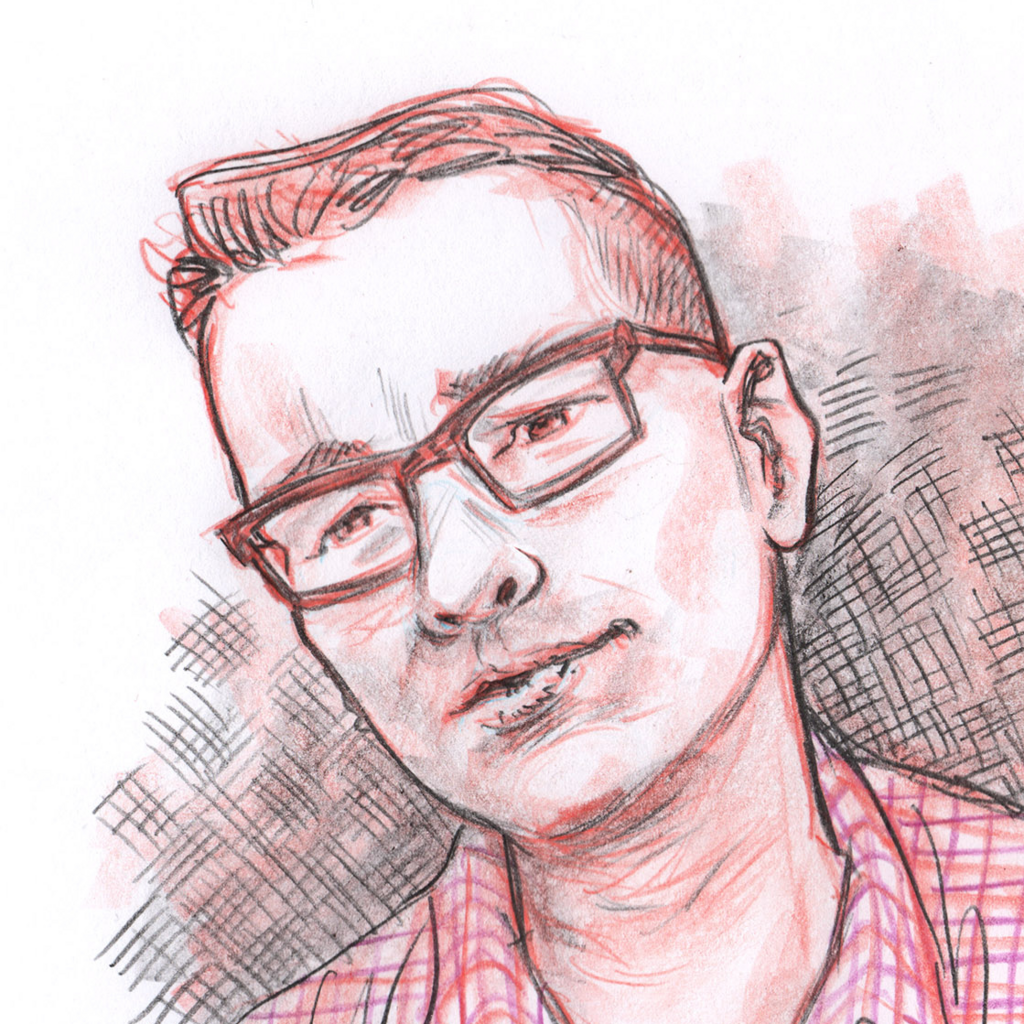
Special Guest: Michael Bhaskar, Co-Founder of Canelo
A Leanpub Frontmatter Podcast Interview with Special Guest Michael Bhaskar, Co-Founder of Canelo
Michael is co-founder of the UK-based book publisher Canelo. In this interview, Michael talks about his background, his early career experience at a prestigious literary agency, digital publishing, curation, tech, and power, and his experience launching and building a successful publishing startup.

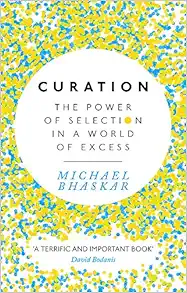
Michael Bhaskar is co-founder of the UK-based book publisher Canelo, and the author of The Content Machine: Towards a Theory of Publishing from the Printing Press to the Digital Network and Curation: The power of selection in a world of excess. In this interview, Leanpub co-founder Len Epp talks with Michael about his background, his early career experience at a prestigious literary agency, digital publishing, curation, tech, and power, and his experience launching and building a successful publishing startup.
This interview was recorded on April 20, 2021.
The full audio for the interview is here: https://s3.amazonaws.com/leanpub_podcasts/FM178-Michael-Bhaskar-2021-04-20.mp3. You can subscribe to the Frontmatter podcast in iTunes here https://itunes.apple.com/ca/podcast/leanpub-podcast/id517117137 or add the podcast URL directly here: https://itunes.apple.com/ca/podcast/leanpub-podcast/id517117137.
This interview has been edited for conciseness and clarity.
Transcript
Len: Hi I'm Len Epp from Leanpub, and in this episode of the Frontmatter podcast I'll be interviewing Michael Bhaskar.
Based in Oxford, Michael is co-founder of Canelo, an innovative independent book publishing company launched in 2015.
He's also the author of The Content Machine: Towards a Theory of Publishing from the Printing Press to the Digital Network, and Curation: The power of selection in a world of excess, as well as an editor of The Oxford Handbook of Publishing.
Michael is also a former writer-in-residence at DeepMind, and he's working a new book due out later this year, called Human Frontiers: The Future of Big Ideas in an Age of Small Thinking.
You can follow him on Twitter @michaelbhaskar and check out his website at michaelbhaskar.com.
In this interview, we’re going to talk about Michael's background and career, his books, and technology and the book publishing industry more broadly.
So, thank you Michael for being on the Leanpub Frontmatter Podcast.
Michael: Thank you very much for having me.
Len: I always like to start these interviews by asking people for their origin story. So I was wondering if you could talk a little bit about where you grew up, and how you found your way into the book publishing industry as a career?
Michael: My origin story - I don't think anyone's ever asked me for that. And I'm sure it's, in many ways, quite boring.
I grew up just outside a city called Norwich here in the UK, in the east of the country. Norwich is an interesting place. I kind of think that, in some ways, it's maybe a bit of a British Austin. It's weird. And it's got some good, weird people in it. At the time, I hated living there, because I think everyone hates where they grow up. But actually, now I think that that was a really great place to be. Because it just - it had a kind of counter-culture to it. Anyway, that's where I come from.
How I ended up in books and working in the book world - I suppose like many people that work in publishing and write, I've just always loved reading. And one of those people, who - if you see a text on the side of the road, you read it. You're eyes are just scanning for text in a kind of obsessive way. I've just been somebody who - I think found reading just to be the ultimate escape in life, the ultimate drug. And then also, somehow, knowing things, the ideas that books convey, is also like a bit of a drug. So I was just really, really hooked on that.
Then went to university. I studied English literature. I did that, because here in the UK, we all do something called A Levels. And you do kind of three of them. It's not like in a lot of countries, where you have a really broad spread. Actually, after 16 and before university, you specialize. I specialized in English, history and philosophy. I liked those subjects equally. I just thought, "Well, if I do English, I can probably crowbar in more history and philosophy than any of the other combinations." And that's why I did it. Basically I sort of spent years just trying to do literary theory.
My plan was to be an academic. I thought that was how life would go. But then it didn't work out like that. I think I messed up some exams. I blame it - I had these cluster headaches. And so, my grades weren't quite as good as they should've been. I mean, I'd always been at the very top of the year, and then it all sort of fell apart. I'd done a sort of a - I had work experience at a literacy agency one summer when I was a student. That kind of opened my eyes to publishing.
I never had this great ambition to be part of that, to be part of the book world. I wanted to be part of the scholarly world. And then just sort of by accident, I found myself in that world. And basically - at the time, I sort of then thought, "Oh well, maybe I should go into tech, and like do some kind of tech entrepreneurship thing?"
Basically, I think probably the past 15 years - I've been trying to square the circle of being an academic, being a publisher, and being a kind of entrepreneur in the tech world. And just trying to figure out a way of making those three things hang together, which I don't think they really do hang together - and I don't think I'm particularly brilliant at any of them. But they're all things that I love. They're all things that I'm passionate about. And so I would say from a slightly strange place, have ended up doing bits of all of them.
Len: Thank you very much for sharing that. I really like the two instances of taking three things and trying to sort of connect them, and get the most out of them.
I wanted to actually drill into one part of the story there. One thing I like to do when I have people on the podcast who studied undergraduate degrees at Oxford, is to ask them a little bit about their story about that. Because I think a lot of our listeners, particularly our North American listeners, aren't familiar with the model there, which is that - it's three years, not four, like one would typically do in a North American university.
And when you go in, you choose a major - and that's all you study, typically. You don't get to have electives. So the reason you would say, "Choose one of them, in order to hopefully get the other two in there," is that you don't have electives. You can attend any lecture you like, which is one of the brilliant things about the university. But you sort of - at 18, you have to choose. Or 17 even, you have to choose what you want to do.
Len: And then, the particular part of your story that I wanted to dig into there was - your final grade comes from a set of examinations that you write at the very end of those three years - typically, or at least at the time. For the most part, it's not determined by anything you do up until then.
Michael: Yeah. That's correct. It is in fact not at all - well, there are two essays and seven three-hour exams that you - basically, everything's on those seven three-hour exams. And you do them in a big hall. You have to wear a suit, a white bow tie, a big gown, and carry a mortarboard. You have to wear subfusc academic gear. And basically everything's riding on that.
I still have nightmares about it. Because it's - even sort of being there, it's such a kind of big deal in your life at that point - that everything's kind of riding on these exams. It's an incredibly backward and stupid way to run things.
I would say my feeling about Oxford is that - in so many ways, it's such an incredible institution. But it is also a flawed institution, and it doesn't - it seems like it's never quite capable of ironing out its flaws. It's never really - it's just too complex and too ingrained to get rid of some of that. So yeah, you just have this thing, where you have to just prepare for seven three-hour exams.
And if you do English, like I did - basically you were expected to just rote memorize a ridiculous number of quotes from works of literature, from old English up to the 20th Century. So I had a stack of cards, probably about three feet high, each of which was just like a two or three line quote from a novel or a poem or a play - and you just have to jam that into your brain. It's, to me - a sort of slightly silly system, to be honest.
But there are a lot of good things about it as well. Like you said - that you can go to any lecture. Do you know - actually in my second year, I didn't go to a single lecture for the whole year? Because what you're doing is you're writing essays and then presenting them to an expert. And I just thought, "These lectures are irrelevant." I just wanted to go off and read Michel Foucault or Jacques Derrida, and then maybe kind of discuss Shakespeare a little bit. But then go back to the Foucault. And if that's what I wanted to do - I could do it, and I could just go off. And actually that really worked.
Len: Yeah, I think what you said - just to drill very briefly into this part of the story as well. What you just said, it would've shocked a lot of people familiar with the North American university system - going a whole year without attending a lecture. Basically, you're given a lot of independence as a student there. And this has benefits, and it has drawbacks. I think that if there's any contradictions in the system that are very difficult to untangle, that's where a lot of that comes from - at least in my experience as well.
And as a student, what you'd do is - you'd meet with a tutor, who's often someone in your college, in your subject. And you present them with a term paper, basically - or with a paper every week during the term. And you don't actually have to attend any lectures, you can just go off and do your own reading. And it's very - it can be very intimidating. Because there you are, like sitting on the other side of a desk from someone who might be a really famous expert - and you're 19, and you're just getting to learn these things.
But just very briefly, there's the similar - my joke about how the DPhil works, is that - they spool you out like a kite at the beginning, and come back in three or four years and check to see how you're doing. So there's a lot of independence there. And some people absolutely thrive being left alone to make their own decisions, and some people completely collapse - and that can be really unfortunate.
But in any case, yeah - the idea that - having a period of time when you're having some headaches, can disrupt your grades for your whole degree - is just really, that's a really serious flaw.
Michael: It is a flaw. But actually - well, before going back on what you said - actually, I'm glad that it happened now. I mean, in some ways, I think I would've had a really interesting time if I'd just gone down the academic route. But also, I look at so many people who are academics, actually. They're struggling. The sector is screwed. Academia is not a healthy or a happy place right now. I think the incentives are totally warped. The job opportunities are really, really tiny. I mean, publishing is a competitive industry, but academia is just brutal. And above all, I just have this feeling that a lot of academics just do push themselves into narrower and narrower niches. And of course they do. That's kind of what they're about.
I've realized actually, I just think that would bore me to death. What I like doing is opening things up even wider, and then drawing the dots between things. So, I think, actually in some ways, at the time you wouldn't believe it - but sometimes these things are kind of meant to happen. And it's funny, so many years later, I can say that and smile.
But then on the point about the freedom - so even as an 18-year-old, I'd turn up and they'd just say - They wouldn't set you an essay for the next week, they'd just say, "Oh, write something on this author."
And so you have to go - I'd have to do two a week for very short terms. The terms are only eight weeks long. So you have three eight week long terms in a year, an awful lot of holiday. But in those eight weeks, I'd write two 3,000 word essays a week - and there'd be no guidance on it. There'd be no guidance on-- they'd just say, "Oh, I'd like an essay on Shakespeare's tragedies next week." So which one you do, what it's about, what your angle is, what your argument is, what the question is - none of that. And - to be honest, I loved that.
Looking back, I think there were two - there were pretty much two kinds of people. People who liked that, and people who didn't. And actually, I found at the time very strongly - the people who'd had better educations at really posh schools, struggled way more at Oxford than people like myself, who'd just been to a really, really bog-standard school. Because we'd spent our life not really having our hand held through every lesson, through every project.
And all those people who'd been to the really posh schools, actually - they didn't ever really have to think for themselves that much. They were coached their whole life to get into Oxford. And then when they get there, they're like, "Oh, go and write an essay on Shakespeare's tragedies." Nothing had prepared them for that kind of level of freedom. And actually, I look back - and every job I've ever had, I've never once had a job description. I've never once had a kind of plan. I've never once had clear expectations. And so I've always been making it up. But I loved that at Oxford - and I still like that, to be honest.
Len: I think we could talk about that for a very long time. I'm very much like that myself. And it's- for anyone listening, who's still in university, even if you're not at a place where that's sort of like formally the case, that you have that freedom - you actually can propose essay questions to your professors. And if you do that -
Michael: I think they'd be delighted.
Len: They'll love you. I know from my personal experience, they will - on both sides, they will love you for it.
Moving on. So you went from that crucible, and you had a couple of other positions - I'm just looking at your profile on LinkedIn here - but then you ended up working for a very big name publisher in digital strategy and digitization programs, right around the time that the Kindle dropped.
Michael: Well, before that, Len - there was another really formative experience. Because my first job in publishing, I worked at a literacy agency called Rogers, Coleridge & White. They were one of the kind of really old London literary agencies. They've got an amazing roster of authors. Absolutely amazing. And that was my introduction to the publishing world. But it was an incredible place to land. Because they were in this like higgledy-piggledy old mews house in Notting Hill. There were dogs running round the office.
One of the founders was just this most remarkable lady called Deborah Rogers. Ahe died a few years ago, and I was devastated when she died. Because she was just the most incredible person. I mean she was this extraordinary eccentric. Just really mad. But just a genius. She discovered Kazuo Ishiguro, Ian McEwan - and just this raft of names that she'd represented. Like so many Nobel Prize winners. And she was, she was just a sort of - you could hardly believe that somebody who was sort of so crazy, was just such a genius and so successful - but she was.
And then there were lots of other brilliant people there, who were steeped in the old world of publishing, I would say. But who were just really, really interesting. And so, it was just an incredible place to learn about some of what it is to be in publishing. And I would say - from the really kind of old school, traditional perspective - but also the perspective - who will just go, have loads of wine at lunch and, all of that.
What I think I learnt from there, one of the things, was that, what you know is really quite irrelevant, and it's who you know is important. That was such a shock to me. I just couldn't believe that the world wasn't what you know. That your network - I thought, "God, this is really unfair. It's all about who you know. It shouldn't be like that." But then I just thought, "Well, that's kind of how this is."
And secondly, you just learn. I learned how to be with people in publishing. Like with authors, let's say - or with other publishers. You learn some of that lovey stuff.
And - like now, the young people - they're not just going to hear the old ones on the phone for two hours, because no one's working in an office anymore. That's all I did at the time - was just listen to people on the phone in a difficult negotiation, charming somebody. So in some ways, all of that old school of publishing, I've never really done it again. But it was a brilliant place to be, and to see into that world, and to have a grounding in that world. And I made really good friends.
Len: Oh that's really fantastic, yeah. I'm sorry I skipped over that, without - I didn't know that you had that period, that's really wonderful.
Michael: It's kind of - yeah. I was only there for, maybe - I was actually there in two bursts of maybe nine months or so. In the middle, I'd gone traveling and so on. But it did really form me. I think actually, my - then moving into digital publishing and digital strategy and so on - that was actually a conscious reaction in the sense of - at the time, I was really young, and I just thought, "Oh, publishing is kind of carrying on. It's just doing what it always did." And I thought, "Well, it's kind of addicted to newness, in that it always likes new books. But in its business practices, in its method - it's just staying the same. And I thought, "Actually, if you're going to just do something that stays the same for your whole career, that's not very exciting." And I thought, "If there's going to be a great tidal wave of change, I'd like to be part of that - not just somebody letting it wash over me."
Len: Yeah, it's interesting. The publishing industry has all these curious contradictions in it. Like it's all founded on change and technological innovation and aggressive contract negotiation and stuff like that. And yet it often presents itself to the world as kind of like a clubby world of very smart and interesting people drinking wine for lunch and -
Michael: Yeah.
Len: And giving talks and thinking deep thoughts. And so, you've made this choice to go into a very rapidly changing part of the publishing industry, which was digital publication at that time. And this was around the time when you - I believe, started thinking about the concept of curation? I'm probably skipping some things over.
Michael: Yeah, I mean - well, we've got to skip.
Len: Yeah.
Michael: And I fear for the person who relives my life in too much granular detail. I guess the thinking about curation came a bit later - and many, many conferences later. I think that was a sort of a golden age from 2007 to 2013, when the whole space of digital and books was being created, and being invented. It felt like anything might be possible - that the grand millennia-old history of the codex might be in for its most defining moment. That this was the most interesting time since Gutenberg. That the entire ecosystem of books could be reinvented, and could be done in a way that was creatively extraordinary, commercially exciting - and so on.
So I found that a really exhilarating time. And to some extent, I really believed that, or wanted to believe a lot of that. It was also a brilliant time to be working in this. Because you could go to a lot of conferences, and it really has been something that's helped me travel all around the world, and meet an unbelievable range of fascinating people. And sitting here in 2021 - it's kind of almost hard to believe, how much of all that we used to do, and it's difficult to remember. But digital publishing really was this great space of people just meeting, traveling, talking and imagining the future in a very open way.
I think how it ended up is that we have a slightly more boring and stable and unchanged future than people had imagined at the time. But that many of the predictions did come to pass. A lot of people read books digitally. When I first started working in digital publishing, the question was, "Would anyone ever, ever read an ebook?" And I would've said - 80, 85% of people in publishing would've said, "No. Nobody will ever read a digital book." Well, you're definitely wrong.
But did we create all of these incredible new flourishing startups reinventing the book? Not nearly as many as I would've thought. Leanpub is a good example of I think a really new kind of company. But the numbers that are sustainable has proved to be a lot lower than anyone thought. Actually, for a long time, I kept this public Google document that was a list of digital publishing startups. And yeah, it had hundreds of names on it. And the failure rate was shockingly high.
Len: I found that list when I was doing research for this interview, and it was interesting to scroll through it.
Michael: Yeah. So that list, it used to be the top thing that came up on Google if you Googled "digital publishing startups."
Len: Oh.
Michael: So the amount of traffic it had was huge. I never knew how much, because you couldn't get Google Analytics on Google Docs at the time. But whenever I opened it - I could see, it was absolutely chock full of people. At any time, it was always being viewed by a lot of people.
But, anyway - to go back to thinking about curation. I started to think about that, because I would go to all of these conferences, and people would bang on about curation. It annoyed me at first, because I thought, "You're just talking crap. You're trying to borrow stuff from the art world. You're trying to look cool." And then the more I thought, the more I actually began to realize that - in the infinite catalogs of the digital era, curation was the single most important piece of value add that you could do. So, I then ended up writing a book about it.
Len: In the interest of time, I'll point people in the transcription of this interview to various talks that you've given. There's one you gave at Google, and there was a TEDx talk as well.
Michael: In fact, the TEDx talk, that sort of predated the book. And it's almost - I got asked to do a TEDx talk, and had been thinking about curation. So I had to write this talk about curation. And then that eventually became a book, or at least it was very much connected to that.
Len: They're really fascinating to listen to, and it's really interesting - discoverability is one of the more recent terms that are sort of - where people say, that's the most important thing when it comes to selling books. And the way discoverability often works is through these curation mechanisms, like algorithms in - well, in Google, in Amazon, and things like that. And it's become this really interesting struggle from the perspective - particularly, I believe of certain publishers - which we could talk about a little bit. But also in the self-publishing world as well, where you're always - you know there are these selection machines out there and you've got to try - but they're not transparent, you don't know how they work. And so you've always got to try experiments or try to learn from people who've succeeded at them, to try and get your thing put in front of the right people.
Michael: I actually wish that I could just go back and rewrite all of Curation, because what I think you've essentially described, is the huge asymmetry of power between the great tech platforms, and everyone else. And that's only become so much more apparent since I wrote that book. It was already clear then. Now I think everyone can see that. I think it kind of validates the thesis that curation is really important.
Len: Oh yeah.
Michael: Because the powers of the people who are curating - Amazon doesn't really own content, other than TV. Nor does Google, nor does Facebook. It's their ability to curate a mass that is the core of their value proposition. And I would talk so much more about that as a sort of a power.
And equally, I would want to talk more about how that power influences power elsewhere. Actually the thing that I think I missed to a massive degree when I wrote the book, and managed to get it in at the end on the paperback - was just how much it was the curation of the political realm and information, had become the arbiter, almost, of geopolitics.
We saw that with Brexit. We saw that with Trump. Who sees what information why, how, and when - is now a kind of - a question of absolutely central importance to the future of society. This isn't like curation as a nice thing for managing the fact that we've got 40 million songs. It's not curation as helping self-published authors on Amazon. It's curation as directing the direction of our democracies. That's kind of crazy, and I wish I could address that a lot more, and see how the pattern of all of those things holds together.
Len: Yeah, we could talk about that forever. I mean - it just reminds me of one really fascinating kind of incarnation of curation, is the idea that a lot of people seem to have - that if something comes into their world, it's come through some kind of gate with a keeper. I remember an interview with someone who had been influenced into believing in some kind of conspiracy theory, who had said, "Well, but it kept coming up in my Facebook feed. It came up so many times, there's no way it can't be true."
Michael: Yeah.
Len: And there's a weird way in which - yeah, again - that people actually do feel that their world is somehow curated one way or another, which it is in a lot of ways. But that there's some kind of - a lot of people don't find it disturbing to think that there's an authority in control of what they see, and what happens. They in fact sort of very much believe that's just how the world works.
Michael: Yeah, yeah. I think - it's almost the question, and this is something I've often been asked about curation - there is an authority, in that it's - let's say it's Facebook. But Facebook isn't even a person, and an algorithm isn't even a person. An algorithm doesn't have agency in the way that a human does, despite the fact that machine learning scientists call them agents - they're not really actually agents, because they don't have any responsibility.
So it's kind of - the crazy thing is, that actually nobody is in control - and perhaps that's the problem? Is that we need more humans in the loop, not out of the loop. And to me, curation is - it's not just about humans, it's about machines - and it's definitely about algorithms. But responsibility, expertise, judgement - they're kind of human traits. And curation is much better when it's enriched by them.
Len: I completely agree with that. It's really interesting how complicated it can become though. One example that's come up on this podcast before, is - I was interviewing a woman who had grown up in Eastern Europe, in a very Catholic community - and I'm not picking on Catholics here, this was just the nature of the story. And she said, "Look, if you went to a local bookstore and tried to order a book on how to get a divorce, you would get a visit from the priest later that week."
Michael: Right, wow, yeah.
Len: And I always think about that when I hear people say, like, "Why do you want an algorithm picking your books for you, when I'm here at the local bookstore and I could get to know everything about you myself?"
Michael: Yeah, interesting.
Len: And it's like, well actually - that's an easy choice for me, I'll go with the algorithm.
Michael: Yeah, it does show the flip side. Yeah. I mean, that is a really interesting story. And, yeah - it's people, who are ultimately the creators of these things. And so it's like when people in technology will occasionally try and say, "Technology is somehow divorced of moral norms, biases, etc." Of course it's not. Of course it's totally implicated in all of those things. Because everything we do is wrapped up in our own humanity. So, no - of course it - anyway, there's so many interesting things about that story, but I'm not actually bothered that much by the whole sort of privacy thing. It doesn't worry me on a personal level too much.
I almost think - I follow the debates around privacy probably a bit too closely, and I think the pendulum has now swung amongst that kind of circle, where people think that any kind of data collection by a company is evil surveillance capitalism. I don't buy that at all, actually. I'm quite happy to give bits of data. I don't feel that protective over it. I think my life probably is made better and easier in many ways because of it.
Len: Yeah, I could talk about that forever. It's interesting. There are services out there that set themselves up to protect your privacy, that demand more information from you than any of the services. In order to protect you, they have to know what - they have to know your information. And so people will sign up for these things under the idea that they're protecting themselves, when actually what they're doing is they're exposing themselves.
And there's been a lot of very - I believe, misleading messaging around this kind of thing. It comes from a good place. It comes from a proper concern, particularly with the idea that like - basically, virtual models of you are being built and sold. That's something to - there's definitely something to think about there.
But specifically with respect to ethics, though, in the interests of time - as I'm going to say a couple more times - so you were writer in residence at DeepMind, and I see here from your profile, that you were consulting with their ethics in society team. I was wondering if you could just take a couple of minutes to talk about what your work was with this company?
Michael: We were going to explore long-form writing projects. I mean - to be honest, nothing in the end really came of it. For me, the most important thing was I just had an incredible kind of insight and experience. We wanted to explore ideas around those topics. The ethics of AI, the impact on society of AI. I think in the end, it didn't really come to anything. So the work itself never really went anywhere. I did a lot of kind of internal writing and stuff like that.
So in some ways I think the kind of output - certainly publicly, aren't really there. What it gave me was an incredible insight into what it's like at the very technological frontier. How people think. What it's like to be in a tech company. To be exposed to the kind of very highest level of debates around AI, around the ethical safety, social implications of AI - and to be immersed in that. Just to talk to really clever people about a lot of these things. It was an incredible experience to have, and a great confidence booster, that actually you can go in and have these kinds of discussions, and not be totally at sea.
Len: It sounds like it must've been a really, really great experience to get to see things happening at the cutting edge like that.
Michael: It was really brilliant. And I really enjoyed it. I loved - I'd do two days a week in the offices at Google and DeepMind, and it was just fantastic. I mean just an amazing place, really, that is doing extraordinary work. The level there speaks for itself. They've done so many amazing things.
Len: Speaking of doing amazing things, it was really interesting - when I was preparing for this interview, I watched a talk that you gave - I believe back in 2015 it may have been, in Argentina?
Michael: Oh God.
Len: And this was right around the time when you'd launched - I just bring it up, I'm not going to ask you about what you talked about five years ago - you talk about how you just left a really great job in publishing to start your own company. And you said, "Who knows, it might turn out to be totally crazy?" I wanted to give you an opportunity to talk a little bit about your publishing company, and how things have turned out.
Michael: Well, things have turned out pretty well. Five, six years on - we're shortlisted for Independent Publisher of the Year here in the UK, in the big publishing awards. We are now a multi-million pound business. We've got 18 employees. A lot of authors. We are selling millions of ebooks, millions of print books. So I would say it's worked out very well. The amount of blood, sweat and tears it has taken to get to this point is unreal.
In many ways, it's the thing that I'm most proud of. Because it's just brutally hard to build a publishing company and make it successful, and to scale it to a level where you are really sustainable, and you're secure. We built Canelo, with - until last year - pretty much no outside investment. So every penny we've had, has been from generating sales. We've done it the hard way. So I would say, it is still - I would say - in many ways, I would say now to people, "If you're going to quit your job and start a publishing company, I think you're probably more crazy now than I did at the beginning of the journey. But equally, I'm more certain that it can be done." It's just going to be tough. And if you're ready for that, great. But if you're not, you're in big trouble.
Len: What do you think are going to be some of the sort of new challenges that people running publishing book publishing companies are going to be facing in say the next five years?
Michael: So from my experience at Canelo, I thought the biggest problem we would face would be finding the books. I thought that would be really tough. That no agents, no authors would want to speak to us, and that whole aspect would be a nightmare. That we just were unproven. I thought most of the other aspects would be okay. Actually, it's never been difficult to get books at all. Even really, really good books. I think agents were, right from the start, way more open-minded than I thought they would be.
I think that was partly because we were always very careful not to pitch ourselves as a digital or tech startup. Even though at the beginning, especially - we were just pure ebook, pure digital. We were verymuch about deploying new technologies. But we just knew that everyone in publishing hated that. The more you try to spin yourself with kind of Silicon Valley crap - for want of a better word - actually, the more you just rub people's noses up the wrong way. And it backfired, and it was really counterproductive. So we were really careful to, right from the beginning, sort of play up to our publishing heritage - if you will, or background in publishing, the values of publishing. And to make sure that was front and center.
So actually - the whole thing of getting authors, getting books - that's been fine. I think much more the difficult thing is - one - how do you then sell those books in a sufficient quantity to make it work? And then - two - it's just all of the operational complexity of running a company - from building a team, keeping a team happy. Making sure that all of the finances are working. Making sure your systems are working. The operational side of publishing is so complex. You've got so many products, and each one is really complex - that's really hard.
And then I actually just think - being honest - the people side of running a business is really tough as well. I think I'd probably underestimated that. I'd never given what it is to be a manager of a team. And I thought, actually - if you are trying to scale a company, that's so critical - and probably needed a lot more thought than certainly I'd given it.
Len: One thing I wanted to ask you about too was - one thing that, to some extent, surprised me about being in the sort of book publishing world, is having to deal with regulations and changing regulations. I mean we've been affected by Brexit.
Michael: Right. But do you know, we haven't been affected by Brexit at all. I - well, I would say I've personally been affected by Brexit on an emotional level - having lived through the whole drama for God knows how many years, and watching this whole craziness unfold. But as a business, we haven't been impacted by Brexit at all. We sell most of our books in the UK, the US, Canada, Australia - and everything's just carried on. I think the only way it has impacted us, is that a lot of our paper for our print books comes from Sweden - and the printers have been finding that a lot more difficult. But they deal with that, so it's fine. So the regulation side, I haven't found it too problematic, to be honest.
Len: Oh, well, that's good to hear.
Michael: That would be low down on my list of problems - the very, very long list of problems. That wouldn't be too hard.
Len: Yeah, I guess what I'm trying to get at is that - it's not the biggest worry, but it was - it was one of the ones that surprised me, that I would be reading lengthy EU legislation about -
Michael: Right, yeah.
Len: But that's just a part of doing business all around the world.
Michael: I'm constantly surprised by the different things you have to think about. I would say in many ways, the hardest thing about founding a company is that every problem is basically your problem at the end of the day. So every single problem in the entire business - if there is a problem, it is ultimately your problem as well. And because you're a startup, you don't just have a team of problem -solvers in any given area, to just go and sort it out. If you're the CEO of a Forbes 500 Company or whatever, you've just got your teams that you can just go and sort out every problem. But actually - if you're just a small, scrappy startup - no, the founders have to sort out every problem, ultimately. And so that's quite stressful. Because just every day you get a barrage of different problems that might be legal issues, it might be author issues, it might be issues with cashflow. That might be issues with HR, that might be issues with an unhappy author. That might be about customers kicking off. But there's always something.
Or, it has happened to us - our whole office got completely flooded by a random leak in the flat above - I think that is the whole other thing. Is that - all the problems are yours, and you never quite know where the next one's coming from. And whenever anything's kind of plain sailing, I always just think - you know something's lurking, and it's going to come up.
Len: And of course - just to end on a positive note, though - there's often always something positive around the corner too, which is part of the excitement.
Michael: Well, that's totally it as well. I was just going to say - the positive thing about all of that story, is that - actually you do become just way more resilient over time. And it's amazing that - like now, just every month, we're dealing with kind of sums that we would have been dealing with in maybe a year in like the first couple of years. So, suddenly, you just realize that you've kind of overcome your problems, and stuff that would've really stressed you out, let's say a problem with an author - that would've almost given you a sleepless night in the first year, now you just say, "Right, we can deal with this. We'll manage it. It's fine." You just grow better at knowing the problems that you can overcome.
And so many of the problems of yesterday are just swamped. Because you've just got bigger, you've got better, they're gone. And actually, when you look at some of the new problems you have, you think - well, "Those are the kind of problems that we literally signed up for. Those are the kind of problems we would've given our left arm to have three years ago, even." Because that shows when we're worrying, "Oh, how are we going to get hundreds of thousands of books to this retailer?" Sort of thing.
And just to that point about good things happening - I just love it when sometimes it's complete - and publishing is good for this - you just get completely surprised by something going even better than you could've ever imagined. And, yeah - sometimes it is the exact opposite. But sometimes things that you never thought would work, are what really bail you out. That has happened to us at Canelo many, many times. We've been surprised in a good way.
Len: Pardon my kind of cute segue to ending the interview, because we do have a deadline. But we didn't actually talk about your book The Content Machine: Towards a Theory of Publishing from the Printing Press to the Digital Network. But it sounds like you've gone and built your own very successful one, after having thought through the theory years ago. And so that's just so wonderful, wonderful to hear.
Michael: I do sometimes think about that. I used to think about publishing in a very abstract kind of way. I was so interested in developing a kind of theory of publishing. And actually, at Canelo, we're-- I think you're right, it does put into practice everything that I've said. But you're so engaged every second with just the practicality of running the business, and making things happen, and keeping the show on the road, and growing and doing good work, and making the authors and the readers happy - that I almost never get to step back and think about it in the somewhat grandiose terms that I used to think about these things. Because it's just in-the-trenches doing it, making it happen.
I think at some stage - I'd like to be less fully, fully on it all the time, and actually be able to reflect a bit more, and go back to thinking about the world of books in a slightly more relaxed and open way.
Len: Well, thanks very much for taking time out of your very busy schedule, and adding the challenge of doing a random podcast interview onto your list.
Michael: No, it's a real pleasure Len. It's a real pleasure. It's really great to come on.
Len: Yeah, thanks very much, and I'll make sure to - I mean, I'm sure everyone who's listened to the, this interview - has got a sense that there are a lot of different avenues we could've gone down, and I can point you there with various links and things like that - to various things that Michael has written and various talks that he's given.
Well, in any case - thank you very much for taking time out of a beautiful Oxford evening, I really appreciate it.
Michael: Thank you very much, Len and thank you for having me.
Len: Thanks.
And as always, thanks to you for listening to this episode of the Frontmatter podcast. If you like what you heard, please rate and review it wherever you found it, and if you'd like to be a Leanpub author, please visit our website at leanpub.com.