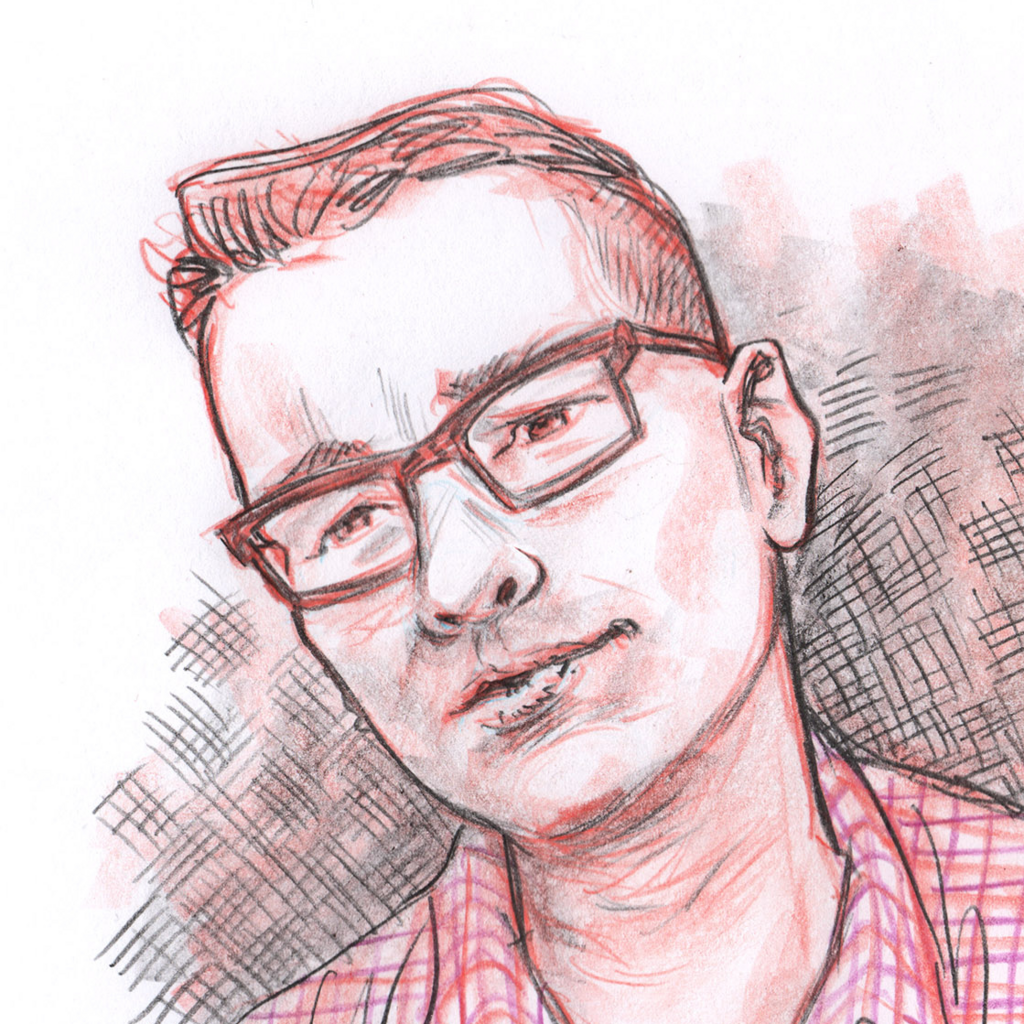
Special Guest: Micah Bowers, Founder and CEO of Bluefire Productions
A Leanpub Frontmatter Podcast Interview with Special Guest Micah Bowers, Founder and CEO of Bluefire Productions
Special Guest: Micah Bowers Micah is the founder and CEO of Bluefire Productions. In this interview, Leanpub co-founder Len Epp talks with Micah about his background, his early career work in television, his work with Adobe on various projects, founding Bluefire and eventually creating the Bluefire ereader, the Cloudshelf Reader app and the Cloudshelf SDK, and more.
This interview was recorded on June 16, 2020....

Special Guest: Micah Bowers Micah is the founder and CEO of Bluefire Productions. In this interview, Leanpub co-founder Len Epp talks with Micah about his background, his early career work in television, his work with Adobe on various projects, founding Bluefire and eventually creating the Bluefire ereader, the Cloudshelf Reader app and the Cloudshelf SDK, and more.
This interview was recorded on June 16, 2020.
The full audio for the interview is here: https://s3.amazonaws.com/leanpub_podcasts/FM157-Micah-Bowers-2020-06-16.mp3. You can subscribe to the Frontmatter podcast in iTunes here https://itunes.apple.com/ca/podcast/leanpub-podcast/id517117137 or add the podcast URL directly here: https://itunes.apple.com/ca/podcast/leanpub-podcast/id517117137.
This interview has been edited for conciseness and clarity.
Transcript

Len: Hi I'm Len Epp from Leanpub, and in this episode of the Frontmatter podcast I'll be interviewing Micah Bowers.
Based in Seattle, Micah is the founder and CEO of Bluefire, which works with institutions and businesses around the world to deploy mobile applications and cloud services designed to help people read and distribute ebook and other digital publications. Some of the more well-known organizations they've worked with in the past include household names like Adobe and Microsoft, and the New York Public Library.
Bluefire is also the company behind the popular Bluefire Reader and more recently Cloudshelf, an SDK mobile ereader applications and cloud services.
You can follow him on Twitter micahsb and check out the company website at bluefirereader.com.
In this interview, we're going to talk about Micah's background, his career, Bluefire and its evolution over the years, and ebooks and the ebook industry more generally.
So, thank you Micah for being on the Frontmatter podcast.
Micah: My pleasure. Thanks for having me.
Len: I always like to start these interviews by asking people for their origin story, so I was wondering if you could tell us a little bit about where you grew up, and how you first became interested in technology and producing digital things?
Micah: For me it started in college. I was going to Evergreen State College down in Olympia, Washington, and I decided that what I wanted to do was interactive multimedia. This is the late 80s. At that time, that was literally HyperCard. And so I studied a variety of digital media and technologies like audio and video and all that kind of stuff.
But then when I got out of school, there really wasn't a market yet for employees in the digital interactive media space much. It wasn't really happening yet. And so, I ended up working in the film industry. I worked on a TV show called Northern Exposure for a few years. I did a lot of different television commercials, rock videos - that kind of thing. That was in the early 90s.
From there I got into digital post, and then I finally got my opportunity to start doing interactive media with a CD-ROM project. That was pretty fun. It was called "Piper," and it was a musical for kids starring Jason David Frank. Is that his name? He's the Mighty Morphin Power Ranger, the black-suited Ranger. In any case, that was a lot of fun.
And after that project was done, which was about a nine month project - three of us that were on that project, went and started a company called Livewire. Livewire got a big break, because the very first week that we were in business, we got tapped by Microsoft - for their install disc for MSN, they wanted to do a multi-media extravaganza. And they said, "Well, we need it fast, because the company that we hired out of LA to do it - we don't like what they're doing, but we've got to ship on this date." And we came back and said, "Okay, well we'll need $500,000." Thinking they were going to say, "No." And they said, "Okay, go." We went, "Oh-kay."
That really launched Livewire, and went well, and we eventually - merged with some other digital agencies in the space, and then eventually sold that to a company that acquired us.
And then I left there and started Bluefire, founded in 2000. So it was a weird time.
Len: Yeah, before we talk about Bluefire - I want to talk a little bit about your interesting background. So, what was the time when you were doing the work for Microsoft for the big launch?
Micah: Oh, you mean the Livewire - that, when we started that? Gosh, that must've been 1996 or 19997.
Len: It's really interesting actually - you unearthed an old memory I had of - I was in Delhi for the launch of Windows 95. We're both very much dating ourselves here.
Micah: Yes.
Len: But I remember - people might not know this, I mean nowadays it's kind of like the big kind of Steve Jobs-esque kind of person on a stage, trotting out other people on the stage to give presentations. But there was a different kind of launch for products like that in the past. There might be like a video with like the stars of Friends - famously - for how to use Windows, or something like that.
Micah: Sure.
Len: But I remember with the launch of Windows 95 - I was in this fancy hotel in Delhi, for whatever reason. And they could play a video by the band Weezer on the computer. And that was just like an incredible thing, that you could watch a video like that - like a rock video on the computer. At least for me. This was sort of like, "Wow." Like we're all used to watching rock videos, but now we can do it on the computer too - and what does this mean for the future? So - if you can recall from the past, what kind of work did you do for this multimedia launch? Because those were really big deals.
Micah: Oh sure. It was distributed on CD-ROM. We shot it in film. We shot much of it at the Paramount Theater in Seattle. We had - it was basically promoting their six different channels. And so we had six different individuals - well actually one was a couple, so there were seven people that were the stars, that were actors. And each one represented a channel. And those channels were demographically focused. And so they each had these characters, essentially.
And each of those - were all on stage at one time. But each one was this separate little video, and they would alternate which one would play. Because you couldn't play full screen video back then. And so, to make it seem like that, the other ones would just kind of have these sprites that move around a little bit while one was speaking. And that one would be video - all composited to remove the background, so that you would have minimal noise. That kind of thing. So that was the kind of thing that we did at the time, and it was - actually there was a young actress, who was I think maybe 17 years old at the time, a blonde. And she went on to have quite a career. That was one of the first things she ever did. And she - and I don't remember her name, because I'm terrible with actor names. But I know that she was married to the guy that's the star of Guardians of the Galaxy.
Len: Oh yes, I know exactly who you're talking about. I have just terrible name recall as well. But everyone listening will probably actually know, and it'll be like we're a couple of old guys going like, "You know that guy from the thing in the place?" [The actors, of course, are Anna Faris and Chris Pratt - Eds.]
Micah: Totally. But anyways.
Len: And so you went on to found Bluefire - could you talk a little bit more about what the inspiration was for that, and going out on your own?
Micah: Towards the end of the time at Livewire, we were doing a lot of work in what you would call - let's say, "Interactive TV" of the time. And most of that was not actual shipping product, most of that was prototypes. And so we were doing a lot of work with Sony US Research Laboratory down in San Jose, doing essentially examples of what an interactive television experience could be like.
So the whole idea was this 10 foot interface, meaning you're using your remote control, and using the Sony 3D capabilities of their chip set and compositing, to do some really interesting things. And so we did news shows and sports shows and sporting events and other kinds of different TV programming to represent the possibilities of interactive TV, which they would then show at NAB and those other kinds of big broadcasting technology events in Vegas. I'd often go down to Vegas and do these private demos for studio executives and so on. And that was a whole heck of a lot of fun.
When we sold Livewire and I went off to start Bluefire, I was essentially doing the same thing. I actually - at the time, in my mind - I was going to actually create my own content. So I was going to do a mix of for-hire digital media, and some of my own content. And I was looking to do outdoor action sports stuff from the northwest. At the time, you still couldn't really do full-screen video very well on CD-ROM or the internet. And so I was looking at using Blu-ray as an interactive TV format, essentially, to make highly interactive titles. I never ended up actually doing that, because I just got too busy with other things.
We had some clients that ended up coming back to work with Bluefire that I'd worked with before - like Sony US Research Labs, and Microsoft Studios and so on. I got real busy. And so I never did get around to making my own content.
We did those kinds of projects for the first several years, and we started doing a bunch of prototype development work for Adobe. And so we did, for example - a really interesting project was a prototype of Photoshop on a phone, but it was a feature phone. So it had the rocker button, the four way rockers, and that kind of thing. So, trying to envision - what would Photoshop be like on a feature phone? That was a lot of fun.
And so, after a couple of different products with Adobe - and we ended up working a lot with the photo and the Photoshop team, the Lightroom team doing a bunch of - we actually became kind of the Flash experts at Adobe. as kind of consultants, in terms of creating Flash content. And then we got tapped actually to look at a potential Flash competitor technology, and that would be, but it would be based on web standards. That project didn't happen, because Adobe acquired Macromedia, and thus acquired Flash.
Some of the people that were involved with that went on to take this similar concept and apply it to ebooks. And so we got involved in ebooks. And the very first protype we made was an ebook reader for the Playstation Portable.
Len: Wow.
Micah: A little gaming device, and that was a lot of fun. And that was part of a pitch to Sony to work with Adobe in terms of using their ebook technologies, and Sony's ebook platform.
And it worked. They decided to do it, and thus the beginnings of Reader Mobile SDK and the Adobe DRM platform, and all that kind of came to be. Which also had another component to it - which was that previously public libraries had been able to lend content, but it was PDF - so it was ebooks, so to speak. But it was PDF, and it was read in Acrobat. But it never really took off. And so they decided to take that out of Acrobat.
But then Kindle came along and there was massive new interest in it - but it was too late in the cycle for Acrobat to put that back into their plan and their ship date. So we needed to create a separate application to handle ebooks, and thus Adobe Digital Editions and the Adobe platform was born out of that as well.
Len: It's actually this is something I was really looking forward to talking to you about. I didn't know that you'd worked on Adobe Digital Editions.
Micah: I did.
Len: And you've got a really great talk, where you talk a little bit about how all projects have their origins, and some of them are more complex and fraught than others.
Adobe Digital Editions is the one product that we advise authors not to use, and I can tell you the very specific reason for it: it's that they test their ebooks on it, and then things get rendered improperly, and they assume that means they're going to be rendered improperly everywhere.
Micah: Sure.
Len: But there's some deep corporate and technology story behind Adobe Digital Editions. And I was wondering if you wouldn't mind taking a couple of minutes just to talk about that. Because it's this thing that like I think a lot of authors - and actually publishers I've worked with in the past - their first experience of trying to create an ebook was with Adobe Digital Editions.
Micah: Sure. Well it really does come down to the fact that - a) well, one thing you have to keep in mind is that when we originally designed Adobe Digital Editions and the UI design and the functionality design - it was intended to build in Flash in the browser.
Len: Okay.
Micah: But that would've required a set of technologies - in terms of being able to - related to DRM. They couldn't be just done in the browser at the time. And so we would've had to do something that was more like, what later became Adobe AI, which, if you remember, was kind of a desktop implementation of Flash in a way. An extension of it to the desktop. But that didn't exist at the time.
And so kind of at the last minute, we had to get it into it's own desktop application shell. And so that was part of some of the oddness of the application. From a technology standpoint with the rendering engine, a big part of it was that it - when we created it - and this was, what? 2005 maybe? It needed to be able to run on these e-ink devices. And these e-ink devices - I mean - meaning the rendering engine, the whole technology stack - they have terrible processors now - but they had really weak processors back then, and very weak graphics capabilities.
So to create a stack that would work in it, it had to be extremely efficient and extremely targeted to those chip sets. The PDF engine is called Tetraphiliam, which was actually left over from a PDF renderer that was done for PDA devices, if you remember those.
So that was a very efficient low power use, low chip set library. And of course - you're going to use that, because you're not going to write it from scratch if you've got that, right?
Then for EPUB, you couldn't - I mean, the right way, of course, to do EPUB, would be to use a browser. Because it's HTML, in your browser engine. But there were no browser engines that could run efficiently enough and do pagination, for example - especially, which is very processor intensive - on those devices. And the Adobe team had to literally write their own custom browser specifically targeting that specific device.
And this was at a time when the EPUB 2 standard was not even ratified yet. And so it was - right around the time that it was ratified, it was released - but when we first started on it, the spec wasn't even done. We didn't always know what was even going to be in it. So that's really kind of the origin story of how it came to be odd in that way.
Len: Thanks very much for sharing that. That's just so fascinating.
One of the pleasures of this podcast is we get to talk to people who've had lots of experience with different things. One of our most recent episodes that we published included a guy named Larry Garfield, who did reviews of Palm OS devices back in the early days of PDAs, and things like that. And actually, I really mean it, getting to hear the story of how this came about is really fascinating. Because the yoking together of different technologies and different standards, and different - I don't know? Protocols, I suppose, around DRM for example - seems to be something that you've spent much of your time trying to deal with. And you've colorfully described the sort of ebook industry as Kafkaesque -
Micah: I did.
Len: - which works on a number of levels. We've just learned about one of them. But another of them is the unwillingness of sort of conventional publishing companies to embrace ebooks in the past and even in the present now. And so it's really fascinating to me that the companies you were working with, like Sony and Adobe and things like that - and it's just an interesting thing that - from the view from 30,000 feet, that it wasn't like Penguin.
Micah: No, and it wasn't until much later that I even worked with publishers at all. And what experience I did have with publishers, was not particularly good.
Publishing companies are not big fans of spending money on software. And it's challenging. But there are some really great individuals that work within the standards groups and so on, who are just amazing individuals - especially the people on the EPUB working group, and now that are part of W3C - are some of the most dedicated, thoughtful, hardworking, well-intentioned people I've ever met.
Len: I'd like to talk to you about standards in a little bit. This is just a fascinating story in itself, and the Readium Foundation and things like that.
So you were in TV, you were in rock videos, you were in all kinds of other kinds of production work - and you ended up building this, the Bluefire ereader.
Micah: Yes.
Len: How did that come about after the Adobe Digital Editions work that you did?
Micah: I think we released Adobe Digital Editions and Sony released their stuff 2006. And then we worked with Barnes & Noble to get NOOK out the door, in like 2007, something like that.
And then by 2009, we were saying, "We should make an app for this new crazy thing called the iPhone." And iPad didn't exist yet. We were like, "This is perfect for reading." And - however, right around that time - so we were going to work with Adobe to do that, actually. Make a version of Adobe Digital Editions for that.
But right about that time, Bill McCoy, who had been the champion at Adobe of this whole platform, and the person who single-handedly made it all happen - who, by the way, has become a very close friend of mine. Fantastic guy. But anyways - he left, and he landed at - after many, many years at Adobe.
And he had boomeranged - I think, a couple of times before from Adobe, and had done startups and so on. But now he left and he went to be the Executive Director of the IDPF, which is the standards body for EPUB. Really to go, and really try to push through the EPUB 3 standard. Because for him and for myself as well, our passion for ebooks - a big part of that was the ability to make rich media interactive ebooks.
But in any case, he left to go do that. And then at that point - without that champion there, it kind of floundered. The business unit had been part of kind of a new initiatives business unit at Adobe, and that business unit was actually - as is very common in these big tech companies, they tend to come and go. And they try different things. They're like, "Well, let's try this new business initiative thing." "No, let's keep everything in the core business units and let them do their innovative stuff." And so it was the end of that kind of MVI phase of Adobe.
And so then at that point, the business units - there wasn't really a business unit that really made sense for it. The Acrobat team was like, "Ah, what's this ebook thing?" Like, it's not part of their mission around corporate documents and that kind of thing, right? And anyways, it became clear that there was not the inertia to make an iPhone app at that time.
And so we decided, at Bluefire, we said, "Well, the industry really needs this - and if we don't do this, then it's just going to be -" And by the way, I'm not anti-Amazon. But I do believe that it's important to have some diversity of competition within markets. And I have always been worried that Amazon would over-dominate the publishing industry - and, well - the retail industry, and the publishing industry for books. And so I felt that it was important that a mobile option exists that was outside of this big box, giant tech company worlds. Because they're walled gardens.
And the whole point of the Adobe technology was to make it so that anyone could use it. Anyone could build their own app, anyone could use their own logins. There was no - I mean, yeah, the DRM was - the DRM was designed to be interoperable. So you could buy from one place or another place, and they would all work in all the apps. And so it was quite a vision for a kind of independent and thriving third way from this corporate closed world, right?
I thought it was really important, and so did my business partner. His name is Patrick, he's our CTO. And so we decided that we would do it. And we in fact, had to literally go borrow money from our families to pay our bills during this time. There was about a, maybe a nince month - it took us nine months to develop the iOS version. We did some other work during that time - but we were really trying to stay focused and get it done. And so that's how it came to be.
It was designed to be an app that was going to be an end point for retailers of all kinds, to be able to use it as the app that they deliver content to. And we were going to do - we were actually going to have like a mall, so to speak - inside the app. And in fact, we built that, using a format called "OPDS," for expressing catalogue data. And it's kind of a flavor of like RSS Atom kind of stuff. We actually invested a lot of money in creating a system to index all these various OPDS feeds.
So, the user could actually go in and type in a book and see all the places that it's available for sale or to loan, and see the prices or so on, and then choose which one they want to take. And they can choose a specific store if they want and just shop that, or they can shop across all stores, etc. And so we actually built it, and it worked - and we submitted it to Apple. Apple initially accepted it. But then within a few weeks, actually - they changed their policy and said, "No, you cannot have links in an app that point to a place where you can buy digital content." And so that blew up our entire business model.
We got a call from Apple. Some guy named "Dave." Wouldn't give us their last name. Insisting to be taken off speakerphone. Telling us that we were going to get our app pulled from the App Store if we didn't immediately take that out. And famously - story-wise - we said, "Well, this is a really important app. Because it's the only way currently to read ebooks from public libraries on your platform. It's the only way." Because at that point, OverDrive didn't have a mobile app. And they said, "Oh yeah, your app is about as useful as a fart app." The guy from Apple literally said that to us. And we were just - this is after we've spent a year and all our life savings, money from our parents to make this app. And to hear them say that to us was just terrible. It was terrible.
Len: That's awful. It's funny that it's all wrapped up in all this affect of seriousness. With like, "Turn it off speakerphone," and, "I won't tell you my last name." And then there's just some like snide insult.
Micah: Yeah.
Len: What a mess.
Micah: It was like getting stabbed in the heart, it was terrible. And so anyways - after weeks of pain and conflict and trying different things and so on, we eventually decided that we'd have to abandon that business model. And that's when we decided to go to making apps for each of our customers in their own brand, integrating their retail or library platform into their own app. And we - and since then - that was probably 2010, I guess it would've been? Early, when we started down that path.
We've done, I think, 70 different brands of apps all over the world for ereader apps. However, Bluefire Reader was already in the App Store. So we said, "Ah, we'll just leave it there," essentially as a calling card, so like a marketing piece to show our capabilities. Because it was getting used by people. And it was kind of neutral, right? If you were too small of an organization to have your own app - because it costs money to do that and to maintain it - people would just say, "Go use Bluefire Reader."
We weren't making any money off that, but we were getting some search engine links and so forth. We were like, "Alright - this is kind of odd that we're creating this product for free for users and these other companies are using it. But yeah, it's good enough because it's a marketing piece for us." And so we did that for years and years. And over that time we accrued about - I don't know? Right now we probably have somewhere around 4.2 million active installs of Bluefire Reader. So yeah, that's how that came to be.
Len: Thank you very much for sharing that story. What a lot of ups and downs.
Micah: Yeah.
Len: Do you think - I mean, this is just total kind of pub table opinion - but you've had some inside experience. Do you think Apple's going to be able to keep their kind of tax that they get? Like 30% off every sale in the App Store, and you can't sell things in your app?
Micah: I certainly think that they want to. The only thing that would prevent them - I believe, from doing that, would be if that somehow got regulated.
It's interesting. I don't know if you saw today? There was a kind of a high profile issue where the founders of 37signals, that do like Basecamp and so forth - they have made a new email platform called HEY. And they had submitted their app to Apple, and they accepted it. Actually, it was very kind of like - almost like PTSD triggering to read it today. Because I was reading this literally this morning. That they had - and Apple accepted their 1.0. But then they went to do a minor bug fix update, and apparently Apple rejected it, and was basically insisting that they do in-app purchase in their apps. Because they were allowing users to sign up for a subscription outside the app, and then consume their subscription inside the app.
But they weren't offering a way to sign up for the subscription inside the app. And so he's mad. And I can relate. Very intimately can relate to that. So anyways, very interesting. It's still going on. And he was kind of going off today about that. And so interesting to see that it's 10 years later.
Len: Is that DHH that you're talking about?
Micah: Yeah.
Len: It was David Heinemeier Hansson. That's fascinating. I haven't checked the news today yet, so I hadn't seen that. But yeah, that's fascinating. I mean, there's a higher level issue of like having your service tied into someone else's platform.
Micah: Yeah, absolutely.
Len: And there's just exposure to that. But it's interesting. It's the same way a lot of newspapers actually feel about Google, right?
Micah: Or how people feel about Facebook, or how people feel about all kinds of - yeah.
Len: And in particular, in our world - the world of self-published authors - are often, like Amazon's their platform. Amazon through certain services, might force exclusivity on them. And then you do everything you can to position your book properly. And then something in the algorithm changes, and all of a sudden - like a sort of - a really interesting example is - getting your family to buy your book the day you publish it, is a really bad idea - or at least was for a time. Because it would scramble the algorithm, because it wasn't just people who bought werewolf novels.
All of a sudden it was just the people in your family, who buy all kinds of other things, are all of a sudden buying this werewolf novel. And it's like, "What the heck is this thing? I don't know how to promote it to anybody anymore." And a lot of us find ourselves in this situation. There were analog versions of it, of course in the past. But where like - these decisions are being made in an opaque and unpredictable way, that have a huge effect on everything that you do.
I wanted to go on to talk a little bit about Cloudshelf and the Cloudshelf SDK, and things like that - and maybe a little bit about DRM generally, because it's such a huge thing and it has - I mean, I breezily fire off an anti-DRM blog post once a year. But like, I don't have corporate clients that can get sued for things getting misused.
But before we do that, I would like to take what has become a standard digression in the midst of these podcasts, to talk a little bit about the coronavirus and how it's been affecting you and your company. It's been affecting everyone we work with in various ways, obviously - because it's been affecting everybody. But you're the first person from Seattle that we've had on the podcast in a long time. So I was wondering if you could just talk a little bit about what the experience has been like there?
Micah: Well, there's a lot of different facets to that. But if we talk about just the company for a moment. We're a small team. We are seven people. Of those, it had gotten - and we have people that work remote. We've had some people that used to be here - worked local, but then have moved somewhere else for various reasons. Their spouse needs to move for a job, or whatever. And we keep people. We're very interested in long-term employment of our team. And so most of our team have been with us for 10 years or more. And we try to treat them so good that they never want to leave. And they don't, usually.
But in any case - so there's four of us that would regularly work in our office in Ballard now. And since the virus hit, I decided that I wasn't going to work there anymore. And for the time being, Patrick, who's my business partner, works there every day, because he also lives like four blocks away. So it's really handy for him, really close. It makes a lot of sense. We have an office manager, Jessica, that comes in, maybe once a week to the office - and then is mostly working at home. But sometimes she really needs to come in, because all the filing cabinets are there, and that kind of thing.
That's working fine, because we're so used to people working remote on our team all the time. It's really almost unnoticeable, other than me not seeing Patrick in person every day and doing our customary - we usually do like a one hour walk meeting every day, as our kind of check-in. I miss those a lot. Looking forward to doing that again. But in any case - so from that standpoint, not that big of a deal.
From a business standpoint, it has not been much of an impact in a negative way. In fact all the impacts on the business side of things have been positive, because we have a revenue stream through our DRM technologies that we sell, and which have transactional-based revenues. And those transactional-based revenues have doubled during the pandemic, or more. Lending - especially academic lending, has increased dramatically. And so our revenues are up there. And as well as our sales.
A few months ago, we started selling Bluefire Reader, we started charging for it in the App Store - which we thought was insane. We're like, "Let's do an experiment and see. Will anyone buy this?" Well, they do. And that surprised us. There's a whole thing to talk about there in terms of paid apps, and the upsides that we've seen from that, that we did not anticipate at all, like going way up in the rankings. But in any case, the revenue from that went up as well. Because more people were getting ebooks, and more people are getting Bluefire Reader.
So from a business standpoint, it's just really been a positive. I mean, I obviously would rather that didn't happen. But, you've got to take what you can, right? The good with the bad.
Len: Yeah, it's a well-known thing that - I mean, we're doing this interview on Zoom. Zoom's usage has shot up dramatically. Anything that's digital and that allows people to do the things they love to do, without having to be physically in touch with each other - those are things that people have turned to in this time. We've - I wouldn't use the word "dramatic", but we've seen an uptake not only in sales, but in book creation. Which is really interesting. People are taking the time to create more books than they were in the past. At least from our like tiny portion of the pool.
I just wanted to ask a little bit about how things were in Seattle. So for example, here in Victoria where I live, there haven't really been all that many cases really. People reacted relatively - this is all anecdotal - people actually started reacting pretty quickly. British Columbia, the province that Victoria is in, is on the west coast of Canada, and was one of the first places to be affected by the novel coronavirus. And yeah, people kind of like started - a lot of the news is like, "Oh the economy was shut down by the government." Well, here, like everybody started acting on their own, long before any directives came down from the government. And it was - I would say, the most kind of - obviously like ethically-minded businesses were - I remember like a couple of restaurants were just like, "We're closed." Long before the government said anything. But at the same time, partly because of that - and this is to the ire of my co-founder, Peter - but masks never really took off here. I basically see none in my neighborhood. .
Micah: Really?
Len: Yeah.
Micah: Wow.
Len: People just don't wear masks. And they never really did. I mean, I would if I was going into a store. But I also learned how to shop online for more things than I did in the past. Stuff like that.
And now, the pubs are open, and it's just like a bacchanal. It's pretty wild. I - knock on wood, crossed fingers - I hope everything works out okay. But that's been my experience, just watching things happen here. What's it been like in Seattle for you?
Micah: So we were probably - if not the earliest-hit region, at least pretty much contemporaneously to other, where - New York, let's say - where it was also hit. And because of that, it spread fairly quickly, before anyone really even knew it was here.
And then by the time we started figuring out that it was here, and that there was beginning to be a bunch of cases, it wasn't yet clear what the scope was - because you couldn't get tested. And but there was the anecdotal stories of the hospitals increasing and so on, and among news stories as well.
So I think once people began to recognize that it was real and was happening - yeah, it was long before the government stepped in. People just started staying home. And the restaurants were empty. Everything was empty, and everyone was staying home. And then also, our government was one of the first to move. So fovernor Inslee and the Mayor of Seattle and so on - were very, very early in the move to make that step.
So we were hit fairly hard in terms of numbers, but it was able to be turned around. And there was a mixed bag, but of course everybody was just in their home anyways. And of course the CDC's advice, that you shouldn't wear masks because - and, well, they were saying they didn't work - but they were mostly lying, because they were just -
Len: They didn't have any left.
Micah: They didn't want the medical professionals not to have it. Which most people in Seattle, Seattle being-- Seattle has the highest per capita education of anywhere in the United States. A lot of people in Seattle knew what was going on. And - however - so the people weren't wearing masks, because actually it was considered poor form to wear a mask, not because it didn't work. But because it meant that the professionals might not have them, and that you might inspire other people to hoard masks or buy masks or whatever.
And so ot was not really a thing where people were like, "Oh that's stupid, it's wrong." It was really a moral and ethical consideration. And then finally once it became, like okay - the government's like, "Oh okay, now you should probably wear masks," then everybody did.
And so now, if you go out - for example, my family went to the recent march. It was just called, "The Silent March," a couple of days ago, for Black Lives Matter. And there were 60,000 people there. And I would say 99.5% of the people were wearing masks. I mean there's times when you'd look around and you couldn't see anyone - I mean it's a huge crowd, and you couldn't see anyone that wasn't wearing a mask. Then every once in a while you'd see one here or there. But it's that level.
Len: That's really fascinating, and that's a whole - you just opened up another whole path that we could potentially go down.
Micah: Yeah.
Len: But I would just say - to anyone who's interested in Micah's views on politics, just follow him on Twitter, like I do, and you'll find out very quickly what he thinks.
Micah: Yes. I'm progressive.
Len: I think that's probably kind of how we found each other on Twitter, one way or another, eventually.
But you've already given us a very interesting story there. Like tens of thousands of people meeting, even in the midst of a - an awareness of the danger. Because there's other dangers that matter too.
Micah: Yes.
Len: And by the way, I didn't mention it to you when we were chatting before we started this interview - I now record a little ominous, "This interview was recorded on such and such a date," little thing before every interview. Because things change so quickly. And it might be a couple of weeks before this comes out, and by that time things will have changed. But every one of these interviews has become a little snapshot in time of things happening rapidly. And hopefully, eventually going in a very good direction. So thank you very much for being willing to talk about that, I really appreciate that.
Micah: Oh sure.
Len: I kind of hit you with it out of the blue, but it is something that we have been talking about on every episode.
So, going back to the main thread. We've mentioned the acronym DRM a number of times in this interview.
Micah: We did.
Len: We haven't talked about what it is - Digital Rights Management. So this is a really curious thing. The idea is basically that people want to have digital products wrapped up in security protocols, so that only the person who purchased them, or who has been lent to, can access them. And this creates all kinds of crazy headaches technology-wise. For example - if your loan period expires, do you have to? Is it built into the technology that it can auto-renew, or something like that? Or do you have to go loan it again? I guess I just really want - I don't know how to ask it more precisely than this: what's your view of DRM? Is it something that we would've been better off without, or is that a meaningless question because of litigation and copyright?
Micah: So I think DRM has it's place, and I think it's also sometimes misused. And so in the case of lending, you kind of have to have a mechanism for expiration - or else, you're just giving away books, right? And that's fine if people are happy with you giving away their books. But if they're not happy with it, then it's not okay, right? And so that's needed. Right there, the technology has to exist and there needs to be a way to support that. And because those technologies needs to exist, there is benefit of it existing in a commercial way as well. Because the commercial revenue's actually kind of funding the development and maintenance of it.
But also in the case of commercial retail, when you're selling a book - it relates to both the value of the book, relates to the popularity of the book etc. etc. So you certainly could have a very reasonable system where you said, "Yeah, blockbuster hits -" Which is where the publishers make the vast majority of their money, just like in films - where if they're - those are the things that are most likely to be shared illicitly, if they can be. Because they're popular and people went, "Oh, like you want to read this too?." "Of course." "Here you go." And so you have that kind of social network component of sharing, so to speak.
And then you also have the very expensive content and very specialized content. That also has it's own considerations. In a scenario where you need - you could totally have a retail platform, where it's up to the content owner as to whether they want to DRM it or not. And actually, many of the retail platforms have had that option for a while. So it's really a choice.
Although, I will say that the problems with DRM, that you're talking about, are largely a legacy problem.
What I mean is this. There was a time when you would download files, and you would move them around, and you would put them from one platform to another platform, and you would come up in all this kind of stuff.
Well, in the modern world where you have this kind of-- I used to say like, "Yeah, Amazon might be a walled garden - but if you took down the walls, the vast majority of those people would never want to leave it anyways."
And because of the benefits of this - like Apple. People choose Apple specifically because it's a walled garden, in a lot of cases. I mean, they may not think of it that way - but ultimately, that is true. And so the considerations - oh and of course - we're always connected to the internet now, pretty much. And you can always re-download your stuff on multiple devices. And so you don't really need to move files around the way that they were.
Now for small indie distributors, it's still a little bit of a challenge. Because we have never had - I've tried multiple times, and that's been a big part of my foray into ebooks - tried to solve the problems that it presents for smaller indies. Like what I was trying to do with Bluefire Reader, with its mall-like interfaces, with doing a white labeled version of the app - try to push the cost down so that each small retailer could do their thing.
We at one time built an app for IndieBound, which was a platform of the American Publishers Association, I believe it is. That was actually working with Google, and Google was providing retail infrastructure, and we were providing the ebook reading apps. And so we tried multiple things to try to make that work. And still to this day, there isn't really great solutions for independent small retail. And so that is a pain point still to this day, because of the costs, right?
And it's not - I mean, the reality is, is that if you - the vast majority of the time, people - if you want to provide a retail platform that is going to compete at all with Amazon, even if it's in a tiny niche, right? You really have to provide a level of a bar of user experience and functionality, right? You need an app, right? And because you need a way for someone to just come to their app, sign in - there's all their stuff. They can get on a new device, and they should sign in - and there's their stuff. There's no business model that makes sense for someone to do that for you, you have to do it yourself. A lot of publishers and retailers and so forth will try to get around that. And so, for example - Adobe Digital Editions, really - kind of like Bluefire Reader - is not a great user experience in a lot of ways for people. Because it's not really intended to be. Like Adobe - why would Adobe care about those consumers? They're not paying Adobe anything. They're not Adobe's customers. Why would I care about the Bluefire Reader users? They're not my customers, they're not paying me anything - nor are the retailers.
So you could have a model where you're saying, "Well okay, retailers, you need to pay me something so that you can fulfil books into our app." And we've considered that before. We've explored that. And we actually - part of that kind of integrated experience in the app that we had that I described, we took a percentage of the sales, and that was our business model. But it was much smaller. It was actually 7%, not 30%, which just seems a lot more reasonable to me.
However, it still felt high to them. But once we could no longer sell content in the app - meaning they would have to just like - let's say, come and sign in. Now they get access to their files, instead of having to download them. What's a little indie retailer going to pay for that? It's not going to be cost-effective. So the problem is not the technologies, in terms of the awkwardness that you see, because it can be done perfectly, seamlessly, with not that much money. It's just used wrong, a lot.
Len: Right, right. I think this might be a good opportunity to move on to talking about Cloudshelf and the Cloudshelf SDK and the Readium Foundation. Because, you've done so much work, starting from a point where you have to actually understand how the chips work and how to get an e-ink sort of like HTML page to render kind of thing - to trying to give people solutions so that any well-trained developer can actually deploy a kind of ebook solution, I guess you'd call it. So I was wondering if you could talk a little bit about what the Cloudshelf SDK is, and about the Readium Foundation and what it's goals are?
Micah: Let's start with Readium, because it's kind of built on that. So after the EPUB 3 spec was ratified, Adobe was not at that time interested in investing in their platform, and doing the substantial amount of work it would take to add EPUB 3 support to their SDK. And it was important to me and to my colleagues, that we have that. We worked hard on the spec, and we've worked hard on getting to this point.
But we were just too small of a company to be able to actually build that all ourselves, because it's a really huge undertaking to build a rendering ebook solution for the browser, and the four major platforms - IOS, Android, Windows, Mac. There's just no way in hell we could've done it ourselves, unless we took like millions of dollars in investment. And so, I mean millions of millions.
And so we said, "Well, the only way we're going to be able to pull this off is if we can team up with other companies and work together to do it." And so we said, "Okay, we're going to have to -" And then the only way that's going to work is if it's open source. I mean we could've tried to do a partnership of some sort - proprietary, but really - no. The only thing that's going to really make sense is open source.
So we decided that we needed to make this open source project, and we found a few companies that were willing to work with us. One - by the way, was Kobo - was one of the founding members. Was another one out of Canada called "Evident Point," ourselves - and was there another one? I think that was original three. And so - anyways, and that was, I don't know, seven years ago now or something. We started down the path of trying to create this rendering engine for EPUB 3 that we could all use.
Well, we succeeded, and that has now occurred. It took years of work to do. And still not really done on all platforms, I would say. Mac is still - we're lmost there on Mac, and Windows - I would say it's there at a base level, but it's not there at like, "sweet," right? But anyways, we did get to that point years ago on Mac, on IOS and Android.
But the thing that we found - one of the challenges is that our focus there was, "Let's work together to use technologies that we can all use." It wasn't necessarily, "Hey, let's make this truly easy for anyone to just make their own ereader app." That wasn't the goal, right? And especially since some of us make money making the ereader apps, right? So that really wasn't our goal. We wanted to make something we could use, and not keep it to ourself; anyone can join the Foundation.
And for a while we were like, "Well, you either have to contribute a certain amount of code or contribute a certain amount of money, so that we can hire people to contribute code," right? And that's changed over the years. Now there isn't a paid option, it's just free to anyone, basically once we got it done. Then we're like, "Let's make this free." It was difficult to work with, very complex technologies.
And so Cloudshelf SDK is a commercial product that we sell. It incorporates Readium SDK, but makes it really easy for someone to build their own app with. So you could literally build an ereading application, full-featured, in like a day. I mean, that might be a little - well, you could get it up and running in a day. You're probably not going to have it ready to ship in a day - you know what I mean? But you'd be reading ebooks.
And of course there's a part of that project - or an adjacent project to Readium, is the - what's called LCP. And that's a DRM platform that's also open source. Or at least 90% open source. Because in order for it to be less hackable, there's a little component of it that you have to register for, and promise that you won't divulge the secrets or whatever - and get a certificate. But the vast majority of the code is open source.
Readium SDK can be integrated with any DRM system - and in fact, Adobe did. In fact - Adobe took the Readium SDK that we created, and they put it back in Adobe Digital Editions.
Len: Oh wow.
Micah: And via Mobile SDK, and hooked it up with their DRM.
Len: Wow, that's an amazing story.
Micah: Yeah.
Len: And what do you see happening next with Readium and Cloudshelf?
Micah: Well so, what's been interesting is that we have not had a huge success with getting adoption of those things. Some, but not huge - because, basically, by the time we kind of were done, the industry was in a massive slump. Meaning it was - our customers were dropping like flies. So, like I said - we had 70 customers at one time - brands that had apps. I think we've got 10 now that are still standing, so to speak. Because they got acquired, or they got out of ebooks, or they gave up and they went to Kobo, and just said, "Okay, we'll just partner with Kobo, we'll sell Kobo devices - and they'll give us a share. And that's, we're done," right? That kind of thing.
There was just not new entrants into the space. And once people had entered and invested and had a DRM platform - it's very difficult to switch. And so really, that's been a challenge. In Europe we're seeing some advance, some movement forward - especially with the French publishers, who are very supportive of it - because they really don't want to be completely dominated by American corporations, their whole industry. Because their publishing industry is a key part of their culture, and their culture's exceedingly important to the French. As it is to a lot of people, but the French particularly.
I think we're seeing - most of the success we're having as Readium projects and so on in general, is happening in France. But there's some things like Quebec, that are a bit similar. And there's also some action going on in the Nordic countries, where they oftentimes don't have Amazon - or not strongly, for a variety of reasons. Like Norway, they don't sell Norwegian ebooks.
Len: You're touching on something so fascinating, which we get to see a little bit of in our business as well. Which is the way different countries, and even regions within countries, relate to books and ebooks.
Micah: Yes.
Len: It varies. And it's a really - I lived in Quebec for a few years, and Montreal - and had a little bit to do with the culture scene there - so I'm a little bit familiar with how that scene is. And yeah, and it's a curious thing. There's - different countries, for example - like Germany. Everybody was accustomed to being able to call up the local bookshop, and get a book delivered within a day, for the last few decades kind of thing, or at least that's my understanding. And so Amazon plays this weird role. Because they're like, "Hey, you just order a book." And they're like, "But I could do that already."
But yeah, there's all these sort of really interesting regional variations around the world, and which obviously you've had a lot of experience with as well. I guess my last question for you is - what's next for Bluefire and for you?
Micah: So we are getting reenergized about the Bluefire Reader. We had kind of gotten sick of it, and we were thinking about just putting it down - out of its misery, so to speak. Because we felt like the industry wasn't going anywhere, and these mobile platforms are so hard to maintain, because they're changing so quickly all the time, breaking things left and right, adding new requirements etc. etc.
One of the reasons we put Bluefire on sale in the app store, is because we were like, "Well, if we're going to kill it, let's just do the experiment we always wanted to do, and charge for it." But the fact that it's getting some - that people are paying for it. I mean not huge, not big money - but enough to like, "Mmm hmm. People will actually pay for stuff in the App Store." And so, that kind of got us excited. And then, ebooks kind of resurged under the pandemic. I think some of that's going to be sustained. And so we kind of got more excited about it again and reenergized.
And part of it is, in order to move forward with the apps, we needed to completely rebuild them from scratch. Because they're 10-year-old technology. The newer versions of Reader Mobile SDK from Adobe weren't compatible with the things that we had done. Because we had modified our SDK heavily, because we could, and we knew how - which we can't do anymore because of the way the model is; they don't provide source code.
And so, in any case - then we had to completely rewrite the app. So we're right now, right in the process of completely rewriting Bluefire Reader. We've get several new business model things going on, some of which will be subscription-based services, and some of which will be retail. Some of which will be retail of stuff that we are part of publishing, which is all new for us. And so that's an exciting thing that's happening.
We already had - we were forced to do something similar on Android, in the sense of having to rebuild from scratch. But it was because of - basically Google eventually said, "Hey, you've got things in - you've got code in here that's Google-provided components, but we've deprecated because of various reasons. And you can no longer distribute it, so we're going to take your app out of the App Store unless you update." And the only way we could update was to completely start over from scratch, essentially. So we did that too. That's already been out there. Although that's kind of like - we just did the emergency version of that and got it out the door, and I'm not at all happy with it. And so we have to revisit that as well this year.
So a lot of this year is going to be revisiting Bluefire Reader, completely redeveloping the IOS version. We've done a lot of work on accessibility recently. For the very first time when the next version of Bluefire Reader comes out, we'll actually have text-to-speech, TTS, and full voiceover support on Apple and TalkBack on Google, Android. Which will be the first time that the Adobe platform has had that on mobile. Which is going to be a big deal, I think. Especially since so many libraries across the world use that platform. Especially academic libraries, higher education. And so that's pretty cool, we're excited about the accessibility stuff that we're doing.
And then also we're doing a little bit of stuff outside of the book area, altogether. And then kind of - when we were thinking like, "Oh, we're done with ebooks, let's have a one-year transition and get out of here." We started taking on a few other projects that were not related.
The most interesting one is a medical device, where the medical device is a home medical device, and the app is essentially a combination of like a remote control and a health tracker, and speaks over Bluetooth on low energy with this device. We've been involved with the hardware from day one, in terms of the design and the architecture, about firmware and the interface of the app, and that kind of thing. So that's been really interesting and fun.
I don't know yet whether we're going to continue to take on other initiatives in the hardware space, but it's pretty fun. And that's really what drives me, right? I have never been in this business for getting rich. I do it because I - well, one, I don't take orders very well. And so I really don't have much of a choice, other than to have my own company. And B - I want to do stuff that's interesting and fun and meaningful to me. And ebooks have been that. It's nice that that's kind of resurged. I don't know yet whether I have that with medical hardware.
Len: Thank you very much for sharing all that. Best of luck with all of the things that you're going to be up to, and maybe the new directions.
It's funny, just to end - you reminded me - I interviewed someone recently called Alex Hillman, who is based in Philadelphia. And he called himself - I think it was something like, "Inherently unemployable," or something like that?
Micah: Yes.
Len: And we really bonded over that. Because, if you want me out the door, give me a command. And it's just - some of us are just like that, and that's why we find ourselves on the various paths we end up on.
Micah: Indeed. Although I'm okay with boards, if it's a good board.
Len: Fair enough. Okay, well thank you very much Micah, for taking the time to talk to us and to cover so much ground, and for being game for all my questions shifting from one thing to another very rapidly. Sometimes I'm good at segues, but not always so much. But you responded very well right away, to everything I asked. And I really appreciate you taking the time to do this.
Micah: Well thanks, it's been fun.
Len: Thanks.
And as always, thanks to you for listening to this episode of the Frontmatter podcast. If you like what you heard, please rate and review it wherever you found it, and if you'd like to be a Leanpub author, please visit our website at leanpub.com.