
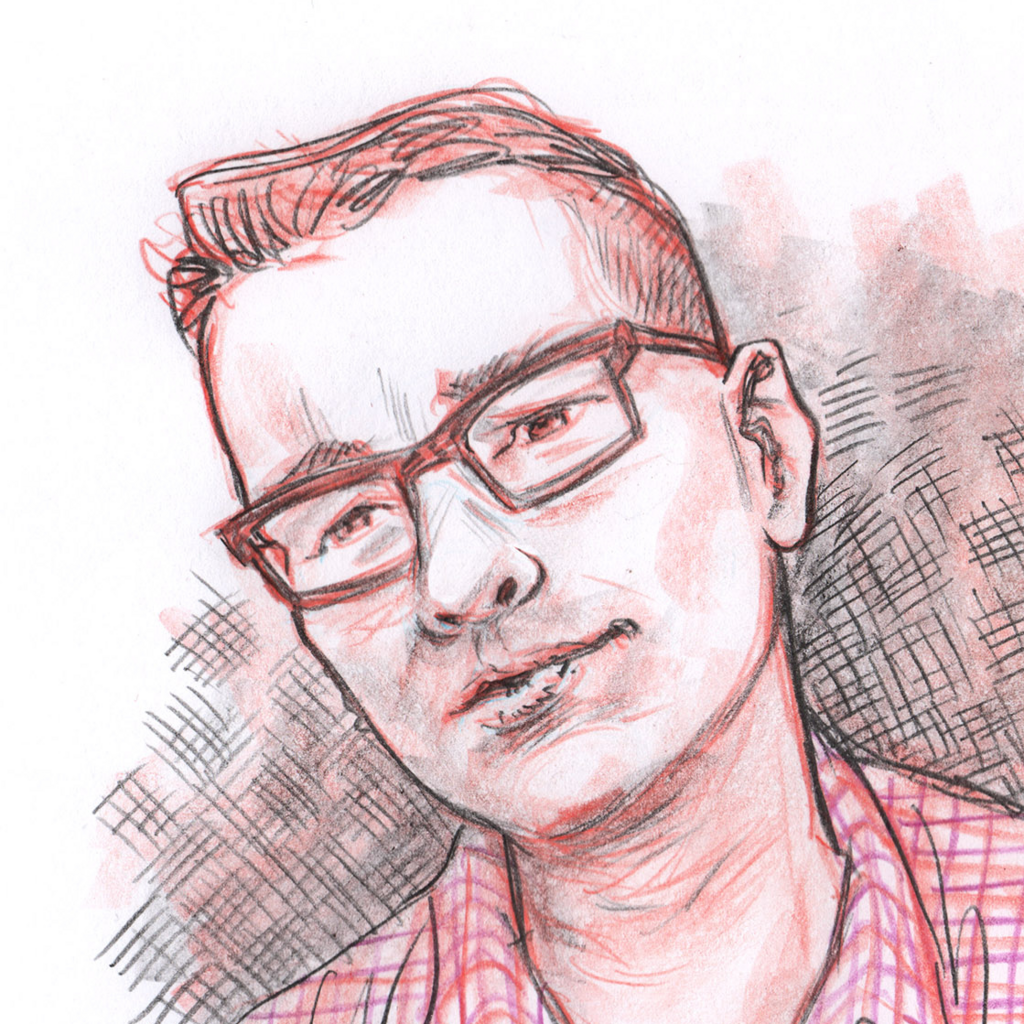
Special Guest: Marshall Poe, Founder of the New Books Network
A Leanpub Frontmatter Podcast Interview withSpecial Guest Marshall Poe, Founder of the New Books Network
Marshall Poe is the founder of the New Books Network and author of How to Read a History Book: The Hidden History Of History. In this interview, Leanpub co-founder Len Epp talks with ...

Marshall Poe is the founder of the New Books Network and author of How to Read a History Book: The Hidden History Of History. In this interview, Leanpub co-founder Len Epp talks with Marshall about his background, how he got interested in Russian history, the development of the academic study of history in the United States and its German roots, Wikipedia and the collaborative nature of knowledge, and the creation and success of the New Books Network.
This interview was recorded on December 12, 2019.
The full audio for the interview is here: https://s3.amazonaws.com/leanpub_podcasts/FM140-Marshallt-Poe-2019-12-12.mp3. You can subscribe to the Frontmatter podcast in iTunes here https://itunes.apple.com/ca/podcast/leanpub-podcast/id517117137 or add the podcast URL directly here: https://itunes.apple.com/ca/podcast/leanpub-podcast/id517117137.
This interview has been edited for conciseness and clarity.
Transcript
Hi I’m Len Epp from Leanpub, and in this Frontmatter podcast I'll be interviewing Marshall Poe.
Based in Northampton, Massachusetts, Marshall is a historian, writer, and editor, and the founder and Editor-in-Chief of the New Books Network, a very popular podcast network, and home to one or two of my own top ten favourite podcasts, which has grown to encompass dozens of channels and a worldwide audience of listeners and hosts. The New Books Network covers a wide array of non-fiction, particularly academic monographs, and matches up experts in their fields with authors to produce great conversations from African American Studies to Critical Theory to Philosophy and Religion and Science and Technology.
Throughout his career Marshall has taught at a number of universities, including the University of Iowa, Columbia and Harvard, and NYU, and currently he's at the University of Massachusetts Amherst. In addition to his acadmic writing and teaching on his specialty, Russian history, he has also worked on online collaboration and communications media.
You can follow him on Twitter @marshallpoe and check out the New Books Network at newbooksnetwork.com.
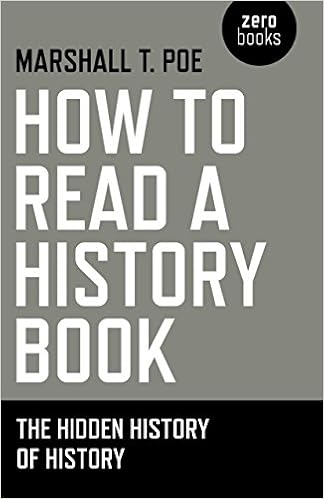
Marshall's latest book is How to Read a History Book: The Hidden History Of History. In the book he talks about the nature of the academic practice of investigating, teaching, and writing about history, that most of us take for granted, and the origin of which is a lot more recent than most of us probably think. It's a fascinating and at many times very funny account of the practice and the lived life of being an academic historian.
In this interview, we’re going to talk about Marshall's background and career, professional interests, his latest book, and we're going to devote a special segment to talking about the founding and amazing growth of the New Books Network.
So, thank you Marshall for taking the time to be on the Frontmatter Podcast.
Marshall: Thank you Len for having me, I appreciate it.
Len: I always like to start these interviews by asking people about what I call their "origin story." And as I was reading your book, I realized that you provided a pretty good model for that, where the central conceit you adopt is that you're telling the story of a thinly-veiled fictional account of your own journey. So, I was wondering if you could maybe start with talking a little bit about where you grew up, and how you found your way to studying Russian history?
Marshall: Sure thing. I was born in Huntsville, Alabama, at Redstone Arsenal. My father was in the army. Redstone Arsenal is famous - it's the place that Wernher von Braun started the American rocketry program.
And then when I was about five, we moved to Kansas, which is actually where both my parents are from. And so I grew up in Kansas, where I attempted to become Michael Jordan. That was unsuccessful. I played a lot of basketball, and I wasn't really a particularly good student. I had dyslexia, and we'll come back to that when we talk about the New Books Network. I wasn't a particularly good student until I kind of decided that I wasn't going to become Michael Jordan, or anything like Michael Jordan. I just like mentioning my name in the same sentence with Michael Jordan.
So then I started to apply myself in school, and I was lucky to get accepted to a small college in Iowa - Grinnell College, where I met a man named Dan Kaiser. He was an early modern Russian historian, and - well, he was a very influential person in my life, and I wanted to become like him. And so I tried to do that - I guess I did do that. I started to study Russian history, and I learned Russian. And then I went to graduate school, or as I call it "gradual school."
Len: If I could just actually interrupt you there - what was it that drew you to Russian history in particular?
Marshall: Well, it was him, essentially. It was just by accident. The people at Grinnell put me in his freshman seminar, and he's a really very impressive guy. I just knew immediately that he was somebody that I wanted to emulate. And so I took all of his classes, and he said, I remember it very well - I was in his office one day, and I said, "I'm very interested in Russian history." And he said, "That's great," and he started to speak to me in Russian. And at that time, I don't think I'd encountered anybody who'd ever spoken a foreign language.
Len: It's really interesting actually, just to capture this for our younger listeners - at the time there was something going on called the "Cold War," in which Americans and Russians were pitted against each other in what was conceived of as a battle for civilization. It was very serious. Nuclear war was something that was constantly on people's minds - or at least, often on people's minds. And just to hear someone speaking in Russian had a bit of a - not a taint, but there was just something. There was a special flavor to hearing that language spoken.
Marshall: I was just amazed that a Russian historian or any historian had to learn a foreign language. Because I didn't - I know that in my high school, this was in the late 70s or early 80s - there were Vietnamese people, they were boat people - and I'd heard those people. But other than that, I hadn't really heard anyone speak a foreign language. He said, "Geez Marshall, you've got to take Russian." And I said, "Okay, I'll do that." And essentially I studied Russian history and the Russian language and went to Russia, the Soviet Union then, and I was -
Len: What was that like, actually? When I was reaching for researching for this podcast, I learned that you'd gone to Russia, I think a few times in the mid-80s.
Marshall: Yeah.
Len: How were you received there?
Marshall: Oh it was very nice, Russian people are very nice. But one of the things - like all college students, I was a big socialist - and then I went to the Soviet Union, and then I wasn't a big socialist anymore. It was about that fast. Because it was a pretty dreadful place in many ways, especially through American eyes.
It was - the people there lived in what we would call relative poverty, and of course there wasn't freedom of expression, or freedom of basically anything. It was kind of an impoverished cultural landscape, at least as far as I could see. And I felt very deeply for them. They're really warm people. I like them very much, they were extraordinarily kind to me.
I wouldn't say that I fell in love with the place. But it was kind of a combination of learning more about America, because you could see America through their eyes - and also gaining an appreciation of how lucky I had been to be born an American. Because they have been through a lot, and continue to go through a lot.
It was also kind of a cautionary tale. Because it didn't really work out very well for them, socialism - and you could easily see why, once you were there on the ground with them. Because they were stifled, essentially. They weren't able to do all the creative things that I think people ordinarily want to do.
And so, that sort of shaped a lot of my views on life in general. And this does relate, I should say, to the New Books Network. Because one of the things I came away from that experience with, was a desire to start a business - because you couldn't do that in the Soviet Union, and I don't even know if you can do it in Russia today. But one of the blessings of being an American is that you can - if you have a good idea, or what you think is a good idea - I had a bunch ideas, most of them are bad. But if you have a good idea, you can actually start a business. And I'd always kind of wanted to do that - even after I started, essentially, being a professor.
Len: You mentioned that by traveling to Russia, you learned something about America, and I think you've also spoken and probably written also about how Russians learned from the foreign gaze. I wrote a review a few years ago of Astolphe de Custine's Letters from Russia, when I think the New York Review of Books published a version of it. It's fascinating, the way - and I mean, a particular part of Russian history is a concern with the foreign gaze, particularly European.
Marshall: Yeah, that's precisely right. And my work was on 15th, 16th and 17th century European travelers who traveled to Russia, and what they wrote about what they saw.
I was kind of like them in the 1980s, when I was traveling there, in the 1990s and early 2000s - and yes, they think a lot about what we think. This has powerfully affected their own self-image, much more so - I mean Americans generally don't consider - at least very carefully, what other people think about them. But Russians do, and they they think about it a lot.
A lot of it is behind what you see today in Russia - because Russia still wants to be a great power, even though economically and in many other ways, it's not possible for Russia to be a great power. It just doesn't have the, I guess you'd call it, "fundamentals" that are necessary to be a great power. Yet they still want to be seen as a great power.
Len: I'm not the expert that you are, but being perceived to be a great power is number one - being related to, and spoken about, as a great power, seems to be the number one concern. Whether the underlying demographic decline, or mortality rate - they can see things like that are less important than, where we are conceived as a great nation.
Marshall: I think that's exactly right. For many Russians, the fall of the Soviet Union was a great tragedy. They think of it as a loss of international prestige - which it was, I suppose, in a certain way. They gained at least partial freedom in the exchange, but the loss of international prestige is important for them - particularly for Russian political elites. And Vladimir Putin is one of those Russian political elites, who I think look back on the Soviet Union, and thought it was a pretty great thing. It's gone now, so they have to make their way in the world without it - and that's been a challenge for them.
Len: We could probably talk about this forever, but I guess the high-level question I'd like to take the opportunity with your precious time and expertise to ask you about, is, for example - from my background, my paternal grandparents were Russian Mennonites from Ukraine. So, German-speaking people who were brought over by Catherine the Great from Prussia, in the 18th century. My grandfather was born in 1904, so I grew up on stories of anarchy and mayhem. I know a lot of a lot of tricks for protecting your valuables from raiding bandits, just randomly growing up in Saskatchewan, in Canada - and I happen to know about how to protect yourself from bandits.
My great-grandfather was killed on the way to the gulag, because he was accused of being a Kulak. And so I grew up with - I was just going to say "no illusions," but that would be kind of patronizing. I grew up with a very particular view of the Soviet Union and its origins, and what it meant to live under that regime. But - and the people who lived there knew it better than I did, because they lived there. And yet there is this nostalgia, and there was - even at the time amongst many people, and it sounds naive to put it this way - but there's people who loved it.
Marshall: That's absolutely true. I mean if you talk to - I was just visiting with a friend of mine who is from the Soviet Union, I guess I would say. She grow up there. And she looks back on her childhood, for example, and says it was just the most wonderful thing ever. It's a very child-centric culture, and I think for many people it was a wonderful thing, particularly if you're of a certain age - and I mean much older than me, because you had gone through World War II, which was a complete catastrophe in many ways for the Soviet Union.
And pretty much - that's a very low bar, obviously. Because the place was virtually destroyed, and millions and millions - tens of millions of people were killed by the Germans. So pretty much any upward movement at all looked very good to them, and security particularly. Because, well - as a Russian friend of mine once said, "If you want to understand Russian history, you just need to understand this - the Germans are always coming."
Len: Oh that's very good -
Marshall: And well, they did - twice. They haven't forgotten that, and it's no wonder they're very interested in security matters, if I put it that way.
Len: Yeah, particularly nowadays. One of the high-level discourses is about NATO expansion after the fall of the Berlin Wall, and the collapse of the Soviet Union.
Marshall: Yeah, that's right.
Len: Going back to your own story. You sort of passed over very quickly that you went to graduate school. But did you know what graduate school was going to be like when you went to it - and I believe you went to Berkeley?
Marshall: I went to Berkeley, and no I absolutely did not - I was not really prepared. That wasn't Grinnell College's fault, it was my own fault. Because it had been explained to me by Dan Kaiser, and I didn't listen. So at that time - of course, like all 21-year-olds who'd done pretty well in college, I thought I was the smartest guy on earth - and I quickly was disabused of that fact once I got to Berkeley, and it turned out to be much more difficult than I thought it would be. As I often say, "I went to graduate school to read books and talk to people about them, and then they asked me to write one?"
That was like, "What?" And so, no, I wasn't really prepared to do the work that was necessary to do it. Because I was more interested in the intellectual exchange. I did learn the craft of a historian, and my advisor there Nicholas Riasanovsky, made sure I did that. And it was a good experience.
But graduate school is largely self-study; I don't think many people realize this. You spend a lot of time alone learning the craft, and essentially that's what I did when I was there. So eventually I came out of it with a dissertation, and I've worked as a professor.
Len: One thing you write about, just to sort of take a step back - the world that you found yourself in was actually one that had only existed for about a hundred years, at the time when you started studying academic history, and its origins are from Germany.
Marshall: Yes, they are. Essentially what happened was is that some people at Johns Hopkins and a couple of other places looked at Germany. Germany had invented the research university in the 19th century, and Americans said, "We need that."
It had been the case that bright young American students had gone to Germany to study in the late 19th century, and the people that came back from those experiences are largely responsible for founding modern American graduate schools. The methods that we use are actually German methods, they invented them - or at least, they were trucked over to the United States by these people.
Len: And these methods include - for example, as you mentioned - that you have to write a book or sort of semi-book, which is which is a long dissertation. And you also have to do comprehensive exams.
Marshall: Yes, that's right - essentially what's called the "seminar method." Which is - usually there's a professor, and the professor leads you through source material, teaches you how to read it - there's a lot of language involved. To some extent, it's exegetical, or it's philological. When I went to graduate school, there was something called the 60 year rule, which meant that you really couldn't study anything that wasn't older than 60 years - and I studied something that was many hundreds of years old, that's changed a lot now. Things that are 10 or 15 years old are now considered history. They would have been in the political science department or a sociology department, or something like that, at the time. It was quite an experience for me, learning what I think of as the "German method."
Len: And one of the really interesting features of the German method is academic freedom, and the idea of tenure. I'm just going to quote you back at yourself, because you had a line about academic freedom that made me laugh out loud - which was not something I was expecting.
You've got a very funny voice in the book. And you talk about how one thing they imported to America was academic freedom. And you said that, "When this concept was introduced in Germany, since most of these scholars were Germans themselves, ordnung ensued."
So basically - you can give Germans this kind of freedom, because they'll naturally just behave in an orderly manner anyway.
I just wanted to sort of step from there to ask you - how do you perceive the status of academic freedom in America now?
Marshall: Well, I think in general it's very good, in the sense that it's very free. I'm reminded of something one of my dissertation advisers told me when I was asking - I said, "What should I write my dissertation on?" And he laughed out loud, and he said, "Well, that's up to you." And it really is up to people, academics and graduate students, what they're going to write about.
So on a very basic level, yes it's very free. You get to choose what you're going to work on. That's all good news, and I don't think that's changed one iota in - I don't know how many decades.
So that, I would say, is the bottom line, with that kind of academic freedom. Of course, there's a lot of stuff going on concerning - I guess I would call it the policing of speech, and things like this. I'm not really very interested in that, per se - I'm more interested in scholars choosing topics and then pursuing those topics, and writing about them in a thorough way, and we do that.
In a sense, I don't think people really realize this - but modern academia is an incredible thing. I mean, the number of books that are published, the amount of research, the diligence with which all those researchers pursue those topics - is truly incredible.
I mean, you would know this if you were sitting in my chair and looking at these books all day, and editing the interviews and posting them - it's just a remarkable, great, rich, ever-growing library of research. That's a wonderful thing, and people are pretty much free to do what they want, in terms of their research - and so that's good.
Len: One of the things that you write about that is - I suppose in many ways a driver of the extent and nature of that research, is something I think a lot of people who maybe don't go to university, or never proceeded to graduate school don't know - is how incredibly competitive and risky the endeavor is, to become a tenured professor, with this perch where you can do research on whatever you want, safely behind the protection of tenure.
I was wondering if you could talk a little bit about your own experience of that? When did you learn that 50% of people actually who get - I mean that's the number now - but it's always been a low percentage of people, that actually finish a PhD in history, and get a prof job.
Marshall: It was talked about when I was in graduate school, because people had stopped retiring. It used to be the case that people retired at 62, and then our cohort just stopped retiring, and the number of jobs that were available for historians - I wouldn't say it dried up, but it became smaller. This is something we were all aware of. I don't know if "competitive" is the right word? In the sense that we didn't think of ourselves as competing with one another, but we knew that the chances that we would land a tenure-track job were much lower than they had been. And I wasn't deceived into this by any means. Dan Kaiser told me that it was a tough go, and he was right.
I do think that part of the fault for this lies in the professorial - in the sense that they accept too many graduate students, and they all say generally that, "Well, you're going to be the exception, you're going to get a job." But that just statistically isn't true. You're not. I mean, 50 percent of the people that get PhDs in history in the United States don't ever get tenure-track jobs. Those are long odds, man - if you're going to spend eight years of your life, or 10 years of your life, studying something.
Now that doesn't mean it isn't valuable in other ways, but I do - I spent my last years teaching, essentially trying to convince undergraduates not to go to graduate school. Because it really is not - I don't know - I saw a lot of wasted talent. People that probably should have gone and done something else. But to an 18 year old who hasn't really had any experience outside school, what do you want to do to you? You want to become your professor. You haven't seen the world, you haven't don't done anything else. I was kind of like that myself. It looked like a cushy job. It isn't a cushy job. But yeah - I would say, more than anything else, I just didn't listen. Because I thought I was going to be the exception, and in the end I guess I was.
Len: I wanted to ask you a question actually, about this. I did my doctorate in the Oxford model, where you're "all but dissertation" from day one. The idea behind it is partly that, at some point, you're not going to have to take classes anymore, so they say, "When we let you in here: that's the point at which you don't have to take classes anymore."
Marshall: Right.
Len: And so, you don't have comprehensive exams, because they're like, "At some point you're not going to be examined for how much you know, and that point is when we let you in here." The model there is a little bit less - there's a little bit less oversight even than there is, I think, in the North American model.
The analogy I have is that you arrive, they let you out like a kite - and then they tie it to rock and come back three years later and ask how you're doing.
So if someone's made it through there, you know that they're very independent and they can do things on their own. But I mean - there's a bit of a tussle between the sort of Oxbridge model and the North American model. Given the time that it takes to finish a PhD, I mean - I just wanted to introduce that into the discussion. Which model do you think is superior, when it comes to the scholarship that comes out in the end?
Marshall: I really don't know. When I had graduate students, I always encouraged them to start writing their dissertations from the day they got there, and to get a topic pretty quickly. I didn't do that, because one of the things about graduate school - and being an undergraduate, that I really enjoyed - were in fact the seminars and the discussions of books. Those, I found very enriching, and really a lot of fun. The writing part, although I've written several books - I do enjoy the research, and I do enjoy the writing - but I really enjoyed sitting in the seminars and talking to other people about these books, and that was the most enjoyable part for me. I can't really speak directly to the - I can't really answer your question, because I don't have any experience with the other model.
Len: Thank you for the straightforward answer. I don't have any experience with the North American one myself, other than vicariously.
So, you said you enjoyed your time as an undergraduate. One thing I left out of your bio is that you've spent some time writing articles for the Atlantic.
Marshall: I did, yeah.
Len: And one of those articles is about your experienc,e when you suddenly became an undergraduate administrator, because every academic has to do their administrative time eventually. And you discovered that a lot of undergraduates don't enjoy their time.
Marshall: Rhat's right. I'd met a lot of people in my teaching and as an administrator, who just didn't really enjoy college very much - and they felt like they just had to be there. I thought that was particularly unfortunate, because I really liked it a lot. And the conclusion you might reach from this is that maybe too many people are going to college - and I wouldn't be the first person to say that. I think college is a good thing for some people. I don't know that it's a good thing in a global perspective. Does that answer your question?
Len: I think so. It's just something I - the care for undergraduates is something that has a kind of - the discourse about it has a bit of a paradox to it, where there are people who who are like, "They pay so much, and then they get neglected when they go." And there are other people who say that modern university is nothing but a summer camp where people get mollycoddled and have fun. It's a difficult thing to talk about.
Marshall: Yeah, I don't think it's a summer camp or anything like that. Being an undergraduate and studying all the time like that, as you probably should - because it's kind of a job, it's a hard thing. And I have great sympathy for students who do it seriously. There are a lot of students that don't do it seriously, because they don't really want to be there. And that's fine too, I mean, most of the people that go to college in the United States go to community colleges and they go part-time, and that's fine as well.
One of the things I would say is that I would always tell my undergraduates that they should really try to leave their experience with at least one marketable skill. And by that I mean, you should be able to code a computer, or keep in an account, or something; speak a foreign language or be a translator. Something that you might find in the want ads. Because I think that's really important.
A lot of people graduate, and they're like, "What do I do now?" And often the answer is, "Go to graduate school." And that's not the right answer, generally speaking. I don't have any solutions to these problems, but I've met a lot of undergraduates who got through their degrees, and they just didn't know what they were going to do next - and that's unfortunate.
Len: When I was coming up with questions to ask you, and trying to structure this interview, one thing I was worried about was coming up with a kind of segue into your work on communal cooperation and organization and online collaboration. And then I discovered that it actually came from your interest in literacy and governance in early modern Russia, and I was wondering if you could talk a little bit about that?
Marshall: Well, I'm not sure I can.
Len: I listened to a podcast that you did where you talked about how you were curious at one point about how the Russian state was able to govern itself, given its vast size and low rates of literacy. And it was something about being able to write, the technology of writing that allowed the state to govern itself.
Marshall: Well, certainly it is the case. I wrote a whole book on the history of communications, and so certainly it is the case that writing - at least until modern times, had a primarily administrative function.
It was designed essentially to keep lists and keep track of people, and that's what the Russians did with it. They did some communications as well - but in the case of early modern Russia, they wrote no literature - almost no literature whatsoever, they weren't interested in that aspect of it. That aspect of writing and reading is really very modern. That is to say, mass literacy isn't older than the 19th century. And it only came about because we forced people go to school, because we thought reading would be a great thing for them to do - and it probably is. But they still don't like to do it, which is a nice segue into the New Books Network. But we can talk about that in a second.
Len: Yes, we'll be getting there soon, I think. But you wrote - what I was trying to leap towards was your article about The Hive in The Atlantic.
Marshall: Yes, that was a kind of seminal thing for my own - I was going to say "intellectual development." But I truly think that Wikipedia is an incredible thing. I mean, we did not know, prior to the invention of Wikipedia, which was invented by accident by the way - and for good reason - that there were tens of thousands of people out there who were willing to essentially give what they knew about specific topics, in the entire range of all topics - free and for nothing.
That is an incredible discovery. Wikipedia is really the most remarkable compilation of knowledge in human history. There's simply no question about that. And the level of quality in many of those articles is extraordinarily high. Because if you think about it, most knowledge is in people's heads - and what they're doing is kind of data dumping about whatever it might be that they know.
In the case of early modern Russia, I found an article on a fellow in Wikipedia named Sigismund von Herberstein. Nobody has ever heard of this guy. He was a 16th century Austrian diplomat. I'm just amazed that that article existed. Because I thought there were about 30 people in the world who knew who that guy was. But apparently one of them wrote an article in Wikipedia. And I was just like, "Wow, that is deep. That is really, really deep." And you could see how rapidly it expanded, and how much people used it, and it was truly an incredible kind of collaborative endeavor.
But it was collaborative - it was made collaborative, because the technology was right for it. And the people who founded it - again, they didn't realize this before. Because they started Wikipedia as a kind of an effort to put an encyclopedia online, and they went to get experts to do it. And the experts did what experts do, and that is, take too much time and then argue about what the hell they were going to write. And so then they opened it up to everybody, and it turns out that everybody knows a lot of things.
And then they instituted this editorial function. Larry Sanger is largely responsible for this, the rule of neutrality, and they allowed people to play online - play, I use that word advisedly, in a kind of informed and structured and usually very civil way.
And the results are - I just think they're absolutely astounding. That was important for me, because I saw that large groups of people with the right technology and with the right incentives, could collaborate in a way to produce really very useful things, and Wikipedia is nothing if not useful. It is super useful, it's the first place everybody goes when they want to find something out. And chances are what they find on Wikipedia is going to be pretty close to accurate, or at least a good starting point. So then they can go into the monographic literature or the scientific literature, or whatever it happens to be.
Len: I just wanted to take the opportunity to ask you a little bit about that, since you've written about it and thought about it deeply. What is it about the structure of Wikipedia that directs it towards truth? Rather than - sorry, just to contrast it with the morass of social media.
Marshall: Well, I think it's the editorial function. It's that pretty much anybody can edit a page. That was the way Larry designed it, so that anybody could go in - and they could look at what had been written, and then they could go to the discussion page, and they could ask questions to the writers about what they had written. And they could rewrite it.
And then of course there were alerts when things were rewritten. So that if you wrote the page, you'd get an alert that somebody had changed something you'd written. Then you would go back, and you would discuss it with them.
They were very insistent on this rule of neutrality. That it was an encyclopedia, and it was not a political platform, and it was not something you yell and scream about. It was about the facts, and that was that.
This created a culture in Wikipedia, where people would come and actually discuss what was in the articles. Oftentimes the discussion pages are many, many, many times longer than the entry, because people are talking about whether this particular sentence or this particular word is the right word to use in describing X, whatever X is. So it's really that open, collaborative editorial structure, and the rule of neutrality. That it has to be neutral, that you can't be grinding any axes on it - that I think made it so successful.
And then most of the content and Wikipedia is not political at all, it's--
Len: Discographies and things like that.
Marshall: Yeah, it's not political in any way, it's just the facts. And there's a town - Northampton, Massachusetts, what are you going to say about it? Well, hopefully stuff that's true.
Len: You're reminding of an experience I had - oh gee, almost 20 years ago now. Where I attended a talk by Umberto Eco. And he talked about - he was in the camp of people - profoundly sure of himself, that the internet was going to be a disaster for knowledge - unless there was an authoritative internet that was created to exist alongside it.
And my instinctive reaction was, "fuck you." People want to share, and people are going to get it right if they have the right structure. And I mean that, with this cheerful sense of confidence that my side will prove to be true. What do you think it is, that sort of divides people in this way? Where some people just seem to feel that without an authoritative guiding hierarchy, we can't function?
Marshall: I don't really know, except to say that all knowledge is in some sense collaborative. Again, as the author of articles and books and things like this, I didn't really write them alone. I stood on the shoulders of giants, and not-so-giants, and there were a lot of other people involved in the production of those things. And I was really - every book is a dialogue with people that have written about whatever it is you're writing before. And there are many, many people who had a hand in the production of these things. They're collaborative as well. They're not as collaborative, because your name appears on it. You're responsible for whatever it is you say.
But you certainly want to take into account what other people have said about it, and you want to try to get all the data you have, and you can get, and you want to try to take in as many viewpoints as you possibly can, so that you can give a reasonably convincing account of something.
And there's really no substitute for discussion. John Stuart Mill had it exactly right. You've got to get all the ideas out, and then you sort them. And you sort them by discussion and deliberation, there is no other way to do it. Wikipedia does a wonderful job of that, I think.
Len: Another institution that does a good job of that is the New Books Networks. I think it's been building up to that the whole time. So, what's the origin story of the New Books Network?
Marshall: The origin story of the New Books Network - I said that, when I was a kid, I had trouble learning to read. So I like to listen to things, I really do - and I always have. I'm a big radio fan. And so, let's put that in our back pocket.
Then I went to graduate school, and I guess I became a writer as well. I had learned to read, and I read effectively and so on and so forth. But I always had this idea that people really like to listen. And what I often say about this is - we were born with listening organs, they're called ears. But we were not born with reading organs. Our eyes are not designed to read, and for people like me it's very difficult even to learn - and a large percentage of people never learn to read. Because, for whatever reason they're kind of on board - technology is not quite working the way that is optimal for our society.
So people really favor watching and listening over reading, and I always knew that. And one of the things I enjoyed - as I say, I enjoyed the seminar room. But I enjoyed listening to Terry Gross or somebody interview an author. And so I'd been working at The Atlantic, and I'd left academia for the first time. And I said, "Well, I really am interested in disseminating serious ideas to large groups of people." I think that's very important for democracy. I won't quote Thomas Jefferson or anything like that, but you get the picture. And what I discovered at The Atlantic was they did really great work out there for five years - but the medium was the wrong one. And I really felt like audio or video was the right medium.
So then the question was kind of an economic one. How do you do it effectively? I've been doing this for 13 years. Podcasting, when I started, was not really a thing. But I knew that you could record a conversation with somebody, because somebody had done it with me. And so I started to look into it, and I thought, "Well, what if I interviewed people who had written pretty serious non-fiction books and put them online - would anyone listen?" And believe me, I did not know if anyone would listen.
And so I did it, and I started New Books in History, which was the first podcast in the New Books Network. It wasn't the New Books Network at the time, and people did listen. And again - I have to give thanks to the Apple corporation, because they had brought podcasting to the public mind. They had aggregated podcasts, and they made it very easy for people to find them. And they still do that, by the way - and they do it for nothing. Which, again, is much to their credit.
And so people started to listen to the New Books Network, and I was a professor at the time, at the University of Iowa - and it grew. And other people from other disciplines started to contact me and say, "Why isn't there New Books in Philosophy?" Or why isn't there New Books in Anthropology?" And I said, "I don't know. But if you will host it, I'll do all the technical stuff," and essentially that's how it started.
And then I began to contact people as well, saying, "There is an East Asian Studies, do you want to do East Asian studies? I can set that up." And it grew into this kind of collaborative process. Me and now 350 other hosts produced these interviews with serious non-fiction writers, I would say. It really grew organically, it was never planned. And eventually I left being a Professor to run it full-time.
Len: And just to give some people a sense of the scale. So you mentioned, I think over 300 podcast hosts that you have now? And there are, I think, 86 different podcasts?
Marshall: I think there are 91 now. I lose track sometimes, I really do.
Len: I got the sense that it changes and it's growing quickly, and over a million downloads a month.
Marshall: Yeah, about a million a month now - that's right.
Len: And just to give people a sense of what an accomplishment that is - you write in your book very well about the origins of contemporary academic publishing, and how they come from this German model that we spoke about earlier, and how essentially an academic monograph functions primarily as a credential. So, you can't get tenure without publishing a monograph nowadays. Bu tit has been an important part of the life of an academic, and particularly an academic historian, going back a long time.
Of course, there's a huge market for popular history books. There is not a huge market for often very narrowly-scoped and specialized academic history books.
And so the university press model was brought over, and they needed customers, so university libraries were created. And so there were all these books being written primarily by very specialized academics as credentials, that then - actually, the popular historians used them as a very wonderful resource for their popular histories. But basically, books were being written by people and published in these presses, and bought by these university presses, and bought by university libraries. So there was this very closed loop. And what you've discovered is that there's actually a huge interest in all this work, that was sort of locked away in that closed loop.
Marshall: I would say that's largely accurate. The university presses are really the kind of backbone of what we do, and they do an incredible thing. Again, it's really of world-historical significance. They publish, I don't know? 15,000 monographs a year, and these are by people that have devoted much of their life to studying particular topics, some of them extraordinarily interesting, some of them extraordinarily good. But they don't really ever reach the public, because the public doesn't have time to find them and get them, and/or I guess the money to buy them? Although they do buy a lot of them.
So, I was thinking of trying to find a way to get that richness out into the public, and that's really what the New Books Network is. Because we essentially give people an entry point to this huge world of what I call, "monography." All of these books, some of which are just terrific.
And they're truth with a capital "T" for the most part. They're like anti-fake news. So if you want to go deep, you're going to end up at a university press book, or a serious non-fiction book. And many people do want to go deep, that was a kind of discovery - that there were people out there who are not academics or graduate students or whatever, who were really actually interested in these topics.
And they might not have the time to go look for them, but if they're presented with them and they're given an entry point - like an audio interview of an hour with somebody about Charles the Fifth, they will listen to it. Because they kind of remember who Charles the Fifth was from an undergraduate class that they took. And heck, they've got a commute, and they're tired of listening to NPR, so they listen to us.
Len: One of the really great - and maybe this is to my own detriment- but one of the really great features of the way that the New Books Network works is that often it's another professor interviewing the professor who wrote the book. And so getting to hear - and of course, academic books are often expensive, they can be intimidating just to look at - but the idea that you can be anyone, anywhere, and then you can hear these two experts - who, their bread and butter is writing and lecturing - have a high-level conversation with each other about a topic, that you can just access this on the bus, is amazing.
Marshall: Yeah, that's really our mission right there in a nutshell - is that the people that are hosts, are generally professors. They really know the topic very well, and that's by design. They're either professors or graduate students, sometimes they're writers and journalists. But they really know the topic very well, and they know the right questions to ask.
And then we have people who have just written a book. When people start to talk about their books, they can be very eloquent. And if they're not very eloquent, they certainly know the subject matter extraordinarily well, and they'll get deep into the weeds - and we definitely encourage that on the New Books Network. We want people to get into the weeds.
Because what we've discovered is that people really want a kind of detailed information. I mean, in a sense it has to be an overview, because it's only an hour long usually, or 30 minutes. But it's a good entry point. It's like reading a Wikipedia article, except you listen to it. And it's an engaging discussion, because you have two experts talking about something they both know everything about.
Len: Speaking of the weeds, the final segment of this podcast is reserved for weeds - for people who stick around long enough. And so one thing I was really looking forward to talking to you about, was the actual work it takes to build and maintain a growing network like this. How do you recruit new interviewers into your network?
Marshall: We used to interview them on listservs, and many academic disciplines have them on something called H-Net. We still do that occasionally, but the network has grown in terms of popularity and coverage, to the extent that mostly people just approach us and say, "I'd like to be a host on New Books," in whatever it is. And as my co-editor Leann Wilson said, "We succeeded by saying yes, not no." So if somebody comes to me and says, "I have a PhD in this and I want to interview people in my field," I'm going to say, "Yes." I mean, 99% of the time I'm going to say, "That's great, do it." I'll set you up, and I'll do all the post-production, and I'll publicize them for you, and I'll publish them. All you do is the raw interview. You just talk to the person for an hour on the phone, and I do absolutely everything else.
I always tell them, "You're the talent, I'm the producer - that's just the way you should think about it. You should think about the content, not the rest of the stuff that is necessary to run a podcast or a podcast network. I know how to do that, and I can do it very effectively."
I don't mean to sound boastful, and this is not meant in that way. But I think I've edited and published more podcasts than any person alive. I've done 7,000 of them. We just did our 7,000th episode. And so, I've got it down. I know how to do it really fast and really well. So there's no reason that an author on a book about Charles the Fifth should be worried about that.
Len: As someone who does production, just in my own humble way on podcast episodes - how do you do it?
Marshall: Well, since - as you pointed out - the people that do the interviews largely talk for a living, because they're university teachers, and the people who write the books know everything about the books and speak in paragraphs, there's really not a lot of editing to be done. We don't spend a lot of time on production values. We've gotten some criticism about that. But the Network runs on a shoestring. I mean, I had day jobs until very recently. So for 10 years, I would work my day jobs - and then come back and edit audio and work on the servers and publish blog posts, and all this other stuff, so -
Len: I'm really interested in the issue of scale, the scale that you operate at. Do you provide new recruits with standard training material, like -
Marshall: Oh yeah.
Len: Like, "Keep your mouth shut when the other person's talking?"
Marshall: Yeah, absolutely. We have what's called, "The New Books Host Handbook," which explains in some detail exactly how things are done, and how to conduct an interview.
But I should also say that they're free to conduct the interview in any way they want. One of the kind of bedrock principles of the New Books Network is the hosts pick the books. I never have anything to do with that, ever. So if a host says, "I want to do this book," I'm going to say, "Okay." I mean, they don't even ask me, they just do them. Because they're the experts, they should decide what the field wants - what listeners want to hear, or what's important in their field. So we give them a lot of editorial control.
And then they record the interview, I explain how to do that. Again, given the vagaries of the internet - sometimes the audio is better than other. It's improved a lot. Technology is catching up with it. We use Zencastr to do most of our interviews now, which is much better than many other methods. But if you listen to early NBN interviews - they don't sound very good, because the technology was not very good - and there's really not much you can do about that. People will say, as you know, "Content is king." Oh, we're testing that proposition.
Len: It's really interesting you mentioned - when we were corresponding before this interview, you mentioned that you use Zencastr, So it's an in-browser service that records the audio, and it's dead simple.
Marshall: Yeah, that's right. And what it does is it records locally. Essentially, it records the signal from the microphone directly to your computer. So it doesn't rely on the VoIP. It doesn't rely on the Skype connection, it's just a monitor. So what's actually recorded is recorded on both sides independently. And so the sound, I have to take the two files and then marry them - and that's where I do the editing in a editing program. They have to be lined up, and sometimes you get something called "drift," because different computers record at different speeds. But, as I say - I've done 7,000 of them, I'm really good at it.
Len: That's really interesting, I didn't know that it recorded locally on both sides.
Marshall: Yeah.
Len: That's something that-- It's a really tricky thing, because it - recording a podcast, you need two people to get their shit together on both sides.
Marshall: Yeah, that's right.
Len: And things can and do go wrong.
Marshall: I'm glad you said that. Because for those of you that - I mean, again - the audio quality issue is important to us, but in many cases since - you're interviewing somebody who is in the Dominican Republic, they don't have a very good internet connection, their computer isn't very good. There's only so much you can do. And particularly on the guest’s side - the hosts are usually pretty squared away, because they've set up a kind of small studio, and I've explained how to do it.
But the person that you're talking to - I have a nice microphone in front of me, I have a nice computer - because I do this all the time, and this is going to sound good. But in many cases, you have people that don't have those luxuries, because they live in some other part of the world where it's not possible. But that doesn't mean we shouldn't try to listen to them. We should try to listen to them.
Len: Oh yeah, I totally agree. And one of the things I think that is just a wonderful feature of the podcast format that people have grown to embrace - I mean, the long-form interview format -
Marshall: Yeah - of the podcast is, the odd bit of randomness.
Len: You go into it, there might be - I think I listened to a David Axelrod podcast, where a senator walked in eating an ice cream cone and you could hear - we were talking about this - dogs or kids in the background, things like that. And I think people understand that it's the discussion that's most important. And you kind of see - it sort of makes it feel almost a little bit like you're there, right? Like if you were sitting in -
Marshall: Yeah, that's exactly right.
Len: Getting to listen to listen to people, like a dog might run in and you give it a pat -
Marshall: Yeah that is exactly right, and it's one of the things I discovered - is it really is just a discussion. We don't do reviews on the New Books Network, I'm very strident about this. We do not do book reviews. What we do is we allow the authors a chance to tell people what they found in their research, full-stop. That's all. You can disagree with it, or you can agree with it - whatever you like. We're not going to tell you, "This is a good book," or, "It's a bad book," but you can listen to the author.
The author will tell you in a straightforward way, what they found in the course of their research. I think that's really kind of wonderful in a way. Because it takes the evaluative, a political part of it, out of the equation. We're just about the facts. And whatever the author says, the author is responsible for what they say about their book. We provide you an opportunity to go and listen to that, and decide whether you want to read the book - and we hope that you do, because we want you to support university presses, and all of these other people.
The other thing I would say, well - you mentioned this thing about length. I remember when I started, everybody said they had to be short, short, short - 15 minutes. Well, what we discovered is, we have a lot of people that complain about interviews being too short. Not too long, never too long - but too short. So who we publish interviews that are two hours long now sometimes. Nobody complains.
Len: I call those, when that happens, are "feature length" interviews. And yeah, people love it.
Marshall: People do love it.
Len: That you can just pause it and listen - one of the things that I should bring up - and you brought up Apple - one of the reasons it's called a "podcast" is because - I don't know if they still do, they probably do, but Apple introduced something called the "iPod" in the early -
Marshall: I remember them well, I bought the first one - cost me $500.
Len: Yeah, they were expensive. And it was in the early 21st century, and the thing about these things was that you could easily transfer digital music to this device. And you could have up to - I think that the number they advertised was 10,000 albums worth of music in your pocket. And one of the many things that it absolutely transformed was commuting, on public transport, or walking around. Because now you could listen to whatever you wanted, and not sort of as it were just the radio or something like that - which you can't listen to when you're on the Tube, or something like that.
Marshall: Yeah, that's right. I was going to say, also - the wonderful thing about podcasting is that it - it's kind of gone past the do-it-yourself phase, I think, now. But still, you can start your own podcast like I did 13 years ago, and it allows what I call - and I know this will sound a little bit jargon-esque, "narrowcasting." How many people are interested in Islamic studies in the United States, I don't know - 10,000, maybe? Those people are underserved by broadcast media. But in the world of podcasts, they're not. Because they can go listen to New Books in Islamic Studies. Because there are dedicated hosts and dedicated authors out there working on these topics. And you can find that on Apple Podcasts.
And you can, again - we do 91 different subjects on the New Books Network. So if you really want to geek out on something, you can do that. You cannot do that on NPR. You cannot do that on the BBC.
And that's really, I think the wonderful thing about podcasting - in that sense it's like Wikipedia, because pretty much everything is there. I wouldn't say everything is there, but a lot of stuff is there, that would not be there because of the economics of broadcast media. They need to aggregate enormous audiences. On the New Books Network, we don't have to do that. We don't have hits, we have no hits. We have a slow and steady flow of interviews that serves many, many, many small audiences in a very targeted way - and that's really the intent of it. So we can serve those small communities of really interested parties.
Len: Yeah, the only qualification I guess I would add to that as an outsider to the New Books Network, is it's not slow.
Marshall: No - we do 35 new episodes a week, and that is probably going to rise a little bit. And it's all done - I think one of the most remarkable things about the New Books Network is it's done for almost no money. For example, it costs somewhere between 30 and 60 thousand dollars to publish a monograph, soup to nuts - and that does not include the research costs for the scholar. The New Books Network runs on less than that, and does, what - 10 to 12 million downloads a year. So that's a great efficiency.
Len: It's a really amazing accomplishment in all sorts of ways. And as you mentioned - you're sort of capturing this amazing explosion, excellent research that is a new historical phenomenon in audio format, that can be distributed for free all around the world - it's really quite an amazing thing.
The last question I wanted to ask you - for any budding or experienced podcasters out there - one feature of podcasting is that crazy things can happen during them. My go-to story is that I've once had an interview interrupted by the approach of a poisonous snake. What's your story?
Marshall: My story would be - I was interviewing somebody in Israel, and they said, "I have to go to the basement." And I'm like, "Why do you have to go to the basement?" ""Well, there's an air-raid siren going off, there's incoming missiles. So can we pause now?"
But we run into things like this all the time. When you've done as many interviews as we have, lots of stuff happens. And again, that's kind of part of the charm of it. Because it's lively, and it is live. I mean, especially - what I tell hosts, I say, "You should think about it like a live take. We're not going to do very much editing." I always tell them like, if somebody says what I call a "brain fart," I'm sure you've encountered these. Like somebody says, "The war of 1812 is in 1813 -"
Len: Oh, I've done them.
Marshall: "We'll take that out. But short of that, we're not going to really take anything out. So if your kids walk into the room, we might take that out. If your dog barks, we'll probably leave that in. Birds chirping, all associated - it's part of the charm."
Len: You remind me actually - I didn't do this for you, but normally I have a little spiel that I give to guests, and I like to say three things. One is, "If I ask you a question you don't want to answer, you can just say, no, and I'll edit that out." The second thing is - "if you want to start an answer over, just say that, and I'll edit it out." But the third thing I added after someone contacted me after an interview and said, "What I told you about my service in Afghanistan might be classified, can you please delete that part?"
Marshall: I've had that happen before, where people that have worked essentially in the administration, or in some administration, or had worked for the FBI or CIA or something, they've said, "I talked about that, but I shouldn't really have talked about that. Can you take that out?" "Sure, I'll take that out, definitely."
Len: And it can be corporate secrets or just something they signed an NDA about. I mean, it sounds kind of romantic when we put it this way, but it's often kind of just mundane. I've even had people say, just, "Can we just cancel the whole thing?"
Marshall: Well, I always tell people, and this is in the host handbook - that we don't go for "gotcha" moments. Like if something really goes wrong, or somebody says the wrong thing - we take that out. I always tell them, "We want the author to say exactly what they want to say, nothing else. That's it, just what you want to say." And if there's a brain fart or something like that, well we're going to take that out - because it's irrelevant.
Len: Yeah. The important thing - I mean, I don't have nearly the experience you have. But one of the very important things is to know what your podcast is for, and to communicate that to the guest. And so, if you're not doing journalism - like, be aware that you're not doing journalism, and make it clear to them, and then everybody knows where they're at.
Marshall: Right. And we do not do journalism. Again, and this is in the handbook too, I say, "Encourage your guests to be expansive." I have another sort of anecdote like this. I did an interview with a guy who wrote a biography of Bismarck. I think I asked one question and he talked for 40 minutes.
Len: Those are the best guests.
Marshall: It was great. He gave a great lecture on Bismarck. I was really very pleased. He said exactly what he knew what he wanted to say, he said it - and we were done. I'm like, "That's terrific."
Len: And actually - in your handbook, do you have any advice for what to do - I get it would be rare in your case, given the nature of your podcasts, but what to do if someone is not being a good interviewee, and I don't mean that in a blame way - just giving short answers or something like that.
Marshall: Well, that usually gets covered when I say to them, "Be expansive," and they usually do. There have been cases where people have been interviewed, and they simply have a kind of stage fright, and then we usually interrupt the interview and we say, "Would you like to reschedule, or would you like to prepare, or should we send you prompt questions, or something?"
This very rarely happens though, because the people that we talk to, again - they speak for a living, as teachers usually. And so they're usually pretty good at it. And again, we don't pay - this isn't the Joe Rogan Show, I'm not a comedian, and neither are the other hosts - it's just not that kind of thing. I get where you're going with that, but we usually don't have that problem.
Len: Well, we didn't have that problem, and thank you for that. I want to thank you for taking the time to do this interview. For anyone who's interested, please check out the New Books Network. You will find something there for you. And check out How to Read a History Book: The Hidden History of History. It's a really great and funny look at the nature of academic history - how it was created and how it is conducted.
So thank you very much Marshall, for taking the time today.
Marshall: Alright, thanks Len. I really enjoyed talking to you.
Len: Thanks.
And thanks as always to all of you for listening to this episode of the Frontmatter podcast. If you like what you heard, please rate and review it wherever you found it. And if you'd like to be a Leanpub author yourself, please check out our website at leanpub.com. Thanks.