
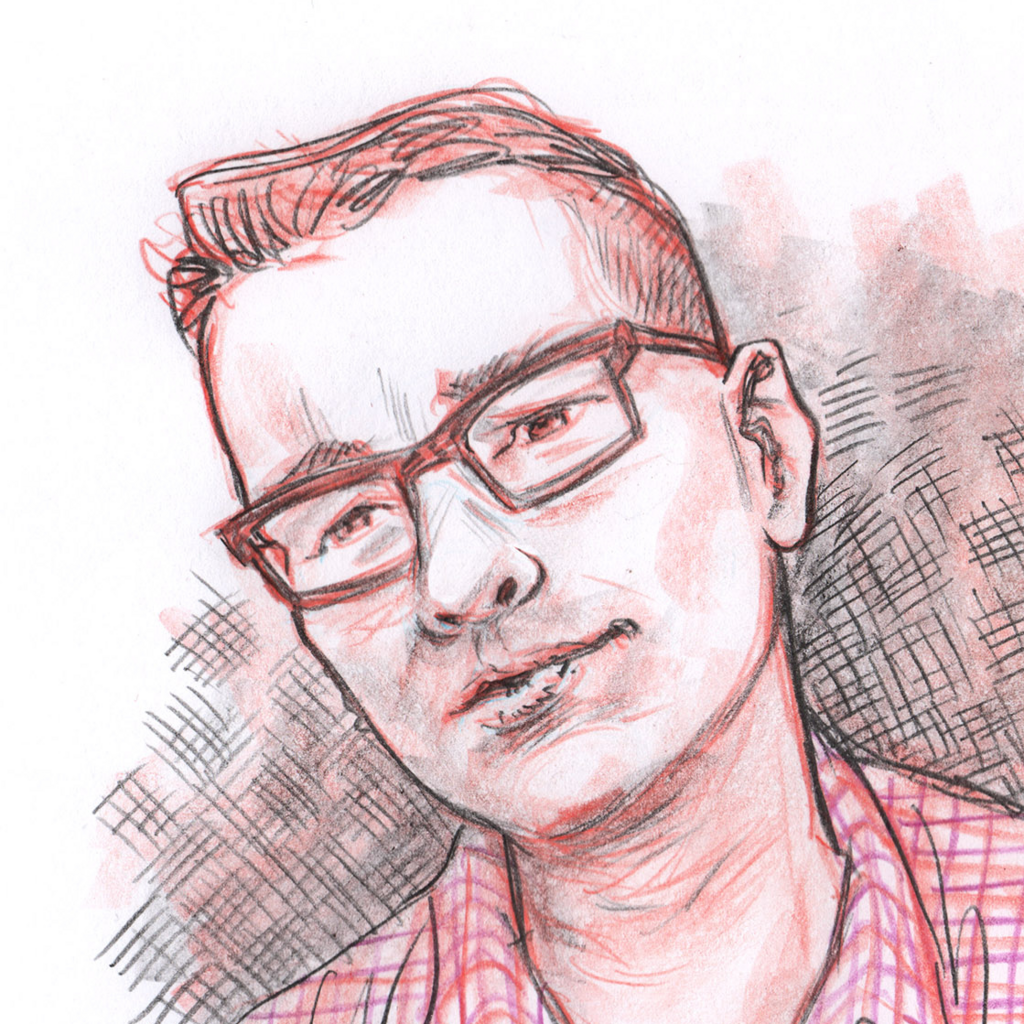
Special Guest: Maram Taibah, author of Weathernose
A Leanpub Frontmatter Podcast Interview with Special Guest Maram Taibah, author of Weathernose
Special Guest: Maram Taibah is an author, screenwriter, and filmmaker. In this interview, Leanpub co-founder Len Epp talks with Maram about her background, growing up in Saudi Arabia and falling in love with English-language fiction, her films, world-building in fantasy fiction, and her novels, ...

Special Guest: Maram Taibah is an author, screenwriter, and filmmaker. In this interview, Leanpub co-founder Len Epp talks with Maram about her background, growing up in Saudi Arabia and falling in love with English-language fiction, her films, world-building in fantasy fiction, and her novels, The Road to Elephants and Weathernose.
This interview was recorded on May 5, 2020.
The full audio for the interview is here: https://s3.amazonaws.com/leanpub_podcasts/FM153-Maram-Taibah-2020-05-05.mp3. You can subscribe to the Frontmatter podcast in iTunes here https://itunes.apple.com/ca/podcast/leanpub-podcast/id517117137 or add the podcast URL directly here: https://itunes.apple.com/ca/podcast/leanpub-podcast/id517117137.
This interview has been edited for conciseness and clarity.
Transcript

Len: Hi I'm Len Epp from Leanpub, and on this episode of the Frontmatter podcast I'll be interviewing special guest Maram Taibah.
Based in Kingston, in the Canadian province of Ontario, Maram is a fantasy author and filmmaker. She made her first film, Munukeer, in 2014, which is set in Jeddah in the 1970's, and tells the story of a lonely housewife and her attempt to rekindle the romance in her marriage, and her second film, Don't Go Too Far, came out in 2016, and is about a mentally disabled Arab man who gets separated from his family on a New York subwqy, and needs to find his way back home.
Maram's two books, which we'll be discussing in this interview, are The Road to Elephants and Weathernose, both of which I think would be better described by Maram than me, so we'll definitely give her a chance to do that later in this interview.
You can follow her on Twitter @MaramTaibah and check out her website at maram-taibah.com, where you can sign up for her newsletter, and you can follow her on Instagram at maram.taibah.author.
In this interview, we're going to talk about Maram's background and career, and her work as a filmmaker and a self-published fiction author.
So, thank you Maram for being on the Frontmatter Podcast.
Maram: Hi Len, it's really nice of you to have me here.
I grew up in Saudi Arabia, in Riyadh, the capital. And my nose was in a book the whole time. So I don't really remember much, other than all the books that I read. I think that that that has been what has fueled my passion for writing.
My mother got me reading English class texts at a very young age. I wasn't very excited about Arabic literature for many reasons. But it was really English literature that had me - it just lit me up.
I was in sixth grade when I decided - it was just like this mountain of revelation for me, I just decided that that's what I wanted to do with my life - I wanted to write and I wanted to contribute, and I wanted to make these beautiful things that I was exposed to. I wanted to give back to literature.
Len: We're big fans of literature on the podcast - and I'm curious to ask, what was it about Arabic literature that just didn't grab you? I mean, to wildly generalize.
Maram: The language is really hard. It's a beautiful language if you listen to it, if you grew up with it and you can understand it - it is a beautiful language. But it's really difficult. It's not a simple language that flows easily, especially if you're a child and you're looking for a good story and you're looking for simplicity and you're looking for - this is my own personal experience: reading in Arabic felt like going through a thorny bush, that's what it felt like for me.
And English was like water. So that was the first reason, that had me attracted to English literature.
The second reason was that - I would say that there was a decline in Arabic literature, at least at the time, and as a young child, I was able to compare English literature with Arabic literature, and see the differences and strengths, when it came to plot building and character development, and just originality - and so many genres out there. Whereas with Arabic literature, it just felt - again, this is my own personal experience - to me, as a child, it felt limited.
Len: And what was the English literature that you were exposed to that really grabbe you, at such a young age?
Maram: Well, my mother introduced me to the classics, like Charles Dickens, Jules Verne, and all that good stuff. But she also introduced me to Sweet Valley. Yeah, I'm a 90s kid. So I read contemporary books, and I read English classics, abridged version of classics. My favorite was A Tale of Two Cities, and probably still is, among the classics.
And then I started to look for my own, to find my own taste in books. I started to scavenge for them on my own. The more skilled I became with the language, the more my taste was refined in what it is that I was looking for, and what it is I enjoyed.
I found that it was fantasy that I loved the most. So I read stuff like Lloyd Alexander's Prydain Chronicles, I read the Narnia series. Harry Potter, when it was time for Harry Potter.
Len: Lloyd Alexander, that's ringing a bell for me. It goes back a long way.
Maram: Have you seen the Disney cartoon, "The Black Cauldron?"
Len: Yes.
Maram: Yes, that was Lloyd Alexander. And--
Len: It's very funny, the--
Maram: Okay.
Len: The version I had that book of was probably English, and it was called, "The Black Crotchen."
Maram: Yes. That's another name for the cauldron.
Len: Yeah.
Maram: Disney slaughtered this story. I just wish they never made it. They smushed the first two books together into one horrible film.
Len: I remember being disappointed a little bit myself, when I saw it as well.
That's really interesting - so Charles Dickens and the French Revolution, to Sweet Valley High, to fantasy -
Maram: I know.
Len: Is the wide range. One thing I'm curious about - so you grew up in Riyadh. You were born in Montreal - I gather, from your bio.
Maram: Yes.
Len: What was it like as a young woman growing up in Riyadh in the 90s?
Maram: Well, the'90s was the most horrible decade in Saudi Arabia. It was very different from what it is today, obviously. It just, it felt - and this is a child's experience - through a child's eyes, it felt dark and gloomy, and hot and dusty. It was an era when the ideology, the -
Sorry, I'm going to repeat that. It was a time when the predominant ideology was very fundamentalist. You could sense it through how people behaved, and a lot of things that crept into our educational system. But then it's loosened up very, very, very slowly. And then in the last three years, it has completely exploded wide open.
Len: Oh, what do you mean by that?
Maram: Well, there's a lot of change going on in Saudi Arabia right now. Very fast evolution, I would say, when it comes to women's rights and just opening up the country to people from outside. There's tourism, entertainment. A lot of the restrictions that we had to experience growing up are just like - poof, gone. And that's pretty amazing.
But having grown up in the 90s as a child, I think that that experience on its own was very intense for me. And it was - it's actually driven me to write my first fantasy novel, based on that experience.
Len: I'm looking forward to getting to that in a little bit. But - and we'll definitely talk about that at length, or as long as you're willing to - thank you for sharing that about your childhood. I'm just looking at your LinkedIn profile - you made your way to the United States.
Maram: Yes.
Len: And what spurred that decision?
Maram: I did two years of film school in Boston University, for my Master's.
Len: And how did you like Boston?
Maram: I love Boston. It's - I don't know if you've seen the movie, Sabrina, starring Julia Ormond and Harrison Ford. There's this moment in the film when she describes how - when she was sent away to Paris to study, and then she kind of unleashes herself and she finds herself. And she says, "I found myself in Paris." To me, I found myself in Boston.
Len: That's wonderful to hear. And what did you do after that?
Maram: I went back home to Saudi Arabia, and I dabbled with a career in filmmaking. I tried different things. I experimented with different startups, and it was just a time of jumping around from one thing to another, until I settled at what it is that I actually want to make the priority in my life. Which is writing, and always has been writing.
Len: I wanted to ask you about your first film Munukeer, if you could just talk a little bit about that project. How did that come about?
Maram: It was my thesis film. I was fascinated with this group of characters, and I wanted to experiment with it. It was actually the experimentation ground for a TV series that I would then later write. The series is not produced, but it's just waiting to be set loose. I've done a lot of work on that series with a group of mentors. And one of them is David Isaacs. He was a writer on Seinfeld. Not Seinfeld, sorry - Frasier. He's a Professor at USC in California.
We did a lot of work on that series, but it was based on Munukeer, which was me just experimenting with like - what would these characters look like? What would this world look like?
I filmed it in New Mexico, because New Mexico, surprisingly, looks a lot like Riyadh, it looks a lot like Saudi Arabia. So we went down there as a student film crew, and we set up a 1970s set, which was beautiful - and we filmed it. That film went to the Dubai film festival. It went to the Cannes short film corner.
Len: It sounds very exciting, and quite the challenge as well. Particularly, I mean, I imagine - you said this was part of your Master's degree, I gather? And so you would've had some funding that came from that?
Maram: No, I got the funding from my university where I did my Bachelor's. As an alumni, they funded me, yeah.
Len: Okay, because I've known some playwrights and filmmakers myself, and funding is a big deal.
Maram: Yeah.
Len: And where it comes from and how you get it, the miracle that it - the sort of dirty miracle that it represents when you finally, finally get it. And then a responsibility of using it -
Maram: Wisely.
Len: Wisely. Yeah, it's an incredible challenge.
Maram: Yes.
Len: And then you did another film called Don't Go Too Far. I was wondering if you could talk a little bit about that?
Maram: Yes. Don't Go Too Far was the film that I wanted as my thesis film, but I didn't have the guts to make it at the time. The character is based on my older brother, who has a mental disability. I wrote this story, because - it's never happened, but I just wanted to experiment with it and see - because it stems from a fear of mine, that I would lose my brother in a crowd. He's older than me, but he's highly dependent on all of us. And just the thought of losing him in a crowd is - it just is terrifying for me. So I decided to make a film to explore that emotionally, and just follow him in the story and speculate on what he would do if he was ever alone in the world.
The story is about this mentally challenged young man who accidentally gets separated from his sister on the New York subway. And he finds himself alone in New York City, and he has to find his way home. So the short film is his day in New York City, looking for his sister. It was a sweet, heartbreaking film. I was crying the whole time on set. Because the actor was superb. He sat with my brother for a couple of hours, and then he just - he did it. He was able to become that character.
Len: I was moved, simply - I haven't watched it yet, but I was moved simply by the description of it. It's a very compelling idea. It's something that I think we've all had nightmares of our own, one way or another, of that kind of thing. But also, it struck me as kind of-- I mean, this is the way art works - but to some extent, an apt metaphor for our current moment, where a lot of people who may be - well this is going a bit too far, but people who thought they were more independent than they were, are realizing how dependent they are for their livelihood and their welfare on everything working, and the help that they get from other people.
Maram: Absolutely.
Len: And that to be truly alone is terrifying.
Maram: Yeah.
Len: And that the needs we have for each other are not incidental - they're fundamental.
Maram: Absolutely.
Len: And it must've been, I imagine - a big part of that intellectual journey must've been making decisions about how other people would respond to a lost, perhaps strangely behaving Arab man in New York City.
Maram: Yes, absolutely. That was definitely part of my process. I had different people - some of them ignoring him, some of them thinking he's a threat. I had a child who saw him for what he truly was. It was a wonderful exploration for me in a creative sense, but emotionally it was very intense.
Len: And I see also, when I was doing research for this interview, that amongst the many things you've done and are doing, you are also a travel blogger.
Maram: I was a travel blogger.
Len: Yeah.
Maram: fearlesspilgrim.com was my blog. For the past few years, I had been going through a deep dive into my own spiritual journey, and I did that through travel, because I wanted to experience different people's pathways or traditions, and their spirituality. I used to travel for that intention. And I met some fantastic, beautiful, magical people. I wrote about every experience, every destination as a sort of pilgrim. That's why "pilgrimage," that's why I called it "Fearless Pilgrim".
I am no longer writing those blogs, but they are available online. But it was a life-changing experience while I kept it up. I think I will forever be a pilgrim. I don't think I will ever stop learning, and being curious about people's paths and people's traditions.
Len: And it was the people that you met that were the sort of primary adventure, rather than the places?
Maram: Both. No, that's a good question, it was both.
Very often, before I went to a place, it was just - it was a very intuitive feeling for me. It wasn't like - it didn't come from a - "Oh, I have this list of places I wanted to go." No, it was more like, "What is calling to me right now?"
It didn't always happen that way, but very often I felt a calling by the place. And then I would go there, and I would discover what it had in store for me.
Len: And do you have a favorite place?
Maram: Bali.
Len: Oh really?
Maram: Yes. I've been going to Bali once a year for the past three years. I was hoping to go sometime soon, but with COVID I don't think I'm going anywhere.
Len: So, being a travel blogger and things like that - COVID comes up in pretty much every interview that we do nowadays. Actually I've started date-stamping the interviews with a little ominous, "This interview was recorded on..." at the beginning of the interview.
I wanted to ask you a little bit about that. For me, one of the most fun things about this podcast is I get to talk to people and authors from all around the world, and ask them about what things are like where they are. So in the past, it's been, "How are the protests? What's the war zone like?" But, what are things like in Kingston?
Maram: Well, I'm truly grateful to be living in such a sweet, charming place like Kingston. It's not a big metropolitan city where you're holed up in an apartment and there's really nowhere for you to go outside. Kingston is really - I wouldn't call it "rural." But there are some really residential neighborhoods with houses, and you can just go outside and walk. If you have a dog, you walk your dog. You can go outside and garden.
You'll hear the birds, you'll see the sky. It's just, it's much more - I think it's much more liberating to be in a place like this, than to be in a city like Toronto, for example, or New York - stuck in COVID times. And there are so many natural reserves around us, and forests that you can go and walk alone - there won't be any people around. So we have that liberty, and I'm grateful for that.
Len: For those who might not know about Kingston, Ontario - it's on the shores of a great lake and has lots of prisons and Queen's University there.
Maram: Lots of prisons. Now it doesn't sound so charming.
Len: No, no - it's a charming place.
Maram: Queen's University is very beautiful, actually.
Len: Yes.
Maram: The campus is gorgeous. And when I go biking there, I have it all to myself.
Len: Sorry to ask the local question, but does Oil City Saloon still exist?
Maram: I don't know. I moved to Kingston in August, so I'm probably not much of an expert to answer that question.
Len: Oh okay - I'm sure I got the name of the country bar I went to there wrong, it was a few years ago, but it was a lot of fun. Kingston's a fun place. And so, actually, what brought you to Kingston, if you don't mind -?
Maram: I'm doing a PhD in cultural studies at Queens.
Len: What's your thesis about?
Maram: Well, my thesis is an ever-changing thing. The short of it is, I'm looking into gender performance - how children perceive gender performance through Arabic children's literature. That's how I started, but like I said, it's an ever-changing topic. I'm still on my first year, so I get to jump around a little bit.
Len: Oh you're in your first year?
Maram: Mmm hmm.
Len: So you'd be taking classes and stuff like that?
Maram: Yeah.
Len: Okay.I did a doctorate in English myself. But that was - I'm Canadian, so I did my Bachelor's and Master's in Canada, but then I did my doctorate at Oxford, so you're ABD](https://en.wikipedia.org/wiki/All_but_dissertation) from the beginning - there are no courses, and no teaching. Which is - some people see that as a perk, I saw it as a bit of a drawback. But yeah - doing a doctorate is a wonderful journey.
Maram: Yeah.
Len: With many, many, many challenges.
Maram: Oh God, I try not to think about that.
Len: Yeah, you've got to just look at the road in front of you.
Well, that's fascinating. I actually didn't know that. Even though I try to research extensively on these things, but I guess I missed that.
Maram: That's fine, I don't believe I've written about it anywhere.
Len: Okay. And actually, on that note - so you can't travel anymore, at least not in the short term.
Maram: No.
Len: But it sounds like you have a pretty good understanding of what things are like in Saudi Arabia now.
Maram: Uh huh.
Len: How - just totally anecdotally - I peruse the news more than I should, and I've read a lot about Saudi Arabia from all kinds of perspectives, but not from the COVID perspective. What are things like for people there? I imagine they're doing the social distancing and stuff, just like everywhere else?
Maram: Yeah - the government is doing an amazing job with that. I'm really proud of what's been done so far. They've been really strict about social distancing. There's been curfews and fines for people who break those rules. And they've been taking a lot of precautions. There's been a lot of medical support. They're even controlling the border. Like if you're Saudi and you want to return home after - because you've been stuck somewhere before this whole COVID business happened - like if you were a student or if you were a tourist, they're not just letting people come in through the border. They're getting people to come in by schedule, so that they can control the quarantining of these people coming in.
So there's been a lot of amazing organization that's been going on during this time. And people - just the people, the efforts that the people are making to get together and inspire each other - I see stuff on social media that just makes me really proud.
Len: That's fantastic, thank you very much for sharing that.
So, moving on to the next part of the interview - so, this has all been kind of a build-up to talking about your books. And you've published two books - The Road to Elephants and Weathernose.
Maram: Yes. My recent one is Weathernose. It's a children's steampunk novel, set in a world called the Cerulean Universe. It's about a old-fashioned weatherman who wakes up one day to find that his career is being sabotaged because a 10 year old girl has invented a machine that can predict the weather. In the middle of his vendetta against her, to destroy her and her machine, he ends up going to dastardly lengths, and also discovers that she is way smarter than him.
Len: And has no sense of humor.
Maram: And she has no sense of humor, no.
Len: A formidable opponent.
Maram: Formidable child.
Len: I've listened to a couple of podcasts that you've done relatively recently- you mentioned before that one of the people who recognizes the lost man for what he is in New York, is a child. And you have a very interesting view about - particularly the consciousness of the typical eleven-year-old and where they're at in their life.
Maram: Yes.
Len: I was wondering if you could talk a little bit about that?
Maram: Yes. I am particularly enchanted by that time in life when you're eleven years old. It feels like the pinnacle of your childhood, where you've collected all of the wisdom that you are supposed to have as a child, but you still have that - that magic, that innocence, that belief in possibility. So it's kind of a culminating ball of energy, that is just at its highest, and at its strongest.
And then puberty hits, and you're just thrown headlong into this weird world, where you're supposed to undo all of that.
I think that we all spend a lot of our adulthood just looking for our childhood again, just looking for that moment again.
I'm particularly fascinated by that age. I think that it shows up a lot in my writing. Cypress is 10 years old. She's bordering around that age. I'm very fascinated by how smart children are, and how perceptive and how wise - and how they're very often not listened to.
Len: And there's a very interesting theme of innovation that's associated with youth in the book as well.
Maram: Yes. Invention is a theme in this world. I'm actually creating a lot of artwork from the Cerulean Universe, and I share it exclusively in my newsletter. I'm doing pieces that are Cypress's inventions and then Tart's - that's the lead character, the weatherman - his designs for airships. I share those things on my newsletter. But I think it comes from my own fascination with new ideas, with -
It came at a time when I was still in college and I was bursting with creativity. I'm still bursting with creativity. But I feel like at the time, it felt so novel to me, to be able to create, and to be able to imagine things, and bring them to life. I think that that was the energy behind the Cerulean Universe. I wrote the book when I was in college. I don't know if I mentioned that before or not?
Len: No you haven't mentioned that, but I was going to bring it up, actually. I was wondering if you could actually talk a little bit about that. So you've actually had this sort of in your storage for quite some time?
Maram: I actually began to build the world in my head at a much younger age. I was maybe 13 years old when it started to emerge in my imagination. And I never - I was never able to really put it into a story, because I didn't know what the story was - but it just kept building and building and building. I kept seeing it and wishing I knew what the story was.
And then one day, one boring summer in Saudi Arabia, I was just waiting for school to start, and I see this character with a floppy straw hat and a crow on his shoulder - looking across at the sea, on his own island. I got really curious about him, and I started to write and write and write. And then it just kind of unfurled.
Cypress came in later in the writing process, and once she happened, it just felt like I had something. I was hooked, and I kept going with it.
Len: It's really fascinating and kind of tantalizing - in the foreword to the book, you talk about how the characters came to you before the story did, separately.
Maram: Yes.
Len: And you eventually settled upon a story for them to interact in.
Maram: Yes. I think that what really attracted me to them is this dynamic duo. He's a 42 year old man and she's a 10 year old girl, and they are having this power struggle. It's not something you see every day. I knew I had something there.
Len: I've been thinking about it a little bit, and in the context of this podcast - for a number of reasons, most of the people that we interview are people who write technical books. So this could be like the chief software architect of an investment bank, or something like that. And age and innovation is a theme of our time, to some extent, with respect to technology.
Maram: Absolutely.
Len: And so, for example, many of the people who listen to this podcast might not have been around at all at the time, but there was something called the dot com boom in the mid- to late- 90s, basically when the World Wide Web took off, and people could use web browsers and stuff like that to gather and present information, and then eventually buy and sell things, which was an incredible revolution.
But you'd get things like - a tech founder barefoot on a throne kind of thing - the idea of very young people who became very wealthy.
But even going back further, when the personal computer came out - and there's a point to all this - when the personal computer came out, before that, computers had been seen as this highly professional kind of thing that engineers used. But when it came into the home - although it was brought in often by parents who used it for work or something like that, the computer, popular kind of culture, became understood to be something that kids knew how to use.
And it's weird that that stereotype has lasted to this day. It says something a little bit about - I don't know? Demography or something? Like the baby boom generation and stuff like that, still dominating our cultural discourse, to some extent. But even to this day, there are a lot of people who associate the computer and innovation as a kind of like threat from the young.
Maram: Yeah, and that's - thank you for bringing that up. Because I think about this a lot, about the book. When I wrote it, I don't think that there was as much booming innovation back then, as there was today. I think that children today, nowadays - they're very - like Cypress, I would say - they're too smart for their own good. They know a lot of stuff they shouldn't know. And they - I feel like a lot of them have kind of lost some of their childhood because of this. It's just interesting that I choose to publish the book at a time when it was more relevant than it was, back then when I wrote it.
Len: It's a really curious thing. I mean, there's the dark side to childhood and innovation as well, right? Like when I was a kid, certain things - just to be straightforward about it, like pornography were like - your friend's older brother might have a magazine hidden under his mattress that you find or something like that, right? But like nowadays, childhood involves sudden exposure to crazy things.
Maram: Yeah, yeah.
Len: And so it's wonderful that there's so much amazing children's literature for kids to read as well, and hopefully be better exposed to - sorry for going down that dark path a little bit. But you also have written a book called The Road to Elephants.
Maram: It's a dark fantasy. It's not for children, I would like to align that right now.
Len: Okay.
Maram: No, don't give it to your child to read. It's not for children. The characters are children, but it's not for children. It starts out pretty charming and pretty, whimsical. But then it slowly starts to take a darker path. And the twists in that book, I've heard love/hate responses to it. That book, I wrote - I was in Boston, and I was finishing up my degree. And I was just - I wrote it out of sheer curiosity. I was actually listening to the soundtrack of the film Cracks I don't know if you've ever seen it?
Len: No.
Maram: Starring Eva Green. It was composed by Javier Navarrete, who did the soundtrack for Pan's Labyrinth. What I'm trying to say is that that soundtrack really inspired a lot of the mood of that book. I was so captivated by it, and that's why I wrote it.
Len: Thank you for sharing that. I read the beginning of it. It's funny, if the beginning was whimsical, then the rest is going to be a challenge. It starts out with the story of a young girl and her even younger brother, kind of trapped in a house by a caretaker who tells them that their parents are never coming back - because they found a better life elsewhere, which was quite the challenging opening.
Maram: Yeah.
Len: I mistakenly went into it thinking it was a children's book, and realized something else was going on, but hadn't - I confess, I haven't gone further enough to see. But now I'm definitely going to.
Maram: Yeah. Part of the dilemma for me as a writer is writing about characters who are children - but then, not having the book mistaken as a children's book. But that's kind of dilemma that I had.
Yes, the book is about these two children in the 1920s in Saudi Arabia, who run away from home because of their abusive nanny. They run away to join the circus, and they've never been outside of the home, and the road just takes them and shows them things that they'd never seen before. And they're not quite prepared for what the road has to offer.
Len: When you brought up Pan's Labyrinth, it all of a sudden kind of clicked for me a little bit.
Maram: Yeah.
Len: I'm sure you did that on purpose. So you're working on a sequel to Weathernose?
Maram: I am. I am so excited about it. I'm still in the beginning of the process. But I've had the idea for quite some time now, and yeah, with this COVID nonsense going on, and I'm in a phase in my degree where I'm not doing much - so I am writing. Now I'm using this time to really get on it. And it's fun - this world, I love it so much. It's so whimsical and whacky and quirky - and I just have a lot of fun with it. So I'm glad to be doing this during these times.
Len: One of the really interesting challenges of fantasy is world-building. I was wondering if you wouldn't mind talking a little bit about your process for world-building?
For those who might not know - if you're going to write a fantasy novel, you have to have a world that you construct, that has its own rules, and things like that. And not only do you have to construct it and hopefully make it consistent - but you also have to sort of convey it in a way to the reader that is - perhaps I should put "not overwhelming."
Maram: Yes. World-building is one of my favorite parts of this whole process. Because it's where you get to have fun with no expectations. It's where you get to put ideas together and see if they work.
I like to get as playful as I can with this. I do mood boards, I have binders where I collect images from that world, fabrics, plants - anything that is central, that brings it to life. That's what I did with the Cerulean Universe for years, before I even wrote a story about it.
I have this binder with pictures from Architectural Digest and from National Geographic, and fabrics that I find in my daily life. I collected perfumes, just so that I could use all of my five senses to immerse myself in this world.
One of the things that I really enjoy doing is, I like to cast my characters. So I look for actors who look like my characters. And I put them on a mood board. So Tart, for example, would be Hugh Grant when he was younger.
And what else? I use a lot of visual stimulation, like Tarot cards. Anything that takes it outside of my head, somewhere where I can see it and feel it.
Len: And do you have like an encyclopedia or something like that?
Maram: No. What do you mean, like -?
Len: I mean like if you invent a new type of animal or a new type of weather phenomenon or something like that - where you define it, how it works and stuff like that.
Maram: Actually a great idea. I am going to do that. Thank you.
Len: Just my methodical mind probably, or my worry about making mistakes or something like that.
Maram: Yes, that is really cool.
Len: One of the podcasts I was listening to where you did an interview, you talked about - made a really interesting point about - well you made many interesting points, but one of the interesting points that you made was about how the world can't be - I mean, for certain projects you might want it to be - but typically, you don't want the world to be too different from earth.
Maram: Oh yes. I personally have trouble with - when authors who write fantasy or people who are still beginners, who write fantasy - they try so hard to create something that is original and different, and doesn't correspond to the rules of planet earth.
You've got to have gravity. Sorry. I'm just making a joke, but what I think works is to ground yourself in planet earth and then build around that.
Because what happens for a reader, is - I'm just going to have trouble relating to your world if it's too different from our planet. I mean the trees - you can make the trees blue, but you've got to have gravity and you've got to have night and day. It's just a way to make sure that your reader can really step into your character's shoes without feeling lost, without feeling like they have to spend so much energy understanding just the laws of physics in this place that you're taking me to. And sometimes when there's no consistency even, it just gets more and more confusing.
Len: One of the reasons that point struck me so much was - it reminded me of the reason I stopped reading Stephen King's Dark Tower series. Have you ever read that?
Maram: No.
Len: It's quite dark in its own way. Quite fascinating. But at a certain point, it takes a turn where it kind of gets like - in a very crude way, kind of meta. Stephen King just communicates to you like, "Everything you read is coming straight from my imagination and what I decide to show you." And it became just kind of gross, like, "So you're just manipulating my mind and subjecting me to your choices." And it's like - well of course that's true of all books.
But I couldn't suspend disbelief anymore -
Maram: It becomes exercise.
Len: Yeah. Exactly, exactly. And I think, I find - one of the-- I mean, reading fantasy, but there are things that I've given up on - for example, for a number of reasons. I don't know if you've read the Thomas Covenant series? It's the name of the character. This is something that - my brother, who reads a lot more fantasy than I do - talks about, is - sometimes authors, when they've written too many books in the same series, start to punish the characters.
I guess probably when you're designing the plot - which is something we could talk about as well - you feel like you need to level it up again and again, and make the challenge like even greater. But it can turn into just a kind of torture porn for the main character.
Maram: Are you talking about Game of Thrones?
Len: So I've never read them, and I never will. I mean, I could talk about that for a long time. I could talk about how I think the Lord of Rings novels are poorly written, which makes me a lot of friends.
How do you plan on facing some of these challenges going forward? Do you try and introduce people to new things in the world slowly, so, not too many things all at once?
Maram: Yeah.
Len: Or sometimes do you barrage them, just for fun?
Maram: No. I don't think barraging works. I recently came out of a novel actually, The Discovery of Witches. I don't know if you've ever read it or heard of it?
Len: No.
Maram: It's a fantasy book about witches and vampires. I could go on a rant right now, but you've just got to stop me.
Len: If you want to, please do. I think it's important for people to hear what authors think about when they read other people's books, and what drives them.
Maram: So I received this book, and I'm looking for a fantasy book to read during my quarantine. And I get this book in the mail, and I start reading it, and I'm hooked. I'm just hooked. The story is amazing.
But then I find out that it's a romance. Which - okay, I'm fine with romance - I have read romance before. But then it starts to get progressively complicated. And the author kept throwing new secrets at me all the way to the last bit, like all the way to the last few chapters. There's a new villain that shows up out of nowhere, and causes the worst kind of damage ever.
And it was just exhausting. It was exhausting. It didn't feel like there was a gentle lead-in, and then there was a combination - and there was that kind of denouement at the end - there was enough time for that, at least. There was just always something going on.
And the character just kept fainting and losing consciousness. And then her boyfriend would revive her and tell her to take care of herself. He'd put her to bed. And then she'd faint again, and he'd put her to bed. And it was just - oh my God, stop. I couldn't help myself. I watched the TV show on Sundance now. Discovery of Witches was made into a drama series.
Len: Oh wow, okay.
Maram: Starring Matthew Goode. He was my all-time crush. I really appreciate what they did on the show. Because they cleaned up the book. They removed all of the nonsense with the character acting like the damsel in distress the whole time. They kind of leveled out the love interest - instead of having him be this possessive, controlling vampire, he's more enlightened. There's a balance between them as a couple. And they just - they cleaned out all of the things that were unnecessary. And then they rearranged the events, so that you're aware of who the dark force is from the beginning, and you're not just finding out in every chapter, there's the same thing. So, I forgot where I was going -
Len: Oh no, that's ok - you were just going to go on a rant, and that was very good.
These are really interesting challenges, and they're probably, not necessarily resolvable or knowable in advance. But I think that a lot of people - when you're alone writing, particularly if you're writing certain kinds of genre fiction - you feel like you kind of need to give a new surprise to keep people reading.
Maram: Yeah.
Len: The advice you might get would be, "If you don't keep up the action -" I think actually this was in one of the podcast interviews I was listening to with you, where someone - I think it was not you, but the person who was interviewing you, was saying, "If you don't give them enough action early enough, an avid reader of these novels might just stop reading yours, and go to another one that's going to give them the dopamine hit.
Maram: Yeah. It's a balance between - we were talking about barraging readers with information. I think it's a balance between giving them controlled spurts of action or surprises that are well-designed, so that it fits in the arc, without creating too much confusion and chaos. And also, not introducing all - if you're planning to write a trilogy or a series, you don't need to introduce everything about that world all at once in the first book.
That's something I learned in my recent process with the fantasy book that I recently finished, is - that there was this big plot - something in the plot was significant in the story, but I had to cut that out because I was working with a mentor of mine, and we discussed me actually introducing that later in other books. Because there was room to do that, and you don't need to overwhelm your reader with all of that information about how this world works all at once.
It's like in the Harry Potter books. There's so many things about the intricacies of the magical tradition and the politics of that world. You don't get all of that in the first Harry Potter book. The first Harry Potter book is just an introduction. It's a little bit even - naive, right? But then it starts to get more and more complex as Harry Potter grows up, and he starts to understand his world better. So you as a reader, you're understanding this world with your character. You don't need to tell everyone about how terrible The Ministry of Magic is in the first book, you find that out later in the fifth book.
Len: That's really interesting you say that. Not to get too sort of specific, but did you watch the Matrix movies?
Maram: I watched the first one.
Len: Oh well, good for you for stopping there.
Maram: Yeah.
Len: The break that happens is that in the first movie - and that makes the subsequent movies terrible - is that in the first movie, you're with Neo. And you learn about the world with him. But the second movie starts with a jump to the future. So now Neo knows a bunch of stuff you don't know, and you're a stranger to him, and a stranger to the world that he's in, all of a sudden. Which completely causes this break. And yeah, that's one of the things - I've read a bit of The Philosopher's Stone or whatever it's called in America -
Maram: The Sorcerer's Stone.
Len: But yeah, it's like - one of the things that's so brilliant about that series, is exactly what you just described. You grow up with Harry. And it's just a brilliant solution to some of the problems that we've been talking about, which is, the person, the character you're with - is discovering these things as you are, as well. So you're not alien to the world that they're in ,any more than they are.
And so - on that note - in the last part of this interview we like to talk about some of the challenges that come with self-publishing and writing. And so, you talk about having a mentor. Before you published Weathernose, did you show it to a bunch of different people?
Maram: I worked with a couple of editors, who gave me their thoughts. So I got feedback in that sense. And I did have friends and family read it. Other than that, I submitted it to an online magazine once - and they loved it. But that's about as much exposure it had before it was published.
Len: And does operating independently like that come naturally to you?
Maram: I think in this day and age, it's a double-edged sword. You have a lot of control, especially with the creative part. Like the book cover for Weathernose, I'm really proud of - and I'm so happy that I found Leah Palmer Preiss, who made the cover for me. Because she really understood my world, and I was able to communicate that to her, and we were able to go back and forth. And so I had complete control with that.
But then the other part of it is - it just becomes challenging and a sea of competition. It's not like apparently in the olden days, when you would just mail your manuscript, and hope somebody accepts it, and then they do all the work. Now with social media, you are responsible for a big part of that marketing and, a big part of that building of an author platform.
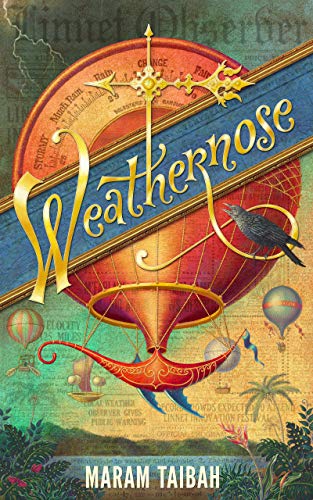
Len: I was going to bring that up, and so you've answered the question already. But like, "How did you get that fantastic cover for the book?" was going to be one of my next questions. It's just amazing.
But yeah, that challenge that you describe. It's interesting. That is a challenged faced - of building the author platform and doing marketing yourself - faced not only by self-published, but also by conventionally-published authors.
Kind of infamously, even a like Big Five publishing house might be like, "Well, how are you going to market your book?" And you've got to give them a marketing plan for what you're going to do. Increasingly, a lot of authors are facing this situation, where it's like, "What? If I've got to do all my own marketing, why would I sign away all the rights to you?"
And in particular actually, right now - I mean, who knows how long it's going to last? But with COVID-19, there are particular challenges around print books, and people being apprehensive to order them, having to wait a few days before opening the package, things like that. And there's all kinds of other things, like really complicated things.
Maram: Oh really? I just ripped the package open and started reading.
Len: Oh really? Everybody has their own approach. Personally for me, I touch all the food as soon as it comes into the house, but I leave the packages I order - it's kind of arbitrary. But anyway - yeah, that competition for eyeballs and things like that, is really difficult
One thing that comes up - and I'm sure you've maybe read in the self-publishing world, is - should you keep your book in one place, or should you "go wide" and publish the same book on a lot of different sites. What's your approach to that, as a self-published author?
Maram: I currently have my books on Amazon. And for me, it's - I don't know? That's just a personal choice. For me, it's a matter of, "I want to master this, and then I want to think about the next step." I just felt overwhelmed by the idea of throwing my book out in different places and then having to like manage and monitor in different areas. I don't know if this is the correct way to do it or not, but this is what I felt comfortable with, when I first started.
Len: Just on that note, at least to me, the best advice I have come across when it comes to this kind of thing, is, "Always do what you enjoy doing." A lot of people like might feel pressure to like become a master of the Facebook ad, or something like that. And it's like - no, if you're not into that - do the things that you're into. Those are the things where you're going to succeed.
Maram: I've been learning the ropes of Amazon AMS, the app advertising platform on Amazon. And it's kind of like working on the stock market or something, just in the sense that you need to monitor it daily, and kind of toggle the bid, and experiment with what works best for your book. But yeah, I just feel like - there's a lot to learn already on Amazon, that I don't want to, at this time, worry about other platforms.
Len: That's a great analogy - to the stock market. Because when you invest in the stock market, you're investing in companies that you don't control. And when you buy an Amazon ad, they've got algorithms that you don't control, that change all the time, and that are not transparen, so it's a bit of a game. And you're also competing against people who are paid to do it all day long.
Maram: Yeah, yeah.
Len: Which is not to say "don't do it." It's just like, that's, I think, an extremely great analogy for what it's like to use those systems, in that way.
It's a real challenge, and it's really interesting too, because we live in a - if you're in Amazon, you're in a world where they know how many pages of your book someone has read, and how far they got in, for example. Or how much time they spent on it. And a lot of people in the self-publishing world are confronting this thing where you're battling these algorithms.
Where like - who knows, right? Maybe Amazon favors an author whose book gets bought and someone only reads 30 pages and then goes and buys another book? Because then the natural thing would be to think, "Oh, they're going to favor the author whose book gets fully read." But then that person's wasting time that they could've been spending buying other books. So maybe Amazon makes more money from authors whose books get abandoned? It's just a curious space to be in.
Maram: Yeah.
Len: Anyway - thank you very much for taking the time, and for talking about your background and career and your films and your books, and your approach to writing and being an author - and for your experience, right now, with everything that's going on, I really appreciate it. Thank you very much for being a guest on the Frontmatter Podcast.
Maram: Absolutely, thanks for having me. This was such a fun conversation.
Len: Thanks very much.
And as always, thanks to you for listening to this episode of the Frontmatter podcast. If you like what you heard, please rate and review it wherever you found it, and if you'd like to be a Leanpub author, please visit our website at leanpub.com.