
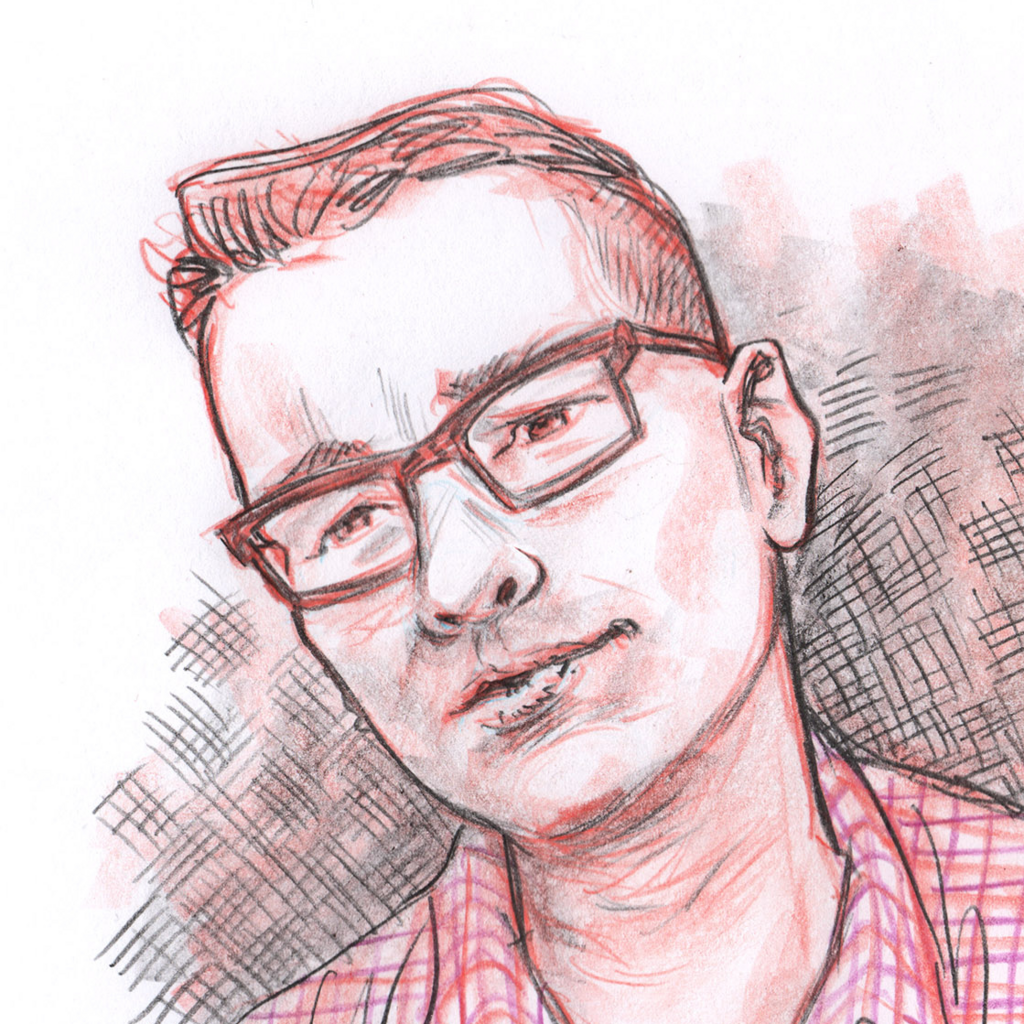
Special Guest: Frankfurt Book Fair CEO Juergen Boos, Discussing the Sheikh Zayed Book Award
A Leanpub Frontmatter Podcast Interview with Special Guest Frankfurt Book Fair CEO Juergen Boos, Discussing the Sheikh Zayed Book Award
Special Guest: Juergen Boos is CEO of the Frankfurt Book Fair, and a member of the Scientific Committee of the Sheikh Zayed Book Award. In this special episode of the podcast, Juergen talks with Leanpub co-founder Len Epp about the history and purpose of the Sheikh Zayed Book Award, the importance and difficulty of translation, what it's like organizing a major set of awards with a committee of experts from all around the world, arts and literature in the Middle East generally...

Special Guest: Juergen Boos is CEO of the Frankfurt Book Fair, and a member of the Scientific Committee of the Sheikh Zayed Book Award. In this special episode of the podcast, Juergen talks with Leanpub co-founder Len Epp about the history and purpose of the Sheikh Zayed Book Award, the importance and difficulty of translation, what it's like organizing a major set of awards with a committee of experts from all around the world, arts and literature in the Middle East generally, censorship and the importance for organizations to protect authors and bring visibility to them when they are persecuted, and government funding for the arts during and after the pandemic, among other topics.
This interview was recorded on June 4, 2020.
The full audio for the interview is here: https://s3.amazonaws.com/leanpub_podcasts/FM155-Juergen-Boos-2020-06-04.mp3. You can subscribe to the Frontmatter podcast in iTunes here https://itunes.apple.com/ca/podcast/leanpub-podcast/id517117137 or add the podcast URL directly here: https://itunes.apple.com/ca/podcast/leanpub-podcast/id517117137.
This interview has been edited for conciseness and clarity.
Transcript
A Note About the Sheikh Zayed Book Award: The Sheikh Zayed Book Award is one of the Arab world’s most prestigious literary prizes. The award, which has been described as the "Arab world’s equivalent to the Nobel Prize", has a reputation for highlighting the most exciting, and often the most challenging work from and about the Arab world. The Call to Submissions for the 15th edition is open now. www.zayedaward.ae
Len: Hi I'm Len Epp from Leanpub, and on this episode of the Frontmatter podcast I'll be interviewing Juergen Boos.
Based in Heidelberg, Juergen is President and CEO of the Frankfurt Book Fair, the world's largest book fair with a tradition going back to the 15th century, or even as far back as nearly a thousand years, depending how you look at it. The Frankfurter Buchmesse attracts hundreds of thousands of people per year, and plays a pivotal role in the global book publishing industry in countless ways every industry insider can tell you about.
In addition to the many responsibilities he holds with respect to countless book industry and conference constituencies, by virtue of his role with the book fair, going back to 2005, Juergen is also a member of the Scientific Committee of Sheikh Zayed Book Award, a very prestigious cultural award organization in the Arab world, and one of the world's best-funded cultural prizes.
In this interview, we're going to talk a little bit about Juergen's personal and professional background just to set the stage as we usually do, but we are going to devote most of our discussion to the Sheikh Zayed Book Award itself, and talk about its purpose and the role it plays in culture and literature in the Arab world, and beyond.
I always like to start these interviews by asking people for their origin story, so Juergen, I was wondering if you could tell us a little bit about where you grew up, and how you first became involved in the book publishing industry - which you've been a part of for - I gather, over 35 years now.
Juergen: Actually, it's even more than 35 years since I started working with books. Finishing high school, I grew up in a little village next to Basel, in Switzerland, and my uncle had two book stores. So there was always a connection with the book business.
I was interested in becoming an editor. So I did an apprenticeship for two years in a publishing house.
But then, I got a degree in business administration at a business school, and worked all my life in publishing. I worked for literary publishing houses. But I think what was very important for me, was working for STM - Scientific, Technical, Medical publishing - for more than 15 years with Springer Nature, and later on with John Wiley & Sons, an American STM publisher.
In 2005, I got asked whether I would like to head the book fair. And I said, "Well this is really something new." I still would be in the publishing community, would see my friends, would work with books. But still, Frankfurt does have a huge cultural impact, and does have a huge political impact as well. This combination, actually, was quite attractive for me. And now it's lasting for 15 years already.
Len: In another podcast, we will talk about how the Frankfurt Book Fair is handling - just from my outsider's perspective, handling everything very well - the many complications of the COVID-19 pandemic.
But today we're going to be talking about the Sheikh Zayed Book Award. In the transcription, I'll point people with a link to a really great interview that you did recently talking about some of the challenges with respect to the Frankfurt Book Fair. But when did you become involved with the Sheikh Zayed Book Award?
Juergen: This also dates back quite some time. I was traveling in the Middle East, and was fascinated by the Middle East. In 2007, I went for the first time to talk to the then cultural authority, about their book fair. We also work as a consultancy for many years. And so we have many roles, not only organizing the Frankfurt Book Fair, but also German cultural institutions, where we promote German culture abroad - especially literature.
So I went, in 2007, to Abu Dhabi, and actually become friends with the then General Director of the cultural authority. We always stayed in close contact, and I was very much interested always in the Sheikh Zayed Award.
It's a very special award. It's not only focusing on literature, but it's focusing also on many other aspects of culture. Like the Cultural Personality of the Year. But it's also focusing on the publishing industry. It's focusing on translations, it's children's books. So I think it's one kind of a cultural award, which doesn't exist somewhere else.
Len: Yes, it's a really fascinating award. I did a fair amount of research looking into it, nd I just wanted to ask you generally - can you talk a little bit about the origins of the award, and what its higher level purpose is?
Juergen: The name comes from, obviously, the late Sheikh Zayed, who was the important person, the leading figure in the Middle East and in the United Arab Emirates, and actually the founding father of United Arab Emirates. So he was very, very instrumental.
And for him, education was so important, to train his people. Also, coming from a humble background, he put all the emphasis on culture and education.
And so this award is there to praise the late Sheikh Zayed, on the one hand, but actually on the other hand as well, to promote Arabic literature and culture abroad.
Because I think Arabic literature doesn't travel too easily. There are very few translations. And for the understanding of the Arabic culture, I think it's very important that you have access to what is published, what gets written to all different ways of Arabic culture.
Len: It's a really interesting question. Why do you think that Arabic literature doesn't have more of a purchase on people's imaginations in the West? I mean, there are some obvious examples that one can think of. But generally speaking, I think a lot of people, even people who read a lot from all around the world, might have a bit of a blind spot in the West, with respect to Arabic literature. Is there a reason for that?
Juergen: Yes, one of the reasons I just mentioned. There are very few translations.
On the one hand, the publishing industry always suffered in the Middle East. So it was mostly about educational or a spiritual literature. There wasn't much of a the focus on even training the children to read. This only came up in the past 20, 25 years.
So actually on the one hand, it's the interest of the West - we are following the tradition of the enlightenment, which is a completely different tradition. And so this made it very difficult for us.
The interest of the international publishing houses in translating Arabic literature, also was always very difficult. And on the other hand, reading promotion is so important to the Middle East, to the Arab world. A lot of things still have to be done.
Len: And is there something specific about the language that maybe makes it difficult to translate into - let's say, like in English or German?
Juergen: I think it's not the language itself. It's actually people learning the language so they can be translators. There are not many institutes who teach you how to translate from Arabic in a literary way, into other languages. And actually also, a lot of titles then get translated from Arabic into English, and then from English into other languages. And this doesn't help the quality.
Len: Just going up to the view from sort of 30,000 feet. You talk about how partly the award is part of a larger cultural effort in the Arab world, about literacy and things like that, and promoting the culture. But one thing I think that a lot of people maybe don't quite understand, is the literary award or prize, or even competition, goes back a couple of thousand years, at least in the Western tradition. Going back, you can think about Euripides, for example. Can you talk a little bit generally about the sort of profound role that prizes like this can play in advancing a country or even a person as a cultural figure?
Juergen: I think the Sheikh Zayed Award does this on many levels. One level is actually academic - to interest people to deal with Arabic culture, to dig deep into Arabic culture, and work on a translation process for the scientific community all over the world.
But this I think is one way. The other one that we mentioned before, it's about reading promotion, and about quality of children's books - to raise awareness of how important children's and young adult books are. And to bring children to read. So this is very, very, very important on another level.
Young authors - we have to encourage young authors to start writing. It helps them to get a stage. And then, again - we have the translation award. I think everything - the combination of all these awards together are there for development - by reading, by exchange, by getting new ideas, by strength and creativity. All of this you can find in the Sheikh Zayed Award.
Len: You're on the Scientific Committee of the award, and I was wondering if you could talk a little bit about what work you do specifically on that committee?
Juergen: Actually we are working very closely with editors. We'll suggest certain titles, because there are way too many nominations. So we have a pre-selection process, and then the members of the Scientific Committee would go very deep into these suggested titles, on all levels. And it's a very, very strong discussion always. It's very challenging, because everybody has their own favorites. We are fighting for this.
I once had this very interesting or funny situation that we talked about a translation of the German philosopher, Martin Heidegger, into Arabic. They made me read it in German. And then they re-read it in Arabic, to see how the melody of Heidegger would still be there in translation. So we really go deep into details.
And having the other members, coming also from quite an academic background - but being based from Paris, to Iran, to Egypt, so from many different places. For me, I learn so much from my colleagues, and I'm very happy and honored to be on this committee.
Len: It's interesting, I was laughing a little bit along with Juergen, when you talked about translating Heidegger. I read Being and Time way back when I was 19, I think, or something like that. And there were so many words that you just keep using in German, like Zuhandenheit and Vorhandenheit, things like that. Because to translate them into English is just kind of pointless. You have to understand the term in the rich context that it's in. I'm really glad you brought up Heidegger as an example, because he's one of those people. I mean, what's the old joke? That Germans read Kant in English, in order to understand him.
Juergen: Yeah, yeah.
Len: But translation is just this wonderful challenge for all languages. And there's philosophy - that can be particularly challenging. And also poetry.
Juergen: Yeah. Poetry plays a very important role in Arabic culture, forever. It was mostly an oral culture, and there, the poetry focus came from.
I remember also a TV show - which was always very fascinating to me in the United Arab Emirates, called, "The Million Dollar Poet", where actually - where we have supermodel contests, they have poetry contests. I think this is very special, and I admire that a lot.
But coming back to Heidegger, I was so fascinated by the translation of the "sign is the sign that the being is a being". So, what you said before, it's so difficult. And especially - this is, we are still staying in Western Culture. Now, translate Arabic culture into other language. This has a completely different dimension. And though the award and the work of the judges it's so important.
Len: And actually, speaking of the judges, I wanted to ask you about that. So about a decade ago, I was a co-founder of something called The Montreal International Poetry Prize. We gave away a $50,000 prize for a single poem. But it also - the project had two sides. It also entailed the creation of a global poetry anthology of previously unpublished poems. So we had jurors from - editors, as we called them mostly - from all around the world. How do you go about selecting a jury for a prize?
Juergen: That's a good question. You're looking into experts, and you want to have experts from different sectors. So my background obviously is publishing. And some of the other members of the scientific committee who have an academic background. But most of them are authors as well. Mohammad Bennis is quite a famous poet on the Scientific Committee.
So this is nice, it's a mixture of people,. Because you don't want to think only - unidirectional, yeah? You need to think from many different perspectives. And me, not being able to read Arabic anyway, the interaction between the judges, it's so important to me. Between the peak members of the Scientific Committee. Because they have to help me understand, and I think this brings in another quality - they have to convince me, not being able to read some of the titles, yeah.
I can read the titles, which are translated from other languages into Arabic. I can deal with children's books for very young children. I can deal with the cultural personality. But original Arab texts, I cannot read. So they have to convince me that this is a good text. This I think is a strong quality of the Sheikh Zayed Award.
Len: And does the jury change? Is it sort of like an initial level of people who would have the works submitted to them - does that change year by year?
Juergen: Yeah, there are - people are leaving, people are joining. I think I'm one of the longest-standing members of the Scientific Committee. I think I'm around for about 10 years now. But some people are leaving after two, three years, and others are coming in. So sometimes it's a bit growing in new members. And also just makes it interesting. Len: I wanted to ask you something about objectivity. Which is something that - obviously, with respect to things like this, like when I sort of ran my prize years ago - we could actually keep things anonymous, because they were single poems. I think the line limit was like 50 lines, or something like that. So things could be anonymous. If you really knew someone's work, you might be able to guess at who wrote it. But with prizes like this, I mean you know - everyone knows who wrote it, there's no doubt about that. Submissions are not anonymous. Is there anything that the Prize does to maintain transparency and it's objectivity in its discussions of who should win?
Juergen: Yeah actually, so we do have - besides the Scientific Committee, I think there are always at least two judges who would dig into one title. And they have to agree, yeah. And we go through all these judgements again. So it's a two-level process.
You have, first, a pre-selection by these judges from all over the world, which come from different nationalities and different languages. They might be Italian, they might be American. They can come from all over. But I think this is part of the quality of the selection process.
And the other one actually is a Scientific Committee, which can always go back to judges and ask them about their opinion. So it's a back-and-forth process.
And it takes quite some time. I'm spending several - at least, every time I go for a meeting - we spend two, three days together. And this happens several times a year.
But this is quite interesting, that the Sheikh Zayed Award people do organize seminars all over the world. Whether it's - it could be at the University of Oxford, it could be in Rome, New York. At the public library in New York recently, two years ago, there was a huge interest by publishers and academics actually, to understand the award and to meet some of the winners. So it's also, I think - that everything is public, is a guarantee for the quality of the Sheikh Zayed Award.
Len: And in all the years you've been involved, have you seen increased interest and awareness, like in the international community, of recognition of Arabic literature and culture?
Juergen: Yes, actually we see more translations. Because part of it, it's also translation funding. So you need to convince people from the quality, if you can support the translation. And this happens every year in different languages. And I personally do believe, because I am also here in Germany working with a company, or a not for profit organization called [?] Society - to promote literature from Africa and the Middle East. We offer translation funds, for translations from these languages into German.
And now it's the other way round - actually, we have to do a lot more in these translation sectors, so translators can survive, on the one hand, and actually make these titles accessible. Think of Africa - what is translated from original African languages? Very, very little.
Len: Speaking of making a living and surviving - I mean, the work of translation is incredibly difficult. It necessarily involves an understanding of two languages and two cultures at least, when you do it. And it's arduous, and not often well paid.
And so one of the roles that prizes like this play, is not only drawing attention to the works that have been translated - but also, just providing some funds to the translators. And the amount can be quite high for a big award. But often the author or the translator has been working in obscurity for years, before they receive something like that, and it can really make a big - just material difference in their life, and in the work they can do going forward.
Juergen: Yeah. Also, we once awarded - a scientific publishing house which is focusing on Middle Eastern Studies. And they used this money actually, to publish more titles. To promote young authors. And that's the idea behind it - to put the money in your pocket, but actually help the community. And there's very little in this field. If you think what kind of magazines, what kind of websites, what kind of podcasts really deal with Arabic literature? So there are a lot of things which have to be done.
And it gets even more important now we are getting back somewhere in the nature of nationalism,. And building up, even cultural borders - what is happening now all around the world. It's a really disastrous situation, and literature might help a little bit to bring down these borders. Translations might help a bit.
Len: Well, we could probably talk about that at length. Is promoting a kind of - I'm going to say, sort of - international view of culture, something that's very important to the prize? That it - sort of is actively contesting the forces of nationalism?
Juergen: Yes, I believe that's one objective of this award. Actually, it's an objective of culture anyway. Because an open society can deal with culture. A society where you have censorship, where people are not encouraged to work on their creativity , will always turn into a totalitarian system. Well actually, the Sheikh Zayed Award is also there to promote a liberal society. And especially in the Middle East, there's still a long way to go. So it's one step into the right direction, again.
Len: And for those who might not know, actually - Abu Dhabi has a really big international book fair that happens every year, that I would see as being part of this wider cultural project. Of bringing people in and setting -
Juergen: Yes, and they do have literature festivals. I would love to encourage our friends in Abu Dhabi to even invest a lot more in their cultural activities. I think it's so important. On the one hand, you have something like Louvre Abu Dhabi, which is focusing on the world's culture. I think Abu Dhabi has to focus a lot on its own identity, on its Arabic culture - not only reflecting what you find anywhere in the world as well, but focus on what you have, and promote that - and work on the creative spirit there.
Len: Speaking of - you mentioned events and different kinds of events that organizations like this - and like the Sheikh Zayed Book Award, and like the book fair can engage in, around the world - we are in the midst of a pandemic that is having a huge impact - I don't have to tell you - on people who organize events all around the world.
I actually I watched a presentation that was done - of a sort of virtual announcement of the awards for 2020, where there were various people involved with the prize, who shot videos of themselves introducing the winners, and things like that. And then the winners themselves shot videos that were then edited together. And it's quite charming.
How has the prize been adapting to things? In addition to things like having a kind of virtual announcement. Has it changed the way you interact with people? Have you had meetings cancelled, and things like that?
Juergen: Not actually - we put everything with the Sheikh Zayed Award, we put everything into digital media. So it's easy to communicate, and actually people now have learned what - two years ago people didn't like to work with Zoom or teams, and now it's here, and it's going to stay. So, some of our meetings are going to be easier. On the other hand, I think - sometimes believe these meetings can be very focused, but actually they are killing creativity somehow.
Because people aren't one-to-one. Like the two of us right now, focusing on a topic. But what happens - when people do meet somewhere, and especially when I meet my colleagues from the Scientific Committee, there are so many other things we are talking about. Because we have the time to do so, and we are sitting - sometimes I'm sitting with two people, sometimes we are like 10 people, though this gives a completely different dimension. And I personally do miss that very much, and I hope I can travel again soon.
Len: It's a really interesting feature of the sort of literary world, that although writing is usually something that is done in solitude, and reading is something that's done sort of effectively in solitude, you might be in a library - but you're not allowed to talk, to interrupt people. But in the literary community all around the world - getting together is a really important part of things that people do. So poetry readings, poetry slams. But even award announcements and galas and things like that, actually play a really big role in - in addition to the creativity that can happen in meetings, when you're managing things or when you're talking about - if you're a writers group, writing a TV show or something like that - actually getting people together is something that's really important.
Juergen: Yeah, I always liked the idea of the Hay Festival, where a remote little city - 70,000 people attend - and they had a virtual, some time ago - and this had more than 70,000 watching, as I understand, I read about it. But it was a different audience, yeah.
So actually, what's going to happen next is probably a combination out of virtual and face-to-face meetings - especially in cultural circles. I don't think one can replace the other anymore. But it has to be this combination.
Len: This is just a very general question that I probably should've asked earlier, but what's the literary scene like in the Arab world in 2020?
Juergen: I don't think there's something like the Arab world, yeah.
Len: Right, right.
Juergen: Every region does really have a different, completely different situation. If you see a megacity like Cairo, does have a very lively scene. And in the United Arab Emirates, it's quite good for the literary scene. So they have festivals, well-organized festivals.
In other areas, you see - it's very chaotic. But also you see a lot of blogs. You see a lot of activities on the internet, and that's what I really like. I think people who are designed to spend their life as literature, can be very engaged. Actually there's a lot of motivation behind it. And they find many, many ways to reach their audience.
And this is what I'm seeing in the Middle East, because this is a very young literary scene - it's young people. And it's people - actually I met people 16 years old starting to write. And there's no formal training right now. They have to learn from others. So they have to attend festivals,. And an academic education does not always help creativity. But it's good if you form circles, if you meet other people and exchange ideas.
Len: Thank you for challenging me on that "Arab world" formulation. It's far too broad and sort of lazy shorthand for a place that's obviously very diverse.
And with respect to that, I'd like to talk to you a little bit about censorship. Do young people in that part of the world, or in various parts of that world - are there places where people are more concerned about state reprisal for writing and publishing the wrong thing than others?
Juergen: You can find this all over the world, and actually I saw it like 10 years ago, 15 years ago. But you see what's happening right now - you can look into Hong Kong, you can look into what's happening in Brazil right now. You can look into the United States. You find censorship all over. Sometimes it's very obvious that things are getting censored. This experience - actually censorship meant that publishers didn't get any paper to print on. So you could control what's going to be published. And there's so many ways of censorship, of influencing people, of threatening people. And this is getting worse every year.
Len: On that note, what do you think that people who care about it, but aren't necessarily a part of the literary community - what can they do to help contest these changes that we do see unfortunately happening in lots of different places?
Juergen: On the one hand, create visibility. On the other hand, we are also a part of a program where we give shelter to authors, which cannot live in their home country, yeah. We hired Aslı Erdoğan for two years in Frankfurt, together with the City of Frankfurt. It's an icon, it's a network of literary institutions.
We have to protect these people, and we have to actually give them, find a way that they can live without this pressure.
On the other hand, some people cannot leave their country. So we have to create visibility, whether they are in prison or whether they are threatened with prison. It doesn't matter. We have to speak up all the time. I'm working very closely with the IPA, the International Publishers Association.
So give awards to these people - actually make them visible.
Len: So drawing attention to people who are being persecuted or even threatened, or even operating under this sort of just vague possibility of this happening - is the right thing to do. One really important, I think, COVID-related question, is funding. And particularly government funding - a lot of countries do spend money on the arts. And a lot of countries are perhaps thinking about how they want to - they're scrambling to get through the current moment.
But going forward, I know particularly here in Canada, there's a lot of concern about what arts funding is going to look like a year from now, or two years from now. If we go through a prolonged recession, is there going to be money for the arts? How do you see governments in the Middle East responding with respect to arts funding?
Juergen: I think it's a different situation, as it is here in Europe. In Europe, you have always had this money for projects. I think in the Middle East, actually they are only about to build it up. There's an idea of a language institute to promote the language. This will also create more visibility for authors and for other artists as well. But there's a long way to go actually in this region, actually to have this sort of state fund or structural funding of culture.
I just received a newsletter about what's going to happen in Germany right now. We're getting a reduced VAT - and there will be support of 25 billion euros for cultural institutions, in the year to come. And so there are many, many different things. And this is not happening in many places in the world.
Len: As someone who sells books to people in Germany every day, when you say "reduced VAT," do you mean the high-level VAT, or the VAT that's charged just on specific products?
Juergen: No actually, we do have - for books, we have 7% VAT in Germany. For the rest, we have 19%. And 19% - as far as I know, are going down to 16%. And for books, I expect them to go from 7% to 5% percent, yeah. This does help really. This does help bookstores, everybody in the value chain actually.
Len: Oh yes, it makes a great deal of difference to people. And yeah, actually there have been countries - that I'm sure you know, like for example - the UK just recently announced that on May 1st that the VAT on ebooks would go down to zero. And there are a lot of changes like that happening.
I think a lot of this kind of stuff is being driven by - where there are governments that do appreciate the value of culture and education, and the importance of funding them well - but also making things more affordable for people down the line. This actually is a moment where some people are taking advantage of it to do what - I mean, people like you and me would probably naturally see as positive things.
Juergen: Yeah. And actually, you think of bookstores now, they had to close for a few weeks in Germany, and revenues, I think in March, went down by 30%. But the booksellers have been very active, especially the independent ones. So my small book store next door, they always send somebody with - on a bicycle actually, to deliver whatever I ordered - the other day, which was very nice to see. Now we actually expect actually only minus 4% by the end of the year. So people really having lost 30% in one month, and now we are recovering already. So there's this need for culture.
I've read about a study in Spain actually, where they've been seeing, during the crisis, a lot of younger people started buying books. Which might have to do with the accessibility. So people use a lot more - an electronic ordering system, and young people like to order with Amazon - I don't know? Maybe that's an explanation for that, yeah. But I like more the explanation that people have seen too many livestreams actually, and they want some downtime with a decent book.
Len: My pub table theory about the uptake in reading, that I've read about, is - amongst these sort of younger people also - is that they just don't have as much time to spend with their friends nowadays. And they actually have a lot more time on their hands, because they maybe haven't had to go to school, and things like that. And as you say - even the most avid Netflix watcher and video gamer, probably at a certain point, wants to sort of do something else. And that something else might be reading a book.
Juergen: Yeah, actually I've got a 19-year-old son at home - right now, he's back at home because his university closed. And I think he likes moving images, but I found him yesterday reading a Nietzsche biography. Which surprised, it really surprise --
Len: Yeah, reading a Nietzsche biography - you're not looking for a sort of uplifting story.
Juergen: Oh not really. I wonder whether this is a symptom of COVID as well, but he liked it, yeah.
Len: That's wonderful.
Is there anything that you'd like to take the opportunity to talk about, with respect to the Sheikh Zayed Book Award, or literary prizes in general - or the changes that we're seeing happening right now, that I haven't asked you about?
Juergen: No actually I only want, I would like to mention once more the motivation behind this award. And actually, it's one of the most well-funded awards in the world. So it really puts an emphasis onto the finalists, the winners really can feel very honored.
And I think that sometimes, it doesn't happen in literary or cultural circles. If you see how much money goes into a lot of other institutions, but the award - we have the Nobel Prize, on the one hand, but actually with the Sheikh Zayed Award, you have a wider outreach, because it can be a lot of different people. And also - especially also in the academic community, and for translators. Where do translators get an award ever, which has such an outreach?
Len: Yeah, I can say - having had personal experience, being on the announcement side of the call to an author who won a major award - it's just a wonderful experience for them, and for everyone involved in offering the award. It's exciting and wonderful and meaningful, and it transforms their life forever. Because now it's in their bio, and it's something they carry around.
Juergen: Yeah, and this is so important - that these people really are encouraged to work on in their field. Children's books - there's not a tradition of children's books really in the Middle East. And now people are so excited that they are getting this award, and now we see a lot more books coming out. There are so many initiatives, translation funding all over the Middle East now for children's books. A completely different focus, yeah.
Len: That's wonderful news, and I'm glad to end the interview on a positive note.
Thank you very much Juergen, for taking some time out of your day to talk to us and to talk to our audience about the Sheikh Zayed Book Award.
Juergen: Thank you so much, Len.
Len: Thanks very much.
And as always, thanks to you for listening to this episode of the Frontmatter podcast. If you like what you heard, please rate and review it wherever you found it, and if you'd like to be a Leanpub author, please visit our website at leanpub.com.