
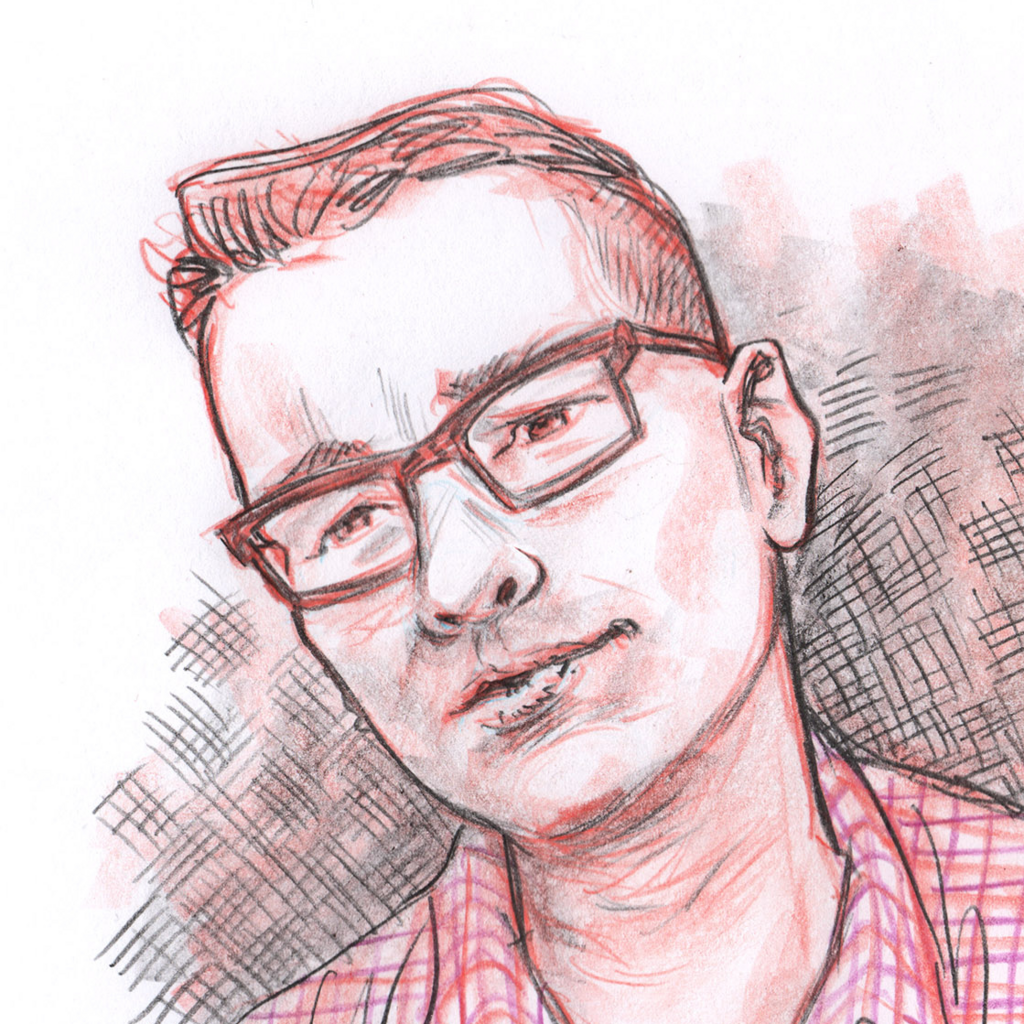
Jonathan Kohl, Author of Tap Into Mobile Application Design
A Leanpub Frontmatter Podcast Interview with Jonathan Kohl, Author of Tap Into Mobile Application Design
The book by Jonathan Kohl on Leanpub

Jonathan Kohl - Jonathan is the author of the Leanpub book Tap Into Mobile Application Design. In this interview, Jonathan talks about his background, how he got into Computer Science, how publishing his first book changed his career, ethics in app development, his latest book, and his experience writing and self-publishing.

Jonathan Kohl is the author of the Leanpub book Tap Into Mobile Application Design. In this interview, Leanpub co-founder Len Epp talks with Jonathan about his background, how he got into Computer Science, how publishing his first book changed his career, the tech scene in Calgary, ethics in app development, his latest book, and at the end, they talk a little bit about his experience as a self-published author.
This interview was recorded on August 4, 2022.
The full audio for the interview is here: https://s3.amazonaws.com/leanpub_podcasts/FM209-Jonathan-Kohl-2022-08-04.mp3. You can subscribe to the Frontmatter podcast in iTunes here https://itunes.apple.com/ca/podcast/leanpub-podcast/id517117137 or add the podcast URL directly here: https://itunes.apple.com/ca/podcast/leanpub-podcast/id517117137.
This interview has been edited for conciseness and clarity.
Transcript
Len: Hi I’m Len Epp from Leanpub, and in this episode of the Frontmatter podcast I’ll be interviewing Jonathan Kohl.
Based in Calgary, Jonathan is a consultant and product manager who specializes in applications for smartphones, internet of things devices and wearables, as well as a popular conference speaker and writer.
You can follow him on Twitter @jonathan_kohl and check out his website at kohl.ca.
Jonathan is the author of the Leanpub books Tap Into Mobile Application Design.
In the book, Jonathan covers a lot of ground in mobile app design, with the aim of helping you create an engaging app that people will want to use and, crucially, won’t want to delete.
In this interview, we’re going to talk about Jonathan’s background and career, professional interests, his books, and at the end we’ll talk about his experience using Leanpub to self-publish his book.
So, thank you Jonathan for being on the Leanpub Frontmatter Podcast.
Jonathan: Thanks so much for having me Len.
Len: I always like to start these interviews by asking people for their origin story. So, I was wondering if you could talk a little bit about where you grew up, and how you found your way into the world of mobile app testing and design?
Jonathan: Origin story - well, I was at the University of Lethbridge, south of here, where I grew up. South of Calgary as you mentioned, where I’m currently at.
I was on my way to law school, and got lost on the way. There was enormous demand for Computer Science. I never really thought I was good at computers, and I wasn’t that good at math. I knew you needed to do well in logic to do well on your LSAT, and things like that for law school. So, I started taking philosophy and logic courses.
I was studying some really deep stuff on Bayes’ theorem. My prof said, “I can’t help you anymore. Why don’t you go talk to Doctor Cowan - he’s a math guy.” I went, “Oh yeah, he teaches my linear algebra class.”
So I went and talked to Doctor Cowan. He said, “What are you doing with this baby logic? Everything is getting dumped into Computer Science.” “I’m not very good.” He’s like, “Well, these are problems that can be solved, so why don’t you think about it?”
In the meantime, I was studying data general in another class, and reading Soul of A New Machine.
As you know, a young man around twenty - the “Work hard, play hard” culture really appealed to me. A little bit of a wild west kind of thinking, and not a stuffy corporate environment.
So I started taking some courses. I almost immediately got job offers from companies that were just desperate for help. I ended up taking a co-op work term in a company here in Calgary, and I just loved it. Like, “This is for me. I love everything about software development, and all the stuff about the market, and customers and users, and then the technical stuff.” I got really obsessed with the UNIX operating system, and specialized with that. We also worked with mainframes.
You had to apprentice with someone. It’s not like now where you can read all these things. There were multiple schools of thought, and you picked a person, and they were your guru. So I had this really varied experience.
Of course, at that time, this is the late ninetiss, the web was really taking off, and ecommerce, and things like that. So I found myself, by day working as a co-op work term student in quality assurance. By night, doing anything for an ecommerce startup.
When everything fell apart in 2001, with the dotcom crash, I had this sort of like, “Okay, I have a broad base of training and I’m out of work, what should I do?” I did some naval gazing, and decided, “Really U want to do software development work. I want to work on products in particular.”
I stuck with that for a number of years, and then became a consultant. I became quite well known in the quality software testing world as a consultant. I wrote the book Tap Into Mobile Application Testing. That addressed a gap. At the time, there was a lot of earlier mobile phones. But there wasn’t anyone really talking about what to do with smartphones, which really combined a lot of technologies.
Big surprise - I was doing a keynote at a conference in California, and I announced that, “I have my first version of this book on Leanpub,” and I created a QR code. They set up at a conference table, people started downloading it like crazy. Then I started getting calls from all over the world, “Can you come help us?”
That kicked off a couple of years of consulting with mobile. But what a lot of people didn’t know at the time, was I was trying to get out of software testing and switch careers. A lot of my work wasn’t really sort of technical QA, it was very product-focused.
I took some time off and did some navel-gazing. “Do I want to go do law school, and scratch that itch I never scratched?” Or, “Do I want to do something else?”
I came to the conclusion, “I really want to do this. This is what I’m built for. I love identifying and solving problems in the Computer Science world, app development world, that’s really for me.”
So I started to focus on product management. Mostly, to begin with, because you can make your own role out of it.
It covers off all the things that I like to do: looking at product marketing and market intelligence, and looking at product strategy, and then the product development, the software development part, I was really familiar with.
In lifecycle management, “What do we do next? How do we manage what we have?” Or, “What do we build next?” Depending on the project or the timing, I can focus differently in each of those four areas. So that really took a hold, and started to take off on me.
But then my health reared its ugly head, I guess you could say? I ended up with two extremely serious health issues. So now, while I do a bit of product management work and consulting, it’s mostly remote consults, because I’m disabled right now. Doing a lot of rehab to try to get back where I can work on projects, and things like that.
But right now, I’m mostly doing advisory for short term things still. Keeping my oar in, and staying up to date with the latest JavaScript framework and whatever else is new. Plus the forces in the market, and things like that, are especially fascinating right now.
So my origin, I was dragged into it, because it looked interesting. Then, I’ve had a couple of times where I’ve thought, “Do I want to start over?” But I came to the conclusion that, “No, this is where I want to be. If I was independently wealthy and could do anything I want, I’d get up in the morning, and I’d want to do what I do.”
Len: Thanks very much for sharing that really great story. It’s interesting you talk about “keeping your oar in.” I think you might be a little bit modest there, given that you’ve just written this 600-page, really amazing book about mobile app design. Which is more than keeping - you’re rowing for other people as well, and we’ll get to that in a little bit.
But I just wanted to ask you a question. You mentioned you’re from Calgary. I’m a prairie guy myself, I’m from Saskatchewan, and my parents have lived in Calgary for the last twenty-five years. So, I could maybe answer this question a little bit myself, but you would know a lot better than me. This is a question I ask of guests all around the world, what’s the tech scene like in Calgary these days?
Jonathan: It’s variable. It’s not as good as it was when I started. We’ve had a bit of growth lately that’s making things more interesting. But Alberta has a really big problem with capitalization of software projects. So there’s a little bit of feast and famine.
Then, we never really quite realize what we could here. Because oil prices go up, or something like that, and the money flees to oil and gas, because that’s the big thing in the province. We’re known as this oil and gas center, but there’s so much more, and a lot of it is because Calgary draws in all these people.
Often people will come here, from everywhere in the world, maybe if they’re a physicist or in some technical role. Then people see the ossified world of energy, and go, “Let’s do something new.” There’s a real maverick way of doing things that’s really accepted here, because of that industry.
So, a lot of software companies get off the ground, and they’re adjacent to oil and gas. Or oil and gas people get together, and do something completely different. But the missing piece there is that funding model. We don’t fund as well as places like in Vancouver or Toronto, and things like that.
So, it’s variable. I would say, we’re definitely in an uptick now. It’s definitely better than it has been. But when I first came here, it was crazy with - I would go to other places, “We’re hearing all these great things about Calgary.” But I think with the - there was a huge amount of mergers and acquisitions. So, a lot of small scrappy Calgary companies got bought up by these giants. They’re less interested in innovation. So you’re not getting as much of the oil and gas innovation money. Then the capitalization for regular projects - you get it off the ground, and it dies a little bit.
There’s a lot of unrealized talent here. But there is a lot of talent. So I think that, we can’t stay like this forever, and it’s a problem a lot of people here locally have been working on. I expect great things in Calgary over the years, on the software front.
Len: It’s interesting actually, you mentioned there’s this huge industry, oil and gas, in Alberta. Which means there’s a lot of money around, and there’s lots of ups and downs.
In places where there’s lots of people with lots of money, there’s lots of people who want to make apps sometimes, who have a great idea, and have some money, and want to do it.
This is a bit of a selfish question, I guess, because I’m just very curious about the work as a consultant that you’ve done in the past. But what do you do if someone comes to you with a terrible idea?
Jonathan: Well, that’s extremely common. Because the people who can capitalize, tend to be the ones with the very rearward looking old tech, or a lot of bad ideas. A lot of people who’ve made a lot of money aren’t used to people challenging them. So they come up with an idea, and they tell their friends, and no-one wants to tell them that the emperor has no clothes.
So they come to me. There’s a lot of really bad ideas that have a lot of funding. There’s a lot of world-beating ideas that die on the vine, because you have some nerdy guy like me, who is hyper focused on this thing, and that doesn’t resonate with the lenders or the investor types. Whereas the people who already have a lot of money, have the credibility there.
So it’s almost an inverse relationship. There are some who have pretty good ideas. Some of them are bad, and I work with them bluntly and gently to - especially on the market intelligence side, “Okay, this is a really good aspect, and have you considered doing X or Y?”
The first thing I really need to do is to determine, “Is this just a pure vanity project?” They’re not going to take any feedback, and they’re going to dump a bunch of money into a certain point, and then - wo, you’re going to be working for a low wage, on a shoestring, with no one listening to you, and then how that got cancelled when their financial advisor has a fit.
Or is it, “Is their ego wrapped up in it?” Which it needs to be, to take a product from concept to market. But, “Are they willing to take feedback and look at evidence, and pivot a little bit?” That’s a big test there. You have to just do it. You have some tough meetings. You see how they react. You see how they come back.
But sometimes, like I had - I had one that was frighteningly illegal. It violated - they wanted to use multiple APIs. It violated every API. If you try to do what they did, you would get banned from ever developing for Apple or Amazon, or any other big players. There’s consumer protection laws, privacy laws. Like there’s no jurisdiction which you could roll this out, and I had to get legal advice.
“This is where we’re at, and you just can’t move forward with this. The kernel of the idea’s good, but you’re going to really need to go back to the drawing board.” They basically said, “No, no, we want to move forward.” I guess enough people told them that they couldn’t do it, so they didn’t do it, but -
Then, a lot times, you end up with - it used to happen a lot, if I was out anywhere, I would get accosted almost every coffee break or lunch break or something, someone would come up to me. Laypeople, they were not in the industry, “I have this idea, what do I need to do?” I’m not “Develop an app the easy way,” I’m “develop up an app the hard way.”
Because I’ve been all around the world helping companies, and I see the horrible things that can go wrong, and the harm that can be done to people. You can’t just sit there in your basement and crank out an app that’s going to hit all the high notes. You might be able, and then survive - you may be able to come up with an initial concept and prove the concept, and then move forward.
But there’s a lot of work. Especially now, as we interact with multiple systems and there’s a lot of legislative things, and a lot of upheaval in society right now, there’s a lot of things you have to get right, as you said, so that you don’t create an app that people are going to delete.
Len: It’s really interesting, when people propose doing bad things, one thing, if you’ve got any experience at all, what you really want to say is, “You’re going to get found out. You will get found out eventually.” So, it’s probably a bad business decision in the end, if that’s all that the person has in their spirit for you to appeal to, there’s at least, “This is impractical in the long run.”
But actually, I’m really glad you brought that up. Because, as I said, your book covers a lot of ground. You’ve got this really great, big section on ethics in app design. You mentioned just now, I didn’t know that you had a bit of a background in philosophy. I wanted to talk to you a little bit about that. People might be surprised to hear that there’s an ethical dimension to app development. If you could just talk for a couple of minutes about your approach to that, to explaining that to people?
Jonathan: Sure. It goes back to the post-dotcom area, when we started to crawl out of the ashes, and people started to get onto this idea about more distributed, ubiquitous computing.
But from that, all the data that we were generating, how do we capitalize on that? I worked on some big retail systems. I worked on one system, they were extremely resistant to a loyalty program, but then they were getting crushed by their competitors. Because a loyalty program is all about getting that data, and trying to do a better job for your the people that use your software, services, or whatever it is.
What came out of that was that a lot of thoughts of, “Well, let’s just collect the data, and we’ll do something with it.” I think that has been a real popular idea.
What we’re finding out now, is that something that was done with it can be really bad. The way data can be used against people. People will wonder about the surveillance advertising systems and things that we have. They’re probably pretty harmful for society, and there’s a lot of information out there that can be used for bad purposes, by bad actors. And, so, there were a lot of us, a number of years ago, that would say, “Well, you don’t just collect the data.”
I was reading an article about a store that could tell whether a woman was pregnant or not, before they knew. There’s nothing crazy about it from a technology perspective, it’s just that we’re able to get all of this data and categorize, and run lots of math really quickly, and we’re pretty good at predicting certain kinds of things. There’s a lot of implications around people’s health, and what their personal views are, going from whether you belong to certain groups, or whether you’re worried about rights or things like that. But then there’s just things like getting your data stolen and held for ransom, and things like that.
So, a number of years ago we would be saying, “You shouldn’t be doing this. You shouldn’t do this.” There were those of us where we would have lines, where we didn’t want them to cross, and we wouldn’t work for certain organizations. That really made me think about ethics from a formal perspective. Like, what do we mean, and what is the right thing to do?
You end up in some of these conversations with companies, where more relativism comes into play. They’re like, “Well, in Canada, we do this, because it’s the law of the land. But we bribed government officials in this other country, because that’s the law of the land.” It can get pretty tricky and difficult.
One of the things that I use in the book, that I found is useful, it’s not perfect, but it’s a framework called Ethical OS. I think the key is, we focus on the here and now, and on the next thing, right? “I want to build this thing, because I see a gap. Either there’s a feature or a whole app that needs to be developed, because people need it and they want it, and I can feel it and I know it. We can get this thing done, and we get it out to market at the right time, and it’s going to be a success. I can help people -“
We don’t think about the long term. That’s not the industry we’re in. Because, well, we throw away the stuff we build today, and we build new stuff tomorrow. But what we’re seeing with dark patterns and design, and people having their data used against them, and fiddling with algorithms and generating outrage, and these kinds of things.
We’re starting to see these problems with addiction and other things. Those are long term effects. We were very much of the mindset of, “Just do it, and worry about that later.” The “later” has come now.
So, I like to look at frameworks, any framework that you can use that helps you look at the long term. Ethical OS is one.
Then, I’m a big McLuhan-head, Marshall McLuhan, he was an Albertan. He talked about media. There’s an exercise I love to do with groups. It’s called a “Tetrad.” You look at the effects of media. What does the new media do that’s good, essentially, that we like? But then, what does it cause to go away? It can replace something that was nice, or that we enjoyed in society, or as humans and the individuals.
Then, what happens when it reverses? Like it’s not - social media’s great for connecting with my aunt and uncle and my long-lost relatives. But then, my long-lost relatives are posting all that conspiracy theory stuff that’s making my brain rot. Then there’s lots of things, where it’s like we have a good thing, and there’s too much of a good thing, and we don’t have mechanisms. Then we do that at scale, and there can be a lot of problems there. So, there’s a number of frameworks.
Ethical OS is number one in software, so I use it quite a bit. It’s a good system of thinking, that helps you hang your hat on something that’s measurable, and you can agree, “What are the values that we want to uphold as a team?”
More importantly, “What are the effects that we want to have on others?” Rather than, “Well, it’s all relative anyway,” or, “Do unto others as you would have them do unto you,” you take it a step further. Or, “Do unto others as they would have them do.” Or what they - “Treat others the way they want to be treated,” essentially.
But then really looking into the long term, like, “We’re doing this thing, and it’s sticky and people like it, but could it hurt people in the long term? Or could something happen at scale? Are we collecting data and we’re not securing it well enough?”
I think that you can end up in endless debates. If you have a project pedant that I mentioned, someone who immediately moves to defining words and ending up in rhetorical contests, rather than dealing with the problem, you will get nowhere without some a framework. So, I think it’s important as a team to have discussions about, “What do we mean by ethics? What can we do that’s measurable, where we can compare what we’re doing with where we want to be? How do we want people to treat each other using our system, and how do we want to treat those people?”
Len: It’s really interesting. You can see in the detail that you just went into now, but also the detail that you go into this section in the book, that very hard-won experience in very like down to earth contexts, that you’ve learned these lessons, and that you’ve got ways - not just that you learned them, but really great ways of explaining them and making them clear to people.
We do have a bit of a hard stop for our interview today, but I wanted to mention, we just focused in on this one section of the book. It’s just one chapter of many. They all go into the same detail in the same way, but in the different things that the chapters are about. So, if you want to get - this is just an introduction to one part of a book, that talks about a lot of different things. Including knowing your design material, and what it means to even just frame design.
In the last part of the interview, when the guest is a Leanpub author, the selfish question that we save for the end of the interview, is - you’re a little bit of an OG Leanpub author, you’ve been around for a long time. I wanted to ask you, if there’s one thing, one magical feature we could build for you, or one thing that you really hate about Leanpub, that you’re always shaking your fist at us for, that we could fix for you, is there anything that you can think of, that you would ask us to do?
Jonathan: I don’t have any huge ask. The UX is a little awkward, there’s a lot of options. So, there could be some massaging on some of the workflows there. I find myself hunting and pecking for things sometimes. But it’s a great platform. What I like about it - I remember, I was talking - I started, I think I started three books on it, and I did Tap Into Mobile Application Testing. Brian Marick was asking me about it. I said, “Well, in theory, you just publish it as you go along.” I use a text editor. So I’m on a Mac and I’m old school. I have BBEdit, and I save it in Dropbox, and I click a button, run a build script, and it’s there.
I worked with another technical publication with a book that - with a co-author, that didn’t end up getting published, and it was technical-focused, but we needed to use different kinds of tools. There were these scripts, and I spent half my time looking through Ruby and Perl scripts, debugging. So, this was just - there’s a simple extended Markdown language. I press a button and it does a build. That works the way I work, as a technical person, I like to write in text editors, I always have. So, that’s the part I really like, and I hope sticks around. I know that a lot of other people, they want to use their productivity software they want online, and you’re supporting and moving in that direction, which is wise.
But for me, I like the simple OG features of Leanpub, that attracted me there in the first place. One of these days, maybe I’ll actually use it as intended, and not just, “After a number of years, here’s my giant tome.” I loved how Marick wrote, where he’d write a chapter, and release it, and then he’d get feedback, and he’d update the chapter, then he’d have a new chapter, and he had this really nice cadence, and it was like, “Well, I can really buy into this.” I like to be there with my fingers in the book as he’s writing it. You go back and you look at a chapter. You’re like, “Ah ha, that was my influence there, I helped him explain that better.”
That was a super cool - that’s probably not everybody’s cup of tea, but that was a really cool experience to go through with someone, to - he’d say, “Well, I’m doing more than I expected. I think I can raise the price of the book by 50 cents.” It was a really fun thing.
I think that people who are less wordy than me, and work a little faster and can have that time like Brian did, it’s like, that’s the ultimate, I think, appeal of Leanpub. Is that, people are growing a book, and you’re along for the ride. That’s a really cool feature.
Len: Yeah, it’s funny. “Never” is a long time, but I think there will never be a day when you can’t use a text editor to write a Leanpub book.
Jonathan: That’s reassuring.
Len: I mean, I’m the resident non-technical person, and I write in Emacs, so if that gives you any indication of our devotion to plain text technology…
Well, Jonathan, thank you very much for being on the podcast, I really appreciate it. Thank you very much for publishing another book on Leanpub, and another really great one.
Jonathan: Thanks for the opportunity to speak today, and thanks so much for a great platform, I’m looking forward to a new project, hopefully a little smaller next time.
Len: Thanks.
Jonathan: Thank you.
Len: And as always, thanks to all of you for listening to this episode of the Frontmatter podcast. If you like what you heard, please rate and review it wherever you found it, and if you’d like to be a Leanpub author, please visit our website at leanpub.com.