
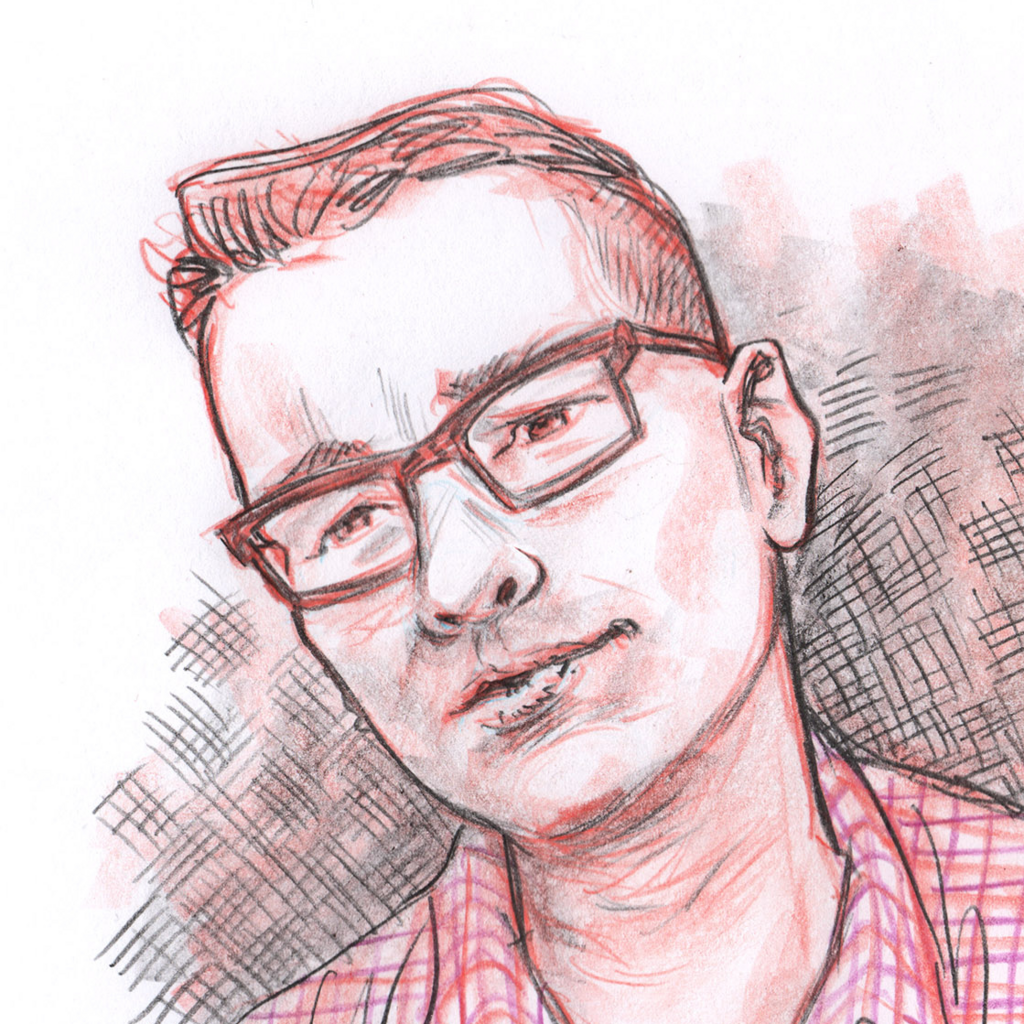
Special Guest: Jane Friedman, Editor of The Hot Sheet
A Leanpub Frontmatter Podcast Interview with Special Guest Jane Friedman, Editor of The Hot Sheet
Special Guest: Jane Friedman is a book publishing industry expert and the editor of The Hot Sheet industry newsletter. In this interview, Leanpub co-founder Len Epp talks with Jane about what she's been up to since she last appeared on the podcast, her book ...

Special Guest: Jane Friedman is a book publishing industry expert and the editor of The Hot Sheet industry newsletter. In this interview, Leanpub co-founder Len Epp talks with Jane about what she's been up to since she last appeared on the podcast, her book The Business of Being a Writer and what you need to know about being a writer from the business side of things, the tension between money and art, and how the pandemic has been affecting many different aspects of the book publishing industry.
This interview was recorded on May 22, 2020.
The full audio for the interview is here: https://s3.amazonaws.com/leanpub_podcasts/FM156-Jane-Friedman-2020-05-22.mp3. You can subscribe to the Frontmatter podcast in iTunes here https://itunes.apple.com/ca/podcast/leanpub-podcast/id517117137 or add the podcast URL directly here: https://itunes.apple.com/ca/podcast/leanpub-podcast/id517117137.
This interview has been edited for conciseness and clarity.
Transcript

Len: Hi I'm Len Epp from Leanpub, and on this episode of the Frontmatter podcast I'll be interviewing Jane Friedman.
Based in Charlottesville, Jane is a very well-known expert in the publishing industry and popular speaker and consultant on business strategy for publishers and authors alike. In addition to having her work and expertise being featured everywhere from Publishers Weekly to the Washington Post, PBS, CBS, and NPR, she also has a great course on The Great Courses that I highly recommend, called "How to Publish Your Book", and recently, in 2019, Jane was awarded Publishing Commentator of the Year by Digital Book World.
You can follow her on Twitter @JaneFriedman and check out her website at janefriedman.com, and you can sign up for her really amazing publishing industry newsletter The Hot Sheet at hotsheetpub.com, which is just an incredible resource for both authors and for anybody working in the book publishing industry.
In this interview, we're going to talk about Jane's work, recent developments in the publishing industry, and we'll dive in to the impact of the coronavirus on everyone right now.
Jane: Thank you Len, it's great to be back.
Len: Normally I like to start these interviews with a deep dive into the guests' origin story. But as you just suggested about being back, you've already done that - when I first interviewed you for the podcast way back, way back in October, 2017.
So, I was hoping that maybe this time we could start the interview with you talking a little bit about what you've been doing for the last couple of years, up until 2020 hit - and then we'll start a new conversation when you've had a chance to talk about that.
Jane: So the last few years - in many ways, it's more of the same as when we last spoke. I'm still doing The Hot Sheet - the paid newsletter that's all about the publishing industry, news and perspective and analysis for an author audience. Although I'm doing that solo now. I did have a partner on that, journalist Porter Anderson, and I took it over last year. So I'm now running that solo.
The other thing that happened is I had my book come out from The University of Chicago Press, The Business of Being a Writer. This was something I really wanted to do for the classroom. So, specifically for writers who are getting MFA degrees or studying formally, and really needed what I consider to be a wakeup call about the difficulty of making a living as writer, and what it means to do that.
Because so often you're not earning primarily from book sales, you're earning from somewhere else, especially in your early career. Once you're established, of course it's more possible. But I don't think - especially when you're a creative writing student, I'm not sure how aware they are of the challenges.
Len: It's really interesting. So you mentioned an MFA. That's a Masters of Fine Arts, for those who aren't aware. But for those who are, this is a route that people take through university towards a career in writing. It's often people that do - the reason it's Fine Arts, is because it's creative writing. So it's people who are doing sort of short stories or novels and poems and literature, basically.
Jane: Right.
Len: As opposed to other kinds of writing, typically. And what are the things that people who - not to generalize too much, but who sort of - people are often very young, and haven't necessarily had careers before when they do MFAs. What are the things that they actually really need to hear?
Jane: In the programs, they're really focused on craft and technique, and studying literature. Their professors are often in a position where they don't have to think about the marketplace for their work. Their salaries come from the university, they have a full-time teaching job. And they have very varying levels of experience when it comes to selling your work, or making a living just purely from writing.
So the issue that's come up, especially within like, let's say the last 10 to 20 years, is those teaching positions - I mean, there's so few of them. And the number of creative writing students - this is a degree that has flourished like since 1980 - the number of these degree programs have increased. So you have this huge number of students graduating with these degrees, really focused on what has been the art and the craft of writing , without the business side of what it means to earn a living from it.
In liberal arts institutions, they don't want to have the business or the marketplace discussion. You're supposed to somehow have higher intentions than money. So it's just - I find there's this missing piece, that I hope that the book provides, as well as all of the resources that I try to offer online that are free, that help students see as well. And there are also lots of adults. People in their 20s, 30s and 40s go to these programs. It's not just conventional college-age students.
So trying to help this entire community see, basically how to build a business model. The different ways that that happens, what it means to share your work with an audience online in a way that helps build a career and builds a readership. I don't think these things are antithetical to the art, or to literature, but they're often treated that way in an MFA program.
I think that's changing a little bit, because professors see that there's a problem with them training these writers to go and do something that they can't really pursue fully unless they have a day job. They feel like - you don't want to mislead them as to the challenge. So things are changing a little bit, and I'm hoping the book helps provide a tool that's useful in pushing that change forward.
Len: It's such a fascinating topic that one could talk about forever - the idea that money and art are kind of antithetical is not even true now, in a sense - if you know what I mean? If you read about people like Damien Hurst, or even Picasso and such. And if you know anything about Dickens, he liked money and had no problem sort of starting new magazines and expanding the outline of his novels if they were being serially published, and they became hits - which is one of the reasons I always like to say to people, "Why are those 19th Century English novels so big?" It's because they were being published chapter by chapter, and they became hits. The short ones are the ones that - well not always, but weren't that popular.
Do you have a sense of when did this sort of - I'm going to call it, in a loaded term, "modern" phenomenon of money and art being seen as antithetical emerge in western culture?
Jane: Some time ago, I was tasked with giving a key note talk at the Muse and the Marketplace - which is a big writers conference held in Boston by GrubStreet, a non-profit organization that serves writers. And the director basically asked, "I want you to talk about how artists or writers make money - what the history of that has been like, and where we're going."
I actually looked a little bit at this question of where things took a turn. And a lot of it has to do - at least as far as my research went - with the rise of literacy, and when books became a much more commercial product. Prior to that time, reading was a more - it was an activity pursued by people with leisure time and education. But as newspapers and magazines started to take off with the rise of literacy, as did books, you started getting more forms of what we call "light entertainment," or what they called light entertainment then - and we still do. Like romance, mystery, ghost stories - these sorts of things.
And so you then kind of had this bifurcation in the market of the more "Literature" with a capital "L," poetry, the classics - and then the things that were being written and published to entertain the masses, love stories and things. That happened in the 1800s roughly, and it's been the same ever since. I mean there's still, I think, a lot of tension between the people who pursue writing in that more literary MFA sense, like the Jonathan Franzens of the world, and the people who write and publish genre fiction - the commercial fiction, the James Patterson or the romance.
And you saw that tension manifested years ago when there was the Oprah pick of the Jonathan Franzen novel The Corrections, one of the biggest scandals in publishing - because it caused Oprah to shut down her book club when Franzen suggested that he wasn't comfortable with his literary novel being chosen by this mainstream TV show, like it damaged his literary credibility. I think he might've since apologized. But that sort of tension has been with us a long time.
Len: It's really interesting. There are so many strange contradictions in the discourse, and the way of thinking that people have. I mean, for example - I've never gone near a Jonathan Franzen piece, because everything I hear about him, I've ever read about him, made it pretty clear to me that there's not a word he can write that I'm interested in reading. And the idea - there's this weird idea that everybody wants the money, but everybody pretends they don't. And so it sort of gets offloaded - the work of getting the money gets offloaded onto the publishing company or the publisher that is supposed to play the role at once of doing all the dirty work, and elevating the author's status by virtue of doing the dirty work.
Jane: Yes.
Len: Which is just such an interesting feature of the way people typically think about it. But we live in a world, fortunately, where things have changed in the last - let's say 10 years or so, with respect to self-publishing. Not only that it's become easier to actually make a living self-publishing, but attitudes around it have changed as well. And this is again one of those things where like we could talk forever about it.
If you actually understand the history of publishing - Homer didn't have a publisher, Nietzsche self-published his thesis. Walt Whitman self-published Leaves of Grass. They're - I mean, in a sense, Dickens self-published many of his works, because he owned the magazines they were published in, and things like that.
But how do you see - in your interactions with authors nowadays, do you see people still approaching self-publishing sometimes as a little bit dirty?
Jane: It depends on kind of the culture that you grew up in. The books of literary culture you grew up in. And also, I think to some extent, age. So for instance, a lot of the writers or authors I speak to, who are familiar with the term "vanity presses," or "subsidy publishing," and remember seeing those old ads in Writer's Digest in the 80s - I can't remember the companies now, Dorrance might have been one, where you pay thousands of dollars, and then you have thousands of copies of your book sitting in your garage. There's the stigma attached to it from those older versions of self-publishing. Some of which have stuck around, amazingly.
But if you look at younger people - and I use "younger" with a broad brush. There's some old people who have younger attitudes, and are exposed to the many different ways that people publish now. But people who use Wattpad, for example. Or if you look at the Instagram poets, which pushed poetry back into a popular selling category. This participation in the literary community - even though it might not be considered formal self-publishing, to me it's just like Dickens putting out his magazines and his serializations.
So, yeah, I think largely the stigma has fallen away. And what's become even more interesting to me, is how self-publishing authors have, I think, a healthier relationship to money, to the art-money tension, which can be productive, than traditionally published authors. And it's probably because they're closer to the business, they see what succeeds. They have to make choices every day about, "Am I going to pursue this series or not? Am I going to do this next book? Does it make sense to continue with something that I believe in, but that clearly isn't earning me any money?" So they have this control, and a sense of responsibility, if they're using income from that self-publishing activity to provide for their family.
There's a really great podcast called Six Figure Authors - it's hosted by three authors who write in multiple genres, but they are particularly strong in science fiction and fantasy. They're talking about these sorts of challenges all the time. And it's - I don't think they're any less dedicated to the quality of their work than a literary author. But they're also excited to talk about what's working, in terms of building their readership.. And that's rare among traditionally published authors.
Len: Yeah, and unfortunately so. Because being an author is running a business - as you write about in your book, and as other people like - we've had Orna Ross on the podcast in the past, for example - who's very straightforward about that.
It's funny you mention the scams sort of still exist. Which is - it's a funny space to be in. Because you can just go out and make money on your own now. And the stigma around self-publishing has gone, but they still exist.
Just to share a brief story. So this effected my life. About a year ago, I got a call from my parents. And we talk like once a week on Sunday nights, right? So to get a call from my parents in the middle of the afternoon, is like literally like, "Oh no, did Grandma die?" Or something like that - not to make light of that - and I get a call from my parents and they're like, "Someone contacted us from a publishing company. They want to publish a book by you."
Jane: Oh dear.
Len: "We just thought it was very serious, to let you know." And I explained to them, I found it like - it was to a number that like I didn't even remember that they had, from like 10 years ago, for their landline. And I explained to them, "There's no way a serious person contacted my parents when they were trying to get in touch with me." And I thought I'd explained the whole thing to them. I won't name the company, I figured out what it was in the end. But a couple of days later, I got a call again from my dad, saying, "I know you told me not to tell you about this, but they called again. It's really serious." Just the idea of, somebody's job is just to sit in a boiler room at a desk, calling people - trying people's parents, elderly parents.- trying to get them to influence their grown children to sign up. And that it works some percentage of the time.
Jane: Oh yeah.
Len: Really incredible.
Jane: Yeah. It is heartbreaking to me, especially within the last few months. These companies are now sending solicitations or making these calls, telling people, "Oh, we love your work and we can publish it for $1,200." Which is the exact amount of a stimulus check in the United States.
Len: Oh my God.
Jane: It's just like, this is not what anyone needs to be spending their money on right now. Unless of course they already have - they're already knowledgeable, they already know what they're doing - but funneling your money to one of these companies is not at the top of anyone's list right now, or should be.
Len: Oh boy, that's so - that's so gross, I'm sorry to hear about that latest iteration. But it's been gross for a while. And so yeah, if anyone's wondering why to some extent, there might be still a little bit of a lingering suspicion around self-publishing, it is because there are kind of bad operators.
Although of course, there are bad operators operating at every level as well.
It's kind of hard to keep a hold of the time line, but there have been lots of controversies in the publishing industry. People listening to this podcast who aren't familiar with the book publishing industry, might not know it's full of controversies.
There were things about The Romance Writers of America. There was something with the CEO of Macmillan, which is a big publisher, who tried out a new library lending program that didn't work out - and things like that. Many other things like that, actually. But they've all kind of gone away, I think, anyway. Because something else has happened, which is the novel coronavirus has hit.
And so I wanted to start - well, let's start from the ground level, and we'll end up at the higher level of how this has affected the publishing industry.
It's a complicated industry - particularly the physical side of things. It has everything from paper production to distribution to returns and things like that.
But so, you're a very independent person - you have The Hot Sheet, you do lots of consulting, and you do lots of speaking. How has COVID-19 and lockdowns, anything like that, affected you?
Jane: I've been very fortunate in that my own business is pretty diversified, so I don't have one piece of income that probably exceeds more than 40% of my overall income. A lot of the work that I do that's highest volume, that really serves as the foundation, is editing and critique work and consulting work - which I've always done remotely or virtually via email or Zoom meetings. And that sort of business has been very consistent, I would say. Maybe it's even increased a little bit, since people are now at home, and they maybe have more time on their hands. They're more available to work on these sorts of things, even if they are distracted.
I actually reached out to a couple of colleagues who offer services, like editing companies that are communities of people who have formed a co-op to offer editing services. I asked if their business was up or down, and there was two that I asked - they were up by say 10% to 15%, versus last year.
So much depends on what little piece of the industry are you are working in, and does it depend on you having to be out speaking? Does it depend on in person events in some way?
Now, I do have some portion of my business that's very event-driven. I was supposed to go to 17 total conferences this year. I only got to two, before things hit. And I've cancelled the rest.
I mean, most of the events had to cancel anyway, or they've postponed, or they've gone online. But for those that haven't made the decision yet, at this point, I'm not willing to commit to anything in-person, because of the tremendous uncertainty.
So I have lost that chunk of income, but it was never a big piece of my business. It was maybe 10% to 15% of the overall business? And I can fill that in by doing more online teaching, which has always been pretty fundamental to what I do.
I've started just staying at home, and being parked here has given me time to think more about what I want the business to look like in three years or five years. To think about how I can do better business development on The Hot Sheet, the paid newsletter - which often gets short shrift, because I'm just so busy keeping the machinery working, or I'm busy traveling. I don't have a lot of time to spend on, "Okay, how can I retain my subscribers?" Or, "What more can I do to boost the return on that particular product that I offer?"
Len: With respect to The Hot Sheet, I would say it's - it's funny to hear you say you give it short shrift. The Hot Sheet newsletters are very comprehensive emails, and lengthy. As you said, you're referring to the kind of like customer development kind of side of things. But the content itself, does not get short shrift - that's for sure. I always like it when they show up, and set aside a block of time to read them.
With respect to conferences though, I've been sort of watching this from afar. I'm not a big conference-goer or conference speaker myself, but it's been really interesting. I mean, O'Reilly. who do, who did tech conferences as a big part of their business, were very quick - I've brought this up a couple of times on the podcast. That was one of those - we all have our little moments, where it's like, things get real. And when O'Reilly permanently closed their in-person conferences business, that was a moment for me. Because they're a pretty sophisticated bunch, and for them to do that was a sign of things to come, perhaps?
But there were other organizations that didn't respond so quickly, and were even doing things like saying, "No, we won't refund your conference fee that you've paid, what we'll do is we'll just defer with some voucher or something like that."
I guess my question to you is - I mean, I think we know your opinion about what they should be doing, based on your own decision about not attending. But why is it that some institutions have been slower, rather than others, in the book publishing industry in particular, to cancel conferences?
Jane: When I worked at a traditional publishing house, there was an events division that was quite profitable, and it ran events for different enthusiast communities. When I was at Writer's Digest, that was one of the communities - and there were writing conferences held about twice a year. There was also a really big design conference. I think it attracted more than 10,000 people, or close to it. And there were other events like that. Both very enthusiast-driven, and then a little more casual events as well.
And I bring that up just to say - I've seen those profit and loss statements, I've seen some of the contracts that events make with convention centers and hotels, and I think they're brutal. I think they're some of the most brutal contracts I've ever seen, as far as what you're committing to, when you're running an event, and the sort of risk financial risk that's involved. So I do not envy any event organizer who is trying to make the call of what to do. Because whatever the events contract is with their venue, they may still be on the hook for numerous costs. But how are they going to pay those if they don't have people coming, or if they have to process refunds or -?
So it's a huge mess. I wouldn't even know where to begin in tackling it. But I do think that - it was London Book Fair that felt like eons to make the call to cancel. It was maybe only a week before it was set to start, which is a long time when you consider how many people were traveling internationally. I was supposed to go to London Book Fair, and I was biting my nails wondering. "Should I be cancelling my flights?" And then finally they made the call, which was the right one, of course. But I have to imagine that money is underlining the difficulty of these decisions.
Len: I can see what you're saying. I mean, if you think about it - if you were going to be running a big conference, and you have a contract with the hotel to offer discounts to people,they're going to be setting aside rooms, basically, in the anticipation of people coming. And they're probably going to have some protection in the contract that you make with them against the expense - the risk, basically of setting aside rooms.
Catering companies are like, "Well, we can't cater two events at the same time, so we've got to set aside time to do that - and we're turning down other offers from other people."
The conference thing, it's funny, because we sort of took them for granted, as it were - those of us who didn't work on the conference side of things. But there are so many ancillary services that are involved in putting together a conference.
Jane: Yes.
Len: Security guards, catering - things like that. And even if you think about things from the municipal level - it's like, there's influxes of tourists that are coming in all the time - and to cancel something like that, it's not just the conference company is going to lose some money.
Jane: Yeah.
Len: There's tons of different businesses and tons of different people that are affected by this.
I guess, on that note, I wanted to ask you - do you see these big book fairs coming back in 2021?
Jane: There are going to be fewer. I think the biggest ones where I think they've just become so integral to how business gets done - I don't see them going away. So, like if I had to name the three - that I would be shocked if they disappeared - it would be London Book Fair, Frankfurt Book Fair, and Bologna Children's Book Fair. The rest, if they went away, I would be like, "Yeah, they needed to go away."
Len: And for those listening who might not know why, why are some book fairs so integral to the business of book publishing and selling?
Jane: I think - for the three I mentioned - the rights sales that happen there. I'm not saying that they can't be done in person, but when you hear rights people talk about what happens at those fairs and how deals get done - and this applies, to be honest, I think more to publishers outside of the US; the US is so insular in how it publishes, and it doesn't have a lot of translated literature.
But in Europe and for a lot of the rest of the world, they're avidly looking at what other publishers in other countries are doing. And they're looking at translations and licensing and co-editions. And it's just harder to conduct business virtually in that way, and to get as much done. I mean, certainly they're doing that now - but I don't think that's the preference. I don't think it will be the preference in the future.
Len: Oh, that's interesting. So when we're talking about rights, basically someone - a publisher has bought some content from an author, and then they want to sell the rights to publish it in different regions of the world, or in different languages - and I'm just getting the image in my head of like, if you're at a conference and you've got this property to sell - you can sort of go in one room with some people at like 3 o'clock, and one room with some other people at 3:15, and they both know what's happening, and so you sort of get this febrile environment that -
Jane: That's exactly it. And for instance, in the UK - I think about 60% of their sales, generally out of the publishing industry, happen outside of the UK. So it's just incredible how much they - it's an interdependent system. And so when you have a UK publisher or a France publisher going to these fairs, they might be basically traveling all of Europe on a single exhibit floor. So it's very efficient, and it helps build relationships.
Len: That's really fascinating. There's so many things to talk about in the industry.
Just to sort of set the stage a little bit, one of the things that's happening in all kinds of industries, like the oil industry, it's one in particular that for some reason, I've become fascinated with recently. I did some work in that in my old investment banking days - but, is e way the coronavirus or the pandemic has been accelerating trends that were already there, and also exposing weaknesses that maybe people were having a hard time facing.
Can you talk a little bit about maybe one or two of the weaknesses in the book publishing industry that you think have been exposed, to people who weren't aware of them already, by current events?
Jane: Independent bookstores have generally ignored online commerce. So they see online commerce as - "That's Amazon. We're doing battle against Amazon. We're not trying to replicate the experience of Amazon. We're very community-driven. We want people to come into our stores. We're about selling print." Obviously that gets really complicated when you're in a pandemic. And so they have had to pivot so quickly, and look at solutions for still providing both print, as well as digital to their loyal customers.
I mean, on the flip side - the good news is that a lot of people are recognizing the value and the importance of shopping at the businesses in their region, or in their community, that they want to see exist after this is somewhat returned to normal, whenever that might be and whatever "normal" might look like.
But it's so much more work for these independent stores, if they didn't already have the processes in place, to try and like, "Okay, we've got to - how do we facilitate online orders? What technology or platform are we going to use? How will we handle delivery?"
And so a lot of them are finding - and at this particular moment, they're doing three or five times the work, for half the profit. And maybe if they had already had systems in place, they would've already optimized, and figured out what's going to work for them and their community.
Fortunately, I think because of the outpouring of support among readers and publishers and donations, many will be able to survive, if they weren't doomed prior to the pandemic hitting.
Independent book selling is already a razor-thin margin business, and so some were probably weak to begin with, and this is going to make it impossible to recover. But for those that have a really strong foundation, I'm hoping that this pushes them to do what they probably should've done all along, which is, have a way for people to order online, and order digitally.
And then - just quickly, I'll mention - there's a new retail storefront called Bookshop, which was launched by the people who do Lit Hub, they do Catapult. It's kind of like New York literary publishing central in my mind. But very, very innovative. Very forward-thinking in terms of technology. Which is unusual in the literary community, I find.
Bookshop launched in January, before anyone knew what was coming. And it's supposed to be the way that people can support independent book stores, without shopping at Amazon, but with the same seamless kind of experience that Amazon provides. There has been a huge acceptance so far of Bookshop. And I think they achieved the milestone they hoped to achieve in three years, in just three months. So that's the good news story coming out of it for the independent bookstores.
Len: That's pretty incredible. Just to talk about that a little bit. You mentioned donations. I think that you might be talking a little bit about James Patterson there, for example?
Jane: Yes.
Len: Who's a big time author who donates money to profit-taking businesses, which is an interesting thing to do. But the independent bookstore occupies a particular position in a lot of people's lives, where that's not a strange thing to think about. But Bookshop, their goal, I gather, was - like, if we can just get 1% of Amazon's book sales, we can thrive. We can sustain a thriving independent bookstore community across the country. I'm speaking specifically of the United States. And they've been succeeding.
Jane: Yeah, they have. And more power to them. I hope that people continue to use them after this is over.
Len: It's a really great success story. It was really interesting to see. And as you say, they launched before sort of things happened. But the things that have happened have proven the demand for what they were getting at. And that's, I guess one of the reasons I wanted to sort of frame things as like - underlying trends that have just been accelerated.
In particular in the book publishing industry, I wanted to talk to you a little bit about the supply chain for paper. So we're all familiar with Dunder Mifflin and how paper is really boring. But if you're in the book publishing industry and you make your money from paper, paper's really important. Paper has to come from trees. It has to be made. It has to be shipped around. There have to be orders in advance, and things like that.
And prior to the pandemic, there was already consolidation going on. Or I might be getting that wrong? Failure happening in the supply chain for paper in the United States. And I was wondering if - hopefully I'm right about some of that, and if you could talk a little bit about what's been going on there?
Jane: The paper supply is tight, although it's an area that I'm not as familiar with. I know even going back a few years - because there are so many changes that are happening outside of publishing that influence this. But think about how Amazon's need for packaging material might influence what sort of papers or cardboards or paper-like products get manufactured. If you go to a paper manufacturing conference today - or whenever one would happen - they're often looking at diversifying their own businesses away from printing paper, into other types of paper products that can keep them alive.
So, I'm the wrong person to talk to about where this is at currently. The concern for publishers at the moment, I know also lies, not just in paper, but in the printers. Because the two - this is just insane. The two main printers in the US - one is filing for bankruptcy, and the other one doesn't look like it might be far away from it. So this is LSC, the largest printer in the US, which has filed for bankruptcy. And then you've got Quad, which is second-largest - and they just closed all of their book printing manufacturing facilities.
Rhey're trying to sell them, but then COVID hit - and I don't know who's going to buy that right now. It makes me wonder why a publisher just doesn't buy it. Maybe protect your supply chain by owning the printers as well. Though that might - I don't know how crazy that is? I don't work in that sector.
But in any event - printing supply is very tight, and I know publishers have had to kind of scramble a bit. Because with COVID also, they've had to change some release dates.
So some books really rely on that retail placement, like merchandising in-store, in order to sell. And so for those books where the publishers feel that's critical, they're moving the release date to the fall.
But of course, that throws the printing schedules into disarray. There's only so many books you can print at a time.
It's tough. I don't know how that gets solved. I would love to hear what conversations are happening.
One thing I do know is that print-on-demand is one solution, and that has seen - at least according to some publishing industry consultants - Mike Shatzkin is one who has written about this on his blog. Apparently print-on-demand consumption has skyrocketed at Ingram, which is the biggest provider in the US of print on demand services. And their turnaround times have gotten longer and longer and longer through the spring, because I think as the supply chain is effected, more publishers are pushing things to print-on-demand.
Len: It's such a fascinating thing - print-on-demand, for those who don't know - so, typically in the past, if you were a publisher and you had the rights to a book, you owned a book, you would print a bunch of copies of it. And you would hire people to do that, or you would have it in-house, perhaps? But you would print a bunch of copies, and then you would have a conference, and you would try and sell them to book store owners or distributors. And then they would take those copies and then they would return the ones that weren't sold, or that people actually bought and returned, and things like that. It was a very complicated process.
But print-on-demand is the idea that a book, a physical book doesn't exist until someone orders it. And when they order it, then it's printed with a machine that's dedicated to this purpose. And Ingram - the company in particular, has - in my understanding, has really advanced the popularity of that process. And Mike Shatzkin, who's a publishing industry expert like Jane - who we've actually had on the podcast as well - talks a lot about how one of the things that print-on-demand has done, is that it's made books that previously would have been disappeared from the supply chain, reappear. And so things can happen, like for example, suddenly a topic can become popular, and people can click buttons on their computers and order books that are suddenly brought into existence. But print-on-demand really changes the logistics of how books are produced and shipped and things like that, and it's been a real revolution.
But for companies that haven't adopted it, things like the timing of publication are really crucial. Not just because of the launch, when something becomes popular - all of a sudden it's in the news that this new book is out - but timing with publication matters when you've got to marshal the physical resources to be available at the time.
This is all a long way around of saying - everybody's probably heard about movies whose release has been deferred. The same thing's been happening in the book world. What do you think will happen if people who've deferred the launch of a book until the fall, discover that in the fall there's a resurgence of COVID-19?
Jane: I'm not going to say that the moving of the publication dates is unwise. I mean, like at the time - yeah, it made sense. But the further we get into this, the more I'm concerned that it's just, a from the frying pan into the fire sort of phenomenon.
I don't want to say that those authors are going to lose their chance at launching. But if I were an author of a book coming out in August or September, or God forbid, October, November when the election is going on - I would be looking at alternatives for marketing and promotion, like looking at any innovative way possible to reach people online, and shoring up my online presence.
Len: There's so much uncertainty out there. But people have their ambitions. And the book they just finished, or that they had their dream come true - a publisher picked up and was ready to launch - and now people just really don't know what to do, and it's really been affecting people in a lot of different ways.
So has there been - just to draw an analogy - some movie, some film companies have been releasing movies - like a Trolls movie or something that was released straight to streaming, rather than going to cinemas - has there been something analogous to that happening in the book publishing industry, where say a book is released in just like ebook format, that was supposed to be a big production number, and is just suddenly out in ebook format, but not in print format?
Jane: I haven't seen that, except for titles that are much more of the moment. So I think there's a cookbook that one of the big five publishers is doing, that's maybe pulling recipes from top chefs about what they cook at home. And it's being done as a charity publication. So maybe they're charging $5 for the ebook, and then all goes to supporting restaurants in New York - that sort of project, or a COVID children's picture book. I'm seeing those things come out, digital only. But anything that was acquired, let's say - even just six months ago or 12 months ago - all of those profit and loss statements were done with the assumption of a print presence, a print launch. So it would be really hard to backpedal on that now.
Len: You mentioned the big five. For those who are in the book publishing world, there's big five book publishing companies - I always forget all the names, and when I'm sort of like under pressure to name them, but you can Google it, and I can put a link in the transcription. But one of the very big prominent book publishing companies in the United States is Simon & Schuster. And their corporate owners have recently, rather dismissively, put it up for sale.
Jane: Yeah.
Len: I was wondering if you could talk a little bit about that. Because for people who are in the book world, and the world of words and writing - Simon & Schuster's a big deal, it's really important, it's published important books, it's brought people to prominence who've influenced our culture. Itt can be a bit jarring to suddenly be reminded that it's a business, and it's owned by somebody else, who's looking at a profit and loss statement and going, "Wow, we're in the paper industry. We're in the paper business, and it's really variable and hit-driven and there's no way of predicting it - let's get rid of this crummy business."
Jane: Yes.
Len: Is that something that other corporate overlords are thinking about other big famous companies?
Jane: Fortunately, I don't think so. So ViacomCBS, which is the corporate parent of Simon & Schuster, I think they - I mean that was a recent merger. And I think in the release where they said that Simon & Schuster was up for sale, they mentioned, "It doesn't fit with our video focused mission," or whatever it is that they're planning to do, that's video-driven. And if that's the reason, I take them at face value - it kind of does make sense to discard this thing that doesn't really fit. I mean in the bigger business, Simon & Schuster is a pretty tiny piece. Which is true of a lot of book publishers owned by these conglomerations of media outlets.
It's sad to me, because Simon & Schuster is the last US-owned big five publisher. So the others - we've got Macmillan, which is German-held - and I believe that company holds mostly other book-related or book-friendly properties. You've got Bertelsmann that owns Penguin Random House - another German-based company which has a lot of different media properties. But it seems very unlikely they would let go of Penguin Random House, because they just bought it. They just bought full ownership of it, because there was another company involved in it. I won't go down that rabbit hole.
And then you've got Hachette, which is owned by a big company in France, which is very much in book publishing. And then finally HarperCollins, which is owned by NewsCorp - the Australian Fox-related company. And HarperCollins is kind of an odd duck there, to me. I mean, what do I know, a Virginia-based consultant? But to me it seems like a very odd little fit with the rest of what's going on there. And to me, it's more the equivalent of what I see with Simon & Schuster and ViacomCBS, when I'm just looking at the holdings of the larger company. But all of that is to say, it doesn't surprise me.
What's hard to gauge is, who would want this? Even though it has wonderful authors and a backlist, it's a profitable company - who wants that intellectual property? And so the most likely acquirer is probably one of the other big publishers. I forgot now, there was a consultant who shared with me, who he thought was the most likely big five to pick it up. I can't recall who that is now - maybe HarperCollins, actually? Because apparently NewsCorp likes to acquire things like that. So, we'll see.
Len: And I guess I shouldn't talk about Simon & Schuster, without talking about the unfortunate passing of the CEO, who died unexpectedly of a heart attack just very recently.
Jane: Yes, Caroline Reidy just passed. And it was such a blow, because she's been in the industry forever. So well-respected, frank, straight-talking - she would give answers that were not CEO answers, if you know what I mean? And just clearly a very intelligent, warm woman who cared about the business that she was in. That's not to say anything negative about the other CEOs. But she just really stood out for her personality.
Len: I never had the pleasure of meeting her, but I did see her sit on a panel at-- Oh what's the big New York book conference called?
Jane: Book Expo.
Len: Book Expo. Back in like 2013 or something like that. And she just was one of those people who had a presence. They were there. I still remember it.
And so, speaking of the big players, we've talked about the supply chain, we've talked about books, we've talked about conferences, we've talked about the profitability to some extent, and desirability of big conglomerates owning publishing companies - but there's also bookstore chains to talk about as well.
Probably the one that - to American listeners who are interested in the book industry, Barnes & Noble is the big one. Do you have any thoughts? This actually comes up every time I interview someone from the book publishing industry, like, "What's your Barnes & Noble opinion?" You're the first person I've talked to about this, I believe, since the pandemic. But Barnes & Noble is very much a physical business, with physical locations. Do you have any thoughts on their future?
Jane: What a mess. I mean, it's been a mess for so long.
To give listeners some context here - the chain has been kind of hobbling around for several years now, if not longer than several years. And I don't know what to blame. I think part of it is just - it was going to happen no matter what. But I think mismanagement probably factored into it. They went through like four or five CEOs in a very short amount of time, and just last year it was finally - it was a public company. It was sold to a private equity group that already owns a UK chain, Waterstones.
And that chain is led by James Daunt, who has now been put in charge of Barnes & Noble. And so, because James Daunt comes from the book community - he started Daunt bookstore, and he's seen as someone who can turn around failing book businesses - there's been this kind of hope now, he could be the savior of the Barnes & Noble chain. And maybe, maybe - I don't know? But what's happening now certainly makes that a lot, lot harder. And whether it can survive, I don't know. I guess it depends on how long this drags out.
But if you want to look on the bright side - his intention all along has been to really revamp those stores, totally remodel, because he thinks like they're just dull and they haven't kept up with the times. Which is true. So with the store closings - that's actually given them a chance to tear them up from top to bottom, and do what they wanted to do on a faster timetable.
Len: Yeah, you can only imagine the challenge. James Daunt - famously, in the book publishing industry - sort of turned around the fortunes of Waterstones, the book chain in the UK. Partly by, as I understand it, giving more autonomy to individual bookstores. And that has a number of impacts, one of which is making the people who work there feel better about the work that they're doing, because they have some choice about what to do. And then that has an impact on the relationship that they have with their customers. Because their customers can be giving them some feedback, and they can actually make decisions. And people love seeing their decisions reflected in the store that they're in. And you have some - an amazing cat right there, by the way.
Jane: Yes, yes.
Len: I love cats. We like cats on the podcast. Anyway, so yeah - James Daunt was brought over to the US to try and turn around the fortunes of Barnes & Noble. It's funny, it seems from an age ago, but I remember reading a story about the tons of work he did, sort of Steve Jobs-style - to the angle at which books would be presented on bookshelves, which, in this moment, seems kind of seems trivial. But actually giving Barnes & Noble a chance to refurbish its stores, without having to drive customers away - because there are no customers there at all, actually is a really interesting kind of opportunity, to see what they can do.
Jane: Yeah. I think everyone would like to see them survive. No one has this black spot so big in their heart that they don't want them to pull out of this. Because it helps all authors, all publishers, if that chain can stick around. So we'll see.
Len: One thing we haven't talked about directly yet is the impact that the pandemic has had on authors pitching books, which is something you're - a great course on The Great Courses about how to publish a book - a lot of it is about that side of things.
So there you are. You've got - maybe not even a finished book, but you've got an idea for a book. You've got to approach an agent, you've got to convince the agent to take you on - because they're getting incoming requests from all kinds of people to take them on. And when they take you on, they do a lot of work for you. You've got to have a business plan that you present to people about what you're going to do. How has all of this been affecting that? Because a lot of that was very interpersonal. There could be a lot of email and stuff, but there might also be in-person meetings and things like that. How has that been affecting people who are trying to pitch books, for example?
Jane: I think the immediate effect for writers is that they can't do any conference pitching, or in-person pitching, which a lot of people rely on to make progress, and to feel like they're getting meaningful feedback on why their project isn't working out. So some conferences are trying to turn that into virtual pitch sessions, and we'll see how well that plays out. But the truth is, most books do get acquired based on pitches via email. And so I don't know that that has changed so much.
But certainly agents and publishers - what they're looking for is going to be modified. I think - anecdotally speaking - there's much more interest in escapist fiction. No one wants the really kind of depressing psychological thriller that would bring someone down. No one wants pandemic or dystopian sort of fiction at the moment. So if you're writing this kind of happy-go-lucky, more like escape-from-the-world type of novel - you'll likely have better luck if you're submitting, let's say, over the next six months, maybe longer.
For non-fiction, it's just going to depend, I think, on the category. There are many non-fiction categories that are up in high demand. Anything to do with cooking, DIY, crafts, hobbies, gardening, money. These things are faring really well, as is many types of children's non-fictions. Home schooling - kids need distraction; many people are looking to books to help provide them with that distraction. Coloring books are back. Activity books and puzzles, as I think everyone knows. Everyone's now doing puzzles.
I think initially there was some anxiety around whether or not agents and editors would really be able to acquire in exactly the way they had been. But as far as anyone can tell, pub meetings are still being held, albeit virtually. I think the one difficulty I've seen, is that it might be a little harder for agents to do the lunch meetings with editors to gather information about what they're looking for.
I've seen calls on Twitter from agents, specifically, saying, "Hey, if you're an assistant editor, an associate editor, if you're new in your position, if your list needs are changing - we can't take you to lunch, maybe you can tweet about it or blog about it or arrange a Skype?" So there's kind of these promptings from agents to editors, for them to be more forthcoming.
Len: It's really curious - just a brief digression, but you mentioned - the hings that are happening in the world affect the books that people are buying. This reminds me of one of my pet peeves - which is that Camus' The Plague is not about a plague.
Jane: Yes.
Len: Like it's not actually about a plague. Look it up. Please read the book for whatever reason, but The Plague is not about a plague.
But it is a really fascinating thing about the publishing industry. Watch the bestsellers to see - you can see what people are thinking about, and what they're concerned about. And with respect to coloring books and things like that, what they're doing.
One dimension of the book publishing industry that we haven't touched on yet is education. There's just so many things. But a lot of education has moved online now.
Have you seen signals coming from the education side of things in the book publishing industry, with respect to this change?
Jane: I think that's probably going to be the area of publishing that is most dramatically affected. Educational publishing - whether that's K through 12 or university - was already under so much stress. So the biggest of those publishers, Pearson, has been declining in profits for years now. They sold their stake in Penguin Random House, in order to gin up some money to keep the whole thing going. Or that's my reading of it anyway. Len: Oh, that's interesting.
Jane: And it's because textbook sales are not what they used to be. There's changing habits of students, and these purchasing - there are more rentals. So the whole ecosystem is shifting. And these companies are trying to do the right thing and pivot or transform and offer, what I would consider, more services. So like online course modules, or things that are built on the texts that help professors teach the whole thing - not just from a book. You've got the quizzes and the tutorials and videos and all these other things.
But still, the writing's kind of on the wall, I think, about where this is all headed. And so now with COVID - that's depressing sales even further, and that's probably going to be the ugliest area when you look at whose sales or profits have declined the most.
Len: I guess I'm a bit curious about that. Because from someone who wasn't aware of it, and they thought, "Oh, everybody's got way more time on their hands, aren't people going to be studying more? Aren't people going to be enrolling in courses more?" And, "If actually - maybe I can do it without having to move to another city, and I can just do it online now from my home," one might think that education would actually be a place that would be expanding in terms of demand.
Jane: Well certainly, there could be something I'm not seeing or reading. But a lot of the increase in sales that I've seen are happening with more mainstream consumer-oriented publications, from what we call "trade publishers." So, the stuff that gets stocked in a bookstore where a parent might buy it, versus things that are textbooks. Things that - like a Barnes & Noble, university or a university bookshop would carry. Those sorts of sales are way off.
Len: Oh wow.
Jane: And part of it - some people blame piracy, like, students don't want to pay $80 or $100 or $200 for that textbook. And so they're pirating it, or they're borrowing. They're trying to go without. And professors too are changing their habits in how they're assigning texts. Because they realize the economic repercussions of assigning - for every six books, that all are $200 a piece - and then their students can't afford to purchase them.
Len: That's something that I can get quite worked up about. The pricing of, particularly educational books - there was an article that had me shouting at the computer, in the New York Times not too long ago, where someone was saying, "Students are depriving the professor of income by pirating his book." And he meant, I think maybe even himself. Because he assigns the book, and they've got different page numbers or whatever, because they've got different versions. And it's like - if people aren't buying your $200 book, it might be because you shouldn't be charging $200 for it. And the only reason you could get away with it at all, was because they had no choice. And that's a crummy situation for everybody but you.
Anyway, that's just my sort of pet peeve again, of things that - underlying trends or weaknesses that are actually being exposed, that people were getting away with charging too much for things might be realizing - including rent - might be realizing that you can kick everybody out, but if there's nobody knocking on the door to come back in, you've made a big mistake.
Actually that leads me to, I guess maybe my last publishing industry question before we end the interview. So, ebook pricing has always been something really interesting in itself. But also, when you're watching the major book publishers, the big five and things like that - I'm sure many people listening who have had the experience of going online and noticing that the ebook version of a book is the same price, or even more expensive than the print version of the book - has the pandemic had any impact noticeably so far on the big five's pricing?
Jane: I was just having a conversation with a professional marketer about this. Someone who is - she's an author herself, and she also helps authors market and promote their books, particularly through digital channels, and running Amazon ad campaigns. So in her work with clients - especially those working with the bigger publishers - she's noticed that some big publishers are in fact dropping their ebook prices, but they're not marketing that fact.
So that's, I guess, good that they're responding in some way. But if what she says is true, and they're not even - and she said they're not even telling the authors that they're dropping the price. The authors are finding out by accident. Well, that really begs the question of, why do it if you're not going to then market it? You're just kind of waiting or hoping that people stumble on this opportunity. That's really just anecdotal. I haven't seen myself any concerted effort from publishers to modify their pricing - either for a front list or a back list.
I think it's still an issue, especially for new authors - for their ebook pricing to be equivalent or up near the price of what an established author would be charging for their ebook. I think it penalizes them for their entire career when they don't - when their pricing isn't a little bit more friendly to people who need to be taking a chance on a new voice. So, yeah - I don't know that it has changed. And even before the pandemic broke out, there were just kind of some negative indicators - or not encouraging indicators, that publishers were doubling down on their position here.
You mentioned earlier the library issue with Macmillan, where they were restricting front list titles from being purchased by libraries. They were increasing the prices of those books. And then, also - we've seen Penguin Random House pulling back their audiobook and ebook - I think it's both audio book and ebook titles from subscription services, like Scribd and Storytel. It may just be audio book, I'll have to double check. Because they just feel like they're not getting the full value of that sale through a subscription service. Which I can understand. There are challenges there.
But in any event, raising the prices on library ebooks, to me, is not the direction we want to go in. And fortunately, when the pandemic hit, publishers did start to offer price breaks specifically to libraries. I don't know if those are still in effect, and they're definitely temporary. But that part, I was happy to see.
Len: Well, to close out the publishing part of the interview on a positive note, let's leave it there. Hopefully good things are happening on the library side of things.
So the last question I wanted to ask you about - I neglected to draw people's attention to your newsletter, Electric Speed at the beginning of this interview, but we'll do it at the end. And in the - I think it was the second last one you sent out, you talked about cooking - and you mentioned cookbooks had become more popular recently. That's actually been true in my life. And we had a little bit of an exchange about cooking after you sent that email out. I just wanted to ask you, what are one or two of the major cooking discoveries you've made in the last couple of months?
Jane: I think one of the biggest was learning to make proper creamy scrambled eggs from Gordon Ramsay. And this wasn't from a cookbook, it was from his Masterclass. It's just an ingenious method, and it's easier than probably however you're making scrambled eggs right now. And the results will be 100 times better.
And then the other thing I discovered was a focaccia recipe from The New York Times.
I didn't realize that baking bread could be this easy. I've avoided it, because I just consider it too time intensive, it requires too much care. But with this focaccia recipe, you don't have to knead it. You just bring the dough together, refrigerate it for a day, and then you dump it out into a pan, and then after an hour you put it in the oven. Like anyone, I think - anyone can probably manage that. And the results were fantastic.
Len: Thanks very much for sharing that.
Jane, thank you very much for appearing on the podcast once again, and for being so forthcoming - and for being so game to take my barrage of sort of very high-level questions about so many different aspects of the publishing industry, and handling them all so well.
Jane: Thank you so much Len, it's a pleasure.
Len: Thanks.
And as always, thanks to you for listening to this episode of the Frontmatter podcast. If you like what you heard, please rate and review it wherever you found it, and if you'd like to be a Leanpub author, please visit our website at leanpub.com.