Special Guest: Guy LeCharles Gonzalez, Project Lead for the Panorama Project
A Leanpub Frontmatter Podcast Interview with Special Guest Guy LeCharles Gonzalez, Project Lead for the Panorama Project
Special Guest: Guy LeCharles Gonzalez is the Project Lead for the Panorama Project. In this interview, Leanpub co-founder Len Epp talks with Guy about his background, how got into writing, poetry slams, how got his first experience in marketing, Digital Book World, technology and book publishing, libraries, and his work on the ...

Special Guest: Guy LeCharles Gonzalez is the Project Lead for the Panorama Project. In this interview, Leanpub co-founder Len Epp talks with Guy about his background, how got into writing, poetry slams, how got his first experience in marketing, Digital Book World, technology and book publishing, libraries, and his work on the Panorama Project.
This interview was recorded on March 10, 2020.
The full audio for the interview is here: [https://s3.amazonaws.com/leanpub_podcasts/FM148-Guy-LeCharles-Gonzalez-2020-03-10.mp3. You can subscribe to the Frontmatter podcast in iTunes here https://itunes.apple.com/ca/podcast/leanpub-podcast/id517117137 or add the podcast URL directly here: https://itunes.apple.com/ca/podcast/leanpub-podcast/id517117137.
This interview has been edited for conciseness and clarity.
Transcript
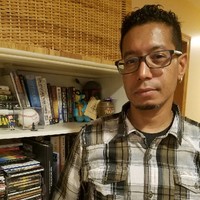
Len: Hi I’m Len Epp from Leanpub, and in this episode of the Frontmatter podcast I'll be interviewing Guy LeCharles Gonzalez.
Based in New Jersey, Guy has over 25 years' experience in content strategy and marketing, holding many different roles at organizations from Writer's Digest to Digital Book World, and Library Journal & School Library Journal, amongst others.
A former National Poetry Slam champion, he is Chief Strategist at Free Verse Media, a strategic marketing consultancy for brands and businesses, and he is the Project Lead for the Panorama Project, a fascinating research initiative looking into the impact of libraries on their readers, their communities, authors, and the book industry generally.
You can follow him on Twitter @glecharles and check out his website at loudpoet.com, where you can find out more about him and his work, and read his blog posts, where he covers a variety of issues important to people with an interest in understanding the book publishing industry.
You can also find the Panorama Project at panoramaproject.org and follow it on Twitter at PanoramaProjOrg.
In this interview, we’re going to talk about Guy's background and career, the Panorama Project, and address some of the big issues people are talking about in the book publishing world right now.
So, thank you, Guy, for being on the Frontmatter Podcast.
Guy: Thanks for having me. I'm going to steal that bio. You kind of knit a few things together that I always have trouble with.
Len: Yeah, I try to do a lot of research for these interviews, and actually it's funny - this came up in a recent interview, but actually getting the bio right is one of the hardest things sometimes, because people have their fingers in so many different pies.
I always like to start these interviews by asking people for their origin story. So, I was wondering if you could talk a little bit about where you grew up, and how you first became interested in writing? And I guess maybe how you got interested in poetry?
Guy: So, two separate stories.
The writing origin starts way back as a kid. As I grew up I was an avid reader, I enjoyed reading. I was the stereotype. I'd read the back of the cereal box. Anything that was in front of me that had words in it, I'd read. My father worked for the New York Times. He was in advertising support for a long time, so the New York Times was a regular presence in our apartment, while my parents were together. So, I grew up where reading was just a thing we did. There was nothing magic or special about it - I was a reader, my parents were readers. My grandparents were readers.
The writing came in - I forget the grade, I want to say it was third grade. We had an assignment, and we had to write a short story. I had waited till the last minute and was like, "Oh man, this thing's due tomorrow, what am I going to do?" So I plagiarised a short story out of a book of ghost stories that I had picked up at a Scholastic book fair.
And it was a story about - I forget. It's one of the old urban legend classics. Kids around the campfire, the voice in the woods. Today any kid pretending that that was their story, it'd be like, "Are you serious? Come on." But I changed the names, I handed it in. The teacher was like, "Hey, this is great. You're so creative." I really liked the feedback I got from that. It's like, "Oh wow, this is kind of cool. I'm going to write another book, another story."
So I come home, I tell my mother about it. And she's like, "Oh wow, that's great." So I'm like, "Yeah, I've got some other great ideas for stories that I want to write." And they're all stories right out of this short story collection of ghost stories. So she's like, "Oh, well, tell me another one." So I tell her one - and it's the one about the wife with the ribbon around her neck, and the husband's like, "Oh what's with that ribbon, why don't you take it off?" She's like, "No." And ultimately one day he takes it off, and her head falls off and she's like, "I told you not to take it off."
And my mother's like, "Huh, that one sounds kind of familiar. I feel like I've heard that one before." And now I panic, I'm like, "Oh shit, I've been busted." So I hide the book in my closet, and I go write a story of my own - which is not very good, does not get the same reaction that that first one did, that wasn't mine.
But that process triggered two things. It was like, "Hey, the idea of writing is something I like, and I particularly like the feedback you get. But writing is hard. So if I'm going to go after it, I've got to take this more seriously." And so that began a young lifetime of thinking of myself as a writer, writing short stories in my early teen years.
I was famous for - I would write about whatever I was into at the time, which, around then, was James Bond and Stephen King. So it'd be James Bond books, Ian Fleming. I'd write these variations on either Stephen King horror stories, or James Bond type thrillers, where I was the good guy. Whatever girl I had a crush on was the love interest. And the villain was the guy she liked, because he usually wasn't me. they weren't very good, but they kept me writing.
What I didn't realize until many years later - the other writing I was doing, that I never considered writing, was non-fiction. Particularly, the peak of that was probably in 1986, when I was in high school - I ran my first Fantasy Football League. And back then in the eighties - nowadays it's all online, it's easy to do. In the eighties, it was USA Today on Monday - going through the box scores manually, adding up all those points for the 10 teams, and however many players that was.
So I started that League, I was the Commissioner - and one of the things I did was I self-published a weekly newsletter about the results. So every game kind of had its own match report, and I'd write them as if they were real games, and not just collections of numbers from unrelated players. That was the first real instance of me writing in a non-fictional kind of way, that I never thought of as writing.
And actually, it was also my first experience in self-publishing - not counting, during a comic book phase that I went through, that was a whole parallel track. where I wasn't a good artist, but I drew well enough to tell the stories I wanted to tell in comics.
So there's that whole underlying foundation of this avid reader, interested in particular types of genres - that translating into writing I'd like to do; this experimenting with self-publishing, but back then having no idea that that's what it was called.
And in eleventh grade, I got a job at the library. That was my first real job. My job right before that, I was a paper boy. So books, publishing, media - kind of from my first time getting paid to do something - first as a paperboy, then I was a Page in the Mount Vernon Public Library for a year.
And that's where I really got to discover the breadth of what was out there, beyond the genres I was most interested in. I explored the stacks, didn't learn the Dewey Decimal system, but learned where the interesting things were in the Dewey Decimal system. That really carried over the teenage years, into early adulthood. There was this belief that I was going to write a book someday. That was what I thought. I was a fiction writer, I was writing these short stories.
Most of those short stories in later years, were attempts to start a novel - that once I wrote the story in my head, I'd have 15, 20 pages of build up - and then I'd wrap it up in five pages. Because in my head, I'd finished it. And so, the self-discipline it takes to write a novel - I have so much respect for, because I've never had that self-discipline. And that kind of segues into how I got into poetry.
In my mid-20s - so, poetry slam in the Nuyorican poets café was going through its kind of second wave of popularity and notoriety. I had recently moved back to the city, and been in the Army for a few years. I came back to New York, and had heard about the Nuyorican poets pafé for a while. Finally I went - it was actually the Friday after Thanksgiving, the year of 1994,. I went to my first show. It was a Friday night poetry slam.
Bob Holman was the host then. I forget who the poets were. But they were all amazing. I was impressed by the entire experience. The poetry on stage, the interaction of the audience. At that point it was purely an experience to enjoy. It never crossed my mind at that point, that, "Oh hey, I could write poetry."
That happened three years later in the most stereotypical way possible. For a girl. I went through a breakup. I got some terrible poems that - "Oh, the Nuyorican, they read poetry there. I'm going to go read these terrible poems at the Nuyorican."
And so I went to their Wednesday night open slams, read a couple of poems. One of them was halfway decent. Two of them were pretty terrible. But the community there was very supportive. Unless you were just - not so much bad from a crap perspective, but bad from a perspective, perspective. Like if you were getting up there saying some purposely crazy stuff, then you might not get the community support. But if you were up there giving it a genuine effort, or there was something authentic about what you were trying to say, the community was generally supportive on Wednesday nights.
Friday nights was a little more cutthroat, that was the real competition. But I locked into a Wednesday night. The host by then was this guy, Keith Roach, who had taken over from Bob Holman. He saw something he liked about me, and invited me to do a Friday slam, about - let's say - I think I had about two months' notice. So that was like, "Oh man. A Friday slam is the real thing. I've got to start upping my game here and taking this writing a little serious."
Len: Sorry to interrupt, but could you explain a little bit about what a poetry slam is, for those who might not know, because it's intense.
Guy: Yeah, absolutely. Yes. And not as popular as it used to be.
At its core, poetry slam is - it's a competition that's not meant to be taken seriously. Poets have three minutes to get on stage, and read their poem.
Over the years, different regions have adopted their own variations to the rule. But at the heart of it, you're performing your work, it's a single piece, you've got three minutes to perform it - and then you've got judges in the audience, who are generally randomly picked by the host ahead of time.
They're going to score every poem from zero to ten, like gymnastics. And generally there's five judges. You drop the high, you drop the low, you add the three points - and you get a best of 30. And then, depending on the size of the slam and how it's run - there's either a couple of rounds, or there's one round, and best score wins.
At its core, it really makes poets a little more responsible for engaging their audience.
It was partly a response to - poetry in the eighties had kind of gotten very dry. Poets would get on stage, have their head buried in their book and read their poems like this [speaks in monotone voice] and expect applause after they were done. It was a painful experience that almost became a stereotype, but was more or less the norm.
The poetry slam started in Chicago, it was a response to that. And that subculture bubbled up in Chicago, and started to spread.
The first National Poetry Slam, I think was in 90, 91. I think there were four teams. By the time I went on behalf of the Nuyorican in 98, I think there were 24 or 28 teams? I forget the number, but it had grown pretty big at that point. And that's the year we won. So that's how I get to claim, "I was a National Poetry Slam Champion." I was on the team for the Nuyorican that year.
And the difference between your local slam - which could be anywhere from, "We don't take this too seriously, it's a fun night," to reasonably competitive - the National Poetry Slam was both of those poles taken to their extreme.
There's a deeply supportive community, because at the end of the day, four teams make it to the finals. So you'd better enjoy your experience there, because you’re most likely not even going to make it to the finals. And then there's the hyper competitiveness of the teams that actually can make it through and make it to the finals.
So it was a really intense experience, that was rewarding both as a writer, because people are responding to your work. But also, some people weren't willing to recognize the artifice of it all. And, "Hey, don't take this too seriously. These are literally random people putting a number on your work."
So you can buy into that a little too much, and start catering your work in that direction. Which - fast forward to today, let's call that the "Corporate Publishing Bestseller Novel." Or you can be true to what you're trying to do - and you may not get a 10, but you may connect with somebody in that audience who doesn't have a score card - in ways that are going to be way more important and longer-lasting than getting that 10 and winning. And that to me is the more community centric, small press model. Just to connect the dots to publishing there a bit.
But at its core, Poetry slam was meant to be a way to make poetry more accessible and interesting, beyond the audience that it had contracted to by the 80s.
Len: Thanks very much for sharing that. Not to digress, but you dropped the line about having been in the army for a few years, and I'm trying to put together the timing - was that around the time of the Gulf War?
Guy: I actually signed up in March of 1991, which was - so, the day I signed up, Desert Shield was happening. By the time I got out of basic training, Desert Shield was technically over, because, depending on how you reference it, that was a very short war. Or it's a war that actually hasn't ended, and is still ongoing. And I defer to the latter - only because people who signed up years later, still qualify for the same ribbon I got for service during that period. Because from the military's perspective, that period actually hasn't ended. The names of the wars have changed, but for that service in wartime, basically from Desert Shield on, the US has been in some form of military conflict ever since.
Len: That's really fascinating, and it sounds like we could have a whole other interview about that, so I'm going to resist the temptation and just let it go. But thank you for sharing that.
And so, you then developed a career - or perhaps in parallel to this? I know you founded and hosted a poetry series in Union Square in New York City for a while. You did a bunch of other things. But you also ended up with a career in marketing, and things like that. How did that happen?
Guy: So when I came out of the Army, I moved back to this area. Initially I moved back to Jersey, and stayed with my father for a few months until I found a job. And this was back in the day where temp assignments were - working as a temp was kind of a legitimate way to make a living.
My first assignment was at a B2B directory publisher, called K3. It was in their accounts receivable department. It was a one week assignment.
The people were nice, they liked me, they had another opening a couple of weeks later in their circulation department, and they brought me back. Circulation is subscription marketing, basically. Back then it was primarily direct mail. So I was brought in for a two-week assignment, and on my third day, one of the three people in that department quit. On the spot, unexpectedly. Some drama happened there that I had had nothing to do with, but it opened an opportunity.
Because, among her responsibilities, was this one annual publication called Musical America, which was an old-school physical directory of concert and music venues across the country. Basically a Yellow Pages of opera halls and music houses, and things like that. She was the only one who knew how to use the database that managed the subscriptions for that product, and it was about month due from being, needing to be active and ready to go.
So I was - at that point - was I 24 or 25? Because I grew up - millennials are considered the digital generation, which I think is nonsense. I grew up in that transition. I had an Atari 2600. I had a Commodore 64. I experienced that transition from typewriters to computers, from telephones to mobile phones. So I always think it's funny when people pretend millennials are the first generation with that digital background.
I came into that role very comfortable with computers, and in a department with two other people who were older - not as interested - all of their subscription products worked with a third party who managed the subscription databases. So this was the only one that had an internally-managed database, on a program neither of them knew. So it was like, "Hey, job opportunity. I'll take it."
So I taught myself - it was called QuickFill, I think it's still around. It was basically a subscription management database program. I took that on, and my two week assignment turned into a never-ending nine month assignment, before they finally hired me full time.
In that process, I learned all about direct marketing, direct mail, database management, analytics, tracking - all the things that are allegedly in digital marketing - introduced and turned into magic bullets. All of these things are the foundation of circulation. That old-school subscription marketing direct mail.
That beginning was both my entry into publishing, my entry into marketing - and my entry into understanding that two things that I was personally really into, could actually become a career. And that was media and marketing.
Len: And so we're talking sort of mid-90s here, right?
Guy: This would have been - came out in 1993, this would've been late 1993.
Len: Okay. I always like to - when these sort of contexts come up, it's always really interesting to situate things in the technology of the time. Right at that moment, the World Wide Web was becoming a thing. And so it was this interesting collision between very - and I'm really glad you brought this up. Like, print wasn't unsophisticated.
Guy: Right.
Len: A lot of people like to think that it was, and it was not. There was lots of very sophisticated marketing, lots of very sophisticated processes. Some of them you might even regard as more sophisticated than the things we do these days, because it involved physical things. And that involves logistics and timing and other things like that, that are really important challenges to face.
I actually interviewed someone for the podcast a while ago who had a similar experience with legal directories, just at that time, and the transition from - these things were really, really important. And not just important, but incredibly valuable to the people who used them. You can imagine if you're managing a band and you're going to book gigs, having a directory with places and addresses and names and numbers to call - without that, you had nothing.
And so - carrying on - you now had this really robust, almost accidental experience that you fell into. But then you went on and you worked for things like Poets & Writers. I'm just looking at your LinkedIn profile here. The Academy of American Poets. And this was all - then you, going into the beginning of the 2000s, you worked as an advertising Sales Manager and Marketing Manager. Just skipping ahead, you ended up being one of the founding - the Programming Director for Digital Book World - and in 2010, I believe?
Guy: Yeah, that was the debut of Digital Book World.
Len: I watched a video of you online talking - I think giving the closing address at the first Digital Book World Conference. And it was the very day the iPad came out. I bring that up to talk about that. Skip ahead through a bunch of technological revolutions happened. But there you were organizing a conference, or helping organize a conference around digital books - just after the Kindle came out, just when the iPad came out. What was the atmosphere like in the publishing world at the time?
Guy: That was a really interesting time, because there was a segment of the industry - and I'd say probably a pretty large segment too - more for worse than for better. who saw the iPad as the saviour of publishing broadly, but particularly on the book side of the world.
Book publishers really thought it was going to be a big deal. Our CEO at the time thought it was such a big deal that we had to actually revamp the entire second day of a Digital Book World schedule, to block out time to put Steve Jobs' address - we streamed his address introducing the iPad.
We didn't schedule anything, stopped programming. It was like, "Hey everybody, gather around these TVs. Free advertising for Apple and the iPad, which happened a lot in the industry. But it was one of the more egregious examples of it.
But there really was a lot of buzz around - the iPad was going to help turn things around for publishing broadly, and it was going to be particularly a big deal for Apple. Because finally - I mean, for book publishers - because finally there was a legitimate competitor to Amazon.
I think Apple and Steve Jobs were very smart in how they approached different markets, and basically got them to do free advertising for them. At Digital Book World, it had a lot of market share - even though it technically wasn't on the program in any way. A short couple of months after - I want to say it was two months in and Steve Jobs did this update - what he said, isn't what he put up on his slides. What was reported is what he said, even though on his slides was a - not so much a contradiction, but Jobs worded it in a way that if you weren't paying attention and chose not to do any actual fact-checking - reported that in two months, Apple was already the number two ebook player in the space - after only two months being out.
And in fact, what his slides said, and if you parsed what Jobs himself said - because it was really slick, about how he framed it - for the publishers who were working with Apple on specific books, they were the number two. So it was a very nuanced spin that the media quickly just promoted as, "Hey, Apple - two months in, the iPad is a huge success. Apple is the number two ebook vendor in the country - second only to Amazon." Which was far from the truth at that point. Barnes & Noble were still a solid number two with the NOOK.
But yeah, the ebooks and iPad and Digital Book World - Digital Book World was born partly from - I don't know if you remember Tools of Change?
Len: Yes.
Guy: So Tools of Change was maybe four years in by the time Digital Book World launched? Digital Book World was born at the 2009 Tools of Change, when our CEO David Nussbaum attended - and left frustrated by the doom saying and negativity around, "Publishing technology is going to kill the publishing industry. All these new disrupters are going to come in and legacy publishing is dead. Just lock it up you guys, we're done."
Our CEO left and was like, "a) I don't believe that's true. b) Even if that it's possibly true, there's got to be solutions to - we shouldn't just close our doors, there's got to be things we can do.
And this program didn't offer anything. It made the presumption that, "Hey, you guys are done, here's where the future is." So he came back and was like, "This is ridiculous. Where is the conference for publishers to tackle these digital challenges?" It didn't exist, and so he was like, "Well then, fine - we'll do it."
F+W had events, had a lot of experience in producing events, but they were a B2C media company. Books, magazines, for consumers. They had no B2B footing at all. I had B2B experience from prior companies, and I had started to develop my own kind of following, being just a critic of the media space in general.
To this day, there are people who think they met me at Tools of Change 2009 in person. We only ever interacted on Twitter, and I wrote a couple of blog posts - back when blogs were a lot bigger than they are today. But I met people on Twitter via the TOC 2009 hashtag, that - to this day, they swear we met in person at TOC 2009.
So Digital Book World was born from this sense of, "Look, no question - digital is disruptive. There are going to be challenges down the road. But there's absolutely no way that there's not a place for - quote unquote - "legacy publishers" in this new world. And so the challenge is to figure out where those opportunities are, identify where those threats are and see what can - how we can overcome them."
So that's how Digital Book World was born, and I initially was brought on in the beginning, purely just to sell sponsorship space. Because it was a new initiative, I was excited about it. And pretty early on, we got a lot of positive feedback from the publishing community that we were onto something. And I want to say - Digital Book World was announced in July of 2009, and it was just a press release. In September we started having internal conversations about the feedback.
And by October, our CEO decided, "You know what? We're going to launch a full-fledged community around Digital Book World. We're not just going to produce this one off event, we're going to build something bigger around it," in what then was the F+W community model. Media, events, education - whatever made sense for that particular community.
At that point, that's when I was tapped to actually take it over and say, "You know what? You're going to run this." From my experiences with Writer's Digest, some other internal experiences I had at the company, and helping drive some of our innovations - I was tapped to be the public face. Mike Shatzkin was brought in to be the Program Chair, and actually do the - for the first year, 95% of that program was Mike Shatzkin.
It reflected Mike Shatzkin's world view, which was, back then, very Big Six centric. Small and mid-sized publishers, and anything outside of core trade, were curiosities - but nothing to really be fully integrated. Because that was Mike's world. Big six publishers. That is, from his own perspective, that was his client base - so that's where the money was for him.
What happened between year one and year two is we realized, "For this event to be what we want it to be, it can't just serve the Big Six - because even based in New York, you're only going to grow so big. We could probably hold an event in New York that was Big Six-centric and top out at four or five hundred people at the max." If we didn't broaden it to also show small and mid-sized publishers to talk about some of the other challenges - not just be about ebooks, but talk about marketing challenges, talk about other channels - libraries, things like that.
So that was the evolution between year one and year two. At that point, I took over about 25% of the program and developed those kind of non-Big Six sessions and tracks. And between the two conferences, we produced a lot of webinars, content became - we were never trying to be Publishers Weekly and compete on volume. So in a lot of ways, I became the contrarian. I wrote a lot. I was one of the few voices who was always like, "Hold on, can we fact check one of these Apple statements, rather than just reporting yet another huge spike in percentages or whatever?"
Len: There's so many threads to pull on there. Thank you for sharing all that, and for putting it so sort of compactly. But there's - so for example, for people listening - Mike Shatzkin is a publishing industry expert and consultant, who we've had on the podcast before. He's a really good person to follow for - I mean, for industry analysis. You mentioned the Big Six, it's now the Big Five.
Guy: Yes.
Len: But these are the biggest publishing companies. And one of the themes in discussions like this, is that everything in book publishing in America is typically very New York-centric. Actually my co-founder, Peter, gave a talk about Leanpub at Tools of Change in 2013 in New York. I remember being there at the time, it was very exciting.
But there was - I do recall - there's this very big tension between sort of technology and publishing. Which is something that if you're in the book publishing world, it's - just saying that sort of like is a very overdetermined thing. But there is this inherent tension, and always has been for some people - particularly the Big Six, which inherited this huge legacy industry based on print books.
And the times that you're talking about, and the tensions that you're talking about, were just huge, like earthquakes. 2009 was, I gather - a sort of very tense year for the book publishing world. Things like the Kindle coming out - just, I think in 2007 or 2008 or so? Was something that people were - a lot of people were biting their nails about what was going to happen. Then Apple comes out with the iPad, which was a revolutionary device in terms of - things like that had existed before, but it mainstreamed having a tablet, that you could touch and download and read things on - including books. And so you can imagine the publishing world, where like you've got huge investments in an industry that goes back centuries. And all of a sudden, people can hold this thing in their hand.
And speaking of New York stories, I was - I think it was the next year? I went to Book Expo America. And there was one session on self-publishing, headed by Guy Kawasaki. I remember, I always tell the story - I probably get it wrong in my memory - but there was this one packed session, where there was the CEO of OverDrive, Steve Potash, I think? The CEO of Simon & Schuster. I think the head of a big library association, and someone else. And I still remember Steve Potash just totally full of passion, waving an iPad in the face of the other people on the panel, saying, "This is not a science experiment, this is real."
And it's one of those things where if you're on the - I'm going to try and circle into something coherent here. But if you're on the technology side of things, it's really obvious what the potential is for these things, and you see them as good, and you see them as opportunities. This is - the future of publishing is going to include print. But aren't we lucky to live at a time when all of a sudden we've got all these other things we can do? Like download texts, read them on screens - have the whole world available through one channel to sell books to.
But there's this other side of things, which to this day, reacts with total dismay and incomprehension and retaliation to these things, that people on the tech side - these opportunities.
But one thing I really want - because this is going to become something we talk about later on in the interview - I'm really glad you went into such precise detail about the misreading of Steve Jobs' statement. The misunderstanding. Because this is a really serious problem in the world of book publishing data reporting. People get shit wrong all the time.
Guy: Yeah.
Len: And it is very frustrating - you're in the industry, and you know you've got a bit of a data and analysis mindset - to see, like the New York Times and The Washington Post and the New Yorker and Vox - and everybody get it wrong all the time. And the Authors Guild, and I could go on - and there's an organization in the UK, which I forget. But people get it wrong all the time. They get it wrong in very basic ways.
There's just this inherent issue around data and analysis. Not only with book publishing, but with libraries and things like that - that I'm sure we're going to get into in just a few minutes.
But just carrying on. And so, after you had all this pretty sophisticated experience with the cutting edge stuff - and this is not to contrast it with what you then went into. But then you went to work for a company called Media Source, and you worked on a library journal.
Guy: Yeah. So, Library Journal and School Library Journal are kind of the main trade journals for the library profession. And if you think of - every profession has its trade media. Some better than others. What's interesting is some people would see that as, "Oh, that's a weird -" At best, maybe sidestep, at worst - maybe a step back? What was interesting about that?
And Media Source, I don't even want to use that name. That was the shell, that was the name of the holding company that acquired Library Journal and School Library Journal - and they also owned the Horn Book Engineer Library Guild. LinkedIn just makes it difficult to name the company, because technically I worked for Library Journal, School Library Journal, and the Horn Book.
What was interesting about them - so, I moved over to them after the second year of Digital Book World. Digital Book World was starting to head into more of an event-only model than I was interested in. I enjoy events as being part of my platform. I didn't at that point have an interest in being an event-only guy. And there was also some other events that were going to come on our plate that didn't drive revenue for us, but we were going to be responsible for. I didn't want to deal with that.
So the move over to Library Journal, just for shorthand, we'll just refer to as "Library Journal" - was appealing for two reasons. Between those first two years of Digital Book World, I started to learn a lot more about libraries and their place in the overall publishing ecosystem. And particularly their place in the ebook ecosystem, which at that point was more or less an afterthought. In 2011, neither Macmillan - and I think it was Simon & Schuster? - neither of them were even making their ebooks available to libraries yet at that point.
Getting libraries on the agenda for the second year of Digital Book World, was kind of a personal challenge of, "Hey, I think this is important." Through that process, I met some people at Library Journal. I started working more closely with them, originally with a goal of making libraries a little more central to the Digital Book World platform, going into year three. Ultimately what ended up happening is I just went through them directly.
What was fascinating about that business was - librarians are a fascinating community. There's a handful of professions in the world that most people give a high level of respect, even if they don't know a lot about what they do. Teachers and librarians are two of those. Librarians, at their heart, are information specialists. Their thing is the frictionless sharing of information to make us all better, smarter citizens. Books are obviously a big part of their brand. Their relationships with publishers are a big deal.
So moving over to them was more of an opportunity to work on a much more diversified business model. They were historically print magazines. Thankfully, paid subscription print magazines and not what's called "controlled circulation," which a lot of business-to-business magazines - are free to the subscriber, based on their qualifications. Which, in an ideal world, "Oh, you're the CEO of a tech company - yes, you're a qualified subscriber." But you're still getting it for free, so the value you place on that magazine and that content is probably a little less than the librarian who either directly or through their library is paying 100 bucks a year for that.
So at that point, they were already working on - they had done their first ebook summit, which was an online conference, specifically focused on the challenges of ebooks in the library space. They had done that in October of 2010, between the first and second Digital Book Worlds. So they were already starting to play in that space. OverDrive was the big player, but at that point there were a number of other startups playing with different models. This was before OverDrive kind of really ate the ebook world on the library side completely.
But what was really cool about moving to them was, it really fit what I personally like about marketing. Which is working with a brand that I can personally respect, that serves a community that I have a particular interest and respect for. And has either - if not already a diversified business model, has the opportunity to do it.
So through Library Journal, we had the magazines, but we had live and virtual events. We had free and paid webinars. We launched online education a couple of years in. It was - to this day, I look back on it, honestly my favourite job.
It's the job that kind of made me sick of book publishers. And pretty close to saying, "You know what? I don't think I ever want to work in book publishing again." And when I left them, I thought I was not coming back. I went to work in travel media, with Northstar Travel.
But the transition - I actually got to learn a side of the publishing business that most people don't know a lot about, which is libraries. Libraries are, I'd say at best, taken for granted. Most people see them as a cultural good. Almost every author has a nice backstory about how the library helped nurture their becoming an avid reader. Or in some cases, nurtured their writing skills by giving them access to information. Libraries are such a critical part of the publishing ecosystem.
But to your point about data and the media's inability to get data and analysis right, libraries are the least understood and least measured side of the business as well. So those four and a half years there were personally fulfilling from getting to do the kinds of marketing things I really like in a community I really respect. But from a publishing perspective, I got to see aspects of the publishing industry that I wouldn't have seen if I was on the more traditional side. Either while I was at Writer's Digest or working for a book publisher, or working for a wholesaler or a book store.
Len: And one of those interesting features of the book publishing industry and its relationship to libraries, is that it is, in some senses, commonly adversarial. Which is probably - people who are in the library space are probably laughing at the statement that is.
You've got a line in a recent post on your blog, where you talk about, "Antagonizing the one partner whose core mission is effectively expanding and nurturing the audiences for your products, FOR FREE, is a bad strategy".
I think I'm going to enjoy talking with you a little bit about the nature of that relationship, and some of the things that have been happening recently, like the controversy with Macmillan - who did eventually start lending to libraries, but to this day hasn't figured it out.
Just to set the stage a little bit, I was wondering if you could talk a little bit about what the mission of libraries is, and what some of the technological challenges are.
And just - I'm not an expert in this, but I have a little bit of an academic background. And so, I've spent a lot of time in research libraries. And some of the challenges - just going back starting, let's say 25 years ago when digitization started to happen. It took the form of - one thing that people started doing was digitizing data onto laser discs. But then that turned out to be not such a good idea, because they were locked into a proprietary technology that can expire or change.
Libraries - one of the things they are tasked with doing is preserving things. And so, it's a very deep technological challenge. Discs decay. Servers decay. Bits flip when radiation comes into the machine. What format do you choose to save things in? How do you make it searchable? Things like that. But then - let's put all that to the side. As huge an issue as all of that stuff is, lending eeally is what libraries do, and there are particular challenges with ebooks. And so I was wondering if you could talk about that and some of your experience with seeing like the interaction between libraries and publishers as they started working this relationship out? Which is still hugely problematic and difficult.
Guy: Yeah, so two caveats to start. I by no means position myself as an expert on libraries broadly. And one thing I commonly see librarians themselves say when they are speaking on behalf of libraries, is - most librarians will also set a caveat of, "I can only speak from my experience." And I say that because - sometimes when we talk about libraries, similar to when we talk about publishing - there's this broad sense of what that word means. But libraries aren't one thing.
There's academic libraries, public libraries, and school libraries. Three distinct segments that - other than being libraries and broadly sharing a mission of access to information, their business models, the way they're funded, the way they interact with their communities, the partners they work with - are all very different, across the board. And even an individual publisher will work with those three communities very differently - terms not the same, etc. etc.
So for the purposes of this conversation, I'm going to mainly focus on public libraries. Partly because public libraries - school libraries are really important, but are probably the most under attack by - let's call them "market forces." School librarians are continually being let go. School libraries are being downsized. So they're facing challenges that really have nothing to do with publishers.
And ironically, serving the audience that's probably keeping commercial publishing afloat - which is kids. You look at the latest numbers for 2019 - kids' books are up, adult books are down. Politics fatigue has set in. So even the biggest selling political books of 2018 didn't carry over into 2019.
From a public library perspective, you've got a couple of things. When we talk about publishing, there's the Big Five, there's big mid-sized publishers like Scholastic, Workman, Source Books. And then you've got this huge bottom of a pyramid - smaller, hundreds, thousands of small and mid-sized publishers, that are actually rarely ever factored into these conversation,s when we talk about publishing.
Libraries are similar. There are public libraries which, at their core, all have the same fundamental mission, which is access to information for their communities. And what that translates into - from an acquisitions perspective, collections - the physical and digital content they acquire - books, magazines, newspapers, databases - all those things. That's going to vary community by community.
So a New York public library, a Multnomah County library, a Nashville public library - those are big library systems that are - their needs, their budgets, the way they interact with their communities are going to be very different from, say, my local library here in New Jersey - who doesn't even have their own ebook program. They are part of a statewide cooperative consortia that buys ebooks. And then, the various library systems that are in that consortia get access through that access point. So that's one of the first points about libraries that most people don't understand, when they talk about publishers and libraries.
And John Sargent [the CEO of Macmillan -eds.] ran up against this face-first most recently, with their new terms. He talked to some big libraries, he talked to some small libraries. And what he ultimately found was, "There is no one solution that's going to make them all happy, so we're just going to do this. And we know it's going to piss some of these guys off. We think it's going to make some of these guys happy." But that was a poor example of - there is no single example of what a public library is like.
So from a publisher perspective, all the big publishers have dedicated library marketing departments. That in itself tells you something about the importance of libraries. Most big publishers don't have dedicated sales reps for local independent book sellers anymore. A lot of them got rid of their field reps over the years. But meanwhile, libraries still have this dedicated marketing group in a lot of the good publishers.
But what's not there is - I'm trying to find the right analogy for it. So, thinking about libraries is like lumping Amazon, Barnes & Noble, and all of your favorite indie booksellers together and saying, "bookstores." If that makes sense?
Len: Got it, yeah. That totally makes sense, and thank you very much for sharing all that information in precisely that way. Because getting a sense that - it's very complicated and it's not - there's no comprehensive understanding that maybe any one person can have. It's actually a really important thing to understand about this. And it is part of the reason that the reporting on these things is often wrong. Because people want to use a term like "libraries," and give the impression that by saying that word, it's - well, this a well-understood unitary sort of self-identical thing.
But actually there are lots of different things going on with - like internally to the library space, then the way the rest of the world interacts with libraries depends on the type of interaction on both sides. And one of the really interesting tensions in understanding libraries and how they work, is that - libraries often have a kind of public mission, especially, specifically public libraries. Publishing companies have a private mission, which is to make a profit.
Guy: Yeah.
Len: And it's one of the things that makes it an inherently difficult, multi-dimensional space to understand. I interviewed someone for this podcast a while ago named Rebecca Giblin. I don't know if you've heard of her. She's a Professor at Monash University in Australia. She's with something called the eLending Project. Where - what she's tried, she's led this project - where people are trying to figure out how many books from different publishers are being lent out, and in what way, by Australian libraries.
And one of the biggest challenges she faced was getting - if I recall it correctly - was not getting buy-in so much from the libraries, but getting buy-in from the publishing companies, to share their information. Because they're competitive, capitalist organizations that are trying to make money. And the idea of selling something to someone for money, that is going to be lent to someone else for free - just has all these inherent problematic things.
And you mentioned John Sargent. John Sargent is the CEO of Macmillan, which is one of the big five publishing companies. And you're talking about a very specific controversy that happened recently. They had released a press release saying that they were introducing yet another innovation into e-lending, and this was going to involve only giving a library one copy of an ebook to lend when it was in the, eight weeks, I think, when it's a new release.
Guy: Right.
Len: And so that ebook can only be lent to one person at a time. And since it usually takes a couple of weeks to read a book - that means maybe four people are going to get to read this book within the first eight weeks? There's all kinds of things we could talk about there when it comes to the lending models. They're really complicated, they're always changing. I imagine it's probably like on a library-to-library basis. Sometimes these things need to be figured out. Books can have time bombs in them, where "You're allowed to lend this ebook for two years or 20 reads," and stuff like that. It's just this incredibly complicated area.
But I wanted to zero in on - before we talk about the Panorama Project, which we'll get to shortly - just zeroing in on the nature of - one of the reasons this Macmillan thing is such a big deal, is this inherent tension between lending things - as it were, for free, although often people pay for their library cards and stuff like that, and they pay taxes that go into funding these institutions - but Sargent had a line in there that really struck me in his press release. Where he said - he talks about, "The active marketing by various parties to turn purchasers into borrowers." Did you catch that at the time?
Guy: Yeah.
Len: That really stood out to me. Because, just to put it in cartoonish terms, this was kind of top hat Mr Monopoly in his New York tower, going - there's basically a communist plot out there to turn people into like communal owners, rather than personal owners.
Guy: Yeah.
Len: So that line struck you as well.
Guy: Yeah, yeah. And so - what's been interesting about Sargent is he's - he uses a lot of outliers as his examples to prove that there's a problem. And he kind of has to, because he won't release any of the data that he claims proves that there's a problem. So the idea of libraries marketing their services to their community as free - on its face, I get what he's saying.
But there's two huge assumptions there. a) Nothing's free. People in the community pay taxes that fund that library. Then that library takes that funding and pays publishers - or through distributors, publishers get paid. And on the ebook side, a lot more than consumers are paying for those books under these onerous terms that limit their ability to lend them out.
But people in the community understand that, "The library's not free." Because, you know when they definitely understand it? When it comes on a referendum or a bill that says, "Hey, we're going to raise property taxes a penny." Or, "We're going to do X to build a new library." So the idea that library patrons think that libraries are doing something for free, and that means, "Hey, I don't have to shop at Barnes & Noble anymore."
The other flaw in that assumption is, it assumes that people are changing their behavior from, "Well ,I used to be a Barnes & Noble shopper," or, "I used to be an Amazon shopper. But now that the library makes these things available for 'free', "I'm going to shift my purchasing behavior over there." There's no evidence for that. There's probably - I'd say, some small truth to it.
For me, the push back then becomes, well, if you're not willing to share data, then we're talking hypertheticals. Rhat to me is the fundamental problem with this conversation - is your refusal to share the data that you claimed pushed you to this decision - at least not sharing it in good faith with the partners to whom you are saying, "You're causing us a problem and here's how we're going to solve it." If you can't even share that data with them, they're not really partners at that point. Like, let's stop saying you love libraries, because you're not negotiating in good faith there.
But if you take that data off the table, well, let's look at the other assumptions you're making. You're making an assumption that libraries alone are eating away at your consumer sales. Not the expensive prices of your consumer ebooks, where often on Amazon, it is very clearly cheaper to buy the print book. So if anybody's shifting consumer behavior, it's your pricing model that you fought for, through agency pricing, and have full control over. So if you're seeing a decline in ebook sales, and you believe people are going to the library instead - that's a business model problem. Tweak your pricing.
And, so, his secondary claim was, "Well, everybody's raising their prices on libraries, we didn't want to do that. We wanted to find another way." So the other lever was availability. And this is the point where the whole logic falls apart. Because if you truly see libraries as a partner that you respect, then you probably have a bare minimum of understanding of their core mission. And two of their foundational principles are privacy and access.
So by you saying, "Oh we were in conversations with libraries, and we decided this embargo model is going to be good for libraries," you are shooting one of their core principles right in the face. By saying, "We know you believe in access, you're just going to have to wait eight weeks for you to fulfil that part of your mission."
Now, you can have a whole philosophical debate over, "Is that the right place for libraries to draw the line?" Who knows, but it's where they draw the line. So if this is a valued partner that you claim, making that decision and saying that it was - it's partly for benefit of libraries - to me, was where Sargent kind of shot himself in the foot, where he could've just raised prices like everybody else, and nobody would've skipped - they would've complained, but there wouldn't have been these massive PR pushes to get communities engaged. There wouldn't have been a number of big library systems boycotting. They would've done what they've always done. They would've taken it on the chin and figured out how to spread their budget around accordingly.
So that was a real miscalculation that came from a fundamental misunderstanding, a) of what libraries value most in their mission, and b) this assumption that consumer behavior is as simple as, "Oh, well I'll just go to the library."
Len: There's so many threads to unpack there. Because everything you say is so densely put and well formulated. But in this press release, Sargent made it - I mean, as you say - he's the CEO of a company, he's got responsibilities to his employees. He's got responsibilities to his customers. He's got responsibilities to his shareholders. This is a very serious and important, and not necessarily an inherently bad kind of project to be engaged in. I'm part of a capitalist enterprise myself.
But when you go and say sarcastic things - I've actually got the press release open here. But he says like - it's sort of remarkable, because he made it personal - right? He goes, "It seems that given a choice between a purchase of an ebook for $12.99 or a frictionless lend for free," - just dipping with sarcasm, he says "...the American ebook reader is starting to lean heavily toward free."
And you pointed out in an article you had in Publishers Weekly recently, there are 16,000 public libraries in the United States. They have a 1.5 billion dollar acquisition budget. A lot of that is going to publishing companies.
To start getting all sarcastic about the fundamental nature of what a library exists for, in a press release, not only betrays a kind of ideological, adversarial thing, but like I said, something sort of personal. That made it much more complex than just - as you say, if it had just been a matter of straight up money, people would've adapted like they have in the past. But when you sort of go around attacking the fundamental mission of a library, you're - how can you not expect people to start talking about boycotting you? And, again, this is a bit in the weeds, but like - what world are you living in? Who are you surrounding yourself with? Where no one told you, "Don't do this. Just don't do this."
But anyway, this is probably a really good opportunity - so, the library space is multidimensional, it's very complicated. It's got lots of people on all kinds of sides with all kinds of interests interested in it. There's this inherent kind of dark matter nature to some of the information involved in it. Because, there's so many different libraries doing so many different things for so many different reasons in so many different ways. But they're interacting with private, competitive companies that don't want to release information.
And so, skipping over your time at Writer's Digest, you're now the Project Lead at something called the Panorama Project, which is trying to address some of these fundamental and very complicated issues. I was wondering if you could talk a little bit about the origin of the Panorama Project, and what it exists for, and why you got involved?
Guy: The Panorama Project was first conceived in 2018. Steve Potash and OverDrive had convened a few other industry members, I think somewhat from seeing the writing on the wall. That new term - publishers were all in the process of developing new terms that would roll out in late 2018 into 2019. And what was missing was data. At that point, Macmillan had already initiated its Tor experiment, where they windowed new releases from their [?] brand, which is their sci-fi fantasy imprint.
And in that experiment, they did it for 16 weeks - four months. So for four months, libraries couldn't acquire at all - not even the one copy that the new terms introduced. They couldn't acquire any new Tor books for the first 16 weeks. And so whatever discussions were happening there to implement that and the thinking behind it - Potash and a few other people in the industry started discussing ways to kind of address the problem. And the problem fundamentally was a lack of clarity around libraries actual impact.
Some publishers were saying, "Libraries are having a negative impact." Some publishers aren't saying it, but are changing their terms in ways that suggest maybe they think that. Other publishers are happily working with libraries, and not introducing all those terms. At the heart of it was a lack of data to say, "Is anybody - somebody's right, who is it?"
So the initial conception of the Panorama Project was very much a data-driven initiative. The goal was to - similar to what you mentioned about the eLending project in Australia - was to gather data from multiple publishers, multiple vendors - and do analysis to really try and measure the impact of library availability.
It was primarily focused on ebooks at that point, because that's where the data was accessible, because OverDrive dominates that side of the market so much. And they were willing to make that data available.
What they found was publishers were either reluctant or unable to aggregate and share the kind of data that would be required do do any real, effective research. So while they were working through those kinks trying to figure it out, they were able to conduct a few title-level experiments that, at least anecdotally, showed, "Hey, given a focused marketing effort centered around libraries, where you're actually making the library freely available to everyone - without restrictions for a limited period of time, and all the promotion that comes around with that - not only was there a positive impact on ebook sales, there was a positive impact on print sales as well. Both in libraries and on the consumer side.
Granted, those were anecdotal initiatives that had a heavy marketing element attached to it, which - the message to me there is, "Hey you know what? If you're better at marketing, you can improve sales on your books." That's the heart of that message to me.
But, so, at some point there was a realization that the data-oriented approach, at best maybe was a longer-term thing, and what they really needed was more active engagement and advocacy on behalf of the project, and the need for what the project was trying to do. In it's beginning, Cliff Guren was the initial project lead. He's based in the Pacific Northwest, I want to say Seattle. I've never met him in person. He was the initial project lead. One thing they were looking for was someone closer to New York who could, at any point, go into the city and meet directly with publishers. That's particularly difficult if you're coming from the west coast.
I knew Steve over the years from my time at Digital Book World, my time at Library Journal. We stayed in touch off and on. And at that point, just as I was on the verge of leaving Writer's Digest in the wake of F+W's bankruptcy, blah, blah, blah - the timing was kind of perfect.
My background being more of a publicly outspoken figure, my proximity to New York, the desire to focus more on advocacy and engagement, made me a good fit. And my personal interest in the space, my interest in data, marketing analysis - all those things, made me a good fit for it.
Initially, I started last July, and it was supposed to be a quiet summer in publishing - as I eased my way in. And two weeks after I start Macmillan's new terms are announced, and everything blows up - and I've been kind of running ever since.
Len: That's really fascinating. That shift from a more strictly a data-focused thing to actual interactions. And I think this is reflected in some of the work you've been doing on what's called a Readers' Advisory?"
Guy: Yeah. So the Readers' Advisory committee, I have to give Cliff and the committee that's around that full credit for that. That was one of the initiatives done, implemented during the first year. And what that was, it was a survey done of librarians to understand the various Readers' Advisory activities they do and don't do. And just as a quick definition - anyone who's familiar with hand-selling, that's one of indie book sellers hallmarks, is - hey, they hand-sell books, that's great. In the library world, that's called "Readers' Advisory." The difference is, that's an actual discipline libraries learn as part of getting their library degree.
So it's not just, "Hey, you're really into sci-fi, I'm really into sci-fi - you should read this latest book by x, y, z." It's a more grounded process, that doesn't just rely on a librarian's individual interests, but actually it works with their background in information science research - their familiarity with their collections. So it's a much more in-depth version of hand-selling.
The initial initiative that they worked on was building out this directory. What are the different forms of Readers' Advisory? How do libraries implement it? What does it look like in the library? What does it look like outside of the library online?
And that was kind of a nascent effort to help publishers. But even - frankly, some librarians - to understand the marketing value that libraries deliver that isn't monetized in any way. These aren't co-op programs. Getting on the front shelf of a library isn't the same as getting on the front table at Barnes & Noble. You pay for that at Barnes & Noble. Libraries are making those decisions on their own, based on their community’s needs and interests. So that Readers' Advisory survey and the directory that came out of it, that was the first wave.
What I'm working on is a follow up to that. In that research, we found author events were a particularly potent part of that discovery mix. And out of that, we are starting to build a library marketing evaluation tool kit that will actually give libraries a template that they can put a value on the various marketing initiatives they do, and present that to publishers the same way a traditional media operation will present a media plan.
So hey - perfect example. Cuyahoga County library outside of Cleveland. They do a number of author events every year. They've got a good partnership with a local bookseller who handles the book sales. They're one of the models that gets used a lot for author events in libraries that drive book sales. What was more interesting - when they started to dig deeper, they did an analysis of the marketing that they did for some of these events.
And there was on author, I forget her name. Not a major A-list author - but a perennial best seller, solid. Book version of a character actor. You'd know their name if you heard it, even if you're not necessarily a fan of that author. But anyway, she was doing a reading at the library, and they measured the value of the various touch points that the marketing had - in all the in branch promotion, email, website promotion. Cuyahoga has their own public access TV show.
And what they got was, they put market value on all of that locally targeted marketing. And it was basically about $15,000 - if, in the equivalent marketing - if a publisher had brought that author to that town, but put them in an event space outside of the library, and had to do all that marketing themselves - that one event, there was about $15,000 in equivalent marketing attached to it. All about that author. Which not only drove book sales at the event itself, but awareness of the author in the community, yada, yada, yada.
So what's really important about that is - your average mid-list author, not your big bestseller who gets the big banners at BEA - but 95% of the books published by publishers - on average, they might be getting five to ten thousand dollar marketing budgets, with most of that going to social marketing efforts. Maybe email? At the higher end, maybe they're going to get some ads in some key trade journals? Very few are getting the New York Times or New Yorker ad, anything like that. So your American Dirt, that got the full court press, those are your exceptions.
Most of these books, you're getting five to ten thousand dollars marketing budgets across the board. Not specific to libraries, across the board. So if a single library can deliver $15,000 in marketing value for one author for one event, what are 16,000 libraries potentially delivering for publishers across the country, for the various books that they're promoting into their communities?
Len: And is this specifically the Library Marketing Evaluation Toolkit?
Guy: Yes, yeah.
Len: Right. And is this something that people can download and use? For any librarians listening, if you want to let people know how much value you're giving to the community and the industry.
Guy: Not yet, we're still developing it. My goal is to have that by late April, it should be available, yeah.
Len: The work that you're doing is just so important. One of the things I found so fascinating researching for this interview, was - I mean, you point out in various places that there hasn't really been a lot of research done in the last five years on all of this. And although there are literally billions of dollars at stake, and there are tens of thousands of organizations all over the place - we just don't - it's all a big black box.
Guy: Yeah. What's fascinating to me is - so because my initial background in marketing was not from the book side, I came to the book side of publishing from the broader media side. The magazine world, as a general consumer. I play video games, I'm an avid movie fan. And as a kid, I was fascinated by the USA Today's ratings charts, box office mojo. I was kind of annoyed recently. They've paywalled a lot of their box office data. I'm a geek for data.
Book publishing is the most opaque media industry of them all. Like, bestseller lists are meaningless. There are people running around calling themselves "New York Times Bestsellers," because they hit the list once, maybe in the 7th spot - dropped off immediately, but they're a "New York Times Bestseller," alongside Michelle Obama, whose book is still on the bestseller list. And those rankings have no meaning, because there's no numbers attached to it. So given the time of year, the number one New York Times bestseller might have sold 5,000 books, might have sold 50,000 books. But that opaqueness is purposeful.
I think Amazon drives a lot of that. Amazon refuses to give any data on anything, unless it serves their specific purposes. So there's a lack of transparency in the book publishing industry across the board, when you compare it to other media.
And then when you get into libraries, now it's a black box inside a black box, when it comes to figuring out libraries. Not so much on the ebook side, because OverDrive is, as much as any company's willing to share data.
OverDrive is reasonably willing to share data in ways that Amazon isn't. And because they're such a big part of the library ebook marketplace, their data on its own has some meaning.
Where there's a complete lack of transparency - and this isn't even purposeful, like that, it's structural - is on the print side. Libraries spend more of their budget still on print than they do digital, even though author's compensation is about digital.
But what's a big unknown is - you know how many copies they buy? You can't know, that's a knowalbe number that isn't typically reported anywhere. And it's one of the things I point out in PW piece, is, "Let' start there. How much revenue do libraries actually drive, like directly? How much money are they putting in publishers' pockets through their direct purchases? Forget about perception of lost revenue from lending and stuff. Just off the bat, how much money is that?"
I've heard anecdotal numbers from companies as high as 10%, to, I'd say, on average I hear 8% to 10% is what libraries drive for a lot of the big publishers. Compare that to independent book stores, which - the narrative right now is - they're re-surging, they're coming back, they're such an important part of the ecosystem. And I personally believe that's true. Most publishers, they have three to five percent tops of their revenue.
So their value is less about their revenue, than it is about – it's a bulwark against Amazon. Because God forbid the day Amazon controls the market any more than they do. That becomes a challenge for publishers. So publishers value physical book stores - both indies and Barnes & Noble. And there's numbers that can be placed on that. Libraries, I'm pretty confident, represent a bigger percentage of publisher revenue than independent bookstores, partly because independent book stores are zero when it comes to ebooks. So that side of the market, indie books just don't really play a role in. Whereas libraries do, and it's been growing.
So you look at - the data that is kind of knowable, is partly what has me say, "You know what? If libraries are the problem, in the way you see them - are they just a symptom of the actual problem, which is shifting consumer behaviors and preferences?"
If Amazon has done a really good job of making ebooks the preferred format for a lot of people, and you've decided you want to charge more for those ebooks than your print books - you've made a business decision to prioritise one format over the other.
Now the consumer gets to make their business decision to, "I can pay $15 for that ebook, or I can go borrow it through the library." So if there is a shift, and if anybody is turning buyers into "free-ers", borrowers - there's a more compelling argument, that publishers pricing models for ebooks are what's doing that. Not libraries successfully marketing themselves from doing what they've always done, making information accessible to their communities.
Len: You're reminding me of a line - Nate Hoffelder, The Digital Reader, blogger - had a great line about the Macmillan thing, where he said, "I know that the legacy industry likes to tell itself comforting myths, but the idea that library ebooks affect ebook sales more so than high retail ebook prices requires a unique level of denial." He really gets to the heart of it.
So, just moving on to the last part of the interview, where we get to pick your brain about the book publishing industry generally - maybe from 30,000 feet.
You mentioned you're a gamer. And one of the really interesting things about the book industry now, is that there seems to be a little bit of a growing - this has always been true, that there's been competition for a time and eyeballs. But people seem to have a growing understanding that - or I think they do, maybe I'm wrong about this? That books are competing with Netflix, and with games, and with all kinds of other things. Is this something that the industry is having a reckoning with?
Guy: I think there's a reckoning happening, that a lot of book publishers are unwilling to recognize or acknowledge. I think there's still - by and large, book publishers believe they live in this kind of rarefied cultural taste maker space that, personally, I think is mythological. I'm not old enough to say, "It never was true." I'm definitely old enough to say, "If it was ever true, it was for a very narrow segment of what we define as cultural." But whenever you talk to people in publishing, there's -
So, my daughter is a firm believer in the dessert stomach. No matter how full you are, there's always room for dessert. Book publishers seem to have a version of that belief, that no matter what's happening in other medium, book people are book people. And there's always money for books when you're a book person. And while that's a comforting belief, I think it's a myth. The reality is, people's discretionary income has not grown significantly over the past couple of decades - [but] the demands and opportunities for them to spend their money [have grown] in the digital space.
One of ebooks' biggest problems in the early iPad days - I don't know if you remember enhanced ebooks were going to be the next big thing? And anybody who was paying attention to the overall iPad ecosystem, and what was happening in the App Store, was like, "Really? Your 1999 enhanced ebook is going to compete with the 99 cent Angry Birds? I'm not sure that's realistic."
And that turned out to be the case. Like ebooks could - became - and even Apple stopped really paying attention to iBooks for years. It became an afterthought. They didn't even trot it out for several years in their big presentations. Because where the money was, was in games in the App Store.
And where it wasn't money, it was inattention with the social apps. Books became, at best, a third-level thing when it came to digital attention. And that's only increased over the years as the world has increasingly gone mobile, as the mobile experience has improved.
I personally don't understand how people watch Netflix on their phones, but plenty of them do. And audiobooks and podcasts are a huge growth area. Audiobooks, in particular for book publishers, are a huge growth area. That's where the revenue is really growing right now. And there's a sense that that's a brand new audience. I think there's some truth to that. I think there are definitely some people who are coming to audiobooks, who were not previously book readers.
But I'm married to someone who was formally a huge book reader, who now - 90% of her book reading is through audiobooks. And as a result, she never got into ebooks. She jumped from print to audio. So that's part of - when I talk about these changes in consumer behavior that haven't been measured.
That's the other big initiative with Panorama, we're undergoing - is this immersive media and reading study that we're going to do in partnership with Portland State University. It's to not just look at book consumption, but look at books in the context of media overall.
How much of your time - and as importantly, money - is going to gaming? "I used to read a lot of ebooks, I'm spending more time watching Twitch, or more time on my Xbox," or "I've shifted my reading towards self-publishers. I don't think of them as self-publishers, I just think of them as - there's these $2.99 books in Amazon, and then there's $14.99 books. I just like sci-fi, so I'm going to read five of these $2.99 books. And that $14.99 one, I'm going to go get at the library."
Those are all anecdotes of actual consumer behavior, that I'm not going to pretend to say is 50% or 20%. So what my goal is - nobody's measured this in a while. A lot has changed over the past five years in consumer behavior, in where you can spend your money. Five years ago, people were still wondering if, "Oh Netflix, you're going to be HBO - really? I don't know if that's going to work." Now Netflix is like, "Hey, yeah our competition is Fortnite, not HBO."
The world has dramatically changed, but if you live in the book world bubble - what's changed is libraries?. It's like, really? Come on.
Len: Speaking of the book world bubble. For those who don't know, the book publishing industry is controversy-ridden. I think it is surprising to people who don't follow it. But we're living in a particularly controversy-ridden time. You mentioned American Dirt earlier. Anyone who's interested, I'll post a link to your lengthy blog post about that - and the very important links in that to all the other important things that people have written about it. Because it's a difficult one to wrap your head around if you're not sort of into it. But there's also been a controversy at the Romance Writers of America. There was a controversy with Hachette just recently regarding Woody Allen's book.
Guy: Yeah.
Len: And I was just wondering - while we've got you here, and you mentioned earlier that you're outspoken - so I really want to take advantage of the opportunity to ask you - if you could talk about - not necessarily, of course like go into the weeds about any particular controversy - but what's the bigger picture here? What's the problem?
Guy: So publishing has a couple of problems. I think the one that is currently flaring up in the examples you are referencing, is - at its heart, it's publishing's long-term diversity problem. And that's not just racial diversity, that's diversity across the board. But it's - in the most recent examples, what you're seeing is - that Hachette example. The Woody Allen memoir being published by the publisher of Ronan Farrow's big #metoo expose that primarily focused on Harvey Weinstein.
The disconnect that the company would think, "Hey, yeah this makes sense to publish this book when this was our big book of last year," is representative of a version of - so, there's the broad book world bubble, where everybody in the book world lives in this bubble, where books are the most important thing. And then within that book world bubble is a larger subset which is, "And the important books are first and foremost the bestsellers, and bestsellers are defined by our core audience," which - most publishers will say this in different ways - but my favorite framing of this [?] - I won't say she coined it, it's where I saw it, is, it's the middle class white woman book club reader, that is corporate publishing's core demographic. And I want to be clear - in corporate publishing, versus what I mentioned earlier - you've got the Big Five, underneath them you've got some significant mid-sized publishers - and then underneath them, you've got hundreds, thousands of small and mid-sized publishers.
That group down there - to me, is the future of publishing. Because those are publishers who are keyed in on specific communities, specific genres, specific niches. They're not worried about national bestsellers. They're more focused on selling to the audiences that they have connections to. Whether that's regional connections, cultural connections, genre connections.
But you get into this corporate publishing where - you said yourself earlier, there's that business aspect. Corporate publishing exists first and foremost to make money. Cultural gatekeeping is a by-product of a legacy that they like to have on their "About" page. But first and foremost, it's about bestsellers. Secondary, is "let's win some awards too." That's nice. But first and foremost, push for the bestsellers.
And so that push for a bestseller is partly defined by - well, what drives bestsellers? Amazon, increasingly. But what drives that buzz that builds towards the bestseller that Amazon makes it easy to buy? Because Amazon doesn't create bestsellers, Amazon will perpetuate existing bestsellers. And if you are good at Amazon marketing, you might be able to piggyback and ride the coattails of some of that activity.
But bestsellers are created in the pre-publication process. The publicity machine that gets your book on Oprah's radar, that gets you first on the list at the various trade journals - where you're definitely going to get a review. Versus maybe, they're not even looking at your books.
So there's this entire pre-publishing, pre-publication machine that works in the Big Five's favor - first and foremost. Because they're the big publishers. They've got the relationships, the leverage to pull. You get on the big retailers radars. You - "This is our big book, you get behind it with a big buy." Print runs determine advances, and print runs determine the marketing push that's going to get behind a book. So by the time a book hits the bestseller, so much has happened that really the Big Five are the only ones who can - yeah - "manipulate" is the wrong word - have access to the leverage to create that pre-publication buzz, to land on the bestseller list, week one.
And so by definition, you're looking at these trade journals, these retail outlets who cater to a specific subset of the reading audience. And corporate publishing has built their business model around, first and foremost, serving that core audience. And everything else - regardless of the size or potential, becomes niche.
So there's a lot of conversation about diversity. I firmly believe that in a country that I think is estimated to be 50% minority-majority in like 10 years - but at the kids level, is already past that. Like you look at under 18 -
Len: Oh that's a really great point.
Guy: Yeah, the United States is already minority-majority. I was at PubWest a couple of weeks ago, out in Portland, Oregon. And Andrew Proctor of Literary Arts - it's a literary organisation out in Portland that serves [?] sustain one organization. And one of the analyses they did, was - because they were having this challenge of evolving their model to serve a broader audience - and he made a great point. "It's like - well, if you just look at the data, Portland is only 12 and a half percent people of color. So there's not much we can do for that small an audience." Fut then we dug into that data, and I think he said, "40% of kids under 18 in Portland," were people of color. And suddenly, you now are looking at your audience very differently.
Big publishing has that same challenge. If you define your core audience by what historically drives a bestseller, you're going to continue to feed that beast. You're going to publish five times as many books into that channel, because all it takes is one big hit. And PRH, much to some employees' chagrin - a few years back, they all got their bonus because of the success of Fifty Shades of Grey. Not the literary masterpiece that won a National Book Award, but the allegedly low brow, originally self-published book. That put money in every PRH's employees pocket that year, because it was so successful. So publishers are driven by this bestseller model, that prioritizes feeding that beast - and everything else becomes niche.
I wrote recently about The Witcher. Netflix just did their series based on the novels. I think the novels, there's eight of them that have been translated into English. Modest seller on the book side, a huge gaming franchise though. The Witcher 3 sold 20 million copies in its first two years of release. Name a book that sold 20 million copies in its first two years of release. You can't. It would come to mind immediately if it existed, because there would've been 50 press releases about it, and we - Becoming, Michelle Obama's book, I think sold 1.8 million copies.
But The Witcher was perceived as a niche IP by NPD when they did their book scan analysis for the impact of the Netflix show on the novels. So a franchise with 20 million sales of one edition of a game, in a category that has a behemoth like Fortnite - which in 2018 brought in more revenue than all but two of the Big Five - on its own, that one gaming franchise. But books - the book world looks at those categories as niche, as romance is a niche. Not to be generic and say, "Only women read romance." But the audience is more than 50% women. How are you going to say a romance, which is - if not, the biggest genre category - it's the second biggest, possibly only behind thrillers. It's dismissed as a niche.
So there are these huge categories of readers who are perceived as a niche by big publishers, because they don't fit what they consider core demographic. The middle class white woman and book clubs.
Len: It's really - thank you for sharing all that by the way, there's so much to think about there. One thing you're calling to my mind is - there's something really interesting, because - you made a point earlier about how people often think some things are generational, that aren't - like computers. And there's something about - I guess, I don't have - I've been trying to put my finger on it for a long time, and I don't have it. And this isn't going to be quite right. But there's kind of the book world gaze, where computers are seen as this interloper that might just go away soon.
And there's - like I mentioned John Sargent getting all sort of personal and sarcastic about free versus paid. And there's something - I was just reading a New York Times article, by - I think a millennial? Characterizing working from home as being like people kind of sitting around in their sweatpants and eating snacks. I'm trying to put something together here, that there's something about a kind of mindset that seemed - I don't know if it's kind of institutionalized, or what? But it looks at things like diversity as like a fad. It looks at things like computers as like a fad.
And so there you can have people who are - like you said, The Witcher 3 sold 20 million copies. The video game world is bigger than the book world, as big as it is - at least in some dimensions of the book world. I think it's bigger than movies. And yet you've got people who sort of set themselves up as being kind of hard-nosed, watching the demo types. And they've just got these giant blind spots.
I guess I don't know what else to kind of say about it, except it's this very weird phenomenon and it's not unique to people of any particular age - to just dismiss these very serious things that are happening - that are really happening in our world, as passing fads.
Guy: Yes, I mean - I compare it to - and I hate this framing, because it's kind of reductive. But it was ultimately effective.
A few years back, when, in the US, gay marriage was finally gaining steam, and was starting to be legalized in several states, what ultimately tipped the scales in a lot of states was the economic rationale. It was like, "Look, if you legalize this - that's a whole bunch of people getting married, spending money. Weddings are expensive, all the things that come with that." And people who were fundamentally against it, at least could understand the economic rationale. And suddenly it became, "Okay, I may be against it, but I can see why it should be allowed."
And for some reason, publishing has never quite been able to turn that corner when it comes to all these categories it considers niche. All these audiences that - so many authors have stories of, "Oh yeah, this is a really good book - we just don't think there's a market for it." Self-publishing has kind of been built on traditional publishing's blind spots for what they believe there is and isn't a market for. So when you think about all these categories of readers who are not well served by traditional publishers, or are - to your point, "fad" - "Alright, you know what? We're going to publish this one book." "Oh it didn't do that great, I guess there's no opportunity there."
Meanwhile, how many failed book club attempts hit the remainder pile? But as long as - if you publish 100 of them, all it takes is two to really be hits. But when it comes to other categories of readers, you don't get that kind of long-term thinking and investment. You get the, "We're going to give it this one shot, and it better be exceptional - otherwise there's clearly no market here."
So it's kind of that same - you can either prioritize a particular market and invest and go after it. Or, you can play the fad game and say, "Well, we published two Latinx authors and they weren't bestsellers, so we don't think there's an audience there." It's like, "Well you weren't - you're not invested in that audience, you just threw two books out there." Especially knowing what publishers spend to market books that aren't their A-list books.
So there's a business model challenge. I think there's a traditional blind spot to who publishers believe their core audience is. And the business decisions that kind of trickle down from - it starts there. Like if this is who you think your core audience is, all of your business decisions that follow are going to be through that lens. And anything else, any other audience then becomes an exception. No matter what, somebody might be able to show you the opportunities. You can't see it, because you're so focused here.
Len: Well, Guy - thank you very much for sharing so many really amazing insights into so many different things.
We've reached feature length in our interview. We could, I think, talk for a long time. I could certainly listen to you talk about these things for a lot longer. But I think in the interest of our audience and of course your own evening, I should probably let you go.
Thank you very much for taking the time to do this interview, and for sharing so much. For anyone interested in the Panorama Project, it's at panoramaproject.org. And you should definitely follow Guy at @glecharles on Twitter.
Guy: I appreciate it Len, thanks a lot.
Len: Thanks.
And as always, thanks to you for listening to this episode of the Frontmatter podcast. If you like what you heard, please rate and review it wherever you found it, and if you'd like to be a Leanpub author, please visit our website at leanpub.com.