
Special Guest: Emily Crookston, Ghostwriter and Book Content Specialist
A Leanpub Frontmatter Podcast Interview with Special Guest Emily Crookston, Ghostwriter and Book Content Specialist
Special Guest: Emily Crookston - Emily is a ghostwriter and book content specialist who works under the brand The Pocket PhD. In this interview, Emily talks about her background, getting a Ph.D in philosophy and the tough choice to leave academia, starting her own business, how to price your services, adapting to the pandemic, ghostwriting, creating content on LinkedIn, and about the importance of experimenting with your writing practices and habits.

Special Guest: Emily Crookston is a ghostwriter and book content specialist who works under the brand The Pocket PhD. In this interview, Leanpub co-founder Len Epp talks with Emily about her background, getting a Ph.D in philosophy and the tough choice to leave academia, starting her own business, how to price your services, adapting to the pandemic, ghostwriting, creating content on LinkedIn, and about the importance of experimenting with your writing practices and habits.
This interview was recorded on October 19, 2021.
The full audio for the interview is here: https://s3.amazonaws.com/leanpub_podcasts/FM192-Emily-Crookston-2021-10-19.mp3. You can subscribe to the Frontmatter podcast in iTunes here https://itunes.apple.com/ca/podcast/leanpub-podcast/id517117137 or add the podcast URL directly here: https://itunes.apple.com/ca/podcast/leanpub-podcast/id517117137.
This interview has been edited for conciseness and clarity.
Transcript
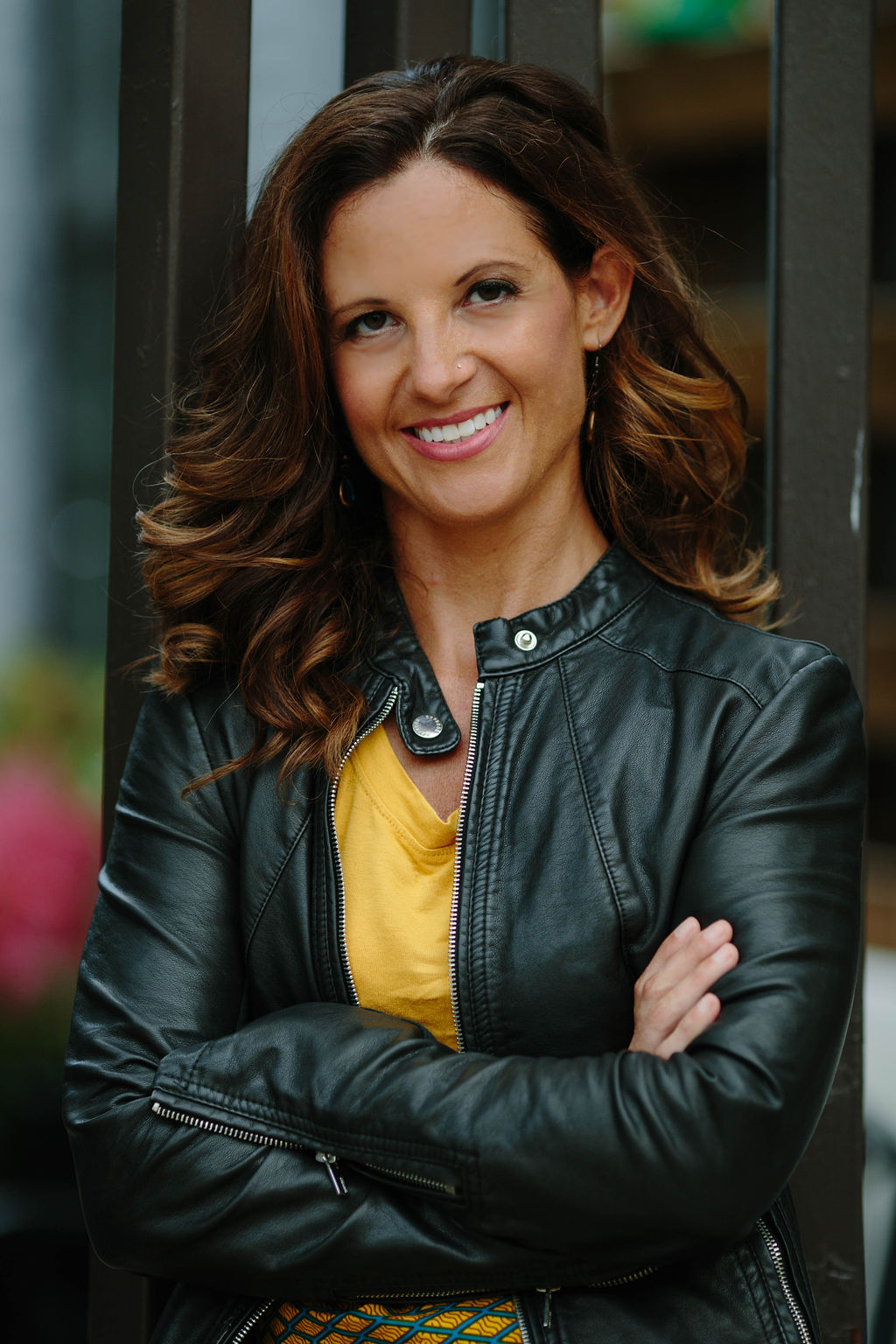
Len: Hi I'm Len Epp from Leanpub, and in this episode of the Frontmatter podcast I'll be interviewing special guest Emily Crookston.
Based in Chapel Hill, North Carolina, Emily is a former philosophy professor and currently a ghostwriter and book content specialist who works under the brand The Pocket PhD.
Emily works with professionals, from industry experts and thought leaders to busy executives and others, both as a book coach and as a ghostwriter, to help them create a constant stream of original, well-written and to-the-point content, so they can reach the right audience for their work and ideas in just the right way.
You can follow her on LinkedIn in/emilycrookston and check out her website at thepocketphd.com.
In this interview, we're going to talk about Emily's background and career, getting a PhD in philosophy, ghostwriting, and writing and publishing more broadly.
So, thank you Emily for being on the Frontmatter podcast.
Emily: Thanks for having me, Len.
Len: I always like to start these interviews by asking people for their origin story. So, I was wondering if you could just talk a little bit about where you grew up, and how you first became interested in philosophy, and eventually made your way to getting your PhD?
Emily: Sure, yeah - I love to tell that story.
I grew up in a small town in Michigan. I went to a small liberal arts college, when I went to college, also in Michigan.
When I started as a freshman, they said, "Okay, you have to take philosophy or religion." And I said, "Well, I know what religion is. Maybe I'll try philosophy, I don't know what it is."
What I discovered in my first philosophy class, which was basically an "intro to ethics" sort of class, is that there's a way of talking about right and wrong, a way of discussing and arguing, that doesn't always just go back to, "Well, this is what I learned in Sunday school." Or, "This is what God says, so this is what we have to do."
I discovered that this whole new world opened up to me, something that I just had no idea even existed as a subject matter. So I really loved it, I said, "Well, I'm going to law school, a philosophy major is a great thing."
And so I majored in philosophy, and then realized, "Yeah, actually I think I want to go to graduate school, I think I want to become a professor." And I started down that road.
I went to graduate school, and got my PhD. It was hard; people told me, "Academic life is going to be tough. Getting a job in philosophy isn't going to be easy." But it doesn't really sink in until you're there.
Andso I was a teacher, I taught philosophy for about eight years - and just discovered that all the politics and all of that stuff was getting in the way of enjoying the teaching. So that's when I decided to leave academia.
Len: I've got a lot I could ask you about there. I've got a doctorate myself, it was in English, and I read a lot of philosophy. I was just curious - that decision to go to grad school in philosophy is a big decision. As you say, there's things you can only learn when you get there.
Emily: Right.
Len: When you were doing your undergrad, was there any particular class or philosopher, or class of philosophy, as it were, that really drew you in?
Emily: I wanted to do ancient philosophy, and I took ancient Greek. I knew that at some point I need to study Latin as well, to be able to read those folks in their original languages. I was really drawn to Aristotle, and through just falling into different classes in grad school, just started moving in a different direction, thinking, "I really like ethics."
I kind of went back to my roots. I love ethics and political philosophy, and I really wanted to talk about that stuff with students. So I ended up writing my PhD on John Locke.
Len: It's funny how different people's experiences are. Mine went straight to Kant.
Emily: Oh, yeah, very cool, yeah.
Len: Because the stuff that drew me in when I was in undergrad, was like Heidegger and Husserl and Hegel and what have you.
Emily: Right, so much depends on - well for me, so much depended on the professors I had. My favorite professor, that was the class that I thought I wanted to do. And then in grad school, my favorite professor did Plato. But I felt like, "Oh, I don't know if I really want to go down -" It felt like a whole new subject that I needed to learn, and I was an Aristotle girl. So I ended up saying, "Well, I'll move over in this direction, because I like this guy, and what he's saying."
Len: And if you don't mind talking about it for a couple of minutes, what was your PhD dissertation on?
Emily: Yeah, so, it was on John Locke, his political and social philosophy. I was trying to really bring together some of his very early work - in fact a work that wasn't even published - on natural law theory, and how that connects up with his later work on political philosophy - a lot of his ideas about democracy and how governments are formed, and how that can be squared with some of the strict religious views that he seemed to hold in those earlier works. So, really trying to bridge the gap between his ethics and his moral philosophy.
Len: Oh, that's totally fascinating.
Emily: Yeah.
Len: I guess in many ways it must have been difficult to leave. For people - I think you write on your website, thepocketphd.com, - about academia, there being a lot of bullshit in academia. I'd like to ask you a little bit about that.
Emily: Yeah.
Len: I can think of a specific example that people might not be familiar with - how specific it can get. A friend of mine was getting an article published in a prominent philosophy journal, and it got rejected - and he could basically tell from the comments that one of the - quote unquote - "anonymous" reviewer figured he was a rival, and knew who it was who'd submitted this paper, and so rejected it for that reason.
Emily: Yeah.
Len: And like, once you start learning about that kind of stuff and how political it can get - people will use, "It's very competitive," and it's like, "Well, that's true - but it's not competitive the way the 100 meter dash is competitive."
Emily: Yes, right.
Len: So that must have been a very difficult decision - but you'd said you did enjoy the teaching part at least.
Emily: Yeah, I loved the teaching, and I think it's sad that the politics of everything else gets in the way.
What I really wanted was a tenure-track position. A position where I could get tenure, and then be there for the rest of my life - because that's all I wanted to do.
But after eight years being on the market, applying to 300 jobs, it just became clear to me that I wasn't getting where I wanted to go. It's sad, that that was the point when I decided, "Oh, I need to figure out something else." Rather than, "Oh, this is an option. This is one option among many." Had I thought that way all the way through, it would have been an easier transition for sure.
But yeah, the story about publishing from your friend, that's not an isolated event. That kind of stuff happens throughout academia. I can tell you why I left, and it was very political.
It was my department telling me, "You're in line for this tenure-track position," rather. And then basically, "Ooh, sorry, you're not even getting an interview for that position." And then someone going to the dean, because they overheard a conversation, and the dean just cancelled the research altogether. So they never hired anyone.
And so, at that point, I had to take a $10,000 pay cut. I had to take an increase in my teaching load. Because I had nothing else for the following year. And so that was when I decided, "Okay, I'm giving myself a year to figure out my next move - but I'm out, I'm getting out."
A friend of a friend was looking for marketing help, and I started writing her blog. She owns a web development company, and she had clients who needed blogs. And so that's kind of how I fell into ghostwriting, writing the blogs.
At a certain point, she said, "You could start a business." And I thought, "Oh, yeah. I could do that." So that's how I ended up here.
Len: That's fascinating, that you found a way to stay in the world of words and ideas, even outside academia. And of course the wonderful variety of things you would get to do with a business like yours.
Len: I gathered from something I read, maybe on LinkedIn, or on your website, that you were writing marketing content, like you were just kind of describing. But then, as you just mentioned, you decided to start your own business. I think it was in May, it was the fifth anniversary or something like that?
Emily: Yes, that's right.
Len: When you sort of went out and started your own business, what were -? I can tell from the research I did, that you think things through, and I think you got a business coach, or something like that, at the beginning?
Emily: Yes.
Len: What were some of the things you were most worried about or excited about, when you started your own business?
Emily: That's a good question. I was most anxious about not failing, right? Not fucking it up.
Because I think - coming out of academia, what I really, really wanted more than anything, was the syllabus to starting a successful business. "Just tell me the steps, and I will do it. I'm really good at following directions." But I had to really let go of that hope or that intention, because running a business is an experiment 24/7. It's, "Oh, I'm going to try this, and see if it works - and if it works, okay then I'll try something - I'll keep going. Or I'm going to track this thing and see what happens over the next month - and if it looks good, then I'm going to keep going."
Once someone said to me, "You've got to think about your business as an experiment," it changed my view of everything. Suddenly I was like, "Oh, failure is off the table at this point. If it's an experiment, then I'm learning things whenever something that I think is going to work doesn't work, right? It's not exactly a failure, it's a bunch of stuff that I've learned." And, "Maybe this piece works, and I can do it over here."
So that, in a lot of ways, took the pressure off a lot in the beginning. Because I also had the thought, "You're not the kind of person who fails. You have a Ph.D. You've gotten through 10 years of graduate school, and looking and doing a professorship and all of that. You've been very independent in your work for a long time, there's no reason this can't translate into running a business."
Also, my dad owned a small business my whole life, and so it started kind of clicking for me. Like, "Oh, maybe this is something I can do? Maybe this is in my blood? I can find the resources I need to figure out whatever I need to figure out." Yeah.
Len: That's really fascinating. I mean, what you said about, "I know I'm not the kind of person who fails. I got a Ph.D." I think to some people - to sort of boost that idea. because that's - actually, we'll get into that when we talk about the branding of your business, The Pocket PhD. But I think a lot of people think, "Oh, professor in their ivory tower." But if you ever see people who've gone through - let's narrow the focus to humanities Ph.D.s - they have their own version of the thousand yard stare that they can share with each other.
Emily: Yeah, true.
Len: You've been through something unique.
Emily: Yes.
Len: And difficult - uniquely difficult, and it's not all around, "Oh, because the ideas are hard." Or, "There's just years of reading." But like, there's all kinds of challenges you need to overcome. And it's a very long-term, self-directed thing - which is one of the most particular things that's most important.
And also, typically, to get a Ph.D., your dissertation has to not only demonstrate familiarity with the whole discourse of the subject that you're in, but also being a contribution to it as well. And to pick someone like John Locke and make a contribution, in the early 21st century, it takes a lot.
Emily: True, yeah.
Len: And so you decided with that boost, the idea - you decided to brand yourself, "The Pocket PhD." Was that right off the bat, or was that something you came to after some experiments?
Emily: No, that was right off the bat. It took me a while to come up with the name. I wanted something that connected me to the past, that past identity of the Ph.D. with - but what I discovered once I started the business, is I got a lot of pushback from people saying, "But what is The Pocket PhD? And, your name should say something about writing, something about ghostwriting, something in there."
I just loved the name, it just resonated with me. I was thinking of a pocket thesaurus. I'm the writer you pull out of your pocket when you need something.
And I kind of had in my head - like in the beginning, you don't exactly know where the business is going, or what kind of writing you're going to be doing. So it's really hard to come up with this branding stuff and the name. But I had in my head, "I could start an agency of Ph.D.s, and maybe they could do any number of business tasks that someone might need done?" And that's kind of still in my head, potentially down the road. Most immediately, I'm thinking about hiring more writers to help me with some services. But I just thought, "How cool would it be to have a business, where you could hire a Ph.D. like a hired gun?" So that's sort of what I was thinking with the name.
Len: One of the things that I find so interesting about it, and I've got this little sort of catchy saying - I guess got sort of like a bon mot, or something like that? Which is that, the kind of education you get with getting to the level of a PhD in the humanities, grants you a power that must be possessed in order to be perceived. And that's one of the things that makes communicating about it so tricky - notoriously tricky, going back to antiquity, right? Like, what's the value of getting an education to that level? And it's like, "Well, you kind of have to get there to know."
And then they're like, "Well, what's the good of it if you can get to there, and you still can't explain it to me?" And it's just -
Emily: You're right.
Len: An interesting paradox. But yeah, that idea of finding people who've done these long-term, like decade-long, self-directed things, at a very high level - and then just sending them out and applying them to different business challenges, I think is a really great idea. That's something that I think would appeal to a lot of people with Ph.D.s, who've been turned off of academia, which is probably at least half.
Emily: Right, exactly. I always think about - when talking to other academics who are thinking about starting businesses, in the humanities in particular - it's difficult to see how your skills translate. I didn't know how my skills translated. I mean - I found this position, and was like, "Oh, I guess I'm kind of good at this." But in other fields, in the sciences, it's like, "Oh, well you can go into industry." There are lots of options. But for the humanities - and I think we sell ourselves short, because we're like, "Oh, what am I going to do with this Ph.D. that I--?" I'm unemployable in some ways. But it's not true. The world is open - wide open.
Len: Yeah, I mean, in my personal experience, after I finished my doctorate of English, I went to do investment banking and did mergers and acquisitions. And that's when I found out, "Oh, there's actually like -" We undersell ourselves. And then you start looking, it's like, "Oh, Henry Paulson got an English degree, and so did the former CEO of the Bank of Montreal," and stuff like that. So there's more of us out there than some people might think.
Emily: Yes. Exactly, yeah.
Len: I could talk about that all day, obviously. But so - the Pocket PhD turned five in May, as we already discussed - and you wrote a really great post about the top five things I think you learned in those five years.
I just wanted to give you an opportunity to talk about one or two of those. The pricing, I think - how to price yourself. That's something that people who go independent and into consulting businesses and stuff like that, have a really tricky time with, at the beginning at least.
Emily: Yes. Pricing in particular was tough in the beginning. That was one of the major reasons I hired the business coach at first. Because I thought, "I don't even know how to price my services." She at least pointed me in a direction with that. I read a book called The Well-Fed Writer, and that had some really good advice around pricing.
And I've always - I don't know where I got this idea - but I've always just kind of raised my prices along the way, kind of on a regular basis. So, I write a couple of books at a certain price, and then I raise the price for the next two. That kind of thing. And that got me really comfortable with how far I could go with ghostwriting, and how much it costs.
I like to think about pricing as contextual. So, if I were going to write a book for, I don't know - someone in a non-profit, I might think about reducing the price - or a student. I have a student who's thinking about leaving academia - and she wants to increase her presence on LinkedIn, and I'm working with her there. I'm not charging her the full price that I charge to my corporate clients, for example.
When you think about pricing in those terms, or if you talk to a client who told me, "Oh, I used a ghostwriter before, and I've paid X." Well, then I'm not going to charge them less than what they paid before. So pricing is really - it can be very contextual.
I don't think that means there's not a high price that I could go to, where I'm never going to find a client - for sure. But you can hone in on the sweet spot, if you think of it in that way. You don't have to set your price today, and this is going to be your price forever. You can always change prices. Especially if you're in a service-based business, especially if you're doing one on one type work.
I think I want to encourage people starting businesses or working in these fields, to charge, I won't say, "What you're worth," because I don't know what that means. But charge a price that makes you feel really good about what you're delivering.
Because there's nothing worse than taking on a client because, oh, you're desperate and you don't have any money coming in. Taking on a client for less than what you want to charge - and then they become the biggest pain in the ass you ever met. Suddenly, you're regretting every moment of the work that you're doing.
So, I'm always thinking in terms of pricing myself in a comfortable place, where I feel good about what I can deliver. And if the project goes overtime, or if I need to spend extra time on it for some reason - I'm okay with that, because I've built that into my price.
Len: I think you mentioned writing a couple of books there, which is a part of what you do as a ghostwriter. I wanted to use that opportunity to sort of move the discussion on to talking about that. Because I find the subject totally fascinating. And you're the first ghostwriter I've interviewed for the podcast, so you're breaking new ground here.
Emily: Yay.
Len: I was wondering if you could talk a little bit, for those who might not know - imagine someone doesn't, they've never heard of the idea before. What does a ghostwriter do?
Emily: Most of the time, I ghostwrite books. That's my main business, business books in particular. I also ghostwrite blogs. But basically the idea is - you come to me with an idea, you don't have the time - or maybe you don't have the inclination? You're not that excited about writing. You have more ideas than you have time to write those ideas down. And so you bring those ideas to me - and I take them, and I run with them. I do a lot of my own research, but I also really like to keep my ghostwriting jobs very collaborative.
So when I do a book, for example - it's a 16-week process. You come to me with a complete outline. I sit down with you. It can be a working outline, we can work on it. But I sit down with you - and we meet once a week, we talk through different pieces of the book. I write, you edit - and in the end, we go through about two rounds of revisions. And it becomes this beautiful mind-melding kind of process, where, in the end, if we've both done our jobs well, then you take full ownership over the book. Because you've really been through it every step along the way.
I think one of the biggest challenges with working with a ghostwriter is thinking, "Oh, I won't know what's in my book if someone else writes it." I think that's a really valid concern. Because if you're writing a book, you're going to be using it. You're going to be doing speaking engagements, you're going to be interviewed about the book. If you've done the marketing correctly, you're going to be talking about this book a lot. So you need to know what's in there.
And so I think through a really collaborative process, that really helps you take ownership in a way you might not, if I said, "Okay, thanks for the outline. I'll see you in six months. Here's your book." I think it's been working really well for me and my clients with the collaboration.
Len: That sounds like a really excellent model. I mean, the idea of - I think you write about this, but you're sort of testing the client out too.
Emily: Yeah.
Len: It's not just the other way around, when you're trying - it's going to be a relationship, and it's going to be collaborative and creative. And then there's sort of like people - I imagine they're usually really excited and full of ideas, and you're like, "Well, give it some structure first," as you said - a working outline, maybe is all it needs to be - but having that mind meld happen, must be a really kind of interesting experience.
Emily: Yeah.
Len: But you also, I know - you sometimes have to be honest, as it were - with your clients, as well. I imagine that happens not just at the level of the outline, but it's actually the content and the actual substance of the ideas itself. So the person's - they're in a debate with you as part of the process. Is that right?
Emily: Yeah, often. I tend to work with experts. And what's really good about working with me, is - I wrote a book, for example - with a neuroscientist, a parenting book actually. She's a pediatric neuroscientist. And she's got all of this huge body of knowledge in her head. She's trying to talk to an audience like me, somebody who doesn't know very much about the brain - or very much about parenting, maybe?
And so what's really helpful is that she can - I can be kind of a filter for her. I'm one of her first readers. She tells me what's going on, and I take all of these notes and restructure everything and say, "Okay, now explain this to me like I'm five. Let me wrap my mind around it, so then I can translate it for your audience."
A lot of the work I do feels like translation. It's like taking the expert ideas and the technical stuff, and working it out so that a reader without that expert knowledge can really understand it, and get a lot of value out of it.
Len: And I imagine people might come to you with like, "Oh, I'm going to write the next global bestseller and win a Nobel prize," or something like that. I gather a big part of what you have to do is try and use your knowledge and expertise to help people understand - once you understand what they're really after, who the real audience ought to be for that project.
Emily: Yeah, positioning is really huge. The biggest question I ask prospective clients is, "What is the business case for this book? Because we're writing business books, I want you to think very hard about the ROI here." I don't like taking people's money when I'm not sure if there's the - some people come to me, and they want to write a book that's totally outside of the realm of what their business is all about. And I just want to know, like, "How does this relate to your business? How is this going to help you get more clients? How is it going to help you get speaking opportunities? What's the pay-off for you?"
"Because if you want to write a book about your childhood, you could do that - and that's fine. But is this the right time for you to be putting all your energy into that? Is this the right thing for you to do? And if you want to write a book about your childhood for your grandkids or something, great - record some interviews. Why would you hire a ghostwriter and pay me a lot of money to write that for you?"
There's got to be a return on that investment. So that's one of the biggest questions I ask, and often where the biggest pushback happens.
Len: One other thing you write about in this post about the five main things you've learned, is something that really resonates with me - which is lesson four, "Positivity is not synonymous with Pollyanna-ish."
Emily: Yeah.
Len: I deeply believe that myself. I was just wondering if you could elaborate a little bit on what you mean by that?
Emily: Yeah. I think it's related to this idea of toxic positivity. You run into people who - any time you're - you have a venting moment, or you have something to complain about. They're just like, "Oh, yeah but it's okay. Look at the silver lining." Or it's, "Oh well, think about the lesson that you're learning." I can appreciate the perspective of, "Yeah, there's probably something positive that might come out of this terrible situation." But that's not something I'm ready to look at, until probably down the road.
I think sometimes we skip over the negative feeling too quickly. When what we need to do do, is feel it and let it rush over us - and take it in a realistic way, and look at it for what it is. I think that that can actually give us a better lesson down the road, once we are able to see it for the positive stuff that's there. But if we just try to flip from the negative to the positive too quickly, I think it can cause some whiplash.
Running a business is a really emotional game. In a lot of ways, it's about figuring out how to manage your own emotions. Especially when you're a solopreneur. And that I think is one of the other big lessons I've learnt as a business owner.
Len: Actually, on that note - one thing I introduced into the podcast longer ago than I wish it were, given that I'm still asking about it - is asking people how the pandemic affected them and their business. That's a very emotional thing. I mean, I've talked to people, solopreneurs, some of whom are like, "It hasn't changed anything at all. I'm an introverted software developer who works out of his basement, and always has. And I go running by myself." Things like that. To people who are like, "My whole - half my business is speaking engagements as a consultant, and being flown out to talk live to people - and it's also something I really love."
I remember one guy in particular at the beginning. He's like, "It's all just dried up. I don't know how this is going to go."
So, I was wondering if you wouldn't mind talking a little bit about how that affected you? I gather, I think I listened to a podcast where you talked about - you'd had some big planfor 2020, that got derailed. So if you wouldn't mind talking a little bit about that, and how it felt, and how you adapted to it?
Emily: In the early days, I definitely freaked out, and said, "I don't know how I'm going to keep this biz going." Because I relied really heavily on in-person networking events. That's where I got all of my referrals. That's how I found all of my clients, basically, before the pandemic. So I was in panic mode for a couple of months, for sure. And then I sort of stepped back and took a breath, and I got some stimulus money.
And so I was like, "Okay, I think I'll be alright. I think I can figure this out." I just thought, "I've always wanted to really lean into using LinkedIn for my business, and I've never really made the time to do that." So I just made the plan, and the plan was very simple.
I was just like, "Look - I'm just going to be consistent on LinkedIn, until this pandemic is over, basically - until we can go back to in-person networking." I just had this plan of like, "Okay, I've got a formula - Monday, Tuesday, Wednesday, Thursday, Friday. I've got a plan for each day of the week - and I'm just going to post, come hell or high water. Nothing else matters."
In doing that, I realized really quickly how important consistency is on these platforms, for one thing. But I also started learning more about my own audience, and discovering what people really enjoy reading on LinkedIn. And recognizing that - I've heard the statistic that only 1% of LinkedIn users actually post their own content. So it's not that hard to stand out as a content creator on LinkedIn. The algorithm does crazy things. Everyone's complaining about that at the moment. And you can stop seeing the kinds of page views you were seeing three months ago really quickly, which can be disheartening.
But in general, if you just stick with it, and you focus on particular metrics - after using LinkedIn for even like three or four months, I suddenly was getting all of my leads through LinkedIn rather than referrals. And I thought to myself, "Well, this is what I've always wanted anyway." I always thought referrals were kind of hit or miss. That's not really a steady lead generator, right? "What I need is, okay - if I have ten conversations on LinkedIn, I'm going to get a client out of it. That's more in line with what I'm looking for."
I just discovered there are other ways to network. You can clearly network online, through LinkedIn, or through Facebook, or whatever your own platform is. And it's different, it's not the same as maybe a face-to-face interaction. Not as immediate - at least for me, it takes a little - the sales cycle's a bit longer. But if can work.
And so, I was doing well with the pandemic. I really didn't feel much of a difference, until about spring of this year. Then things slowed down quite a lot. I think the vaccine came, people started sort of moving around more. They started thinking less about maybe their business. And I think also people started getting really burned out.
I think in a burned-out space, it's really hard to think about a book. I heard people say, "I can't even focus on reading, how could I think about writing a book?" So yeah, since the spring it's been slow on the ghostwriting side of things. But I have noticed things picking up, I would say, within the last month or a couple of months.
Len: One really interesting thing - I don't know why I found it so fascinating - about being a ghostwriter, from just reading on your website, is that you can't - you can't really show your portfolio necessarily, in the way that an ordinary writer can. I'd just like to ask, not for you to give away any secrets - but like, specifically, how can people find out about the work that you've done, if they're interested in say approaching you for work?
Emily: I always tell any prospective client that, "You can get in touch with my clients. They're happy to have me put you in touch with them privately to have a conversation." I do that kind of on a referral-type basis.
I also - this is one reason I need to create a lot of content, I think? =I put out a lot of blog posts. I've been doing two a month or so for a while. I have a newsletter, of course. And then the LinkedIn stuff.
So I always say, "At least if you like my content, that should be enough to get you on a phone call with me." And then, "If I can gain the trust one-on-one, and you talk to one of my previous clients, that should be pretty good."
The other thing I do is - I'm happy to give a list of books that I've edited. And my editing is developmental editing. So it's not proofreading. It's not very surface-level editing. It's pretty deep, in-depth editing. You can get a sense of the way I work by looking at the titles that I've edited and the types of things I've done. I'm always happy to share blog posts that I've written for other clients as well.
Len: Actually that's a really interesting thing I wanted to ask you about. But just before we do that, something I neglected to ask you earlier, which is - so someone comes to you, you're like, "Give me an outline, and let's talk about it." And you decide you'll work well together. And eight weeks' later, there's a book.
Emily: Sixteen weeks, yeah.
Len: Sixteen, oh pardon me, it was sixteen weeks.
Emily: That's okay.
Len: Eight weeks wouldn't be, as I was saying it, it was like, "Wow that's faster than -" anyway, that I thought. But then, do you help with marketing the book afterwards as well?
Emily: I don't. I have resources that I can share, and I'll send people to. I have a couple of Amazon bestseller list guru-type people that I'm happy to share information with. I do often offer like blurbs for Amazon. "Here's a summary. Here's a blurb for the back cover. Here's your bio." Happy to do little things with marketing. But as far as a marketing system, no, that's not my expertise.
Len: And writing - so you say you write posts for people as well, right? Is that the same thing too? Where you'll come up with like a schedule? Like, it's going to be seven days a week, or three times a week, or something like that? And you agree to a schedule, and then you probably outline them in advance. And then might edit- ?
Emily: Yeah. Right. So this service is more new for me. It's something I developed over the summer. But it's a LinkedIn content strategy, and content creation.
What I like to do with this, is - we meet monthly. We have a content strategy session, where we talk through types of posts that we want; two blogs are included in the packages as well. So it's two blogs, plus three LinkedIn posts per week.
But the thing about LinkedIn is that you really need to be on it for it to work for you. You can't - people ask me about schedulers, LinkedIn schedulers or things like that. And you really can't schedule your posts ahead of time with LinkedIn, because you really want to be engaging on the platform, before and after you post. The algorithm really picks up on that with LinkedIn. They're driven to create conversations, so they want to see that you're active - rhat you're commenting on other people's stuff.
So, that's one of the biggest kind of barriers to getting LinkedIn to work for you. Because if you're super busy - it's great that I'm creating posts for you, and you don't have to do that part - so that does save you time.
But you still need to be setting aside about twenty minutes a day to be on there, and to be engaging. I'm not interested in being a LinkedIn manager, so I don't want to take over and be your ghost on LinkedIn. "Happy to help you create posts, but don't feel that comfortable commenting as you in real time." Although maybe that's something to think about down the line, I don't know? So yeah, so the service is - we create the post for you, and we create some blog posts as well. And then you do the engaging, and you're there.
Len: You've mentioned the algorithm a few times there. It's a really fascinating feature of the self-publishing world - whether it's books or getting attention on social media, and things like that - that we all have this concept that like, what we're doing is being evaluated in some changing way. And so everybody who gets involved in this - if you're trying to increase your profile on social media platform, if you're trying to get attention for your book - you have to make a decision about whether you're going to engage with the algorithms in a sort of very like - trying to game them kind of way, or whether you're just going to kind of have a sort of high-level understanding, or whether you're just going to ignore it completely.
I gather the high-level understanding, is the kind of approach that you prefer, rather than chasing it all the time?
Emily: Yeah, I agree. I don't feel like I have the energy to chase an algorithm. And I don't think there's that much value in gaming an algorithm. I mean, even if you did manage to game it - they change them so often. That whatever you've figured out, isn't going to work in a few weeks. So why put all that time and effort into it? It feels maddening to me, to try to chase down an algorithm constantly.
So what I like to say, is, "Figure out what metrics matter to you. Because the metrics that the algorithm cares about are not likely to be the metrics you care about," right?
The algorithm wants you to get that dopamine hit. It wants to show you constantly how many people have viewed your post. But how many people view your post, is not a metric that's that helpful for you. What's helpful for you, is seeing how many people engage with your post and comment on it. What's helpful for you, is figuring out how many people who see your post then send you a DM and want to talk, right? How many leads you're generating.
So as far as I'm concerned - if I'm getting the number of leads I need, I don't care if my post views are down. If they're being shown to the right people, who are likely to be my leads - then that matters more to me than having thousands of followers or 10,000 followers, or whatever it is, yeah.
Len: And from what I gather, at least from having looked around and failed to find you - you're not on Twitter, I don't think?
Emily: I am on Twitter. I'm actually thinking about doing a Twitter strategy. Because I'm finding it hard to sell LinkedIn services on LinkedIn, because of the algorithm. And so it's amazing. Linkedin has their own stuff to sell, they don't want to sell my stuff. So yeah, an I am on Twitter. It's @emcrookston, not The Pocket PhD. So that's what makes me hard to find.
But I am thinking about doing more on Twitter, for sure. I've tried Facebook, I'm over it. I'm not doing Facebook for Business anymore. I've tried Instagram, which also was challenging for me. I don't love the visual stuff. As a writer, I can't wrap my mind around making that work for me. But Twitter seems like the place, so yeah.
Len: Yeah, I find Facebook confounding and infuriating, personally.
Emily: Yes, yeah.
Len: I interviewed someone who worked there - for the podcast, once - and he didn't say what I'm about to say. But I kind of put together that, like - why is Facebook so crazy? And I'm particularly talking about like in the browser, on a desktop - right? And every single square inch of that is somebody somewhere fighting for your engagement. And it's not a coherent thing, right?
Emily: Right.
Len: It's by design - it's just like they'll give a person a desk, and they'll give them a part of that screen. And they'll say, "Increase engagement here," basically, to put it crudely.
Emily: Wow, interesting.
Len: So everybody's fighting all over the place for you.
Emily: Wow.
Len: And that's one of the explanations for why it's so - there's just something on every square inch. It's a huge, complex service, with some obviously very aggressive, and sort of ambitious people, behind it. But they don't really tie together. So it's very deep in every part of it.
But also, and I'm not making any specific accusations here, but like, Facebook's the only place I go where I click "post," and then I have to wait a few seconds while it says, "posting." I can't help but think, somebody, somewhere, whether anybody knows they're not doing it or not - put in a little delay, so that he or she or they get to bump their metrics for their little part of the process.
Whether that's true or not, for that specific example, once you start thinking that way, it's like every single part of it - you're like, "This is all designed to waste my time."
Emily: Yes, yeah. Well, unfortunately, LinkedIn is feeling a bit like that at the moment. And what I've gathered from talking to other people who know much more about the algorithm than I do, is they have like eight different algorithms. And the mobile algorithm is different from the desktop.
It sounds similar to what you're describing - where there's a lot of people competing to try to make things work, and they're not talking to each other at all. It's totally maddening to see that. I mean, you have a post and you're doing the same thing - the exact same thing, right? It's getting the comments it was getting, you were getting three months ago. But the views are just in the toilet, and you're just like, "Ah, what is going on? People seem to be liking this post. They're commenting on it. Why isn't it going up?"
Len: That is one of the reasons I kind of like - I mean, everybody's like, "Twitter's awful." And it's like, "Yeah there are features of Twitter that can be totally awful." But the fact that it's still got this basic functionality of like, your followers are people who have chosen to follow you - whether they act like it or not all the time, is another thing, but the people you follow are people you've chosen to follow. And it's simple messaging and replies back and forth, things like that.
And so, I mean - as long as you can keep away from the toxicity as much as possible, it actually is a place of very clear and personal engagement, where it feels like it really is that person and you, not Facebook, that's having the conversation.
Emily: Yeah, I agree. I feel like Twitter is becoming higher on the list of where I want to be right now online.
Len: I've just got a couple of sort of like - when we get to the end of the podcast, we like to talk about things as writers and publishers, and self-publishers and stuff like that. I just wanted to ask you, so how do you- ? So, you've got this sixteen-week process, that you engage - and you've got a client, it's all ready to go. How do you keep yourself motivated throughout that period when you've got a new client? Do you schedule everything, like from 1:00pm to 2:00pm or 3:00am to 4:00am, or something like that? How do you manage your writing that way?
Emily: I do tend to try to sort of eat the frog when I have a new ghostwriting client. The hardest thing is getting the draft done, I think the first bit - getting all that stuff down, and figuring out how we each work together, and getting into a groove that way. So it's really helpful to get as many words done as possible, as quickly as possible.
I like to try to actually do the full draft in eight weeks. That gives us eight weeks to edit it. And that tends to give me a good result. But yeah, I like to write in the morning. And like I said, I like to do - the first thing, the hardest project I have of the day.
And if I have a ghostwriting client, that's what it is. So I'll usually set the first two to four hours of the day, where I'm really going to try to hammer out a lot of the book - or as much of the book as I can in that day. I do have word count goals in mind. I usually tell people, "40,000 words is a good goal to shoot for with a business book like this." So that means I need to write 20,000 words in the first month, and 20,000 in the second month. I'll just break that down into 5,000 words a week. Pretty doable. 1,000 words a day. And usually I can hit that goal pretty easily.
Len: That's really interesting. I have the same kind of - at least - not with respect to writing, necessarily. But like, "Hardest thing first. Get that one done."
And breaking it up into chunks like that can be really helpful, too. Particularly something, I think - I don't know if we've talked about it that much? But you did mention consistency earlier on, and how this is actually just a sort of principle that's particularly valuable in all kinds of areas of life. Specifically - I mean - well with podcast publishing, it's true.
Emily: Oh yeah.
Len: When you're trying to appeal to algorithms, it's true. But also, when you're trying to get things done yourself, it's true that just - making it a habit, getting a little bit done every day - can really help a lot. And even just with your own mental health.
Emily: Yes. Yeah, I'm finding that now. I actually am writing my own book at the moment. And that's - the reason I usually say I'm not a good book coach, is because I think the key to writing a book is just putting the words on the paper. No matter how messy they are, and no matter how poorly you think it's going - if you're hitting 1,000 words every day, they add up. And when you have 40,000 words, you're like, "Oh, look - I wrote a book. I've got words to play with here." And it's much easier at that point to edit it, so--
Len: I didn't know that. Would you mind talking a little bit about the book that you're working on right now?
Emily: I actually set out this year with the goal to write my book. I started in January, roaring start. I took a course to figure out my book idea. I did my homework very dutifully. I set my word count goals.
And then, like most resolutions, I suppose - after about six weeks, I just said, "Ah, to hell with this - I'm not doing it." But what stopped me, was that I could not outline the book. So now you know why I make my clients bring me an outline. Because I find that piece of organization particularly challenging.
I just couldn't wrap my mind around where the book is going. I know it's going to be about self-awareness. I want to talk about my journey to self-awareness, and how important I think self-awareness is for business owners.
But I've picked it up again, I've got about 8,000 words at this point. I've been writing pretty consistently, 1,000 words a day. what I've decided, is I don't need an outline. Maybe that's not the best way for me to write my personal books? I'm going through questions. I've picked twenty questions around self-awareness, and I'm just riffing on each of those questions - what I know about them. I'm leaving the research till later, but I'm just kind of shooting off the cuff about each of those questions. And then I figure I can organize it later. So that's the method right now.
Len: That sounds fascinating - I like the way - like, everybody's got to find their own way through. We talked about it before with the Ph.D., right? There's going to be ups and downs.
Emily: Yeah.
Len: And learning how to push through it. And that it can be different every time, as well, is part of the robustness that you need to develop. And of course, sometimes it's on a downward trajectory, and other times it's on an upward one.
I guess the last question I'd like to ask you is - if there's someone listening to this podcast who is thinking of writing their first book - what would be the say one or two pieces of advice you would give to them? Things maybe you wish you'd known when you started out doing this kind of work.
Emily: I think I would say - experiment. Just like with the business. You want to experiment with writing. So, maybe you're really good at writing at two o'clock in the morning? Because you're a night owl. Give that a shot, and see if it works for you. Maybe you're better in the afternoon? You're better if you hit your book after lunch.
Play around. Give yourself like a week of trying to write at a certain time of day, and see how it goes. And then switch to a different time of day, and see if that works better.
So I would say, experiment - like I think that's coming out of my own experience, like, "Oh, I can't come up with that line, so I guess I'd better figure out a different way to start writing."
But like I said before - I think the number one thing when it comes to writing a book, is just getting those words on the page - however it needs to happen. If that means taking a walk and coming back, go for it. Whatever it takes.
And I do recommend setting some kind of word count goal, as opposed to - some people will say, "Well, pick an amount of time that you want to spend writing your book." That doesn't work so well for me. For me, the goal of hitting that number of words, is really key.
And you don't have to be too strict about it. I like James Clear's advice in Atomic Habits, which is - you start a habit, don't skip more than a day. So if you take a day off, all is not lost. It doesn't mean you've ruined everything, because you broke your streak - just get back on it as soon as you can and keep going. I find that to be really satisfying. You're checking off the goal on your calendar, and it feels good.
Len: It definitely does.
Well, thank you very much Emily, for being on the podcast, nd for sharing all those thoughts, and sharing all that advice and everything, and for sharing your journey with us as well - which was really great to hear about. Thanks very much.
Emily: Thanks for having me, Len.
Len: Thanks.
And as always, thanks to you for listening to this episode of the Frontmatter podcast. If you like what you heard, please rate and review it wherever you found it, and if you'd like to be a Leanpub author, please visit our website at leanpub.com.