

Special Guest: Derek Doepker, Author of Why Authors Fail and Kindle Bestseller Secrets
A Leanpub Frontmatter Podcast Interview with Special Guest Derek Doepker, Author of Why Authors Fail and Kindle Bestseller Secrets
Special Guest: Derek Doepker is a bestselling author, speaker, and consultant, who specializes in content marketing for authors and entrepreneurs. In this interview, Leanpub co-founder Len Epp talks with Derek about his background, how he got into the music scene in Los Angeles, how at a young age he got into healthy living, the "Can I just?" technique for forming good habits and getting motivated, ...

Special Guest: Derek Doepker is a bestselling author, speaker, and consultant, who specializes in content marketing for authors and entrepreneurs. In this interview, Leanpub co-founder Len Epp talks with Derek about his background, how he got into the music scene in Los Angeles, how at a young age he got into healthy living, the "Can I just?" technique for forming good habits and getting motivated, how he is adapting his consulting to the changed circumstances of authors and entrepreneurs in the midst of the COVID-19 crisis, and the importance of getting the right advice and coaching, as you pursue the development of multiple income streams from self-published books and audiobooks.
Transcript
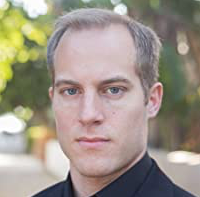
Len: Hi I'm Len Epp from Leanpub, and on this episode of the Frontmatter podcast I'll be interviewing Derek Doepker.
Based in Los Angeles, Derek is a bestselling author, popular speaker, and consultant who specializes in content marketing. His very helpful books cover a variety of subjects, from fitness, to finding success in your life and career, and how to succeed as a self-published author. His writing has appeared in numerous publications, including Forbes, Entrepreneur, SUCCESS, and other well-known magazines.
You can follow him on Twitter @ExcuseProof and @AuthorSecrets and check out his websites at derekdoepker.com and ebookbestsellersecrets.com.
Derek's bestselling books include Why Authors Fail: 17 Mistakes Self Publishing Authors Make That Sabotage Their Success (And How To Fix Them), and *Kindle Bestseller Secrets: 10 Tricks Bestselling Non-Fiction Authors Use To Dominate Kindle.
In this interview, we're going to talk about Derek's background and career, his advice and observations on self-publishing, and his own approach to writing and publishing.
So, thank you Derek, for being on the Frontmatter podcast.
Derek: Thanks for having me here Len.
Len: I always like to start these interviews by asking people for their origin story. So, I was wondering if you could talk a little bit about where you grew up, and why you moved to LA, and what's happened to you in the time there?
Derek: Sure thing. Well, I didn't think I'd be an author. That's the first thing. I grew up in Evansville, Indiana. When I was 12 years old, I went to a friend's house and he was sort of playing guitar. So I go, "Oh, I kind of what to try that." He showed me a few things, and immediately I fell in love. So from the time I was 12, all the way up, when it came time to go to college, I knew I wanted to do music. So I got my degree in music. And my whole life was figured out. "I'm just going to go become a rock star."
I went to college in Nashville, Tennessee, and got a degree in music. And then what brought me out to LA, was I was in Nashville, Tennessee - and it was cool, a great music city, wonderful people there. But I could just feel something inside me. I was like, "LA is where the rock stars are at." It was more my scene being a rock guitar player, not being as into country music as I was into rock.
So moved out to Los Angeles. And when I moved out to LA, I was broke, sleeping on an air mattress, valet parking cars. And then each month, it'd be like the same routine for the first few months - looking around my apartment for something to sell, so I could afford the rent that month.
I remember one month it got to the point where I didn't really have much left. And I look over - I see my music keyboard from college, which I'd composed a lot of songs on. And I go, "I really don't want to get rid of this, but I can't think of what else I can do to pay the rent." So a guy walks out the door with the keyboard that I sold on Craigslist. I got a hundred something bucks, 200 bucks.
I was able to pay the rent, and I was also thinking, "I really need to figure out a way that I can support myself." The jobs I had weren't cutting it, and I had fallen in love at this point with this idea of entrepreneurship. And hearing people like Brendon Burchard talk about, "You can have a message that you monetize," and all this sort of stuff. So I was just consuming podcasts and going to seminars, volunteering at seminars that I couldn't pay to attend, but I could volunteer. Driving around listening to podcasts and things like this, to educate myself.
And most of the things failed, that I was doing. I started blogging, started a YouTube channel. And there was a big success in the sense that I made one affiliate sale, and I made like 47 bucks, which was the ultimate feeling of selling my first thing online. But I had spent way more than that, just to run my website.
So everything shifted. I won something in the mail for posting on a blog, by random drawing. They sent me a Kindle ereader - this was summer of 2012. So at this point, I had already tried to launch a book, a course. I could barely sell it to my own friends and family. So I go, "Okay, I'm going to take all the stuff I've been writing and put it out as a Kindle book."
So I take the material, I just kind of repurpose stuff. I launch it - and then right out of the gate, this Kindle book sells about three copies in the first month - and one copy was to my mom. It did not do well. I then did a second book, and that did a little bit better - it made about 70 bucks in sales, but I had spent months working on this thing. So I'm like, "I'm making probably less than $1 an hour at this rate."
So I was about ready to give up on that pursuit - still going into online business, but just go to the next shiny object.
I attended a seminar in November of 2012, and that's where I learned about the power of influence and relationships. I feel like those were the final pieces of really understanding these principles. It wasn't about self-publishing or publishing skills. It was just these higher-level principles. That was the final piece that I needed.
And then within a couple of weeks - I went home, and started a brand new book. I launched it, and in less than four weeks, I went from nothing to a number-one bestselling book in weight loss, and generated almost $6,000 in royalties in 11 days. So at that point, I realized - I'd figured this thing out, I cracked the code.
Since then, I have published seven books in total, sold over 75,000 copies of the books, and have been helping authors and entrepreneurs ever since then - when it comes to book publishing mainly, but also how to build an online presence - whether that's through coaching or courses, or things like that.
Len: Thanks for sharing all of that, it's such a great story.
One thing I wanted to ask you about was, what was the scene like in LA for someone who's like, "I'm here, I want to be a rock star." What do you do? Do you answer ads in Craigslist for, "We're looking for a guitar player in the band," or something like that?
Derek: Literally, it was exactly that, actually. I played in a band for about a year, a little over a year, when I first moved out. Maybe it was a few months after I moved out, when I found the band. And that was a really cool experience. Because we got to play on the Sunset Strip at like Roxy and Viper Room and Whisky a Go Go, and a lot of these popular clubs that I knew of, just from being a kid and knowing that's where a lot of the hard rock 80s hair metal bands played at - and then now I'm playing there.
But yeah, it was answering a Craigslist ad. I hit it off with the band, and we all got along by mostly agreement. At least by the band members - including me, we didn't want to keep it going - just the direction it was going in, so we split up. But that's exactly how it went, yeah.
Len: Was it like The Dirt? Have you seen that movie, sorry?
Derek: I've seen it, yeah. We weren't - at least I wasn't quite as crazy as Mötley Crüe. I'm a health nut. So I was not into quite all the shenanigans. But yeah, I definitely love that rock star feeling, being on stage. I feel like it also translates into the now more virtual world.
But prior to things getting shutdown, the world - being on stages and speaking and being in front of an audience, it's a similar sort of feeling.
Len: You mentioned you're into health and fitness, and that's another really interesting thread in your tale. I was listening to a podcast where you'd spoke a little bit about how you got into that, and I was wondering if you wouldn't mind sharing the story of how - because you weren't always a health nut.
Derek: No. Through high school, I ate fast food virtually every single night. And it was McDonald's. I remember McDonald's, always supersize - going through the giant things of Dr Pepper and Mountain Dew.
It shifted when I was about 17 years old. I read a book, so it's the power of books. It was about anti-aging, and so it's called, &The Wrinkle Cure*. I learned all about what happens when you eat trans fats - for instance, what happens in your cells. Too much sugar, this is what it does.
And before that - like, I wasn't overweight. I was probably unhealthy and did terrible in gym class and had skin breaking out. But I didn't think of myself as like - there's this disconnect betwee people talk about eating healthier, "Oh man, dude - your diet's so unhealthy." I'm like, "Ah, what is it? Like what is that?" It's not that I didn't get what unhealthy meant in a literal sense. But it just didn't have any personal impact on me. I'm like, "Well I'm doing okay. Maybe if I'm 70 years old trying to avoid a heart attack, then I'll change my diet."
Well, this book opened my eyes. And I go, "Oh, wait a second - this is actually affecting me right now. If I keep this up, this could be doing permanent damage to my body. This is explaining why my skin is probably constantly breaking out and I feel tired all the time," and this and that.
I also just had this moment, where it's like I remember I'm imagining, maybe it's 10 years into the future? I just had this vision of my ideal self. Like, "Who do I want to be in this world?" And I just couldn't imagine myself being someone who was unhealthy, and by choice, right?
Obviously some people can't choose that. But just choosing to engage in a terrible diet - not taking care of myself. I wanted to be this person I saw in my mind, that was fit and just this ideal version of someone who was in great shape, who was on top of things, who valued myself. And I made a choice, that's who I'm going to be.
It was crazy, because now I teach changing habits - and sometimes it can be a pretty serious process to change habits and let go of old behaviors. Even for myself, it can be challenging to do that.
For that though, at that point in time - it was a very clear decision, and it's like my whole life just - almost in an instant, I was just like, "Now I'm a health guy," and refusing to eat any junk food. Only eating health food. The pendulum totally swung in the other direction. And since, I've eased up on that - but that's what it was like back then, about 17 - and then I was just hard-core into health and fitness.
Len: And when you decided you wanted to start working out, what resources did you go to, if you recall?
Derek: Yeah, I remember. I was searching on a lot of like, on bodybuilding.com. Then later I found T Nation, which is Testosterone Nation - which has some great articles and stuff. And I was going through all these articles, but I experienced something that you'll experience studying anything - from fitness to entrepreneurship, to book publishing: there is so much conflicting advice out there.
I'd read about, "You want to do low reps and heavy weight to build muscle." No, "You want to do medium weight." No, "You want to do higher reps to volume, and you should work out a muscle once a week." No, "You should do at least three times a week." And it's like all these people are saying all this different stuff, and I remember I just - I was obsessed. "Oh, I've got to find the right answer. I've got to find what the best thing is." And so it's just this never-ending thing.
Finally, the one good thing is, I just started doing whatever I could. So I had - my sister had some workout DVDs like Tae Bo or whatever. Like these random little workouts. So I would pop in whatever DVDs I could find around the house, just so I'd be doing something.
And then I invested in a program that's not around anymore, but it was a guy who was like a skinny guy who put on a lot of mass. I remember seeing the before picture, and I go, "Oh that kind of looks like - " I was 118 pounds at the time. So his "before" picture kind of looked like my body. He had a little bit more muscle, maybe? And then his "after" was like just, he had this fitness model look. And I go, "Oh, that's possible - to go from that before to that after? Well I look like that 'before,' so I want to look like that 'after.'"
So the visual impact of that - and then I remember the promises. Like, "I show you exactly how many calories to eat for your body. The exact proteins, fats, carbohydrates, the exact workout. If you follow these other programs that are meant for people with a different body type, it might not work for you. So this is designed for people who are skinnier," and all this sort of stuff. And I go, "Okay, that's it. This is what I want."
I talked my mom into getting it for me. I dove into it, and I followed that thing to a T. And probably within about five or six months, I did put on about 30 pounds of lean - and I still had a six pack by the end of it. So that was my start. And it was probably the first, now that I think about it, information product that I consumed. And years later, I would be producing it myself.
Len: This might seem like a bit of a strange question, but one thing I've experienced generally with attempts that people make at making positive changes in their lives - is that often the biggest pushback they get is from the people around them, who might take it personally. So if all of your friends keep eating McDonald's and you're like, "No man, I'm not eating there anymore," that can actually be one of the hardest things to navigate. Did you get any pushback from people around you when you made that particular change in your life?
Derek: Not in as much as I could have, and certainly not as much as I hear some other people get. So my experience was - I was probably so into the unhealthy thing that I was getting pushback from friends for like, "Dude, your diet's terrible." But these are my friends that were eating Taco Bell and whatever - they weren't like beacons of health and fitness themselves. But I was the worst of the bunch. So in a certain way, I was probably getting a little pushback from my other habits.
Then I started going to school, and I stopped eating the school lunch. I'd sit at the table and pull out like my raw broccoli and chicken breasts and sandwiches and stuff that I brought. I think I might've gotten just some friendly teasing or whatever from my friends. But I think actually they respected it. And what I noticed is - even if someone was kind of like - I don't know, if they say, "Making fun of it," or whatever. It seems like six months later they'd be the ones coming for advice, and be like, "Oh, so what did you do?" Right?
I've seen that happen for some people. Certain people, especially if they're close to you - they might challenge you and be like, "Oh, what are you doing? That's ridiculous." But secretly, they wish they could do it. And then when they see your perseverance - it's not a guarantee. Some of them are still not going to like it, because it's bringing up their own stuff. But it can plant a seed.
And when you're the role model, it's funny how many people who were once teasing someone about it - actually go, "Hey, so wait - how did you do that?" They're like, "Wow, I'd kind of like to do that for myself." Not everyone has the willingness to open up and admit that. But that's, a lot of times, what can be happening inside of people.
Len: And a lot of the benefits - I mean, there's like all kinds of skills in life - the benefits are long term and they build on themselves over time. But when you're sort of at the bottom of the mountain, the top can look really far away. What do you advise people to do when they decide to make a shift like this, and try to keep them focused on the long term?
Derek: Well, there's the cliché, and the saying about, "How do you eat an elephant?" And that's, "One bite at a time." So if you're looking at - the bigger picture is inspiring, in that you can see what's ultimately possible. If you're thinking about the peak of the mountain and the ultimate goal that you want to achieve, whether that's a body transformation or a business transformation, or going from nothing to a finished book or something - these big projects that people take on.
But I know for myself - at least my personality, I tend to look at the big picture. And then with the inspiration comes overload and overwhelm. A feeling, like - "There's so much, it's so far away." And if you were to tell me all the things I would have to - like, let's just say building a business. If you're going to tell me all the things I'd have to learn and all the skills that I'd developed and what it really took, I probably would've quit from day one and been like, "Screw that, I'm not going to do all that."
But by going at it and then shifting from the big picture to, "Okay, what's my next step? What do I need to do today? What's this hour? What's my project for this week or this month?" And breaking it down on a project-by-project level, on a day-by-day level - it's that - people in recovery who - I haven't been through that, but I've heard the stories, of like, "It's one day at a time." If they're drug or alcohol, recovery - you just focus on today, getting through today.
And so I thought, "I've heard that." And I go, "Oh, that's a really good mindset for just about anything, if a person's feeling overwhelmed." I mean, it's common sense advice if you think about it.
And yet, the trick isn't that it's some big revelation - it's actually, "How do you remember that? How do you actually proactively keep bringing yourself back to this moment and going, 'Okay, what do I need to do today, or what's my short term project?'"
There was probably more strategy involved in that. But I say - having wins, a feeling of accomplishment, more short term - because it's just human psychology, and this is part of habit development - what I've learned. If the gratification is three months away, you're not going to turn it into a habit. Like if someone wants to get in shape for a wedding and it's three to six months away - yeah, that's a big reward. But if they don't feel good today about the fact that they did a workout when they didn't feel like doing it, or they ate a healthy meal - it's those day-to-day tasks that you want to feel that sense of accomplishment and reward yourself.
It doesn't mean you have to do an external reward, just even an internal sense of like, "Yes, nice work. Alright, I'm proud of myself." That's the kind of thing that keeps you going. And then you're not thinking, you're not waiting and constantly longing for the future outcome. You're enjoying the process each day, each moment as you're going through it.
Len: Speaking of sort of short term - you've got a very short term tactic that I learned about watching an interview that you did, when I was preparing for this interview. I think it's the three magic words, "Can I just?" That one really struck me. I was wondering if you could talk a little bit about that? Because it's - without having the words or the concept in my head, I'd sort of experienced something similar in my life, where it's like - getting a little, just take a little dive off the - not the deep end, the short end - and just like getting a little bit done, and the sense of pleasure you can get from accomplishments, you might even throw away - that can be really good at driving you to complete bigger things.
Derek: Yeah, that's exactly it. It's based on this idea that momentum generates motivation. So once you get into action, that's when you tend to feel the momentum. I'll go to fitness again, then I can give up productivity and another example.
So - I feel like a lot of people have had this experience. Even if they're not like fitness enthusiasts, especially if they're not fitness enthusiasts - like, "I don't feel like exercising." But if you've ever started to exercise, and five minutes into it you go, "I'm really glad I'm exercising." Or like, "I want to keep this going now," right? That's the idea. Once you start doing it, then you'll want to do it - you'll want to keep doing it, at least more so than before. The time where you're probably least likely to want to exercise or move, is if I've been sitting there for three hours binge watching Netflix, and the next episode's about to come on - and I don't even have to push a button, and it's going to go right into it.
I have all that inertia. It's going to be really hard to break that and get up and go, "Okay, now I'm going to go do a 30 minute workout." It's hard to do that. But if I go, "Can I just--? You know what? I can keep watching Netflix - but can I just hit pause, get up and do a set of jumping jacks?" Then I can go back to it if I want. Well, if I get up and I start doing 10 jumping jacks, and I play this little game with myself, I go, "Okay, well can I just do a set of push ups? I mean, I can quit after that. But can I just do one set of push ups? Can I just do one push up?"
Stephen Guise talks about this in his book Mini Habit." He did one push up, then it led to a set of push ups - then it led to the next exercise. Then he did a whole workout without ever psyching himself out about having to do a whole workout.
Well, that's what I've found. And so, can I just - the idea is you ask yourself this question, "Can I just?" And then you follow it up with a micro-commitment. A really small commitment, which could just be the one jumping jack, the one push up, or the one set.
And then if you ask it again, after you're done - it's a lot easier to go, "Well yeah, I mean I can do a few more. I mean, I can do another set." And then by the time you're a few sets into it, you're like, "You know what? I might as well just finish out a workout, and then I'll get back to whatever else I was doing."
For me, it's like cleaning my apartment. If I tell myself, "Do I want to stop and clean my apartment? Do I want to clean my entire apartment?" Most of the time, I'm like, "No." But if I go, "Can I just clean off my desk over here to the side?" I look and I go, "Yeah, it'll take me 30 seconds, a minute or two.
You do it, and what happens is - you get a dopamine hit. You start to see it being cleaned up. You start to feel a sense of accomplishment, and you're already in the cleaning process. And then it's like, now it's almost harder to go back to what you were doing before. Because you want to stay in momentum, and it's easier to go, "Well, can I clean off my other desk? Can I clean off this table? Can I do whatever?"
The idea is, you do want to give yourself permission to stop, wo you can quit, you're not forcing yourself. But, "Can I just do a little bit more, a little bit more?" And this is how you can start to build on a day-to-day basis - getting stuff done, but also building over time this momentum.
Where - let's take meditation. "Do I want to create a meditation habit?" Okay, my minimum for the day might just be 30 seconds of meditation. Okay? But 30 seconds can very easily turn into a minute, which can turn into five minutes, which can turn into 10 minutes. If I tell myself I have to do 10 minutes or 20 minutes of meditation every day, I might talk myself out of that. But I can't easily talk myself out of 30 seconds. It's almost embarrassing for me to say, "I can't do 30 seconds." So you kind of get your ego working with you at this point, because you make it so small and so tiny that you're going to do it.
And then in business, "Can I just send one email? Can I just reach out to one person? Can I just write one sentence of this book that I'm working on? Can I just write one paragraph, and then I can quit?"
One other little distinction about "Can I just?" - Tim Ferriss talks about "Two crappy pages a day," was his goal. So there's "Can I just?" in terms of quantity, meaning a micro quantity, a small amount, a small amount of time, a small amount of effort. And then there's also micro in terms of quality. Where you remove the quality standard.
This might seem very counterintuitive for anyone who's - if you're a high achiever, it's like, "Why would I want to lower the bar and do lower quality?"
Well, here's the thing. You take the pressure off, and then all of a sudden, from there, you go, "It's much easier for me to take two crappy pages and then improve it, and improve, and improve it - and get something pretty good."
Versus, if I put the pressure on, "I've got to think, what's going to be like a masterpiece? What's just going to be the most amazing writing I've ever done?" I'll freak myself out. I'll put so much pressure.
Then nothing gets done, and I just keep thinking about it, and thinking about it, and thinking about it. So by actually lowering the bar, it gets you warmed up.
And just like if you're a pole vaulter, you don't sit at your highest level when you first wake up in the day - you actually lower it down, you get yourself warmed up, you get yourself in the momentum - and then you gradually raise your standard up from there. And then that's when you can actually produce some of your best work.
Len: That's really interesting that you say that. That's one of my biggest - I mean, I have many flaws - but I've identified that as one of my biggest ones. It's not that I'm a perfectionist, it's that I beat myself up if I don't get something exactly right the very first time I try it. I don't know if that comes from like getting graded in school? Where it's like, "That grade's just going to be your grade forever on that test." And so, you really do have to kind of get it right, right now - or anything like that.
But yeah the sort of letting go and learning - in particular, about the truly long term - I was talking to a friend of mine the other day about how, before I injured my hand recently, I got up to 200 push ups in my workout. And he's like, "Oh my God, how did you do that?" And it's like, "Well, imagine you started right now doing 10 push ups a day, and then every year, you added 10. In 20 years, you'd be doing 200 push ups."
Keeping that kind of long term is really hard to grasp for most of us. But if you can get that attitude towards things, you'll think about how good you'll be in 20 years, at guitar or at fitness or at writing, or something like that - and if you can keep that long term in mind, that can really make a very big difference.
I think we'll talk a little bit more about your writing and the things you write about, and particularly being a self-published author - but before we do that, so far we've been talking like it's normal times. And just for anyone listening - no matter whether it's 20 years from now that your listening to this, we're recording this on March 24th, 2020 - when the world is in the midst of the Coronavirus, and we have no idea what things are going to be like when this comes out or in the future.
But I know you posted a video online talking to your audience about what to do now [Note: unfortunately we've lost the link to this video and can't find it! - Eds.], and how to think about it, and I'll link to that in the transcription for this interview. But I was wondering if you could talk a little bit about what things are like in LA right now, and how you've been adjusting to being shut in?
Derek: On a personal level - it hasn't had - it hasn't been a big shift for me, being someone who works from home already. So I'm very fortunate in that regard, that my life, and also just my personality - being an introvert - when I was 12, 13 years old, my dream was to just sit in my room and shut the whole world out and play guitar. So I have - I do feel for those who are affected by this, I can't pretend to know what it's like though - it's been so long since I've been out working in the service business.
I can relate to the idea though of, "I don't know how I'm going to get my next paycheck" And for people going through that, that's - I can only imagine how tough that is. So I'm looking at this, and I'm going - my biggest shift, for me, is really just asking the question, "How can I support those who are going through this? They're uncertain about the future. What have I learned, mostly from other mentors who have taught me and prepared me, what can I pass on, what can I learn through this?"
One thing which is maybe not on the surface, the most comforting thing to consider - but I also think it's important to recognize - is that certainty is a human need, so we want to feel a degree of certainty. At the same time there's a degree of - it's always been an illusion, this idea that everything - like if someone's had a job, and they think that there's such a thing as a steady job - I don't really want to go out there and be like, "You could lose your job at any point," and like fear monger or anything.
But I think people are realizing - and this is what I said, being a millennial who graduated in a very bad job market, I very early on realized, "I'm not going to depend on a job. If I get a job, I could lose it at any time." So that mindset was instilled in me, and it's waking people up to this idea that the world can change. It can be a virus, but it could also be technological innovation, disrupting things.
So this idea that things are going to get disrupted, things are becoming less and less certain - we're in more rapid change - goes back to this quote from Charles Darwin, who said, I'm paraphrasing, "It's not the strongest of the species that survives, nor the most intelligent - it's the most adaptable." And so it's a good wake up call for myself and for everyone. I say "wake up call," not like, "How dare you not know this?" It's just like we all can benefit from recognizing that. We've got to be adaptable.
But how do we shift, how do we adapt? So for me, like I said - my adaptation is from a place of leadership and service and going, "Okay, at least for the time being - how can I help people, how can I shift the way that I help people? How can I shift what I recommend to people, and be able to adapt in that way? And then how can I help them adapt?" Working with many authors, they still work from home - so it hasn't been a huge change. Working a little bit with some gym owners and things like that, that's clearly going to be a shift for them.
From a practical business standpoint, that's just taking things online. Lots of different ways to do that. But yeah, moving economically to being online - and then also a mindset that - looking at this - not to minimize the pain that people are going through, the health impact or anything like that; none of this is meant to minimize that, when I say that - there's also an opportunity here, and a way to look at this as - how could this be happening for me as an individual, and how can this be happening for us as a society? Tony Robbins uses this idea a lot.
It could be happening for us as a society in multiple ways. First of all, if things get even worse in a year or a couple of years - and I hope it doesn't, but worst case scenario - hopefully we'll use this as a time to recognize, "We have some issues that we need to correct in case there is something like this that happens." Because as bad as it is, it could be worse. And that means hopefully we'll use this as a time to prepare.
And then also on an individual level, if I go, "Was I prepared for this?" To a degree. There's also certain areas where I could've been more prepared, and I hope that this can serve as an opportunity for people to go, "Okay, things are not as certain as they seem. Things can rapidly shift. I need to be ready to adapt and maybe have some food in storage, and some water in storage, and have some back up sources of income - multiple streams of income that I can shift and go, 'If I lose this stream of income, do I have another stream of income?'"
Practically speaking, for me it's like - I could teach guitar, I could do virtual trainings. I could write. I could write for others. I can do all these things. And that's not being like, "Oh Derek, oh you have all these skills." I'm saying you probably, if you consider your lifetime of experience - you probably have multiple skills.
And so to wrap this up, I'll say that for my audience and for anyone - I just invite you to consider, you probably have some skills that might actually be even more in demand right now. And almost no one is starting from scratch. I think this will be the point that is most empowering.
When I got into writing books, for instance - I could've looked at this as, "This is a whole new venture in my life, writing books." Or I could go, "You know what? I have years of experience writing music. And is writing a book different? Yeah, but are there principles of writing music that I can apply to writing books?" Absolutely. And there's a lot of principle-based things that I'm actually able to translate over. And so even if you feel like your life has gone in a whole new direction, you're still carrying all the years of experience and knowledge that you've gained - so the question is, what do you already know that you can bring into this thing, that you're doing right now, and that you're going to need to adapt to?
Len: Thank you very much for sharing all that.
I want to talk a little bit next about the training that you've been doing. I've actually watched a webinar that you did on creating audiobooks recently, and you're doing a lot of great work. So we'll talk a little bit about that.
But I just wanted to say, just for anyone listening - it's important that these times, as well - to keep your minds on the good habits that you might be forming now, which is something you touched on.
One thing I've noticed - I live in a, like many people. and I guess, like LA - car culture kind of place. And one thing I've noticed in the last few days is everybody keeping their distance from each other, but way more people out walking. And one thing I'd never seen - I've been living in this, where I'm living now for about four years - couples walking around holding hands.
It's all happening for very bad reasons. But I think that a lot of people are going to remember what it's like to hold their partners' hand, walking down the street, and make dinner for each other every night, when we emerge from this into whatever happens on the other end.
So with respect to training and things- observing your own life and thinking about, "What do I have? What skills do I have that I haven't been maybe using, and how can I find training and resources online?" What sort of training have you been doing online, and who have you been working with?
Derek: A lot of stuff. In terms of what training am I consuming, or what training am I presenting - or both?
Len: Oh, actually I meant presenting. But if you want to talk a little bit about both, that would be great.
Derek: So for presenting, I'm - so you mentioned it, I do audio book training for those who've published a book - how to turn your book into an audiobook. Which involved getting tied into this idea that if you're quarantined and home writing, turning your knowledge into a course or an audio book or a combination of all these things. For many, this is an opportunity.
Maybe they didn't have time before, they were so busy. That one of the potential upsides for some people - at least, during these times, "Hey, okay. I get to kind of take a breather now. I get some time to get some of these things done." So yeah, creating audiobooks as well as just getting a book done, how to take your knowledge and turn it into a book.
Those are the main trainings that I've been doing. And then studying from others - just listening to - there's a lot of people out there now, who are running trainings on how to go online. Which I've known about, but I still like to stay up to date, in terms of what they're saying.
And on a bigger note, I sent an email about this out. I mean, I like to have a full spectrum. I don't want to just look at only the bright side, nor only the downside. I like to have as much objectivity as possible.
I can see that there's people out there - some people who are taking advantage of the situation in an unethical way. Just absolutely price gouging and being extremely rude, and punching each other in grocery stores. There's some of that going on, of course.
Then I've also seen a lot of really good responses to this. Like you mentioned - some people are being brought closer together to their family.
I've seen a lot of entrepreneurs who are offering training and coaching and support, discounts - sometimes free, giving away a lot, in order to help each other out.
And I saw - I think I just saw something from a lot of like Paypal and different things are saying, "Hey - if you're having financial hardship, we'll work with you." Credit card companies, a lot of this different stuff.
So I do feel like there's a lot of people, and a lot of businesses who are being conscious of this time and saying, "Hey, we're all in this together." Again, another cliché thing, but like literally the whole world just about is in the same type of situation. And that seems pretty unusual. I don't know how many times in history we can really say that we like - it doesn't matter what country you're living in, it's like, "Are you in quarantine?" "Yeah." "Are you in quarantine?" "Yes." So it's just - it's a universal thing that we're going through.
And so all that's to say, there's so many directions you can go on that. But I'm happy to see that there's still a lot of compassion and support for each other through these times.
Len: Thanks very much for that. I guess this might be a good opportunity to switch into the next phase of the interview, where we go into a bit of the weeds of what it's like to produce content online, and find an audience and sell, and things like that.
One thing I can say - and people who read the self-publishing blogs and stuff like that, will know all about the value of free, but I can say, for people going through things all at the same time right now - our two bestselling books right now have a minimum price of "free." But the author has reached thousands of people in the last few days - many of whom are choosing to pay for the book, even though the minimum price is "free." I think that's part of the people being all in it together kind of thing that's happening, to some extent.
So he made his books free, because he's like - he didn't expect to make a single dime off of it. He's like, "I know at these times, people need help. So let's try and help." I was wondering if you could talk a little bit - some of your books have a free price on Amazon, and I was wondering if you could talk a little bit about how you've experienced "free" over the years?
Derek: Well, I can start by saying there's some debate about the idea of "free." And so there could be different schools of thought about this. I guess to lay out some of the cases for this, it's like - well, if you give it away for free, does that devalue it in people's minds? Will they not take it as seriously? And there's a validity to that. I mean, there's research that shows, when people pay for advice, they tend to take it more seriously and use it.
So I'll actually say - I can play both sides, and say that - yeah, there is a reason I also charge for some things. Because I know I take it a lot more seriously if I pay a bigger price for it. At the same time, I'm not an either/or person. I tend to go, "Well, there's a place for both," right? And what is the place for "free?" When is it good for "free," and when could there be a place for charging?
And as a business owner, obviously any business is going to want to have some sort of revenue source. So for me, the "free" is a way of - a couple of things. One is, I'm able to help virtually anyone - without excuse, financially speaking at least - so if there's someone who's like, "Derek, I can't afford to pay thousands of dollars for high-end coaching," or whatever, "Okay, well you can get started here." That's how I got started with podcasts and the library has lots of free books, right?
So there's ways to do it, although I will say I didn't really have much success until I invested. But it's also, practically speaking, a way for people to get the help that they need. And then, for me, the free offers are all about building the "know, like and trust." So that people can see, "Okay, there's something here." And then if they want more hand-holding, especially if they want more of my time - then that's where there's some paid things.
But with content, with a video, with some books and some things like that - it's very possible to give away for free, and then use that to create an audience and have people go, "Oh wow, I really like this person. I resonate with what they have to say. We share similar values and philosophy." I find that there's a lot of people who will actually want to then work further, if you give them really good value for free - and will seek it out.
And then of course, I would say - practically speaking, in most cases, your free thing - if your goal is to build a business, then make sure the free thing connects to ways that they can work with you further.
Len: And your first bestselling book, I believe, was published in 2012, is that what you said?
Derek: Yeah.
Len: Now that might seem like just eight years, but things - at the time, the Kindle had only been around for about four years or so. And so it's actually been a long eight years in the world of self-publishing. What would you say would be one of the biggest changes that you've seen, in your experience, in that time? I know that's a very broad question.
Derek: Well, maybe because I was just talking about free stuff - I'll say the first thing that comes to mind, is I ran a free promotion for that book and got thousands of downloads. This was using some paid ads too. And so thousands of downloads, and then once it went on sale, the Kindle edition for $4.99 - then hundreds of sales started coming in, at the end of that free promotion. So the free promotion got it a lot of exposure, and then it got paid sales after.
One thing I can say is that, free promotions can still work today, specifically speaking about an Amazon Kindle, KDP still likes free promotion - but it doesn't work quite the way it did back in 2012. There's more factors to consider, in terms of whether you want to do a free promotion like that, or not. So that's one thing.
I will say that a lot of what I learned and a lot of what I teach - 90-plus percent of it, is still the same, the reason being, it's much more about human psychology and buying behavior - and then also the adaptation, right? So when you think in terms of principles, this is what I learnt from one of my mentors, who - I went to the seminar, it was very principle-based.
Adaptation is a principle. It's vague, you don't really know, "What do I do with that?" But when you understand how to think in principles, then you go, "Okay, what's going to get a person's attention? What kind of title speaks to their desires?"
For instance, before I was really focused on keywords, and keywords are important - but I shifted focus: "Okay - if I can get some keywords in there, great." But like, what's really going to have a person look at the book title and subtitle and go, "Ooh, that's intriguing, I want that." So I shifted my focus from. less from writing for an algorithm, and more for writing to a human being. And that, to me, was a shift that was important.
Now, I'll give the caveat. There's a perfectly legitimate strategy of writing keyword-based titles and descriptions and doing that. But as we have more opportunity with advertising and things right now - I'm less focused on trying to get it ranked because of keywords, and then more focused on, "What is a person going to read and go, 'I want that?'"
Human psychology has been the same for thousands of years. So I'm safe in that territory. That's why I like learning about and teaching principles of copywriting and marketing and psychology and influence and persuasion. Because now, no matter what happens, no matter what the changes happen in the world - when you understand how human beings work, you're much more able to adapt to that. Because you've got the underlying principles.
Len: One of your books that I haven't mentioned yet, Why You're Stuck, which you can get if you go to excuseproof.com/freeoffer, right now - and I think you can also get it if you go to ebookbestsellersecrets.com, as well - there's an offer.
Derek: Not on ebook bestseller, but on that first link that you gave - yes.
Len: Okay, it's excuseproof.com. You can get a free copy of this book.
It's very good. It goes into principles very much. But as I was reading through it, I was also looking at some of your recent emails. And you had one called, "No shit, Mr Captain Obvious," which was hilarious. Basically the reason I bring it up, is often - I imagine this is a challenge that - given the work that you do - that you find is that, sometimes people really want to know like, what's the latest trick to game the Amazon algorithm or the Facebook ads, or something like that?
And while those things are important, those can seem like the real knowledge, but the high-level principle can actually sometimes seem to people - especially if they're nervous or watching falling sales or something like that - it can be like, "Oh, don't tell me the obvious stuff, tell me what I need to get through the next five minutes." How do you try and handle it, when people sort of push back that way?
Derek: The first thing that I do - I mean, I can handle this more readily in my books - is that, I just pre-frame it. And what I mean by that is saying like, "Look, some of the things you're going to read in here are going to seem obvious and like common sense. You may have heard it before.
Well, the issue isn't that you need a new revelation, it's that you need to be reminded of these things that you either aren't doing, or that you've forgotten about." And I might make it more personal. Like, "Look, I teach this stuff, and most of the time when I'm screwing something up, I go, 'Oh yeah, I forgot. I forgot to do this basic thing. I forgot to focus on the fundamentals,'" right?
So I can bring it back to myself, and just reminding people of that. It's a reminder. Most of the time, success is about reminders.
That's why I even came up with "Can I just?" - this idea of, momentum generates motivation. "How do you eat an elephant? One bite at a time." You can say this till you're blue in the face, and most people in the world would probably nod their head and go, "Yeah, I've heard that." And, "Yeah, that's true."
But you look at what they're doing in their day-to-day life, and what I'm doing in my day-to-day life, and that's the thing - it's not about learning this new thing, it's about-- It's like a friend said to me one time. We're having a conversation. I don't remember what I said to them.
But he's like, "Dude, I just want to like pay you to follow me around. And whenever I'm getting upset, just like slap me in the face and remind me of that," whatever. That's kind of what it is a lot of times. It's just this constant reinforcement of these fundamentals and of these basic principles. So that's part of it.
I also appreciate that when you talk in principles, principles are abstract and you need a lot of examples in order to understand how it applies. And that's where I can help someone more in coaching and consulting. Consulting is like, "Here's what you do. Here's the three things you want to do. Okay, here's the type of offer you want to make. Here's the language. Here's the exact sentence-by-sentence script that you can use." But I can't give that very easily on a mass scale video or even book, because that might be horrible advice for someone else. And that's the key.
So just to give the very brief version of something I talk about in my book, Break Through Your BS, is the importance of context, and the idea that, you can take something that seems totally good, like breathing. "Is breathing good?" Most people are going to say, "Yes." "Okay, well, what if your head's underwater?" If you've got your head dunked underwater and you try to take a big breath in, that's terrible. It's not like you're going to say, "Inhaling is a bad thing." But in that moment, it's a bad thing to do, okay?
So you've got to understand, what's the situation you're in? This is one of the reasons for conflicting advice, health advice. Yeah, maybe that food's good for one person, but terrible for another person? Maybe that food's good if you're adapted to a certain type of diet, but not at another time? Maybe it's good if you're in one season of the year, but not another? One location on the planet, but not another. Or one genetic type, but not another. Maybe it's good by itself - but you combine it with other things, it like -
There's so much nuance to this that the challenge for anyone who is a teacher or a mentor, a coach of some type - is that when you give specific advice, the more specific it is, the more immediately helpful it could be for one person, but the more it runs the risk of someone else hearing that - applying it to their situation, and it totally backfiring. And it could just be a timing thing. Or it could be, well, you know what? That doesn't work with their personality. Or all of these different factors.
So that's the challenge. The way around it is teaching in principles.
But then you do that and people go, "Well, that's common sense." And so you've got to remind people that - there's just ways to frame it for people and being like, "Yeah, I know it might seem like common sense, but -"
What's funny is - to give you a little more context for what you brought up about the "No shit, Mr Captain Obvious." That was the response I got when posting in a Facebook group, about why a book might not have been selling.
I actually checked out her book. I didn't mention this. But I actually found her book on Amazon, at least I'm 99% positive it's her - it had the same name. And it was a very fundamental thing. A couple of fundamental things. And I guess she knew it, if she was saying, "I know that," in some way. But it's like, "Man, you've been doing this for five years? This is an easy fix, what you could do." And I'm going to keep my mouth shut, because she didn't want the feedback - apparently.
But it's one of those things. If you're open to coaching, if you wanted the feedback - I could tell you in five minutes the things to fix and how to fix it, and how to do it for free or affordably. But it would be basic. It'd be a fundamental thing. So that's where I go on a certain level.
Also the other part is, who do I attract? I want to attract the people who get this. Who go, "I don't need the shiny objects, necessarily." That's cool too, that's human nature. "Just tell me what's going to work. Just tell me what gets the results." And the more I can attract those people, the more I can just focus on saying what needs to be said.
Len: Speaking of attracting people, that leads me to my next question. One of the things that people who get into self-publishing discover that they face, is a decision about whether or not to distribute their products - whether it's books or courses or what have you - in one place, or in many different places. In the book self-publishing world, they call that "going wide." You might also hear people talk about "Putting your eggs in one basket, or in many baskets." What are your thoughts on this debate?
Derek: To go off of what I was just saying, it's going to depend. So my answer - is breathing a good thing? Well, it depends. Is going wide or not a good thing? Well, it depends. It depends on what your goal is.
For most of the time, I've been exclusive to Amazon for my ebooks. For my audiobooks, I wanted to go wide, because I wanted to do more with the audio books. But I also see a benefit to -
Before I get into that, the reason why I focused on Amazon was because, I'm like, "I just want to think about one channel, one platform. Let me get that down first. I can always go wide later." And so that was my approach.
Now I'm going, "Okay, I've done the Amazon thing." I don't really need Amazon, to be exclusive to Amazon at this point. There's other services that make it easy to get wider distribution. There's other advertising platforms that are now available. Like BookBub lets you advertise on a lot of different platforms.
So you go, "Okay, I see now how I could fairly easily expand out." And so now, I'm starting to expand out to wider distribution. Whether that's going to be more profitable or not, I don't know? But my results wouldn't matter anyway, because you can talk to different authors, and you'll hear different experiences. So it's the kind of thing that you've got to decide for yourself, also based on your goals.
If I were to give a real simple, potential experiment - it could be, you could start exclusive with a platform, and that's mainly going to be Amazon. And then you can decide if you want to go out broader. That's one option. Like what I did. Because you're only in a 90-day contract.
Or if you know you want to sell it on your own, your ebook, then that immediately tells you that you want to have that ability to be wide right away. So those are the kind of things that you'd have to, well -
Let me make this point. Before going into strategy, start with, "What's my ultimate, higher purpose?" What's the vision? What do I want to create?" Because that's going to inform the more nitty-gritty. "Do I go wide, do I go narrow?" I couldn't answer that for someone, or even myself, until I go, "Wait a second, well what are you trying to accomplish here? What's your purpose behind this, what's your vision?" And that's how you chunk down.
I call it the "POWER method," where you start with the purpose behind it all, your intention, what's the outcome you want to achieve. And then the "W" is, what's the way you're going to get there. So that's a "W" question. "How am I going to get there?" But you've got to know your purpose and your outcome first. And then to close the loop, "E" is for the environment that you need to create, and "R" is for recalibration, which is how you adjust and get feedback as you go along.
Len: It's a really interesting and a sort of very deep topic. You've touched on a lot of really important points there.
Another one is, for example - I had a friend of a friend who was making six figures selling werewolf erotica on Amazon. And one day, blam - Amazon turned them off. Probably some automated thing determined they violated the terms of service or something like that. And the only way they could - they lost their whole business, and they had to adopt a new pseudonym and get new bank accounts and stuff like that, in order to get back on Amazon.
And the interesting dilemma there was, "Yes, I'm on one channel, and I could just get cut off at any time. But I would not have been making six figures selling werewolf erotica if it weren't for that channel." And so these kinds of things. And a lot of them, you can only learn through experience.
I think that's another really important thing about, when people like you, who are out there giving people advice - it's really important to take advantage of the advice that's out there.
Put the advice itself in context as well. Use your judgement and things like that. But there are a lot of things that you have to go through to learn, and other people have gone through them. Apply your own judgement when you come across that advice. But it is actually really important to keep in mind what great resources there are out there.
One thing you mentioned was audiobooks. You've been doing audiobooks for a few years now, and I was wondering if you could talk a little bit about that? Is that something that authors should do if they have the appropriate type of book, for an audiobook?
Derek: Yeah, if they have the appropriate type of book. I would say for the vast majority of authors, I recommend audiobooks. The market's growing. There's a lot of people who will only consume audiobooks. There are a lot of people who will consume audio and the ebook. Especially with Amazon Whispersync. So you could be missing out on a whole market, if you don't have your book on audio.
Again, assuming, like you said, it's the appropriate type of book, that there's audio for. What would not be an appropriate book? Cookbooks, picture books, technical manuals - things like that.
Most other books though, fiction and non-fiction, lend themselves to audio. So yeah, whether you hire someone or you do it yourself - which is what I teach - both of those options can work. It just depends, again, on your circumstances. What do you want to do? What's your goals? What's your vision behind everything?
I've noticed, without doing much extra marketing and promotion, a nice chunk of sales come from audiobooks that I would've not made - I know it's over 14,000 sales the last few years of audiobooks. And that's not doing a ton of promotion. Now, I'm not saying anyone else is going to get those results. Some people do a lot more than that. Some people might be in an obscure genre, and not make any audiobook sales. So this is not a suggestion of results, just my personal experience.
And so I'm like, "Oh, I didn't really - I just kind of uploaded them, and they just kind of sell." Without adding in a whole additional effort to promote the audiobooks. Do I promote my books in general? Sure. Send people to my Amazon page. If they click the audiobook, they can buy it. If they click the ebook, they can buy it. But the point being, I don't do a whole lot of audiobook-specific marketing. I'd probably get more sales if I did. For me, it's nice to see this coming in somewhat organically.
So yeah, the audio book market is booming, and I think it's certainly going to be here for a little while, I believe. And possibly, eventually taking over some of the print book sales. It looks like people are leaning more towards ebook and audio now than print.
Len: We've been talking for about an hour, so it might be time to wrap things up pretty quick. But before we go, and to reward people who've listened to the whole episode - maybe I'll ask you a couple of cheesy questions.
What's the biggest mistake you see authors make?
Derek: My totally biased opinion as a coach, is that they don't get a coach or some sort of mentorship. Whether that's paid, or whether that's just getting some really good quality feedback from people, you just aren't going to know what you don't know. Like when I taught guitar lessons - I got a guitar teacher, because I think I recognised this too growing up. A student comes in, and her - she'd been practicing for several months, but her form's all wrong. Well, she was just spending six months making herself a worse guitar player.
There's a quote, I'm paraphrasing, like, "It doesn't matter how hard you're rowing your boat, if you're rowing in the wrong direction." Well, you can be working really hard at doing the wrong thing, and creating bad habits, or making things harder on yourself.
So a coach who is good, who knows what they're talking about, a consultant, can help give you that. Or at least get some sort of outside feedback from someone who knows what they're talking about.
The flipside is, you get advice from people who don't know what they're talking about. And that'll, again, take a person in the wrong direction. The idea is, we need outside feedback, we need corrective feedback - and making sure that it is from a source that is accurate, in the feedback that they're giving.
Len: Thanks very much for sharing that. I think that's great advice. It just reminds me of - I've done a little bit of martial arts training in my day, and the thing about martial arts training is that you cannot learn a martial art from books. You need to talk to someone, and you need to have training with them.
And anyone can put up a shingle saying they're a martial arts expert. There's nothing stopping them. They might even have an accreditation from some association and a certificate on the wall, but in all these circumstances - yes, it's very good to find an expert, even find a mentor if you can. But always keep using your judgement and never, never, never stop thinking critically about what you're encountering. Yeah, that's really great advice.
Okay, well thank you very much Derek for taking the time to do this. I hope you stay home and stay safe and everything. And thank you very much for being on the podcast.
Derek: Appreciate it Len. Thanks for having me.
Len: Thanks a lot.
And as always, thanks to you for listening to this episode of the Frontmatter podcast. If you like what you heard, please rate and review it wherever you found it, and if you'd like to be a Leanpub author, please visit our website at leanpub.com.