
Special Guest: Carol J. Michel, on How to Market Your Book Without Social Media
A Leanpub Frontmatter Podcast Interview with Special Guest Carol J. Michel,on How to Market Your Book Without Social Media
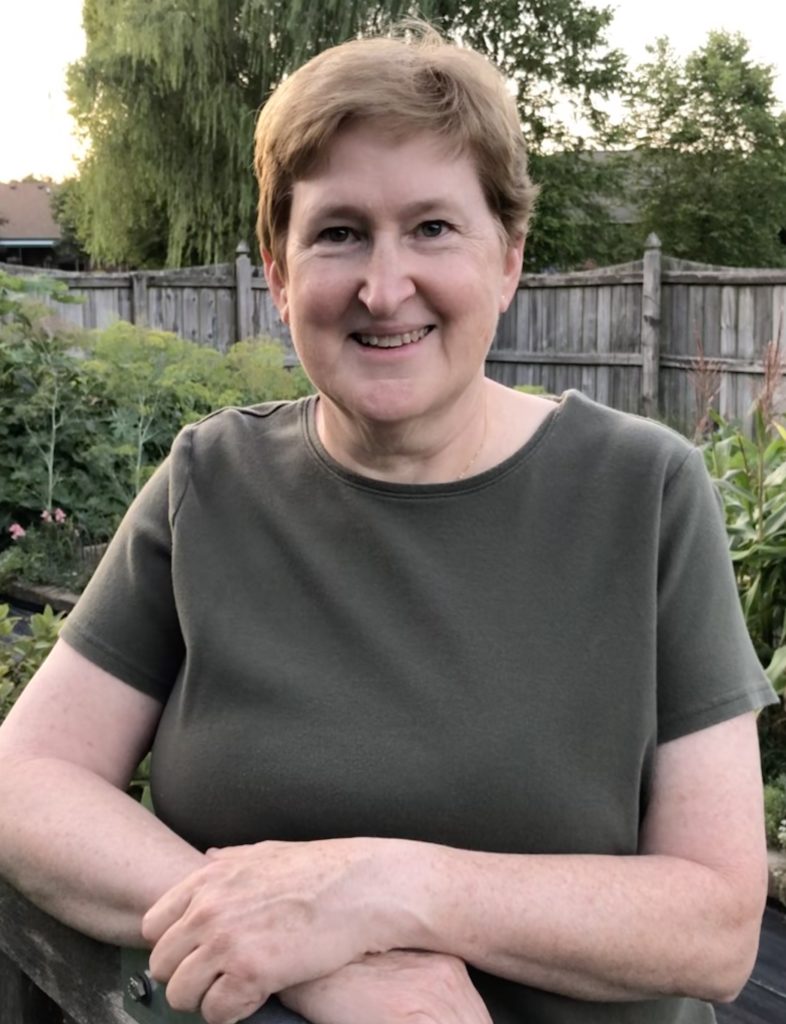
Special Guest: Carol J. Michel - Carol is a speaker and podcaster and author of award-winning self-published gardening books. In this interview, Carol talks about her background and career, how she got into gardening, blogging and self-publishing, and her recent popular post on How to Market Your Book Without Social Media.

Special Guest: Carol J. Michel is a speaker and podcaster and author of award-winning self-published gardening books. In this interview, Leanpub co-founder Len Epp talks with Carol about her background and career, how she got into gardening, blogging and self-publishing, and her recent popular post on How to Market Your Book Without Social Media.
This interview was recorded on September 7, 2021.
The full audio for the interview is here: https://s3.amazonaws.com/leanpub_podcasts/FM189-Carol-J-Michel-2021-09-07.mp3. You can subscribe to the Frontmatter podcast in iTunes here https://itunes.apple.com/ca/podcast/leanpub-podcast/id517117137 or add the podcast URL directly here: https://itunes.apple.com/ca/podcast/leanpub-podcast/id517117137.
This interview has been edited for conciseness and clarity.
Transcript
Len: Hi I'm Len Epp from Leanpub, and in this episode of the Frontmatter podcast I'll be interviewing special guest Carol J. Michel.
Based in Indiana, Carol is a blogger and podcaster and award-winning author of a number of gardening books, and a children's book.
You can't follow Carol on Twitter for reasons we'll get into, but you can check out her website at caroljmichel.com, her blog at maydreamsgardens.com, her YouTube channel at www.youtube.com/indygardener, and the Gardenangelists podcast, which she co-hosts with Dee Nash.
In this interview, we're going to talk about Carol's background and her books, maybe a bit about gardening, and then we're going to focus on her recent popular post on Jane Friedman's website about How to Market Your Book Without Social Media.
So, thank you very much Carol, for being on the Frontmatter podcast.
Carol: Thank you for having me. It's a great pleasure.
Len: I always like to start these interviews by asking people for their origin story. So, I was wondering if you could talk a little bit about maybe where you came from and grew up, and how you made your way into gardening?
Carol: I grew up here in Indiana, where I still live. I started gardening, like many lucky children, following my dad around in the garden, and I loved it.
I also loved writing, and I remember writing stories in the second grade and thinking that was - the teacher thought it was a punishment if you had to stay in for recess, and make you write a story - and I thought, "Oh, this is the greatest thing ever."
So I did go to Purdue University, and I got a degree in horticulture. I got out of Purdue University, and realized that the economy at that time - which was decades ago - was not good, and prospects for jobs were not good. So I went right back, and got a computer technology associate degree.
And then, as I tell people - I got the first job I was offered, working as a COBOL programmer in healthcare IT. I stayed there for 33 years, until I took an early retirement - and I became the director of something or other.
And anyway, I'm going to say, ten years before I retired, I was talking to these tech guys. By then, I'm in management. So I don't really have all the details of every technology. I say, "What are these web blogs? It seems like it's easy to get on the web with these web blogs." And they explained it to me.
So I made a couple of fits and starts - and in 2006, I really started blogging about gardening. I was still working full time. I loved doing it, and I immediately - Not immediately, but I started to have an audience.
I did something that, it turns out, today - we're into fifteen years of doing this. Something called, "Garden Bloggers' Bloom Day." On the fifteenth of every month, I've got gardeners across the country, around the world, to post, "What's blooming in your garden?" - then come back and link to my blog.
In the early days, we'd get like 100, and now - during the height of the growing season, right - you get 40 or 50. During the winter, it might be 20 or 30. But I never give it up. Because - hey, people - they post, they link - and that is all good in the blogging world.
Len: Thanks very much for sharing that. It's so interesting. I was quite fascinated when I saw that you had this background in computer technology and things like that. Partly because that's - as we were talking about before the podcast, most Leanpub authors are people who are sort of from or adjacent to that space.
What was your training like? It's changed, and one thing I like to ask people about is - things have changed so much, so back in those days there was no Stack Overflow or things you could go to on the web to learn. Did you have just stacks of books? Write out code by hand, and things like that?
Carol: Well, yes. Now, when I actually got into computer technology, we were no longer using punch cards. So those were out. When I started work - where I worked, they still had some things that they did with punch card.
But I tell people, I say, "It's this ancient language known as COBOL." If I'd stayed as a COBOL programmer, I could be making a lot of money right now. Because COBOL programmers are aging out, but some of that software is still out there running. Especially with big banks, credit card companies. There are some people that are running some serious COBOL.
But yeah, we learned in school. Then you basically had manuals and books, and that's what you learned from. If you had a question, you had to go to the manual and look it up - or holler across the cubical wall, because we did have cubicles, and say, "Hey, do you know how to do such and such?"
It was interesting. I was actually pretty good at it. When you're pretty good at it, you get on into management, because then you realize you don't want to do that all your life. So, I never learned the C languages at all. I didn't get into C++ or any of that. I managed people who did that, and I assumed that they knew what they were doing.
Len: It must've been - I mean, healthcare must've been just a fascinating industry to have been in for the last 30 years, just amazing transformations.
Carol: Oh yes. Yeah. Amazing transformations. From the very beginnings - it was business applications, payroll. Getting the charge in, and billing out to the patient.
Then, gradually over the 33-plus years - and I've been out of it for five years, so I don't even have a clue - then to make that electronic charge, so that the doctor can look up the information. It used to be - and you're probably too young for this - but if you went to the doctor, they'd ask you like a series of questions. Then if they gave you to a specialist, they would ask you the same series of questions. So you kept repeating information, and the electronic record really helps to share that information around.
Len: Yeah, I'm a little older than I look, and I do remember those days. Walking into the doctor's office, and there would always be this wall of files of paper.
Carol: Oh yeah.
Len: Paper files and manila folders with color coding on them and things like that. And, yeah - the repetition of things, the miscommunication about things - was a common experience. It was so fascinating.
I mean - like so many other people, I got vaccinated twice now, because of the pandemic. the experience was just incredible, compared to what would've been possible in the olden days, right?
I got an email saying, "Do you want an appointment? Click here." I booked - I got to pick the time, down to the five-minute increment. It told me where to go. It even gave me a QR code. I went there and stood in line. All I did was like swipe my drivers' license, and then I stood in line.
It all just happened magically. They knew who I was every step of the way - and whether I'd had my first one or my second one, and things like that. It was just incredible, to think about the amazing things that - about like tracking prescriptions and things like that, that have become possible.
Carol: Sure. that is the up side of it. The downside of it is, that the doctor feels like he's got too much time staring at a screen - and not enough time staring at you, the patient. That's the doctor's complaint, is they'd have to put so much into the chart.
But - and speaking of paper records, versus electronic records - this kind of comes back to that - I had this blog, and I had - today it's got almost 2,600 posts on it. I mean, it's a ginormous blog.
I remember, I used to read a magazine called Computer World. They had an article in there that said the Smithsonian - if they wanted to preserve something - they would far rather preserve something in paper, than electronic format. Because if it's electronic, and somebody hands them a three and a half inch floppy and says, "Preserve this," I have to preserve that floppy, and the equipment to read that, and that file type, in perpetuity. In 50 years, who knows?
So I always felt like what was on my blog, I wanted to get it off my blog and into a book in paper form, so that someday somebody would walk - not that it's going to end up at the Smithsonian - but somebody might walk into a used book store, and there would be this dusty old book called Potted and Pruned, and they would discover it. It would be kind of fun for them, I thought. It would be fun for me.
Len: That's really fascinating, that topic of preserving information and particularly libraries, books, and stuff like that, is something I could talk about forever, and it sounds like you could too.
I remember, I think it was in late - mid to late 90s, when some libraries started investing a lot in those giant LaserDiscs.
Carol: Oh yeah.
Len: To preserve information. then that didn't last.
Carol: No.
Len: To people who are concerned about archiving the web and things like that, this is just a huge, huge issue. But it's also there with books - the idea that you would publish a blog as a book, motivated by the idea to preserve it - makes complete sense, if you think about that kind of thing.
So, you started publishing books based on your blog. Your latest one is Digging and Delighted, and I was wondering if you could talk a little bit about that?
Carol: Yes, sure. So there's actually five books. It started out one book. then there were two. Then I thought, "Oh, a trilogy sounds nice." Then I did a forth, and I tried to make it not part of the other three. That made no sense. so now it's - I looked it up, and basically it's a series - and it can go on indefinitely, because of the way I title them, with alliteration - Potted and Pruned," and now Digging and Delighted, and I have other letters of the alphabet - they accuse me of being the one who's going to try to use every letter of the alphabet, and I won't stop until - they're trying to figure out, "Well, what's X in the garden?"
So, but anyway, Digging and Delighted is probably - it's loosely based on the kind of stuff I used to blog about. But it is sort of my advice to live your best gardening life. It's like one of my friends said when they were reading it, they said, "Carol, you're trying toi help us learn to think like a gardener." "That's it, I'm trying to help you think about the way gardeners think about things."
It's a little bit different, especially if you're new to gardening. People like me that have been gardening my whole life, I'm slinging plants around. They're like, "You have to be more careful with those." The famous question that I got at the checkouts of discount store that starts with "W," was, "Do these seeds work?" I'm like, "Did you go to school? Do you know where food comes from? If seeds don't work, we're an extinct species at this point." So I just have a lot of - there's 30 chapters like that. Just advice to think like a gardener.
Len: I've got a couple of questions that I wanted to ask you about that actually. By the way, I definitely recommend listening to the Gardenangelists podcast, it's absolutely delightful.
Carol: Well thank you.
Len: It's fun and relaxing, and very informative at the same time. When you talk about "thinking like a gardener," you reminded me of a couple of - I never got into it, but my dad's a biologist, and he loved poking around in the little garden that we had. I remember - this is a little bit of a gruesome thing, for anyone listening - but we had - I grew up in Saskatchewan, in Canada, and there were lots of grasshoppers. My dad, to sort of make me and my brother laugh - he thought it would anyway - he was popping the heads off grasshoppers, and then showing us how they keep jumping around.
Carol: Oh yeah.
Len: I don't remember finding it funny. And another time he was eating some broccoli from the garden. I pointed out that there were these gray worms all over it. He goes, "Oh yeah, protein," and just pops a new one in.
Carol: Right.
Len: But when you talk about "thinking like a gardener," I was wondering if you could maybe give a couple of specific examples? Is it patience, for example? Things like that?
Carol: Well, it's things that people don't think about. Like if you move into an existing garden, people just tend to sort of put up with the plants that are there. I say, "Grow the plants you love. If there's a bunch of plants in your garden that you don't love, what's the joy of going out there and working in the garden?"
Because let's face it, it's hard work. So I advocate, if you don't love that plant, get rid of it. Get another plant that you do love.
Then, the other thing - people in gardening, they get kind of nervous. Because we have botanical names for plants. And it's very useful, because the botanical name of - I can't even think of a botanical name right now, but - coneflowers, is a very common native American flower, and the name of it escapes me. Give me one minute. Echinacea Purpurea. So I can ask for Echinacea Purpurea anywhere in the world, and it is the exact same plant - or it should be.
The thing is, people are afraid to pronounce those words. Because they look weird, and, "Am I saying Echinacea correctly? Or is it ETCH-IN-ASE-EA?"
What I tell people is, that, "Botanical Latin is a written language, not a spoken language. Don't let anybody tell you that you've pronounced it wrong. Because nobody knows how they're pronounced, you just pronounce it." It's "Clematis," "CLAM-AT-US." Which is a nice vine. Either way is correct, in my opinion.
Len: That's really fascinating. Because I would say one of the things that I find intimidating, when I even just think about gardening, is trying to get it right, right? That there's going to be some rules that I've got to learn. That there's going to be some conventions that I have to follow. just naturally, I don't know why - but naturally for me - I mean, I guess it's fear of the plant dying - is probably the main thing that I find kind of puts me in that kind of passive - I mean, I don't do it - but a passive relationship when I think about it. "Oh, I've really got a responsibility to try and make this work," But that's not up to me, that's up to some rules out there that I've got to find and follow.
Carol: There really aren't as many rules as people think. If you're a gardener, you have killed more plants than you will ever admit. I mean, I've got a whole graveyard. It's called "the compost pile." There's tons of plants that I've killed. I have killed houseplants. I've intentionally killed plants, just like, "This sucker's got to go." Of course weeds have got to go. There's some things that I thought, "Oh, I want to keep that going." Then it up and dies on me. You don't realize it.
Then one spring, you're going, "You know what? That plant is gone. Where did it go?" It just disappeared, died. It happens. You just get another one. It just opens up space in the garden, and you get to go buy another plant.
Len: Do you use chemicals?
Carol: I personally do not use chemicals in my garden. I grow a lot of vegetables and I tell people, "You can buy pesticide-laden vegetables at the grocery store all day long. So why bother your garden?"
There's a couple of ways you can cover certain crops to keep certain - like the little worms that you said were on the broccoli, is actually the larvae or a white butterfly that you'll see. "Oh it looks so pretty in the garden." It's laying eggs at the base of the broccoli plant.
Then the eggs hatch, and those little worms come up and they get right in the head of broccoli. As your dad says, "protein."
Now, you do try to get them all out of there before you actually eat it. You can cover those crops and things.
Or sometimes I say, "I'm just not going to grow broccoli, because it's going to have those little worms on it in my garden," or, "It's going to get eaten up by the worms, because I'm just not going to spray anything on it."
Len: One of the things that people often have an issue with is managing animals as well. I live in a city, but it's full of deer. And, so everybody - I mean, since COVID - there are a lot of those new - I forget what they're called, but these little boxes that are now on the curbs with flowers and plants and vegetables and things in them.
Carol: Sure.
Len: But they all had these really tall posts with like a sort of mesh fence around it to keep the hungry deer out. Do you have any sort of general advice for people who are like thinking of setting up a garden and worried about, "What am I going to do about deer?," or whatever other animals they have in their area?
Carol: Well, look around and see if you have neighbors that are gardening, see what they're doing. Because if they're having problems with deer, you will certainly know it. They'll be doing things to try to keep the deer away from their gardens.
I personally don't have problems with deer. They say they are - deer, there's a woods behind the houses across the street - and they say the deer never leave the tree line. They certainly haven't ever left the tree line, come up through their backyard and crossed the street to my yard. It's one of those things that you do sometimes end up having to put up ugly fencing and things like that to keep them out.
I have rabbits. I have chipmunks, squirrels, raccoons - probably possum? I haven't seen a possum in a while. Groundhog. But I just try to do the least invasive thing to allow them and me to co-exist.
I feed birds. I have a big baffle thing on my bird feeder, so the raccoons can't get up there and get all the food, because they do every night if you don't do that.
Then I employ some rather odd techniques that seem to work for rabbits. You can look this up on the web, because I'm famous for it, is - I put little plastic forks up and down the rows where I sow the green beans. Just that little fork sort of keeps the rabbits from the green bean seedlings. I call it "The Forktress."
Len: That's a really good idea. That's really interesting. I really like the idea too, of accepting that you're going to have to co-exist with animals and all these other things, that might appear at least in a kind of immediate sense to be a problem.
I think in particular about the sort of - I don't know? - predilection for total control that people who like - where I grew up, neighborhood where I grew up - there were poison signs on lawns.
Carol: Right.
Len: Every spring and summer or whatever, because people didn't want a dandelion -
Carol: Oh and dandelions, I have the dandelion.
Len: Yeah. I guess that's a convention that's probably not quite as followed as it was in the past. But there was - somehow there was, people thought that, "Oh, if I'm going to have this front yard with grass, it has to be perfect," in the sense of totally controlled, or else - I somehow failed managing my yard, or something like that.
Carol: Right, right.
Len: But accepting that - like, yes - raccoons going to get in there every once in a while and mess things around. "Maybe that's why the plant disappeared?" Or something like that - just accepting that there's going to be these things that you have to constantly be tending to.
Carol: Right. I grow a little bit of sweet corn. I tell people, "I know how to tell when sweet corn's right: the raccoons get it the night before."
They didn't actually this year. I did actually get my own sweet corn. But I mean, there's nothing more maddening than to go out - and it's just like a 4 x 8 plot of sweet corn. I only expected to get about six ears out of it. To go out there and find the whole thing is just trashed - because the raccoons have gotten in there and trashed it, to get to the sweet corn.
Len: I imagine that people ask you for advice all the time. I was actually curious to ask you - for the last, I mean - longer than I wish it had been - I've been asking people a little bit about, how has the pandemic affected you, and things like that. Did you see an uptick in people following your blog or asking you for advice or things like that, as people got into gardening so much in the last year and a half or so?
Carol: Well, this is going to come as a big surprise to you, and maybe not? But I don't really track my blog statistics very closely. I do see a few comments. I get some emails from people that will read something like - I grow figs outside in Indiana, which is not the usual thing that people think. So I get two or three emails a season that say, "Hey, tell me about growing figs outside in Indiana. What are you growing?" I'll answer those emails. But I don't really closely track my blog statistics. I write because I enjoy writing and posting, and that's it - I'm good.
Len: And in addition to writing and posting - it turns out you also started podcasting as well, getting information out there to people in a fun and humorous way. When did you get the Gardenangelists blog started?
Carol: The Gardenangelists blog, Dee Nash and I started that in - we just did our 150th episode. So, about three years ago, in 2018, we started in the fall of 2018. We were both at a garden communicator’s convention in Chicago. People were talking about blogging, that's the next big thing. We knew a couple of people that were doing garden blogs. She just texted me one day, and she says, "Let's do a podcast." I'm like, "Okay." That was it. We just started doing this podcast.
We've known each other for a long time - obviously, through garden writing. Even though she lives in Oklahoma and I live in Indiana.
Len: For any authors listening who might be a little bit - well, how do you actually start a podcast? Did you have any resources that you went to, or anything like that? Or did you just kind of set things up?
Carol: We knew a couple of other garden writers that were doing a podcast. They were doing - not like the one person doing it, but a combination. One woman lived in Cape Cod, and the other one in New Mexico. They did a session at this conference, to explain how they did it, how they did their recording. So we said, "Okay, we can do it too."
We figured out where we wanted to host it. I looked at different hosting things. I didn't end up using the hosting company they used, I ended up with a different one, which I've been very happy with. It's sort of I think a newer player in the market. They've kind of grown and added features every year.
And then recently, we used to get on Skype, and then we would each record on GarageBand, and she would send me the recording. Now, we're doing like we're doing here, where we do it on Zoom. Then, depending on the quality, I could either get the single recording and say, "That's good enough," or I get the separate ones and do more editing.
Len: Thanks very much for sharing the details of that. We've been doing this one for about ten years. I've seen things change and - particularly, I mean - with Zoom, it's really changed. It's evolving. It's getting better and better. Particularly at voice levels and things like that.
Carol: Right.
Len: Cancelling out background noise. Because in the old days - I mean, with the old tools I used to use - there was a Skype call recorder app. It didn't turn off the feed when a person wasn't talking automatically. So there was just a lot more editing that you had to do in those days. Things have gotten a lot better.
So, just moving onto the next part of the interview - you have self-published all of your books?
Carol: I have.
Len: I was wondering if you could talk a little bit about that decision? Did you ever consider approaching a traditional publishing company and asking them for a contract?
Carol: I briefly did. I rather informally talked to one publisher. I said, "Hey, I want to write a book of gardening essays. There won't be glossy photographs of gardening in there. It will just be fun little stories about gardening." The first thing they said, is, "Oh no, you've got to have pictures." Then I told them what I thought about calling it, and he says, "Oh no, you can't call it that."
Then I realized that, if you're going to edit with a publisher, it's a partnership, and you're providing just one piece - the writing. They're going to figure out the cover, they're going to figure out the title. They're going to figure out the distribution. So you're not really going to have your baby, so to speak. Except in-between the two covers.
Even then, there's probably going to be an editor who's going to do some massaging. So I knew that - what I was writing, the gardening essays, is - for lack of a better way to put it, more personable than many gardening books. I just decided, "Ah, do it myself."
So that's what I did. Not exactly by myself. I did hire somebody for the first couple of books. A company called The Garden Of Words. I wrote it, and I told them what I wanted the covers to look like. They got a graphic designer and showed me the covers, and everything was good. They packaged it up, and they got them uploaded. Then, after I saw what they did, I had them work on the first four.
This last one I did myself. I did hire a graphic designer, because the cover has a certain look to it. The children's book, I did with - basically, my nephew, who's a graphic designer. He did all the illustrations, and we did that one together.
Because, I guess I have enough awareness of computer technology from working in it all those years - I'm not afraid to go out and just try it. I look and say, "Oh that's easy. Oh that's not a big deal." So now, I think from this point on - I'll probably do most of them myself, with my graphic designer doing the covers.
Len: What sort of tools or apps do you use to produce your books?
Carol: So this last book, I actually used a tool called Vellum, which is on the Mac. Vellum is used by a lot of people that are writing fiction. You basically take your Word document and you download it into Vellum, and then you can format it and add pages and things. I think you can probably add pictures and illustrations if you want? But I use that.
Then it uploads the exact formats that you need to upload it. I publish through IngramSpark, and then I can do a hardback. Because some people like hardbacks. I can do the paperback. I also let them do the ebook, although I hear that's not the best deal for ebooks.
That's what I use. Then independent bookstores will go out to IngramSpark, they will order books. Because if you use Amazon, KDP as your only distribution mechanism - there's no independent bookstore that I know of, that will go out to Amazon and order books at a 40% discount. That's the competition. That's the wolf that's eating their lunch.
But, Amazon got really fussy. When I decided that I was going to use IngramSpark for sole distribution and not upload it to Amazon via KDP, Amazon would not show that book in stock at all. It was always out of stock, the paperback.
So to appease Amazon, I do upload a version to KDP that's on Amazon. I turn off "worldwide distribution" from Amazon, or "expanded distribution," and let Ingram handle that. That seems to work for me.
So then it does show up, and, not that I'm getting sales from target.com and walmart.com and Barnes & Noble - but it does show up in all the places that get the basic feed from IngramSpark, and show the books. Including bookshop.org.
Len: Thanks very much for sharing all those details. That's super helpful to anyone - not only anyone who's sort of thinking about getting into self-publishing in the first place, but who's experienced something similar. It's always helpful to hear about - that you're not alone - what precisely happened, and why. Or at least "why," insofar as you can figure it out, and what you can do about it.
Amazon's obviously a huge issue for people in a lot of ways. That is where a lot of eyeballs are.
Carol: Yeah.
Len: They know it, so they can do things to you. They're basically all automated, by the way. So don't think Amazon's coming after you personally, but -
Carol: No, they are not.
Len: But that automation can itself be - of regulating things - you can end up being - it might be misapplied to you, and then you can end up in an awful place, where you're trying to get your book visible again, or get your account reinstated, or what have you.
I don't know this for certain, but I believe at least it used to be the case that they would automatically check to see if you were selling a book elsewhere for less - if you were enrolled in certain programs in Amazon. Then they'd find various ways to try and pressure you to not do that.
So, getting your book on there is kind of like - a lot of people do do it, but it does come with a headache factor - that's for sure.
Carol: Right. I priced my book the same across all the platforms. From using myidentifier.com, which is where you go get your ISBN's, says the retail price. Same retail price on IngramSpark. Same retail price on Amazon. So there's - if Amazon knocks it down, and sometimes I've seen like the hardback that I priced at $24.99 - I've seen it for $2.99, and I think, "Oh well, I should buy a bunch of copies for that price."
Len: Yeah. Actually that reminds me, you sell autographed copies as well. Carol: Yes.
Len: What mechanism did you use to set that up, and how does that work?
Carol: So today, I use Square. I have an online store, and it works pretty well.
I did discover something. Square will only allow me to take credit cards that are in the United States. Somebody from Canada tried to order a book, and they said, "It won't take my credit card." So I'm like, "That's weird." I looked it all up, and it said, "Oh, you can only take US credit cards." So the person was willing to pay me on PayPal, but then I said, "Well, by the way, you wanted to buy three books - and three books sent to Canada will cost you $25 in postage alone." They're like, "Thanks, goodbye."
Len: Yeah, those kinds of things can be really tricky. But I guess, just to sort of tie that off - the way it would work is, someone puts in an order through Square, and then you get the order - and then you actually put the autographed book into a box yourself, and send it yourself?
Carol: I put it in an envelope, I take it to the post office. I mail it out, Media Mail. Although the price of Media Mail, it just went up again. So I've got to compare it to First Class, and make sure I'm not getting snookered by the post office.
Len: Yeah, it's funny - I used to have some acquaintances that sold used books online. They were the kind of people who'd go to auctions and that kind of thing, and get the big consignment or whatever. They lived in Montreal, and they did all their US business by driving down to the States, and sending the mail from there. It was prohibitive -
Carol: Oh, you would have to.
Len: Yeah.
Carol: It's just ridiculous to get it across the border. With my first book, I actually hired a publicist - which I won't do again, because I realized they were sending the book to people that I knew. It's just like, I just had to have the gumption to go ask them, "Hey, you want a copy of my book? Can I be on your radio show? I don't need to pay this woman to do it." But she convinced me to send the book to Canada. So that's when I realized how much it cost to send books to Canada. I sent two or three, and I say, "I've got to sell several books off these deals, in order to make it work."
Len: Speaking of gumption, you just gave me a great segue into the next part of the interview, where we talk about your recent blog post, How to Market Your Book Without Social Media, which of course we'll be linking to.
But if you're looking for it, and you're just listening to this, it's on Jane Friedman's website at janefriedman.com. I really liked this post when I came across it. I particularly liked the great advice and the straightforwardness.
Often - I was saying this, again - before we started recording. But often when you sort of see things about like, "How I got off social media," or whatever - it's often kind of - there's a lot of resentfulness and stuff like that in it. This post is not like that. This is just like, "You can do it if you want to. But if you do, you still have to do a lot of work to market your book."
Carol: That's right.
Len: It's not going to happen because you don't like social media, and that makes you feel good about yourself somehow by getting off of it, which maybe it should? But you still have a lot of work to do.
One of the things you talk about in there is getting a guest appearance on a podcast, and -
Carol: I got one.
Len: Although I reached out to you, you didn't reach out to me. But you do specifically mention, "Hey, go ask."
Carol: Right.
Len: "If you find a good podcast, present yourself." I was wondering if you could talk a little bit about that, about how you go about doing that? Because I think - I mean, I know that I do get - sometimes from publicists, those are typically the worst. "Do you want to have my client on your podcast?"
The reason I say they're the worst, is typically these are people who - they just cut and paste, and don't tailor the message to the particular podcasting recipient. Whenever you see that, it's just kind of insulting and unprofessional.
I was wondering if you could talk a little bit about, for people who are wondering, "Okay, well - I'm shy or I'm worried about pissing someone off. How do I go about asking to be a guest on a podcast?"
Carol: Well the first thing is, you should know the podcast. Dee and I were asked a couple of months ago - this woman said, "Hey, do you mind if I recommend guests for your podcast?" We're like, "Have you ever heard our podcast? We have yet to have a guest on there. It's always just the two of us."
If you know that they have guests, you just reach out to them. I mentioned Garden Communicators International. I know people that have podcasts - and they do have guests, and I reach out and say, "Hey, I want to be a guest." Or they have a radio show.
I've got two podcast appearances out there waiting to set a date. I've got one radio date. It's not until December, but she said, "We'll sell your book for Christmas," which is perfect.
Another one, she says, "I'm in my busy season, but we'll have you on this fall." So, sometimes you have to remind them and say, "I'm still out here. I'd love to be a guest." It's just a matter of - you want to be asking, but you don't want to be a pest about it.
Len: Yeah, and as you say - know the podcast, and make it clear in your email or your message - however you get it to them, that like you do know their podcast.
Carol: Exactly.
Len: It doesn't have to be like super complicated, and it doesn't necessarily need to be full of compliments or something like that. It's like, "Hey, I really like your podcast. I particularly enjoyed the recent interview that you did with so and so about such and such. I recently published a book on a similar topic, and thought hey maybe I'd be a good -" It's common sense once you've thought it through and you know it. But until you've done that, it might seem a little bit like tricky.
Carol: Right.
Len: Just be specific about the podcast, and be specific about why you think you'd be a good guest, and what you think you can talk about. You might end up talking about something completely different.
Carol: Right.
Len: But just showing them that like you're a real person on the other end - you're not somebody who got a productivity app and dumped a bunch of email addresses in there, to try and go get some attention that way. Yeah, don't do that. Most people don't like that.
Carol: Speaking of email, I did find that - when I sent a blind carbon to like ten people and said, "Hey, my new book is out, you've taken review copies in the past and helped me promote it - are you interested?" I got about two that responded. Because I think it was because it was a blind carbon. But when I sent a note to them specifically and then, they were like, "Oh yeah, I'd love a copy Carol."
Len: Yeah, it's funny - I think it's true in all kind of - I don't even want to say "industries." It's just - if it looks like it's - yeah, a blind carbon, or a cut and paste. Whether it's - for any startup people out there, if you're approaching a venture capitalist for a potential investment - definitely make it clear that you know who they are. The formula - the reason I have the formula in my head is because there was a time in my life when I was doing that. It's like, "I recently read about your investment in such and such and such and such. We really think that our company might be a good fit for you." Things like that.
There are people, who - in those worlds, where they're often being reached out to - who are very explicit, "I just don't answer something that doesn't look like it's specific to me and it's coming from a real person."
Carol: Right. I don't either.
Len: You also talk about professional organizations as a way of marketing your book without being on social media. I was wondering if you could talk a little bit about what you mean by that?
Carol: I know that a lot of writers join American Society of Journalists and Authors. I'm in a group called Garden Communicators International. We are in the United States, Canada. We have people as far away as Australia. But we all have in common that we're writing articles and books, and we're doing podcasts and radio shows and TV shows. It's all about communicating about gardening. So, I could tell you - as somebody who does a weekly podcast and tries to post on her blog regularly - good quality content is always needed.
You can reach out to them and say, "Can you do a review of my book? Can you write about it? Would you like a review copy?" You just sort of get the word out through this professional organization. They get to know you too, and sort of reciprocate.
Dee and I, on our podcast, every week, we talk about a gardening book. Probably 80% of the books that we talk about, are review copies we've gotten from the publishers - or from the authors themselves, who've said, "Could you mention my book?"
The nice thing is, for somebody like me that's not on social media - a lot of times, if we mention their book, then we'll send back and say, "Hey, we talked about your book on this week's podcast," and they'll socialize it for you.
Len: On really interesting thing you also mentioned there, is that although it's all about, getting off social media, and what's all the other work you can do - you do have a LinkedIn presence.
Carol: I do.
Len: I was wondering if you could talk a little bit about why that's the exception?
Carol: I made LinkedIn the exception, because I feel like that's still a place where people go out to find - quote unquote, "professional Carol." So, "I'd like to find out more about Carol Michel, the author." I can put stuff out there.
I try to make the content that I put on LinkedIn relevant to - quote unquote, "professional Carol," the garden writer. You don't go out there and see somebody's grandkids - which is fine, right? I don't want to say that certain posts and stuff are bad. But you tend to see professionalism on LinkedIn, more so. At least I do, the way I've LinkedIn to people. Less so on Facebook.
Len: It's interesting what a practical matter it is. I mean, I was really glad when I read that you were on LinkedIn. Because. of course I could find your About page on your website and stuff like that. But for people who are thinking of interviewing you, or people who are thinking of doing a write-up about your book or something like that - having something that's a little bit more serious and kind of third party - even though you write all your own content on LinkedIn anyway. But it's actually really helpful for people who are doing research on you. Which they will do, if they're going to be interviewing you - or something like that, or doing a review and things like that. So having some kind of presence out there is still important, even if it's not the 240 characters, "Here's a picture of my cat," or something like that kind of thing.
Carol: Well you know, the internet was invented to share cat photos. That's a known fact.
Len: By the way, nothing against cat photos. I love cats and cat photos. But wherever you're doing that, might not necessarily be the best place to also be promoting your professional stuff.
Carol: Unless you are a professional feline expert or something.
Len: Exactly, exactly.
Carol: A breeder of Siamese cats or something.
Len: You also mentioned local bookstores. This is a matter of basically walking in and going, "Hey, would you be willing to sell my book?"
Carol: Yes. What I tell people, is - you can't walk into a bookstore that you have never been in, you have never shopped in, and you have never bought anything in, that's local. You can't say, "Hey, I buy all my books on Amazon. But why don't you carry my book in your store?" But if you go in there, and you're a regular customer, and they find out you're an author, they'll carry your book.
Unfortunately the closest bookstore to me is about 25 miles south, as far as independent stores go. I don't count Barnes & Noble as an independent.
There's another one north of me about 30 minutes. The one north has a mix of used and new, and she takes books on consignment that I - I just got a nice check from her from the books she's sold.
The one south of me is all new books. she's always happy to stock them. And, so - I need to get down there. Because I think she's got some of my new books, I need to go down and sign them.
Len: Another thing that you mentioned, and just a specific thing in there is having a YouTube channel. The thing that you mentioned in there that I really liked was that - you don't have the biggest presence, but you enjoy doing them. I think -
Carol: Right.
Len: This is something that's often - for self-published authors - even people who are newer, people who have been doing it for a while - you often think of the work you do to promote your book is this like chore, this unpleasant thing. It's work. It's like, "I've got to figure out how to game the Facebook ads algorithm, after I've already figured out how to change the Amazon algorithms. Then, they've changed on me already." You're always playing catch-up, and you're being competitive with other people for space and stuff like that.
Maybe you should still do those things, but it's also important to keep in mind that you can actually - this is kind of a general theme of your post, is like - you can actually limit - you're self-published, it's up to you what you want to do, right?
Carol: Exactly.
Len: You can actually limit your book promotion activities to things you enjoy doing, and that's okay.
Carol: Exactly. I'll say - I did talk to somebody, and she's like, "Oh Carol, I'd like to get off social media like you did, but my book's just coming out and my publisher would just freak out if they found out I wasn't going to post on Instagram." She has a very lovely book, and it's got a lot of pictures in it. so, it really can attract a lot of people with good pictures on Instagram - I guess? But she's like, "Oh, I wish I could get off." She only has 1,400 followers on Instagram. I looked it up the other day.
Then I heard this other author talk, he has 600,000 followers on Instagram, and he wrote a book about houseplants. But he wrote a book about houseplants, because he had 600,000 followers on Instagram, a literary agent approached him and said, "Hey I think you could write a book."
Well, first of all, if you're writing about gardening, very few of us have literary agents. It's usually the publishers - most of the publishers just work directly with the authors. So if you have 600,000 followers on Instagram - knock yourself out, have fun. Just the right person at the right time, with the right subject matter - houseplants - which are very big with the - I don't even know what generation it is, but the ones in their 20s and 30s - houseplants is a big deal for them, so -
Len: I think that's Gen Z.
Carol: Yeah. Gen Z, whatever. I'll admit that I'm a baby boomer. So after that, I lost track of all the different generations.
Len: Yeah, I'm from the generation that was first given a letter - Generation X, right? we're the one that no one knows anything about, except that we have to take care of our parents and our kids kind of thing.
Carol: There you go.
Len: There are more items in your list and things that you talk about in the book. The last one I'd like to ask you about, is speaking.
You mentioned that speaking publicly can actually be a really good way of getting attention, particularly if you're writing - I mean, the thing is - this is true both if you're writing about fiction and if you're writing about non-fiction. I remember the last time I went to Book Expo America in New York a few years ago - some authors, they were fiction authors - they got on a panel and they talked about their books, and they talked about their genre, and stuff like that.
Everybody absolutely loved it. They loved seeing authors in person. They love hearing them talk. They love being able to ask them questions and things like that.
So, when it comes to speaking, I imagine, it's probably like with the podcast or radio shows - one thing you do is you find the right venue, and then you put yourself forward as a potential speaker?
Carol: Yes. I'm registered on another site called Great Garden Speakers, so I can be found there. Then, of course, within my local city and everything - people know that I'm a speaker, so they'll hire me.
It is interesting. I pretty much can judge an audience by looking at them, exactly how many books I sell, because older audiences tend to buy fewer books. They're trying to get rid of stuff, not add stuff to their collection.
Then some people, they tend to buy the book after they hear you speak. Because before you speak, they're like, "Not quite sure, what are these gardening humor books you have Carol?" Then I speak, and I try to make my speech, my presentation, humorous. Then they're like, "Oh, humor - I'm going to buy that book." So it just varies.
I went to speak in Florida, which was a big deal for me. That's a long way from Indiana. I told them, "I've never gardened in Florida." They're like, "Okay, but you're funny." So I shipped 50 books, and thought, "Oh I don't have to ship back 45 books." I ended up selling like 59. Because they all wanted the book afterwards. Then, they just kept giving me money. I took down addresses and then mailed them the books later. So that turned out to be pretty nice.
The bigger the venue, the better. A lot of Master Gardener groups and stuff, they'll have a couple of hundred people there. If you have 200 people there, and 20% will buy the book, which is kind of my average, that's 40 books.
Len: That's great. Thanks very much for sharing that. That's really good. It's funny, because you often hear the sort of stories of like, "I went all the way across the country, and there were like three people in a bookstore basement." But it can actually turn out really well. You can meet people, and you can have a great time - and they can have a great time, when you do speaking engagements like that - and you can also sell books.
Well, Carol - thank you very much for taking some time out of your day to be on the Frontmatter Podcast.
Carol: I appreciate you having me. I will be listening very soon.
Len: Thanks very much. I'll make sure - again, to have links to everything, including your latest book, in the transcript.
Carol: Okay. Thank you, Len.
Len: Thanks.
And as always, thanks to you for listening to this episode of the Frontmatter podcast. If you like what you heard, please rate and review it wherever you found it, and if you'd like to be a Leanpub author, please visit our website at leanpub.com.