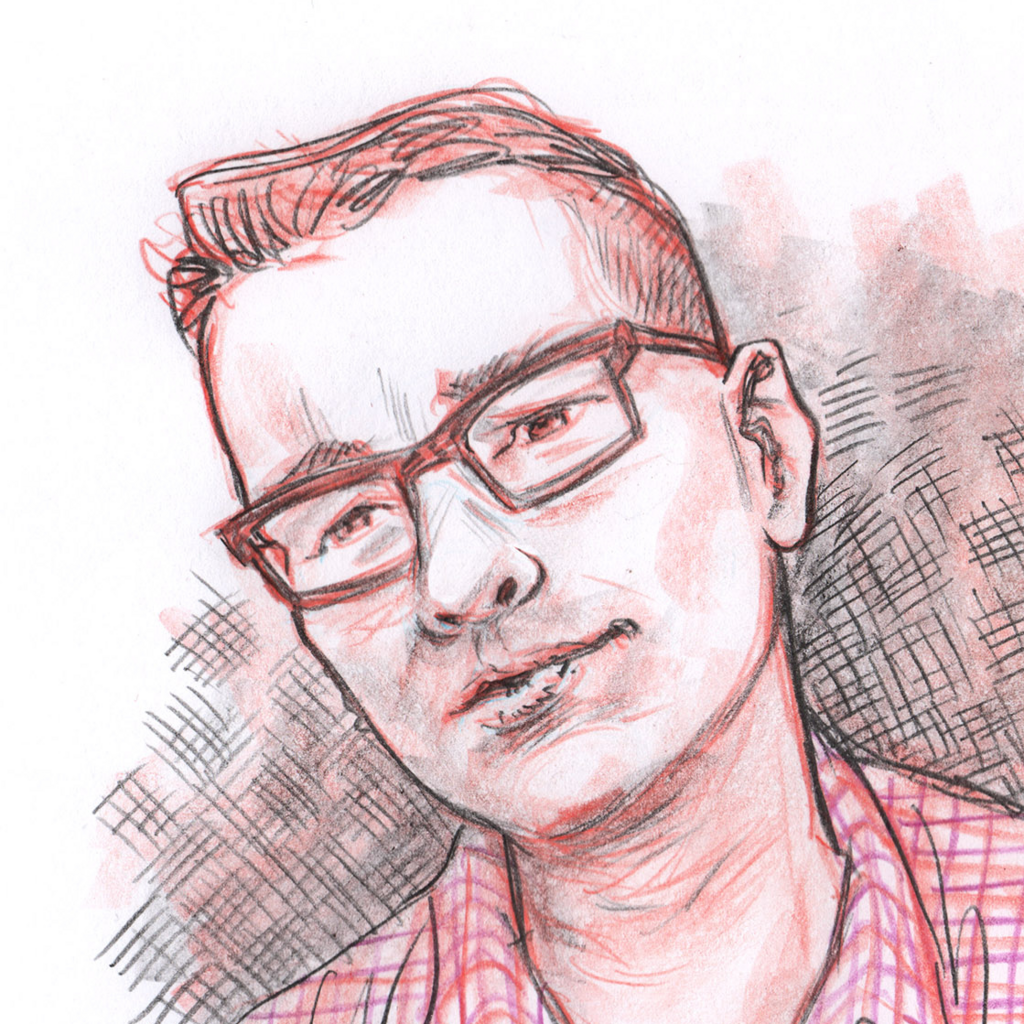
Bruno Lowagie, Author of Entreprenerd: Building a Multi-Million-Dollar Business with Open Source Software
A Leanpub Frontmatter Podcast Interview with Bruno Lowagie, Author of Entreprenerd: Building a Multi-Million-Dollar Business with Open Source Software
Books by Bruno Lowagie on Leanpub


Bruno Lowagie is the author of the Leanpub book Entreprenerd: Building a Multi-Million-Dollar Business with Open Source Software. In this interview, Leanpub co-founder Len Epp talks with Bruno about his background, the story of how he built a very successful business, how and why he eventually shifted his approach towards a focus on being acquired and what that requires, his book, and at the end, they talk a little bit about his experience as both a conventionally-published and a self-published author.
This interview was recorded on May 27, 2021.
The full audio for the interview is here: https://s3.amazonaws.com/leanpub_podcasts/FM181-Bruno-Lowagie-2021-05-27.mp3. You can subscribe to the Frontmatter podcast in iTunes here https://itunes.apple.com/ca/podcast/leanpub-podcast/id517117137 or add the podcast URL directly here: https://itunes.apple.com/ca/podcast/leanpub-podcast/id517117137.
This interview has been edited for conciseness and clarity.
Transcript

Len: Hi I'm Len Epp from Leanpub, and in this episode of the Frontmatter podcast I'll be interviewing Bruno Lowagie.
Based in Ghent, Bruno is the original developer of iText, an open source PDF library, and co-founder of the iText Group of companies.
You can follow him on Twitter @bruno1970 and check out his website at lowagie.com.
Bruno is the author of the book Entreprenerd: Building a Multi-Million-Dollar Business with Open Source Software. In the book, he talks about being a developer and technical founder, and the long road to taking a company from startup to a multi-million-dollar exit. You can find the book on Leanpub and elsewhere, including the website entreprenerd.lowagie.com, and the Twitter account for the book is @Entreprenerd21.
In this interview, we’re going to talk about Bruno's background and career, professional interests, his book, and at the end we'll talk about his experience self-publishing.
So, thank you Bruno for being on the Leanpub Frontmatter Podcast.
Bruno: Thank you for having me.
Len: I always like to start these interviews by talking to people about their origin story. And so, I was wondering if you could talk a little bit about where you grew up, and how you found yourself getting interested in computers and programming?
Bruno: I grew up in the West of Flanders. It's where all the peasants lived. So in Belgium, they look a little bit down on us.
I grew up in Ypres. Ypres is a city that people could know from the World War. In World War I it was completely razed to the ground.
And it's a small city. So if you would ask me about my first computer, I had to go to a city near Ghent to buy the first computer. I got my first computer at the age of 12. Today that's normal, but I was 12 in 1982, and I was the only person I knew who had a computer.
How did I come into getting a computer? Well, my parents had friends, it was a couple. The husband of that couple, he wanted to study computer programming in the neighboring city. His wife didn't want him to go alone, so she needed a chaperone - a trustworthy person to accompany her husband. And my father was such a trustworthy chaperone. And so my father, he took the computer classes - although he wasn't really interested in the computer classes.
But he brought home all his textbooks, and that really interested me. He had to do homework - and to do homework, we needed a computer. So he bought a computer, and I made his homework.
And so, that's how I made my first programs. It was on a Texas Instruments 994A. It could only save programs on cassette tape. It's before floppy disks. And well, that failed more often than it worked.
Soon that home computer, I didn't talk about a PC yet, it was a home computer - I hit my limits very fast.
So two years later, I bought a TRS-80, a Tandy, from RadioShack, that was my first portable. But it was more a luggable, because it was bigger than my mother's sewing machine. It didn't have a hard disk. It could have a hard disk, but it didn't have a hard disk. It had two large floppy disk drives. So the bigger floppy disks. And that's when I really started making- I even had my first small business with that computer. I wrote my own database system, and I took all the addresses of cultural organizations in Ypres.
My father, he volunteered as a secretary of the City Council, and I went to all these organizations asking them for the list of all their members and their addresses. Today, this would be like, "Invasion of privacy. We aren't going to share those addresses." But I was 14, 15 years old, so they didn't see any harm in it. And so I put all these addresses in my computer, and I returned the addresses with printed address labels. The year was 1984, 1985. When they wanted to send out the mailing, they had to manually write all the addresses. And suddenly they could use pre-printed address labels.
I gave the first stack away for free, and then they came knocking on my door and they said, "Hey Bruno, that was really interesting what you did there. Can we get some more address labels?" And then I said, "Yeah you could - but I have to buy address labels, so would you pay for these address labels?"
That's my first business. I also considered it my first failure. Because the address labels I sold never made up for the cost of my computer. But it was a nice experience.
Len: thank you very much for sharing that. It's so interesting - because so many of the guests on our podcast are people who are programmers, or were programmers, it's become a little bit of a time capsule of - someone's experience differs greatly depending on when they got going. I've interviewed quite a few people for whom their first experience making money was as a teenager, because they were the one who knew how the computer went, and knew what it could do. And there is - to some extent, still to this day - a bit of a legacy of associating computers with children, for some reason.
But one thing I wanted to ask you about actually - you have a great line in your book where you say, "I was born in 1970 in a small Belgian city, called Ypres. Being normal was a moral duty in that time and place." I was born in a city called Regina, in the province of Saskatchewan in Canada - also kind of looked down upon by people from the rest of the country. And that line about "being normal was a moral duty in that time of place," reminded me a lot about my experience growing up in a kind of remote place.
Bruno: Yeah. It was just in that time and age. It was like if you were different, people couldn't deal with people who are different. And so I kept very low profile. But I couldn't hide my interest of computers, and computers were like my safe place. And if you've read the first chapter, you see that I gave my computer a name - and at some point it was my best friend. Which is sad in hindsight, but it was like that.
Len: Depending on where you grew up, that could've potentially been the best friend around. Thanks for sharing that. It is a really curious thing. And I think, particularly in the connected world that we're in now, it's a little bit difficult to get yourself back into the - what it was really like pre-internet, when long distance calling was unaffordable. What it was like to be unusual in the place where you grew up - where I grew up, you were considered pretentious if you went to the Irish bar. And I'm not joking. And so, the pressure to be normal, and like the extremely limited range of things that you were allowed to do without -
Bruno: And books really helped. Because you went to the library, and then suddenly you read a book and you said, "Is this for real? Is this fiction or is this non-fiction? Are there people who exist like that?" And so that was like - in the coming of age, it was like - that was also when I started rebelling against like my parents, and puberty and stuff like that. That was because of reading books and seeing - hey, what people tell me and what I learn in school - there's a world outside.
Len: Actually, just not to dwell on this particular feature of the book too much - but you did mention that you got the Tandy computer, because that's what RadioShack had. And that - specifically with respect to books as well, that reminds me a little bit of my experience growing up too.
Where like, the books available were the books that the person who owned the local bookstore stocked the shelves with. Those were the books. I mean you could - if you were really resourceful and you had money and catalogues and stuff like that, or you asked, you could find more. But this idea of like - the only thing you can get is what the local shopkeeper makes available, was also - I was glad to relate to that as a time that we're past now.
And so, eventually you made your way to university, and I don't believe you studied Computer Science or anything like that?
Bruno: No, I studied civil engineering architecture. So if you had kids at that time, you wanted them to be one out of two things. Either you wanted them to be a doctor or a civil engineer. In The Big Bang Theory, Sheldon always looks down on the engineers. But civil engineering is supposed to be very difficult. And so that wasn't my first choice. When I started rebelling, I went to art school, so evening school - I painted.
I wanted to grow, I wanted to be a painter. But my parents said, "Well, you should do the entrance exam.", to be admitted to the civil engineering faculty. I did this as a favor to them. I passed the exam at the first try, and then they said, "Well, now that you've passed the exam, why wouldn't you do these studies?" So I started doing these studies.
Well, I can't say I was a good student. Because in high school, I never had to study. When there were examinations, I stopped early and I did the examination, and I passed without any problems. But that was a big problem once I went to the university. Because if you don't study at the university, you fail.
But I found a partner in crime. There was another girl there, Ingeborg Willaert. And, well, we became friends. And today, I'm still married to her. So together we kind of helped each other through our studies.
Len: And was it around that time when you went to university that you really got into movies?
Bruno: Yeah. So in Ypres, we didn't have - we had a small movie theater. For instance, when E.T. came out, the movie theater in Ypres was, "This is the last chance to seeing this movie in the movie theaters." Because it was two years after it came out. So we always got the last chance to see a movie.
When I went to college, it was in Ghent - you live on your own. You're away from your parents, and it's the whole world that opens. In Ghent we had three movie theaters - an abundance of choice. That was also why my wife and I, we connected. Because we were both into movies.
Len: And so eventually you did start studying and you graduated. And then you talk a little bit about how in your first couple of years in your sort of working career, you cycled through a few jobs.
Bruno: Yeah. So I didn't study Computer Science. But when I started looking for a job, by the time I graduated, I was totally uninterested in what I have studied. I was not interested in constructional engineering. I was interested in architecture. But I knew that I would never be the best architect. If you're only mediocre, why start a career in something that you know that you're not going to succeed, or you'll be unhappy in your career?
I was fortunate enough that I could go into a training program that was something from the unemployment service in Belgium that started experimenting with internships. I was accepted in an internship that took one year. Five months was people teaching us C, C++ - all kinds of GIS, Geographical Information System Software. Five months teaching, and then seven months internship - unpaid internship. Which is kind of exceptional in Belgium, that you would do an unpaid internship, but that was like experimenting with it.
During my internship, I had two assignments. One assignment was teaching the next batch of students. For instance, that was in 1996. And the programming language, Java, was still very young. Because Java exists since 1995. I was very interested in Java, because I saw this as a very different - a huge step forward in programming. And I said, "Well, I'm going to teach the next batch of students Java." That's how I got to know the programming language that I would use throughout the rest of my career. '
The second assignment was - we didn't have internet over the cable network back then in Belgium. But different stakeholders were trying different projects. And the - how do you say that? Facilities management company, like the company that you buy electricity from - they had two test setups. One in Mechelen, that's near Antwerp. And one in Roeselare, that's in the west of Flanders, not so far from Ypres. They knew that the one in Mechelen was an all-cable solution; upstream and downstream was over a cable network.
In Roeselare, it was a hybrid system, - where the upstream traffic went over the regular phone line, with modems. But the downstream traffic went over the cable. And so we knew that the feasibility study of this project was negative. So, a hybrid. We also know in hindsight now that hybrid network - a hybrid solution doesn't work, so why would you occupy your regular phone line and combine this? We knew that this wouldn't work, but they had a budget allocated to that project.
They said, "Instead of putting expensive consultants on that project, we are going to make this. Bruno, we are going to make him coordinator of this project. We don't have to pay him anyway." so that's how I started to learn many things about the internet in '96. for Belgian standards, that's quite early. I was on the internet at a quite early stage.
Len: I've got a pair of related questions that are variants that often come up in interviews on this podcast. The first is - given the way things went for you in your career, do you ever regret having studied engineering rather than Computer Science in your years in university?
Bruno: No, because it gave me a solid foundation. The one thing that you learn if you're not a study-head and you want to pass your exams, you have to have discipline. I lacked the discipline before. But that's one of the most important things that I learned in college, that's the discipline to - I wrote a PDF library. I read the PDF reference from the first page to the last page, and again. I think that if no one had taught me that discipline to do things like that, it would have been more difficult for me.
Also, the tools to understand the language, the scientific language and to be able to - the PDF reference, that was like a dictionary. We all know that you can't learn how to speak a language if you only have a dictionary. But having studied engineering, that helped me know how to work with that reference manual. Another thing, I studied architectural engineering. The architect is also the person in-between the person who wants to build a house, and the people who actually build it - the technical people and the people who give the assignment.
You always have to be able to talk a different language and to translate. If someone wants something, you have to be able to translate it into technical terms. If there's a problem - if the technical people notice a problem, you have to be able to translate this technical problem into normal language that the people who give you the assignments understand. That's one of the things that I took away from my studies as a civil engineer in architecture.
Len: Thank you very much for sharing that. I was just pausing for a moment, because you're reminding me of a friend of mine who was an engineer who helped build tunnels. He actually said something very, very similar to me once about what his role was, which was getting these commands - probably from architects actually, about what to do, and then relaying in-between those people and their requirements, and the people they had to speak up to - and then also talking to the people who actually had to dig the hole and pour the concrete. In those positions you're always translating from one group to another, and coordinating.
The related question I wanted to ask you was - this is kind of a tricky one. But if you were - just now,to put it in North American terms, "graduating from high school" in 2021 and you wanted a career in programming, would you advise yourself - knowing what you know now, to study Computer Science in university, or would you suggest taking another path?
Bruno: I'm going to answer a different question. Do you regret not having studied Computer Science? So, no I don't regret that. Because one of the reasons why I was eventually hired by my first employer was specifically because they had experience hiring computer scientists, but they noticed that the computer scientists couldn't talk to the people giving the assignment. It's much easier to teach a domain expert how to program, than it is to teach someone who can program, domain expertise. I would say study whatever you like, but Computer Science - if you want to be a programmer - I'm not saying if - my son studied civil engineering too, and he knows all the ins and outs and all the - he could build a compiler.
If that's your ambition, okay, do that. But if you want to be a programmer, study something - I don't know - study biology or study - I don't know? Architecture. Then learn how to program on your own as self-taught, or take some courses. Apply what you know of your domain expertise. Use that to be a better programmer, and use your programming skills to improve your domain expertise.
I think that the people who are most successful, are usually people who are able to combine two domains. Quite often, one of these domains is Computer Science or programming - and the other one could be law, could be biology, and so on.
Len: You've mentioned already a couple of times, and we're going to get there very soon - to talk about you building a PDF Library and how that launched a big phase of your work. But before we do that - over a year ago now, I started a little segment on the podcast where I asked people - fortunately I get to interview people from all around the world - how the pandemic has affected them where they live. I know you would have 14 months of stories to tell, probably. But if you could just - I think you're the first person from Belgium that we've had on the podcast in that time. I was wondering if you could talk a little bit about what your experience has been with the pandemic there?
Bruno: I only had first-world problems. I can't complain about it. If I would complain, it would be like... there are people who are much worse off. In Belgium, we were quite slow. We were the champion in the number of casualties in the first period. Tthere was a lot of discussion - are all the people whose deaths are attributed to COVID - did they really die of COVID, or did they die with COVID? In politics, it was like, "The world thinks that we are not doing well. But actually we are counting in a different way."
Regarding the lockdown: I have a garden, I have a big house and I can continue writing. Because to write, I don't have to go to an office. It's annoying, but I really can't complain.
On the other hand, o Belgium was slow in giving vaccines. I only got my invitation to get vaccinated earlier this week. By the end of June, I will be fully vaccinated. I have friends all over the world - and many of my friends who are younger than me, are already fully vaccinated. But of course, yeah - we can't travel anyway for now.
If you would ask me, "What do you miss most?" I miss a podium most, being at conferences in real life, travelling. I've done a couple of conferences that were purely online - virtual conferences. But that doesn't really work for me. I need to see people in the audience. I need to see the people who ask questions. That's what I miss most.
Len: Thank you very much for sharing that. You fall in probably - about half of the people, just specific to this podcast - I mean, almost everybody we interview is involved with writing to some extent. A majority of the guests are also programmers. The story of, "Professionally, in terms of the work I do, it hasn't directly affected me much," is an answer a lot of people give.
But there is always - as you so well put it - if you want to ask me what I miss, "I miss this, this and that and the other thing." For a lot of people, being in person in conferences is actually something that they've expressed. I actually interviewed someone not too long ago, who actually - her job was creating conferences for HashiCorp. They had quite the transition, her team, when they couldn't do it anymore. They've had to move onto digital-only events. There's things that they find exciting about that, and there's the things that you regret as well.
I mentioned the PDF library, so moving on. We've talked about your early career and experiences. But you eventually found yourself with a project creating this PDF library, and I was wondering if you could talk a little bit about what a PDF library is, just maybe in the context of the story of what happened there.
Bruno: I switched jobs three times in the first two years of my career. But eventually I found a job at Ghent University, where I had studied. I was employed to rewrite the software of the student administration. It used to be a Clipper application. Not many people will remember the programming language, "Clipper." But that Clipper application was stored on a floppy disk, and that floppy disk had an extraction of the student database.
Professors would use this floppy disk, and that Clipper program on the disk, to enter the grades of the students that they took exams of. They would hand in the diskette and an administrator would read out the grades - and then put them in the student database. There were a lot of problems with these diskettes - computer viruses were one of the problems. But there were many other problems. In 1998, we decided to make this an intranet application.
We are going to move away that program from people's computers, because it could only work on DOS. We're going to allow people to enter grades in the browser, and in a web application.
One of the things I promised was - well, if you had this Clipper application, you could print lists with students, to fill them out with the grades, but you could only print them on an HP printer, and it couldn't be a network printer, and obviously it only worked on DOS.
I said, "Well, we are going to solve this. I'm going to give you PDF. Because PDF is a portable document format. I will generate this on the server. Then, no matter if you have a Windows machine or a LINUX machine or an iMac, you will be able to see this list and print this list. PDF will be the solution to your problem." I thought, "Well, PDF has exists since 1993. Java has exists since 1995. There will be a Java library around, to create PDF."
When I started searching, I said, "Oh, I've promised something that maybe I won't be able to keep my promise." Because PDF, in those days, was pretty much something of the desktop. People would create a document in Word or in a designer tool, and then they would hit a button - and that program on their desktop would create a PDF. I didn't find any - There were two libraries, but they weren't fast enough. They didn't work in an intranet context.
What I did was - well, I wanted to emancipate PDF from the desktop to the server and to give people the opportunity to create a PDF in an unattended way.
I need PDF with all the students who follow my class. That's the query. Well, I'm not going to make that PDF manually, let the server create that PDF. As there was no solution that worked for me available, I had to write a PDF library myself.
We could have used Adobe software. But back then, Adobe licensed its software at a per-user basis. If we put Adobe software on the server, we would have to pay a license for every person who visited our website. That was just not feasible. But those were the business models of the past.
So, what I did was, I created a library. That's something without a UI. You just sent data to that library and you say, "This is what the data looks like," in code, you define the presentation with your code. Out comes a PDF.
The first PDF library I wrote was called rugPdf. I know, "rug," that's a stupid word. But that was the abbreviation of Ghent University back in those days. I wrote it in six weeks, and I really hated PDF.
Because PDF was - It wasn't a programming language that I was familiar with. It was a very strange programming language. After having supported my library for one year, I understood why I hated PDF. PDF is not a programming language, it's a document format. So, having worked with that first PDF library, that wasn't really - it was written quick and dirty, I'm not proud of that first PDF library. But having worked with that library for more than a year, I started to understand what PDF was about. I said, "Well, now that I understand PDF, I'm going to re-write a PDF library from scratch." That's how I wrote iText.
Len: Thanks very much for that. Just for the non-programmers listening, a library in this sense would probably actually be - one could think of it as a program, or a set of programs that's designed to do something specific, right? In a particular language.
It's fascinating. Because I think a lot of people might think of PDF as like, "Well, I type out paragraphs in Microsoft Word, and then I do 'export as PDF.'" But what you're talking about is being able to basically take - have some data - that, as you say, isn't formatted in any way whatsoever. Then be able to click a button and give a person a document. That's actually an incredible technical challenge.
For example, I think you mentioned it in the book or elsewhere, that if you use your bank - if you go to online banking and you click to have your statement exported, created as a PDF - nobody typed out your statement somewhere. It's getting that information from a database and it's - or, when you get a PDF receipt or something that. There's actually very complex technology behind doing what might appear to be something quite simple.
Bruno: The example I always give is boarding passes. Of course boarding passes are disappearing, because people have them on their smartphone. But iText was very popular among airlines, because they used iText to create a boarding pass with a QR code or the barcode. This is a complex document that has a lot of information on it. They used iText to make that in an automated way.
Len: Actually, that reminds me - specifically, was there something about a change in accessibility regulation in the United States?
Bruno: In 2012, a new PDF standard was released. PDF/UA. That's - UA is "universal accessibility". If you create a PDF that complies with the PDF/UA standard, it can be consumed by the blind and the visually impaired. That means that you pay a lot of attention to structure.
Because, for instance, take a table. Sometimes in one table cell, there is a paragraph - and then in the cell next to it, there's another paragraph. You cannot just read a table line by line. Because you will read the first line of the paragraph in the first column, then the first line in the second column and on.
You need to create the PDF in such a way that it can be read out loud in the right - for instance if you have a newspaper with different columns, you need to know that you cannot read from left to right, but that you need to read the first column first. The structure is important. If people have assistive technology, make sure that they can navigate through the document easily. Like, "I want to know what's in the third row of this table, third column. Read that out loud." This was a huge step forward for PDF.
in the Disabilities Act, in the US - I think starting in 2016 - there was a - a law that said that it was mandatory. If you put documents online in the context of government, for instance - documents issued by the government or boarding passes, they have to be - people with visual disabilities have to be able to read them. If you do this is with PDF's, they need to comply with PDF/UA.
I was fortunate enough that I followed all the ISO Committee meetings, and I was implementing these standards. When this law become effective, iText was one of the few open - I think the only open source - not the only library that supported PDF/UA, but the only open source library that supported PDF/UA. In 2016, almost all the airlines in the US became a customer of iText.
Len: That actually gives us an opportunity for a great segue into talking about the decision you had to make. Here you'd made rugPdf, you had a job. But eventually you decided to go - I gather you kept your job until things were relatively stable. But you did decide to go independent, and you decided to open-source iText. I was wondering if you could tell us a little bit about that transition?
Bruno: When I first created iText, or even the first PDF library, the rugPdf, I thought, "Well, if I don't ask any money, I won't have any worries. I'm going to make it open source. I have my day job, I don't need to do this for the money - that's my hobby."
But the more popular iText became, the more difficult it was to combine a day job and iText. People started asking questions, and demanded support, sometimes. I mean, you may have 1,000 users - but the one user who always complains, that's the one user that you always see, and that spoils it for all the other users.
I wrote a first book, to solve that problem. I wrote two *iText In Action" books for Manning Publications. But then - once the book was out, iText became even more popular. Because if people have to choose between software that has a book about it, or software that isn't documented, they will choose a software that has a book about it. iText became even more popular.
Then after the technical questions, I started getting legal questions. "Who owns iText? Can we use iText?" In those days, open source wasn't mainstream, and there were companies, banks and insurance companies, that had a policy that it was forbidden to use open source. They had concerns - "Is it legal to use open source? How can we use iText, because we love iText, and still be compliant with our policies? And, yeah - we don't want to be sued, because there may be some legal issue in iText".
I was - again, fortunate enough - and - at certain points in my career, I have been very lucky. I was lucky enough that iText was included in one of the projects that was in the Eclipse program. Eclipse was a consortium that was - I think IBM started it, and several other companies joined. They had a simultaneous release in 2006 of many different projects. The simultaneous release, the goal was that people could download everything in one batch. They wouldn't have to worry about compatibility, about legal issues. Everything was vetted by IBM and the Eclipse Foundation.
In 2006, the Callisto simultaneous release, people could download a whole suite of programs. But if they wanted to create reports in PDF, they had to download iText separately. Because iText was - IBM and the Eclipse Foundation didn't know who the owners of iText were. They didn't know, they didn't have any rights on iText. There was a lot of pressure on me to change the license of iText from the MPL/LGPL, which were weak copyleft, easy to use in a commercial context. But there was some pressure on me to move to the EPL, the Eclipse Public License. But if I had done that, I would have kind of - IBM and the Eclipse Foundation could have appropriated iText, and then they would have solved all the possible legal issues - but I would have lost iText. Well, that's how I interpreted it back then.
I said, "Well, I'm not going to move to the EPL." The lawyers at the Eclipse Foundation said, "Well, then we have to do it the hard way." That sounded very aggressive, but I asked, "What is the hard way?" The hard way was do a complete IP review of all the code. To make this happen, one of the companies in the Eclipse Foundation - Actuate - made a research agreement with my employer, Ghent University. The deliverable of this research agreement was that IP review.
In practice, I went to work doing my job at the University, getting the same salary as before. But whenever there was a report from the lawyers from Canada - IBM Canada, Eclipse - they have a whole legal team. They put the source code through automated stuff to find legal issues. There were people who read the source code line by line. Every time they found issues, they sent me a report - and then I had to drop everything at the university and fix that issue. It took one year. But by the Europe simultaneous release in 2007, we had a clean iText. With that clean iText, I was 100% sure that there were no legal liabilities. Actually, one surfaced a little bit later, but - yeah, that was then afterward fixed.
This came at the same moment that I had another problem in Belgium. If you do a lot of work on your hobby, and your hobby almost becomes your job - you spend money on it, you do it on a regular basis. Many other people benefit from your hobby - then you are considered self-employed in Belgium, and probably in many other countries, too. Someone from the inspection came to my house, and I had to explain what I was doing. He said, "Well, you're self-employed since the year 2004, and you haven't paid any taxes on your self-employment."
I said, "What? I'm a civil servant, I work for Ghent University. I'm not self-employed." Well you're going to have to pay taxes anyway, and you're going to have to pay a lot of interest on those taxes that you didn't pay."
Okay, the interests were dropped eventually. But this made me realize, "Hey, what I'm doing here -" I had a legal risk, and I realized that after doing the IP review, there were things in iText that went into the code base that should never have been there. I take a risk that if something goes wrong, people will sue me. I have to pay personal taxes on my hobby, which are much higher than if I would have a company. It's time to start the company for iText. That's also what my wife had been telling me for years, "You're doing a lot of work for free, you should ask money for the work you do." That's how the first company came about in January, 2008. But in February, 2008, our son, the one who is a civil engineer now - he was diagnosed with cancer.
The first year in business - we almost went bankrupt, because we were more in the hospital than that we were at our desk. That was - if you ask me, "What's your worst experience?" That was 2008, that was the worst year of our lives. Because we didn't - well, I had my day job, fortunately. But we started the company, we didn't have any revenue for the company. We had our son, we didn't know if he would survive. He's fine today, that's many years ago.
But - again, some luck. In 2007, I had met an American, someone from San Carlos, Andrew Binstock. He had read my book. He had a conference in Brussels, and he said, "Well, Ghent isn't far from Brussels. I'll bring my copy of your book. You sign it, and I'll buy you lunch." So, we became friends. When he saw how I was struggling in 2008, he said, "I have to help you out." He started iText Software Corporation in California in 2009, February 2009 - and he helped me close the two first deals.
It's not a coincidence that the deals were closed with an insurance company and a bank. Because - as I said before, those companies had a policy that they weren't allowed to use open source. But the development teams in those companies, they really wanted to use iText. These companies, the legal teams of these companies, helped me make the first end user license agreement. We closed our first deals, Andrew Binstock and I - but we aren't sales people.
Once we had proof that we could sell licenses, we found salespeople who were willing to work on commission - and that's how we made our first sales. The first sales were licenses. If you don't want to obey what is in the open source license, you can buy a commercial license - and then you don't have to worry about the open source obligations. That worked for the first - we had a list of companies that had told us, " we would be interested in buying a license." The sales people on commission, they closed all those deals.
But then when the list was exhausted, suddenly the sales dropped to zero again. We noticed that it was very hard to sell something that was perceived as being free. Because the MPL/LGPL - it's the Library General Public License or the Lesser General Public License - allows you to incorporate the software in a closed source environment, in a closed source product, in a proprietary product. So, after a lot of discussion, I agreed to move from the MPL/LGPL to the AGPL. The AGPL, it's a much more viral license. It means that if you use software that is AGPL in your own software, your own software has to be AGPL too. You cannot incorporate AGPL software in proprietary software. It's a little bit more complex than that, but I'm giving the short explanation.
When I moved from the MPL/LGPL to the AGPL, a lot of people are very angry with me. Because they had been using iText for free and built a business around it. They were angry that something that was available for free in the past was - if they wanted - say, they could still use the old versions, because you cannot change the license retroactively. But if they wanted updates, they would have had to pay. They were - some people were quite angry with me. There are some posts on the internet that I sometimes visit. Say, "Okay."
Len: Just to pause there for a moment. Thank you for sharing all that, by the way. I think you put together many complex things in that story there well and clearly. But just to tease out a couple of threads there - because we got to the point where now - I believe you were actually at a conference, and somebody on stage basically finger-wagged at you for this decision that you made. Talking about open source, for example - for people who might not - I mean probably everyone listening to this knows what that is.
But basically it means - to put it crudely, you made your program - your programming code available to people to use. You don't keep it secret, you don't hide it. But then there's licensing issues. The license is basically, what are you allowed to do with that open source software? Can you just take it and do whatever you want with it? That's one version. Or you can have multiple types of licenses available. One might be - you can do X and Y, but you can't do Z unless you pay. If you pay, then you can do Z - that's another version of it.
I believe in one of your talks, you talk about - I mean, these - by the way, for anyone listening who doesn't know - this stuff is extremely political in its own communities, and I'm not actually very well qualified to talk about it. But I've seen it from a little bit of a distance. It goes back a ways now. But you talk in one video I think I watched on YouTube about vampires and zombies. I liked it, because the vampire is basically, "I want all your work for free, and I don't want to have to pay for it." The zombie is like, "I want to eat your brains and I don't want you to get paid for it."
When I say, "It's political," the people who were being represented as vampires there wouldn't care. But the people being represented as zombies there would say that was a very tendentious representation of their position.
Bruno: I was creating a lot of value for other people, but I wasn't creating any value for myself. people who - the zombies, who say, "Intellectual property is bad. We want your brain. You are not allowed to claim intellectual property." They say, "Well, you can make money with your day job." Well, I was doing that. From experience - I know if your project is successful, you cannot combine a day job with supporting your product.
There are companies - and we've all seen that with OpenSSL, Heartbleed. at some point there was a huge security problem caused by - well, companies who used OpenSSL. When they looked back, they saw - that was on New Year’s Eve. The bug was introduced on New Year’s Eve, and the OpenSSL people who created OpenSSL - they weren't making much money, they were all doing this on a voluntary basis. If, as a company, you depend on open source software, you want someone who is dedicated to that open source, and who will be able to fix your problem.
It's very hard to do that if you combine it with your day job. You need someone dedicated. Then they say, "Well, you have to sell support." But selling support - the better your software is, the harder it is to sell support. People will - if they have a problem, they will agree to buy support for one year. Then they say, "Well, the problem is fixed and we are not going to pay." It's not sustainable. It's - there are companies who succeed in making, creating a business with open source with support. But it's hard.
For instance, I faced competition of a company called OpenLogic. I really admired their business model. What they said was, "We are the one-stop-shop for open source. We sell support for dozens of different open source projects, so that you as a customer don't have to pay support for every separate project." That's a good business model. But as an open source developer, you don't buy anything with that.
They say, "Well, if you don't make money with the support, you have to make money doing projects." But that's a really bad idea. Because what I noticed was that - I always refused to do professional service. I said, "Well, I want to do generic work on iText. I want to work on the product, but I am not going to do projects." That was a good call, because I see other companies who do projects and professional services. But by doing so, they compete with companies that are much larger than them. The compete with Northrop Grumman, Tata, InfoSys… If - as an open source vendor - if you compete with those big guys, they are not going to like you. It's better to - they can be your best ambassadors.
What I did with iText was - well, in Belgium, CSC it's now called - well, it's not a Belgian company, it's an international company - CSC. Computer Science Consultancy or Consultants. It's changed names now to DXC, I think? Those were very good partners, in the sense that they had several government projects in Belgium. They needed PDF technology.
I worked with these guys, and I said, "Well if you sell licenses to the government for us, you get the commission. But I will help you build that project. I'm not going to write the code that you should write, the business logic that is needed by the government. But I'm going to answer all your PDF-related questions - on condition that whatever I do in my PDF library, I can sell it to other companies too."
Northrop Grumman reached out to us, because they wanted to win a tender related the accessibility, to PDF/UA. They said, "Well, to win this tender, we need this functionality." Northrop Grumman was a good partner of ours - we said, "Well, we are going to drop everything and we are going to put your request at the top of our priority list, and we are going to develop that first, so that it's ready in time so that you can win the tender." - again, when we made this - the source code is still ours, we can sell it to other companies.
But that's finding your way into the ecosystem. that's very interesting. Because if you would do their work, every hour that you spend on a project is time you don't spend on your own product. But if you work together with them, you get these really challenging real-world problems that need solving. That's much more interesting than just implementing a spec - not knowing if it's, if what you're implementing is ever going to be used.
Len: It's interesting. There's many things we could talk about. I mean, one whole dimension that we haven't really talked about - you've brought it up a little bit, but, what it is to be supporting a successful open source project. You become a public figure, right? I remember you have one story about somebody angrily contacting you and demanding an answer to something that wasn't in one of your books - saying, "I'm on a deadline." The story just gets more, gets complicated from there.
But, there are these demands on you. Because people have taken it, and they're using it for their own business, or they've been assigned to do something with it. There is a lot of pressure on them, and there's a lot of Stack Overflow and stuff that.
But just in the interests of time, I think we're just going to have to lead people to the book to hear a lot of these stories.
I'd to just move on a little bit to talking about how - you brought up selling into the enterprise, selling enterprise licenses. The first one is climbing a mountain that's very difficult, and it can sometimes be impossible, and that's a whole story unto itself.
But one of the big parts of your book is talking about how you actually managed to get to the point where you had what they call an "exit," which is getting your company acquired. I was wondering if you could talk a little bit about what you did to change course from a founder product focused business plan, to one where you're aiming to be acquired?
Bruno: There's not one single reason why we wanted to exit. My wife was pulled into the company and that wasn't her vocation, she had other ambitions. she said, "Well, it would be nice if we could sell." Also, there was a lot of pressure on us, and I - in the book, I compare iText with a cat. You don't own a cat, the cat owns you. It felt we didn't own iText. It felt iText owned us. We were sacrificing our health even to iText.
There was one book that was very important for me to see how to get out of that situation. That book was The Founder's Dilemmas, by Noam Wasserman. He explains that for all the decisions you make - who are the founders, who are your hires, are you going to accept external capital, are you going to be the CEO of your own company? For all these decisions, you can divide them into two types - control decisions and wealth decisions.
What I like about the book is that Noam Wasserman doesn't judge. He doesn't say, "Control decisions are better" or "wealth decisions are better." He says, "These are just two types of decisions. You need to know two things. If you go for control decisions, you need to know that these are the consequences. If you go for wealth decisions, you need to know that these are the consequences, and don't mix and match. Because if you mix and match, that's a recipe for disaster."
When we looked at our own situation - my wife and I - we saw that we had always gone for control decisions, in the sense that my wife and I were the only founders, only owners. We didn't accept external capital. When we hired people - we were still the only people who were allowed to sign documents, for instance. We didn't delegate that power to other people. We noticed that our choice for controlled decisions had the consequence that, yeah - we had to work more than if we would be able to delegate. What was even worse, by going for control decisions - and it's very well explained in Noam Wasserman's book - by going for control decisions, we were limiting the growth potential of our company.
After reading that book, we said, "What can we do to go from control decisions to wealth decisions?" Pretty early we said, "An exit is not going to happen overnight." We had, well - the chronology isn't exact, but I'm going to simplify it. In 2012, we hired an M&A consultant - knowing that our company couldn't be sold, because there were too many things that we didn't know. For instance, I didn't even know what EBITDA was. That's your earnings before interest, taxes and on. I didn't know the difference between invoiced revenue and recognized revenue. If you go into an M&A discussion with a potential acquirer, those are the first things that they ask. If you don't know the answer, what are you doing there? Why are you wasting the time of the person on the other side of the table?
We did this first M&A exercise to know what was needed to prepare our company for an exit. In 2013, we hired a consultant to help us write the business plan. The business plan - we started in 2014, with the goal to exit within three years. We gave ourselves three years’ time to exit. There are many things that are explained in the book. We put in place a Board of Directors with people who were way more experienced than I was.
We changed accountants. We had an accountant in the US, we had an accountant in Belgium. They both were able to talk English to each other and speak English to each other, but they didn't speak the same language in accounting terms. We went to one of the big five, so that we would have a global accountant.
We started hiring a different type of employee.The salespeople that we used to have are people who - we had a lot of inbound sales. Inbound sales is when people come to you and say, "We are interested in buying a license." Then our salespeople would take the order and process it. But we changed to hiring more strategic salespeople. Salespeople who went to companies and said, "How does iText fit into your strategy?" And, "Look, this is our strategy, this is how we can align strategies."
That was a true were metamorphosis. I think I use it a couple of times in the book - how I changed from being a developer to a business owner to an entrepreneur. That was one of the things that I had to learn, and that was a very interesting episode to see that all happen - by putting all of this in place, we did the due diligence.
When you sell your company, you have an agreement that the buyer will buy your company. But before everything is signed and closed, they do a due diligence. They look at your annual accounts and they check everything. They check everything. We knew that the first time that we did the M&A project, we wouldn't survive due diligence. We used the three years - 2014, 2015, 2016. We said, "We are going to use these three years to do a due diligence on our own company so that once we sell, the due diligence will be a no-brainer, that we won't have any worries."
In 2014, we started the second - no, in 2015 we started the second M&A project. We succeeded in selling three quarters of the company in December, 2015. My wife sold her 50%. I sold my 25%. I exchanged my 25% against 23.6% of a holding company that bought iText. That was - yeah, preparing for an exit - it's something that VC's will tell you, "You always have to start with the end in mind." 2012 was for us the moment that we looked at, "Well, the end goal is an exit. How are we going to put everything in place to reach that exit?"
Len: Thank you very much for sharing that and all the details, including going into learning about what EBITDA is, learning the terms of art, "due diligence" and stuff that. One thing I would say - and listeners of the show know that I've got a background in, from years ago now - but in mergers and acquisitions and from the investment banking world, when you're thinking about getting your company acquired - one analogy would be, if you're applying for a job, you've got to put yourself in the shoes of the person on the other side of the desk, probably, right?
And one thing that's on the other side of the desk is someone having 30, 50, 100 people pass in front of them - each of which represents an opportunity to hire. People who are casting about to acquire companies - yours isn't going to be the only one that they look at. Even if the people you first make contact with and have lunch with, or have coffee with, are really impressed by you, there's going to be someone with a green eyeshade who's going to go, "Show me the business plan."
The business plan doesn't have to be super complex. It doesn't have to be a legal commitment, "This is exactly what we're going to do." But it's just annual projections, basically, and "This is how much this part of the business is projected to grow. This is how much this part of the business is projected to shrink." At the end, there's going to be an EBITDA line - earnings before interest, tax, depreciation, and amortization. Then there's going to be other metrics that people use - weighted average cost of capital, the WACC and all this stuff, is going to come into it. You basically need to make yourself presentable in the terms that they care about, right?
Fortunately, there are some relatively conventional things that you can do. But it takes a lot of work, and in particular - what you mentioned about due diligence. In my world, that was literally you have to pay to make sure there isn't unexploded World War II ordinance underneath the pipeline, right? But in a company, it can be like, "Oh, is there some weird ownership issue from the past? Is there some weird debt issue from the past? Is there some weird intellectual property issue from the past?"
If you show up to a meeting and it's like, "We know how to talk about it. We've worked it all out. Here's what we are, are we a good fit?" To anybody who's looking to acquire a company, you've already jumped through ten hoops for them.
Bruno: I compare it with selling houses. Sometimes people want to sell a house fast, and there's some mold. They put a layer of paint on top of it, and they do window dressing. Our goal in 2013, was - and we told this to the Board. "We don't want to do window dressing." Because that's what you see with a lot of companies. They make themselves big and they present themself like, "You should buy us, we are worth that much money."
We explicitly demanded the Board, and we said, "We don't want to do window dressing. We want to put solid foundations under the company - that even if we don't succeed in selling the company, the company will be better after all our efforts." The things that we needed to do - there are several waves of professionalization in the history of iText. That was some professionalization that was needed if we wanted to be - yeah - true to ourself, honest to ourself, if we wanted to be credible.
Because later we then had more high-end customers, huge banks. They asked the same questions. They wanted to know, "Do you comply with this ISO standard? Who are your employees? Do you have any employees? Do they have criminal records?" Stuff like that. Even if we wouldn't have realized an exit, all the work that we had done would still be - we were ready to have those bigger customers.
Len: Things can get very serious very quickly very quickly, when big money's on the line. That's a really great example about papering it over. I mean, what I would say is - if you paper it over, it's probably going to be found eventually. A - don't do it. But - B - yeah, you're just going to worry about it. You could be there at the moment of a life-changing event, and then have it all fall apart. Because you cheated, basically. Don't - even if you're a cheater, don't cheat.
Bruno: You see it happen quite often. I mean, I'm always surprised when I read stuff that in newspapers. How is this possible?
Len: Yeah.
Bruno: That they, yeah -
Len: People with a certain personality and stuff that.
So, without going into all of the details, you then had - after you had, your company got acquired - things didn't exactly go well, and you ended up in some troubles. I was wondering if you could just talk - without maybe going into any details about it, just talk generally about the experience. I mean, you basically - you had to give up some control and there were - as I understand it, there were understandings that were developed that weren't necessarily honored in the way that you expected them to be, might be the most diplomatic way of putting it.
Bruno: I was happy to give up control in the sense that one of my - the things, one of the conditions to sell was that I would be able to find another CEO. I resigned as CEO, and we found another CEO. The first year was difficult in a sense that - it was difficult to find synergies between the acquirer and iText. I underestimated the culture clash. I sold to a South Korean company. But I think that even if it would have been a buyer from another country, there would have been similar problems.
I - after the - people have read the Dutch version of my book, and they came to me and they said, "Well, we've experienced this - the exact same cultural problems with an American company." So, that's something that I underestimated.
But then, okay - second year, we said, "We are going to focus on iText, and we had a lot of plans to further develop it. I had good hopes that this would succeed."
But then in the third year - to summarize it. The acquirer needed cash, in the sense that they have a lot of assets, but they needed cash on a short term. iText was really valuable. We had grown and, well - the valuation had gone up significantly. They said, "Well, to get cash fast, we are going to sell the shares that we have in iText." They found a buyer. But then I think that they wanted to have me sell my shares with them. But at the price that I didn't agree with.
I was forced to - almost forced to sell all my shares. But at the price that I thought that was at least half or a third of what they were actually worth. I went to court. We had a lawsuit that lasted for one year and a half. I was kind of - I was not allowed to go to the office anymore. I didn't get a chance to say goodbye to iText. From the Friday I was at the office and the Monday, I was no longer allowed in the office. Eventually, we settled. The new acquirer bought the shares at a price that was acceptable and that corresponded with the price that was determined by an expert that was appointed by the court.
I sold the remainder of my shares just before COVID broke out. March 2, 2020. I think March 16 in Belgium was a day that everything was like, that the pandemic was a fact - although it was happening earlier already.
So, yeah - that was very hard for me the first months, because - yeah, it's like - iText wasn't my baby anymore. In the first years of iText, I saw iText as a baby and, "I'm never going to sell my baby." But then iText grew up, and - went through puberty, that was then we felt that iText owned us.
Then iText got adolescent and I saw the exit as a marriage. The lawsuit was more a divorce. A divorce where I was accused of trying to hurt iText. But you - as a parent you never want to hurt your child. I had the same feelings about the other party. Like, "You're going to hurt iText." I think a divorce is the best way to describe what happened. That happens - and I'm not pointing fingers in the sense that - I mean, they made a business decision, and a business decision I felt I - I didn't agree with that business decision. Eventually we went to court and then settled. That's probably how marriages work.
Len: And for anyone interested - I definitely recommend reading about this in the book. It's actually something really good that - these things happen in business, as you say. It can sometimes be - both people can feel completely virtuous in what they're doing and have their own reasons for it, but disagree about what should be done. Then sometimes those things do end up in court. Reading about it, someone else's experience about it - this is one of the gifts the book represents, right? Is giving people the chance to learn a little bit about that.
Just moving onto the book. There you were, everything settled. I imagine it was - I mean, maybe it was even before then - but you decided to write your book Entreprenerd. I was wondering if you could talk - I know that you produced the book yourself, right? You hired people to help, and things like that.
At the end of these interviews, we always to talk about the nuts and bolts of producing a book as a self-published author. I was wondering if you could talk a little bit about what your approach was to that? Did you just start writing and then say, "I'm going to figure out the production process later?" Or did you look into that first?
Bruno: Well, I was trained by Manning Publications. I wrote two iText in Action books, and that was a team of 12 people. It was a hard learning school for me. I describe it in the book too. I knew that - one of the things - that Manning doesn't want an author to start writing, unless he has a detailed table of contents. You need to know exactly what is going to be in chapter 16 and chapter 20. You need a table of contents that has not just the chapter titles, but several levels deep.
That's how I started. Like, "This is the story I want to tell." Also, "Why am I writing this book?" I mean, the first reason was - as a form of therapy. I want to know what happened. Because when things happened, you're in the rollercoaster and you don't always take a break and look at what you've done. So, I felt down because I didn't have the chance to say goodbye to iText. But then I needed to get a boost and say like, but what I have done? That was an incredible journey, no need to be sad about it.
But, okay - you write. If you write for therapeutic reasons, the readers - that's of no interest to readers. I wrote the book in Dutch first. I said, "Well, I'm going to write it in Dutch, and only produce it as a hardcover." I did everything myself in Word and then used print-on-demand and sell the book. I did the shipments of the book too. I sold about 200 copies. That was a test to see if people like my story - what people liked, and what people didn't like, about my story.
Once I got that feedback, I said, "Well, now I'm going to start writing the book in English. That's a much bigger audience, and a bigger risk. I'm going to write the book that I wanted to have read when I first started my career." The goal of the book was - suppose that I just graduated from college and I want to be an entrepreneur - a technical entrepreneur or developer. What would be a good book to read?" That's the book that I want to write.
Knowing myself, I would not believe a word of what I - if I would be able to transport back in time and give that book to my younger self, my younger self would say, "I don't believe you." But okay, that's me, and many people are like that probably. But all these things that you mentioned that you know from your previous career, EBITDA, recognized revenue - I wanted to tell my story. The biography, and the story of iText. But add these small nuggets of information, EBITDA, "This is what you need to know about it."
In very simple words, I'm not - I don't have an MBA, I'm not - "go to your accountant to know the details. But this is the minimum knowledge that you need to have to be able to have a conversation with your accountant, with an investor, with a customer." That was what my goal was with the book.
Writing it in English, I wanted - well, that's one of the things on my bucket list, I want to be published by one of the big five, Simon & Schuster or Penguin Random House.
I had the raw manuscript and the presentation for the book. I presented it to different literary agents. Because these big five, they don't accept manuscripts. You have to go through a literary agent. Well - I want to brag, in the sense that “I have won The Fast 50 in Belgium. My company was the fastest growing company in Belgium.” I have won The European Business Award in the category - I was National Champion in the Business - European Business Awards in three categories. Among others, Entrepreneur of the Year. "I'm important." That's difficult for a nerd to tell someone that you're important. But you need to do that to get the attention of a literary agent. But somehow I wasn't important enough. Because I think two-thirds of the literary agents didn't even reply. One third said, "Well, we're not interested."
After having tried the literary agents, I tried some publishers - business publishers and technical publishers. The business publishers, they were like, "That's not going to be an interesting book, we're not interested."
Again - I mean, that's a lesson in humility. You can be a successful entrepreneur having a multi-million exit, and not be important enough to write a business book. The people who published technical books - they were more interested. For instance, Manning was interested in - although the book wasn't in the scope of what they publish, we had talks about the book. But eventually they decided against publishing. I mean, I completely understand. Because for them, marketing a book that is more difficult than marketing iText in Action, for instance.
My only option was to self-publish. But since English isn't my mother tongue, and the Dutch book that I did completely on my own - I have an errata list, a very long errata list from people who said, "Hey, you made a mistake there." When creating the English version, I said, "I'm going to do everything the way we did it at Manning." I'm going to hire a copy editor. I'm going to hire a proofreader. I'm going to hire a typesetter. There's only one thing I regret for this.
When I first started looking, those were all different people. Then I found one company - The Book Shelf - who combines these things, and who offers these people. The copy editor was someone independent. But then all the rest, I was able to do it with The Book Shelf. If I had known The Book Shelf earlier, I would have even hired them for developmental - to have a developmental editor. A developmental editor is not someone who looks at your grammar or spelling, but who helps you develop the book.
I didn't hire a developmental editor, because that was the process of writing the book in Dutch first, and then rewriting it from scratch in English. I knew what the boring parts were. I knew what I had to cut - if you would compare the Dutch book and the English book, you would see that some parts are removed completely and some parts - the parts about open source history, people said, "Well, we didn't know that. Can you tell me more about this?"
For me, all this knowledge about free software - how it started and open source, I think that - I thought that everyone knows that. But as it turns out, there were a lot of people who weren't aware of those evolutions. I explained the early business model of licenses earlier in our conversation. But open source is living matter, and licensing and the business models for open source, they changed over time. That wasn't clear in the Dutch version, but I made sure that people who read the English version can see this evolution in open source in terms of licensing.
But in terms of business models. So, yeah - I then had the book, and I wanted to release it. I made a hardcover version and I didn't think it would sell well. But I notice now, that a lot of people say, "Well, we want the hardcover version." that's nice. –The hardcover version is available through the Ingram global retail network. The paperback is only available on Amazon. So, yeah - the moment you release your book, you have people who say, "Well, we don't want to buy a book on Amazon, because that's putting money in Jeff Bezos' pockets."
Then the ebook - initially I distributed it on three channels. Amazon, Kobo. Kobo is kind of - I know that in some countries, Kobo is not known, Rakuten Kobo. But in Belgium and the Netherlands, Kobo is quite popular as an ebook platform.
Len: There's this very funny story about how Bruno's book, "Entreprenerd," ended up on Leanpub. He had published something - one or two projects on Leanpub - a long, long time ago, in the early days of Leanpub. I think I've actually followed you ever since then, for nine years or something that on Twitter. I think maybe you've been following me that whole time too? Then one day I get a - we didn't know each other at all. Then one day I got a DM from you about something funny that had happened. so, we might do a little bit of editing to this story - to make sure no relevant names are mentioned. But I was wondering if you could tell that story, about what you reached out to me about?
Bruno: Well, apparently there are some print-on-demand services, and some ebook services, who refuse manuscripts that have names of competitors in them. Leanpub was one of the competitors of such as service. My ebook was rejected, and - yeah, I eventually succeeded in getting it published anyway. But it got rejected, and that's -
I shared that story with you, and that's when you said, "Well, you can publish your book on Leanpub too.". For me, Leanpub - I didn't know that you have the bring your own book module. For me, it's an ideal platform, because no other platform allows me to create targeted coupons. With the previous book, for journalists - I send an email with an EPUB in it. But then you don't know what, how - it's - are they going to even open that email?
With Leanpub, I had already created a couple of free coupons, to get the book for free. Then you can see, "Ah, he downloaded it, he must be interested." The coupons with special actions, it's very - I don't know how to do that with other platforms. For me, the most important thing is to get the book out as much as possible. Having this option for coupons, that's really interesting.
To go back, I wrote some books. The first books I wrote were for Manning publications. But there's a problem when you write for a publisher, you're not - you're no longer free to do with your book what you want. In a sense that, suppose that we want to give the book away for free to our customers - we had to buy coupons, we got them at half price, then give those coupons to our customers. But there were several problems related to it.
The coupons had an expiry date. We had to make sure that we handed out the coupons fast enough, and we could return them for new coupons. But then our customers, sometimes the expiry date was passed, and our customer said, "We tried this coupon and it doesn't work." It's very annoying. But what I found even more annoying was that if you give these coupons to your customers, your customers need to purchase the book from Manning, and they need to give their email address. We were feeding the leads for Manning, all our customers' emails went to Manning.
I know that this also happens with Leanpub. But with Leanpub, I've never had any spam or stuff that. We did have some complaints from customers in the past who said, "Well, we want your book - we used the voucher to get your book for free, and now we're getting all these mails about other books" that's something -
Len: Thanks for sharing that. Just to be clear about what Bruno was talking about, is we have the ability to make coupon links. These coupon links have unique URLs and you can put - you could name it something like "Entreprenerds Conference," or something that, right? Then you can look in the admin section of your book on Leanpub, and see, "Oh this many people actually used the coupon" and stuff like that. That can be really interesting.
When it comes to emails - and people, authors use that in all kinds of really cool ways, and that is a relatively unique feature to Leanpub. But yeah, with respect to emails - yes, you do need to create an account on Leanpub when you get a book from us. The reason for that is that - one of the reasons for that is that Leanpub books can be updated at any time and many Leanpub - for people who don't know, many Leanpub books are written in-progress as well.
So, if you bought an incomplete book and you didn't have an account, then you couldn't get an update. If you bought a book that then got - was complete, but then got typos fixed or a new introduction or something like that - then you also wouldn't be able to access that.
But we absolutely do not add you to sales lists when you create a Leanpub account. We do have sales lists, we do have newsletter sales and stuff that - but it's all opt-in.
Bruno: Well, at Manning, it's opt-in - but we had customers complain about it. So, yeah - I used that feature. As an author, I wrote several books about iText on Leanpub. And, indeed - I could send a message to everyone who had bought the book, or who had registered for the book, but I didn't see who was registered. I could send messages to my audience without having my audience email addresses. That's a level of comfort that you give to your - to the iText users, knowing that if they buy the book, they are not going to have some sales people going after them.
Len: It's actually a really - I mean, in the interests of time and for not ranging too far away from the central conversation - but it is actually a really interesting thing. Because, yeah - one thing we've done is like, when someone - the challenge of building maybe the first platform for in-progress publishing. Not serial, but actually the book still being worked on when you buy it.
We wanted a device for letting the author communicate to a reader, "Oh, I've just released a major new version. Here are the changes." Blah, blah, blah. But of course we didn't want - you didn't have to give up your email address to an author, in order to receive a message from them. You can opt in to receive these update messages through authors. But unless you choose to share your email address with them specifically, they can communicate with you without ever seeing your email address. It's just one of the funny things about being in the - and it's part of the shift to ecommerce in the last, I guess it's almost 30 years now or something that.
But there are some people out there in the selling-stuff-online world who feel entitled to get the email address of everyone who buys their stuff. That's just something I've always found curious. I mean, maybe I'm too old or something that? But the idea of being indignant that you can't get everybody's email address is just far from where my intuitions take me. But there is a whole hustling content creator, independent content creator -
Bruno: Yeah. For us it was interesting, because - what we did was, we put a very small price on the books, for people who weren't the customer. But Leanpub gives you the opportunity to give away books for free. For customers, we gave a code that they could download the book for free. If you weren't a customer, well then you had to pay - I don't how much we charged, but it was $5, $10 - that order of magnitude. That formed a nice balance. If you want the book for free, well, become a customer. If you don't want to become a customer, well, pay for the book.
Len: The last question I always ask in these interviews if the guest has published a book on Leanpub, is - if there was one feature we could build for you, or one terribly annoying problem or bug we could fix for you, can you think of anything you would ask us to do?
Bruno: It has been too long since I created a book on Leanpub, probably many of the things that bugged me are fixed now. I remember that I struggled with getting the layout the way I wanted it, like - I want to have this on the next page, but I don't want to add extra space. I always had to generate the PDF multiple times. But of course, that was because - as a PDF guy, I wasn't that much into EPUB. For the book now, for Entreprenerd, I chose to publish it only as EPUB and MOBI, and not as PDF. One person complained about it. He said, "Well, I brought your book and I asked for a refund, because it wasn't available as PDF." But I think that's - PDF, that would lead us too far if I would go into that.
Len: Right.
Bruno: But as for your question, are there things that we could improve? It's been too long for me since I last created the book on Leanpub. I'm just having my first experience with bringing my own book to Leanpub. I do know that the people I worked with at The Book Shelf were very interested, and they said, "Is this only for technical books, or do they have other books?" So, yeah - you'll see.
Len: Thank you very much for that. if you ever do run into any roadblocks or think of anything that you think would be cool or interesting, or that you'd to do as you're promoting the book or spreading the word about it, please don't hesitate to reach out to me and let me know.
Yes, the answer to The Book Shelf, is - yes, there are non-technical books on Leanpub. It's just, the particular nature of in progress selling and stuff that is one of the reasons it's been more popular with technical book authors.
Bruno: What I noticed when I created the iText books is that if you have a technical book with a lot of code, it's really the best way to create the book. What we did was, I used Markdown - and Stack Overflow uses Markdown - what I did was, I changed our website so that it would accept Markdown instead of HTML. I copy and pasted my answers to questions on Stack Overflow to our website. In our website, I used Drupal. You can create the book. Then I had a feature that I could export a ZIP file from our website, that I could unzip it on Dropbox, and hit the button on Leanpub, and my book was created. It was all integrated.
Instead of working in a text editor, I created the book as - the book functionality in Drupal. I created all the chapters and so on. Then - yeah, the only thing I had to do was hit the button, unzip it, create the PDF, the EPUB, and the MOBI. That was a really cool thing.
But when I looked at Leanpub to - before I started writing Entreprenerd, I noticed that a lot of things had changed. But since I knew that I would involve a team of many other people - the proof reader, the copy editor and on - I decided to use Word, because Word is the tool that they know. They are not familiar with those tools. But I'm going to return to Leanpub to see what's possible, and what I could do more -
Len: Thanks very much for sharing that. We always love hearing stories. Because we often have very technical authors. They often have their own processes and stuff that. It's always wonderful to hear the details of how they set things up.
Well, Bruno, thank you very much for taking the time out of what I'm sure was a beautiful evening in Belgium, to talk to me and to talk to our audience about your book Entreprenerd and your experience putting together and -
Bruno: Thank you.
Len: - selling a successful company.
Bruno: Thank you for promoting the book. I've seen the sales already, it has an effect - thank you.
Len: And as always, thanks to you for listening to this episode of the Frontmatter podcast. If you what you heard, please rate and review it wherever you found it, and if you'd to be a Leanpub author, please visit our website at leanpub.com.