
Special Guest: Ana Bell, Author of Get Programming with Python in Motion
A Leanpub Frontmatter Podcast Interview with Ana Bell, Get Programming with Python in Motion
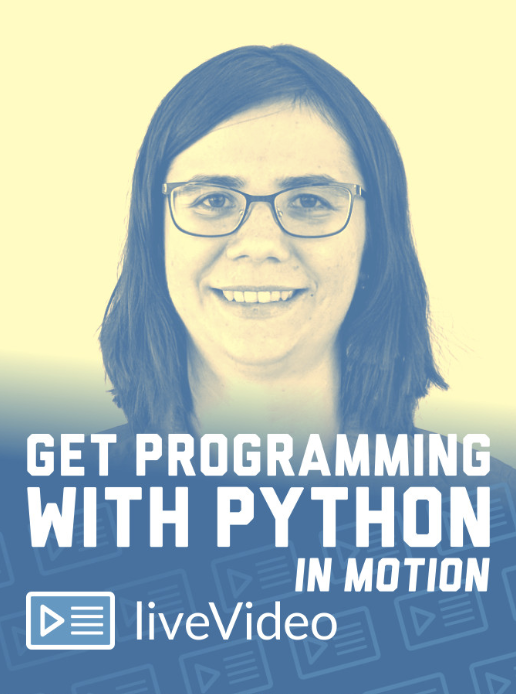
Ana Bell is the author of the Manning Publications course Get Programming with Python in Motion. In this interview, Leanpub co-founder Len Epp talks with Ana about her background, how she got into Computer Science, and what it's like teaching popular MIT programming courses both in...

Ana Bell is the author of the Manning Publications course Get Programming with Python in Motion. In this interview, Leanpub co-founder Len Epp talks with Ana about her background, how she got into Computer Science, and what it's like teaching popular MIT programming courses both in person and online.
This interview was recorded on October 25, 2019.
The full audio for the interview is here: https://s3.amazonaws.com/leanpub_podcasts/FM134-Ana-Bell-2019-10-25.mp3. You can subscribe to the Frontmatter podcast in iTunes here https://itunes.apple.com/ca/podcast/leanpub-podcast/id517117137 or add the podcast URL directly here: https://itunes.apple.com/ca/podcast/leanpub-podcast/id517117137.
This interview has been edited for conciseness and clarity.
Transcript
Len: Hi, I'm Len Epp from Leanpub, and in this Frontmatter Podcast, I'll be interviewing special guest Ana Bell.
Ana is an instructor in the Electrical Engineering and Computer Science department at MIT, where she teaches the popular course, "Introduction to Computer Science and Programming using Python," as well as "Introduction to Computational Thinking and Data Science."
You can follow her on Twitter @anabellphd, and check out her website at mit.edu/~anabell.
Ana is the author of a nearly 7 hour long video course produced by Manning Publications called Get Programming with Python in Motion. In the course, which is designed to be beginner-friendly, you'll get an introduction to the world of computer programming through the Python programming language, which is very popular not only with beginners in programming, but people who instruct beginners in programming - and we'll talk a little bit about that.
Ana is also the author of the Manning book Get Programming: Learn to code with Python. The book is an easy-to-follow introduction for people who've never programmed before, and helps them learn their first programming language.
In this interview, we're going to talk about Ana's background and career, professional interests, her various courses - both online and in person - and her book. And at the end, we'll talk a little bit about her experience as a creator of courses and of course a book.
I am also very pleased to mention that, to help promote this interview, Manning has provided us with a discount code for 40% off all Manning products that listeners to this podcast can enter when you're making a purchase at manning.com. At checkout, just enter the code, "PODMATTER19" in the little box you'll see at the point of purchase to get this great discount.
Manning has also provided us with five single use codes that you can use to get Ana's video course for free. Rather than go on reading out the codes here, we'll paste them in at the end of the transcription of this episode on the Leanpub website - which you can race to, and find on the leanpub.com website and looking for the podcast link at the top of the page.
So thank you, Ana, for listening to that intro, and for being on the Frontmatter Podcast.
Ana: Thank you for having me.
Len: I always like to start these interviews by asking people for their origin story, and I was wondering if you could tell us a little bit about where you grew up, and how you first became interested in computer science and engineering?
Ana: Sure. I was born in Romania and my family moved to Vancouver, Canada, shortly after the revolution, so about 1995. My father was an electrical engineer, and so of course we had computers in the house.
I started learning about computers at a very young age. I disassembled and rebuilt a computer with my dad when I was about 12. And then on that same computer, he started teaching myself and my sister Java.
I guess my parents stressed going as far as we could with education. So I did my undergrad at the University of British Columbia, and I did it in computer engineering. I got an exposure to programming there - as well as building actual machines, robots. Things like that.
But I became interested in biology towards the end of my undergrad. And so I really wanted to do a PhD in computational biology. I had applied to a bunch of computational biology PhD programs, but my biology background wasn't very extensive. So I only got accepted to Princeton University for their Computer Science PhD program - not computation biology. And so there I did study computational biology, but in the Computer Science department.
Ana: So because I didn't have a good grasp of biology at that point, it was kind of a rough time for me. So I would apply machine learning algorithms to gene function prediction, that was my research. But the results I would get back, machine learning algorithms give you back a result - and I would have to consult with my colleagues who knew more biology than I did, about whether those results made sense or not. I felt like I was leaning on other people a little bit too much. So it didn't feel like a very independent way of doing research.
At the same time in graduate school, I also got a chance to TA for the intro Computer Science class, and I really, really enjoyed it. It was a lot of fun to teach programming to people who have never programmed before. And it was very rewarding to see them get something that they had struggled to get for that entire week. So, I knew that I would go into teaching after I had finished my graduate studies.
Len: Thanks for that great explanation. I'm sure we'll get into a little bit more of the details. But before we move on - one of the great joys of this podcast is that we get to interview authors from all around the world, and who've been all around the world. And I saw on your LinkedIn profile when I was researching for this, that you speak Romanian. But I didn't know you were from Romania and that you'd lived there before the revolution.
Ana: Yes.
Len: I have a friend actually who's from Romania. She's written extensively about her father's experience being imprisoned as a dissident, and stories about burying the typewriter in the back yard during the day, and then covering the windows at night so her mother and her father could type up revolutionary pamphlets, and things like that.
Ana: Wow.
Len: I was wondering if you have memories of the revolution - or even what life was like before - and if you'd just be willing to talk about that a little bit?
Ana: So I was born in 1986. The only thing I remember is - I was probably, what? Two or three at the time. It was during the revolution, and I remember hearing - I guess, gunfire outside our window. And I was kind of peeking up, looking outside - and my mother was telling me to "Get away from the window." That's pretty much the only thing I remember. I think my parents did a pretty good job shielding us from that.
Len: And how did your family make it to Canada?
Ana: They had applied for, I guess, a visa, and they got it through - I'm not sure, but I think they got the visa through education - whatever education criteria were met at the time.
Len: And do you know why they picked Vancouver?
Ana: I have no idea why they picked Vancouver. I think, I can only guess - it's probably because we had one family there who we knew from Romania, who was in the area.
Len: It's interesting, often people don't necessarily have a lot of choice even in where they move under circumstances like that. But I'm glad to hear that your family knew somebody where they were going.
Ana: Yeah, and I was pretty young so I don't know any of those details that well.
Len: Thanks for sharing what you do remember.
Moving on - so you decided to focus on teaching - instead of doing research, if I understand correctly?
Ana: Yes.
Len: Not that teaching doesn't involve a certain amount of research, of course.
Ana: Yeah.
Len: And I saw from your CV that there's an explicit purpose behind your work, creating online courses in particular. You write that, "Integrating online learning with a conventional classroom for a more interactive and instant feedback-driven experience," is very important to you - throughout the pedagogical or even theoretical level. I was wondering if you could talk a little bit about what it means to integrate online learning with a conventional classroom? Because I think a lot of people, at least in the past - conventionally assumed that online and classroom learning were incompatible with each other?
So I agree, but I think blended learning and flipped classroom have become more common these days. And they've become more common, especially in Computer Science classes. The course that I teach out of MIT is a very good example of why we have to move to have a portion of our course online.
We originally had maybe 100 students take the class. And then as the class became required for EECS students, we saw our enrolment go way up. And at that point, there's no way that we could grade a problem set every week from 400 students on paper or manually. And there's no way we could grade all of their tests within a 10 hour period, even with a large staff working.
We had to offer the students another way of submitting the assignments, so we moved to an online learning platform. And so we use MITx for that. Once we moved to an online learning platform, we also got the opportunity to show students other resources. So we have videos that we had recorded. Not myself, but another one of our instructors.
And so students have the chance to see the videos presented in somebody else's words. And if they don't understand the way I'm explaining something, maybe they'll understand the way somebody else is explaining something. And then we have a bunch more practice exercises offered online as well for them. And since this is an intro class, practice is the best way that they can learn. Because programming is a skill that they need to hone.
Len: And the flipped classroom that you mentioned, is that the model where you learn- like you sort of watch a video before the class, and that's your preparation?
Ana: Yes.
Len: And then when you're in the class - instead of sorting having a lecturer, you discuss the lecture that they've watched online already?
Ana: Exactly, yeah. That's the flipped classroom. We don't do that. We use more of a blended learning experience. But there are some classes at MIT that do the flipped classroom way. And so in class you may discuss the video, or you may do exercises together in small groups. Things like that.
Len: And is this something that students who come to MIT these days seem to be already familiar with, or is it something that they have to learn? This blended classroom model?
Ana: I think most have to learn it. I think their first exposure is through the classes that are more generalized requirements. Like math, biology, physics, things like that. And then when they come to us, they usually know what to do or what the deal is. But I don't think many high schools offer that way of learning.
Len: Preparing for this interview, I watched one of your lectures online - and by the way, you can find the lectures for these courses on iTunes, and they're really good. I was just wondering if you wanted to give our audience a bit of a sense of how you teach, and what you teach? If you could talk a little bit about what computers do? In the way you would to a sort of class of freshmen - if you could actually explain like what computers do? Imagine I don't know?
Ana: Okay. So a computer is just a machine. It can be programmed to follow a set of instructions. And the instructions are just a recipe, also known as an algorithm, in Computer Science world. And whatever you type to the computer, whatever instructions you type to the computer - the computer will execute. So it'll run line by line. And whatever you tell it to do, it will just do it. So we can't really infer anything other than what lines of code it has. Is that okay?
Len: Yeah, that's great.
Ana: Okay.
Len: It's funny, because we're around computers all the time and we use them all the time nowadays. But actually stepping back and thinking, what is this thing and what does it do and how does it work, is something that we often rarely do.
Ana: Yeah.
Len: Including those of us who work with computers all the time. And you can kind of get lost in the sophisticated interface and the sort of functional level at which you're interacting with it. But getting down to the sort of fundamental description of what these devices are is actually a really useful exercise - even for people who aren't beginners, I think. I was wondering, what level of computer literacy do students have when they come into your classroom? And I don't mean about programming, but I mean about like what computers are.
Ana: I think most students these days have used a computer. We require students to have a laptop when they come into the class, and all of them do. I think they've used Excel probably. They know what a file system is. They know how to organise files. But I don't think many have programmed before. We actually test - we actually allow students to test out of our course before each semester. And for the whole year, we test out about 400 students. So that's 400 people who would've been - I guess, ringers in the class.
Len: Right.
Ana: Right? So what we're left with, taking the actual class - is students who actually have no programming experience, and are curious, or the course is required for their major. Or they do have some programming experience, right? But it's in another language. They didn't get a chance to learn the Python syntax. They didn't pass the exam to test out of it. I think largely we have those two groups of students in the class.
Len: My next question for you is a version of one that comes up on almost every interview that I do with people who've written technical books or made technical courses, and I hope it's not controversial asking you this.
Let me put this question the way I would put it to a sort of conventional Leanpub author who's written a book about programming.
If they'd studied computer science at school formally - and this might be going back all the way to the 60s, all the way up to this decade - I'll ask them, if you were starting out again now to pursue a career in software engineering, would you take a full Computer Science course at university? Again, given all of the resources available now. And do you think there's an answer to that question, or that situation will change in the next 10 years?
Ana: Yeah, that is a good question. You're right. There are a lot of free resources these days for any language you want to learn, right? I guess I can speak to this particular course. I think the answer is yes, I would take a university programming course. And I can tell you what makes the MIT course different, than just learning programming online.
This course is mostly a course about Computer Science, and introducing students to all of Computer Science at a very broad level. It just so happens that you have to learn programming along the way. I think that's probably the motto of the course. So in lecture two, I feel like students are introduced to an algorithm, the bisection search algorithm. Which is easy to grasp in your mind, right? We do this thing in class where I tell a student to think of a number between one and twenty. And then I can guess it in like three or four tries. You just kind of pick the point halfway, and then you ask them if it's higher then or less than the number that I choose.
Len: Right.
Ana: Right? It's an easy algorithm to grasp. But in the first problem set, then we ask students to put that into code. And a lot of students have trouble with that, for two reasons. One is because now you have to think of the concepts that you've learned, and to kind of translate the English thing that I'm asking you into some sort of pseudo code. Like, "I need a loop here, I need a variable here. I need reinitialised variables here." Stuff like that.
And then the other thing they need to learn, they need to know is the actual syntax, right? Like, what is the syntax for a loop? What is the syntax for changing a variable? Things like that.
So this particular course, I think, does a really good job of teaching students the really important concepts in Computer Science - and you also learn programming along the way. We also teach them the efficiency of programs. So that's Big O notation. That's towards the end of the class. Which is, I don't think something that is typically taught in intro classes.
think if you were to look for resources online that taught you these separate things, algorithms, Big O notation, programming - you could find them. But I think this particular course does a good job of kind of blending that together in a coherent way. And I think many Computer Science courses do try to do that, right?
Len: One thing I found really interesting about your course is that you - in the introduction to it, you say, "This is going to move at a fast pace, and it's going to be difficult."
Ana: Yes.
Len: "To keep up." And when I was listening to that, I was thinking - this is all speculation, right? But that - just being in an environment where you're being openly challenged like that, is something that's probably difficult to replicate online.
Ana: Yeah. We do try to replicate it through the edX version of these courses. So you can take the exact same courses that MIT students take on edX. It's the same problem sets, the same exams, the same lectures - and just a little bit slower pace. But I think students from all around the world who take the edX version of these courses at MIT kind of see that they are also challenged in the same way that MIT students are challenged. And we are upfront about that as well in the edX version of the course. I read the forums sometimes, the discussion forums - and people either love being challenged, or they hate being challenged. Yeah.
Len: Yeah, and it can depend on the type of challenge that it is, and the way the person perceives it - regardless of the way it's presented. It can be very challenging.
And so you've mentioned edX. That's something I wanted to talk to you about. You've been part of creating these massively open online courses on edX or MOOCs. And at least one of your courses has attracted over a million students.
Ana: Yes.
Len: Do you know what drove the success of that course in attracting so many students?
Ana: I think it's an intro Computer Science course, and it's offered exactly as MIT students take it. I think those two things are a big part of the success.
Len: And I have an MIT specific question, which is - what's MIT OpenCourseWare?
Ana: Yes, so MIT OpenCourseWare is, I guess, a subdivision of the Office of Digital Learning at MIT. Where an instructor who's teaching a course at MIT, can ask to have their lectures recorded for a particular semester. And then those lectures, the problem sets for that semester, the exams for that semester - are then available to anybody for free if they want to watch, or they want to do the work.
Len: And are you aware - not that you have to talk about controversies at your institution - but was it controversial setting up a program for providing free content from such an exclusive university, to the whole world? Or was this something that just kind of came naturally to the mission?
Ana: I'm not sure. I think OpenCourseWare has been around for a really long time. At least maybe, I don't know? Early 2000s. I think it's always been MIT's mission to make education available freely. And I think OpenCourseWare was a big part of that. I actually remember in my undergrad, looking at OpenCourseWare for some courses that I was taking at UBC.
Len: Oh wow.
Ana: Yeah.
Len: Yeah. Well that's great to hear - it's been such a success and actually had such an influence on people. The intended influence, it appears, as well.
Ana: Yeah.
Len: Moving on more specifically to the subject of your courses and your book. One question I have is, why is Python so popular as a language for introducing people to computer programming at the college level?
Ana: Yeah, a lot of universities are moving to Python. I think at its core, Python is just really simple to start with. I started with Java, and in Java you need some integrated development environment - usually Eclipse, right? You need some like little startup code, before you actually get to writing the actual code, to do what you want it to do. But Python kind of does away with all that. So if you're a pure beginner, right? If you have to type in - in Java, like "class main," whatever - I don't even remember exactly what it is. It's kind of confusing, right - if that's the first thing that you're writing and you're trying to type up.
But in Python you just type the code in, and you're good to go. It does away with extraneous files, there's no setup code, no clean up code. It kind of just works.
It's also very intuitive. It's clean, kind of English-like. Keywords just make sense. And I guess the most important thing is, you don't need to know object types to get started with Python. I remember when I learned Java, one of the lectures was on declaring types. And you always had to tell the compiler what type of thing that you wanted to work with. And you don't need to do that in Python.
Len: I'm curious. When writing a beginner book or creating a beginners course, how do you decide what to keep out and not talk about? Because it must be very tempting to expand the scope or go into detail for all these things that you know so well yourself.
Ana: Yeah, so - I mean, believe me - when I first started writing there were so many things that I wanted to include, and one of the first things that I wrote was this program to solve a maze. If you were given a maze with stars to make the walls and spaces to make things, how could you - what were the steps you need to do to get out of the maze? And I thought it was really cool, but in the end, I took it out, because it wasn't really getting at what I wanted people to get out of this intro course.
I feel like I was already making assumptions for things that the readers would know, that they didn't know at the time. So I tried to explain things in very great detail, like why I'm doing certain things. In the end, I think I just focused on introducing concepts that could be transferable to any other language - so loops, branching classes, but not inheritance, functions - things like that.
Len: I'm curious, have your interactions over the years with your students for your classroom courses affected your decisions about what to include in sort of your next project?
Ana: Yes they have. I talked with many students in my office hours. And there were things that we did in our on campus course that students were just fundamentally confused about, and I would have to explain it in my office hours. So I wanted this book to be truly for beginners. And of course, the video course for beginners.
As in - if you have never seen a variable before, I'm not going to assume you know what it is. Like, "This is what a variable's supposed to do, it stores data. Things like that, and you can manipulate it." So I really tried to get down to the basics, assuming absolutely no prior knowledge of programming ideas at all.
Len: Specifically on the subject of your Manning course, Get Programming with Python in Motion, just moving onto the next part of the interview - I think a lot of people on the outside of processes like this often wonder how things work behind the scenes. I was wondering if you could talk a little bit about how the course got started. Did Manning approach you? And what the process was like? Did they have you audition? Did they train you in how to do videos, things like that?
Ana: Yeah, so it all started with an email from Manning. At the time I was, I think, at MIT for two years or so. And I was on the edX forums answering people's questions, things like that. The email from Manning basically said, "We've noticed that you kind of run this online course, and we liked your replies to people who had questions about basic programming concepts. Would you like to write a book on that for us?"
I was very excited, because I had kind of always thought about doing that, but never did. And it just felt like a really good match. So then I got set up with an editor, things like that. I wrote the book within about a year.
Len: So the book came first?
Ana: Yeah sorry, the book came first. And then the challenge of writing the book, I think the hardest part about writing the book was just to try to translate the mechanics of explaining something using static images. So like kind of a sequence of - like the computer works in the sequence of steps. So just translating those sequences, those steps into images was very hard for me.
And then when I got the opportunity to record the video course, which was based on the book - that went a lot smoother. Because I could use animations and everything that I kind of had in mind that I was trying to put into static images, just flowed.
Len: Oh that's really interesting. So you found the videos easier than the writing.
Ana: Yes, yes - very much.
Len: And did you get flown to a Manning production centre, or did they provide you with any equipment or training, or anything like that?
Ana: They provided me with the equipment. So, for the book, there was no equipment. For the videos there was - they gave me a microphone, and they provided me with some softwares that I could use. And I ended up doing the editing myself. So I would record by myself, I would do the editing by myself. It was exciting to do the editing at first, but then after - I don't know, the twentieth recording, it got a little bit tedious. I have never edited before, so it was a new experience for me. I had to learn all the tricks of the trade.
Len: Oh that's interesting, yeah. I've gone through that same process myself in the past, and the alternating - to having fun and shouting at the computer screen is a familiar experience.
Ana: Yes.
Len: It's actually a very interesting question - at a high level of online instruction, the differences between books and courses. I believe O'Reilly actually bought, it might have been a Canadian video course production company years ago? Signalling a pivot - at least as I interpreted it, or recall my interpretation at the time - as a pivot away from books as a way of delivering instruction in technical issues.
But at the same time, one thing we've encountered - we've got people who've published videos with Pluralsight and Udemy and edX and Coursera. One issue that's sort of emerged over the last few years in this relatively new space - is the difficulty of dealing with outdated videos, versus outdated books.
Ana: Yeah.
Len: And my understanding from at least - this is totally anecdotal, but from the people I've spoken with - is that they'll have a huge success with a video that took a couple of hundred hours to put together in some cases, or a video course - and then a year later, it's outdated.
Ana: Yeah.
Len: And they're like, "Oh my, was that worth it?" And there's this temptation to re-shoot it. But then you think - you confront the fact that it's probably going to be outdated in a year again. I imagine that's different with beginners courses, though.
Ana: In my opinion, I don't think this video, or this course, suffers as much from that. Mostly because I do tend to focus on things that are universal. The concepts themselves, as opposed to specific things about Python - list comprehension, stuff like that. So I think it is different in that respect. And because it is beginner, right - this is something that literally anybody could pick up and try to learn these concepts that are just so basic for programming.
Len: My last question about this process is - a lot of listeners to our podcast are self-published authors, or aspiring self-published authors. But even if they're self-published authors already, they're often both categories. So people are often aspiring conventionally published authors. I was wondering if you could just talk a little bit about the experience? You said you got it done in about a year.
Just sort of full disclosure or whatever, my co-founder Peter has written two books with Manning, and had a wonderful experience doing that back in the day. Did they put the sort of like screws to you to make sure you hit deadlines, or was it a little bit looser than that?
Ana: Yeah, it was - I think Manning tends to publish books that are maybe on technologies that are happening right now. I don't know if they put the screws in those authors. But for me, I think there was no big rush to get this published. I didn't meet my original intended deadlines at all. It was late by half a year or so. And they didn't really mind, they just changed the dates on the spreadsheet and moved on.
It was - I mean, for myself, I think it took so much time because I have a family, I have two kids that required my time. And so I was really just writing in the evenings after coming home from work and dealing with students who didn't know Python, and then I have to write about Python. So I would write on evenings and weekends, and that was my time to write.
Len: That's great to hear. Just for anyone worried about - I mean, there's a wider issue of independence, that sometimes people who are accustomed to self-publishing have a preoccupation with. But for anyone listening who's thinking of getting published by a conventional publisher, every single book editor in the world knows that writers never meet their deadlines. So they will go into it expecting that with you.
The last question I'd like to ask you is a version of the question I normally ask at the end of these podcasts, which is - we actually ourselves offer a platform for creating, selling, and taking online courses or MOOCs. And so the question, the form it's going to take is a bit selfish. But in all your work creating these courses and delivering them to students, these online courses - is there one feature you wish you had, that you haven't found anywhere? Or is there one big technological issue you wish MOOC platforms could solve?
Ana: That's a good question.
Len: Yeah, I could prime the pump while you're thinking.
Ana: Yeah.
Len: Our courses were developed - our first customer was a team at Johns Hopkins University who'd been involved with - I think it was the most successful MOOC, in terms of student acquisition ever, on data science, at Coursera. And they pointed out there's issues with grading, you actually mentioned that - but when you're sort of scaling grading to millions of students, that becomes interesting.
One feature they have is fully anonymized data analysis. So who answers what questions. Like, if someone answers question two correctly, how likely were they to get question three correctly - and then what can we know about question two versus question three? And actually - I mean, they're data science people, right? So they wanted to eat their own dog food, as they say. But there's all kinds of things that you can do, like have the order of questions change every time a student takes a different test.
Ana: Yeah.
Len: Or like, if you've got multiple choice questions, let's say it's always the same four answers for A, B, C and D - but sometimes the same answer will be A, sometimes it will be B, sometimes it will be C. So you don't get the old trick of knowing that like - if you don't know the answer, just put C, because that's where people tend to put correct answers. Because they feel bad about putting it first, and they feel bad about putting it last and that kind of thing.
But I mean, if you can't think of anything right now, please feel free to get in touch with me anytime. Because this is something that - it's a real challenge. Oh and another thing that we know as well. I think you brought up forums. Student forums actually are a hugely important part of dealing with the scale.
Ana: Yeah.
Len: Not just from the perspective of the people who - the instructors for the course - but also the students themselves. Because if there's a million other people who've taken your course, there's a million other people who've potentially written down some advice or asked some question that someone else in the community answered out there.
Ana: Yeah. So, I think - I was going to say, the forums as one of them. Like a practical thing. I've had the chance to do the same course on campus, and online. And on campus, we can have office hours. So students get one-on-one help. It's a conversation about their issue. But the forum, right? It's post your question out there, and then maybe someone will answer it tomorrow - or maybe never.
And so I think, yeah, with a million people who have signed up already - likely somebody else has already had the same question. So, maybe doing something with the forums to make it more of a conversation, rather than, "Here's my question. I'm going to be as detailed as possible, how can you help me?" Is good.
Another thing I wanted to say is - with MOOCs, right? I think retaining learners is a big problem - or engaging learners is a big problem - and having them stay till the end. While there have been a million enrolments in the course, only about 5% have actually finished the course. The number is not as impressive at that point. And so a lot of the MOOCs are trying to figure out - how do you keep learners all the way through to the end? And sometimes maybe there's nothing you can do about it. But maybe something like what you mentioned, which is predicting the student's success as they are working on the course, could be motivating, right?
Len: Yeah, that's a really great suggestion. Thanks for sharing that information. It's - the first thought I had was, maybe fewer people in the top of the funnel would increase the ratio? But just try convincing someone who runs a web platform to do that, right?
Ana: Yeah.
Len: By which I mean, if people didn't get the jargon - if you stated things, at the point where people are deciding whether to sign up for the course differently, you might get fewer people signing up, and a higher proportion finishing. Because you're basically being more selective in your messaging.
Ana: Yeah.
Len: But people who run platforms want users, users, users. And if you were in a meeting with the person in charge of getting users and said, "Let's get fewer of them," they would say, "Well not unless you tie a higher finishing ratio to my compensation."
In any case, thank you very much Ana for taking the time to do this interview, and for covering so much ground. I have a tendency to kind of just, I think, seem to ask my next question out of left field - and I apologize if that happened once or twice in this interview. But you were very game to answer everything, and I really appreciate it.
Ana: No problem, thank you.
Len: Thanks very much.
And thanks as always to all of you for listening to this episode of the Frontmatter Podcast. If you like what you heard, please rate and review it wherever you found it. And if you'd like to be a Leanpub author yourself, please check out our website at leanpub.com. Thanks.
Here are also five free live video codes, that will be live for two months, starting in late October::
gppprf-C846 gppprf-00F5 gppprf-FD5F gppprf-EB0D gppprf-2B32