

The Leanpub 60 Day 100% Happiness Guarantee
Within 60 days of purchase you can get a 100% refund on any Leanpub purchase, in two clicks.
See full terms...
Learn key concepts, commands and analyses for longitudinal data analysis

Longitudinal data are powerful but complex, requiring new concepts, data structures, and models that can feel overwhelming to learn. This cheat sheet brings together the key ideas, R commands, and modelling approaches into a single workflow, helping you understand how everything fits together and providing the building blocks for mastering longitudinal data analysis.
Minimum price
$20.00
$20.00
About the Book
Longitudinal data are becoming increasingly common across the social sciences, offering powerful ways to study change over time in individuals, groups, and institutions.
At the same time, working with longitudinal data is genuinely complex: it introduces new concepts, new data structures, and new statistical models that go far beyond cross-sectional analysis. Researchers are expected to understand ideas such as dependence over time, within- and between-person change, unbalanced panels, and a growing set of specialised methods, often with little guidance on how these pieces fit together. For many people, learning longitudinal analysis feels overwhelming.
The Ultimate Cheat Sheet for Longitudinal Data Analysis in R is designed to help you make sense of this complexity. It brings together the key concepts, commands, and models you need to know in order to confidently work with longitudinal data. Rather than teaching everything in depth, the cheat sheet gives you a clear map showing how ideas connect, how methods differ, and where each approach fits—so you can build knowledge systematically instead of piecing it together from scattered sources.
Bundles that include this book
About the Author
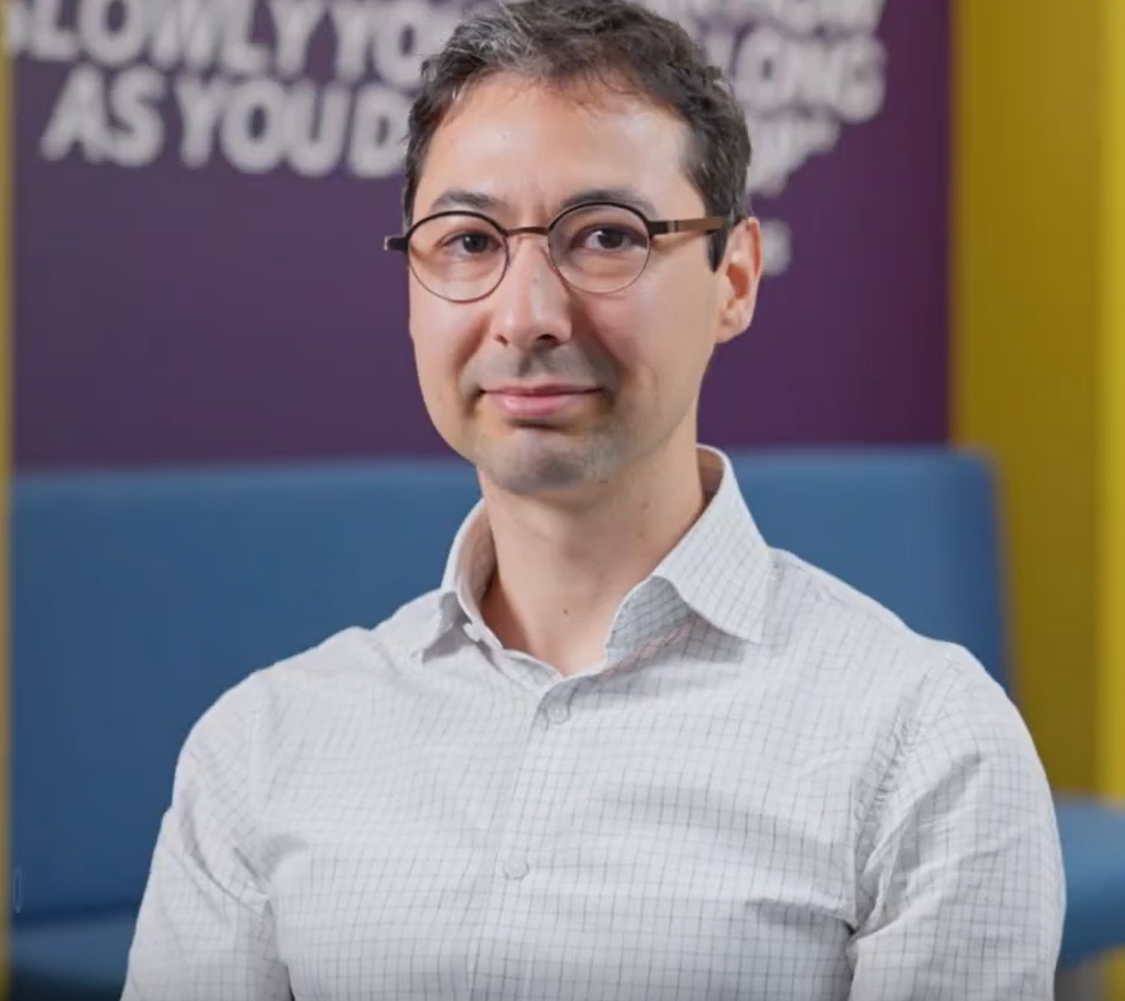
Alexandru Cernat is a professor in Methodology and Social Data Science at the University of Manchester.
He has a PhD in survey methodology from the University of Essex and was a post-doc at the National Centre for Research Methods and the Cathie Marsh Institute.
His research and teaching focus on: survey methodology, longitudinal data, measurement error, latent variable modelling, new forms of data and missing data.
He is also the founder of longitudinalanalysis.com, a platform that helps researchers and analysts learn to collect, clean, and analyse longitudinal data.
You can find out more about him and his research at: alexcernat.com.
Podcast Episode
Within 60 days of purchase you can get a 100% refund on any Leanpub purchase, in two clicks.
See full terms...
We pay 80% royalties on purchases of $7.99 or more, and 80% royalties minus a 50 cent flat fee on purchases between $0.99 and $7.98. You earn $8 on a $10 sale, and $16 on a $20 sale. So, if we sell 5000 non-refunded copies of your book for $20, you'll earn $80,000.
(Yes, some authors have already earned much more than that on Leanpub.)
Learn more about writing on Leanpub
If you buy a Leanpub book, you get free updates for as long as the author updates the book! Many authors use Leanpub to publish their books in-progress, while they are writing them. All readers get free updates, regardless of when they bought the book or how much they paid (including free).
Most Leanpub books are available in PDF (for computers) and EPUB (for phones, tablets and Kindle). The formats that a book includes are shown at the top right corner of this page.
Finally, Leanpub books don't have any DRM copy-protection nonsense, so you can easily read them on any supported device.
Learn more about Leanpub's ebook formats and where to read them
You can use Leanpub to easily write, publish and sell in-progress and completed ebooks and online courses!
Leanpub is a powerful platform for serious authors, combining a simple, elegant writing and publishing workflow with a store focused on selling in-progress ebooks.
Leanpub is a magical typewriter for authors: just write in plain text, and to publish your ebook, just click a button. (Or, if you are producing your ebook your own way, you can even upload your own PDF and/or EPUB files and then publish with one click!) It really is that easy.