
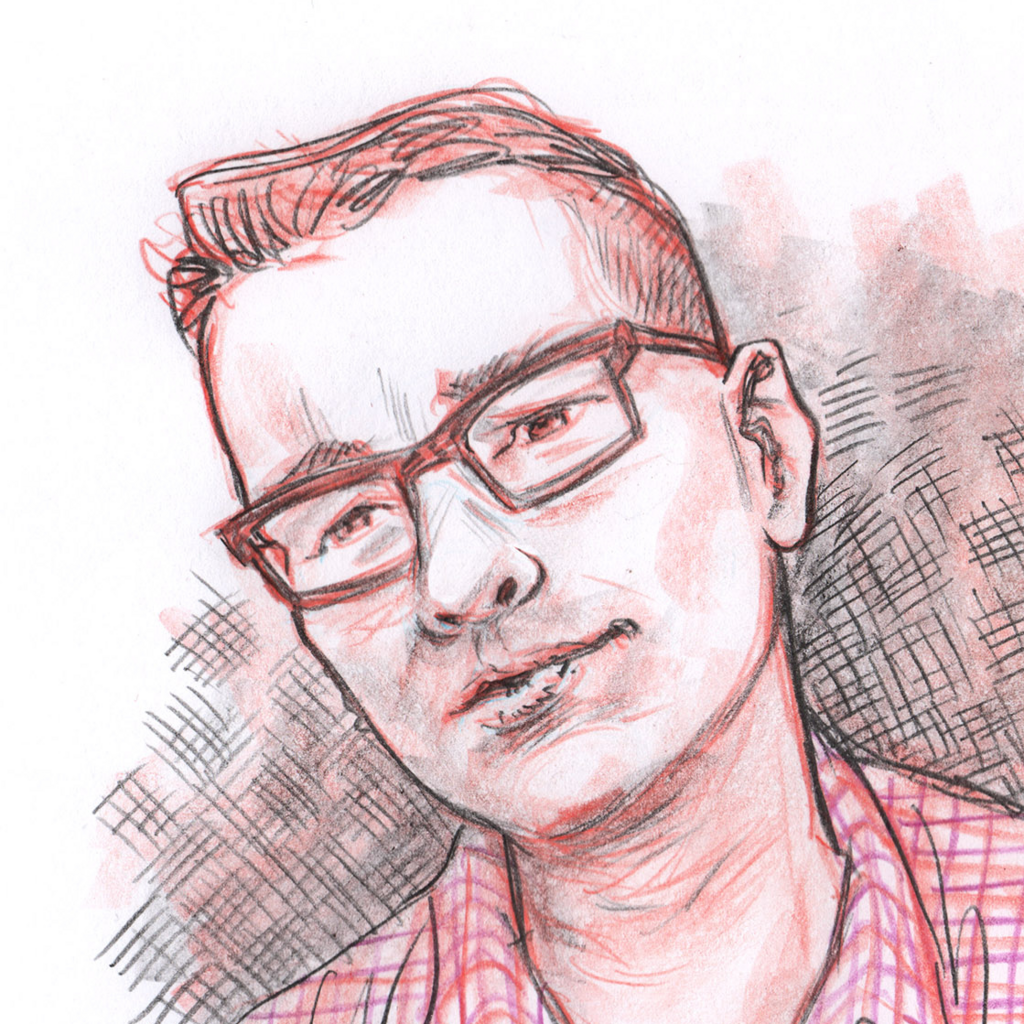
Ajdin Imsirovic, Author of A Better Way To Learn JavaScript
A Leanpub Frontmatter Podcast Interview with Ajdin Imsirovic, Author of A Better Way To Learn JavaScript: Save Yourself From 1000 Hours of Trial and Error Experiences!
Books by Ajdin Imsirovic on Leanpub
Polytope
React From Scratch, Book 3: React Mastery
React From Scratch, Book 2: React and TypeScript
React from Scratch
Angular from Scratch
A better way to learn JavaScript - Useful Snippets
A better way to learn JavaScript - Built-in Objects
A better way to learn JavaScript - Building Mini Apps
Bootstrap layouts in depth
Vue from Scratch
A Better Way To Learn JavaScript - Advanced JS
Learn the basics of HTML5, CSS3, and Bootstrap 5
A Better Way To Learn JavaScript
Ajdin Imsirovic - Ajdin is the author of the Leanpub book A Better Way To Learn JavaScript: Save Yourself From 1000 Hours of Trial and Error Experiences! In this interview, Ajdin talks about his background, learning English in part from listening to music, his approach to writing, and the pros and cons of conventional publishing and self-publishing.

Ajdin Imsirovic is the author of the Leanpub book A Better Way To Learn JavaScript: Save Yourself From 1000 Hours of Trial and Error Experiences! In this interview, Leanpub co-founder Len Epp talks with Ajdin about his background, learning English in part from listening to music, his approach to writing, and the pros and cons of conventional publishing and self-publishing.
This interview was recorded on August 5, 2021.
The full audio for the interview is here: https://s3.amazonaws.com/leanpub_podcasts/FM186-Ajdin-Imsirovic-2021-08-05.mp3. You can subscribe to the Frontmatter podcast in iTunes here https://itunes.apple.com/ca/podcast/leanpub-podcast/id517117137 or add the podcast URL directly here: https://itunes.apple.com/ca/podcast/leanpub-podcast/id517117137.
This interview has been edited for conciseness and clarity.
Transcript
![[A Better Way To Learn JavaScript: Save Yourself From 1000 Hours of Trial and Error Experiences!] by Ajdin Imsirovic](https://d2sofvawe08yqg.cloudfront.net/a-better-way-to-learn-javascript/s_hero2x?1620565905)
Len: Hi I'm Len Epp from Leanpub, and in this episode of the Frontmatter podcast I'll be interviewing Ajdin Imsirovic.
Ajdin is a web designer and developer, and author and educator, based in Bosnia and Herzegovina.
You can follow him on Twitter @AjdinImsirovic and check out his website at codingexercises.com.
Ajdin is the author of a number of Leanpub books, including A Better Way To Learn JavaScript: Save Yourself From 1000 Hours of Trial and Error Experiences!, A Better Way To Learn Vue, and Building Amazing Layouts: Learn the basics of HTML5, CSS3, and Bootstrap 5.
In this interview, we’re going to talk about Ajdin's background and career, professional interests, his book, and at the end we'll talk about his experience using Leanpub to self-publish his book.
So, thank you Ajdin for being on the Leanpub Frontmatter Podcast.
Ajdin: Thank you Len, I'm happy to be here.
Len: I always like to start these interviews by asking people for what I kind of jokingly call their "origin story." So, I was wondering if you could talk a little bit about where you grew up, and how you found your way into a career in web development?
Ajdin: That's actually a really, I guess - kind of a funny story. Because I got my first computer when I was, I think - eight? Yeah, in the 80s. I'm a bit of an older dude.
I got my first computer back then. Amstrad Schneider CPC 464. 64kb computer. It had a tape recorder and a player, integrated the keyboard - and it even had its green monochrome monitor. You could hook everything up, but you could also hook up the TV, right? then you'd get like a full-scale of, I don't know? 16 colors or something? So that's how I started.
Back then, it was former Yugoslavia - the country. So on local radio station, some geek would - who was obviously working on that radio station - he would actually play videogames over the radio waves. You could record them on a tape player and then play them. He would say, "Okay, right now we are playing 'Chuckie Egg', enjoy the ride." That kind of stuff. So I started really early, right?
But I guess I never really got into it. And, funnily enough - whenever I really started getting into it, something would happen, right? Small or big things like - I don't know? It's kind of funny to say, but maybe a girl would come along to change the world. Or, we had the war of course. That was a big bummer. I remember we would really not have too much electricity.
So that time, I wasn't even thinking about programming. I was just thinking about playing games. So like 2am, right? Everybody's up, because the power went on and you don't know how long it's going to be there. So my mom is vacuuming, I'm playing a videogame on the computer. That kind of stuff. So yeah, it was pretty weird.
Basically, like I said, whenever I kind of really get into it, something would happen, to divert me from that way.
For example, when I was in my early 20s, I started working for the UN mission in Bosnia here, after the war finished. They were part of the peacekeeping mission. So I had a lot of fieldwork, and the web was brand new back then. I was kind of like building websites with table-based layouts, just as a hobby, really. I built it for a friend, but it didn't really take off. Of course, it was also, the local market after the war wasn't really well suited for big commerce, I would say. We didn't have the whole bubble thing, at least not to the extent that you guys in the US and Canada had it.
Then I just kind of watched from the sidelines, so to say - check in every few years. I kept working in [tech] as a hobby really, just building websites for my own pleasure and as a pastime, and I was doing lots of designer stuff.
Then about 2011, I actually started working as a web administrator and a designer for a local financial services company. That's, I guess, where the things kind of started really rolling. And it just kept on getting better from there, I'd say.
Len: I've got a couple of questions. One is, what it was like to have - so I imagine after the war, there was this UN presence where you were.
Ajdin: Yeah.
Len: I had a friend who worked, years ago, for the UN in Kosovo. He had interesting stories about how like different parts of town basically were occupied by different countries from the UN. So, if you wanted good food, you went to the Italian part of town. If you wanted to play basketball, you went to the American part of town - because that's where the good courts were, and things like that. Was that - I mean -
Ajdin: All kinds of crazy stories.
Len: Okay.
Ajdin: Yeah. Sorry to interrupt you.
Len: No, no, I was just saying - that's the sort of best vicarious experience I have to draw on. What was it like to have a UN presence where you live?
Ajdin: Well, it's a funny thing. Because I was basically thirteen years old when the war started. So in a way, I mean - you're still a kid, so you kind of don't have anything else to compare it with, right? I'm assuming for people who are older, they could like kind of say, "Okay, this is normal life, and this is -" But since you are growing up in that kind of environment - no, it's like not the usual way to live, but you don't have any experience to begin with. So yeah, it's really an interesting mix of - or experience, I would say.
Also with the UN, when they came - it wasn't only the UN in my hometown. Because we have a big local airport here that was actually a military airport before the war, and now it's civilian. So basically 1995, we had like 30,000 US soldiers coming in, right after the peace agreement was signed. Then we also had the Russian military rushing in. So I guess there was some kind of a geopolitical something happening, I don't know?
I tried not to get into politics as much as I can. Actually, I'm not even watching the news, so there were probably times when I didn't even know who the president, which is kind of weird for this part of the world. You need to know the politics, but I just don't really care about it.
But yeah, it was interesting. For example, one time I remember specifically - this also has to do with Canadians, and I know you being a Canadian, this might be a little bit interesting.
Basically, after the war, we had a peace accord that said, "No firearms are allowed to come in," right? I work in this little UN international police office and the - basically there was like police from 4 different countries that the UN sent as part of the peace effort. The commander of the station was actually an Austrian police officer, and the deputy was also an Austrian guy. I was kind of close with them, I mean - I guess I was a good worker and whatever, they kind of liked me.
Then one day, they called me into the office. They usually call you like when you need to translate some documents, or maybe simultaneous translation - like interpreting meetings and stuff.
But there was a couple of like really buff, huge guys, right? I'm like this really skinny 20 year old. It was kind of interesting to see they're looking like commandos or something. I'm like, "What's happening?" they say, "These five guys, they came over to resolve some things.” They were part of a security agency in Austria that came over to bring back a truck that somebody rented and never returned. But the national is from Bosnia, and the story gets really kind of like a crime movie.
Basically what happened, they entered Bosnia from the southern border - and on the very southern border itself, there was actually a Canadian battalion, right? A Canadian camp. They basically stripped them of all of their firearms. So they went into the country without any firepower, right?
Now these five guys are supposed to kind of, I don't know how you call it? Like enforce or whatever, like get back the truck. But some local crime boss or whoever was the cousin of the guy who stole the truck in the first place, he said, "We're going to kill you." If that was a genuine threat or not, I don't know? But they came over to the UN to ask for some kind of, how would you say? Safety, whatever. Then they sent us all the way back to the southern border to ask for them, right? Me and two guys from Portugal, police officers. So yeah, that was - I mean, there were all these kind of interesting stories like that. So it was kind of wild.
Len: Thank you very much for sharing that. It's just so fascinating, the idea - I mean, one of the reasons I was asking specifically about having this UN presence, is like - in a sense, you can grow up and even grow up into maturity - and be in more or less a kind of remote place, you know what I mean?
Ajdin: Yeah.
Len: Like it's not remote to you - but then all of a sudden, these people from - tens of thousands of American troops, and there's Russians and like they're squaring off. Then there's some Canadian contingent, and things like that.
I mean, stories I've heard over the years of like how - I heard a story once about how - in one of those kinds of situations, the British military intentionally underfunded their soldiers, to encourage them to go and be resourceful. So what that meant, was basically stealing from the American base - like toothpaste and stuff like that.
Ajdin: Yeah.
Len: So amazing.
Ajdin: I also have some - not first-hand experiences, but some friends were telling me it was allowed to drink or something in some British spaces, whatever - like parts of the base, or they had their own bar. Then everybody would go there, but they weren't supposed to go. That kind of stuff. So yeah, it was funny. Lots of stories.
Len: I'm sure. You've given us, I think, enough of a taste that our imaginations can go away with us. But thank you very much for sharing that.
It's interesting. Just one other thing I wanted to add is that, this - because so many of the people we interview for this podcast are people who end up in technology and things like that, hearing stories about people's first computers is actually something that we talk about here.
But the experience of losing power and only having intermittent power has actually come up before. One person, I remember - was in Crimea or something like that, and there was stuff going on, right?
Ajdin: Yeah.
Len: He actually had to learn how to code on paper, because the computer wouldn't have any power. But that's - it was such a good image you gave of your mom, "The power's on. Oh my God, let's take advantage of it." So you played videogames, your mom—
Ajdin: Yeah. It doesn't matter that it's 2am, you're wide awake.
Len: That's fascinating.
So, you've got an interesting story that you've written about online, about learning English. I was wondering if you could -? That will give us a nice chance to segue into your experience teaching and things like that. So I was wondering if you could talk a little bit about that? How did you learn English?
Ajdin: Well, basically I saw lots of movies as a kid on local TV and stuff. Also, it was the time of VHS - video recorder, stuff like that. So you exchanged tapes and stuff. We didn't have Blockbuster here. We had small vendors that were renting out stuff. But also if you had lots of friends, we could just share different tapes among each other. Or you tape a movie right off the TV, right? The wonders of the beginning of the digital revolution, right?
So movies was one thing, and another thing was definitely music. Because I used to listen to all kinds of different, I guess - rock, grunge, metal - that stuff. Sometimes in youth magazines, or old versions of it from before the war - you would get lyrics printed in press. I already had some really good Oxford dictionaries. I would basically take the whole thing, and just circle the words that I didn't know. Then I would research them in depth, get into the dictionary and then find all the different meanings. It was really interesting. Then just, I guess through repetition - I've learned it.
But the question that you asked me is a bit tricky, because I had this - I'm not even sure what to call it? Was it an obsession, is it a character fault? But I'm always thinking about learning, right? Even learning to code and stuff. I'm always trying to put myself into the shoes of somebody who just sees it for the first time, and I'm just curious about the process. So basically, since I'm thinking about it all the time, then I'm drawing parallels in different ways. Sometimes I think, "Oh, this is similar to how I learned English." Then other times, I make similar connections or very different ones. So you got me there with the question. I'm not sure this is the answer that you -
Len: No, no - it's really interesting to hear that. Because not everyone's necessarily so deliberate and self-aware about what they're doing when they're learning languages on their own that, right? The idea of purposefully situating your learning of the words in a context - that is actually really interesting to me.
Because the normal experience people have, I would say at least - I'm dated as well myself, but is - you get a book called a "Grammar," and then you learn lists of words, and then you learn the rules for how to put them together. But that doesn't match - that's the way people are normally formally learning languages in the past. Nowadays, things are much more sophisticated.
But the idea of actually taking songs, so that there's actually a melody and maybe a crescendo or something that - or a climax to the song, or a story that it's telling, then being able to have that, the sound along with the words to learn - the idea of actually looking up the words to the lyrics beforehand, and then listening to the song - just sounds a really great idea to me.
Ajdin: I guess I just stumbled upon it because it was a synergy of things, and they just came together. I would also say that I have a knack for languages in general, so that's also important.
But I was really interested in those songs. I was interested in that music. I was listening to it over and over again anyway. It's just that you hear the words that - especially when you're even younger than I was, I just mumbled the words. I didn't really know what they were saying. But then - as you grow older, and you learn the words - and you start to understand what's happening - even today, if I hear a song that I haven't heard in a really long time, from before I spoke English - I would say, "Oh, so that's what it's about."
So it's funny. But looking at it from the viewpoint of learning itself, I think that was probably the best method. Because you got - as you say, the context. You've got grammar rules. Because songs that make sense, at least follow some of the grammar rules. Then you also get colloquialisms, so slang. I guess you could say maybe things that are cultural. Something - for example, if I'm a fan of whatever band, and then I meet somebody else from another country who was a native speaker, we have a topic to discuss, we have a common ground. So I think if I could ever translate that to learning to code in the same way, I think that would be an amazing thing, yeah.
Len: It's funny. You just set off a memory in my head. One of my very good friends - we made friends when neither of us could really speak the other's language very well, but we could understand it. So I could understand my friend's French quite well. He could understand my English quite well, but neither of us could speak. But we became friends because we both liked Nine Inch Nails. So we had the common Nine Inch Nails language. We could talk about the album names and the song names, and things that. Go to the concert, that kind of thing.
Ajdin: Exactly.
Len: I actually want to talk to you a little bit about - so you're a self-taught programmer. Then you found yourself - well, not found yourself - you took up the opportunity to write programming books and things that - but just before we go onto that, we're recording this in early August 2021.
For the last year and a half, I've been asking most guests a little bit about their experience about the pandemic, and things like that. I was just wondering if you wouldn't mind telling us a little bit about what things are for you now, in Bosnia and Herzegovina?
Ajdin: Well, it started off - we didn't really get too many vaccinations in the beginning. But now, I think it's getting better. But also, it's - I guess - the situation around us always shapes our thinking, and the way that we see the world.
Before the war, and after the war also, here - I mean, I lived through it. I've been here all the time. I didn't leave during the war, I wasn't a refugee or anything. So there was always lots of politics on TV and in the news and stuff. Even when I was working with the UN, I would speak to different guys from different countries, and they would always say the same thing, like, "Oh, you got to watch politics and follow everything." Then one day, I got fed up with it, and just stopped. I think it was about the year 2000. I purposefully stopped watching the news completely.
Len: Wow.
Ajdin: It just got better or worse, depending on which camp you were in. So I really try not to follow anything. Even when I turn on the TV here, I'm assuming it's the same everywhere. They always have so many people are sick, so many people are - I mean, I understand, and I feel bad for those people - but there are so many other things to discuss.
For example, a channel that I would watch all the time would be something Coding TV, right? Because that's what I'm interested in, what I like. So I'm not, I guess, the best source of information regarding the pandemic. Honestly, it hasn't affected me at all, I would say. Maybe that's a bold statement? But I'm pretty much doing exactly the same things - sitting behind the computer, seasons are passing by - and that's it. I'm not saying that's the best lifestyle to have, but yeah - that's my life. So I'm not complaining.
Len: Thank you very much for sharing that - many of the people I've talked to have had varied experiences, and I think it's actually really important to point out how one's experience is actually determined by the choices one makes about what to listen to, and what to be preoccupied with, and things that.
I would say that, because so many of the people that we interview on the podcast are programmers and stuff that - I've had more than one guest say some version of, "To be honest, it hasn't really affected me that much. I was working from home beforehand. Most of my entertainment is online, rather than in person," and things that.
Everybody has their own level of following the news and being preoccupied with the latest numbers, or not being preoccupied with them at all. Personally, I've never been - I made the choice to not get really preoccupied with numbers and things that. But just to follow the general trend -
Ajdin: I've got to give you a disclaimer, though. I just thought of something. Because I do know people who got sick, and I have heard of people dying. But I wasn't personally affected by it, so I guess that also affects my general perception of the world right now. Of course, I would probably be a lot more interested in if anything worse happened, and luckily it didn't. So I am empathizing with people who had it rough. Also, as you say - we are really privileged in the IT industry, especially - I mean, not always. We have our own burden to bear.
People sometimes say, "Oh, programmers got it easy." But nobody's ever asking about my back, right? I get back pain from all this sitting down, and then I have to think like, "Should I exercise? How am I going to do it? How I'm going to organize everything?" Especially if you are more of a - honestly - lazy person I am, as far as physical exercise goes. Or, I don't know - it's just having the family and children and all of that - by the time you take care of all the obligations - I know it sounds an excuse, but yeah - it's tough. I mean, nobody's got it perfect, right? But I still think that we in the IT world, we survived the pandemic unscathed - I would say, yeah.
Len: I think that's true. I think it's important to be straightforward about it too, right? To be honest about the fact that some jobs are more easily done remotely than others.
Ajdin: Of course.
Len: A lot of people did actually discover that they could do their jobs remotely, more than they thought they could. I've got a couple of friends - one's a lawyer, one's a surgeon. They actually learned that they could do things online that they didn't think they could do before. Those have had positive and negative impacts on everybody in their own profession, and the people that they serve. Even when it comes to one's own personal experience and the people you know - that can be pretty random.
For example, I live on an island. So that's played a part in my level of exposure to potential risk. That's certainly found its way into my attitudes, and maybe a certain cavalierness - I would say, for example.
But anyway, thank you very much for sharing that. It's interesting, how this and so many other podcasts are going to be these time capsules when it comes to these kinds of discussions in the future. But it's important to talk about things this.
Just moving on to the next part of the interview, where we start talking about your books. So you are a self-taught programmer. You said you were - you've already talked about building your own websites. I think we can all more or less get an image of how you did it. You'd set yourself a task, you'd go online. Or you'd get a book, or something that. But you found yourself writing books. You wrote four books for Packt.
Ajdin: Yes sir.
Len: I was wondering if you could talk about your first book, and how you found yourself doing that?
Ajdin: That's also, I would say, a funny story. Because I haven't really ever thought about YouTube or podcasts in general, or anything like that. Maybe in 2014, I decided to give Udemy a go.
I didn't know anything about video production or sounds, recording, whatever. So I get this software that I found online - Audacity, for audio editing. I found some recording software for screen capture, and I had some really beat-up old PC microphone.
I recorded a short tutorial, maybe 30 minutes. The idea was, I didn't want to try to record anything long, or big or difficult to come up with, and work with, because I just wanted to send a test video to Udemy, and their limitation was 30 minutes minimum. So I did the very minimum, right?
I sent them the video, the tutorial. They got back to me a few days later and they said, "You need to work on your audio," right? Obviously, I didn't know nothing about it.
So it took me about six months - besides my regular work - to actually sit down, find equipment, find the time. I had a baby in the house at that time, so that was also hard to organize. But I somehow did it - I recorded another one, and they accepted it. It was just on HTML and CSS basics. I got really good comments from people who watched, and it was just a free video, right? A free mini course, whatever.
Then I figured, "Well, maybe I could give it a go." Because at that time, I was also interested in all that passive income hype and stuff. So I started recording videos when I could, and it was a Bootstrap course.
It's funny, because I'm a persistent guy, right? So my general idea is like, "Do whatever you can this time." Unfortunately for the next year and a half, I really didn't have too much time or energy or space. Basically, everything was against me, right? For example, I would wait for - because my apartment is relatively small - so if there's kids inside, we can't really tie them down and tell them like, "Don't talk." I guess some people can relate, because in COVID we had similar - probably everybody remembers that guy who was on TV and then the nanny, and the kid came in and he was - that stuff.
So I just decided, "You know what? I'm just going to do it - as much as I can, whenever I can." So for example, on the odd chance of my wife going outside with the kids, and me staying alone in the house for two hours - then I sit down, and I record something. Then later on when they come back, it doesn't matter - because then I can edit the video and stuff. So it was haphazard, there was really no plan to, it and no organization, simply due to the situation I was in.
So anyway, that lasted for about a year and a half. But after a year and a half, I had eighteen hours of video. It was pretty in-depth - and I think, looking at it from this point, it wasn't that bad, right? I mean, obviously - I wouldn't publish something like that today, but it was a start. So that's how I looked at it.
Obviously it's a free world and a free market, whatever. So whoever buys something, they can always return it if they don't it. Same as the Leanpub policy, which is pretty - I mean, I haven't really - I'm not sure you probably researched it - but are there any other place that gives a 45 day refund, no questions asked? That's a pretty long time to change your mind.
Len: We can talk about that briefly. We have something we call our "100% Happiness Guarantee". After you buy a book, or a course or a bundle on Leanpub, you have 45 days - and with just a couple of clicks, you can return it.
There's basically two reasons for this. One, is - just that's just our ethos. We're just like that. But the second and very important reason, is that many Leanpub books are written in progress. So the idea is that, if you're buying a book for - I mean, typically - authors will raise the price as they write, because that's a way to reward people for being early adopters of a book.
But if you buy a book that's one chapter in, you're placing some trust in the author, and having 45 days is - it's a little bit arbitrary. But it's basically - if you don't see a new chapter within 45 days, then you might just get a refund and say, "Hey, I'll come back later and see if this author actually finishes their project or not."
That's actually one of the reasons it might be longer than in other places. That actually - Leanpub books are often being written in progress, and so it's a way of saying to the person who buys it, "Hey, we're giving you some protection here, from maybe buying a book that isn't going to be finished," or something like that.
I would say that it's a little bit tricky to talk about, because refunds are a very particular thing in the world of self-publishing. There was, I think, a controversy on Amazon relatively recently, where the self-publishing blogosphere really blew up over refund policies. So just to address that - anyone listening who's concerned about that, the refund rate on Leanpub is about 1%. That's even though anybody can do it really easily for any reason, no questions asked.
We do of course have a policy about abuse which we enforce, right? So if someone - if it becomes clear to us that someone's refunding all their purchases, we'll put a stop to that.
But no - more or less, I think actually that it's partly the generosity of the refund policy, that keeps down the rate of refunds. Because it's a friendly, polite, trusting environment on all sides - where they trust the author to finish their book, "I trust you not to get a refund."
So, thank you for bringing that up. That's actually a really important thing.
Ajdin: I really love that platform. But I actually owe you the end of the story, right?
Len: Yeah.
Ajdin: Because I went halfway through. Maybe it's a digression?
Len: Yeah.
Ajdin: So basically, I recorded this video, right? Then, out of the blue, around Christmas time 2016, this guy - he holds job title of Acquisitions Editor for Packt. He sends me a message and says, "Hey, I've seen you recorded this really long and in-depth tutorial on Bootstrap. Would you to publish a book about it?" I'm pretty open to all the new experiences in life, so I just said, "Yes."
I had no idea how I'm going to do it though. Because I was working in a fintech company at the time, and I was pretty busy - and the kids were also still pretty young, and just lots of things were happening. But I said, "why not?"
Aa really funny - well - funny, dark-humored thing happened. I'm not even sure what to call that? Three days later, I broke my leg.
Len: Oh, no.
Ajdin: Right? So I had a cast for four months. So basically, I said, "Okay, well, maybe now is the time to do it?" I actually stayed in that work position for another three months, I would say. I was thinking, "Should I write the book? Should I not write the book?" I was reading in my free time. I was working remotely for the company. So thank them for having the vision of remote work.
But then, ultimately - we parted ways. I was still with my cast on my leg, and I just started writing. It took me about seven months to complete that book. It was the first one - 338 pages, about 12 hours of work every day. Every workday, I would say, yeah. So anybody who's curious about writing, this was my first experience. It was 60 hours, Monday to Friday - on average, yeah. It took me seven months.
But it was a really, really good experience. Looking at it from this vantage point - I would say that the book has some qualities, but it's far from perfect. But also - I guess - maybe we can discuss it later on, towards the end of the interview? But I've learned many, I would say, valuable lessons about publishing in general from that experience.
I'm not - I really like the Packt publishing platform as well, I think they're doing amazing work. But this approach at Leanpub has - was actually my comment, when the Acquisitions Editor that I got in touch with asked me how can they improve their processes - funnily enough, things that I suggested to them - Leanpub was already doing. I'm not sure what they did later on, because like -
Len: We can actually talk about that right now. Normally, we save this for the end, but actually your path through publishing is part of your story as well. So why don't we talk about that now?
We've had a number of people on the podcast before, and even more Leanpub authors who have - their first experience of book publishing is with conventional publishing companies, the conventional publishing process. Basically, everybody's glad they did it at least once.
But a lot of people do - when they've had that experience, they're like, "Oh, there's actually some things about the conventional publishing process that maybe aren't ideal for every project, or aren't ideal for me,". So I was wondering if you could tell us a little bit about what some of your lessons you learned were?
Ajdin: Sure. For example, I got a really bad review on that first book from one person somewhere. I read it somewhere. I was like, "Wow, this would really get to me if I wasn't," I would say, "...so positive in life." I always try to look at everything from the good side. So even if I get a criticism or whatever, I try to - I heard an interesting phrase recently. It says, "You either win or you learn." So whenever something bad happens, a bad review or whatever - I try to learn from it, and just improve my processes in general for the future.
The thing is that, from the very beginning - things that I learned from publishing, from authoring that first book - basically, I think it's probably the same in all publishing houses. When they're signing a contract with you, right - there has to be something on paper. So it doesn't matter how the book is going - well, in a way - I'm saying it doesn't matter, but it actually does matter. You need to have the capacity to envision the whole thing before you finish it. If you ask a good mathematician, "How would you solve this equation?" I'm not sure that everybody would be able to give you a list of ten steps that it would take them to solve it. But they would be able to solve it, nonetheless.
So I think it's a very interesting thing. Because you must put something in the contract, right? So you must - you as a publishing company are giving this person some advance payment or whatever it is, written in the contract. You are agreeing that he is going to do, or she - that they are going to do this, this, this and this, right? So you need to specify. Because contracts are specifications of a sort.
But at the same time, as soon as you've done that, you are cutting off the possibility that that chapter's title might not be the best. Or that whole topic is not the best way to go on about things. Or maybe it's correct, but it's not really in the best order. So to make a long story short - well, I think this is also an important point that I'm going to make.
The second thing that I think is a problem of traditional publishing, is - you have these deadlines, right? So for each chapter, you have a deadline by which you are supposed to be finished. We see that sometimes in movies, when we have that crazy hero author, and he's trying to finish the book, but he's got writer's block. Then his publisher calls him and says, "What's up? You're two months past due date." It's the same thing in this industry, right? So pretty much everything is the same. Except, well - I guess in a way you do need the inspiration, but not that sort as writing fiction books.
But anyway, basically what happens is - you have deadlines you need to hit. I think that the format is good, but it's just too strict, maybe? I'm not sure how to put it? At the same time, we can say that self-publishing has well, not - everything in life has its pros and cons.
I think with self-publishing, the problem is opposite. You don't have any deadlines, right? So you must set your own deadlines. But still, I think that's better.
Because what's happening with traditional publishing, if you really must finish the book - let's say, by May - and you are already late two chapters, for example, then you really have to work yourself hard, and it can be stressful work.
Then in the end, there's not going to be enough time for editors to correct grammar mistakes, or whatever else mistakes there are.
Also, what people often don't realize, is traditional publishing is a team sport. So once you have written your text - there are still ways in which it can be edited, changed, updated, and you don't - you as the author - you don't have it in your full control.
Because people - for example, I remember when I wrote the book on the Elm language. It has a function called "Html," with a capital H and the last three letters are small letters. But they actually, if I remember correctly - they wrote it HTML as big letters. It was actually code. So people who wrote those snippets into whatever editor they were using, the code would look wrong. Then they would have complaints and stuff. But it was actually not the fault of the author. It was actually the fault of the editor, who maybe used spellcheck, or just wanted to make sure 100% that everything checks out, but it didn't.
I mean - it's interesting. But it boils down to - I would say the benefits of self-publishing, being - first of all, you can change the order of your chapters. You can change the topics. You are not bound by any deadline that would pressure you into taking shortcuts or whatever.
Then, on the flipside, in my case - it can take forever to write a book, right?
But I do have some comments about, specifically JavaScript books. My JavaScript books on Leanpub. But maybe it's too early or -?
Len: No, no. We'll get to that actually pretty quickly.
Ajdin: Okay.
Len: Thank you for sharing all that. You brought up a lot of very interconnected and very complex things, when it comes to writing and publishing. Saying that conventional or traditional publishing is a team sport, is a very good way of putting it. The idea is that - one part of that team might be marketing, right? they might have a plan. They want to market a book on this topic in the summer.
Ajdin: Exactly.
Len: Right? They've got a budget ready for it. Then if there's a writer who's like, "Oh, I decided to write a different book." It's like, they might not object at all to your claim that this would be a better book, or something that. But they're like, "No, we've got a plan, we've got books on these three interconnected topics. We want to them to come out in this order - we've got a whole marketing funnel setup. We need a book on this topic at this time."
Then as an author, you're - well, you might be totally sympathetic to that. But if you've been working on a book for - let's say a year, which wouldn't be unusual - you've been trying to make it really good, and now they're like, "Phone in the last chapter, so you can make the deadline."
That can actually be a really difficult thing to choose to do. Because you're like, "Well, from the marketing team's perspective, this is just a product. But if I phone in my last chapter, that's my reputation forever that's on the line,". That can become complicated. It's actually really hard business.
Then from the self-publishing side of things, there's no team, right? Unless you're paying for it, which you can do.
So, that has the benefits of the fact that - like, I remember a friend of mine who spent years slaving over a book of poetry - and then the publisher decided to put a cover on it that he hated.
It's like, "Well, that's the first thing everybody's going to see." It's going to - especially if you're an artist, you might be very sensitive to what's being depicted in association with what your book is about. Then to have that authority just completely taken away from you...
Then from the publisher's side, it's like, "Well, I funded this thing, damn it. I tested these covers and this one's going to sell better."
But with the self-publishing side - you might have to make your own cover. You might not have the benefit of other people's input as much as you would - well, you probably won't have the benefit of other's people's input as much as you would, with a development editor.
But as you pointed out, that can actually be complicated too, right? Because someone whose profession is book editing and not programming, might be a little bit presumptuous about what the programmer is writing - and apply rules that work in 95% of contexts, but just don't work in this specific one.
It's a tangle of problems, it's a very difficult thing. I think it's very important for people who get into it, to do some research and learn in advance.
The last thing I'll say about that, is - this is slightly self-interested. But it's been notorious for years that that team that you think you're going to get when you go with a conventional publisher, doesn't have as many players on it as it used to.
So now, typically you'll be asked - I'm talking about if you're trying to publish a conventional book with a conventional publisher, whether it's fiction or non-fiction - you will be asked to provide a business plan, you will be asked what your marketing is going to be. "What's your online platform? How many followers do you have? How are you going to use your online presence to market your book?"
Authors that are famous, and authors that aren't famous, will sometimes respond, "Isn't that your job? What's the point of me going with you at all, if you're going to ask me to do all the work?"
That is actually one of the things that's been driving people in the direction of self-publishing more and more. Is that - the lines become very blurry, when you're trying to write a novel about, I don't know? Vampire werewolves. Then all of a sudden, they're like, "Oh, and also you need to learn how to write a business plan." "Not my thing."
But anyway that all gives us a really good opportunity to talk about your book, A Better Way To Learn JavaScript. What was your inspiration for moving into self-publishing? I mean, we've talked about that already a little bit. But specifically, what was - why did you write - as I think you've said it somewhere, "Yet another book on JavaScript?"
Ajdin: That's a pretty interesting story, at least for me. It's one of those things.
You answer your own questions as you go on about your work, everyday work and stuff. A light switch goes on. It happens once maybe on a Monday, and then again two weeks later, and then again three weeks from there. It builds up into something.
You see that - okay, you have a genuine overarching question to yourself. That question for me was looking at the publisher - also the experience of publishing with a publishing company also was huge part of it.
For example, one of the things that I said to my publisher was - when they were asking me how to improve as a company - and I told them, "You need to write evergreen books." What I meant by that is, by the time I wrote my third or fourth book for them - the first book that I wrote was already outdated, right?
Of course, you're not going to be happy about it. Because you invest a lot of time into doing something - and then in a year or two, it gets forgotten. Because that book that I wrote was about Bootstrap 4, when it was in Alpha version - now we have got Bootstrap 5, and nobody's talking about Bootstrap 4.
And it's not that it happened ten years ago, it happened a couple of years back.
So that was my realization that books should - well, it was an idea that I wanted to test. But the general idea was books should be software. So instead of saying "first edition," "second edition," you should say, "version 24," whatever.
I know it doesn't make a lot of sense from the, maybe, money making side? Because once you sell an evergreen book to somebody, that's it, right? You can't have a repeating customer. Because you can't come out and say, "Oh, I'm going to write the second or third edition."
The reason for that might be genuine. There might be an improvement in software that you're covering or whatever. So there might really be a reason to publish a second edition in traditional publishing.
But my idea was, "Well, if that happens, I'll just add more stuff to the existing book." So that was one motivation.
The other part of the big motivation for me, was the realization that - this is funny, right? Because I'm not even sure if this is controversial, but I'm a firm believer in what I'm going to say next.
That's that there's not that many books on JavaScript that are actually useful. I said, many people might probably disagree with me.
But here's an example - there's a really famous book on JavaScript, and I believe it's got lots of high-quality merit. I'm not sure if I'm supposed to say the name, would that be considered bashing somebody? Because I know it's hard to write a book, so - I don't know, should we keep it -?
Len: It's entirely up to you. If I were you, I wouldn't name it. I just -
Ajdin: I don't think so. I just don't feel that it would be -
Len: If you can describe the thing that you see is problematic, that's probably enough.
Ajdin: I'm going to describe just this specific thing that I didn't like.
Len: Yeah.
Ajdin: I'm reading the first chapter of this famous book on JavaScript, right? At the end of the chapter, the author is giving you a homework or test or a challenge to solve, and he's giving you a specific instruction. "You need to do such and such. You need to get such and such output," whatever.
I'm looking at it, and I realize, if that was my first book on JavaScript, I would have no idea how to do it. I would probably bang my head for the next two days trying to solve it, and end up on Stack Overflow or just Google, "What's the solution to this question?" with the book title and everything. I realized that it's not a very effective way to do things.
You might say, "Well, everybody in coding needs to go through that process of really straining your brain - trying to brute force the solutions or whatever, research them. Do whatever is necessary to earn that badge, so to speak."
And I agree with that, but I don't think it's supposed to be happening on the very first chapter of a new book you pick up. I also think it's disheartening for that newbie, and I'm always trying to look through their eyes, right?
Len: I was just going to say, is this what you mean when you talk -? I've read a couple of your posts about this, where you talk about the missing staircase.
Ajdin: Exactly.
Len: So basically you climb up, you're climbing up the stairs and you get to the -
Ajdin: you get to the first floor.
Len: Then, all of the sudden - there's a staircase missing. So you can see the door to the fourth floor - but you're stuck on the landing on the third - the staircase is empty between you and the fourth floor.
Ajdin: Yeah. All of a sudden, you're thinking like, "Well, maybe if I was Spider-Man, this would be easy."
That's a part of that whole thing - imposter syndrome, when people who start to pick up coding think they're stupid. Whereas actually it's the opposite, right?
Well, maybe it's a harsh word. Nobody really can be thought of as stupid, but definitely something that people - well, that's what I realized. Through this process of self-publishing this book specifically - I realized that most people, even on MDN or a bunch of resources that are really praised - don't think things through, right?
For example, there were specific examples that I was looking at when I was writing my book. I was researching how other people covered it. I realized one amazing thing. There is a gist of that - whatever it was, a function or some concept specific to JavaScript. But the way they explained it was - they threw a bunch of HTML at the example, they threw a bunch of CSS, a bunch of code that you need to read, and so it gets lost in translation, so to say.
I was thinking, it would be a lot better to have the simplest possible example that people can build on. In a way, I told you earlier about that mathematician guy - so in a way, it would be better instead of having ten steps of solving something, to have the bare minimum of the three steps that you are always going to be faced with.
Then I was even having the idea of maybe doing - for example, with the DOM manipulation. That's in book four now. To have fifty examples of the most common things that you need to do with DOM manipulation models, and I don't know? Burger menu popups and whatnot.
So just narrow it down to the bare minimum - and then, once you have all the bare minimums in these 50 examples, then you can get the overarching idea. Then you can extract - get that elusive knowledge of what connects all these 50 things together. But you can't really do that if you've got too much, what do they say? "Cruft." Too much, too many ornaments around that. CSS animations and transitions and whatever. It just gets too complex. I was really trying to get to the source of it. So that was a part of that motivation.
But another thing was, in book one - I wrote an article on Medium. That's what started the whole thing. I gave it a name of, The Anatomy of a JavaScript Function. Basically, I really thought of it like, "Let's imagine I'm not a coder and I'm looking at this thing for the very first time." I really thought about analogies and how to describe it the best way possible, and I came up with an analogy of a bottle capper machine. I know it sounds stupid, but I wanted to have something that's really simple. A machine that takes a bottle and a cap and puts them together.
In code, that would be concatenating two strings, right? I just wanted for people to have a visual idea. Then the function, the keyboard function - that would be the machine itself. The function name, that would be the machine name. So when you say function bottle capper, it's the same as saying machine bottle capper. Then the parentheses, they are the places to receive raw materials. Then whatever is in those squirly brackets is whatever gets returned, right? Then it goes on from there.
Or for example, I guess - personally I've never seen like, and this is maybe even a more trivial example of people. Well, maybe these days because there's lots of material going out. But at least five or ten years ago, you would hardly ever see people actually explaining even the simplest concepts of, for example - what the assignment operator is. But it's specifically in big, bold letters saying, "It's not maths, it doesn't have anything to do with mathematical operations. It's an assignment of whatever's on the right to whatever's on the left."
Without these really simple, simple concepts - it was, it would be - I assume, really hard for people to actually get the best knowledge they could with what they were given in the books.
There's more things that that I took into account. For example, when I started writing - I thought it was going to be the only one book, right? It was a process of discovery for myself also. Because after I wrote about 500, 650 pages, I realized, I've got at least double this." Who's going to read a 1,200-page book? So I thought, "Okay. I guess I can split it."
Then, once I started splitting it, I split it into three books. Then I came to about the half of the third book - and I realized, "I'm going to need more books." So it ended up as a five-book series, and I never really intended to start that.
And, also - funny thing, since I started in 2018, I never really thought it was going to take this much time to do it. Because books four and five are still incomplete. But at the same time, and this was also a big motivation of mine - I wanted to have a one-stop-shop, so to say. I wanted to really have something that a person could read from beginning to end, and have it a flow. A condensed experience, so to say.
That's why I said, "Let's keep 1,000 hours." Because basically, my idea was for people not to have to go through that brute force process.
Even though I know it's worthwhile on its own, I think it's overrated. I think it should be left for later, right? Maybe if a new coder would read perfect, evergreen books, how I explained here - then after those ten books, they could maybe then have to brute force their way through some tough problems - practical problems at work.
But I don't think it should be the first thing. if you think about sports or whatever like, can you imagine - I don't know? A person starts - a kid starting to play soccer and going to the field for the first time, and then the coach tells them, "You need to hit this ball from one goal post to the other. Until you do it, we're not going to practice anymore." Then he/she just leaves. It almost feels - in a way, it feels people are being cheated out of an experience.
I'm not saying this lightly. I just think that most authors and book writers and people who record tutorials, they just don't think things through.
I understand why. I mean, money is definitely motivation. But in my case, it's secondary. I just decided I want to be on this journey and see where it takes me. It's a hobby of mine - that actually pays, right?
I was talking to a friend recently, and he said, "Well, you've got a hobby that pays. Most people got a hobby that they just invest in." So that's - you can see that I'm thinking about these things a lot, right?
Len: Actually it's really - we could talk about the things you just talked about for a very long time. There's a lot in there.
One of the things that's actually come up on this podcast a couple of times recently, very specific - is actually very similar to what you're talking about. It came up with an author named Eric Matthes, who wrote a Python book - and an author named Charles Scalfani, who just wrote a functional programming book.
It's the idea that - how am I going to put this? You have to have gone through it in the first place to be able to see what the missing steps are, right? What the missing staircases are. You can't know it until you've been through it.
But actually making sure to get every step along the way takes a very particular determination, a very particular discipline. Because definitely you find yourself, as a writer - so in addition to all the other things like, "I want to make the money, I want to get the book out." It's a very particular discipline to not leave steps out.
I don't say that with a value judgement one way or the other. It's just really making sure that you get every step in there, is - it comes down to like, "Oh you know what? The sports game that I want to watch just started. So it's either this one little step, 'Nobody's really going to care that much, I'm just going to go watch the hockey game,'" or something that.
It's actually - when I say discipline, I don't just mean being a hard-working person or something that. It can actually be - your mind can play tricks on you, to try and keep you from doing every single step.
The other thing is that that does end up often in very long books, and actually a lot of interactions with readers.
But the other thing that you've brought up a couple of times, is - to abstract away from writing - although that's a very important, writing books. Although that's a very important example of it. Journeys have an arrow of time, right?
You don't really understand where you were at the beginning, until you get to the end. But you still have to make choices about what path to take at the beginning. A common example would be choosing what to major in in university, if you go to university - for example.
Ajdin: Right.
Len: Well how do you -? You don't know, right - where it's going to take you?
Ajdin: You have no idea, yeah.
Len: You don't know. One of my jokes, borrowed from my brother, is that when you hear people say "Oh, that's just Economics 101." That's someone you know never went on to Economics 408 - because everything you learn in 101 is a lie.
Because you can't speak to someone who's just starting as if they're an expert. You have to give them things that are meant to be for the beginning of a journey, not the end. If you think what you learned in whatever 101 is the end, you didn't understand what was being taught to you.
But then, as the student, or the person learning anything new or getting into any new area - that puts you in a paradox. Because you still have to choose, right?
Another example is martial arts. How do you know that your teacher's not a total charlatan? Well, you can't, right?
I mean, there's certain things, right? There might be obvious signs. But you actually do have to just trust and commit yourself at least to something at the beginning.
Then, specifically when it comes to - let's say it's for your profession or for your class, and you want to learn a programming language and you get to the end of chapter - it's only chapter one, and you get to the end, and you're stuck.
Ajdin: Exactly.
Len: And you don't know, "Is it me or is it the author? If it is the author, is this a normal problem that authors have in communicating things this?"
Anyway, you put it better than me - just bringing together all the complexities of this thing, and the fact that to write a book that - the reason books that don't have any missing staircases end up being 600 pages long - and then it's just part one of five.
That's actually the easiest way to do it from the students' perspective or the learners' perspective in then end, even though it might seem daunting at the beginning.
Which is another reason why actually sort of - books that are like "The Quickstart Guide," are actually really appealing to people, right? They can actually end up shooting themselves in the foot. Because in the end, you're going to waste that 1,000 hours, because you didn't spend 100 hours really learning things properly.
Ajdin: Exactly. But even those "Quickstart" guides - they are also interesting. I would say, an interesting way to look at things. Because that's actually something that - well, I did two "Quickstart" guides for the other publishing company. So that's also interesting.
But what I'm trying to say is like, right now I am about - well, okay let's be a bit optimistic and say that most of the first, second and third book is finished - and the fourth and fifth are 30% each, maybe? But I see the end of this first iteration.
Once the whole thing is complete, the plan is to go from the beginning of the first one - and just keep on doing that. Rhe idea that I have right now that I'm toying with is, "Should I try to make it as short as possible without -?" I guess that's almost refactoring code, right? I wrote the implementation, and now I'm thinking how to just make the code more beautiful.
But in this instance, it's actually the process of learning. So it's an interesting question for me, and I don't have a definitive answer.
Because - is it possible to narrow down a 650 page book to, let's say, 400 pages, without losing something? It's an open question.
But it's also - I see this as an adventure, right? Because I think this next thing that I'm going to say is really important: I believe many people think - I said - if I work on a book that is going to be evergreen and take up ten years to write, and whatever - it's just not worth it.
But I'm thinking, even from the business viewpoint, it is. Because there's just so many topics in IT, that you can't really ever run out of them, right? So, why not try to make that thing to the best of your ability?
That's the path that I am on. Again - this is a side project anyway, right? Sometimes I wish I was working on it 24/7, because I would see the end of it faster. Not for the sake of having it being done, but just to see the end product.
To move back to the beginning, with the 80s computers and stuff - it's those old platformer games that I used to play as kid. Part of the magic was, I'm always curious - the next level, what it's going to look like? How is it going to feel, right?
So, it's the same way with these books. I'm thinking once I am personally happy with how they look like, what's going to be the next thing then? There's more open questions than definitive answers. But it's interesting. It's an interesting journey, yeah.
Len: And we wish you all the best on that journey - and we're always happy to see more of your books appear Leanpub and -
Adjin: Thank you.
Len: Chapters getting added.
Speaking of things coming to an end, and new beginnings. The last question we always ask in these interviews, is - if there was one thing you could ask us to fix on Leanpub that really bothers you, or if there's one feature you could ask us to build for you -?
Adjin: Ahh.
Len: Can you think of anything you would ask us to do?
Adjin: That's a tough one. Can I say that the platform is perfect for me? I mean, obviously there's always things that you can do to improve. But I'm really happy with how it works, with how it's set up. The Markua, am I pronouncing it correctly?
Len: Yes, yeah.
Adjin: Yeah. The Leanpub variety of Markdown, I'm really happy with it as well. My own blog is in JAQL. So I'm using syntax anyway on there. It's really easy way to continue working on Leanpub. It's almost the same workflow. I'm not sure?
Len: Well, thanks very much for that. I mean, if you can ever think of anything - you know my email, please just email me anytime.
Adjin: Will do.
Len: People do sometimes answer that way, and I have two things to say. The first is that - if someone doesn't have anything to say that really bothers them or anything to build, that's because we've asked this question many times before on this podcast. And we've listened.
The other thing is - you mentioned before, getting that one bad review.
One of the funny things is that, for everyone's who's - this is not specific to a platform Leanpub, it's just any app or platform. There's to be someone who's like, "Wow, it does everything I wanted. Isn't this amazing?" And then there's going to be someone else who's like, "This is the worst thing I've ever seen. It's totally counterintuitive, it doesn't have anything I want. I can't believe it."
So anyway, we're just as happy actually to usually - to hear both, as long as long as there they're said constructively. That's fine.
Adjin: Yeah. I agree with that.
Len: But anyway - well, thank you very much for taking the time out of your evening to be on the podcast, and thank you very much for choosing Leanpub as a platform to publish your self-published books.
Adjin: Thank you very much Len, and it's a pleasure to - dare I say, work with Leanpub? Because that's how it feels. It really feels effortless, and I would recommend it to everybody, yeah.
Len: Thank you very much.
Adjin: Thanks.
Len: And as always, thanks to all of you for listening to this episode of the Frontmatter podcast. If you what you heard, please rate and review it wherever you found it, and if you'd to be a Leanpub author, please visit our website at leanpub.com.