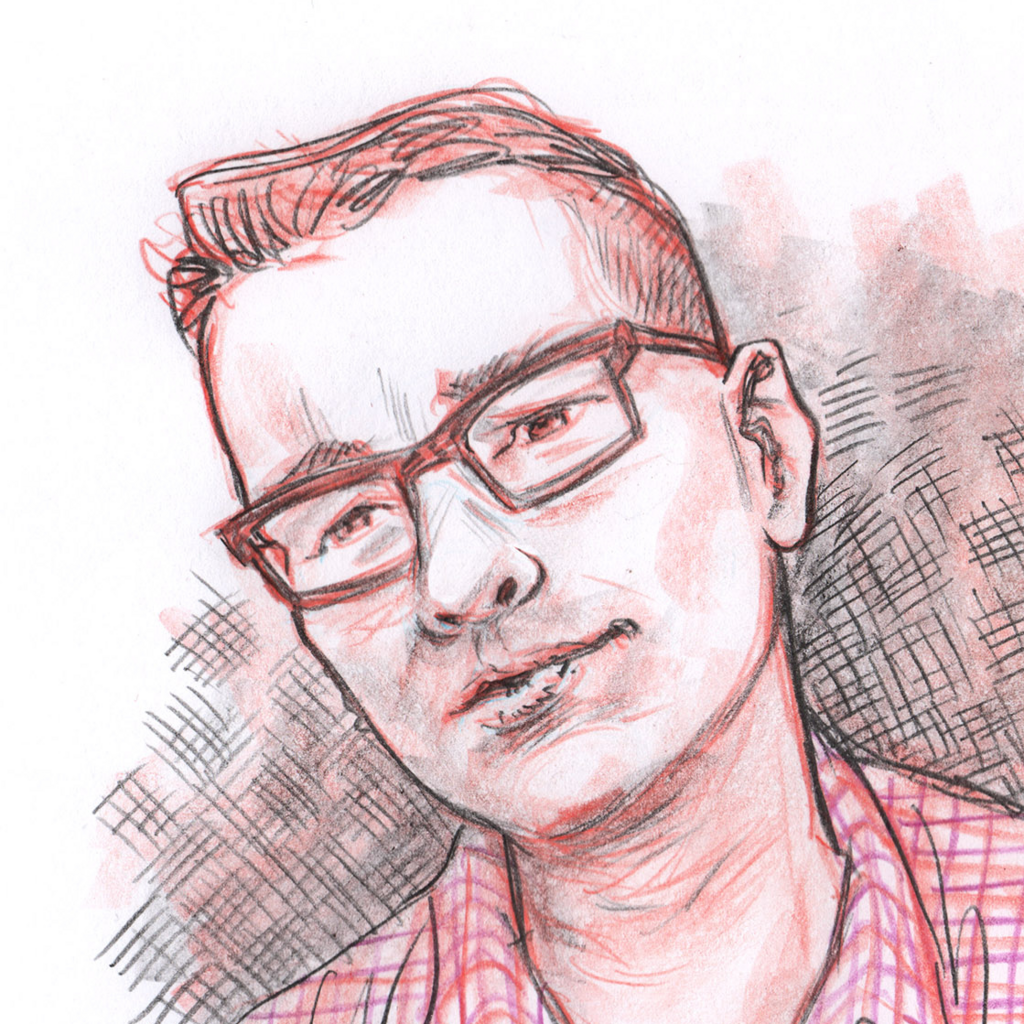
Ines Garcia, Author of Becoming More Agile Whilst Delivering Salesforce
A Leanpub Frontmatter Podcast Interview with Ines Garcia, Author of Becoming More Agile Whilst Delivering Salesforce
Books by Ines Garcia on Leanpub


Ines Garcia is the author of the Leanpub book Becoming More Agile Whilst Delivering Salesforce. In this interview, Leanpub co-founder Len Epp talks with Ines about her background, Salesforce, the importance of games, agile, her book, and at the end, they talk a little bit about her experience as a self-published a...

Ines Garcia is the author of the Leanpub book Becoming More Agile Whilst Delivering Salesforce. In this interview, Leanpub co-founder Len Epp talks with Ines about her background, Salesforce, the importance of games, agile, her book, and at the end, they talk a little bit about her experience as a self-published author.
This interview was recorded on November 20, 2020.
The full audio for the interview is here: https://s3.amazonaws.com/leanpub_podcasts/FM168-Ines-Garcia-2020-11-20.mp3. You can subscribe to the Frontmatter podcast in iTunes here https://itunes.apple.com/ca/podcast/leanpub-podcast/id517117137 or add the podcast URL directly here: https://itunes.apple.com/ca/podcast/leanpub-podcast/id517117137.
This interview has been edited for conciseness and clarity.
Transcript

Len: Hi I'm Len Epp from Leanpub, and in this episode of the Frontmatter podcast I'll be interviewing Ines Garcia.
Based in London, Ines is a consultant, Agile Coach, a Certified Scrum Professional and a Salesforce MVP, and popular speaker who helps organizations become more agile while using Salesforce.
You can follow her on Twitter @Inescapinezka and check out her website at getagile.co.uk, and watch her free video training at tiny.cc/getagile. You can also join her newsletter at getagile.co.uk/join.
Ines is the author of the book Becoming More Agile whilst delivering Salesforce. In the book, she uses real-life examples to show readers how to use Agile practices and principles to deliver value and motivate teams, and how to cultivate adaptability and embrace mistakes in order to encourage sustainable working practices.
In this interview, we’re going to talk about Ines's background and career, professional interests, her book, and at the end we'll talk about her experience as an author.
So, thank you Ines for being on the Leanpub Frontmatter Podcast.
Ines: Thank you for having me.
Len: I always like to start these interviews by asking people for their origin story. So, I was wondering if you could just talk a little bit about where you grew up, and how you made your way through your career to working in agile with Salesforce?
Ines: Well, I was born in Barcelona, and I studied communications. It used to be a double degree of five years at university, where you go through advertisement, marketing, PR - you name it. And towards the end of my time at university, I already started working in public relattions for Segway. There's two wheels, one platform. It's supposed to revolutionize commuting within cities. And yeah, I think it really hit me that I was having a very serious life, convincing politicians to jump into this thing - for being a 31 years old person.
So over summer, normally there aren't many politicians out there to talk to. So I spoke with my boss and I said, "Listen, I think I'm going to go to London for a month." So then, almost 10 years later, here I am. London is my home.
And as you can imagine - I landed here for a month. I did all sorts of jobs, two different flights - flying the first plane in the morning, sometimes coming back the last one at night, to present the end project of my degree. And Idecided to stay here. I absolutely love London. I consider myself a Londoner. I have a mortgage here, this is my home. Although I love travel when we can. But yeah - this is me, how I ended up in London.
And over time, I ended up in business transformation and digital solutions - I have a lot to do as an enabler there. And in one of the organizations I was working in, the CEO said, "Well, I don't really mind too much around the CRM group map, per se. But I'm selling something, and we're going to get Salesforce." And we kind of look at each other and we're going to sell what, without knowing what this thing was. It really blew my mind, the concept of citizen development, and how myself I could learn the business logic in a fairly fast and easy way, so that I could enable individuals to be unique at their work, rather than doing boring things.
This really, really caught my attention, and I decided to focus my career around that. And so the way that you deliver projects - especially around digital solutions, it needs to be very flexible - because our environment changed massively day to day. The technology that we use changes. The market changes. Everything changes. This year is a great example.
And so over time, I got into this Agile thing, which really caught my attention, in the way that it was really flexible to change. And I got certified as a Scrum Master, and I got certified as an Advanced Scrum Master. I finished the professional path, and it's something I'm very passionate about - to try to demystify what this, this Agile thing. And this is who I am. This is how I end up here.
Len: That's fantastic, thank you very much for sharing that. I was wondering if you could talk a little bit - I mean, I'm sure actually most of our listeners know what Salesforce is, but if you could talk a little bit about what Salesforce is and a little bit about it's history, and how it's come about?
Ines: So Salesforce is - to me, it's a great community. But in itself, it's a product. It started as CRM, a cloud solution of CRM - and you can imagine, it started in 1999, where the dotcom bubble kind of burst. And it's the number one CRM. It's been in the top quadrant for years, and now is an ecosystem of products with a fantastic ethics company behind it, that's what I really, really like.
So, it started as a CRM. You as an organization will have cloud solution to have all the different relationships with your customers. But you can extend this in any way from support to digital marketing to how you go to market, lead generation. You can plug in financing and ERP solutions.
It's like a world of endless possibilities. And but also, as I was mentioning - the community there is fantastic. Like for me, to be able to meet people from all around the world over the last seven, eight years - it's been fantastic. It's something I haven't really seen anywhere else that I work - the fact that you can just reach out to people and generally you have a very fantastic response. People really help each other. It's something that is very attractive to me. We spend a lot of time at work every day, so it's important that we find joy whilst we do that.
Len: That's great - it's interesting that you mention that. Salesforce started in 1999, which sort of like - from one perspective, seems like a long time ago. And from another perspective, ot seems like yesterday. But just to explain to anyone listening, CRM is Customer Relationship Management. ERP is Enterprise Resource Planning. So - a lot of these things developed a unique character because of - basically the World Wide Web, right?
That, and people starting to do ecommerce and things like that, so that you could actually get - there's sort of like cynical views about this, that are sometimes based on good, real things. But like, you - as a business, you could start getting actual information about people from something more than just surveys that they filled out. You could actually see how they interacted with things. And so that's why you can combine things like customer support with marketing, which is one of the amazing insights that Salesforce had in its foundation.
And so with respect to Agile, which I think a lot of our listeners will know what that is, and I'm not going to ask you to sort of give a lecture on what Agile is. But Salesforce switched, I think it was in 2006 - from a waterfall to an Agile focus. I was wondering if you could talk a little bit about what you know about that big switch, because it's a big deal when a company does something like that.
Ines: Yeah, so in 2006, they kind of moved their engineering team to a more Agile mindset. And so with that move, Salesforce delivers three major releases a year. And when I say major, that means that every single customer across the portfolio is going to have an upgrade of more functionality, without affecting any other configurations. This is big. Just doing that move, they managed to wrap up the delivery of the release 60% faster. And so -
Len: That's amazing.
Ines: Yeah, these are big numbers. And you have many other examples of big numbers. To its core, it's how you adapt to change, I was mentioning earlier, right? Change is all around us. Humans, we tend to resist change, because we are a bit wired - when things change, to think they probably are dangerous. But we need to move away from the caveman time and realize that when we welcome change, which is also part of nature, many good things can happen. And it's having this mindset of understanding that change is not a bad thing - but if you get the most out of it, you will be quite well off.
Len: Speaking of change in nature, and segues - before we move onto the discussion of your book, one of the things I've introduced into this podcast, starting quite a few months ago now, is a discussion of the pandemic, and how it's affected people where they live, personally and professionally. I've spoken to a couple of people from London on the podcast about how it's affected them. And of course, as we spoke a little bit before we started recording this interview - the neighborhood you live in in a big city can actually be a very different experience from any other neighborhood. How have things been for you as a consultant, as someone who does speaking engagements and things like that? And as just a Londoner, how has the pandemic affected you?
Ines: Well, so it's been interesting, because, I think, in a sense that at the beginning of this year, I decided to take a month off. I went to Japan for a conference, I was speaking there. And I love Japan, was my third time there. I decided to travel around in the very north, and a couple of days skiing. It was aeally amazing month. And that's when everything kicked off.
I came back to London towards the middle end of February. And it really didn't fully hit me what was happening, because things were unfolding. Generally I work remotely anyway, for the last - quite a few years. So work-wise, it didn't have a massive impact at the beginning. And it made me realize that I am very lucky. I have been very lucky globetrotting just before all of this. Who would've thought?
And then professionally - over time, it had some effects. And that's okay. It would be naive to think that the pandemic wouldn't affect me in any way. So it's been a bit up and down, but that's okay, because it gave me time to write my book. We need to see the bright side of life in that sense. I mean in terms of the day-to-day work hours, things are more or less the same - in the sense that I was working remotely anyway.
But I'm playing it quite cautious, being completely honest. I live right in the center of London, and it is difficult to keep distance. It's difficult to leave the building, so I - it's important to keep not only the mind busy, but the body busy. So every morning I have a very tight schedule. I will do yoga for 30 minutes. As soon as I finish my working day, I will do an hour - 20 minutes or an hour of something. So Mondays and Fridays - it's this new thing of running on the spot, which is rather weird. But I do some cardio. Wednesday it's workout dance, because sport doesn't have to be boring. Sunday's is boxing. So it's important to have some kind of routine, and to keep your body healthy as well. And yeah, and sometimes I do go for a walk, but it's complicated where I live to have space between other humans, so there you go.
Len: Oh, do you mind if I ask what you mean by that? Why it's difficult to keep space?
Ines: So, the streets in London are very small in comparison to other places in the world. I live right in the center. So although I have Hyde Park fairly close, to get there, it's very difficult to have two meters apart. And not everybody is as wary as maybe I am, so I just try -
Len: Is everybody wearing masks and stuff?
Ines: Not outside.
Len: Right.
Ines: So, again - I'm super lucky, the fact that I have everything, and more than I need. I have a roof over my head and I have internet, so we can be having this conversation. I'm just playing it cautious, because we don't know what are the lasting effects, and I have zero intention to get sick. My partner as well was not very well at the beginning of the year. So yeah, I have zero intentions to - well, to get sick.
Len: Thank you very much for sharing that. It's interesting, there you are very near the massive and wonderful Hyde Park, but in order to get there, you have to go through these narrow winding London streets, and it's sort of a weird kind of -
Ines: Yeah and then the gates and -
Len: Yeah.
Ines: It's complicated. But that's okay.
Len: Yeah. It's - long time listeners of the show know that I, at one point, moved to London myself, and I lived there in various different neighborhoods and stuff like that. And I'm always sort of nostalgic when I hear about things from there. And of course we're all sort of sympathetic to the second wave that's happening in various places. My last interview was with someone from Sweden, where they're experiencing a second wave. Just yesterday, in - where I live, for the first time - there was a mask mandate that was imposed for indoor public spaces.
I'm fortunate enough to live on an island, so things have been relatively good. But people got lax, and we had a lot of cases all of a sudden. So we're all pushing through in our own way, trying to stay safe. Those of us, as you say, who are fortunate enough to have roofs over their heads and internet and remote work, it affects us maybe a little bit less than it does other - well, definitely a little bit less than it does other people. But we're all doing our best to keep our heads down and get through it.
So, now that we've gone through our digression, going back to the main course of the interview.
You're a board game fan, which you write about in your bios. And you've got a game called The Agile Retrospectives Game that you've created, and I've got two questions about that. One is just a cheesy, "What's your favorite board game?" But the second one is more serious - can you talk about the Agile Retrospectives Game and what it is, and what motivated you to create it?
Ines: It's difficult to choose one game out of all the games. It's a very difficult question. You should have prepared me for this.
Len: I'm sorry I didn't ask in advance.
Ines: Let's see -
Len: Well I'll just give you - I'm kind of like a board game fan, but as far as board game fans goes, I'm kind of medium. And I really like - well, I really like a game called Talisman. I don't know if you know about that. That's kind of an old game from Games Workshop. And there was another game called DungeonQuest which I really liked.
It's one of the rare sort of board games that you can play yourself. You trek through a dungeon and the map changes every time, because you pull out tiles that change the dungeon map, and stuff like that. And of course I like things like Catan and Ticket To Ride, and stuff like that. But if I had to pick a favorite, it would be one of the first sort of like proper board games I played, which would be Talisman, when I was a kid.
Ines: I need to check that one out then, Talisman. I really like Dominion.
Len: Oh yeah.
Ines: I think it's because it changes every time that you're playing, so it's not the same. I also really like collaborative games. Pandemic is one of them. But the maker also does Forbidden Island. You’re basically on an island and it starts sinking, and you really feel like you are playing against something. But it's like the game against you, and you are playing with other -
Len: Oh so you're not competing with each other. You're trying to play together to -? Oh that's cool, okay.
Ines: Yeah. It's, I find that very interesting as well - you have like seven different ways to die, only one way to succeed. So it's quite hard. But yeah, this - kind of collaborate games are quite nice. I can give you a list.
Len: I'd love to have one. I'll put it on my sort of Christmas list for gifts to give to other people, and to myself. And I'll put it in the show notes for this episode if you give it to me in time.
So you created this thing called The Agile Retrospectives Game, which people can find at birdsnerdsandturds.com. I was wondering if you could talk a little bit about the game, and why games are important generally?
Ines: So, I really like games. And I'm really mindful about enjoying what we do. As an Agile coach, one of the things that you do is come together with a team at the end of every cycle, and you talk about the "how," right? Because when you deliver any product, any service or whatever you're doing in a team, generally you always talk about the "what." It's about the delivering the specifics. But there is very little head space to think about "how" we are approaching this.
"Retrospectives is the name for doing that. You come together with your team at the end of every cycle. If you don't have cycles, do it on a Friday. You come together with your team and talk. "What did we set ourselves to do? What actually happened, and what are we going to try next time?" These meetings can be a bit tricky, and if they are not well looked after - for the environment and the different things in it, it can become very boring, and it really defeats the object. So I always bring different frames and games to help to revive, "Why are we there?"
And so one day, after work, I had this game appear in my mind. Like, "Yes, this is a fantastic game, I need to try it." I procrastinated for a long time. The thing keeps stopping at the back of my mind. And I said, "I should do what I preach." So I applied the Agile mindset to it, and I break it down - every single week I was delivering part of the product. And then three months later, it was live.
And so the game itself is - as part of the name tells us, it's a pack of cards, and it's full of nerds and turds. It has also some statements. The statements are about things that you want to achieve as a team. So in terms of like flexibility to choose your own tools, if you have the support that you need - I have tried to write the statements in as funny a way as possible, but you guys will be the judge of that. And the nerds, the birds and the turds, are the way that you vote.
Actually, in the game you have four different ways to play. But essentially, you will throw a statement in the middle. Everybody has a bird, a turd, and a nerd. And you'll quickly throw your vote against that statement. So if you have a lot of turds on the table, then clearly something that you guys need to address as a team.
Len: Oh, that's fascinating. So you sort of have a statement, and then everybody has a bird, a nerd and a turd. And they can, in a fun way, show what they feel about this position?
Ines: Yeah. There are four ways to play, but that's, let's say, number one, right?
Len: Okay.
Ines: And that is - I like what's happening in the room when you're playing. Because - one - it gives the opportunity for everybody to have their voice heard. Because everybody votes at the same time. So that you remove the group-think. Always the same person gives the opinion. You remove a few items and you create a space so that everybody has an opinion.
Len: And so the kind of team that would play this game and do a retrospective, are these typically software development teams, or are they other kinds of teams as well?
Ines: The Agile manifesto came from a software background. So is something that I would imagine most of some of the development teams knows about. But it doesn't stop there, because the concepts can be applied everywhere.
I've been doing work with all sorts of teams. With a roofing company. They also find things that they didn't expect. They have investigations. They go to the house, start taking out the roof, and they're like, "Mmm, surprise." So how are you going to be dealing with this uncertainty and this ever-changing - weather changes, or whatever.
I've being doing work with a PMO team, project management office team. Yes, they can also be more Agile than how they are today. And yes, they also deserve a pause at the end of every cycle and to say, "What did we set ourself to do? What actually happened, and what are we going to try next time?" It's all about trying and experimenting. Some things work better than others.
Len: That's fascinating. I'm just thinking about all my old roofer friends being in an Agile retrospective. It's sort of a funny image, but I'm sure they would've absolutely loved it. And just the idea of sort of like - normally when we're doing our work, we just kind of do our thing. But actually just any event or effort to kind of apply your consciousness to what you're doing and think about it from a higher level, can be really useful.
And so - we've had Brian Marick on the podcast before, who was one of the original Agile manifesto signatories, I suppose you would say? And so like I said earlier, I think most people will know what it is. But the idea that it can be applied outside just the software development or software engineering environments, might be a new idea to some people, and it's just really great to hear about how widely applicable it is.
On that note, moving onto the next part of the interview. So, you've written this 200-plus page book, Becoming More Agile whilst delivering Salesforce. I was wondering if you could talk a little bit about what the inspiration was for that book, and who the intended audience is?
Ines: Of course, with pleasure. So similar to the game creation, this book has been at the back of my mind for quite some time. And my two passions, my two professional passions are Agile and Salesforce. I'm really on a quest to demystify what Agile is about. Also, I care deeply about happiness. And as I mentioned earlier, the Salesforce community is amazing. I spend a lot of my time there. I do development of the products, various products that they have.
And so, hence the title of the book. I could have called the book - honestly, "Becoming More Agile Whilst Delivering Value." Because at the beginning of the book, I'm giving you a little formula of how you could read it that way. And I mention certain things specific for Salesforce. But for me it was really important - it's my first book out there - to bring together the two things professionally that I really, really care about, and really helping to clarify - what is all this hype about, and help anybody in the ecosystem of Salesforce - and that's lots of people. I have the latest report on the ecosystem. To be able to pick this up and apply something to today, apply something tomorrow - doesn't matter if you're a VP, frontend developer, a system administrator, a business analyst, a marketeer. You can pick up this thing and try something today.
Len: One of the things I like about what you write about and talk about generally is - well, happiness. The importance of happiness, which is something that doesn't always come up in kind of corporate or business environments. But also - embracing mistakes. And I know, I've been in a corporate environment where people talked a big game about embracing mistakes, but they didn't really mean it. How do you convince people to relate to embracing an understanding of mistakes, as part of a sustainable kind of work process?
Ines: So if we look at this year, for example - it's a great example, that you can't draw the future on a straight line. Things are going to change the assumptions that you have at the beginning. And that's okay. It's how you respond to that, how successful you're going to be at the end. So, mistakes need rephrasing, and in the book, I'm very specific about semantics. Every single chapter, I have a section about semantics. I think the words that we use are very important. And so instead of mistakes, I think we should be using, I don't know - something else.
Because it's about finding things. In general, I think having a scientific approach to what we do is very important. Scientists come up with hypotheses, statements to the hypothesis - different ones you can go through. And then specific experiments, to see where you're going to go next.
In the professional world, we should do exactly the same. You have a hypothesis about the product or an extension of a product, or a new product line, or something to that effect. What are the different statements that can support that hypothesis, and what are the different experiments that you can try out with minimum effort, to learn?
So what is the smallest, fastest thing you can put out in the market to prove you wrong? That reduces times, and reduces waste of time and money for any organization.
The learning that you do with the experiments is what's going to guide you in what you're doing next. It's like flipping really what a majority of the organizations feel worried about. "Okay, let's design in advance 18 months a very detailed program." At the point of time when you know the lead that you're ever going to know throughout the 18 months.
Len: This is actually something I think about a lot in my life. And one - this is like a really like big generalization question. But like, why do you think that the default for so many people, is that we can predict, and we can create a process, and it's going to work, and we're going to enforce it, and we're going to treat a mistake like a calamitous failure, rather than a learning experience?
Like why are people's - generally, why do people's instincts generally seem to tell them the one thing rather than the other thing, when the other thing makes way more sense. Which is - what you're doing is, you're trying things in an uncertain world. And when things don't work, actually you could learn just as much as you can when they - or even more than you can when you succeed. Why is it that people are wired one way rather than the other?
Ines: Well, I think there are a lot of things that at play there. But things that come to mind just now are that we like order and control, because there is so much we can't - so putting things in lists, in checklists, in groups - it's a way to help our brain to process the information.
Len: This is something I've always - because I've always taken the position that like - of course the world's an uncertain place, of course everything we're doing - or kind of everything you do is a trial balloon. But there are people who seem to think that like actually the world is just like a thing on - as they say, like on rails - and it's going down a certain path.
And if it doesn't, then their interpretation of that is like, "Well, we've done something wrong." Not, "We've just encountered the way the world is." And I just - yeah, and I mean that's a really good point - that a lot of people have a desire for the world to be an orderly place, where things are predictable. And if something doesn't happen the way you thought it would, that's not because the world is full of uncertainty, it's because you made a mistake.
Ines: Yeah, exactly. And it's also confirmation bias. We really need to be more aware of the bias that we have, so that when we are in a conversation and we are picking up a book, and we are like, "Yeah, yeah, yeah" - we need to realize that a lot of the things, it's about confirmation bias. We have an idea and any piece of data that can support that our idea is right, we get really attached to ideas - humans, something that we are really proud of. It's important that ideas are something that can be collaboratively enhanced in teams.
And that's another thing that we need to break through. Ideas, an idea can be - no things are wrong or right - things that you can try, but things that you can enhance for sure.
And the ownership of the idea needs to be beyond one human. The pressure that we put ourselves under sometimes, with, "It's my idea and it's the right idea." And it's because everything else went wrong. It's trying to break some of the things of how the brain processes the information - to be slightly more aware, so that we understand why those things happen, and we can consciously be better with how reactions send us to -
Len: Yeah, that's really fascinating. Sorry for sort of dropping the abstract question on you, but that's a really great answer, and I really appreciate that. I'm really glad that you explained that. Because it's a really great book, and it's called Becoming More Agile whilst delivering Salesforce, but even if you're not working with Salesforce, this is definitely a book that you can learn a lot from if you're trying to - I mean, if you're a consultant, or even if you're on any kind of team - I guess I hadn't thought of the example of roofers. But if you're on any kind of team, or you're leading any kind of team, this is a book you can really learn a lot from.
Just moving on to the last part of the interview. So this is where we get into the weeds - and people who are listening will know about this. But, so - how did you write the book? What did you use to write the book? Did you use Microsoft Word, did you use something else?
Ines: I used Google Docs. So, one of the things is about focusing the purpose rather than the tools - I started throwing some ideas out there, and that became the manuscript before I realized really.
Len: And did you collaborate with anybody? Did you give people kind of review - like ask for reviews, or people to just do typo checks, and stuff like that?
Ines: Yeah, yeah - exactly that. It gave me the ability to just share the doc at different stages with different people that helped me to shape it out. And ask a lot of things that needed to be answered. And it's fairly flexible. I think a lot of people are comfortable with using Gsuite and thankful I had that - tThings unfold, like a picture unfolds, path and products unfolds.
Len: And are you updating the book, or is it kind of like - as they say, "done, done?"
Ines: No, nothing is “done done.” But yeah, I think over time - I mean, I'm looking forward to a pause for a little bit. Because closer to release, there is a lot of decisions you need to make, even on the design. I never realized I had to make so many different decisions about the layout design of inside of the book. And that's not my strong skills. But it has been a journey, right? So look forward to pause for a little bit. But whilst the product is in the market, the product can only get better. So I do hope that it will be more versions or takes to it.
Len: Thank very much for sharing that. That's very much our philosophy.
And your main sales channel is Amazon. What's your experience been like with them, I imagine using like KDP?
Ines: Yes. So I also have it in Leanpub with you guys. But yeah, I did have to invest quite a bit of time to learn the tools and this, that, and the other. But it hasn't been too bad. I don't particularly agree with their royalties model. Because I'm the author, so I obviously think that should be different - and that's one of the things that drove me to Leanpub. But, yeah - so, KDP allows you to do print-on-demand, although we should try not to print at all, because of the environment. If you do give the option of paperback, I know that is only going to be the ones that really wants to have it.
So that's one of the things I think that is good there. IT happens on the spot, so you then don't have to worry about having stock, or anything like that. It's very easy to upload a new version as well. It goes through a review - that put my mind at peace as well, because I wanted to see how it looks before it's out there. So that's easy as well, to have somebody just double-checking before it actually goes live live. But Amazon, as an organization, because I'm seller as well, the cards is massive, right?
So there are many things, that I hope can get better another time. My feedback on things would get better to make it easier to use, and to make the middleman, the seller - right - so we have the author and the seller of the product, a bit happier. Because of my perspective, I write from Amazon all the time - it's very good, I'm very happy. But yeah, I think it's this middle entity that needs to be looked at a little bit more.
Len: Yeah, it's really interesting. I mean I could talk for hours about the - and it would be another podcast, about print-on-demand, that sort of technological innovation where - and with respect to waste and throwing trees in the garbage. In the past, you sort of - they had to do-- I mean, well - and people still do it obviously. But you do huge anticipatory runs of prints, and a lot of it ends up in the landfill, after being transported back and forth on big noisy trucks, and stuff like that.
Whereas now, if you're a self-published author, you can make your book available on something like Amazon, and you can make a print version - you have to do some formatting and stuff like that, and you can then have a print-on-demand version. It's been a revolution, right? Because if someone wants a book - it can just be printed, that single book - without having to print a bunch of them and then do some desperate marketing around it, to get rid of your inventory, and stuff like that. It's just a totally different thing. And it's really revolutionized publishing.
So for example, if there's a book from 20 years ago about a particular topic that then starts trending - like say specifically on Twitter one day - all of a sudden people order 100,000-- well not 100,000 - but 50,000 copies of that book. And only 50,000 copies of that book are printed. And they didn't have to sit in inventory somewhere. They didn't have to - print books are okay for what they are. They are kind of wasteful in a way. Some people really love them and prefer them. But the print-on-demand technology and process is actually like the best of all worlds - if you're in a world where people want print books, where it's like a one-off. And yeah, Amazon's obviously fantastic in many different ways. I use it to buy things as well.
I don't really have any more questions, but I wanted to thank you very much for sharing your time today, and for putting your book on Leanpub - we really appreciate that. One of the things I should also say too, is that Leanpub is here to help all authors. And whether 90% of your sales are somewhere else, or 90% of your sales are on Leanpub - we just really like talking to people and finding out what their experience is. We support authors who use Leanpub to create books, and never sell a single thing on Leanpub. That's perfectly fine with us as well.
And, yeah - it's also really great - in the past, very highly targeted books couldn't necessarily reach a wide audience. But services like Amazon and services like - to a much lesser degree, Leanpub - can help people publish books and reach a targeted audience, in a way that they couldn't in the past. That's one of the reasons I'm really excited to see your book appear on Leanpub, and wanted to invite you on the podcast.
So, thank you very much for taking the time today, and for sharing all your thoughts with us.
Ines: Thank you, it's been fun. Whenever you want, I'll be right back.
Len: Thanks very much.
And as always, thanks to you for listening to this episode of the Frontmatter podcast. If you like what you heard, please rate and review it wherever you found it, and if you'd like to be a Leanpub author, please visit our website at leanpub.com.