
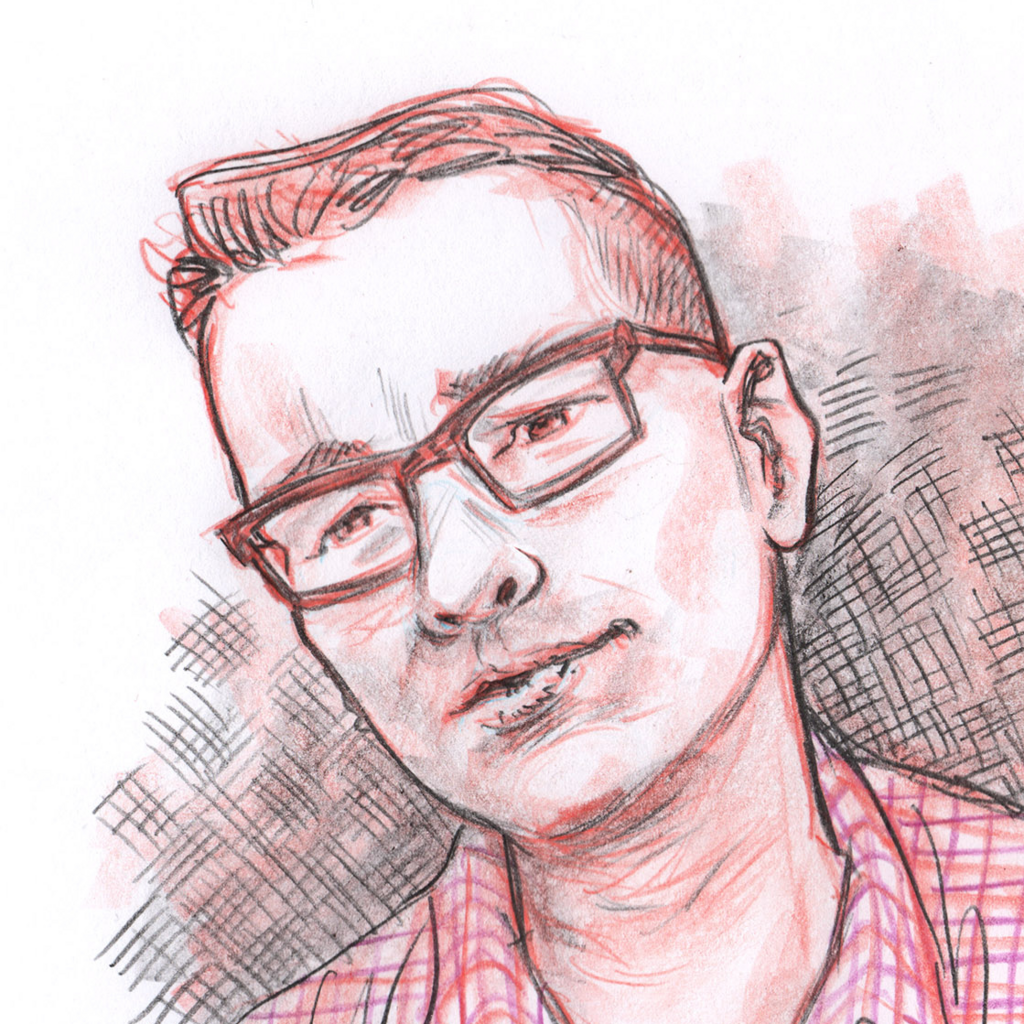
Dr. Bertalan Meskó, Author of Top 10 Trends Shaping The Future of Healthcare
An Interview with Medical Futurist Dr. Bertalan Meskó, Author of Top 10 Trends Shaping The Future of Healthcare
Books by Dr. Bertalan Meskó on Leanpub
The Evolution of Digital Health Devices
Your Map to the Future
100 Questions and Answers about AI in Healthcare
Generative AI in Healthcare - The ChatGPT Revolution
Digital Health And AI Best Practices For Policy Makers
A Guide To The Future Of Hospitals
The Technology Adoption Curve Of The Top 50 Emerging Digital Health Trends
Practical Guide About Digital Health For Medical Professionals
Top 20 Digital Health Trends For The Near Future
Invest In Digital Health - The Medical Futurist's Guide
Hackers, Breaches and the Value of Health Data
The Technological Future of Medical Specialties
Tech Giants in Healthcare
Technologies Shaping the Future of Pharma
A Guide to Artificial Intelligence in Healthcare
Known as "The Medical Futurist," Dr. Bertalan Meskó has a passionate interest in the future of healthcare, and he has been featured in the media by organizations including CNN, National Geographic, Forbes, the BBC, Time Magazine, and The New York Times. In this interview, Leanpub co-founder Len Epp talks with Dr. Bertalan Meskó about the development of his career and his lifelong interest in healthcare, some fascinating trends in healthcare, and some of the accompanying moral challenges the industry and humanity generally will face ...

Known as "The Medical Futurist," Dr. Bertalan Meskó has a passionate interest in the future of healthcare, and he has been featured in the media by organizations including CNN, National Geographic, Forbes, the BBC, Time Magazine, and The New York Times. In this interview, Leanpub co-founder Len Epp talks with Dr. Bertalan Meskó about the development of his career and his lifelong interest in healthcare, some fascinating trends in healthcare, and some of the accompanying moral challenges the industry and humanity generally will face in the coming decades.
Transcript

Bertalan Meskó is the author of the Leanpub book Top 10 Trends Shaping The Future of Healthcare. In this interview, Leanpub co-founder Len Epp talks with Dr. Bertalan Meskó about the development of his career and his lifelong interest in healthcare, some fascinating trends in healthcare, and some of the accompanying moral challenges the industry and humanity generally will face in the coming decades.
This interview was recorded on February 23, 2017.
The full audio for the interview is here. You can subscribe to this podcast in iTunes or add the following podcast URL directly: http://leanpub.com/podcast.xml.
This interview has been edited for conciseness and clarity.
Bertalan Meskó
Len: Hi, I'm Len Epp from Leanpub. And in this Leanpub podcast, I'll be interviewing Dr. Bertalan Meskó. Based in Budapest, Bertalan is known as The Medical Futurist, and has been featured by CNN, National Geographic, Forbes, the BBC, Time Magazine, and The New York Times.
In his writing and his talks, he analyzes how technologies from science fiction can become reality - both in healthcare, and in medicine - in addition to the many other subjects that he discusses. He earned his PhD in genomics, and has spoken at universities around the world, including Harvard, Stanford and Yale. He's also the founder of Webicina, which helps both patients and professionals find trustworthy medical news and advice online.

In addition to being the author of The Guide to the Future of Medicine: Technology AND The Human Touch and, My Health Upgraded: Revolutionary Technologies To Bring A Healthier Future Bertalan is the author of a recently published Leanpub book, Top 10 Trends Shaping The Future of Healthcare. His book features 10 particularly striking trends and stories on the future of healthcare in medicine, that may have an impact in the short term.
You can follow Bertalan on Twitter at @Berci, subscribe to his Medical Futurist YouTube channel, and learn more about what he has to say at his website, medicalfuturist.com.
In this interview, we're going to talk about Bertalan's professional interests, his books, and at the end we'll talk a little bit about his experience using Leanpub.
Thank you Bertalan, for being on the Leanpub podcast.
Bertalan: Than you Len for having me on the show.
Len: I always like to start these interviews by asking people for their origin story, and you've got a particularly interesting story, where I believe from the age of six, you knew what you wanted to do with your life. Can you tell us a little bit about what it was that struck you at such an early age with such precision?
Bertalan: Absolutely. I was a weird kid, to be honest. My mother gave me an encyclopaedia for kids at the age of six, and I immediately fell in love with the scientific method. The idea that there is something we don't understand now, but if we keep on experimenting about it, thinking about it, creating hypotheses - at some point you'll understand it. This way, we grow our bubble of knowledge. And that just amazed me that that's how the world works.
Even if it sounds weird, I knew from the age of six that I would devote my life to science. And particularly I wanted to become a researcher focusing on genetics. That was one of the sexiest topics within medicine and healthcare, and actually I did everything to reach that childhood dream. I was quite a good student. I love how it works. I know I'm strange, but I love these things.
I finished my medical degree at age of 24, and I immediately started PhD training, because, again, I wanted to do research in genetics. But when I reached that childhood dream, and I became a medical geneticist, I felt that something was missing. And the missing part was my geek self.
Because in the meantime, I grew up with technologies around me. I still build my own personal computer. I live with smartphones and digital head sensors and devices all around me. So I really love technologies. And I felt that - this love for technology, you'll be left out in my job forever. And I just couldn't agree with it. I wasn't really happy about it.
So I decided to change - to do something different. And I went to a course at the NASA campus in California. It's called FutureMed. It's organized by the Singularity University. And I learned many things about what might come next in technology. But I felt that what I would love to do, is to combine my doctor self, my researcher self, and my geek self. And as there is no profession to do so, I came to the conclusion that I needed to create a new profession. And that's how I became The Medical Futurist.
Which means now, I constantly analyse what trends and technological directions we are about to see. But my main job is to find out how we people will deal with it. How we will adapt to new technologies, or how we will reject them. Because I truly believe that what we are going through today is not a technological revolution, but a cultural one. So we people matter.
And in medicine and healthcare, it's a really delicate topic. Because physicians feel threatened about new technologies, algorithms, diagnosing rare conditions and robotics seen in surgery, for example. Also, patients go through a hard time when they need to face these new technologies, and how to digest this huge amount of information coming towards them.
I feel like my mission is to create a bridge between technology and people. And also between what might become possible tomorrow in science fiction, and what is possible today. The fuel that motivates me in this very long journey - which feels like going through a jungle sometimes - is my devotion to science fiction. I mean, I call it devotion, but my wife thinks I have a disease. Because I'm addicted, I need - I don't know, from my teenage years, I've been reading and watching science fiction almost every day. That's where my inspiration comes from.
Len: I saw on one of your profiles that I believe you took a course at the Harvard Extension School about that trace of science fiction through history, that analyses how it has understood science and technology, war and colonialism, sex, race and gender, health and disease. And it even investigated how science fiction interacted with religion. Can you talk a little bit about that subject, and how you see science fiction influencing reality?
Bertalan: I would love to. I mean I hope we have at least two or three hours, because that's a very hot topic right there.
I decided to do this course last semester, because I constantly need to move out of my comfort zone. And I'm a very technological guy, and I'm very rational. I don't even have a right brain hemisphere, I guess. But that course was entirely about the ethical, legal aspects of the future - focusing on science fiction.
So the best thing I learned was that the basic concept of every science fiction is called "cognitive estrangement." The cognitive part refers to what's possible today within the realms of science. And every science fiction author described that in a way. But the estrangement part comes into the picture when the author comes up with futuristic ideas - which might be scientific, or far away from that. But it creates a tension between what's possible today, and what might become possible tomorrow.
And this cognitive estrangement is the motivation for our minds to keep on thinking about what could happen next. I just cannot imagine a better way to think about the future than to think about a fantasy, a futuristic idea, a futuristic technological approach. And then try to connect the dots between those things and what I see in action today.
And why we, through major books and even movies in the very long history of science fiction, from the story of El Dorado, which was the first science fiction story to contemporary artists and even Hollywood movies these days - I learned so much about how science fiction authors try to depict different genders, and how society deals with them. How they depicted how religions changed over the last hundreds of years. How technology found a way into our lives, and how it could become even worse in the coming years or so.
We covered so many things that it changed my whole view about futuristic studies per se. And also about how I do my own job. Moreover, the methods I learned there as a student - I will use those methods as an educator at the Semmelweis Medical School, where I teach digital health and futuristic studies to medical students. Because those methods are very innovative, compared to what we have been doing in medical education for decades.
Len: There's so much to talk about on this subject. One of the really interesting things about it - I watched a talk that you gave in Tampa in 2014, which already seems like a long time ago. But you spoke about how there was a teenager, I believe in the United Kingdom, who wanted to replace his healthy hand with a prosthetic hand. Because he felt that it was superior to his normal human hand.
This is one of these science fiction scenarios that we're now confronting from an ethical perspective. Should people be permitted to - I mean, it's not new and it's been around for years as an issue, but should people be permitted to alter their bodies with enhancements? I was wondering what your position is on that issue?
Bertalan: That's a very interesting topic. I see two waves coming. The first wave - and the wave that 99.9% of people see - we are arguing about what happens when disruptive technologies are not accessible to everyone in the world. So what happens when we just don't have access to the best treatment options in oncology? Or the best robotic, prosthetic devices? Because those are expensive.
But disruption must mean that it's not just more efficient, or faster in production than anything before that. But it must be cheaper too. So I see a second wave coming in about 10 or 15 years when these things become widely accessible, because of the decreasing price. But then comes the new wave, when healthy people might decide to change a few things on their body. And who can stop them? I mean it's my body, so if I want to have a prosthetic, robotic arm because it looks cool when it can rotate 360 degrees, and I have the money to buy that, then it's my decision.
But what happens with society when, for example, financial differences lead to biological ones? Or more and more healthy people want to become upgraded cyborgs, because they think it would give them advantages in finding a job or just living their normal lives? I'm not a trans-humanist, so I don't believe that the technological revolution, or the technological explosion gives the final answers to the future of humanity, or the question that we ask ourselves. I do believe that we human beings have not even expressed our best potential, and we are far away from that. We haven't even started.
We could improve so many skills regarding cognitive, physical and emotional health. I think we will take up the challenge with improving technologies to - let's see who's the best, or who is better than the other? So I'm not a trans-humanist, but I'm advocating for technology. Therefore, I try to find the balance between those in a way that these disruptive technologies, especially in healthcare and medicine, will facilitate our jobs, and support us in many ways - extend our capabilities cognitively and physically. But I would love us to remain human.
Len: It's really interesting how money and these issues intersect. One thing I've thought about when I read about people who talk about achieving immortality - by which they mean are no longer dying from aging - is what it would be like.
I suppose this is a kind of science fiction scenario, but imagine a world where there's a 300 year old wealthy person, who inhabits the house on the hill in your city. And you're born into a family that's poor, and you know you're going to age and die like a normal person. Do you see that kind of thing happening with these sorts of technologies? Where the introduction of them is so expensive, that only the wealthy can afford them, and they create this very strange relationship between the poor and the rich?
Bertalan: I think this is happening today already. If you are paralyzed from the waist down, and you want to have an exoskeleton - which is a robotic suit around you, which helps you walk again - it would cost you tens of thousands of dollars. And only in rare cases, insurance companies cover that. In the US, there was a surgeon who got penalized and her insurance company covered the exoskeleton's cost, because she could start working again. And it's understandable. But in the vast majority of cases, these people are left alone. If they have the money, they can improve their lives significantly. But if not then their lives depend on pure luck.
So I don't believe that these things will happen. I think these things have already been going on. But we only get to such a dystopic scenario if "disruption" does not mean "significantly cheaper." And what me and many of my colleagues do is that we push companies forward that, if your technologies amazing and mind blowing, but not accessible, affordable enough, then it's just not good enough and you need to keep on working.
But we are talking about longevity and making aging a chronic condition. Which seems to be possible based on what huge organizations and companies are working on. But when we talk about normal issues today, many of us can't even access our medical records. Or we can't even export them. Then we could analyze our own data. And it's just awful that we deal with basic IT issues, while we should just enjoy the advantages of science fiction technologies.
Len: That's very interesting, because one of your interests is in social media, and in one of the talks I saw you gave on YouTube, I believe, you talk about how often there's a culture in medicine and healthcare where practitioners don't want to engage with the powerful advantages that social media can give them.
Bertalan: It's true, but I don't think we can blame them. For 2000 years since Hippocrates, there has been an ivory tower of medicine. And within the ivory tower - us, medical professionals - we have been able to access everything. The information, medical studies, technologies - whatever we wanted. And we also had keys. So sometimes we could open up the gate and let patients come in. We told them what to do, and they had to go home and follow the prescribed therapy. But the rate of how often people complied with the therapy is about 50% - 50%, it's really awful.
Len: Wow.
Bertalan: If any industry worked like that, they would have gone bankrupt decades ago - except healthcare, because our lives are at stake. But today, because of new technologies, it's called digital health. It's a big umbrella expression. And all the things from social media to smartphones, tele-medicine, robotics, genomics, go under digital health. So because of digital health, in the last couple of years, this ivory tower just vanished.
It's not breaking down, it vanished completely. And now patients and physicians are looking at each other, asking, "What shall we do now?" We can see you. I can access medical studies online. I can buy digital health sensors to measure my vital signs. I can get my DNA sequence from home. So what now?
So what I evangelize is the idea that physicians are not key holders anymore, but they should become guides for their patients in the jungle of digital health information. Because there's huge information patients should be able to digest. And there are many technologies, and someone needs to help them professionally to find the best solution for their health problems.
Len: And one of the reasons, I gather, that they need help, is that - as you know from your work on the site you founded, called Webicina - that of the many, I mean, million-plus sites that Webicina looks at - I believe the number is about 80% have false or misleading information?
Bertalan: I saw a report about that from the UK, it was about 80%.
Len: And so, the idea of the doctor as guide sounds very compelling.
Bertalan: I felt that everyone has the right, or should have the right to access reliable information about their health. I don't mean that we need to come up with disease descriptions. There are so many out there. But there are certain resources which are edited by medical professionals and professional editorial staff - resources that have clear contact address, a real company behind them. So they have responsibility. And there are millions of resources without any of these.
Just false information. And in the world of alternative facts, it's even more important to make sure that quality information is available publicly for free. That's why I launched Webicina eight years ago, and still we manually select the best resources. And then we go back to them to reassess their quality from time to time. And this way, what we can make sure is that what we present a list of resources, from social media, from Twitter and YouTube channels to Facebook groups and news sites or blogs - that those resources provide quality content. Because they know they have responsibility about that.
Len: Speaking of manual work, I know that a lot of your interest is in technology, and that makes sense to someone observing from the outside about someone who's a medical futurist. But you also talk a lot about the importance of the human touch. When I was researching you for this interview, I found it fascinating, because people are, nowadays, quite worried about the effects of automation on the workforce. But there's a countervailing narrative that an aging population will mean there will actually be a shortage of workers in some areas.
And in [a speech])http://medicalfuturist.com/speech-canadian-senate-committee-open-letter-every-government) you gave to a Canadian Senate Committee, I believe, on social affairs, you remarked that the World Health Organization estimates there is a worldwide shortage of around 4.3 million health workers. This was a couple of years ago, so it might be better or it might be worse now. It struck me that in the medical field, automation can actually increase the amount of time that doctors can spend directly interacting with patients.
Bertalan: That's the point. I think we need to acknowledge two quite obvious things. The first is that without technology, we just cannot solve the problems healthcare faces today. Doctor shortages, financial shortages, the lack of access to healthcare worldwide. The lack of trust towards the healthcare system.
And the number two issue is that, if you lose the human touch, we lose everything. So what I'm trying to advocate for is that we need to create the balance. We must include digital technologies, disruptive ones into everyday healthcare. But we can only do that in a way that the human touch becomes the essence. Actually, many physicians who come against me because of these words, tell me that - they think I want to take something away from them, the art of practicing medicine, the chance for empathy and social skills.
But then I ask back, "Do you have time for these? Do you have enough time for your patients to provide the right amount of empathy and attention that your patients need?" As far as I remember, a study from last year came up with a conclusion that a physician in the US has about three minutes on average per patient. Three minutes. You can't do anything time-wise in three minutes.
What I believe in is that a lot of repetitive tasks should be automated, and could be taken away from physicians. Because those things are not the reasons why they became physicians. Doing administration, plenty of phone calls, repetitive stuff. But instead, they could dedicate that amount of time to their patients. And when we show them how it works in action - so how a super computer like IBM Watson can help them make better decisions faster, while checking all the medical studies - there are 27 million, so it's really impossible physically to go through that yourself.
Or how social media can bring together physicians from around the world to focus on a very hard patient's case. Then they understand that it's there to help them, not to replace them or take something away from them. But the more practical examples I can show to them, the better chance I have to persuade them to start using disruption in healthcare, otherwise we are going to be just lost.
Len: It's very interesting actually - preparing for this interview, I contacted a neurosurgeon friend of mine who's been working on a project for a little while now, to automate one of the many tasks that doctors face in their day to day work. As I understand it, whenever a doctor encounters a repetitive bureaucratic task, they have a desire to get rid of it.
I guess I was struck by the level of attention that's paid by at least some doctors to getting rid of work like that. His project is to use an algorithm to automatically use a doctor’s simple diagnosis to enter the information into the correct research registry. I guess doctors often have to keep up with or don't know which registry to put the patient's diagnosis in. What struck me was, from a patient's perspective, you see the doctor, but you don't understand often how much of their job is about efficiency.
Bertalan: That's a good point, and it sounds very rational. I think what physicians need to understand - I spend a lot of time finding solutions for this issue - is that we cannot be semi-gods for the patients. We cannot take all the responsibility for all the healthcare decisions. We are professionals. We must be an expert of what we are doing. But the patients also must become experts of their own health and disease management.
So when the ivory tower is no more, physicians need to come down a bit to meet the patient halfway - who must step up and take responsibility for their own health and disease management. This way, the status quo is changing. Before we had a heirachy. Physicians told patients what to do, and they had to listen - and that's all. But now we have an equal-level partnership, a collaboration, where, me as a physician, I can bring my own data. [As a patient], I can bring my own expertise about my own health to my physician. My physician brings their expertise. And then we collaborate to find the best solution.
And that's a new status quo. I think only there are two or three examples regarding curriculums where they teach this kind of new approach, where empowered patients are there to help you. Because they want to get better, obviously. They want to use digital technologies in getting better. And they want to collaborate with you, rather than just contact you. They need the best solution from you. It's impossible to give them the best solution, because there is no one who can know all the things. There are 27 million medical studies right now. To go through one takes hours. And there one, two, three million new studies every year.
IBM predicted that from 2020, the amount of medical knowledge - so not just medical studies, but the amount of medical knowledge - including expertise and experience, will double every two, three months. So if it's today impossible physically to go through all these and be up to date, it's going to be even worse. So we need help. But when we get help from narrow artificial intelligence algorithms, it means we have more time to do what we are the best at - providing care for the patient, showing empathy, discussing these things with the patient on an equal, level partnership.
Len: So what do you see the future being in the short term for AI and Watson, and the way healthcare practitioners and doctors interact with AI? Is it something that's widely available? Is it something that there's cultural opposition to?
Bertalan: I think that the coming years will be about the chaos. But then if we can go through that chaos, that's going to be a very optimistic future for healthcare. The reason why I think there's going to be chaos is, the technology is not as good as we expect it to be. When we watch science fiction movies like Ex Machina or Prometheus or Her - then we see what artificial intelligence looks like. But when we come across AI in action, we need to realize that's just narrow AI. So it's not really AI at all.
But when I talked with physicians who, in the US, use IBM Watson databases in oncology, they told me that they thought that IBM Watson would make the best decisions. So they would not even be needed anymore. But what happened in real life was that whenever they came across a very hard decision to make about a treatment option for a patient in oncology, they contacted Watson, and Watson came up with a few suggestions - scanning through millions of medical studies, and a lot English textbooks.
So they could make sure that they cover all the potential issues, even if they didn't think about that at first sight. And then they can come up with the right solution. Because they can make sure they have all the information they need in their hands. And that was not the case before.
We need to deal with the issue that even in our own lives, it takes time to get accommodated to using new technologies. And in medicine and healthcare, where lives are at stake, it will take a bit more time. But the challenge I personally face, is that I don't want to wait for a regulatory agency, or a government or a healthcare organization to bring science fiction to my health and disease management.
I just won't wait for them. If I get the access through a smartphone or through a social media channel because there's a startup analyzing biopsy samples, and they can help me find the best treatment for my own health issue, I won't wait for anyone. And if patients start not waiting for anyone, then that's going to be chaos. But after the initial part of the chaos - if we prepare in time, and if we make sure regulations welcome innovation, but they still keep all that safe, then we can have a very optimistic future.
Len: One of the controversies that's alive right now is anti-vaxxers. These are people who believe that vaccines can cause autism. I just bring it up as a sort of real-life example of how people - and the internet is relevant, I suppose, in this context - but there's always been access to all kinds of information written by whoever had the opportunity to publish it. How do you think social media, for example, can be used to address issues like that?
Bertalan: First, I need to mention that in medicine, there is nothing to believe in. If you have a medical study and evidence behind that, then it's true. If you don't, then it's not. Anti-vaxxers have no evidence at all in peer-reviewed studies: there is nothing to talk about. But you are right. If you have a headache and you do a search for "headache" on Google, you will find that there is a one to three chance that you have some kind of brain cancer. Of course that's not how it works in action, but that's how the internet is structured.
And I think the potential solution here is what Jon Stewart said: that we need vigilance. When you find something, look for the resource behind that. Look for the first resource, the evidence. Don't believe anything you read online. When someone sends me a link and I can see that the website is "click on me dot com", of course I won't check the resource. Because I know that that's not going to be reliable.
We need to create awareness about the importance of evidence. Because that's how medicine and healthcare have been working for decades now. And physicians can do a lot in this sense, when talking in social media about all these issues. I know a lot of physicians who have amazing online profiles. And they know that they could reach a few thousand people around their location physically. But they also know that they can reach millions by having efficient social media channels.
And Wendy Sue Swanson, Mike Sevilla, KevinMD - there are great examples how these physicians could have positive messages, and they could just tell people how these things really are, based on evidence in peer reviewed studies, just by using social media channels efficiently. They do Facebook Live sessions. They actively tweet about all these medical issues. Some of them have Facebook groups where they can discuss local issues with their own patients. Without using online channels in a medical practice today, it's almost impossible to help our patients keep up with the flow of information.
Len: That's a great answer. Use your judgement. Look for credibility. And don't necessarily go for the sensational, and understand that a lot of information out there is false.
I wanted to ask you - selfishly - in your book, My Health Upgraded, I believe you talk about how people can sleep better. And I know you've been tracking your own health and sleep signals for a long time now. I was wondering if you could talk a little bit about your latest sleep tracking experience, and what you're doing to sleep better now? I know you told me before the interview that you have a new arrival in your family, so that's naturally disrupted things. But aside from that, what advice do you have for the rest of us?
Bertalan: Absolutely, my sleep tracking device just told me that my sleep deteriorated in the last couple of weeks. But that's understandable. The reason why I started tracking sleep many, many years ago was that my sleep quality was random. Sometimes good, sometimes bad. I just got fed up with that, and I thought that I could give a score to my sleep quality every morning. How energized I am, how easily I woke up. I realized that - yes - my sleep was random, based on these scores.
But how can I measure sleep quality while I'm asleep?
I started using and testing different smart watches and health trackers that I can wear during the night, which help me make my sleep better. And I learned so many things about sleep quality that I'm pretty confident now that nine out of ten times, my sleep quality's more than okay - four or five stars out of five. And almost 10 out of 10 times, I can wake up at the absolute best point. When it's the easiest to wake up, and I still feel energized.
Usually I wake up between five and six am every morning, even in the weekends - I like to work. And even in that one-hour period, it's hard to find the spot when you are not in deep sleep. The reason why these sleep trackers helped me so much, was that, first, I learned, it doesn't matter for me if I sleep for six or nine hours. So I won't be energized just by sleeping more, it just didn't work that way.
The second thing I learned was, for me personally, what matters is having a long, deep sleep. If I have at least one long deep sleep or even more cycles of deep sleep, I'm going to be more than fine. I'm going to be energized, I'm going to be creative. It's going to be easy to wake up. So I found out what I needed to have a good night’s sleep. But even as a physician, how can you make sure to have a good night's sleep and to have long deep sleep periods? I had no idea.
So I used the trial and error method. I tried a few things, and I have a list in my mind now that help me make sure I know exactly what things ruin my sleep, and what things will improve my sleep. For example, if I have a late dinner, if I have a late exercise, if I check my bright phone before going to bed - that's going to be awful. So the sleep quality's okay, and I still use a few devices to measure the quality from time to time.
The next challenge was waking up at the best time. And what I found was that if I use one sensor on my wrist, and I use an application on my Android phone - it's called [Sleep as Android](https://play.google.com/store/apps/details?id=com.urbandroid.sleep, I think that's the best application on all the phones - the sensor and the application can talk to each other. And when I tell the application that I'd love to wake up at five, but I give you plus minus 10 minutes, then it knows it has a 20-minute long period to find the best spot. So it analyzes my sleep cycles during the night. And when I'm in that 20-minute long slot, it tries to find the best spot - when I'm in light sleep. So wasting my time, not re-energizing myself anymore. And it wakes me up. There's one gentle vibration, no sound, no function. Because it's so easy to wake up.
Len: I was going to ask you about waking up with the vibration. The idea that we've woken ourselves up with these blaring red alert alarms for decades has always struck me as crazy.
Bertalan: It's traumatic, exactly.
Len: It is traumatic, I never thought of that word in connection with it before. But I remember once the impact that waking technology had on me. I'm a snooze button person, and one time I had a clock that had a snooze button where you didn't have to push the button, you just laid your finger on it - and it sensed that you had done it. And honestly, it made a huge difference to the quality of my waking up, that I didn't actually have to press down, that I could just brush my finger across.
Bertalan: If there's a snooze function [in the app I use it's] when I get the vibration through the smart watch, that it's time. There's one vibration, so nobody else around me wakes up because of this. And at that exact moment, I need to turn to my phone. And I have 60 seconds to solve four mathematical calculations. If I can do that, it stops and I'm really awake - because I just solved four math problems. If I cannot do that in time, then it starts buzzing around, it's very disturbing. So you have a pressure on your shoulders that you need to finish those four math calculations in less than one minute, and that's my snooze function.
Len: That's really interesting. What type of math is it?
Bertalan: Very simple ones, but it's 5 am and you need to find out the answers for those simple math equations. Then you wake yourself up quite easily.
Len: I can imagine. Switching gears slightly, I wanted to ask you about Theranos. I'm sure most of the people who listen to this podcast know about the controversy around the blood testing company, and I was wondering if you could maybe explain as someone who's an expert in this area, what happened? How could something happen where people could invest so much money and such an illustrious board could be gathered around something that appears to be largely nothing?
Bertalan: Yeah, that's quite a sad story. I tried to watch it very closely from day one. Theranos was, I think, the biggest promise in the industry of medical laboratories. We know exactly how it works. We go to a lab, they take a blood sample. We go home, they analyze that. They had to take a lot of blood from us, and we hate the whole process, and it's painful. And then we get the result, or doctor gets the results. And it's very traditional. There are no infographics we've got in the blood test results. Just old stuff.
And Theranos came up with the idea - what about just doing one simple prick, just one droplet of blood, and they can analyze everything you need. Hundreds of parameters and basic lab markers, and then tumor markers. Whatever you need. And they send you the results through a smartphone app in about one or two hours, as far as I remember.
So the basic idea was brilliant. And that's a huge market, so of course money started flowing in as investments. But the biggest thing we learned about the downfall of Theranos is that first if something sounds like it's too good to be true, then usually that's the case.
And second - as I mentioned before - in healthcare, we have evidence-based medicine. If you have a study proving that you have a point, your hypothesis is right, all your technology's efficient - then we'll offer you. If you don't have evidence, or you don't show your evidence, then there's nothing to help you.
And Theranos kept saying that because of business secrets, they just couldn't show the comparisons they did with other lab tests. So the company's doing lab tests. And we started becoming a little curious about the actual technology behind them. But they didn't share anything. And then the Wall Street Journal had a very long article about these potential issues, and that was I think the first point when Theranos started it's downfall.
And still we wanted to see the evidence. I think the whole community would have stood behind them, because we wanted to help them with such a brilliant idea. But without evidence in medicine, you cannot help or support anyone. And it seems like they are about to get out of business, I'm not sure at what stage they are. But I heard that they broke up the agreement, the collaboration with Walgreens. There have been many other bad news items about them.
What I think we need to get out of this is, without proof in medicine, you have no chance to thrive. Even though there are business secrets, science works in a different way. You can still keep your business secrets when you show the basics of your technologies. I mean - as it turned out, as far as I know - they even kept on paying other labs to make the traditional lab test. Instead of them using their own new technology. Because they could do that, that's how much money they had. And that's just nonsense, and that's really awful.
That happens when they over-hype something in healthcare technology. It was a big lesson for all of us. Because we wanted it to be true. But, again, without proof, nothing is going to work in healthcare.
Len: On the subject of money and the future and things we want to be true, I was wondering if you could talk a little bit about how you see the future for healthcare costs? I know that that's a big question, and that obviously countries often run healthcare policy at a national level. But I think one thing a sort of layperson would commonly think is - if technology is always advancing, why aren't healthcare costs coming down? Why are they always going up? I was just wondering what your view is on that issue generally?
Bertalan: That's a huge question. I think the basic reason is that the structure of healthcare is like we are in the 19th century. The institutions and hospitals are like they're in the 20th century, while technology's in 21st century. There's the first issue. The second is, there are so many medical errors made in healthcare. I think many of that could be prevented by using additional help from - for example - algorithms.
We need to do so many things at the doctor's office, instead of just bringing the data that we already have at home. And when I go to my GP's office, she knows, my doctor knows I bring my data from the blood pressure measurements, and sleep activity, sleep quality, physical activity. So I've got the basic stuff, I can do an EKG at home with my smartphone; I have the approved clinical device. Let's focus on the most important things. We have data already.
Plus even the medical record systems don't talk with each other. Doctors need to spend a lot of time with repetitive tasks. And patients are not proactive. So even if they have the prescription for the right treatment, many of them just don't go with that. Because, why not? And that's why it's awful. But if healthcare becomes digital - and by this I mean that whatever data we put into healthcare is digital, then they become transparent.
When I went to the Netherlands a few months ago, they showed me a system that they use. In the Netherlands, about 97% of the invoices within healthcare are digital. So they can use a supercomputer like IBM Watson, should they choose to use IBM Watson, to mine the data constantly. And they can tell which doctor, clinic or hospital keeps making the same mistake again and again, because they see that through the objective and transparent data. So they can let them know that when you make those decisions again and again, your patients get re-hospitalized later on. Or they get side effects. That's one thing.
The second thing is we don't know enough about how we react to treatment. I myself had six genetic tests. I went to my GP a few days ago. I told her that, "Here are my results about which drugs I am sensitive to. Not because you make a mistake when prescribing those. But metabolically, I metabolized them differently. So if you prescribe this drug to me, I'm going to have a side effect for sure. Because that's how my body works."
By knowing these issues and these potential disadvantages, we can prepare. So she won't give me a drug, if I need one, that will give me side effects, require me to be re-hospitalized, have bleeding or different kinds of side effects. Because we can prepare for that. I believe that the more information we know about ourselves, the better decisions we can make. The more digital healthcare is, the more precautions we can take.
But without transforming healthcare into something transparent, that's just impossible. Because people can lie, people can make mistakes while inputting analog data. And that's a really different scenario.
Len: So transparency and good data are positive ways forward. That's really interesting, especially I would say in the context of controversies around the over-prescription of pain medication. Which has issues with transparency - I think.
I know this is kind of segue, but it was just something I was reading about the other day. I live near a city called Vancouver, in Canada, where hundreds of people died last year from drug overdoses. And this is a reflection of an issue. There are other issues involved here, but it's partly a reflection of a larger issue in the United States where the over-prescription of pain meds leads people to addiction. And I wanted to ask you, do you think that greater transparency in the prescription of painkillers could alleviate this issue?
Bertalan: Definitely. But not only greater transparency, also having access to patient communities worldwide. Patients who deal with the same issues I do every day. That's very helpful. In oncology, there is a site called Smart Patients, where patients having different kinds of cancers can give so much support to each other - and really detailed pieces of information or advice, that's very helpful in their journey towards becoming cancer-free.
When patients have the chance to go home, go to a website and add all the drugs that they are prescribed, and the website can tell them whether they can expect any kind of side effects or medical issues, then there is something that helps them to prepare.
I do believe that with transparency, with digital health solutions - by giving data, by putting data into the hands of physicians and patients directly - that can provide so much support to them, that we might be able to avoid truly bad things from happening.
Len: I have a couple more questions. My last ones, I hope are fun. You have a section in your book where you ask, "Will the medical tricorders from Star Trek become real?" Like many other Star Trek fans, that idea pre-occupies me when I think about this kind of thing, and I was just wondering if you could talk a little bit about that? Because I know you're very connected to all the latest developments and things like that in medical technology.
Bertalan: I remember when I was a medical student, I had to use a huge EKG device, electrocardiogram device. And it felt surreal to use that one, and get a paper as a result, even though I already used digital heart solutions on my smartphone. So since that time, I have been looking for devices that can facilitate the job of medics and physicians so much. And when I come across such tricorders like, there's a Chinese one called Viatom CheckMe, that can measure your body temperature, your blood pressure, heart rate, the blood oxygen levels, sleep quality, and daily physical activities - in one device. Then I start feeling that it kind of feels like we live in Star Trek already. Even though I'm a Star Wars fan, I'm really sorry for mentioning that - but it's a religious issue, so I need to mention that.
Len: Yeah, I was going to say, isn't it a sin to connect the two?
Bertalan: Yeah, but there's a great challenge going on there. The Qualcomm XPRIZE challenge, through which many teams would come up with a tricorder. Some kind of a device that is cheap, light, and can detect or diagnose about 20, 30 basic medical conditions - from high blood pressure to diabetes. Even by checking your basic vital signs, or doing analysis on your urine sample.
So the tricorders are becoming real. And that's an amazing chance to live through this time, when these things from science fiction are coming to our lives. I mean later on it's going to be fun to use all these and do very cheap genome sequencing, and use chatbot algorithms while asking simple medical questions, and getting answers for that
But today we live through this transition, when something sounds or seems too good to be true, and the next day, we start using that in practice.
Len: And how is augmented reality going to impact healthcare and medicine?
Bertalan: When I was a medical student, I had to study anatomy from two-dimensional books, and colorful atlases. But when I used Microsoft HoloLens augmented reality glasses, and I could see the real world, plus I could dissect a three-dimensional human body from any angles - and just focusing on the muscles or the bones, it was my decision - even without the formaldehyde smell, I felt that I would love to be a medical student again.
Augmented reality can add so much to medical education. And if we add that even virtual reality's sneaking into the practice of medicine - then if these devices become affordable - and the Google Cardboard project is quite a good example, where instead of paying $5,000 for a device, you pay $10, and you still get the feeling of being in a virtual three-dimensional world - by getting the prices of these devices cheaper, we will see VR and AR getting into real life healthcare, and that's going to be amazing.
Len: My second last question is - you spoke at the beginning of the interview about a cultural revolution that you see happening in medicine. I was wondering if you could take a couple of minutes to talk about what you meant by that, and what you see happening right now?
Bertalan: Most cases when people see how disruptive technologies could change healthcare, they instantly start focusing on the technology itself, or the microchips inside, the algorithms. But even as a geek, I need to say that this is not the one thing that matters. We matter. What matters is how we, a society, will reject or adopt them. How we will develop feelings for certain technologies like in the movie Her.
How we will feel when people start becoming cyborgs? Or, what it will do when I need an organ transplantation, and based on my stem cells, a company could 3D bio print an organ for me - and I know it sounds science fiction, but it's not - and I don't have the money for that, because it's not affordable. I don't think technology is the one that matters. What we need to deal with is how we persude society - to at least start talking about the issues.
I don't expect people to welcome artificial intelligence with open arms. Or start buying robot companions into their homes. I expect people to discuss these issues.
Because if we don't - if we don't do that now, if we don't start preparing now - then these technologies will jump into our lives so quickly that we are going to feel that the human touch is taken away, and there's chaos, and we don't matter anymore. But I think we will matter forever if we can take up this challenge and we start improving our skills and we focus on how to help people change behavior.
Many people I know buy a health tracker, and they expect the tracker to change their lifestyle. That's not going to happen. Only we can change your lifestyle with technologies. So what I try to do as The Medical Futurist, is to help physicians, decision makers, governments, patients - to have them acknowledge that what matters is how they respond to that. Or how they want to change something. And with data, which could be provided by technologies, it's much, much simpler.
So we need a life purpose as patients. And we need clear research purposes as physicians, while implementing digital health into our lives and jobs. But this goes through a cultural challenge, or a cultural revolution. Because technology will keep on improving at its own pace, whether we want it or not. But how we adopt them, that's a different question.
Len: My very last question is - I know that you have deep interest in how information is gathered and disseminated, and I was curious why you chose to publish a book on Leanpub?
Bertalan: Well in the last decade or so, my main mission has been talking about these futuristic issues to people. And I've used every different channel for this purpose, from doing Facebook live sessions, to having the YouTube channel, to Twitter, Facebook, LinkedIn and all these.
I felt like when I published my books through Amazon, that it was a very official way of publishing a book. And that still, even though it's not the traditional book publishing process, which I also tried, and did not like - still, it took time to get the book to people.
And what I loved about the concept behind Leanpub is that, if I come up with original, creative content in a spectacular way, a colorful way - then it can become available, ready and available to people. I mean - immediately. And a few minutes later, I started sharing the links.
And a lot of people started telling me that they just purchased the ebook. They loved the way that they can choose the price on a certain range, and they could start reading it right away. So it feels like I have a close connection to my readers. And they also know that they can reach out to me anytime they want.
Len: Well thanks very much for choosing to make a Leanpub book, we appreciate that. I was really glad when I saw your book appear. It's really good. And this was a really good interview. Thanks very much for taking the time to do this.
Bertalan: Thank you so much for having me.