
Table of Contents
Transcendent Patterns (инвариант): Teaching the Process of High-Tech Mastery in Student-Accessible Fashion
Russian academic tradition calls this инвариант (pronounced een-vah-ree-AHNT) meaning invariant. That fact is important because the current (2025) Russian academic tradition is stronger in the areas of systems thinking and pattern recognition. The author, through his Cold War-era computing background, fills the gap for modern U.S. liberal arts education. This paper distills and demonstrates immediately-accessible cognitive skills and processes transmitted from the pioneers of computing, when hardware or software component failure possibly meant lives lost. Back then, second place did not count.
Definition
A transcendent pattern, also called an invariant, is a solution or applied skill that appears independently across different contexts because similar constraints tend to shape the form of the answer.
Transcendent Pattern
A “transcendent pattern” generally describes a similar solution to a similar problem in a different context. Similarities might not be obvious or visible; mastering this technique comes with practice, especially practice looking for structure rather than surface features.
Invariant
I use “transcendent pattern” and “invariant” interchangeably. Both express the same concept, but from opposite directions.
- To me, a “transcendent” pattern is something abstract that has several known concrete implementations. In other words, same pattern, different context.
- In contrast, I see “invariant” as the common characteristic between several concrete implementations. Take note of whatever characteristic those contexts share in common. Whatever you identified is likely an invariant (meaning that you have recognized an apparent structural point in common across different contexts, not that an invariant depends on your personal interpretation). I use “likely” because, in my case, I might misinterpret what I see (such as making the wrong assumption in debugging or problem analysis).
Fun and Superpower as Motivation
“Fun” can be motivational. Acquiring “bragging rights,” historically, has been a competitive advantage.
As an example, the original Cray Research CRAY-1 (serial number 1, designed by Seymour Cray) was unsellable because, in 1976, owning “serial number 1” of the newest Seymour Cray design represented bragging rights. The Lawrence Livermore Laboratory (California) and Los Alamos Scientific Laboratory (New Mexico) competed with each other for the extremely small pool of qualified scientists with Top Secret security clearances. As each went for CRAY-1 funding, the other shot it down. Cray ultimately gave the computer to Los Alamos for free, for six months. Bragging rights were that important. Cray’s gift was a boss move showing he controlled the bragging rights.
Bragging rights (based on demonstrated expertise, vastly different from “bragging”) can be important and motivational on a personal level. Dig more deeply than others think necessary, and you will spot patterns and make connections that others do not. This approach contains an appealingly mystical aspect: Arthur C. Clarke’s Third Law (sufficiently advanced science is indistinguishable from magic). When you see, or your student sees, something that others do not, the effect is magical.
I will jokingly present this as a “superpower,” but “superpower” is a valid and motivational framing. Framing as a superpower also carries the mnemonic value of mentally attaching a three-step process (for example) to that mental picture of “superpower.” The Russian tradition prefers “serious practitioner” to “superpower,” considering “superpower” to be non-serious comic book phrasing. This alternate “serious practitioner” phrasing will appeal to some U.S. students as well.
This paper leads you through specific techniques for identifying and using transcendent patterns (invariants) and the remarkable power stemming from creating mental models based on those patterns.
These techniques are both demonstrable and teachable. I have placed this process in abstract terms to demonstrate that it transcends any particular curriculum or technology. These patterns are universal, i.e., transcendent. For me, demonstration carries an obligation:
If I cannot demonstrate something, I do not feel qualified to teach it. But if I can demonstrate it, I feel obligated to teach it.
That obligation is the essence of a master-practitioner-as-teacher.
Age is no barrier: I learned that method in middle school, age 11-12. That method is therefore demonstrable and teachable at any age, any level, in any context.
Tools of Transmission
Connecting “transcendent patterns” and “invariants” to mastery and transmission of mastery is a novel framing within modern U.S. Computer Science practice. Suggesting that this practice should begin by age 12 is also a novel framing (but my personal lived experience). However, this framing (инвариант, “invariant”) is a well-understood aspect of Russia’s tradition of systems thinking.
In referring to this tradition of systems thinking, I mean the long-standing systems-thinking culture found across the scientific and engineering communities of Eastern Europe and the former Soviet region, rather than to any single national or institutional school.
When something is novel, it is easily misunderstood and miscategorized. These techniques are easily misunderstood as design patterns. They are not. These are cognitive tools to empower students. “Cognitive tools” sounds oppressive and boring, at least to me. That is why I suggest framing these tools as “fun” and creating “superpowers”. That framing is not hyperbole; it is literally true.
These tools perform triple duty. They serve to transmit information from teacher to student. They empower that student’s career across the decades. They also, I trust, empower that student to create additional masters of our craft.
Three-Step Process
This is the method I use habitually and continuously. It involves identifying systems and their constraints, but one outcome is identifying transcendent patterns. Systems have constraints, and transcendent patterns tend to describe solutions developed in the face of those constraints.
- First, create a mental model of the system as a whole, including describing its boundaries.
- Second, identify the interacting forces of the system.
- Third, pinpoint the critical limiting factor in the sense of Liebig’s Law of the Minimum (plant growth is bounded by the relatively scarcest nutrient). This is your point of maximum leverage.
You can shift the above steps to focus on solutions rather than constraints:
- Identify the known constraints, recognizing that some constraints might be unknown.
- Observe how the solution (pattern) adapts to those constraints.
- Compare structural features across contexts.
Transcendent Patterns
When two unrelated people or teams solve a similar problem, especially a problem shaped by severe constraints, their independent solutions sometimes exhibit the same structure. I call this a transcendent pattern because the pattern applies across different eras and/or technologies.
Invariant
The transcendent pattern is not the severe resource constraint. The transcendent pattern is the manner of solution to the problem. An invariant is not the thing you build. It is the structure your mind uses to build things in many different environments, even when the environments have nothing obvious in common.
The concept of “invariant” is itself an invariant. It exists in both English and Russian intellectual traditions, and neither derives directly from the other. The idea is universal.
What is the key characteristic that can become a superpower? It is your ability to identify something as a transcendent pattern (invariant). That ability, as with all forms of mastery, comes with practice.
Identifying the transcendent pattern (invariant) as a transcendent pattern provides you powerful insight. With practice, your ability to identify invariants becomes a superpower. You will have insight that others do not, because you saw the pattern. The key skill here is identification in the wild, that is, the act of spotting the pattern or skill and recognizing it as transcendent.
As I mentioned above, your situation will be as if you invoked Clarke’s Third Law. All because through practice, you learned to see patterns where others do not, and gain insight from what you already know concerning that pattern. You are using your hard-won experience in a new context.
Integrating the Skill
It takes skill and experience to spot such invariants. But once you see them, they are invaluable; these are the “future-proof” patterns of computing. When I notice strong similarities, I am likely seeing invariants: parallel solutions to similar problems under harsh constraints.
Note my careful wording: “likely seeing.” To make the distinction precise: when I notice something that appears to be a familiar pattern or skill used in a different context, that is a personal observation grounded in cross-context experience.
The key is my awareness of both contexts, and the recognition that the same structure appears in each. Someone else might see the pattern and not know it has been used elsewhere. It might be an invariant, but the other person has no basis for knowing this is the case.
That is why, in my view, when I see an invariant, I have an obligation. To me this is a matter of transmitting the craft: teaching the more generalized skill or solution as such. Mastery comes from deliberate practice coupled with close observation. That habit is teachable, and specific observations are teachable.
Practicing the Insight
Next is a concrete example of experiencing a transcendent pattern (as a replicable technique that you can use). Both mastery and intuition come from deliberate practice. We will work with warbirds and bridges, rather than computing systems, to show this skill is universal rather than specific to computing. Physical demonstrations are easier to understand and remember than abstract or theoretical exercises. For example, forces such as load, tension, and stress are visible instead of conceptual. As another example, I have successfully demonstrated Artificial Intelligence’s “Transformer” (the “attention mechanism”) as a dynamic system using physical objects (no mathematics).
Design Pattern: Struts and Braces
The beauty of an architectural design is that when you know a design pattern, and know when it does apply and when it does not apply, you can use that information for many different products. This is the key concept (same design pattern applying to different products) to explain and demonstrate here.
World War II Biplane
Figure 1, “Boeing Stearman Pilot Training Biplane, World War II,” shows a Boeing Stearman “Keydet” biplane used for pilot training during World War II. This is the type of aircraft future president George H.W. Bush flew for his initial Navy pilot training. Closely study how the wings are attached. Note the blue struts behind the engine that connect the upper wing to the fuselage. Then note the three blue struts to the left near the wing tip. They connect the lower wing to the upper wing and keep the exact separation between upper and lower wing during maneuvers. Finally, notice the pairs of guy wires keeping everything anchored and taut.
Note my reference to President Bush. Is that reference part of the transcendent pattern? Since we are not watching him use the design, no, it does not seem too relevant. But from the standpoint of transmission of patterns of mastery, he is absolutely relevant. Your students will likely have heard of President Bush, the person. Students can more readily absorb the biplane information by attaching it to prior knowledge concerning President Bush.
Large Language Models use the exact same process when creating the “mesh” from training data. In that context, this process is called “knowledge clustering.” “Knowledge clustering” is a transcendent pattern common to both humans and AI. (By my calling out this pattern, you might have just gained additional insight into how Transformers operate, thus demonstrating our premise.)
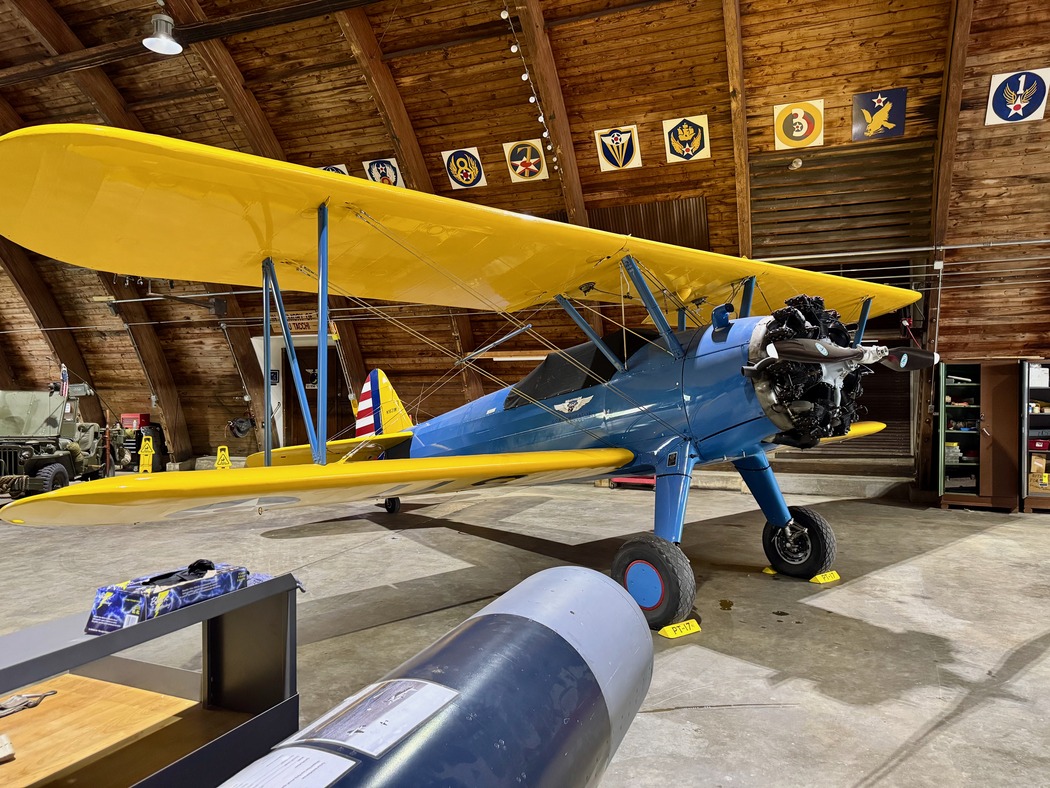
If you actually flew (or even rode back seat) this Kaydet, you would have a good idea of this wing design, its strengths and weaknesses. The Kaydet is a very “forgiving” aircraft for student pilots. That became a disadvantage for the next stage of training consisting of much less forgiving aircraft.
Those struts and wires cause drag. Typical cruising speed for students was around 75 miles per hour. Locals called it the “Yellow Peril” when students were in the air nearby. With two pairs of wings, the pilot has reduced visibility when looking up and when looking down. World War I fighter aircraft (called “pursuit” planes) were biplanes and even triplanes (three wings stacked above each other). Pilots often missed an approaching or intersecting enemy that was at a different altitude (high above or way below).
Did you again note the irrelevant information? “Yellow Peril” had nothing to do with wing design. But wing design is not the point. Transmission of mastery is. Your students can more vividly visualize the situation with “student drivers” flying on by, feared as “The Yellow Peril”. The usual next aircraft in pilot training was the Vultee Valiant, known as “The Vibrator” for what it did to buildings as the students flew by. The vivid visual image becomes the high-bandwidth transmission of knowledge. Students in class can more clearly relate to students in the air, terrifying those around them.
Think again about this wing design. Specifically, think about the struts and the wire bracing. Visualize how it is holding the airplane together during aerobatic maneuvers.
This next example shows a temporal transcendence. We are shifting back a generation to World War I.
World War I Biplane
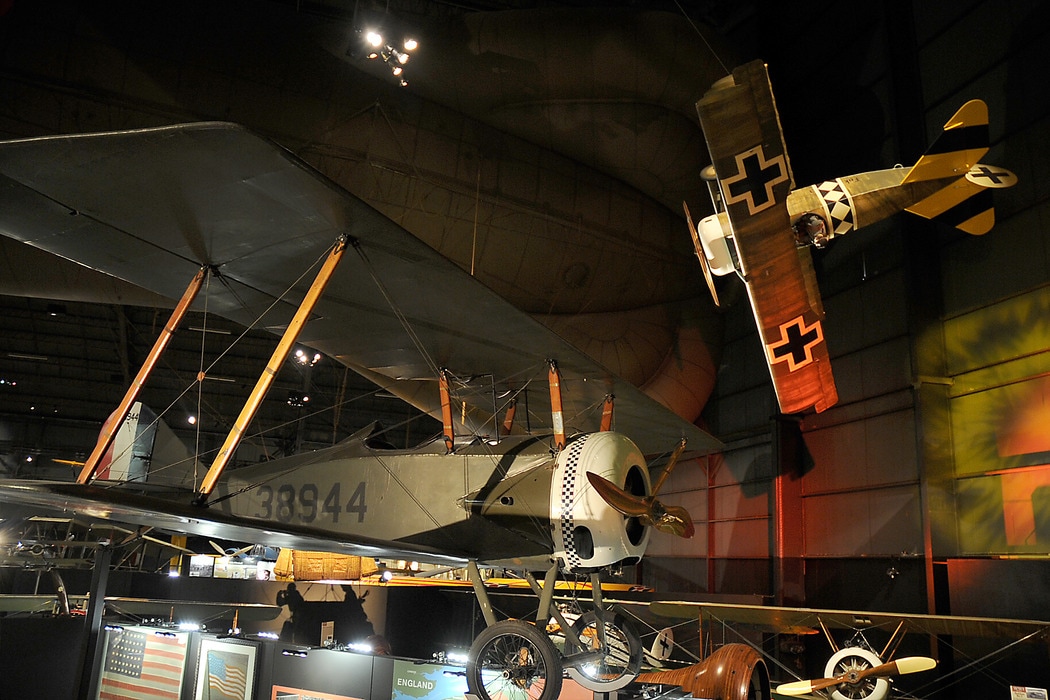
Figure 2, “Thomas-Morse S4C Scout Pilot Training Biplane, World War I,” shows a remarkably similar pilot trainer from World War I.1 The guy wires are in pairs like the Kaydet but arranged differently. The struts near the wing tip are arranged differently. But you can see the upper/lower wing infrastructure is similar. As a pilot or airplane mechanic, if you had strong experience with one of the designs, that would certainly give you strong insight into the other design.
At the upper right is a replica Fokker Dr.I triplane being flown upside down. The “Red Baron” von Richthofen famously painted his red, so that his enemies would know who they were up against.
Design Pattern: Cantilever
The airplane in Figure 3, “North American AT-6 Texan Pilot Trainer, World War II,” has a lower wing only. This is a “cantilever” wing design. A “cantilever” is a structure only supported at one end. In this case the wing is supported by its attachment to the fuselage. All of the support structure is underneath the cockpit. One advantage is greatly reduced drag with no struts or braces pushing through the air.

Swing Bridge
Figure 4, “Wing with Improved Visibility,” is my back-seat view from that same aircraft, crossing the Mississippi River. Even from the back, the wing leaves the view relatively unobstructed. The bridge visible just in front of the yellow wing was formerly a swing bridge (until it collapsed into the river). A swing bridge is a cantilever bridge that rotates.
As you probably guessed, we are about to transfer our knowledge of cantilever wing design to cantilever bridge design. Figure 6, “Swing Bridge Near South St. Paul, Minnesota, 2008,” will show you this same bridge (the one visible just in front of the wing) from the ground level, when it was still a working swing bridge (i.e., before it collapsed into the river).
I remember driving across that bridge in the mid 1990s and thinking, “this might not be a good idea.” It was not. It had long since been closed to railroad traffic, and luckily closed for automobile traffic shortly thereafter.

Figure 5, “Skins Off with Cantilever Structure,” shows the same aircraft with the skins off for maintenance. Now you can better see the cantilever design. You can now see how the strength comes from the structure connecting the two wings underneath the cockpit in the lower part of the fuselage. A cantilever has a central support point (the fuselage) and two equal structures extending outward in opposite directions (the wings).
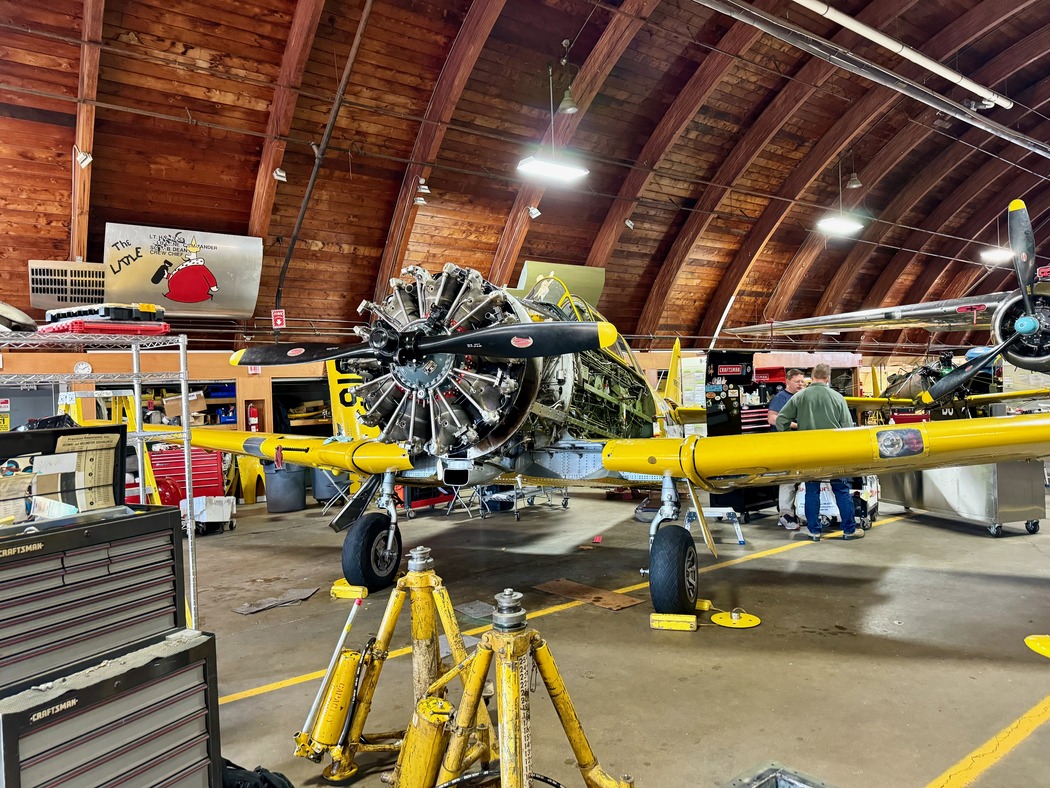
Figure 6, “Swing Bridge Near South St. Paul, Minnesota, 2008,” shows the same swing bridge we saw from the air in Figure 4, “Wing with Improved Visibility,” (before it collapsed). The central support structure is at the exact center of the photograph. We are looking at the swing span in its open position, broadside to the camera. When closed it lines up with the bridge section coming in from the right. You can see the bridge support structures extending up and diagonally out from the center. This is a classic cantilever design, implemented as a swing bridge.2

The above comparisons demonstrate the act of recognizing transcendent patterns.
As you compare the two systems (wing and bridge), notice what you are actually doing. You are identifying the support point, the load path, and the structural symmetry. The system will, of course, include many aspects and context beyond what you identify as a transcendent pattern.
Transcendent Insight
You can well imagine that a structural engineer familiar with the swing bridge design would have special insight into the cantilever wing design, and vice versa. Once you recognize the structural rhyme between these systems, you are no longer learning “airplanes” or “bridges.” You are learning the pattern that governs both.
I chose the “cantilever” pattern to demonstrate the concept is not specific to computing systems. This process applies to many areas within the Liberal Arts, which is an advantage to integration with existing learning tracks. When you and your students understand that a pattern applies in multiple situations, your (and their) past experience applies to the current situation. But first you need to recognize that your past experience does apply to the current situation.
Another example is driving a car or riding a bicycle. The skill was difficult at first. But over time it became easier. Your skill likely advanced to the point that you could ride almost any bicycle or drive almost any car. The invariant is “driving” or “riding.” The specific vehicle changes, but the mental model stays constant.
The same principle applies to using computer programming languages or pretty much any other applied computer science skill. By knowing the general pattern (or, more importantly, the constraints governing the problem at hand), you know exactly to what extent your experience does or does not apply. That fact is particularly important with entry-level positions, because this type of insight allows you to bring the full power of what experience you do have, even though you seem to have little-to-no experience at all.
That latter consideration brings out a crucial attitude: do not be distracted by the fact that it has never been done before. Find your point of leverage (the controlling constraint, from your perspective) and find ways to use that as your point of innovation. Cray Research transformed that attitude into a corporate identity and called it The Cray Style.
Transcendent patterns (invariants) apply to both physical skills (such as driving) and mental models (the biplane and cantilever designs).
As you learn or explore new material, you will identify patterns as transcendent because you see them in a new context, culture, technology, or time period. The act of seeing them is precisely the skill to develop. Explicitly form the deliberate habit.
As you begin to recognize the relationship between transcendent patterns and the severe constraints that inspired them, when you see one you will know to infer the other. When you spot a familiar pattern or skill, you will immediately have insight that others miss. When you see a familiar set of “impossible” constraints, your prior experience may guide you to the solution.
Teaching This Skill
The fundamental behavior to encourage is independent thinking. By “independent” I mean outside (i.e., independent of) the current context.
Examples at Hand
You will find countless examples immediately at hand: use them. For example, compare a pencil to a ball point pen. They are both writing utensils, and thus both solve an identifiable problem, but what constraints might have shaped their different solutions? Have students suggest hypotheses to prove or disprove.
The approach of forming a hypothesis removes personalities from the equation. No student is proposing a “wrong answer.” Students propose hypotheses that might or might not be valid (the first point to establish), i.e., capable of being proven or disproven. Then proceed to prove or disprove. My pen/pencil hypothesis is that the difference is temporal, for example.
Given that my first computer programs were typed on a keypunch, you could infer that I am not a member of Generation Z. Given that the first programming language I learned in college was Algol, you could infer that I am an outlier. In debugging, spotting outliers and anomalies is always a useful skill. Use examples from your personal background because you can transmit insight based on direct experience, a crucial consideration.
Hypothesis as Transcendent Pattern
Once the “hypothesis” method of analysis is established, explain its use in problem debugging: debugging often involves identifying the sequence of events (or code path) leading to the reported incident. Creating hypotheses to then prove or disprove a theory or path taken (or not taken) is an extremely powerful technique. By using the “hypothesis” method in two completely different contexts, students immediately recognize that this is a transcendent pattern, a timeless skill not tied to any particular era or technology.
Simple everyday objects (or, above, wings and bridges that collapse into rivers) make it easy for everyone to participate in a non-threatening manner. The crucial skill is independent (of current context) thinking.
With that habit established, invite students to suggest transcendent patterns related to the topic/subject at hand. Invite hypotheses as to what the underlying constraints might be, and to suggest methods for testing the hypothesis.
These are all aspects of systems thinking, and therefore powerful cognitive tools. Students also begin thinking about thinking (metacognition), another powerful lifelong tool. Forming the habit of automatically thinking this way takes deliberate practice, but when students find ways to make it fun, that accelerates habit formation.
In my personal experience, “elite” is itself a strong motivation. I mean “elite” in the sense portrayed in the classic movie Hackers. That is why I described the “bragging rights” culture. That will not be the correct orientation for everyone. But for some it will be the only correct orientation and should be encouraged. But when encouraging “bragging rights” demonstrate that “bragging rights” only count when using correct social responsibility. “Tech bro” and “gatekeeper” are shameful counter-examples.
In short, with mastery comes responsibility. I learned to exercise that responsibility by age 12 (thanks to my 7th Grade science teacher). With the right ethical stance, neither your, nor your students’, mastery has limits.
Cognitive Design of This Paper
Finally, take note of this paper’s design through a cognitive-framing lens. I couched things in terms of transmission of mastery in a replicable fashion as a demonstration for you to replicate. I crafted intentionally-short paragraphs by restating a concept midway through longer paragraphs, and then breaking the paragraph at that point. This technique reduces cognitive load on the reader (by creating smaller visual blocks) without in any way diminishing the material. I used this technique by splitting this paragraph right here to form the next paragraph.
I used ostensibly off-topic narrative to create a mental break between abstract concepts. I used physical examples (which, not coincidentally, demonstrated “having fun”) as a way of directly experiencing what otherwise was abstract theory. I intentionally began the paper with abstract theory so that you personally could experience the distinction.
Summary
With experience comes mastery, and is often a matter of recognizing known patterns. Experience develops mastery: gaining more abstract, general understanding while gaining greater depth of knowledge.
In other words, mastery develops the ability to take skill from one context and apply it in another. A related skill is the ability to notice that a pattern or skill in one area is the same pattern or skill you see somewhere else. This could also be the same skill applied many years later. Simply put, make use of your experience in new ways: practice deliberately applying your experience across boundaries.
In closing, I wish I could think of a way to emphasize how important it is for you (and, through demonstrated example, your students) to learn to think of complex systems as systems. Systems interact with each other. Systems have controlling forces (perhaps subsystems) that interact with each other. Keep closely in mind the “forest,” so to speak, as you examine individual “trees.” This counterintuitive advice directly contradicts modern trends toward ignoring the “big picture” during in-depth study or implementation.
Within the field of computer science, the “system” must include the system’s designers and their design intent. Hidden forces, such as organizations, politics, or funding, will have shaped that design. Solutions will always be in terms of constraints: designs imply constraints, and vice versa.
Build your own mental model of how these systems relate to each other. Find concrete physical ways to transmit those mental models to your students, including the skill of building complex mental models. That mental model is what turns knowledge into mastery.
You (and, by extension, your students) will continue to refine that mental model as you recognize the same structures even when clothed in unfamiliar machinery (or abstraction). The mental model is not static. It becomes a living structure that expands each time you notice a pattern carrying over into a new domain.