Appendix - A Year in Beijing
As the two buses converged from the left and right into our lane I wondered whether this road was safe for bicycles. When we’d agreed to tea fifteen minutes prior my family wasn’t expecting to navigate a minor highway on two wheels. Our tour guide slipped through the gap, not far behind were Mom and Dad who decided to go for it. My brothers and I were forced to brake and cars behind us honked, not in solidarity, but at least they didn’t hit us. Losing sight of Mom and Dad as the buses zipped the lane shut, I briefly imagined them being crushed. Moments later, materializing out of the cloud of exhaust on that hazy winter morning were Mom and Dad and the guide, each still in their saddle. It was 2005 and there were far fewer bikes in Beijing than I’d recalled in our 1998 visit. Just before the people’s uprising in Jakarta prompted Suharto to step aside from the Presidency after a thirty-two-year reign, on one day’s notice we flew into Singapore; after receiving word that school was canceled for the year, we decided to visit China for the first time.
Seven years later, we were residents on a bike tour. Now off the main road, we navigated tight alleys connecting traditional courtyard residences in Old Beijing, some dating back to the thirteenth century. Parking next to a red door beneath a slanting tiled roof, our guide knocked and announced us. A smiling, elderly woman answered and soon we stepped over the threshold into a quiet courtyard anchored beautifully by a gently swaying tree. We were shown to a small room a few steps further along. We did not take off our coats, as there was no heating (or insulation) but here at least the walls sheltered us from the wind’s bite. We were all keen for the hot tea soon set before us but especially thankful was my older brother whose frozen hands around the cup were eventually thawed, albeit painfully. We sat around a low stone table and sipped our tea while our guide translated our host’s words, including her family’s history, and what life was like in her community. I don’t remember the details, only the feeling. Having expended considerable physical effort and survived both the elements and the attempted bus squeeze, we were as travelers taking temporary refuge from a storm, content for simple pleasures. My Chinese was the best it has been, but only hai keyi, not good enough to verify everything our guide translated. Even so, we were soon transported through time by our host’s tale.
After receiving my high school diploma from the International School of Beijing in 2006, I soon returned to the United States to attend college in Minnesota. In short order however I learned that back in the Chinese capital several thousand traditional homes just like the one we’d visited, along with their more than seven hundred years of history, were bulldozed. Officially this was done to make room for sports venues and other infrastructure for the 2008 Olympic Games, but word on the street was that the Party was embarrassed by the hutong, which were viewed as downtrodden and often occupied by the poor. (Not unlike the opinion voiced by Hillary toward ‘deplorables’ on the campaign trail, a metaphor attempting to degrade not only Middle America, the heartland, but also We the People everywhere.) I learned that the residents, at the time of their evictions, were not compensated appropriately to the point that they couldn’t easily find other places to live.
We lived in Shunyi District, a rural area east of Beijing. The street between our school and the local villages was still covered in fall by corn kernels laid to dry by farmers. In their neighborhoods my new school friends once treated me to a plentiful noon meal for about a dollar a person.
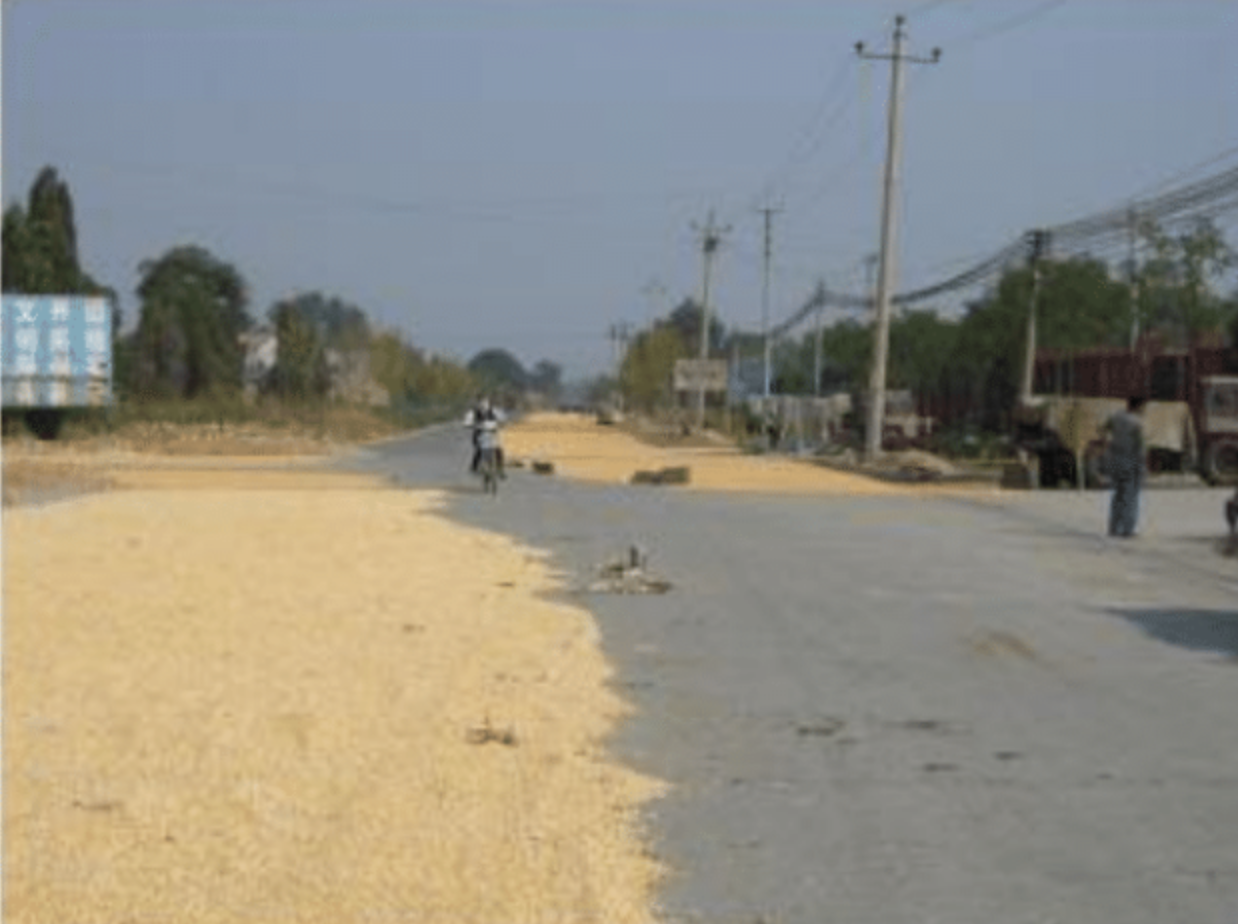
It was not clear how long these rural areas would last as the city expanded eastward toward us. I remember large clusters of residential apartment buildings rising quickly from the landscape, one day webbed by bamboo scaffolding, completed the next. To this day I wonder how many of the workers who toiled all day and through the night were not Chinese but North Korean workers on surreptitious loan. The pace of building in the last decade contributed to the ghost city phenomenon; the sociological manifestation of a “one child” policy the Chinese ruling class boasted of—as the rest of the world shrugged its shoulders. While my two brothers and I sat in a tea shop near the Terra Cotta warriors museum in Xi’an, a plate of melon arrived without our request, the server murmuring “san ge, san ge” (three) as she stepped away. While China’s one-child policy destroyed families and removed the ability to create generational wealth, policies in America undermined families from a different angle, incentivizing single-mom families and attacking the very idea of man and woman.
Prior to our arrival I knew little about China. When I shared my family was moving to Beijing, my history teacher in Houston remarked, That’s interesting. You know, China is a Communist country! Actually, I didn’t really know. I thought the term merely referred to an economic system. At age seventeen without the context of Communist disasters throughout history, I was going in blind.
It would take years for my eyes to be truly opened. But my first glimpses of understanding came in the usual ways: exploring my surroundings, conversations, books. With my adventurous mother I hiked the wild sections of the Great Wall and glimpsed how the people lived in the villages nestled against the ancient divider visible from space.
I’ve since learned that the Great Wall was likely built quite recently, perhaps in 1950, by the Communists, and then said to have been built much earlier, as a result of reading the foreward to AT Fomenko’s Chronology 2, highly recommended.
On my return in 2008, I chatted with migrant workers outside the gates of East China Normal University in Shanghai while they cooked dumplings or slapped dough on the inside of a metal barrel. The bread man travelled daily from outside the sprawling city, here standing all day in the cold and frequent drizzle to sell portions for a quarter a piece. I bought a decent amount but in my defense, he was competing with other food sellers. I came to learn through my classmate Deanna’s research that he was one of approximately 300 million migrant workers throughout the country, at the time equivalent to the entire population of the United States. The international press lauded the country’s economic growth but there was a tragic number of people yet to rise out of poverty. China’s economic growth, of course, came at the detriment of America’s economy and the overall quality of goods. At Christmas in recent years, my dad opened a small metal tin to reveal wooden toys, still beautifully preserved, which had entertained him for many hours during his childhood.
Present day China was rough on the people, but their near-term past was arguably tougher. Mao’s policies devastated the country and as a result tens of millions of lives were lost. The chaperone of a 2008 trip, an economics professor who grew up during the Cultural Revolution, shared with me how she and her grandmother hid in the kitchen stove when Mao’s Red Guards showed up unannounced and took her father away; he was never to be seen again. In Ji Xianlin’s The Cowshed: Memories of the Chinese Cultural Revolution, I learned how a once-respected professor was interrogated by his own students and made to build a holding cell for he and fellow intellectual colleagues labeled class enemies. These were commonplace experiences, normalizing total control of the mind and body for what no one in their right mind (not even Mao) would truly suffer. The total control of the Chinese population was first instantiated in fear, then through elections, establishing a uniparty governance model since the foundation of the Chinese Communist Party (CCP) in 1949.
While I didn’t have a robust understanding of the comparative political models in question, I knew that Beijing wasn’t a place I would ever want to live for very long. Evenings walking our neighborhood I wondered whether the guards were there for our safety or as our monitors. In our living room, below two fire alarms, the purpose of the second my family never did surmise, the television regularly went static at any mention of China. Our church services were held in a conference room inside the neighborhood since there were no Christian churches; Chinese nationals were forbidden from attending.
When I moved back to the United States of America, though my understanding of this country’s founding was still murky, I had a deeper appreciation for the spirit of freedom, central to our founding and identity. It must be said that this yearning not to be a slave is alive and well in many places I’ve traveled, including China, where I’d just moved from.