
Leanpub Header

Skip to main content

Master Longitudinal Data Wrangling and Data Visualization in R

Learn how to move from complex longitudinal data to clear insight. This hands-on course teaches the key concepts, practical data wrangling, and data visualization in R you need to explore change over time with confidence.

Interested in this course? Show your support by saying what you'd like to pay for it!

$
PDF
EPUB
WEB
About

About

About the Course

Longitudinal data offer unique insights into how people, organisations, and societies change over time. Unfortunately, getting to those insights is often difficult because such data can be complex and overwhelming. This course covers foundational concepts, such as defining a longitudinal study and introduces a clear workflow for working with panel data. You will then learn how to handle the most common data wrangling challenges efficiently. Finally, the course develops your skills in data exploration and data visualization in R.

Topics covered

Key concepts and longitudinal workflow

Understanding what is a longitudinal study is often the first barrier when working with repeated-measures data. Similarly, many researchers feel unsure about how panel data differs from cross-sectional data. This uncertainty affects research design, interpretation, and the validity of conclusions.

In this section, you will first learn the core concepts of longitudinal data. Next, you will explore common longitudinal designs. Finally, you will see how design choices shape data structure and analysis workflows in practice. Along the way, you will learn about the age-period-cohort conundrum and how longitudinal data can be used to tackle it.

Data wrangling and data cleaning tools for longitudinal data

Preparing longitudinal data is where many projects break down. For example, researchers often struggle to merge waves or restructure data into long or wide formats. In addition, choosing the right data cleaning tools can be difficult when variables change across waves.

Therefore, this section focuses on practical tools for data wrangling specific to longitudinal data. You will learn how to merge datasets, reshape data, handle missing values, and clean or recode variables. You will also learn how to explore non-response and attrition patterns to better understand who is in your study.

Exploring longitudinal data using descriptive statistics

Many students feel uncertain about how to explore longitudinal data before modelling. For instance, it is often unclear what to summarise, how to check data quality, or how to spot problems over time.

In this section, you will learn how to create and interpret descriptive statistics for longitudinal and panel data. In particular, you will use tables and summary statistics to explore patterns and trends and to diagnose data issues early.

Longitudinal data visualization in r

Clear visualisation is essential for understanding your data. However, many researchers find it hard to move beyond basic plots and apply visualizations specific to longitudinal data.

Therefore, this section teaches data visualization in R step by step. First, you will learn the basics. Then, you will move on to the most common visualisations for longitudinal data. Finally, you will learn how to visualise individual trajectories, group trends, and change over time.

Learn by doing with real support

Learning to work confidently with longitudinal data can feel overwhelming, especially when you are working on your own. This course is designed to support you at every step of that journey. It combines videos, written explanations, quizzes, and hands-on practicals, so you can learn actively and build skills through doing rather than just reading. For every practical, you receive solution files and detailed video walk-throughs. To ensure your learning transfers to real research, the practicals use Understanding Society, one of the largest and most widely used panel studies in the world.

In addition, you receive access to the course forum where the instructor answers questions about the course content and practical exercises. We aim to respond within two working days to every question. You can ask both conceptual questions about longitudinal data and practical questions about applying the course methods to your own research projects, as long as they relate to the topics covered in the course. Forum access is ongoing, so you can return to the course and ask questions as you apply what you learn to new datasets.

The course is regularly updated to reflect changes in R packages, best practices in longitudinal research, and student feedback.

Who this course is for

This course is designed for:

  • PhD students and early-career researchers
  • Applied researchers and analysts working with panel or repeated-measures data
  • Students transitioning from cross-sectional to longitudinal designs

Prerequisites

You should already be comfortable with:

  • Basic R syntax
  • Working with data frames and basic data wrangling

If you are new to R, consider first taking the Introduction to R for Social Researchers course.

Share this course

Instructor

About the Instructor

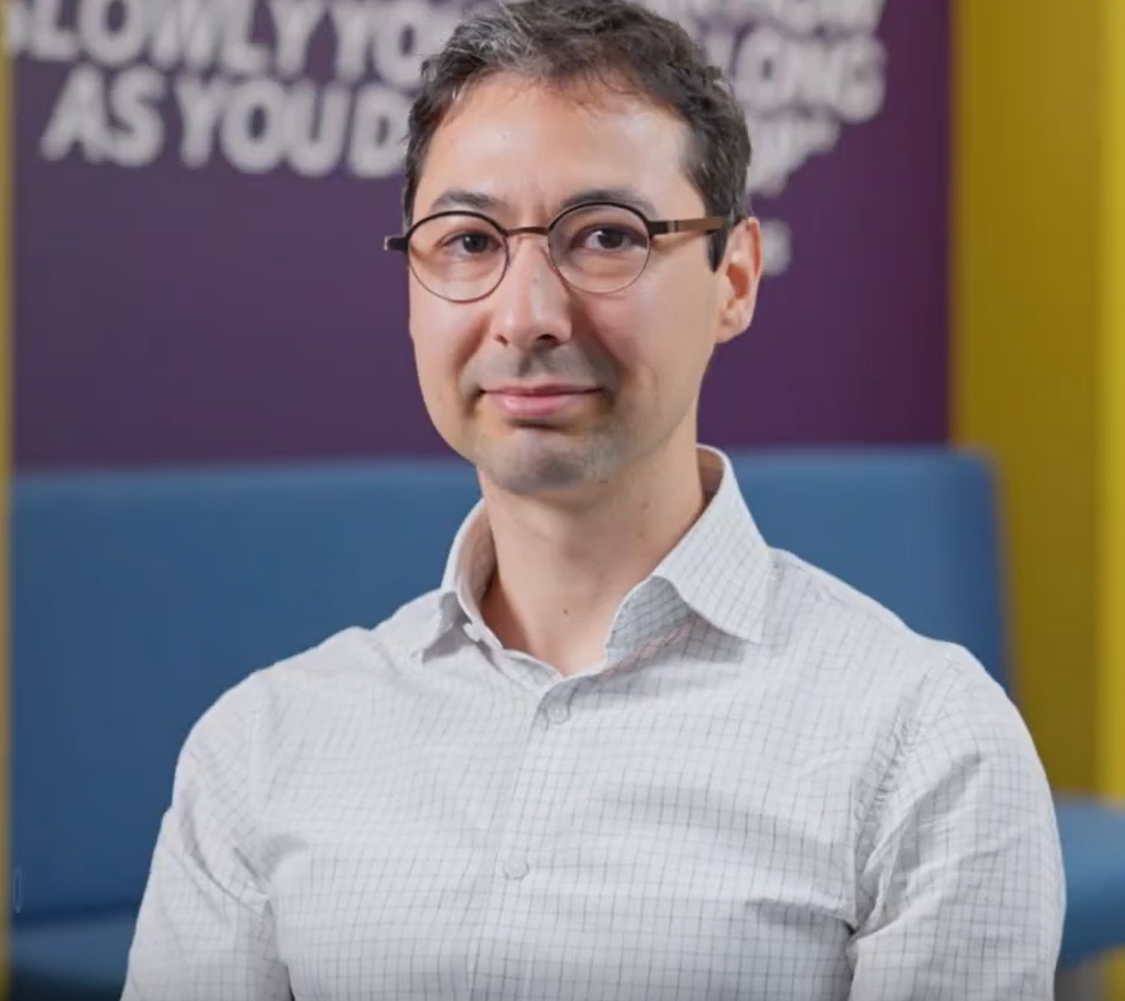
Alexandru Cernat

Alexandru Cernat is a professor in Methodology and Social Data Science at the University of Manchester.

He has a PhD in survey methodology from the University of Essex and was a post-doc at the National Centre for Research Methods and the Cathie Marsh Institute.

His research and teaching focus on: survey methodology, longitudinal data, measurement error, latent variable modelling, new forms of data and missing data.

He is also the founder of longitudinalanalysis.com, a platform that helps researchers and analysts learn to collect, clean, and analyse longitudinal data.

You can find out more about him and his research at: alexcernat.com.

Leanpub Podcast

Episode 267

An Interview with Alexandru Cernat

The Leanpub 60 Day 100% Happiness Guarantee

Within 60 days of purchase you can get a 100% refund on any Leanpub purchase, in two clicks.

Now, this is technically risky for us, since you'll have the book or course files either way. But we're so confident in our products and services, and in our authors and readers, that we're happy to offer a full money back guarantee for everything we sell.

You can only find out how good something is by trying it, and because of our 100% money back guarantee there's literally no risk to do so!

So, there's no reason not to click the Add to Cart button, is there?

See full terms...

Earn $8 on a $10 Purchase, and $16 on a $20 Purchase

We pay 80% royalties on purchases of $7.99 or more, and 80% royalties minus a 50 cent flat fee on purchases between $0.99 and $7.98. You earn $8 on a $10 sale, and $16 on a $20 sale. So, if we sell 5000 non-refunded copies of your book for $20, you'll earn $80,000.

(Yes, some authors have already earned much more than that on Leanpub.)

In fact, authors have earned over $14 million writing, publishing and selling on Leanpub.

Learn more about writing on Leanpub

Free Updates. DRM Free.

If you buy a Leanpub book, you get free updates for as long as the author updates the book! Many authors use Leanpub to publish their books in-progress, while they are writing them. All readers get free updates, regardless of when they bought the book or how much they paid (including free).

Most Leanpub books are available in PDF (for computers) and EPUB (for phones, tablets and Kindle). The formats that a book includes are shown at the top right corner of this page.

Finally, Leanpub books don't have any DRM copy-protection nonsense, so you can easily read them on any supported device.

Learn more about Leanpub's ebook formats and where to read them

Write and Publish on Leanpub

You can use Leanpub to easily write, publish and sell in-progress and completed ebooks and online courses!

Leanpub is a powerful platform for serious authors, combining a simple, elegant writing and publishing workflow with a store focused on selling in-progress ebooks.

Leanpub is a magical typewriter for authors: just write in plain text, and to publish your ebook, just click a button. (Or, if you are producing your ebook your own way, you can even upload your own PDF and/or EPUB files and then publish with one click!) It really is that easy.

Learn more about writing on Leanpub