Possibilities
The combination of time and change is the opening to the realm of events and actions. Events and actions have future, present, and past types.
The definitions used here might be a bit different and are foundational to what we’re talking about.
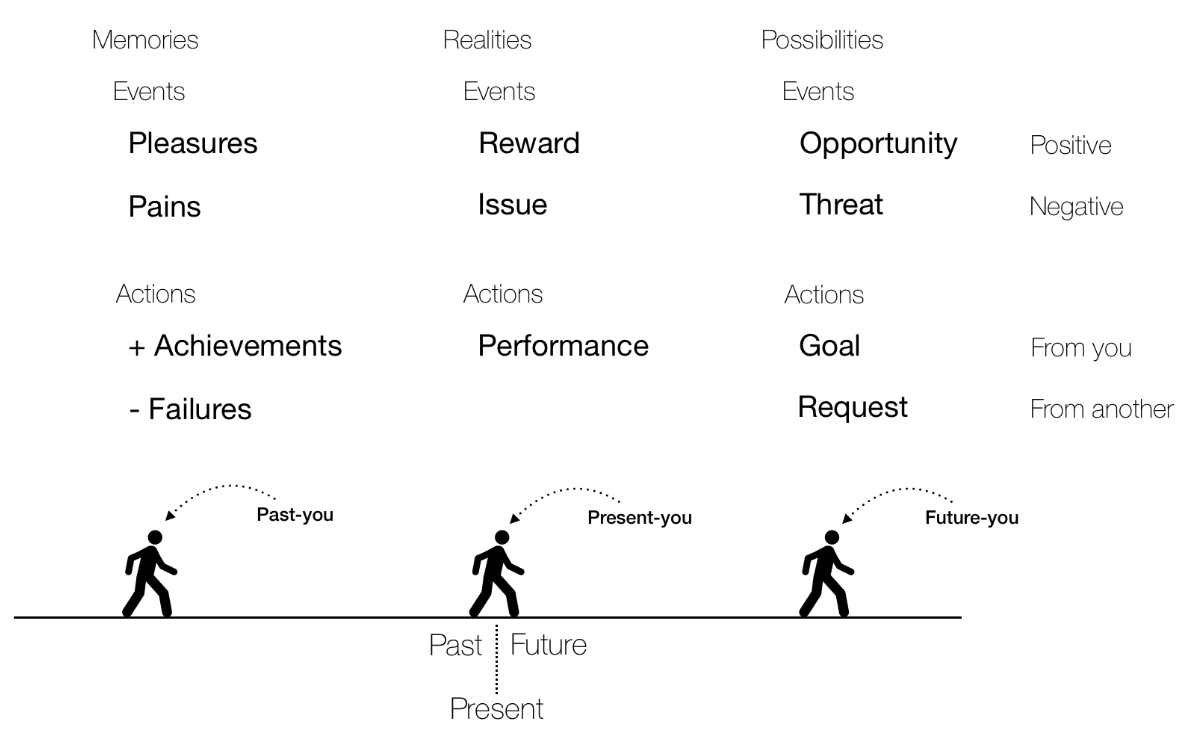
- Possibilities
- are events or actions that could happen.
- Realities
- are events or actions that are happening.
- Memories
- are events or actions that have happened.
- Events
- are things outside of yourself, and usually outside your control, that could impact, are impacting, or have impacted your life large and small.
- Actions
- are things you do that could impact, are impacting, or have impacted the outside world large and small.
The aforementioned sub-types have two sub-types based on perceived positive and negative impact. Further, there are three variants based on time.
- Opportunities
- are possible future events believed to have a positive impact should they become reality.
- Threats (or Risks)
- are possible future events believed to have a negative impact should they become reality.
- Goals
- are possible future actions originating from yourself.
- Requests
- are possible future actions asked of you by someone or something else.
- Rewards
- are present events having a positive impact on your life. Not necessarily in return for you doing anything.
- Issues
- are present events having a negative impact on your life.
- Performances
- are a goal or request currently being executed.
- Pleasures
- are past events with a positive impact on your life.
- Pains
- are past events with a negative impact on your life.
- Achievements
- are past performances successfully executed.
- Failures
- are past performances not successfully executed.
All possibilities have a probability of turning into a reality. All realities become memories. All three have a perceived or real impact on you. Each impact has a duration. How long will it affect you or the outside world. This is what we commonly refer to as cause and effect. A possibility becomes a reality (cause) that affects you and the outside world.
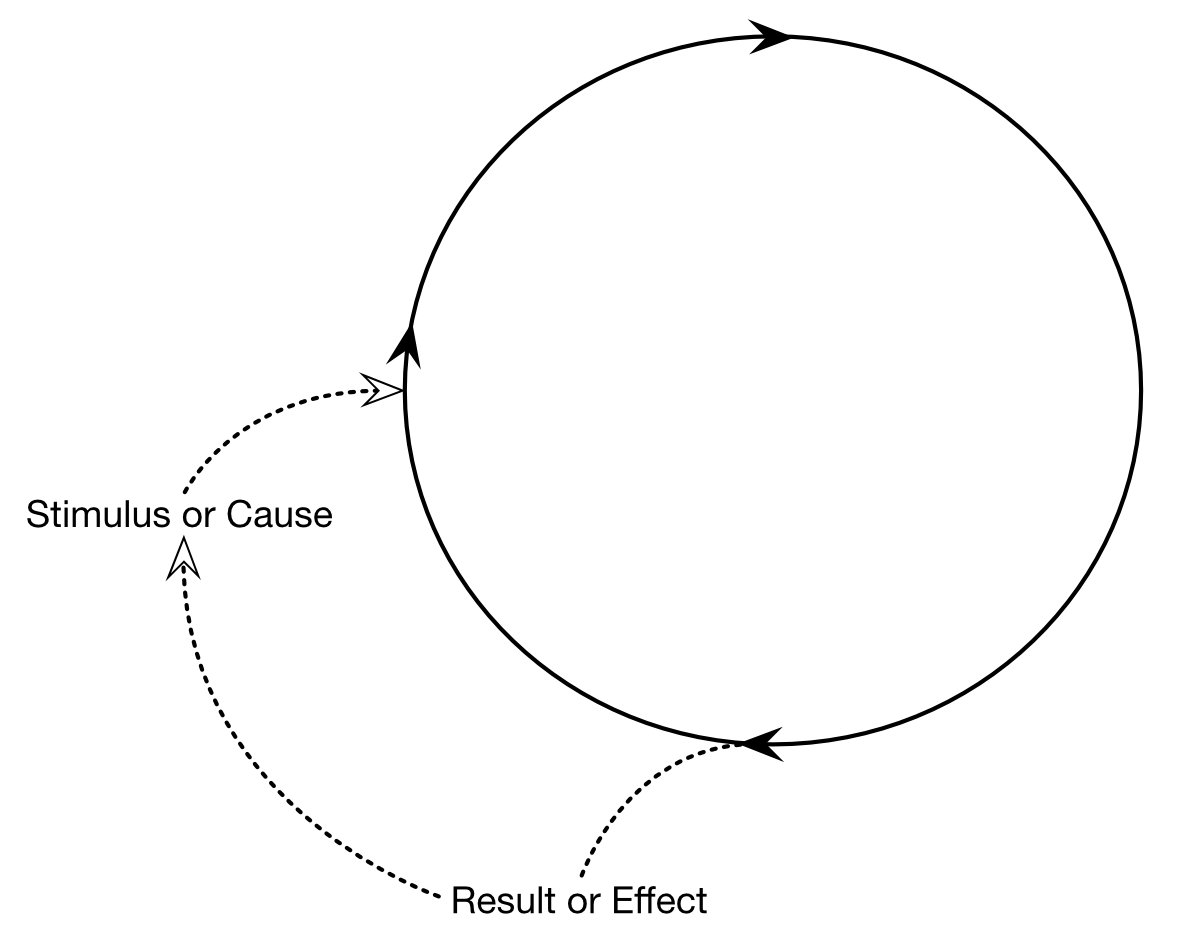
A cause sparks an event or action. The event or action has some type of result. That result may cause some other event or action to spark. This is a foundational model we’ll see a lot with varying degrees of complexity.
It’s important to note that these are not lifecycles. In other words, it is often perceived that threats can only become issues. While that is often the case, it is possible something perceived as having a future negative impact actually has a positive impact when it happens or over the long run.
You’re asleep in bed. You hear the door open and think it’s a burglar (threat). You head toward the door slowly, phone ready to call emergency services. A voice calls out, “Don’t worry, it’s just me.”
The “me” in question being your significant other (reward). As you come rushing into the kitchen, you slip and fall, hurting your elbow and dropping your phone, cracking the screen (pain).
The question that gets raised is: Was the previous example one experience or event, many experiences or events, or both? This brings us to the notion of the Action Loop, which is fractal-like in nature and seen to varying degrees throughout productivity literature.