Landmarks of the Thigh Bone
Moving on to the thigh bone.
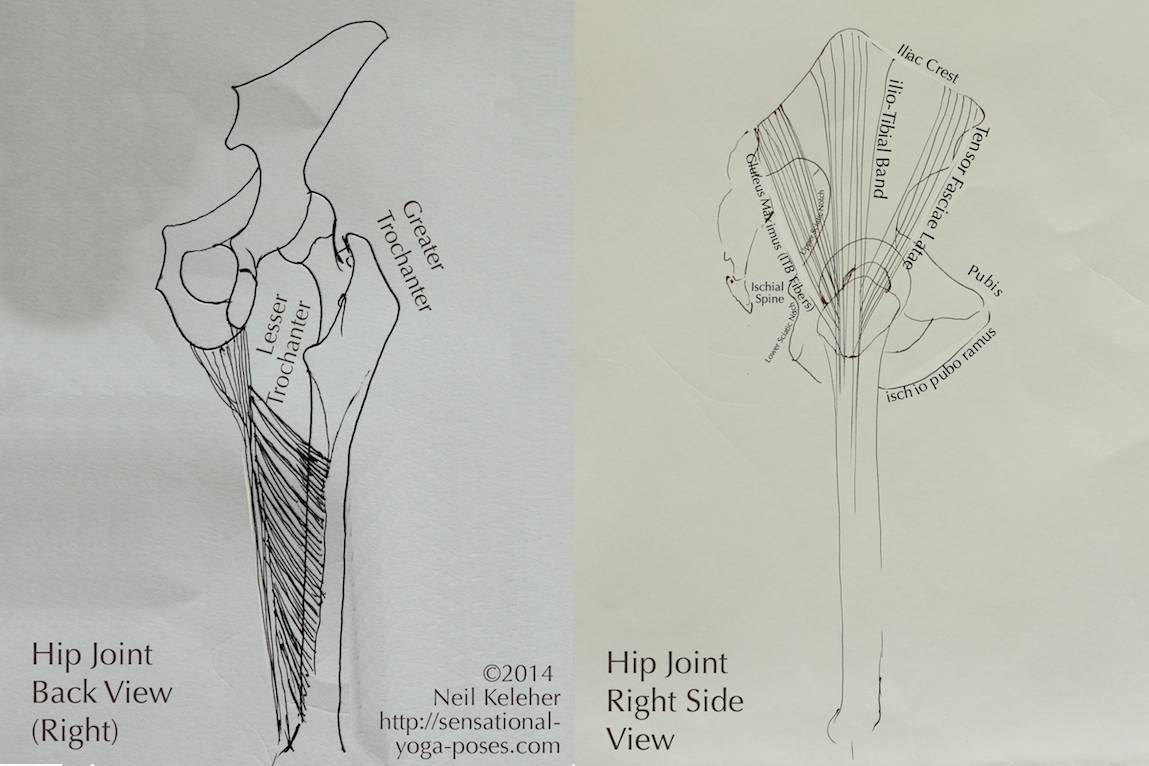
Landmarks of the thighbone include the Greater Trochanter and Lesser Trochanter.
- The greater trochanter marks the top of the shaft of the thigh bone. It is the bit you can feel sticking out at the side of your thigh
- To the inside of the thigh bone, just below the greater trochanter, is the lesser trochanter.
- Also important is the neck of the thigh bone. It angles upwards and forwards from the shaft of the thigh bone (femur) to attach to the ball of the hip joint.
Mapping the Upper Thigh bone
Hip control will be easier if you take the time to visualize the landmarks of the pelvis and thigh bone on your own body.
As a starter, feel the greater trochanter with your hand. Then put your awareness there (and take the hand away.) move your awareness slightly inwards to the inner surface of the thigh bone.
Then move your awareness to the back of the inner surface of the thigh bone, just below the neck, and imagine the location of the lesser trochanter.
Note that the lesser trochanter is at about the same height as the bottom of the sitting bones.
Next see if you can visualize the neck of the thigh bone. From the greater trochanter it angles upwards, inwards (towards the pelvis) and slightly forwards. Imagine the bulk of the ball of the hip socket. Imagine the ball of the hip socket about three inches inwards from the outer surface of the thigh.