Raspberry Pi Versions
In the words of the totally awesome Raspberry Pi foundation;
The Raspberry Pi is a low cost, credit-card sized computer that plugs into a computer monitor or TV, and uses a standard keyboard and mouse. It’s capable of doing everything you’d expect a desktop computer to do, from browsing the internet and playing high-definition video, to making spreadsheets, word-processing, playing games and learning how to program in languages like Scratch and Python.
There are (at time of writing) eight different models on the market. The A, B, A+, B+, ‘model B 2’, ‘model B 3’, ‘model B 3+’ (which I’m just going to call the B2, B3 and B3+ respectively), the Zero and Zero W. A lot of projects will typically use either the the B2, B3 or the B3+ for no reason other than they offer a good range of USB ports (4), 1024 MB of RAM, an HMDI video connection and an Ethernet connection. For all intents and purposes either the B2, B3 or B3+ can be used interchangeably for the projects depending on connectivity requirements as the B3 and B3+ has WiFi and Bluetooth built in. For size limited situations or where lower power is an advantage, the Zero or Zero W is useful, although there is a need to cope with reduced connectivity options (a single micro USB connection) although the Zero W has WiFi and Bluetooth built in. Always aim to use the latest version of the Raspbian operating system (or at least one released on or after the 14th of March 2018). For best results browse the ‘Downloads’ page of raspberrypi.org.
Raspberry Pi B+, B2, B3 and B3+
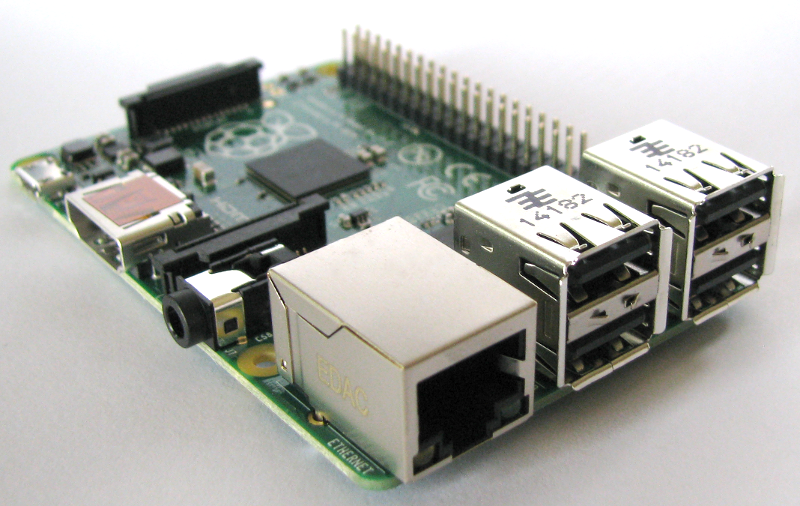
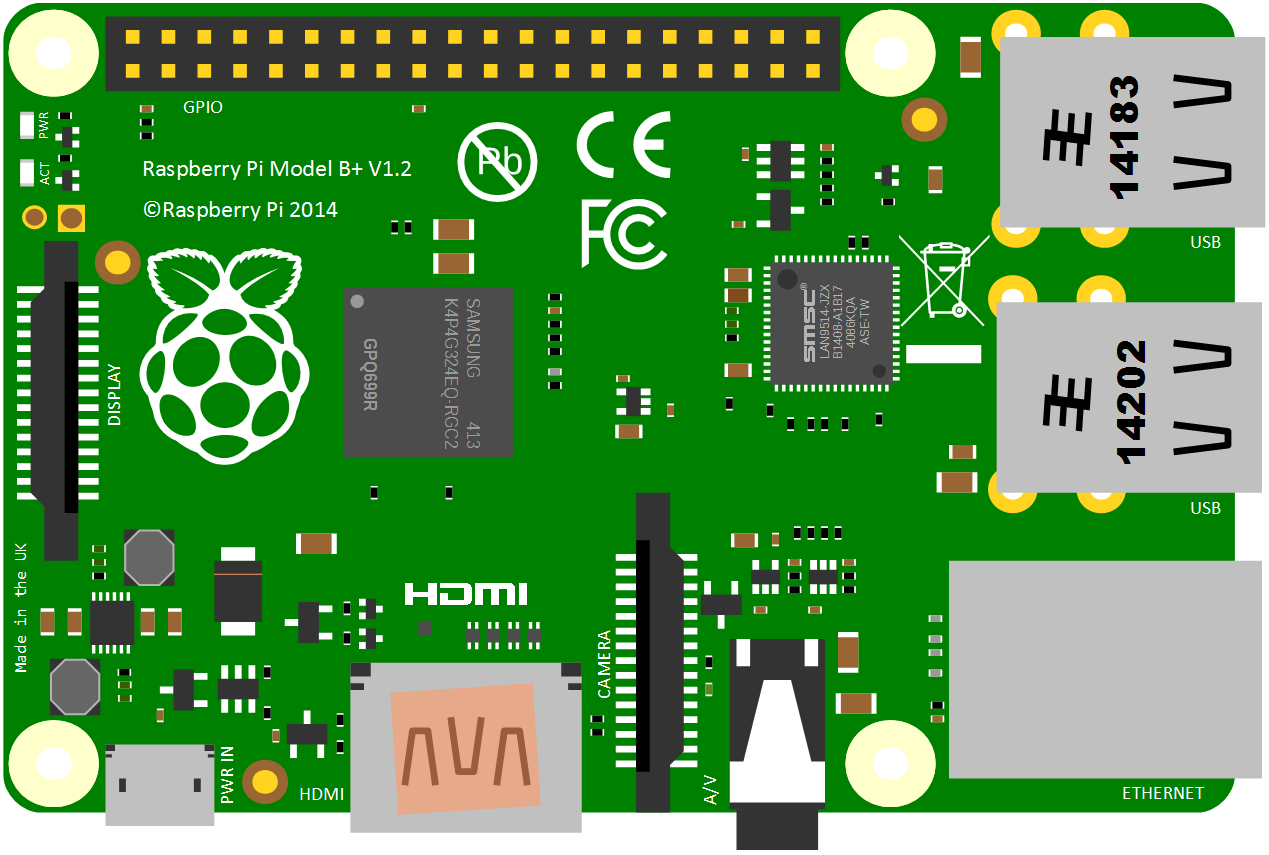
The model B+, B2, B3 and B3+ all share the same form factor and have been a consistent standard for the layout of connectors since the release of the B+ in July 2014. They measure 85 x 56 x 17mm, weighs 45g and are powered by Broadcom chipsets of varying speeds, numbers of cores and architectures.
USB Ports
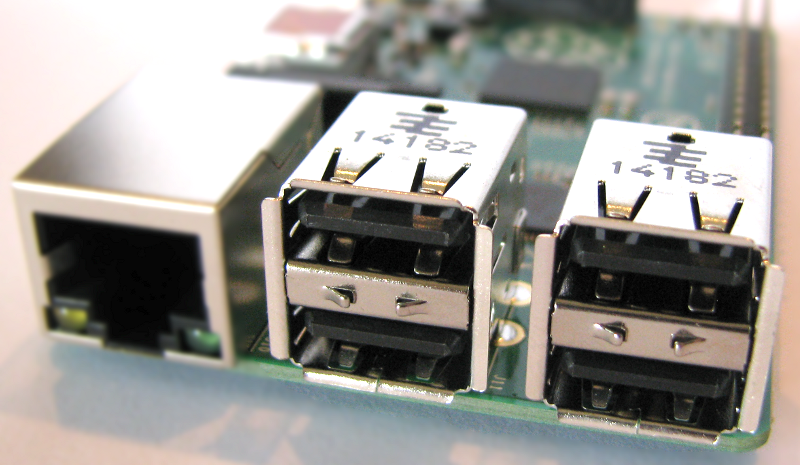
They include 4 x USB Ports (with a maximum output of 1.2A)
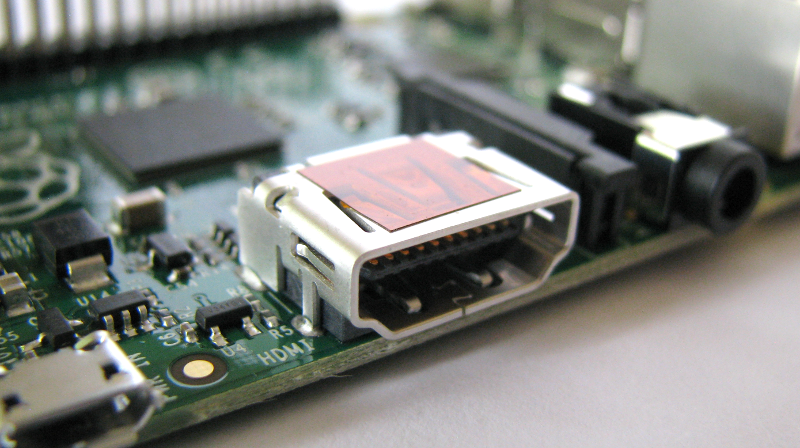
Video Out
Integrated Videocore 4 graphics GPU capable of playing full 1080p HD video via a HDMI video output connector. HDMI standards rev 1.3 & 1.4 are supported with 14 HDMI resolutions from 640×350 to 1920×1200 plus various PAL and NTSC standards.
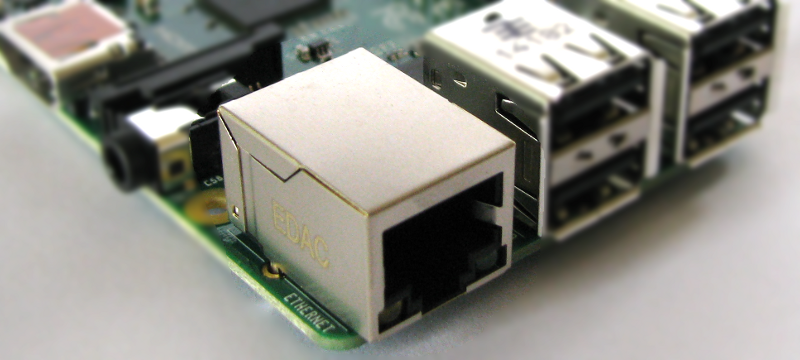
Ethernet Network Connection
There is an integrated Ethernet Port for network access. On the B2 and B3 the connection speed is fast ethernet (10/100 bps). The B3+ introduced a 300bps connection speed.
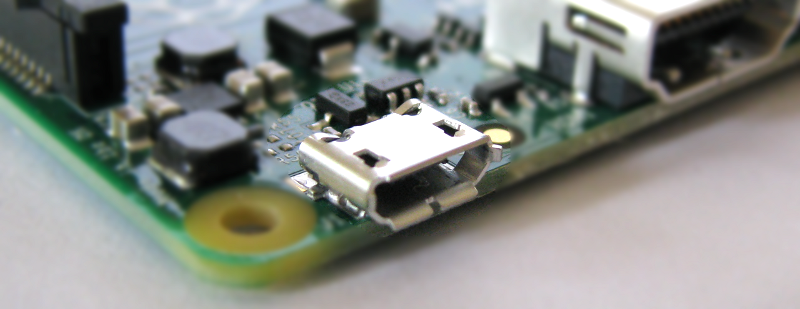
USB Power Input Jack
The boards include a 5V 2A Micro USB Power Input Jack.
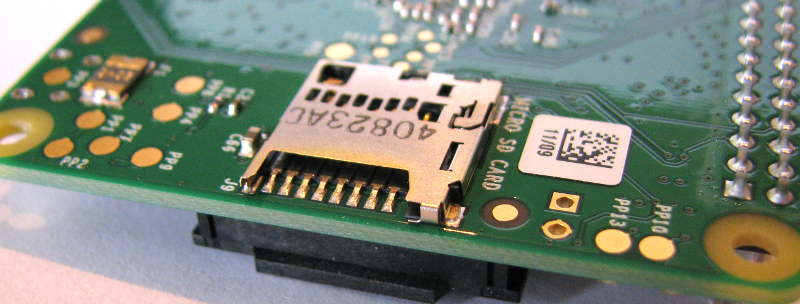
MicroSD Flash Memory Card Slot
There is a microSD card socket on the ‘underside ‘of the board. On the Model B2 this is a ‘push-push’ socket. On the B3 and later this is a simple friction fit.
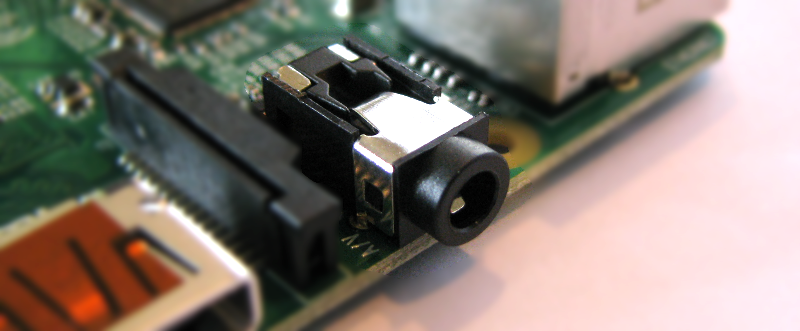
Stereo and Composite Video Output
The B+, B2, B3 and B3+ includes a 4-pole (TRRS) type connector that can provide stereo sound if you plug in a standard headphone jack and composite video output with stereo audio if you use a TRRS adapter.
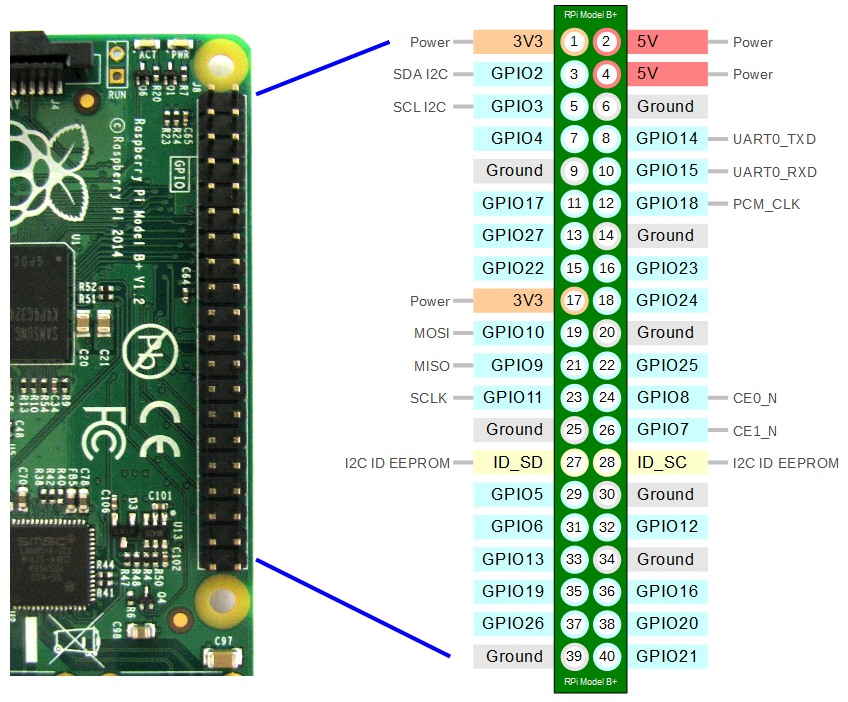
40 Pin Header
The Raspberry Pi B+, B2, B3 and B3+ include a 40-pin, 2.54mm header expansion slot (Which allows for peripheral connection and expansion boards).