Chapter 6 - How You Can Get Started
Making money is not the primary driver of motivation and job satisfaction for a majority of people20. The need to satisfy intrinsic motivation was described in the book, “Drive” by Daniel H. Pink21. He states that when we achieve profit goals, the satisfaction is short-lived. We are happier when we pursue purpose goals (people and planet).
Not only is purpose a good thing for society, it’s also good for us as individuals.
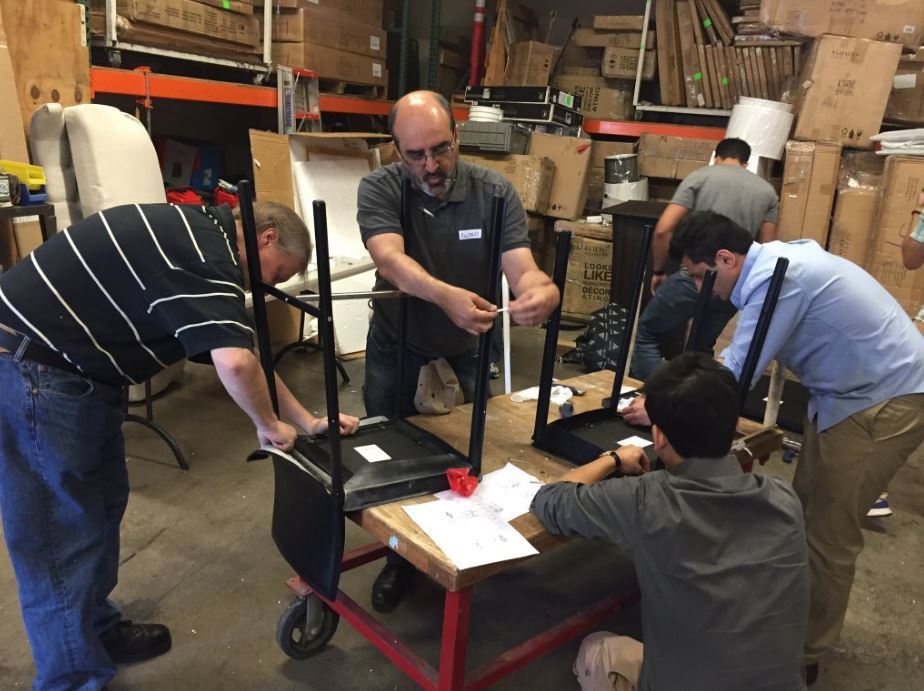
Here are some steps I would recommend for moving towards more rewarding and purposeful work.
- Pick a problem or cause that you feel passionate about - If you don’t have a passion around something larger than you, others will push you towards their own goals and agenda. Go back and review the UN Sustainable Development Goals in Chapter 4 if you need some ideas.
-
Decide if your current work is aligned with this cause - Determine if your company or organization is currently working on, or actively supporting this cause. If they are, then simply get more involved with that effort, using your improvement skills. If they are not, then determine if it is a cause they should get more involved with.
Regardless of how strong your organization is currently supporting this cause, ask your manager if they are willing to allow a few hours per week or month to support your time on this cause while getting paid.
Another option is to propose a volunteer event with your favorite nonprofit as part of your department’s team building efforts. Managers are often looking for ways to get their teams together outside of work (with pay), and helping a nonprofit is a perfect solution. These events can be coupled with a team lunch, dinner or happy hour after the event.
In fact, many companies are already doing this:
- Salesforce.com allows employees 7 days of Volunteer Time Off (VTO) per fiscal year for a volunteer activity of their choosing.22
- For over 20 years, Timberland has allowed full-time staff up to 40 paid hours for community service every year.23
- McKesson’s volunteer program provides grants linked to individual volunteer involvement with nonprofits, with extra dollars donated for serving on board of directors and achieving milestones for the number of hours logged.24
- West Monroe Partners has a 1+1+1 program, giving back 1% of their time, talent and treasure to the greater good. They also established a fellowship program that gives employees’ a 3-6 month compensated leave to support their philanthropic and humanitarian interests.25
- Rockwell Collins donated their lean consultants to help facilitate events and projects within the community, such as leading a 5S event in a prison facility26, streamlining the state government processes, and improving healthcare by reducing variation in patient anticoagulation test results.27
- The Standard Insurance employees are eligible to receive up to 8 hours of company-paid time annually to volunteer in their communities, either during work hours or after hours, based on their preference.28 If your company won’t allow time for you to support your cause, and if you want to keep your current job, you’ll have to volunteer outside of work. Unfortunately, this is the case for most people. Another option is to find a new job, where you can get paid part-time or full-time to support this cause. The goal for step 2 is that you commit to spending time (paid and/or unpaid) towards a cause that you care about.
- Find an organization that is already working on this mission - If you are having trouble getting your company or organization aligned with your cause, find a relevant nonprofit organization (in your area or online), and get engaged. A simple internet search using your city and some keywords related to your favorite cause will help you find organizations you can get involved with. If nothing exists, maybe you should start your own nonprofit organization!
- Reach out and make a connection with the organization - Most organizations have a website with contact information. Review their website, attend an upcoming meeting or volunteer event to learn more about what they do, and find out what their challenges and struggles are.
- Offer your assistance and expertise - Once you’ve made some connections within the organization, the next step is to prove your commitment to the group. This can be done through attendance, participation and volunteering numerous times. After you have built up some credibility, then you can discuss your skills and background with them, and how you think you can help them improve. Please avoid explaining how you’re going to fix them, and how terrible their processes are during your early meetings with them. We always need to show respect anytime we are helping an organization make improvements.
- Identify a specific problem - Work with the organization to identify what problem they need the most help with, and give suggestions on how you think your skills can help address this problem. Do some research online to find Lean or Six Sigma case studies that relate to this cause, so you can help the organization see how your skills can be useful to them. The Toyota Production System Support Center (TSSC) website29 has excellent videos showing the work they’ve done with nonprofits. I’ve also created a website of case studies, videos and interviews explaining how Lean and Six Sigma have been applied to government agencies and not-for-profit organizations. Visit https://www.LeanSixSigmaforGood.com30 to search by industry, country or keyword. If you find examples that are not listed on the site, please contact me using the forms on the website.
- Conduct an event or project - If you’ve got a strong Six Sigma background, start with a Project Charter, and fill it out with the leadership in the organization. Once approval is gained, mentor and coach them through a DMAIC project. If you’ve got a strong Lean background, suggest a kaizen burst event or gemba walk to observe the problem firsthand with a small team of people, and help identify waste and quick process improvements. If you’re interested in learning more about DMAIC, gemba, or other Lean and Six Sigma concepts, see the Resources section. If you are supporting causes far away from where you live, consider traveling to see firsthand, do research online, or watch videos to really understand the current state. This is why it is ideal if you can find local causes and organizations to work with, so you can go to the “gemba” and provide hands-on support. If that’s not possible to visit in person, but you are good with a computer or on the phone, you might be able to help with social media, website updates, automation of processes, raising money, or data entry.
- Document results - Once you’ve identified improvements and are seeing some success, capture the improvements through anecdotes, observations, photos, videos and metrics. Remember, you should have good baseline metrics before you start, so you can compare before and after results. Share those results with your friends, family and co-workers. Pictures and videos are essential in today’s world, and social media is a great avenue to get the word out. Post it to the Facebook page31 for this book, so others can see what you’ve done. Make sure you keep it focused on the organization and cause you are working towards, and avoid too much self-promotion.
- Repeat - Once you’ve had some successes, go back to Step #1 and make sure you are still passionate about the cause you selected. Maybe your experience was not what you expected, and you want to pick a new cause. Perhaps you are still passionate about the cause, and want to continue with another problem within that organization, or perhaps shift directions and work with a different organization.
Some of you might be thinking about donating money instead of volunteering your skills, since you are limited on time. However, if the organization is inefficient, then your $50 donation might only get $25 worth of value towards the mission. Your skills could help that organization get $35-45 of value from all future $50 donations, which is far more impactful than your individual donation.
When you decide that you are still passionate about the cause, you might look more seriously at changing jobs. Some organizations offer part-time and full-time work, although the pay may not be as competitive as what you are getting at your current job. If you’re not ready to make a career change, you can also investigate a reduction in hours, so you can spend more time pursuing this cause.
During my last six months at Rockwell Collins, I wanted to increase the number of volunteer hours I could contribute each week. I requested and received a reduction in hours from 40 to 30 per week. This freed up 10 extra hours available during the week to pursue my passions (including writing this book). This did reduce the amount of money I brought home, but the rewarding work I was doing with my free time more than made up for it, and I didn’t feel like I was working two full-time jobs anymore. In addition, I still maintained a couple hours per week of paid time to continue my environmental efforts within the organization, which I really enjoyed.
Although I have focused mainly on helping not-for-profit organizations in this book, and I have even suggested you leave your current organization to pursue causes you are passionate about, I don’t want you to give up on your current job quite yet.
I encourage you to make an honest attempt to change the culture from within your for-profit organization. You’ve already started to change the culture using Lean Six Sigma, so that experience will be helpful in making your organization more sustainable.
In fact, I think you are one of the most qualified individual in your organization to lead this effort!
This quote from a book titled “Finding Purpose: Environmental Stewardship as a Personal Calling”32 by Andrew J. Hoffman accurately describes my feelings about sustainability and business.
“Never forget, the market is the most powerful institution on the planet, and business the most powerful entity within it. Businesses can transcend national boundaries and often possess resources that exceed those of many countries. You might lament that fact, but it is a fact. If business does not lead the way toward solutions for an environmentally sustainable, carbon-neutral world, there will be no solutions.” - Andrew J. Hoffman
Key takeaway for Chapter 6: If you don’t help your organization move in this direction, who will?