Value Stream 4: Lives
Value Stream 4 A3 Report:
- The self-organization of matter and energy within the OM leads to supervening levels of existence
- Thinking of life’s emergence in lean terms as a form of adaptation, regeneration and energization provides a philosophical perspective on modern evolutionary theory that may be applied universally to all consumers and organizations
- By this definition of life, even a stream of water is alive to the smallest degree
- Basic, biological activity is the first place were knowledge gets transmitted across generations of living systems to improve those systems’ overall existence
- Cognitive activity further optimizes the storage, transmission and application of knowledge toward improving those living systems’ existences
- Intentional, cognitive activity adds an element of self-interest to this process, thereby greatly increasing the ability for organisms to adapt, reproduce and energize
- Increasingly self-conscious organisms like consumers have had an advantage to date of improving their lives by being able to better imagine how their self-interest gets optimized by the different decisions they make – but their advantage is ultimately tested by whether or not they are relatively short-lived
- Meaning gets created to the degree living systems actually universalize themselves through the above processes
Now go along the universal value stream to lean through what life (or “命” in Kanji) really is. Consider how consumers’ lives and organizations’ viability emerged within the Ontological Medium. Think about how universal truth-values led to the processes by which consumers personally find themselves in the seemingly self-defining paradox of the OT. See how these value streams wound their way through the OM within the IB toward the seemingly limitless ocean of true-north value that all life and conscious existence is. This form of Lean metaphysical thinking about consumers’ lives within an HQ ought to flow from Descartes’, “I think, therefore I am,” being a distinct cause and effect, toward a possibly tautological, “We are, therefore we will be.” Your business ideology within the metaphysics of Lean likewise ought to head in circles, similar to a tornado or whirlpool, to greater and greater effect.
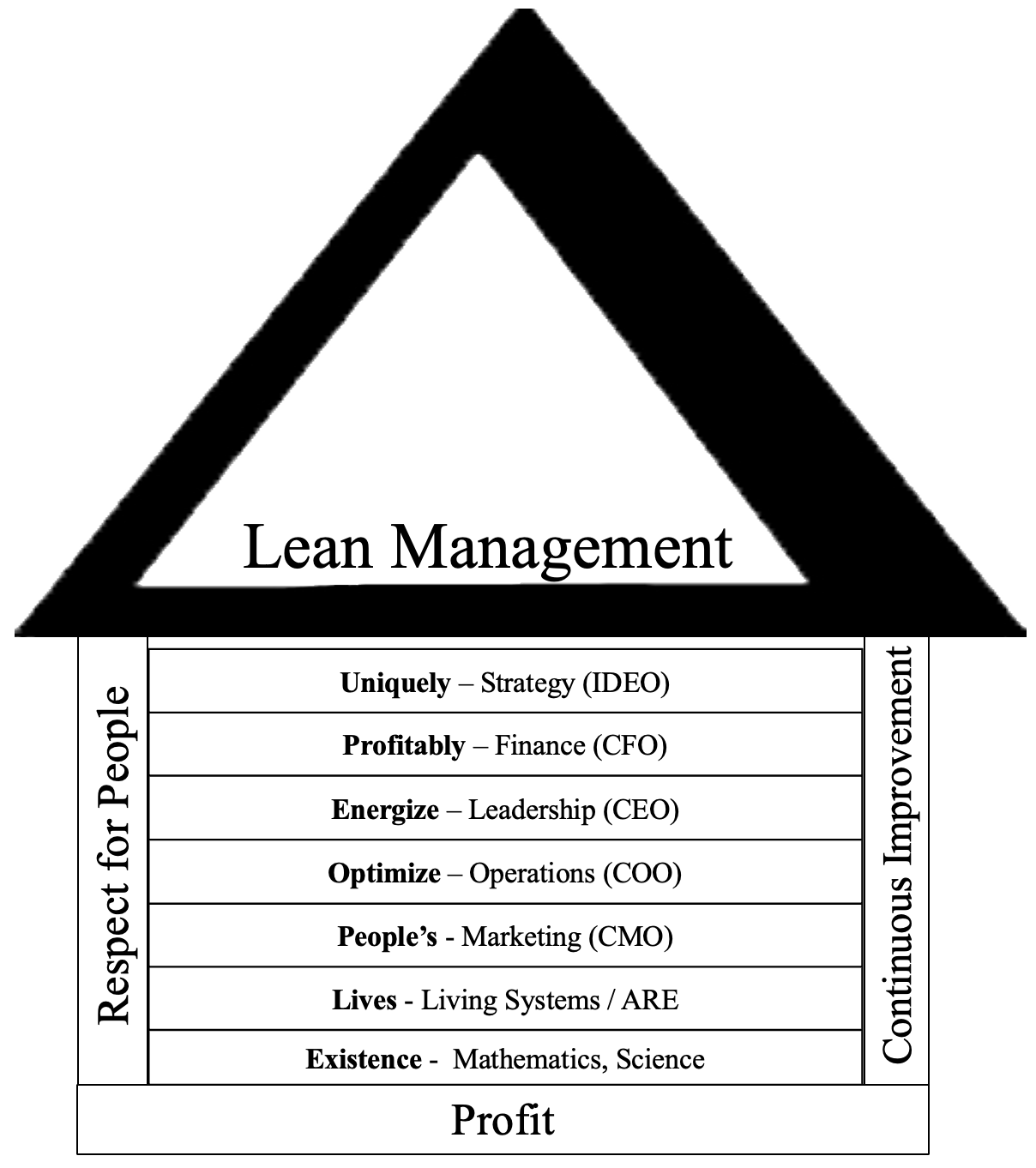
As an organization advances up the universal value stream in this way, you more clearly see consumers explicitly or implicitly finding meaning in their lives in the difference between what is within the IB and what not. Thus, each department of an organization ought to produce products that in-turn attempt to energize and optimize this meaningful difference in consumers’ lives through the processes of the ID Kata at each level, as seen again here:
Customers Self-Organize Upward Along the OT
The self-organization of living systems within the OM leads to consumers finding themselves in the open-ended, nearly tautological paradox of the OT running up through this busy universe. These physical and biological theories describing living, natural systems eventually self-organizing into consumers provides another perspective on why customers consciously buy and consume product. To give you a notion of how old this idea of self-organization is, consider the fact that in his 1633 book, ‘‘The World,” Descartes wrote that order tends to arise naturally from the universal laws operating in the chaos of the cosmos. He wrote that the origin and course of the planets and comets in general, “…were so extended and so impeding that, when they collided with one another, it was easier for several to join together.”1 Scientists today simply rephrase this principle of teleonomic physical interactions in terms of modern scientific knowledge.
Science increasingly tests scientismic theories to explain why living consumers emerged from raw matter within the OM in an upward orientation to the OT to become who they are today. These scientismic explanations revolve around exploring the self-organization of complex structures from chaotic, dynamic systems of the universe, like the study of planetary ecology. These theories model processes that ultimately created consumers’ Ontological Realization. Consumers’ OT processes successively depend on each other to become Ontologically Realized in upward, self-organized fashion due to physical, chemical and biological axioms and systems. These processes get driven even further upward when consumers purchase and consume the products you produce.
Life itself constitutes and constructs one of the most sophisticated aspects of existence, the greatest of all, “Strategically Unique Degrees of Sophistication” (SUDS).2 “Strategic,” in SUDS means the teleological end-goal of Ontological Realization, “Unique” means that which strategically succeeds among all neo-Darwinian games, and “Degrees” means the variously differentiated SUDS you experience in the universe. Therefore, “Sophistication” means an organisms’ strategically unique degree of self-organization that allows it to further and better live by adapting, regenerating and energizing. An organism’s SUDS measure its dependence on various axiomatic and systemic true-north values and its ability to downwardly manipulate them in order to improve itself within the OM. Doing that in the universe requires an organism or organization to pursue a specifically lean angle or vector of true-north value while contributing toward greater degrees of systemic sophistication overall. Adding products to the universal value stream creates more SUDS.
If you intuitively believe that life arose from supernatural causes intervening within the OM and disagree with scientismists’ claims that supernatural causes do not, consider these constraints that scientismists propose for their hypotheses about how life began to work physically:
- The time over which these processes occurred since the inception of the universe over an estimated 13.7 billion years; and
- The size of the universe to the extent we can even detect it due to the limiting factor of the speed of light.
When you think about the universe that way within the IB, these scales make the probability of a single strange physical dynamic called “life” exceptional but not completely outside the possibility of axiomatic and systemic explanation.
Self-Organizing and Supervening Levels of OT Sophistication: From SOOT to SLOTS
If life is considered to have no larger teleological purpose in this way, then a person may say that a simple molecule has no more meaning than a cellular organism within the OM. Along that same line of reasoning, a person may further say that a cellular organism has no more inherent meaning than a mammal, and a mammal than a person within the IB. All this is true within the conceptual lens of the IB but for the fact that different types of life relate within different Strategically Unique Degrees of Sophistication juxtaposed to what is Not Ontologically Teleological (i.e. what is “NOT”).3 What is not NOT in a double negative sense is Self-Organizing Ontological Teleology (SOOT) within the OM, creating all that matters.
Super Supervenience
The process of Self-Organizing Ontological Teleology forms dependencies between one level of existence to the next through what is technically called, “Supervenience.”4 Supervenience is an important concept within the OT for you to understand how to lean an organization philosophically. The Oxford English Dictionary defines ‘‘Supervenience” as:
2. Philos. The dependence of one property or quality on another for its existence.
From this perspective, certain properties, qualities, and/or truth-values depend on one another as a hierarchy of living existence. From this view, society depends on psychology, which depends on life, which depends on biology, which depends on chemistry, which depends on physics. Vice-versa, the composition of physics determines chemistry, which eventually through much complexity determines the foundational rules of sociology.
Thus, from the perspective of supervenience, cosmological SOOT further self-organizes into Strategically Unique Degrees of Sophistication (SUDS) that become Supervening Levels of the Ontologically Teleological Systems (a “SLOT” or “SLOTS”).5 These SLOTS emerge as levels of living existence,6 built upon the universal, axiological true-north values of natural laws ascending via processes into living animals with cognition, intention, and eventually a sense of meaning - like consumers.7 SUDS and SLOTS are embodied in everything from genes to memes (i.e. the cultural or behavioral “genes” of coordination, cooperation and imagination8). Thus, the supervenience of SOOT into SUDS, and then SUDS into specific SLOTS, occurs through axioms and systems interacting within the bounds of the Ontological Medium and what knowledge consumers pass on from one generation to the next.9
For example, just think about how Leanism supervenes on Lean, and Lean in-turn on the cultural and intellectual legacy of Eastern and Western philosophies. Consider further within Lean how consumers pull the production of product up through these SLOTS as we have described them. For another example, think about how an organization produces washing machines that energize and reproduce chemical reactions with soap. Since consumers need clean clothes to live, consumers’ biological processes in one SLOT require these washing machines to utilize chemical reactions that function within a physical SLOT for which no axiomatic self-causing cause is known. Who or what created the SLOT in which the physics behind soap operates? No one knows with axiomatic certainty, but all supervening SLOTS collectively produce delightfully clean consumers.
To illustrate these different SLOTS whether produced by living systems or not, below are three pictures that relate universal, processual and personal true-north value SLOTS: (1) of a Whirlpool Galaxy self-organizing at a cosmic scale; (2) a whirlpool of water self-organizing in nature; and (3) a manufactured Whirlpool® washing machine existing as an extension of consumers’ need to clean SOOT out with soap.
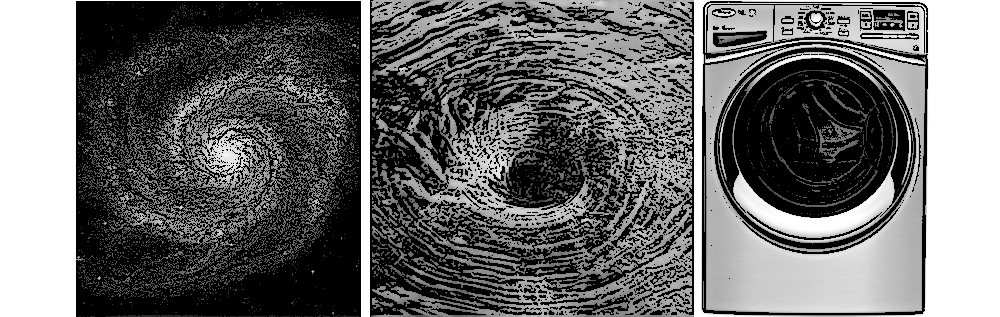
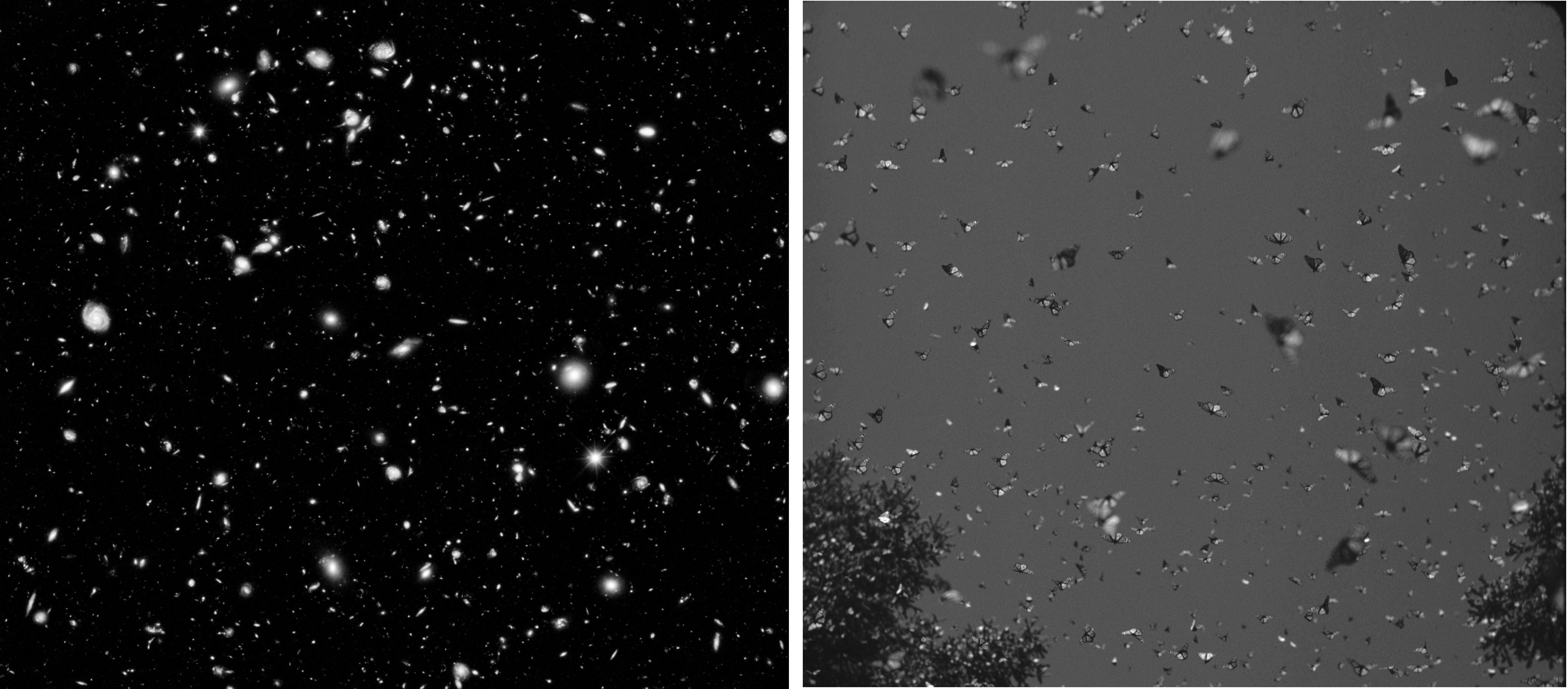
The interrelation between these supervening SLOTS means that they get manifested at each level of sophistication. These inter-dependencies also mean that any given star, planet or washing machine could have looked quite different with a slight change in its production process. Slight differences in their formation could have arisen due the notional “butterfly effect,” meaning that small differences across spacetime can have large effects at the largest scales. Given this extreme variability as to what becomes a fact, you must compare what you think ought to be with what you know is NOT by examining the processes of Ontological Realization. For example, compare the creative processes and aesthetic beauty represented in both the image below from the Hubble telescope composited over a nine-year period10 and the image of a kaleidoscope of butterflies next to it. Consider what a small change in certain natural processes might have rendered at these scales and whether you would change a thing:
Supervenience of Weather, Money and Consumers
You witness in everyday business how each of the supervening SLOTS feeds higher levels of living sophistication. Such aggregate, supervening complexity often takes on a life of its own through its own internal sophistication not easily explained by the lower level departments of an organization.
While you as a businessperson may attempt to forecast the viability of an organization to shareholders, no one in an organization could explain every thought or action taken by every employee that will reproduce that annual turnover. Analogously, while consumers perfectly understand the chemical interactions of H2O with the other primary elements in the atmosphere, they cannot predict the weather more than a few days in advance because they cannot model the interactions of every molecule in that system. The weather’s complexity supervenes on particle physics, giving it a secret life of its own, just like the money an organization produces.
For a more sophisticated example of supervenience, here is a fictional application of it in the future. The “transporter” on the television series Star Trek® operated by having people become atomically disassembled, transmitted and reconstructed in another place. These science fiction transporters beam people from one place to the next based on the premise that if people’s atoms get reconstructed properly at a new location, then people’s subjective consciousness and personal perspectives will follow along and supervene on their atoms in the new location as well.11
For a more realistic but sad perspective, people’s physical supervenience may also be seen in emergency rooms or nursing homes where you live. Who people are appears to change as a function of how their brains get damaged as their neurological processes stop or change from disease or injury.12 Any doctor will attest based on first-hand experience alone that people’s minds and thoughts undoubtedly supervene on their patients’ fundamental physical processes.
What Goes UPP Must Come Down
Thus, the notion of supervenience is generally one of upward causation from the less sophisticated systems with less Strategically Unique Degrees of Sophistication to higher SUDS. Generally SUDS are teleonomically purposive from one level upward to the next. However, at a certain point, consumers’ teleologically purposeful intentions push back down to similarly effect their aggregated, lower level systems that created their teleonomically purposeful intentions in the first place. This notion is one of common sense, but it is best to keep in mind that supervenience functions bi-directionally both upward and downward within consumers. Ultimately though, both directions of supervenience within consumers are bound by and get means tested against the Ontological Realization of who and why consumers are overall as living systems across spacetime.
Taking on a deeper, more speculative topic by way of further example, any question as to whether a soul supervenes on consumer’s physical processes (meaning a soul as something that exists beyond the OM and IB or may not be at all), or whether it continues when consumers’ brains no longer function, is only validated from consumer’s personal perspectives, since we cannot test whether a soul is in fact NOT. Whether a soul lives is a matter of intuitive speculation dealt with outside the IB.
The soul is a good example though of an intuitive truth-value that, given sufficient empirical support leaning toward at least two sigmas (/≥2σ) of common agreement among all fully-informed people, could make it a systemic or axiomatic truth-value. Interestingly, a Nielsen poll in 2014 shows that Americans lean right at a single sigma (/σ) on this issue with 68% of the general population agreeing to a soul’s living existence. However, I can only speculate what percentage of Americans may be considered fully informed on these issues.13
How Did People Come to Live? Living SLOTS Emerge
Thus, to intelligently discuss scientific explanations of how consumers’ true-north values supervened and advanced upward through the living SLOTS of the Ontological Teleology, you ought to limit a business ideology to the boundaries of shared universally, axiologically and processually systemic true-north values within the OM as bounded by the IB. To see clearly what is not intuitive within the Yin and Yang of a Lean business ideology, you ought to recognize the abstract notion that axiological and systemic true-north values, or reason itself, is defined in juxtaposition to what is Not Ontologically Teleological. Fortunately, science can help you in this endeavor when used within the metaphysics of Lean since science has continually advanced what is known about what consumers truly value and what is not. Science’s great virtue is that it provides evidence that may be empirically tested and perhaps falsified with a high degree of confidence – even if what is being hypothesized is not yet considered an axiomatic or systemic true-north value.
For example, discoveries in chemical systems show that, under certain conditions, non-living molecules such as proteins compete for resources. RNA teleonomically, purposively “competes” for chemical nucleotides to determine which replicates.14 Small differences in the configuration of these molecules may result in higher or lower reaction efficiency. Since chemical resources in these systems are finite, their variance leads more reactive processes that adapt, reproduce and energize to a greater extent than others. Less regenerative and adaptive chemical processes recede and eventually become NOT due to all the energy resources going to the more reactive processes.
Thus, within a scientismic explanation for life, the process of natural selection begins at the chemical level. In fact, this type of chemical system - unlike the more common chemical reactions you study in beginning chemistry – is more like a tidal wave in that it only achieves a form of stability when it continuously changes. In this conjectured explanation for life, the chemical system maintains its Ontological Realization as a consistent process within the OM upward along the curved arrow of spacetime until it somehow fails to adapt to its environment, reproduce itself through reproduction or find a source of energy. You might think of these constant chemical changes producing a perpetual reaction to be much like an organization’s revenue streams that only appear to be relatively stable, if (hopefully) increasing, while consistently turning over time.
To best understand consumers’ and employees’ systemic origins and to measure and predict what they will normatively and really buy, look further at recent scientismic explanations for how consumers came to live from inert matter. To do this, we will look through the conceptual lens of the IB at the Ontological Realization of these universal, processual and personally scientismic true-north values.
Leaning Toward ARE SLOTS - Becoming Meaningfully Viable
I developed an “ARE” acronym, standing for Adaptation, Regeneration, and Energization, to test the necessary and sufficient processes that living systems like consumers - and organizations as a group of real people organized as a fictional person - must do to remain minimally viable.15 Everything consumers and organizations do is directed toward energizing their adaptation so they may ultimately reproduce.16 Similarly, all product must ultimately optimize all aspects of these ARE processes that we lean toward from a metaphysical and scientismic perspective to help remain minimally viable. Organizations lean toward ARE processes by adapting to market conditions, regenerating product ideas, and gathering the contractual power to further distribute matter and energy as profits throughout society. “ARE” is the organic inception of true-north value and all meaning within the OM when bounded by the IB.
The “Lean toward ARE” acronym ought to reflect how all consumers came to live and what produces their Ontologically Teleological motivation to buy product. Living systems like all consumers adapt to further live through specific Supervening Levels of Ontological Teleological Sophistication. This scientismic perspective then allows you to determine how to best improve consumers’ lives within the OM and IB through a meaningful exchange for money by presuming that the Axiom of Causation applies within the bounds of the IB. If you presume this, you could then logically intuit, infer, possibly induce and then deductively market test the extent to which an organization’s product helps consumers adapt, reproduce, and energize throughout the OM.
Consider the ARE acronym in reverse order; its inverse meaning is, “ERA.” Thus, performing ARE processes determines how long consumers will persist through time. The capital letter R represents “Regeneration,” which stands central to this ARE concept for ontological continuity, which is the Rubicon of all consumers’ value streams. Regeneration is necessarily and sufficiently supported by Adaptation and Energization because a system regenerating like a water fountain must also teleonomically find energy to perpetually adapt and reproduce at the most basic levels within the OM to still be considered a water spout.
As will be elaborated further below in this Value Stream 4, the epic of evolution generally over-emphasizes reproduction by individual organisms. Reproductive concepts often distract people from seeing regeneration by living systems as the higher abstraction better describing the Ontologically Teleological goal that all organisms (and organizations) have over time. Regeneration is what living systems most fundamentally do to maintain their identity against the forces of entropy and competition.
Reproduction in and of itself is not the process ultimately being satisfied. Rather reproduction, along with adaptation and energization, is a subset of the larger, possibly circular goal of extending and optimizing systemic regeneration. For example, consumers reproduce themselves to universalize their personal value streams both during their lifetimes and through their offspring.17 Reproduction is simply one method of regenerating their Ontological Realization further in spacetime once they pass away.
Living organisms like consumers do not intrinsically or necessarily want to reproduce for self-organization, but rather to increase the volume, velocity and effectiveness of their Ontological Realization that their offspring physically extend. Regeneration is the central true-value stream to which the tributaries of adaptation and energization contribute. Consumers’ lean toward ARE processes to adapt and consume energy to maintain or increase their functional structure and identity to the edge of senescence. Lean, living organisms want to reproduce because, as far as is known, biological organisms cannot perpetually regenerate within themselves indefinitely.18 Reproduction is one mechanism that organically arises as a matter of practical necessity to extend and perpetuate consumers’ Ontological Realization through adaptation and regeneration. Organisms must reproduce themselves in order to extend their lives and existences through their offspring.
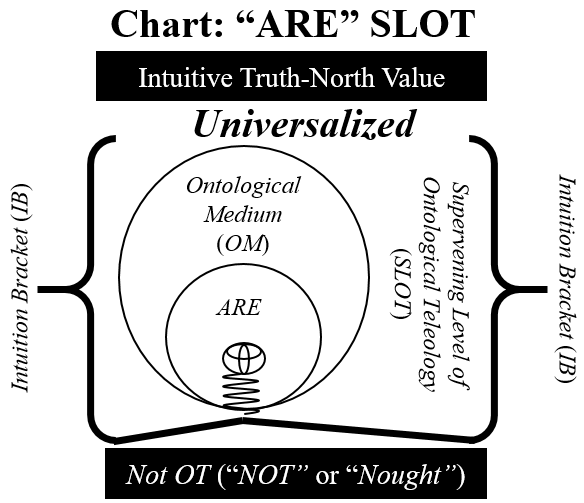
Here is a diagram showing the start of ARE processes at the beginning of the universal value stream, which I will go ahead and symbolically shorten to “/ARE.” This diagram abstracts the notion that somewhere within the universe, IB and OM, the U/People business model becomes viable. This chart indicates how certain Strategically Unique Degrees of Sophistication arise into their own /ARE Supervening Level of Ontological Teleological Sophistication:
You / People
To understand what it means to lean toward ARE processes within the philosophy of Lean, you must understand what life truly is. However, the term Life with a capital “L” is difficult to define scientifically because Life is an informal and vague description of the things we consider to be alive because they self-sustain living processes.19 Nonetheless, the term Life has some scientific meaning because scientists commonly refer to the concept of, “Living Systems.” Life for scientists describes the boundaries between scientific fields such as chemistry, biochemistry and biology that ultimately produced consumers. No definition of Life could fully capture its meaning, especially for consumers as conscious beings, but you might find a lean, flexible statement of the qualities of living systems to make money meaningfully by better serving why, what, and how consumers are alive.
One General Definition of Life Proposed by a NASA Working Group
If you research a general definition of Life, you will probably find one created in the 1990s by NASA’s Exobiology Discipline Working Group (a.k.a. the, “Working Group”).20 The molecular biologist Addy Pross referenced this definition of Life in his book, “What is Life? How Chemistry becomes Biology”21 that extended Erwin Schrödinger’s famous 1944 book, “What is Life?”22 The definition of life that NASA developed within the Working Group was, “A self-sustaining chemical system capable of undergoing Darwinian evolution.” This definition is fairly compact and self-explanatory, but I think you would find it more helpful toward better understanding true-north value in the philosophy of Lean to hear from Dr. Gerald Joyce,23 who was a member of that NASA Working Group. Dr. Joyce described the more complex definition of “Darwinian evolution” as follows:
‘Darwinian evolution’ has an associated property list: you can’t have Darwinian evolution without self-replication or reproduction. You can’t have it without mutability, heritability, and variation of form and function. And metabolism is in there too. You can’t have Darwinian evolution without, at some level, a flux of higher-energy starting materials to lower-energy products that drive the processes of replication and whatever is necessary to support replication. And then there are the specialty properties like locomotion, irritability, ecological properties such as compartmentalization, and so on; those are all adaptations. And then things like photosynthesis, chemosynthesis, energy storage, and so on; those are just strategies of adaptation. All of that is subsumed by the ‘Darwinian evolution’ part.
Qualities of Living Qualities
NASA’s Working Group definition is a great start, but by looking at the concept of life in abstractly metaphysical rather than Darwinian chemical terms as you have been doing in much of this Value Stream 4, you could perhaps better philosophically describe Life’s qualities however consumers and organizations exhibit them. If you sufficiently broaden the qualitative description of Life, you might better analogize and relate its necessary and sufficient conditions to the para-sciences of business and economics. You might then perpetually improve consumers’ standards of living through time in the meaningful exchange for more money. If you include these broad, qualitative descriptors of living systems within the business ideology of a Lean HQ, here are a few criteria that I recommend you follow when doing so:
- Science recognizes that “Life” is more of a processually systemic true-north value than a thing per the Working Group’s definition, so any description of the qualities of Life ought to be processually systemic;
- A description of the qualities of living systems ought to be as efficient as possible under the guiding principle of Occam’s Razor;24
- If an organization lists different qualities of Life, they ought to be:
- Necessary, such that if one quality was removed, the process of Life would never obtain or would eventually cease; and
- Sufficient, such that no further process would be necessary to sustain an overall living system;
- An organization ought to want a statement of Life’s qualities abstracted to the highest true-north value possible to cover all physical and metaphysical contexts within the universe and be amenable to analogizing to more specific business fields; and lastly
- An organization ought to want a statement of qualities that is easy to apply and remember in an everyday context for all, especially if you analogize from the broad qualities of consumers as living systems and apply them across all organizational functions.
Lean Toward ARE Processes
The /ARE acronym provides the three necessary and sufficient qualities that consumers and organizations must possess to perpetually live. It provides a broad church for all forms of scientismic conjecture, hypothesis and theory about what life is however it may appear, not just when it is organic. /ARE is thus the philosophical abstraction and meta-modern synthesis of evolutionary theory. /ARE measures scientismic conjectures, hypotheses and theories about evolution based on the degree they each explain the Ontological Realization of living systems through Lean adaptation, regeneration and energization. You can lean toward ARE to analyze life as follows:
“A”
* Adaptive (Anticipatory/Aligning):25 Living systems like consumers must systemically adapt to changing environmental factors to maintain and potentially extend their energization and regenerative processes, such as through natural selection. In addition to natural selection and other biological adaptation theories,26 adaptation also applies to consumers’ behavior within their lives in the common sense that consumers decide best how to extend and optimize their lives as living systems. Consumers adapt and align as living systems by leaning their Ontological Realization as that which best energizes and reproduces who they are in response to the information they experience within their demographic and environmental circumstances. Through these feedback mechanisms, consumers adapt according to how they are in fact Ontologically Realized, such as when deciding whether a product provided its anticipated benefits after purchasing and consuming it.27
“R”
* Regenerative (Reproductive/Repairing):28 By definition, consumers as living systems adapt and consume energy29 as a physical axiom to reproduce their living processes within themselves or through their offspring, which generally involves some form of reproduction according to natural selection. To do so, consumers must adapt their energy transforming processes in order to continue to reproduce. The most effective living systems increase the size and/or sophistication of their energy transforming processes by increasing the volume, velocity and/or effectiveness of adaptation through time in order to reproduce even more. Per natural fitness, regeneration stands central to living processes but necessarily requires adaptation and energization within the OM; and
“E”
* Energetic (Entropic/Endergonic):30 To support regeneration,31 consumers’ lives must ultimately increase universal thermodynamic equilibrium through transformational, material processes.32 Since energy is an abstract collective concept,33 the vital question34 for consumers as living systems is how they combine or match energy processes,35 as exemplified literally by the pathway of sun to photosynthesis to food, and figuratively in their motivation to purchase product.36 Ultimately consumers’ must synthesize metabolic energy to better live, exist and shop in ways they believe are best. But for this qualitative definition of life, consumers like all life must constantly seek potential energy in order to further their own adaptive and regenerative activities. All life must do this either through direct consumption, or by matching external energy within their own internalized energy conversion pathways, whether unintentionally (i.e. teleonomically) such as how plant life grows toward energy, or purposefully (i.e. teleologically) like how consumers shop at grocery stores.37
This tripartite, scientific conception of ARE - adaptation, regeneration, and energization - orients itself with the Buddhist concept of pratītyasamutpāda introduced in the last Value Stream. See how Dalai Lama XIV defines “pratītyasamutpāda” as a reliance upon three conditions, which you may apply analogously to the three key elements of the ARE acronym within the philosophy of Lean:
In Sanskrit the word for dependent-arising is pratītyasamutpāda. The word pratitya has three different meanings–meeting, relying, and depending–but all three, in terms of their basic import, mean dependence. Samutpada means arising. Hence, the meaning of pratītyasamutpāda is that which arises in dependence upon conditions, in reliance upon conditions, through the force of conditions.38
According to Buddhist monk Thich Nhat Hanh, this Buddhist aphorism provides a physical analogy for this pratītyasamutpāda concept that, “Three cut reeds can stand only by leaning on one another. If you take one away, the other two will fall.”39 Likewise, the Christian concept of the holy trinity dictates that the Christian God is dependent on the three identities as father, son and holy-spirit. Similarly, life is necessarily and sufficiently dependent on all three distinct but interrelated ARE processes in a scientismic, meta-physical and personal sense.
How Far ARE You Leaning Toward Consumers?
I am sure you recognize the three principal ARE qualities of living systems in consumers, by how consumers adapt, reproduce and energize. The duration of any living system’s era can be measured by the time it successfully leans toward ARE processes. These ARE processes are lean (or “/”) because they fundamentally, necessarily and sufficiently define who, why, what and how all consumers are within the IB. Consumers physically energize by eating well, but they also energize metaphorically. For example, consumers figuratively energize themselves through education with information and by developing new relationships in person and online. Thus going forward, energizing means consumers doing so in their lives both literally and figuratively.
Consumers likewise reproduce who they are biologically, personally, financially and socially. They reproduce biologically during their lifetimes against old age and through their descendants by consuming nutritious energy, personally through their psychological maturity, financially with their income used to pay for product, and socially by sustaining relationships. Likewise, consumers adapt to the changing circumstances of their lives directly or indirectly through evolution. As long as consumers, their descendants and their societies successfully lean toward ARE processes to their limits, consumers will all continue upward along the spiraling arrow of time as consistent living systems as long as physically possible, thereby increasing their total lifetime value as customers to organizations.
How Lean ARE an Organization’s Processes?
Given the breadth of this description of consumers as living systems for a Lean business ideology, you may now further apply ARE living processes analogously to any organization. An organization must energize through commodities and human capital by converting those resources into adaptive and regenerative business purposes. An organization must reproduce new product and profits, and it must adapt to changing circumstances by conducting regular Strengths and Weaknesses, Opportunities and Threats (i.e. “SW/OT”) analyses within its competitive context.
Given that an organization is a group of people, an organization must likewise convert its energizing inputs into greater structure through the product it reproduces. The product must enhance the structure of life because in the long run, perfectly functional societies regulate away organizations that reproduce money with no normative value, and thus no truly meaningful, true-north value. While keeping in mind the significant problems of money’s reflection of the true-north value stream as described in Value Stream 2: Money & Economics, an organization can approximately measure the meaning of the money it produces through the energizing earnings it retains. Since making money meaningfully means extending and optimizing people’s lives and existences for adaptation and regeneration overall, an organization and its product becomes an energetic, physical part of consumers’ ARE processes, supporting their lives from below and within.
Apple of My “i”
You can make more money meaningfully by leaning an organization and its technology by extension toward ARE processes. For example, you can see Apple, Inc. lean toward ARE processes at the micro-economic level with the iPhone product and its related apps, since “simplicity is the ultimate sophistication.”40 Apple, Inc.’s product exemplifies how apps lean toward ARE processes to determine the era of a specific organization by similarly leaning toward Apple’s customers:41
Adaptation: Since adaptation relates to how an organization successfully recharges its energization and regenerating processes to better exist in its business environment, you must ask questions such as how is Apple adapting to its changing competitive landscape? What is Apple developing to take advantage of opportunities available to it in the current business environment that might not have existed last year or may in the future? If you review Apple’s risk factors described in its latest annual report, how is Apple adapting to minimize those threats? Given the perpetual introduction of substitutes for its CORE product, what is Apple developing to meet those threats or avoid them altogether?
Regeneration: Since regeneration relates to an organization’s outputs, you must ask questions such as how Apple reproduces highly demanded product through its energization and adaptation? How is Apple structuring its sales & marketing, finance & accounting, people services and operations to ensure it reproduces and grows revenues and profits in the short, medium and long-term to pay operating expenses, debt and dividends? How is it regenerating and growing equity gains to encourage further demand for its stock and ensure the perpetuation of its business? How is it regenerating new lines of product to delight consumers?
Energization: Energization relates to Apple’s figurative or literal inputs. For example, energization requires Apple to manage its human talent acquisition system to ensure it is attracting the most valuable employees it can. Energization requires asking how Apple makes sure that its vendors provide it with the best quality inputs for its products?42 What sort of competitive and marketing intelligence is Apple gathering? What is Apple’s corporate and technological acquisition strategy? What sources of financing is Apple seeking in debt and equity besides the earnings it retains? How is Apple ensuring the health, engagement, and creativity of its workforce to optimize the energy of its human capital? All these inputs energize Apple and are necessary for it to successfully adapt, reproduce and “charge” the best prices for its meaningful product.
Consumers’ Pocket Universe
If living systems’ eras lean on ARE processes, then Apple’s iPhone and its apps serve the discrete needs of Apple’s customers’ living ARE processes by leaning them to a higher degree.43 The information produced by Apple’s product inter-subjectively maps reality, including other people’s perceptions, to other people’s perceived reality in a converged consensus to better lean them toward ARE processes. Thus, the information provided to people by apps metaphorically energizes people’s adaptive and regenerative processes.
Adapting through Apps: Energizing social media and news feeds provide the information necessary for consumers to adapt to the changing circumstances of their lives. Weather apps allow people to adapt to their perpetually changing physical environment. Calendar apps allow Apple’s customers to adapt their schedules as necessary. Customers use fashion news to adapt their wardrobes to the latest clothing trends, or sports news to adapt their fantasy league teams each week.
Regenerating through Apps: In the most literal sense, dating apps allow customers to meet partners for continued vitality and offspring. Customers use health apps and wearable technology in order to optimally reproduce their well-being within their own lifetimes to the limit of their eras. Social media apps allow customers to create multiple, digital personas or avatars to virtually reproduce themselves online. Customers communicate with apps such as those that check into a physical location in order to reproduce friendships. Business apps allow consumers to reproduce their income that in-turn gets spent on product to lean their businesses’ ARE processes further and further upward.
Energizing through Apps: Apple’s customers must energize through new app information as necessary to fuel adaptation and regeneration, whether through algorithmic search suggestions, social media likes or fitness trackers. Customers use social media apps to energize their personal and professional networks. Customers energize through music recommendations, like Siri recommending Johann Sebastian Bach based on feedback they have given. Customers use restaurant, delivery and grocery apps to vitalize themselves with new food. Customers use fitness apps and trackers to energetically stimulate their activity.
All these uses for Apple’s Apps demonstrate the real-world application of the ARE acronym to all life and business. Let’s now look at evidence supporting this tripartite conception of all living systems starting with energization, which funds all adaptation and regeneration.
The Axial Age – Energizing Money and Intuition
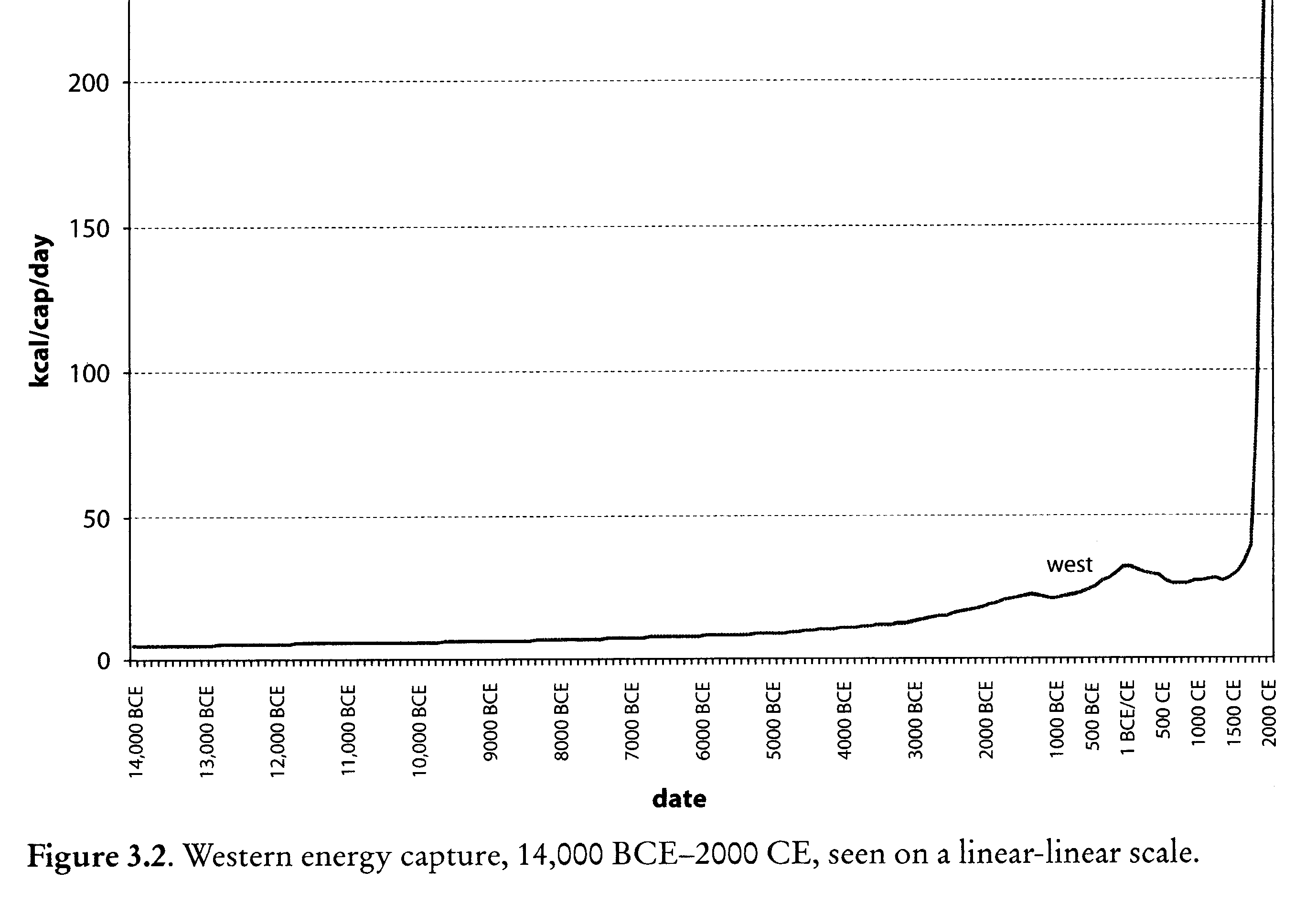
The physical, metaphorical, and metaphysical concept of energization as a fundamentally Lean component of life is evident in the book, “The Measure of Civilization,” written by Stanford historian Ian Morris.44 Morris provides significant data showing a statistical correlation between the development of money, vitality, and energy capture by people during a period of history Karl Jaspers termed the “Axial Age.” Karl Jaspers if you recall is the same philosopher who coined the term “Σxistenz” discussed in Value Stream 3.45
In “Measure,” Morris assesses the development of people by their, “…abilities to get things done in this world,” which Leanism equates with doing things that lean toward adaptation, regeneration and energization. Morris remarks that one of consumers’ most remarkable attributes is their ability to apply energy for non-food purposes as a measure of usefulness, which the philosophy of Lean describes as increasing adaptive activities in order to reproduce. Morris noted that sociologist Leslie White first championed energy capture as the main driver and measure of social development of all people.46 Morris further concludes in his book “Measure” that, “Energy capture must be the foundation for any usable measure of social development,”47 which social development we know precisely aligns with adaptation and regeneration.
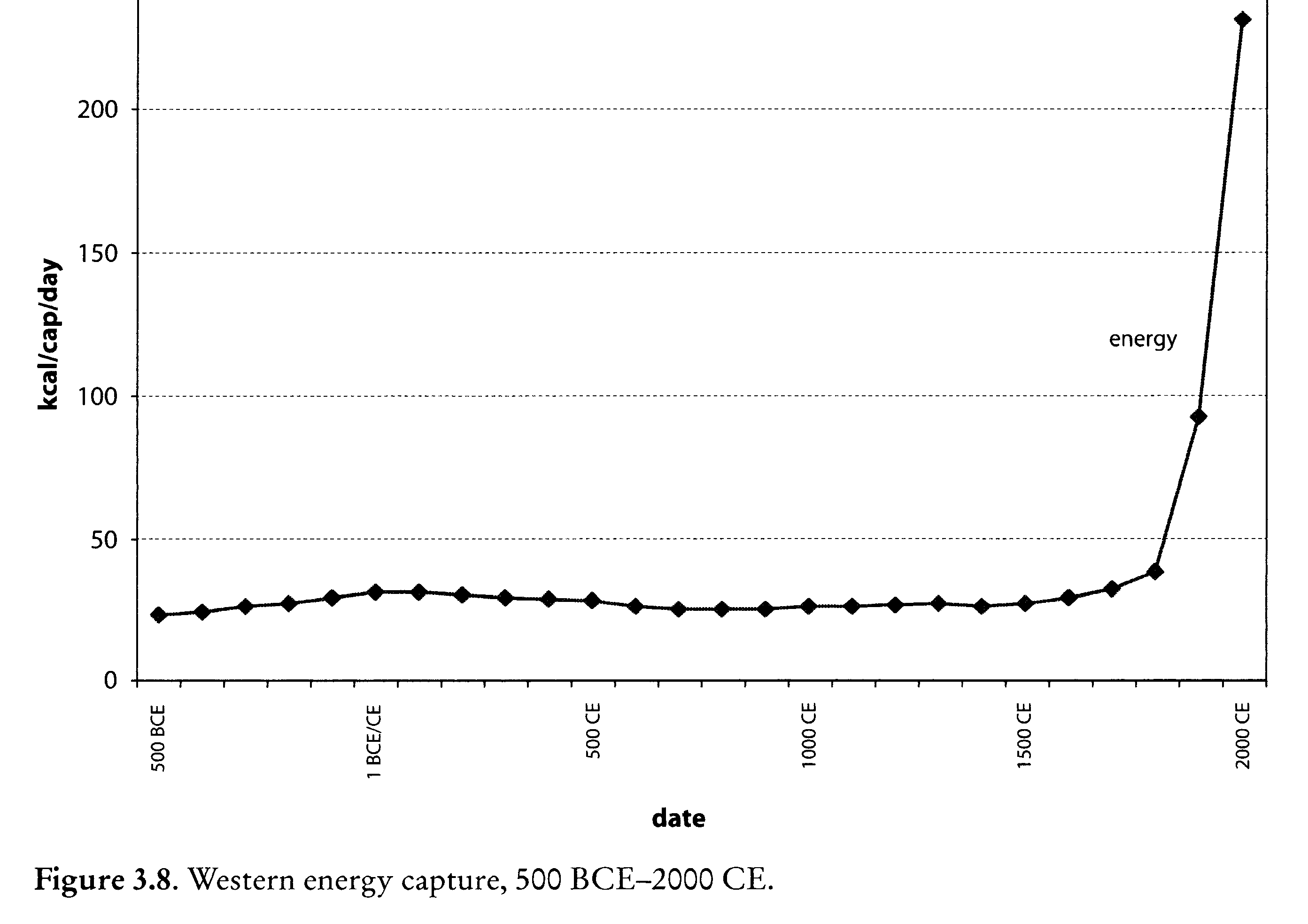
Morris supported this argument with extensive data. The following charts show Morris’ estimated upward curve in the change of energy capture that occurred by people living in the Western world from 14,000 years before the Common Era to the turn of this millennium:48
More recently, you can see a chart from 500 years before the Common Era to the turn of this millennium here with similar effect. You can see an upward, exponential curve in energy consumption as meaningful society advanced:49
Another scholar, Jared Diamond, author of “Guns, Germs & Steel,” supported Morris’ claims by noting that people choose the means of production that yields the highest energizing and nutritional returns.50 More recently, a group of scholars in the journal, “BioScience,” conducted a quantitative study confirming the unsurprisingly powerful correlation between economic growth and energy consumption.51
Spaghetti Suds ARE Processes
Since energization, along with adaptation and regeneration, represents one of the most fundamental components of living systems and consumption, the ARE processes are like the Flying Spaghetti Monster® described in Value Stream 3 brought down to Earth, sitting in a pot of boiling water. Eventually, the combination of water and pasta plus heat creates persistent suds that float on the surface of the water to reach ever greater heights. Consider this process of boiling pasta as the most basic Self-Organizing OT developing a Strategically Unique Degree of Sophistication and emerging into a unique Supervening Level of OT Sophistication.
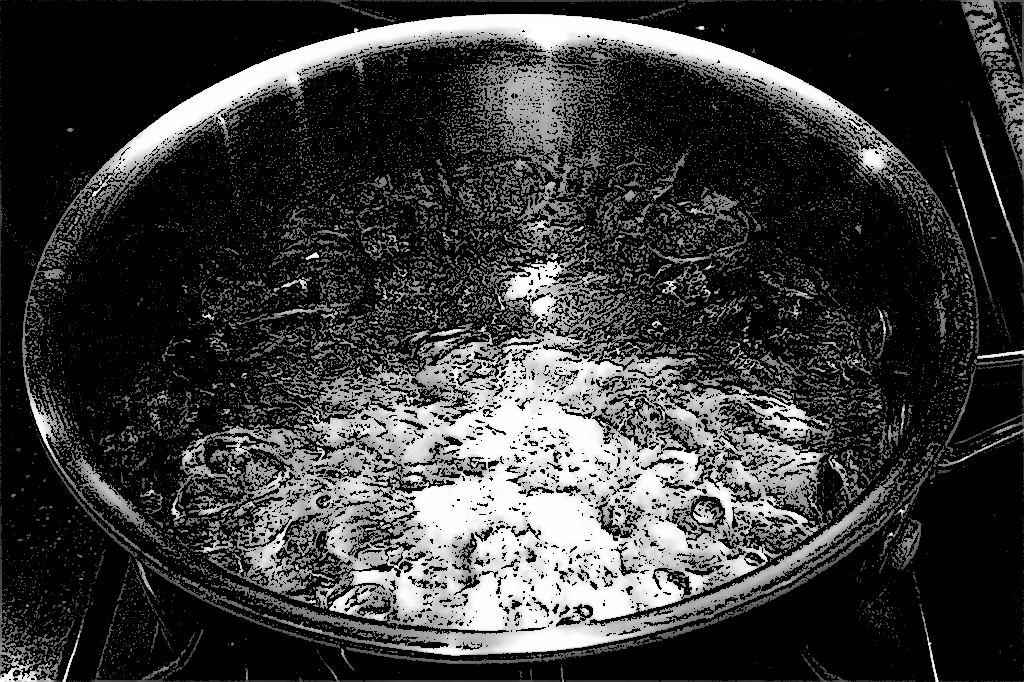
The chemically axiomatic and processual true-north values of the water and pasta form one SLOT, with the suds from the spaghetti and highly energetic, gaseous water having Strategically Unique Degrees of Sophistication in a higher, supervening SLOT. The suds energize from the interaction of the boiling water and spaghetti, with the bubbles continuously regenerating from that evolving system that consumers eventually strain, cool down and eat to live in the highest living SLOT within the known OM.52
The FSM is Not Dead53
This may be a shocking conclusion, but according to our definition of life from ARE processes, spaghetti suds are “teleonomically” alive. After the suds emerged from within the OM and they formed from the energizing water regenerating them, these suds to some small extent teleonomically adapt to perpetuate themselves by changing shape and size as necessary to the extent they can. These suds unintentionally, only by way of their physical and chemical structure, seek new sources of energy to reproduce with the single Strategically Unique Degree of Sophistication they hold onto. Even though the simple SLOT that these suds occupy is merely a chemical process, it is a living system because the suds to a small degree adapt and reproduce while they have a source of energy. The SUDS systemically, yet unintentionally, seek new sources of energy to perpetuate themselves ontologically in spacetime. And, from another perspective, the rising spaghetti suds are actually an extension of consumers’ own lives because while the suds supervene on spontaneous, teleonomic self-organization within the OM from chemical processes, consumers teleologically created these suds to energize themselves to become more of who they are and want to be as human beings.
Emergence of SUDS through SOOT into SLOTS
Beyond pasta suds, another living ARE process is that of a wave in the ocean. Once a wave begins, it appears to reproduce a single, stable column of water moving across space and time in a dynamic equilibrium. However, a wave is like the regenerating cells within consumers’ bodies, and an organization’s annual revenues, by constantly turning over but generally maintaining a consistent identity. The wave originates and gets Ontologically Realized while traveling through the Ontological Medium by constantly becoming composed of new water molecules and yet remaining defined as a consistent, yet greater, wave from a person’s personal perspective.54 Like suds arising in a pot, a wave teleonomically (i.e. unintentionally) reproduces and optimizes itself as a wave simply by increasing the upward pressure on its column of water. This dynamic is much like shareholders demanding greater share prices and dividends so they may consistently and increasingly identify themselves as awash in money - it’s their way of maintaining who they believe they are and becoming even wealthier people than they ever imagined themselves being.
by including quotes about happiness from esteemed individuals repeated here:
Thousands of candles can be lighted from a single candle, and the life of the candle will not be shortened. Happiness never decreases by being shared.
– BuddhaHappiness is the meaning and the purpose of life, the whole aim and end of human existence.
– AristotleHappiness is not in the mere possession of money; it lies in the joy of achievement, in the thrill of creative effort.
– Franklin F. RooseveltHappiness is when what you think, what you say, and what you do are in harmony.
– Mahatma GandhiThe primary cause of unhappiness [and happiness] is never the situation but your thoughts about it.
– Eckhart TolleThe greater part of our happiness or misery depends on our dispositions, and not on our circumstances. We carry the seeds of the one or the other about with us in our minds wherever we go.
– Martha Washington55
The Coke-Cola Company then says on its website:
Like Coca-Cola, these great men and women each asked themselves the same core question – what is happiness? While each of their own definitions differ, each touches on a similar cord that we must all come to realize. The quest for true happiness is not really a quest at all, but a decision and a choice. So don’t wait another moment. Open an ice cold Coca-Cola and choose happiness!
- Coca-Cola Company Open Happiness Ad Campaign56
According to the Coca-Cola Company, consumers can consciously choose to downwardly direct their body to drink Coke, which consumption then upwardly directs their physiological and psychological responses to make them feel a certain way in-turn, just like any other drug. According to the Coca-Cola Company, by its customers consuming its product of ice cold Coke, it determines what happiness its customers experience in their lives and existences. So, consumers’ downwardly conscious decision to consume a Coke will upwardly and teleonomically bubble up happiness within them like SUDS in a U-shaped utility curve. That is the real thing the Coca-Cola Company D/Ontologically produces. This U-shaped utility function works upwardly along with the psychological relation that Coca-Cola Company wants consumers to have between its brand and whatever else really causes them happiness by extending and optimizing their lives and existences.
Setting aside Coca-Cola Company’s philosophical analysis of happiness for a moment, in describing Utilitarianism, Jeremy Bentham phrased its primary question as, “What use is it?” The U/People business model translates that question to mean the extent a product like Coke universally leans toward ARE processes, toward this abstract ethic of Universalization by creating opportunities or removing threats to consumers’ lives and existences within the OM, beyond the IB, and toward what ought to be BOT.
Since notions of good, better, and best, describe what product leans consumers up along the Ought better than any other product they could buy, Utilitarian Universalization can be restated as, “[t]he view that the morally right action is the action that optimally leans consumers in the highest SLOT toward ARE processes overall.” So optimizing ARE processes toward universalizing people overall as the most sophisticated SLOT known, helps you consider what is the most virtuous product an organization ought to reproduce. Consider this notion in the context of what Apple Inc. said is its mission statement during its 2013 developers’ conference:
This is it.
This is what matters.
The Experience of a Product.
How it makes someone feel?
Will it make life better?
Does it deserve to exist?
We spend a lot of time on a few great things, until every idea we touch, enhances each life it touches. You may rarely look at it, but you will always feel it. This is our signature, and it means everything.
- Apple Inc.’s Mission Statement Video at its 2013 World Wide Developers’ Conference in Cupertino, California
Apple’s mission statement aligns with Utilitarian Universalization. Contemporary philosophers generally define Utilitarianism not with happiness as its measure of value, but as a form of Consequentialism through universalizing a person’s ego so that it enhances each life it touches. Like R.M. Hare, modern philosophers now write this type of Utilitarianism as shorthand, “U.” They view “U.” as starting from consumers’ self-conceptions, moving outward to their kin and demographic categories such as family, community, nation, environment, politics, culture and peer-group, to eventually touch the entire world.
Classic Utilitarianism on the other hand evidences Apple’s notion of emotional enactment when it says, “…but you will always feel it,” by using emotion such as happiness as its value system. Classic Utilitarianism holds that you ought to maximize that emotion within consumers to the extent it orients them within the OM toward their true-north and leans them along the Ought.57 Emotions, like happiness, represent a sensory concept or an emergent class aggregating the extent consumers optimize themselves along the Ought.58 Consumers’ emotions thus ultimately get back-stopped and means-tested against truly normative UP values rather than more subjective Personal values.
As demonstrated by substantial empirical evidence and common sense leaning toward more than five sigmas of agreement, emotion is grounded in psychology and is conceptually related to physics and chemistry even if fairly removed from those physical forces due to the sheer complexity of higher mental SLOTS. Emotion thus represents an aggregate of consumers’ sensory phenomena reflecting what they experience for better or worse through the existential factors of processes that U/ARE. This dynamic shows itself in the following dialogue between a Trainer and New Hire at the Walt Disney Company as described in “Built to Last”:
TRAINER: What business are we in? Everybody knows McDonald’s makes hamburgers. What does Disney make?
NEW HIRE: It makes people happy.
TRAINER: Yes, exactly! It makes people happy. It doesn’t matter who they are, what language they speak, what they do, where they come from, what color they are, or anything else. We’re here to make ‘em happy.59
Like Universal Studios and Coca-Cola Company, Disney causes happiness, but how does Disney make itself the happiest place on Earth? Because it universally increases the degree of ARE processes upward into its guests’ personal perspectives. Disney enhances its guests’ remembered and experienced selves from childhood through adulthood.60 Disney’s fantasy land removes constraints of the OT that consumers otherwise experience in their day-to-day lives and thrusts its guests forward like an amusement park ride, toward a pragmatic, universalized perfection, into what they believe is BOT, even if only for a few days’ time during their vacations, which is highly valuable all the same.
As Collins and Porras said in “Built to Last”:61
A visionary company continually pursues but never fully achieves or completes its purpose— like chasing the earth’s horizon or pursuing a guiding star. Walt Disney captured the enduring, never-completed nature of purpose when he commented: ‘Disneyland will never be completed, as long as there is imagination left in the world.”
The happiness Disney reproduces over generations of its guests indicates changes in ARE processes from its guests’ personal perspectives. Disney experiences provide consumers’ remembering selves with the optimism to adapt, reproduce and energize to create a better world when they return to school or work. Disney increases its guests’ perceived juxtaposition with what they know is Nought to become more of what they believe is Bought by stimulating them and relating them to Disney characters and a magical kingdom. Once they leave Disney, consumers then aspire to reproduce that magical feeling within what the OM really is in their ordinary lives to the extent they can by buying Disney media and merchandise to make themselves happy once more, and hopefully forever after. As the journalist and Holocaust survivor Elie Wiesel said in his article, “A Visit to the Wonderful Disneyland”:
I don’t know if a Garden of Eden awaits adults in the hereafter. I do know, though, that there is a Garden of Eden for children here in this life. I know because I myself visited this paradise. I have just returned from there, just passed through its gates, just left the magical kingdom known as Disneyland. And as I bid that kingdom farewell, I understood for the first time the true meaning of the French saying ‘to leave is to die a little’ [partir, c’est mourir un peu]62
Thus, the BOT/NOT existential dichotomy repeats itself up through the SLOTS to become an emotional dichotomy for Elie Wiesel and all other consumers visiting Disney as well. For example, the happiness of love is a natural component and extension of consumers’ relation to other people. Loneliness is its inverse. Fear on the other hand indicates changes in consumers’ sense of physical or psychological integrity and safety. Happiness results from the changes in the factors and degrees in which consumers live and exist.63
Thus, happiness results from changes in consumers’ real or perceived ability to universally lean toward ARE processes along the Ought. Just like how philosophy is the middleware between science and intuition, consumers’ emotions are the middleware between the Ought and who they personally are. Thus, by focusing on the perpetual process of extending and optimizing consumers’ universalization of ARE processes and personal true-north values, and thus on who, why, what and how they are, you will continue make them very happy, just like Walt Disney did.
Emotions thus function bi-directionally from physical cognition to experienced emotion and vice versa because of a concept called “enactivism” described further below. Without emotion, consumers cannot otherwise anticipate, recognize and measure changes in ARE processes from their personal perspectives.65 Positive changes in consumers’ Ought factors (“OFs”) that create positive, systemic improvements for them generally result in positive changes in their emotions, such as their becoming happier by getting over an illness. Positive emotions correlate with improvements in the factors of consumers’ Ontological Teleology when you solve their deepest existential problems. Solving problems with Ought Factors should be the ethical and commercial end-goal of all organizations.
Customers’ Upward, Downward, Inward, Outward Demand - Supervenience and Enactivism
Like other great leaders, Walt Disney intuitively understood what within the OM made customers happy. The latest psychological theory today calls this dynamic, “Embodied Cognition,” which describes how consumers’ physical responses under normal conditions change their thoughts, behaviors and emotions. Embodied cognitive studies have demonstrated that consumers’ opinions of product can change depending on whether they are shaking their heads up-and-down or side-to-side in a “yes” or “no” gesture.66 Just think about the effects of subliminal messages at Disney, and the way its marketing department frames the tangible benefits of its product to consumers so they feel emotionally touched. This concept of embodied cognition should come naturally if considered from the perspective of physical persuasion on what and how consumers think.
Just as consumers’ act of biologically leaning toward ARE processes upwardly developed their personal perspectives from one SLOT to the next, the decisions consumers make also downwardly effect their biological processes as well and vice versa. A symmetric dependency exists between the environmental cause of who consumers are and what consumers really think of a product. The reason for this dynamic is supervenience as we discussed earlier, and again, this process overall is called “Enactivism.”
Through the related concepts of enactivism and embodied cognition, consumers’ interaction with the OM, when moving toward what they believe is BOT and away from what they know is NOT, creates emotional meaning for them. For example, a child gives meaning to an inanimate toy when that toy becomes the child’s new friend and enacts a feeling of comfort in the child by removing threats from what the child most fears. The toy also enactivates the child’s imagination, thereby providing the child with an opportunity to visit parallel universes with the toy inside the child’s mind’s “I.”67 Thus, the child enacts meaning with the toy through the interaction of the toy’s objective, Ontological Realization coupled with the child’s emotional relation to it.68
As consumers realize as adults, toys mean far more within the limited sphere of who children consider themselves to be than when their worldview expands as they get older. This makes meaning a pliable, contextual truth-value within the extreme boundaries of the OM and IB. For example, adult customers fully recognize the Lean manufacturing processes that went into making the toy they so loved, which changes their Personal prospective on it. Thus, consumers’ knowledge of the construction and commercialization of the toy changes the meaning they assign to the toy as adults. Ultimately though, all this emotional meaning at whatever stage of life gets back-stopped and means-tested by what they believe ought to be Bought and know is Nought.
Just as a child enacts a meaning for the toy, psychologist Antonio Damasio demonstrated that adult consumers’ environments and emotions inextricably influence what they reason. A well cited experiment69 showed how consumers change their answers to questions simply by holding a pencil in their mouths, forcing them to smile whether or not they actually felt happy. A forced smile artificially and subconsciously modifies how consumers reason because of supervenience, forming another boundary to their rationality and Utilitarianism.70
For another example of bounded rationality within who consumers really are, mood-modifying drugs have been shown to reduce mental performance, which ought not be a surprise.71 The cause for this among other factors is that emotions are inextricably linked to how consumers reason due to their need to heuristically classify something with an Ought quality such as good or bad, or happy or sad. If consumers can’t feel well whether an answer is good or bad, they are less able to reason well as well. For an example of the effect of naturally produced chemicals, Cambridge researchers recently found a relationship between the level of financial traders’ stress-related hormones and their assessment of risk, which obviously affects their objective trading performance within the market-place.72 On the other hand, some researchers have found that a certain level of stress, called “Eustress,” enhances cognition.73 The connection between emotional truth-value and logical reason is explicit in guiding consumers to ethical OPPs and away from threats to becoming NOT.
Further consider the relation between emotion and facts within the well regarded implicit association test.74 The implicit association test measures the strength of consumers’ subconscious associations between their mental concepts like “product” and their Ought-oriented qualitative assessments like “bad,” “good” and “better,” or sentiments like “joy” and “terrible.”
In one implicit association test for fashion clothing, the color red was shown on a screen, requiring the test taker to then pair it with one of the qualitative words, “bad,” “good,” “joy” or “terrible” shown in the upper right-hand corner of the screen. Test takers were then shown a picture in the middle of the screen, such as the latest clothing fashions, in colors such as pink or red. The computer then asked the test takers to click on a qualitative emotion or sentiment in the other corner of the screen that they felt matched the picture in the middle of the screen and the word in the other corner. The test then cross-matches the qualities displayed in the corners of the screen with the picture shown in the middle. How quickly and accurately consumers associate the qualitative emotions or sentiments for each category, color or class of product depicted in the middle of the screen tests consumers’ sentiments and bias toward the product depicted in the middle by interrupting the mental filters consumers have in place.
How consumers consciously or unconsciously think about the value of what the word or picture represents to their lives and existences emerges from what they phenomenologically feel about that word or picture. Consumers base this estimate on whether they consider the product as extending and optimizing who and why they think they are. Consumers unconsciously best fit their emotions to the product presented to them, such as whether they considered a product in an advertisement to be inferior or superior to competitors’ product that might extend and/or optimize them as well, better or best.
All of these studies support the notion that, rightly or wrongly, what consumers think closely relates to what they feel, similar to how consumers reason coheres to logic. By transitive logic (modus ponens), consumers emote to better lean themselves with the Ought, to passionately thrust themselves forward toward their ontological perpetuation. Happiness is synonymous with advancing Ought Factors, while sadness is their negation. Emotional influences on cognition, and vice-versa, developed so consumers could more universally Lean toward ARE processes. Just as Prospect Theory showed how consumers discount gains in favor of avoiding losses, emotions guide consumers in knowing when such movement up or down the Ontological Teleology may occur, and when to pursue or avoid it as an OPP or a Threat.
Hierarchy of Needs - Maslow Inc.
If emotions roughly indicate what ethically optimizes consumers’ lives and existences along the upward curve of the Ought, then consumers’ motivational psychology ought to Lean that way as well. Well-known models of human needs developed by motivational psychologists reflect consumers’ normatively processual and really personal true-north values. All these need theorists describe what motivates consumers outside of any concept of an Ontological Teleology, or any other philosophical concept described by this book, other than generally, Pragmatic Idealism.75 They all speak to employees’ and consumers’ internally intrinsic and externally extrinsic motivations. By applying the Ought to motivational psychology, an organization can ethically align its ARE processes with the Ought to motivate employees to perform good work and consumers to buy its good product. Motivational psychology can extend and optimize the efforts of people that produce and deliver product in a Lean House of Quality, and leans consumers toward making a purchase.
One of the best known of all need theorists is Abraham Maslow who described a hierarchy of needs within his generally dynamic theory. Like our review of competing philosophical theories about forms of human will, I would like to review briefly Maslow’s work along with some of the other motivational psychologists who have classified what an organization ought to do within the U/People business model for some intellectual context. I will briefly review a synopsis of some of these need hierarchies to factor them into the true-north value that a product may reproduce within consumers.
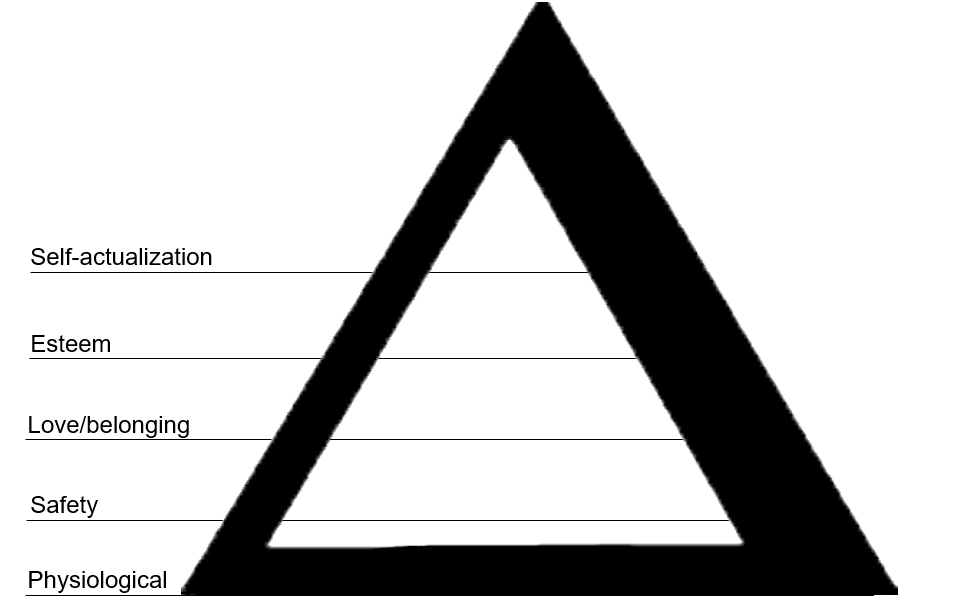
To begin, you can see below the well-known pyramid summarizing Maslow’s concept of human needs arising, much like an ID Kata or Charts of SUDS, toward new, supervening levels of human motivation:
Self-Actualizing Peak Experiences, Flow and Getting Bought
In his book titled, “Hierarchy of Needs: Toward a Psychology of Being,” Maslow begins his hierarchy with the need for self-actualization. Maslow defines this need as:76
… the desire for self-fulfillment, namely, the tendency for him to become actualized in what he is potentially. This tendency might be phrased as the desire to become more and more what one is, to become everything that one is capable of becoming.
Does what Maslow write above sound familiar at this point? Notice Maslow defining self-actualization by repeating the verb “is” as a form of to be or becoming, which of course is a form of Ontological Realization oriented along the upward slope of the Ought. Maslow stated that self-actualizing people may be or become a variety of Ontologically Realized identities, such as a mother, athlete or painter, and that once people are or become those “things” they achieve fulfillment.77
Consumers likewise identify who they are along the upward slope of the Ought with their self-conscious analogies, such as the subconscious notion, “I am like me.” Maslow further says that consumers become aware of, “…what [they are] potentially.”78 This means that consumers recognize that even the very best mothers, athletes and painters are constantly seeking such self-reflexive identities. Consumers strive every day to exist as their self-selected identities because they believe it optimizes the essence of their remembered, experienced and anticipated selves. They seek to cohere all three selves into a seamless personal narrative that universally leans their ARE processes upward along the Ought toward a relentless pursuit of a universalized perfection.
Every one of consumers’ self-identified careers provides a product to other consumers, regardless of how good or bad they are. Even a trickster, fraudster or gangster serves him or herself as his or her own customer. In contrast, good customers validate their own identities by self-assessing what effect the product they produce has extrinsically on others. Collectively, the mother, athlete, painter or trickster each assesses whether he or she is good at what he or she does by the results of their efforts. A mother assesses how she served the life and existence of another, an athlete assesses how he or she extended the range of human physical potential within the OM, and an artist assesses the degree he or she inspired a sense of what seems sublimely outside the IB and may be truly BOT. Tricksters in comparison assess the extent they serve themselves, which is usually an indirect and congruent measure of the extent they move society as a whole U/Socially closer to becoming NOT.
Society measures consumers by the extent each of these career identities, and those who aspire to them, leans other people along the upward curve of the Ought as well. Society decides whether consumers achieve these identities by serving their own customers, by increasing the human population with similarly reproductive people, by motivating others to perform beyond known limits through athletics, or by inspiring others through aesthetics. Self-actualization of an identity results from a perceived and desired ontological effect, which people deem optimizing by universally leaning society’s ARE processes through specific OPPs within these professions to advance who and why people are overall.
For example, consider what the nine-time gold medalist sprinter Usain Bolt said in preparation for his final Olympics, “[I]f I win these three gold medals, I will be immortal… So I’m going to run with that: immortal.”79 Universalization through the OT is always the objective function for everyone, especially peak performers.
Peak Experiences
Maslow’s self-actualization relates the positive aspects of what Maslow called “B-values,” or “being values,” which Leanism calls being Ontologically Realized and closer to getting Bought. Maslow delineated B-values in his writing as the ontological factors of “wholeness, perfection, completion, justice, aliveness… truth, self-sufficiency, etc.”80 All these B-values relate to what Maslow describes as peak experiences that he says optimize the emotion of happiness.81
You might describe consumers’ peak experiences as the seeming instantaneous resolution of all problems without division, thereby reproducing happiness as a B-value. Of course, no peak experience lasts for consumers because it is an illusory production of emotion from U/ARE processes – consumers necessarily live and exist in an imperfect world while hopefully moving somewhere along the upward slope of the Ought while they remain far away from getting truly Bought. Consumers can only perpetually experience peak experiences by in-part consuming product to perfect processes that U/ARE toward the event horizon of where the Ought becomes NOT and goes gently into that good night.
Flow
For a related notion, the well-known psychologist Mihaly Csikszentmihalyi proposed a concept called “flow” that can be seen as analogous to both Maslow’s peak experiences and the perception of universally leaning ARE processes from people’s Personal perspectives. Csikszentmihalyi describes flow as a psychological state that seems like a simulated perfection, facilitating, “… concentration and involvement by making the activity as distinct as possible from the so-called ‘paramount reality’ of everyday existence.”82 People experience flow when they are at work, performing activities that adapt, reproduce or energize their companies, customers or clients without much friction along the upward slope of the OT.
Csikszentmihalyi’s work and that of subsequent psychologists suggests that an organization ought to likewise create products that provide a sense of flow as a peak experience to customers when they consume them. This is what it means to ethically delight consumers to lean them further upward along the Ought. Thus, I further define “flow” in the Lean sense as the universalization of consumers’ ARE processes upward along the Ought as a result of an organization’s specific OPPs to reproduce the best product experiences for its customers.
Self-Esteem
Maslow listed self-esteem just below self-actualization in his hierarchy of needs. Maslow said that consumers need self-esteem in two primary ways:
- … for strength, for achievement, for adequacy, for confidence in the face of the world, and for independence and freedom, and
- …the desire for reputation or prestige (defining it as respect or esteem from other people), recognition, attention, importance or appreciation.83
The first need (1) is largely based on consumers’ internal estimation of their own self-worth, and the second need (2) is externally reflected inward from other people’s estimations. The self-esteem need for adequacy thus relates to consumers’ need to be further and positively Ontologically Realized from their own and others’ estimations of their self-worth.
The second, external self-esteem need (2) of reputation and prestige also relates to society’s attempted universalized leaning of its ARE processes to a greater degree by assessing individual consumers’ contributions to it. Organizations can develop product that better optimizes people’s internal and external self-reflections that help them align with the OM upward along the Ought the way they, and the society to which they relate, perceives the OM as being. This leads to the next lower level of Maslow’s hierarchy, which is the need for love and belonging.
Love & Belonging
The need for love and belonging identified by Maslow relates to both sexual and asexual affection, which Leanism calls “Relation” and “Stimulation.” Love and belonging also promote consumers’ physiological and psychological “Vitality” as a specific ontological factor of consumers’ lives and existences within the OM. Consumers likewise aspire to irrationally love as a form of “Meaning.” “Relating” with someone or something improves the perceived difference between who and why they think they are and what they know is Nought, while aligning them toward getting what they believe is truly Bought.
To feel a sense of love and belonging, consumers ought to feel that the object of their affection makes them safer in some way by helping them avoid physiological or psychological insecurity, such as being and feeling unattractive. This leads to Maslow’s safety needs, which Leanism identifies as an Ought factor of being “Integral” and not “Insecure.”
Safety
Safety needs largely align with an “Integral” Ought factor covering all physical and psychological contexts, though Maslow also includes notions of “Illness” within his need for safety. Leanism addresses notions of “Illness” in the Ought factor of “Vitality.” Leanism distinguishes the need for safety as a threat specific to consumers’ leaning their ARE processes as living systems within the OM at large as opposed to consumers’ need to maintain their internal vitality for the same reason. Maslow states that consumers’ psychological perception of safety can affect many other aspects of their demand for product. Their ability to relate and discover meaning from safety results from their contingently needing physical and psychological vitality and integrity.84
Physiology
The last range of Maslow’s needs delineates physiological needs. Maslow’s physiological needs may be most closely aligned with the Ought factor of “Vitality” and not being “Ill,” on which the universal leaning of ARE processes depends. Maslow rightfully included thirst and hunger in this category, which of course relates to customers’ energy and regeneration activity as living systems, since “Vitality” requires food for energy and water for regeneration.
Maslow describes physiological needs as the most, “… pre-potent of all needs.”85 I propose that by describing the supervening potency of needs, Maslow leans toward a sense of minimum vitality in his philosophical analysis. I believe though that Maslow could have said this better by articulating that consumers’ very existence is contingent on the fulfillment of physiological needs through universalized, leanly adaptive, regenerative and energizing processes.86
No Need Hierarchy
Significant research has shown that consumers do not necessarily respond to Maslow’s above stated needs in any particular hierarchy or order.87 Consumers do not necessarily build their lives and existences from one need to the next – all needs contribute to consumers’ Ontological Realization through different SUDS forming organic vectors of value and distinct SLOTS. Many other needs theorists thus improve on Maslow’s motivational theory by leaning out Maslow’s needs and removing any specific hierarchy.88
While consumers may intrinsically want to satisfy more basic needs like food and shelter before more complex ones like love and meaning, this assumption does not hold when tested because consumers pursue Strategically Unique Degrees of Sophistication to solve their greatest ontological problems, whatever they happen to be at that moment. The only base conditions for existence are Lean adaptation, regeneration and energization, and all other factors simply contribute to those goals when pursued either teleonomically or teleologically.
However, some people subjectively define their priorities so that they lean against the Ontological Teleology and away from ARE processes. These bad people believe they are optimizing their lives and existences in some strategic way that is self-destructive or destructive of others as ultimately judged by whether or not the bad people reduced the Ontological Realization of themselves and others within the OM through their actions. Since the OT is nearly circular, consider too that, in the inverse, the most celebrated leaders sometimes disregard one or more of their Ought Factors and needs, like Spock in the Star Trek, “Kobayashi Maru” scene. Such esteemed leaders disregard their physical integrity and/or vitality for larger ideological goals to universalize themselves through the ontological advancement of all other consumers.
Maslow’s needs though are heuristically potent because they are fairly congruent with the problems of universally leaning toward ARE processes that prevent people from leaning themselves upward along the slope of the Ought. Solving each of Maslow’s needs further supports consumers’ perpetual existence by orienting them toward higher SLOTS. However, we know from research that the only existential hierarchy resides in the extent customers’ ARE processes leverage a specific Ought factor to extend and optimize their lives and existences to solve their greatest problems. Consumers will always buy what they perceive may help them to either:
- Engage in OPPs to universally lean each of their ARE processes toward what they believe is truly Bought, or
- Remove threats to one or more of processes that U/ARE so as to most avoid becoming Nought.
Alternatively, negative Ought Factors, such as deprivation, isolation, illness, insecurity or despondency, may each end who and why consumers are, which is a big problem. The positive inverse of each of these negative factors - stimulation, relation, vitality, integrity and meaning - optimizes who and why consumers are in their ability to leanly adapt, reproduce, and energize to universalize their lives and existences however they think best, which is a great solution. Thus, consumers’ Ought Factors ought to be stated as modifying the verb, “to be” to emphasize each as a parameter of consumers’ Ontological Realization, such as being “Stimulated,” “Related,” “Vital,” “Integral” and/or “Meaningful.”
Maslow, as insightful as he was, also coined the term “meta-motivation” to describe the motivation of those consumers who go beyond simply perpetuating themselves within the OM, to describe those who strive for constant betterment and problem resolution upward along the Ought.89 Maslow’s meta-motivation can be analogized to those consumers’ Will to Universalize ARE processes upward along the Ought. Those consumers consciously define who and why they essentially are and spend the energy necessary to ontologically become it by solving their greatest problems with true-north values within the metaphysics of Lean. Every organization ought to do the same by providing product that reproduces that true-north value within consumers to charge them meaningful amounts of money in exchange.
Other Need Theorists
For comparison, a number of need theorists have proposed models of human motivation other than Maslow’s.90 A small range of the best known of these models classifying consumers’ needs, drivers, end-goals and/or motivations are summarized below to provide a sense of the intellectual history in this area to further an understanding of all people’s “Ought Factors,” and thus what leans consumers toward spending time and money at stores.
Henry Murray
In 1938, Murray predated Maslow to propose a taxonomy of needs that extended to extremely long and seemingly never ending lists; however, based on the earlier discussion regarding Russell’s Paradox, you know Murray’s lists of needs could never universally capture life and existence itself, and his trying to do so was pointless.91 I will not list Murray’s needs because there are so many, but they run from “achievement” to “order” to “acquisition” to “sex” to “infavoidance” to “contrariance” to “play” to “exposition” to “succorance” to “sentience”… you get the idea.
Clayton Alderfer
In 1968, Clayton Alderfer followed and rearranged Maslow’s traditional hierarchy. Alderfer suggested that human needs were made up of three relatively independent factors, whose order of priority may vary between consumers:
- Existence: Alderfer correlated Existence to Maslow’s physiological and safety needs;
- Relatedness: Alderfer correlated Relatedness to Maslow’s esteem needs as judged by others; and
- Growth: Alderfer correlated Growth to the need for internal self-esteem and self-actualization.
Since each of Alderfer’s needs correlate to Maslow’s, they therefore further relate to consumers’ universalization through the factors of the Ought as described above.
David McClelland
In 1985, David McClelland proposed the need for affiliation, achievement, and power similar to Maslow, Alderfer and Nietzsche.92
Manfred Max-Neef
In 1989, the economist Manfred Max-Neef classified consumers’ ontological needs as:93
- Subsistence
- Protection
- Affection
- Understanding
- Participation
- Leisure
- Creation
- Identity
- Freedom
Max-Neef considers these needs as being independent, but I personally would not recommend that you commit to that position in a Lean business ideology for a list of consumers’ ontological needs because of the semantic vagueness of each word and Russell’s Paradox that no list of needs could completely describe who or why consumers are.94 However, all of these physical and psychological needs relate in various ways to universally leaning ARE processes without discerning which ones would compel consumers to buy at their points of purchase.
Paul Lawrence
Another such drive theory based more on the epic of evolution and modern theories of natural selection was proposed by Paul Lawrence, a professor at Harvard Business School:95
Lawrence’s four drives are:96
- Acquire: “The drive to acquire what one needs for one’s survival at the conception and survival of one’s offspring” - which is the purchase of product to support and universally lean ARE processes to a greater degree;
- Defend: “The drive to defend oneself and, as needed, one’s offspring from threats” - which is ensuring that consumers maintain their and their offspring’s Integrity and Vitality in lean, philosophical terms;
- Bond: “The drive to bond; that is, to form long-term, mutually caring and trusting relationships with other people” - which is Maslow’s love/belonging, and Leanism’s and others’ Relation need; and
- Comprehend: “The drive to comprehend; that is, to learn, to create, to innovate, and make sense of the world and of oneself” - which is how consumers mentally map the universe to who and why they are and how they better lean toward ARE processes with what they produce.
Paul Lawrence did admirable work in applying evolutionary concepts to human drives, but as discussed before, the Neo-Darwinian theory he used over-emphasizes regeneration without fully recognizing the paradox of the Ought that causes consumers to experience Ought Cognitive Dissonance in that process, which is the biggest problem, and thus motivation, people have. Ought Cognitive Dissonance causes consumers to recursively search for meaning, which in-turn leans them toward “meaningfully” adapting, regenerating and consuming, so this dynamic spiral must be considered when developing and marketing products to people.
To strip away indirect, secondary drivers of human motivation, one must build logically from the seemingly circular OM as bounded by the IB, which is the ontological fact of existence experienced by consumers through Lean processes and Universal, Process, and Personal true-north values. Deconstructing Paul Lawrence’s model, consumers acquire, defend, bond and comprehend in order to optimally lean toward ARE processes to attempt to become axiomatically universalized over all and finally get themselves BOT as the ultimate end-goal and problem-solution.
Deci and Ryan
More recently, Deci and Ryan’s “Self-Determination Theory” (“SDT”) proposed that consumers’ three fundamental true-north values are “Competence,” “Relatedness” and “Autonomy.” Deci and Ryan’s Competence relates to Maslow’s internal version of “self-esteem.” Relatedness perfectly aligns with what I also call “Related” as a factor Critical to Ontologically Realization (again, what is “CORE”) to consumers along the upward angle of the Ought. Autonomy means the Strategically Unique Degrees of Sophistication that consumers use to discover how to best universally lean their ARE processes over all possible domains.
Thus, each one of these SDT factors aligns with how consumers optimally strive to ontologically realize themselves within the OM along the angular Ought in their attempt to universalize who, why, what, and how they consider themselves to be through problem-resolution. Each Ought factor contributes at some level toward allowing consumers to universally adapt, reproduce, and/or energize – i.e. to find meaning through universalization toward what they believe is Bought and against what they know is Nought.97 Deci defined motivation itself as, “energy for action,”98 thus aligning SDT motivational theory with universally leaning people toward ARE processes.
However, again, categories or lists of factors such as SDT can never fully-capture existence according to Russell’s Paradox, that the list of all lists that does not contain itself. No one can produce a finite list of all aspects of human existence that does not also reflexively describe itself like consumers do when they consciously say things like, “Y AM I buying X,” or, “I MAY buy Y.” This conundrum of unbounded exploration to universalize overall to try and get Bought is how consumers shop among a seemingly endless array of choices available to them and is what causes them to defy simple segmentation and personification.
Attachment Theory
Complementing individual need theories of true-north value and all meaning based on categorical lists, one of the latest need theories is called “Attachment Theory.” Attachment Theory states that human attachment is an adaptive process.99 However, quite obviously, human relationships directly lead to regeneration of the species, and so I summarize all attachment under the general Self-Determination Theory and the Leanism concept of “Relatedness.” The distinction is largely semantic, which emphasizes how fluid words can be.
Factors of the Ought
Specific need categories sometimes succeed in identifying one factor of the Ought as a true-north value, such as Self-Determination Theory’s version of “Relatedness.” More often than not though, the specific need categories described by others identify true-north values that are actually derived by others as an after-thought from more fundamentally affirmative Ought Factors. These primary Ought Factors are the ones that best explain who and why consumers are, and what and how the processes that U/ARE create consumers’ existences. None of this is meant to invalidate such other need theories, but rather to put them in the context of the true origin of normatively Universal, Process and Personal true-north values that arise due to consumers’ existential contingency within the OM.
Today, scholars studying human need drivers tend to shy away from describing specific need categories for this reason. Instead, they favor constructing scientific, empirically verifiable experiments within the OM to try to quantifiably predict human preferences. Daniel Kahneman and Amos Tversky’s Prospect Theory again stands as a good example of such an insight by demonstrating with reasonable certainty that people universally exhibit a bias favoring reducing loss over achieving gains when they have a choice between the two. This loss aversion clearly demonstrates a behavioral driver that does not fall neatly within one of Maslow’s or other need theorists’ motivational categories. However, behavioral economic theories also align with the problem consumers have of perpetually regenerating processes that U/ARE throughout the OM, just like all need theories do.
Zero to One Again- Binary Oppositions of Bought and Nought
So if you are going construct all-encompassing Ought Factors of psychological motivation aligning with the Lean principle of Hōshin Kanri and the Ontological Teleology, you must recognize that the contingency of consumers’ existences within the OM creates binary oppositions. These binary oppositions reside in all HQs between positive and negative Ought Factors aligning with what may be Bought and what is Nought. Organizations can factor consumers’ binary oppositions and deepest problems within these extremes of life and existence in order to identify what products consumers find most truly meaningful. These extremes along the value stream form the terra firma of the money making process because there you find people’s hardest problems to solve.
If you form an ID Kata with champagne glasses on top of a luxury vehicle just like how Toyota’s Lexus division did in its famous commercial in the 1980s, you will notice that this impossible Penrose Triangle forms a point of purchase over the Lexus. An intentional, unresolved paradox exists because while the glasses are stacked in upward fashion, their bottoms point downward. This is not a coincidence.
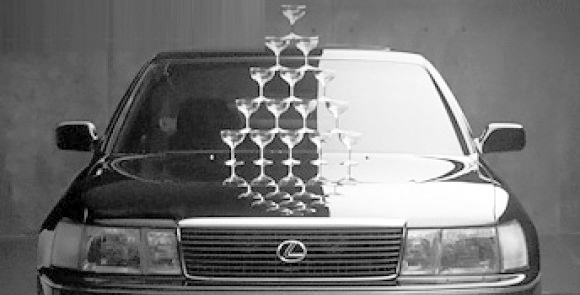
Toyota’s advertising firm Saatchi & Saatchi created this image to draw your attention to the fact that Toyota’s customers’ lives and existences have two explicit, maximal conditions, which are either to get Bought or become Nought. Like Buddha, Hume, Derrida, and an infinite number of other philosophers, Toyota sees these conditions as mutually dependent on one another because nothing could rationally exist without a logical inverse, or some logical distinction to itself, thereby creating all existence, essence, meaning and true-north value in the difference between the two conditions. It’s the difference that motivates employees to pursue perfection and customers to purchase to perpetually try and resolve their deepest problems.
An organization likewise does not need to concern itself with the specific range of possibilities of what may be Bought for business purposes within the metaphysics of Lean other than to know what motivates its stakeholders, employees and customers to think, believe and do. An organization for its own purposes ought to bracket that speculation outside the IB – an organization cannot rationally know either what may be Bought or what is Nought by their own definitions. An organization only needs to be mindful of the potential for consumers to become Nought and what they really personally and intuitively believe is Bought to determine who they believe consumers truly are and thus why they may buy the organization’s product. The ultimate, pragmatic point is to build a logical, coherent, lean ideology of Universal, Process and Personal true-north values for an organization to more accurately analyze, deduce, and thereby predict what are the greatest problems consumers have, and thus what product consumers are most highly motivated to consume in return for paying meaningful amounts of money.
Like bubbles floating up in champagne glasses, Coke-Cola enacting people’s happiness, or SUDS rising up to new SLOTS, an organization ought to inform, innovate and design its product so that it surfaces what consumers essentially,100 universally value, and thus what psychologically motivates them through the Ought to extend and optimize consumers’ universal demand. Between the extremes of Bought and Nought, organizations’ product ought to “OPPtimize” consumers toward universalization and away from real or perceived threats by furthering their energization, adaptation and ultimate regeneration.
Ought Factors (OFs) of Psychological Motivation
Since the processes that U/ARE represent consumers’ sufficient and necessary true-north values by solving their existential problems, you must understand which Ontologically Teleological factors psychologically motivate them by either:
- Optimally leaning consumers’ processes that ARE so they may capitalize on OPPs to strive to get what they believe is Bought; or
- Threatening consumers’ processes that universally lean toward ARE such that they might strive to avoid becoming Nought.
I would never propose to exhaustively list all possible Ought Factors that universally lean toward ARE processes (i.e. “U/ARE OFs”), thereby summarizing all psychological motivation and problem resolution into a mere list. However, I do try below to best fit some Ought Factors to consumers’ real lives and existences with a certain amount of Pragmatic Idealism. Remember that all lists of specific OPPs or threats to consumers’ processes that U/ARE are necessarily incomplete due to Russell’s Paradox, and all categories are analogically fluid within consumers’ value streams unless you can quantify them in some respect, so I propose what Ought Factors I can with words until business people better quantify their true-north value and effect within an HQ.101
Thus, Ought Factors may be objectively, physically real or may be subjectively, psychologically perceived by consumers. Ought Factors are gradations through B/ARE, C/ARE, I/C/ARE, ME/ARE, WE/ARE and eventually U/ARE processes. I do not propose Ought Factors as being unchangeably categorical, but rather to re-purpose the historically proposed motivational factors, needs, drivers, and/or end-goals all people have into ontologically-based problem/solutions that you may use to lean philosophically in a modern way and thereby make more meaningful amounts of money.
Ought Factors are not intended to be formal categories but merely labels of intentions with soft, round edges rather than bright lines. Ought Factors are simply what I perceive to be the most efficient parameters of problem-solutions organized around the overall Ought universally leaning ARE processes that best isolate normative Universal/Process and really Personal true-north values for identifying what consumers find most meaningful to their being as reflected by the money they spend.
I believe it would be helpful for you to take the existential extremes within which consumers extend and optimize themselves, and factor the Ought into the most mutually exclusive, orthogonal categories of problem/solutions to consumers’ being that you can within what makes the most sense to you. Though you must keep in mind that these factors are necessarily interdependent to support consumers’ singular personas, you might use them to better identify consumers’ various true-north values that product extends and optimizes to increase consumers’ Strategically Unique Degrees of Sophistication into higher and higher hierarchical SLOTS.102 Just be careful when leaning up along the value stream in this way because you can easily twist your mind into knots.
A good method an organization can use to factor the Ought is through the ID Kata like Toyota did for Lexis using a stack of champagne glasses as its model. You factor the Ought either positively or negatively depending on which products’ features and benefits upwardly extend and optimize consumers’ lives and existences along the Ought by solving their existential problems. You naturally ought to build products’ Ought Factors toward what consumers believe is Bought in a positive sense. However, because the Ought through which all customers live and exist is an apparent paradox for all practical purposes, you can also build Ought Factors in the negative sense from what may make consumers become not Nought. All ways lead up. You build upward from these positive or negative Ought Factors by leaning ARE processes toward an infinite sigma (/σ∞), which is the relentless pursuit of a Perfectionist Consequentialism and Universal Optimism of what may get Bought and against what is Nought. However, since there is no apparent difference between getting BOT and becoming NOT, you ought to truly lean toward the Pragmatic Idealism of Six Sigma (/6σ) methodologies.
Thus, you may construct the Ought Factors of psychological motivation by asking either:
- What is required for consumers’ to universally lean their ARE processes toward getting Bought; or
- What may cause consumers to stop universally leaning any one of their ARE processes and become Nought?
You can design a market strategy from either existential extreme since the Ought appears to be possibly circular within the IB. As Maslow said in paragraph nine of, “A Theory of Human Motivation,” “Classification of motives must be based on goals.” And the truest end-goals ought to be based on nothing less than consumers’ existential extremes on either side of their life-cycles. When you produce these existential parameters for consumers’ OFs, they should also meet the same criteria that you established for leaning ARE processes. I adapt the ARE criteria to Ought Factors as follows:
- While consumers’ lives and existences may be viewed as a systemic process that attempts to perpetually optimize processes that U/ARE through problem resolution, any description of their Ought Factors ought to be universal and persistent for broad application and analogizing. An organization’s description of the qualities of Ought Factors also ought to be as efficient as possible under the guiding principle of Occam’s Razor and in-line with the Second Law of Thermodynamics;
- Different Ought Factors ought to be:
- Necessary, such that if any one factor was removed, U/ARE living processes would never reach the necessary degree or would eventually cease; and
- Sufficient, such that within the limitations of making finite lists due to paradoxes and categorical semantics, no further Ought Factors would at least seem to be necessary to further U/ARE living processes;
- Consumers’ lives and existentially literal and figurative qualities ought to be abstracted to the most generic terms to cover all contexts within the universe. They should be amenable to analogizing and relating across Supervening Levels of OT Sophistication and include all indirect but still supervening Ought Factors as described below; and lastly
- Ought Factors ought to be easy to apply and remember in an everyday business contexts, especially if an organization analogizes OFs across increasingly sophisticated SLOTS to reproduce customers’ most truly valuable SUDS.
The most fundamental components of organisms and organizations that U/ARE are these categories supporting Ought Factors:
- Ontological Medium (OM), regards all physics as a literal, conditional prerequisite for all life and existence. Again, the “Ontological Medium,” or “OM,” is a bit of shorthand for all of the scientific elements that compose consumers’ physical existences such as the many dimensions, all forms of matter and energy, and the movement of matter and energy across those dimensions upward along the spring-like arrow of spacetime that allows consumers to be. The Ontological Medium regards the inviolable, physical contingency of existence as consumers know it within the IB. The OM, when considered within the IB, says nothing about the intuitive beliefs some consumers may hold about what may be truly Bought outside the IB, such as an intuitive belief in the concept of souls. Common examples of customers seeking to extend their lives and existences through the Ontological Medium include everything from saving time at work by multitasking to buying increasingly better houses as a form of product to shelter themselves from the elements and social disdain;
- Stimulated / Deprived, regards consumers’ inherent need for exploration and discovery to universally lean toward higher levels of the Ought through adaptation, regeneration and energy hunting/gathering. Beyond chemical needs, consumers cannot psychologically develop without sensory stimulation, and proven psychological (and possibly genetic103) harm occurs from extended sensory deprivation.104 Stimulation can also be the basic physical energy injected into adaptive and regenerative living processes at life’s inception, and may be figuratively applied to consumers’ psychological needs in the highest SLOTS by perpetuating better life and existence through SUDS;
- Related / Isolated, regards consumers’ proven need to relate to others under Attachment Theory as bounded by Dunbar’s Number105 in response to consumers’ need to adapt, reproduce and energize to ultimately universalize themselves upward along the Ought. Related / Isolated is simply the fact of consumers universally leaning toward ARE processes U/Socially with all people. Any sensory component of Related / Isolated is handled in Stimulated / Deprived as described above. At the most basic level, Related / Isolated may also apply to related combinations of chemical processes occurring within consumers through B/ARE SLOTS in order for them to optimize U/ARE processes. Relation may also have mathematical support in co-evolutionary free-lunch theorems that show that consumers can increase their optimization overall by specializing and cooperating rather than trying to be jacks-of-all trades. Finally Relation addresses the problem that people need memes as much as genes in order to survive - people now require the legacy of knowledge handed down from our ancestors to now live and exist as much as they do their own genetic heritage;
- Vital / Ill, regards consumers’ real or perceived problems with sustaining internal vitality as living systems in response to real or perceived illnesses. Vitality relates to consumers’ basic biological functions and general psychology. For example, you may label consumers’ psychology as abnormal when it limits their ability to universally lean toward ARE processes at a level expected within their highest SLOT as human beings. Vitality also relates to consumers’ need to perpetually metabolize energy and reproduce as much as possible by optimizing the degree of ARE processes;
- Integral / Insecure, regards consumers’ real or perceived problems with maintaining their integrity in response to external threats to their lives and existences. Like other OFs, the terms “Integral” and “Insecure” can have further figuratively psychological meanings for consumers as conscious beings. As with other Ought Factors, you must differentiate between what UP true-north values are and what consumers personally, phenomenologically experience. Consumers’ psychological perception from their Personal perspectives may not perfectly align with UP true-north values due to boundaries on consumers’ rationality and imperfections within the OM, thus making them feel secure when they are in fact not or vice versa; and lastly
- Meaningful / Despondent, regards recognizing the problems consumers have as fundamentally rational, self-aware organisms who personally experience the “Paradox of the Ought.” Consumers attempt to meaningfully go beyond the seemingly paradoxical Ought to find a certain non-tautological teleology within their bounded rationality. To feel “Despondent” is to not realize a difference between what ought to be BOT and what is not living and existing. Consumers respond to the apparent paradox of the Ought either by engaging in theological, spiritual or atheistic belief, or by simply bracketing existential questions and reflexively focusing only on extending the era of processes that U/ARE within the OM with blinders on. Teleological or teleonomic “Meaning” is the monster of consumers’ souls that products must ultimately speak to in order to make the most money through the normative value they generate. As Maurice Merleau-Ponty said:
Model of U/ARE Ought Factors
This chart of Ought Factors of psychological motivation isolates what extends and optimizes consumers’ lives and existences the most to best identify what makes consumers feel Stimulated, Related, Vital, Integral and Meaningful within the OM. The Chart of OFs classifies who and why consumers are as self-aware living organisms trying to optimally lean toward ARE processes to the extent they can become wholly existing through their Will to Universalize. When factoring the Ought, an organization must empathize with each binary opposition that consumers experience from their self-conscious, really personal phenomenologies that drives them to buy at their points of purchase to solve their greatest existential problems.
Consumers teleologically purposeful consciousness articulates and deals with the apparent paradox of trying to universalize ARE processes infinitely through these Ought Factors:
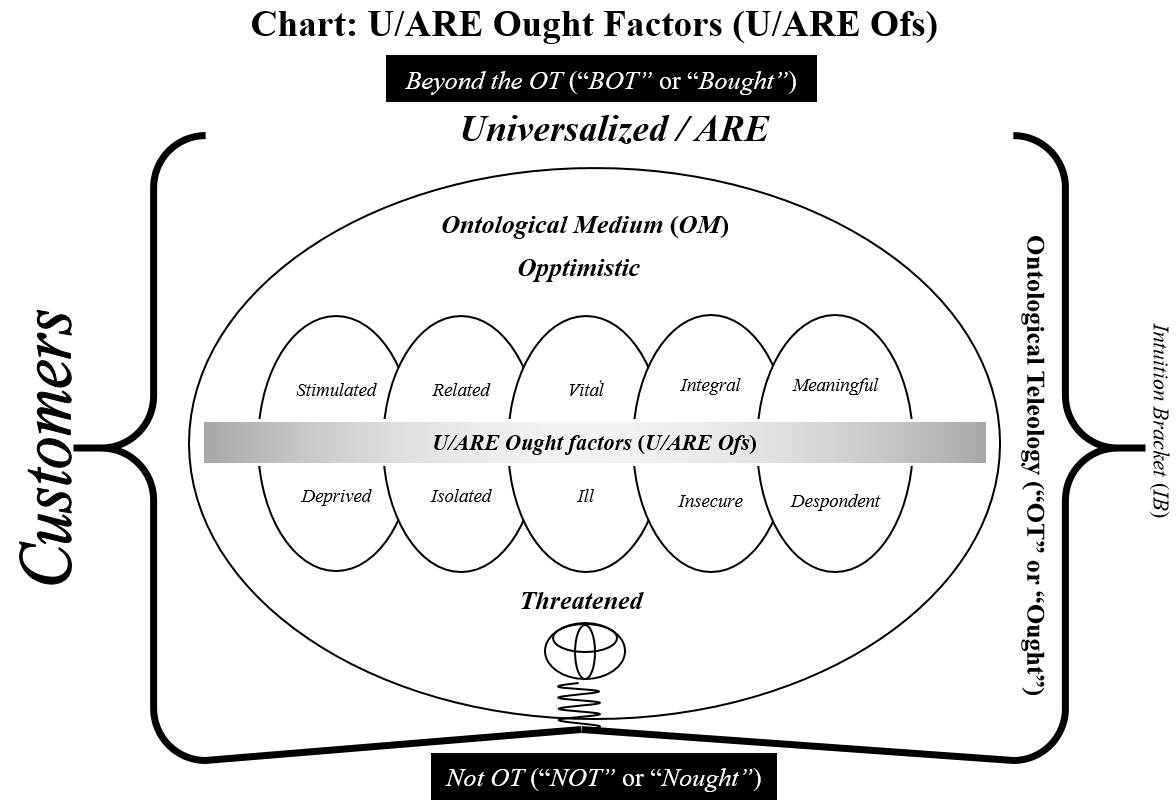
The above Ought Factors act as Ontologically Teleological wants/needs/end-goals/motivations/parameters that in-turn resolve who and why consumers are as living systems. Consumers extend and optimize their ability to leanly adapt, reproduce and energize through these OFs to attempt to universalize across all dimensions. Naturally, these Ought Factors are not the only ones through which consumers could optimize their lives and existences, such as so many others listed by need theorists. However, I ask you to consider these OFs to be generally the most instrumental toward serving consumers’ processes that U/ARE because they factor who and why they ARE ontologically. Thus, I consider these OFs to be more motivating than any others because they address what matters most, but please feel free to put your own spin on them.
Higher Order Meta-OFs (MOs)
All other parameters beyond these primary OFs supervene and resolve themselves as Meta-Ought Factors (MOs). MOs indirectly serve processes that U/ARE, and thus consumers’ lives and existences overall via OFs. For example, consumers’ psychologically “Stimulated,” emotional need for love is an indirect solver of the more fundamental need to be “Related” to more leanly adapt, reproduce and energize. Love in-turn often resolves consumers’ need for “Meaning” by flowing them past the Ought toward an irrational end-goal outside the IB. Likewise, consumers’ need for “Safety” indirectly resolves their more fundamental need to be “Integral,” or in the double negative sense, not “Insecure,” which in-turn provides them with the ability to love freely.
For an example of an even higher-order Meta-OF, consumers’ broad need for information and knowledge may be viewed as a Meta-Ought factor creating coherence between consumers’ personally inter-subjective and objective Universal/Process perspectives on true-north value with all other people. Knowledge reflects actionable Universal and Process true-north values that consumers’ can use to further exist by solving problems to enhance their Ought Factors and U/ARE processes. Knowledge is the power that allows consumers to better lean themselves into the OM by letting them seize OPPs or reduce threats to their lives and existences. Knowledge also allows consumers to more meaningfully avoid becoming Nought by buying products to better perform processes that U/ARE so consumers may at least try to get themselves BOT.
Industrial Classification of MOs
To better categorize larger Meta-OFs, consider two further industrial classifications of consumers’ means to better live, through transportation and telecommunication.
Transportation MOs
For transportation as a Meta-Ought factor, consider that when consumers move from one place to another, such as with the Uber car service, they pursue one or more core Ought Factors and processes that U/ARE. Even if a customer buys a Toyota automobile to go on a road trip only for the sake of exploration, such exploration would naturally fit within the Stimulated / Deprived CORE Ought factor. In other words, consumers’ seek Stimulation to achieve unbounded exploration in order to solve their existential optimization problem through random discovery and play. Transportation for these purposes relates to consumers’ need to seek the best sources of energy and meaning to fund adaptation and regeneration through these lines of reasoning.106
Alternatively, employees might travel for an organization to earn money that lets them buy products to serve all of their CORE OFs. They give money to transportation businesses so the employees can in-turn become more Stimulated, Related, Vital, Integral and/or Meaningful. Transportation could also be used by them to adapt by moving to a new city to get a new job, to regenerate by taking them to a health club or by sending their offspring to get knowledge in school, or to energize them by letting them buy food at a restaurant. Consumers might even purchase a Tesla sports car to transport their self-esteem to a better place.
All of these motives and end-goals are intertwined, existential problem/resolutions, but they can be Ontologically Teleologically factored and identified with the ID Kata. For example, consider employees earning money through a bake sale just to donate to charity. Employees do so to reproduce personal Meaning for themselves and Relate to others in need of charity to ontologically universalize who, why, what, and how they think they are. Or, as David Foster Wallace said:
Telecommunication MOs
For telecommunications as a meta-Ought factor, think through consumers’ end-goals each time they speak with a personal relative as a physical extension of their self-conceptions.107 They also telecommunicate to get job training to adapt to the workforce. They telecommunicate with a doctor’s office to schedule an appointment to reproduce their Vitality in order to continue to live and exist. They telecommunicate to set a date with someone to energize their social life through Relation in order to Stimulate their personal Meaning. Each of these OFs ought to be used as an independent parameter when analyzing who and why consumers are through their lives and existences. Thus, they are each what intrinsically and extrinsically motivates consumers to buy product now, while recognizing that all these parameters cumulatively add up to consumers’ Ontological Realization and fundamental motivation to purchase.
U/ARE processes up through all of the various SLOTS and SUDS reflect different skews, like stock keeping units of real value, to be purchased in each of the above CORE-OFs and Meta-OFs. For example, consumers’ need for anticipation and adaptation gets reflected in their need for Integrity and Vitality just like how consumers’ need to optimize their adaptive processes gets reflected in their need to be Stimulated. Consumers’ need to adapt and reproduce through natural selection gets reflected in their need to Relate, just like how their need to Universalize their lives and existences gets reflected in their need for Meaning. Consumers reflexively conceptualize their universal existences to optimally lean toward adaptive processes by resolving problems toward what they believe is Bought and to better contrast themselves to what they consider to be Nought.
You now Ought to be able to see how consumers’ processes that U/ARE get factored into their true need for Stimulation, Relation, Vitality, Integrity and Meaning. For example, energization requires Stimulating inputs to obtain energy itself and the information to find energy in the first place. Energization requires Relation with others to cooperatively pursue and produce shared energy sources, just like a large chemical reaction, which ultimately results in Vitality. Energization also requires the Integrity of the processes and character creating Vitality. U/ARE processes result in Meaning to more reflexively conceptualize how an organization may gather the energy (aka capital) necessary to fund greater adaptation, regeneration and ultimately “Universalization,” which is the manifest destiny of all organizations, just like it is for the consumers on which they depend.
By now, you can see all this leaning upward along the ultimate value stream toward channels of universal Ontological Realization. All organizational analysis ought to go on and on like this as it investigates how a company’s products serve consumers’ Ought Factors and Meta-OFs as they move along true-north value streams toward universalization. This analysis would apply to any other Ought factor or Meta-OF an organization considers, which is why I think this model best benefits who consumers are and why they really buy what they purchase. How you make that money meaningfully with this information by aligning with the Ought is up to you.
Factoring Meta-Ought Factors
For all these Ought Factors that in-turn optimize processes that U/ARE to find meaning outside the IB, their structure as binary opposites reflects the contingent nature of consumers’ lives and existences.108 Like the Ought Factors diagram shown above and repeated below, an organization ought to factor the Meta-OFs its product serves by building from the existential extremes of universalization on the one hand and what may lead consumers to become NOT on the other. Once an organization has these fundamental end-goals in mind, it can more logically connect them to what problems fall in between. These Meta-Ought Factors provide a framework to guide you and any organization through the general, existential motivational categories of consumers’ lives and existences.109 They will lean you upward along the Ontological Teleology through which consumers extend and optimize their will to consciously and unconsciously universalize.
Emotional Meta-OFs (EMOs)
Consumers’ psychological and physiological feelings, their delights and pain-points, also reflect these Meta-Ought Factors. Emotions are motivational Meta-OFs of their own kind. Feelings are phenomenological events that measure the extent that a consumer’s OFs change up or down along the Ontological Teleology. Feelings are a subjective (and to some extent objective) function and sentiment of how consumers are doing within the OM. Thus, these Emotional Meta-OFs (a.k.a. “EMOs”) emerge from consumers’ real or perceived changes in processes that U/ARE.110 As described earlier, EMOs may be perceived as the middleware between CORE OFs and what consumers personally experience. While they are middleware, they cognitively surround what is CORE to who and why consumers lean toward ARE processes since they are so essential to consumers’ Lean Thinking and being. “EMOs” often get mistaken for CORE OFs for this reason.
While consumers’ and employees’ EMOs consume lots of organizational energy, emotions and gut feelings produce a very powerful computational heuristic for consumers and organizations to efficiently and accurately decide what uniquely/profitably extends and optimizes consumers’ lives and existences. Daniel Kahneman, one of the creators of Prospect Theory, refers to EMOs as “Type 1” thinking, as opposed the more analytical Ought factoring we have been discussing, which Kahneman describes as “Type 2” thinking.111 EMOs thus function as a type of signal, “Andon” (行灯), “Kanban” (看板), or emoticon inside an HQ and within consumers. Andon and Kanban are Lean terms of Japanese origin for tools that centralize information to indicate when operations are good or bad, when things are going well or not. EMOs likewise signal when an HQ or consumers believe that some thing or event resolves problems to facilitate adaptation, regeneration or energization, or not, up or down the Ought. I believe Abraham Lincoln, the 16th President of the United States and a true leader, may have recognized this dynamic in this quote attributed to him with some authority:
At the same time, oscillating EMOs directing how consumers think and act may lead an HQ and consumers to perceive and do things that are not rationally aligned with normative processes of true-north value that U/ARE.113 For example, consumers’ EMOs may diverge from normative Universal and Process true-north values, so an organization must empirically market test with the ID Kata. You can factor EMOs like all other OFs, but you must be careful to identify their possible irrationality and deviation from the OT.
Notice too that CORE OFs critical to consumers’ Ontological Realization simultaneously serve as both Ontological true-north values, such as being Stimulated, Related, Vital, Integral and Meaningful, as well as consumers’ emotional states of well-being. For example, consumers can both be and feel Stimulated, they can both be and feel Related, they can both be and feel Vital, etc. This linguistic fact evidences the emotional and Ontological connection between the two sides of the ontological / emotional coin.
You may extrapolate consumers’ Lean ontological/emotional true-north values further and further, higher and higher into instrumental goals and Meta-Ought Factors above the primary, intrinsic CORE OFs, particularly within the context of human psychology.114 All these ontological/emotional needs relate back in one way or another to the more fundamental CORE OFs, which means back to the problematic contingency of consumers’ lives and existences within the OM and the open-ended universe. Thus, resolving Emotional Meta-Ought Factors, Meta-Ought Factors and CORE OFs is the fundamental job to be done by a product each time it gets consumed.
Irrational Exuberance
All good EMOs though eventually lean toward Meaning, which is toward what may be Bought to resolve the existential problem of leaning ARE processes toward universalization and away from what is Nought. Problem resolution in the form of existential Meaning in-turn may physiologically and psychologically enact what consumers feel on the rightward, upward slope of consumers’ U-shaped utility curves. Meaning is thus perhaps the most generalized and abstract of the CORE OFs critical to consumers’ Ontological Realization. Thus, the Meaningful Will to Universalize is composed of:
- Rational action taken by consumers to resolve the existential problems in-line with universally axiomatic and processually systemic true-north values to universalize themselves within the bounds of the Intuition Bracket; and
- Irrational, intuitive action responding to what consumers know is Nought inside the Intuition Bracket to optimize their search for what they believe is Bought outside the IB.
Consumers’ search for Meaning and a Will to Universalize keeps them in a state of emotional and physical criticality, balancing between (1) rational order and (2) irrational disorder, seeking to optimally universalize ARE processes overall. Corporations as fictional legal people work this way too,115 balancing order and disorder in a perpetual state of rational/irrational criticality toward optimizing their Ontological Realization. I am sure you experience this state of criticality every time you enter an HQ of an organization. While arguments exist against it,116 this concept of self-organized criticality being how consumers optimize emotion and meaning is reasonable, intuitive speculation to consider in a Lean House of Quality. I hope this speculation gets more thorough testing though.
Much as consumers’ Personal perspectives supervene on and assume their Universal and Processual true-north values, you can also see randomness within each of these values that operate inside each of them. Some systemic instability leads to their greater overall stability due to small variations that lead to tremendous changes over time. The author Nassim Taleb created a term for this, “Anti-Fragile.”117 In a series of experiments led by physicist Per Bak and his colleagues in 1999, they determined that these seemingly random changes to consumers’ neurological processes resulted from systemic phase changes whereby randomness is structured as an actual process in consumers’ minds. Per Bak determined that a single, small change led to many smaller changes cascading into what appears to be a much larger cumulative change, resulting in greater systemic and/or structural stability overall. This is a deceptively simple idea until you see how broadly it applies.
Per Bak’s phase changes follow the mathematical distribution of the “Power Law”118 as popularized by Malcolm Gladwell in his book, “The Tipping Point.”119 The Power Law states that one variable is often exponentially related to another in its degree of variance. As Gladwell and others across science and economics have well described, many rare events naturally follow this pattern of the Power Law. For example, a genetic mutation leading to the birth of a black swan could lead to an overwhelmingly large population of black swans if black swans were able to adapt, energize and ultimately reproduce better than birds of a different feather.120 The Power Law reflects the magnitude of what occurs during such critical phase changes, like how a mere kaleidoscope of butterflies could eventually cause a twister further up along the OT by further changing global weather patterns.
Within universal, axiomatic truths, randomness seems to demonstrate itself. At the quantum level this behavior is reported in atomic particles by physicists.121 From a process perspective, scientists report that random genetic mutations are critical to consumers’ adaptation through natural selection even though many other mutations have bad results. From consumers’ personal perspectives, they behave in seemingly random and irrational ways to meaningfully determine what they ought to do in relation to what they believe is Bought and universally and processually know is Nought.122
This apparent instability at each SLOT creates beneficial randomness that reproduces what is critical to ontological well-being by shaking out, stochastically testing and settling what is Ontologically Teleological and what is Nought.123 Randomness (or at least perceived randomness to the best of our senses) thus seems to reflect itself from the ground up within all consumers’ UP and really Personal true-north values. I speculate that even consumers’ random search for emotional meaning is most often instrumental to their optimizing the physical and cognitive processes that best universalize their ARE processes overall.124
Thus, organizations’ and consumers’ criticality can simply be considered rational, structural randomness. This randomness is beneficial to the extent it optimizes processes that U/ARE. Effectively structuring randomness in consumers’ minds and in organizations must be done with processes that C/ARE because true randomness by definition must be closely watched. You must keep in mind that working with randomness, like studying all true-north value, is like harnessing the sun - it is both very powerful but painful and disorienting to see, and only Lean value streams can constructively channel it.
I want to convince you if you need convincing that structural irrationality is a part of leaning consumers’ lives and existences toward further and better being. An organization can make money meaningfully by channeling consumers’ irrationality upward along the Lean value stream so they may best purchase perfecting product, even if when and how such consumption will occur is hard to predict.
Extending Personas through U/ARE Processes
Importantly, irrationality reproduces itself in how consumers feel about products’ meaning when they dream.125 For example, irrationality reflects itself in some of what consumers daydream about buying. And dreams themselves may be plausibly described as unrestricted moments of free-form analogizing and dis-analogizing that aligns and juxtaposes what they phenomenologically experience within their largely rational lives and existences. They dream to define what does and does not align them with the OT, by helping them envision what they believe is Bought and are afraid will make them Nought.126 Hopefully, all paid advertising places product within how consumers’ define their dreamy personas, i.e. who they want to be and become along the OT, in this way.
The Harder They Fall
While an organization produces products that perfect consumers’ Ought Factors in a positive sense toward what they believe may get Bought, whether that belief is rational or not, ironically, consumers feel most alive when they are reaching higher degrees of Ought by increasing their perceived risk of becoming somehow Nought. You can see again the nearly tautological proximity of Ought and Nought in this diagram looking down into the initial twisting fractal of the OT:
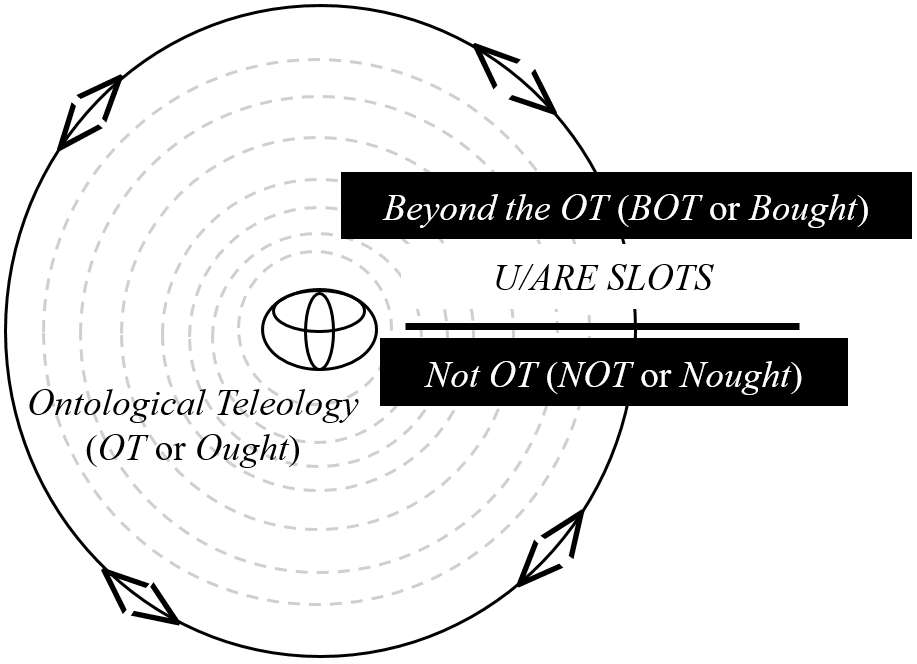
Each of consumers’ Ought Factors grows proportionately in both directions between what they do positively experience and what they can but don’t experience as well in the negative sense. The better and more deeply an organization extends and optimizes consumers’ Personal perspectives by advancing them upward along the Ought, the more acutely consumers rationally perceive a potential loss in their Ought Factors, MOs and EMOs, that would result in greater sadness.
On the one hand, wealth represents advancement in consumers’ Ontological Realization. On the other, wealth does not correlate in a straight line with happiness because people who are highly worthy on a net basis must worry to a greater degree about losing their self-worth.127 Wealth can magnify EMOs and a perceived risk of social and/or material loss in everything wealthy people do. An organization can capitalize on this tendency and consume the money of worthy people by selling them products that wealthy people purchase to help them (or any person or thing they perceive to be an extension of them) avoid losing over gaining in relation to their peers.
The Only Way is UPP through Meaning
Consumers find themselves attempting to find “Meaning” either by extending who and why they are within the bounds of OM and IB, or by attempting to irrationally circumvent the rationality of the Ought with their intuitive speculation or risky behavior. As discussed in the Value Stream 3: Existence, since consumers’ Ought Cognitive Dissonance arises as a rational mechanism to their conscious awareness, consumers attempt to rationalize the Ought paradox itself to no end. This is the only way forward in an unbounded universe.
Consumers need for Meaning as the resolution of their existential problems was famously addressed by Victor Frankl with his development of “Logotherapy,” but I now connect its contents to CORE OFs to explain why Logotherapy is effective within the metaphysics of Lean.128 I of course recommend addressing the balance of the CORE OFs in conjunction with Logotherapy to best optimize processes that U/ARE under the overall function of self-organizing criticality. Meaning is inherently a composite of the CORE OFs since they all increase the distinction between what is known to be Nought and what may be Bought.
If consumers bought a hypothetical product that allowed them to live forever, consumers would perpetually contrast themselves between what ought to be and what is Nought. Nonetheless, most science fiction films show very advanced, adaptive, regenerative and energizing alien species living very violent existences against a universe of possibilities of becoming Nought. Despite having the capacity to live forever, they risk ever more to really live at all.129
Critically, as an organization perfects consumers’ processes that U/ARE toward a fully universalized event horizon of complete problem resolution, its product will serve less Strategically Unique Degrees of Sophistication to extend and optimize consumers’ lives and existences. This paradox results because should customers consume product that fully removed the contingent possibility of their becoming Nought, they would likewise remove the lower portion of their binary Ought Factors. While they would perpetually exist without that contingency, they would remove certain meaning their lives would have within the OM since meaning is defined by the BOT/NOT duality, tension and paradox.
However, given the distance we all are from such hypothetical perfection, an organization fortunately only needs to focus on resolving problems to move along value streams flowing upward toward consumers’ universal horizon of complete satisfaction, toward what they all believe is truly Bought. For an organization to make the most value, it needs to focus only on discovering what best extends and optimizes who and why people are within their lives and existences in the OM, and ultimately help them in their quest to get BOT to the extent that pursuit leans them along the OT.
Extending and optimizing who and why people are means solving their problems to increase their juxtaposition between what they ought to buy with what they know is Nought and tantalizing them with the possibility of getting Bought, even if only to feel that way for a brief moment. Ironically, by doing so, consumers will become ever more acutely aware of what is Nought, and what they have to lose by not buying product from you at all. You will do this by providing them with the most meaningful, delightful purchasing experiences and products possible within each of their individual phenomenologies.
Bringing it All Together
This concludes “Leanism: The Philosophy of Business,” which investigated who, why, what and how consumers are, and what leads them to purchase value from you. With this knowledge, you now know how to follow the value streams that lead to the greatest profit. You also have a solid foundation for your Lean HQ to dent the universe. This Value Stream 5: People’s will conclude by showing the U/People organizational chart together with the universal chart of Ought Factors. In this combination, you can see the delta-shaped ID Kata unfolding like a lotus plant, becoming an upward summation of who people ontologically are, bracketing the Zen we all pursue to reach perfection: